This work by Middle East Monitor is licensed under a Creative Commons Attribution-NonCommercial-ShareAlike 4.0 International License.
Trucks loaded with humanitarian aid on the Egyptian side of the Rafah crossing wait to cross into the Gaza Strip early on October 15, 2025, after Israel said it would allow the crossing to reopen for humanitarian aid to enter from Egypt into the Palestinian territory. [STR/AFP via Getty Images]
The United Nations and the International Committee of the Red Cross (ICRC) on Tuesday called for all border crossings into Gaza to be opened to allow the delivery of urgently needed humanitarian aid to the war-torn enclave.
The two organizations stressed that the truce recently reached in Gaza, as part of US President Donald Trump’s mediation plan, requires immediate steps to ensure aid can reach civilians facing famine conditions.
“This is what humanitarian workers, including the ICRto allow the delivery of urgently needed humanitarian aid C, have been calling for in recent hours — to make sure all entry points can be opened, given the massive needs,” said Christian Cardon, an ICRC spokesperson, speaking to reporters in Geneva.
Jens Laerke, spokesperson for the UN Office for the Coordination of Humanitarian Affairs (OCHA), echoed the call, saying: “We need them all to be opened.”
Laerke acknowledged that several crossings were “partially destroyed,” and that debris clearance was needed to enable trucks to move safely through Gaza’s streets. “We call for them to be repaired so they can be operated” he added.
The United Nations declared a famine in Gaza on 22 August, after experts warned that some 500,000 people were facing a “catastrophic” hunger crisis. Laerke said the UN currently has 190,000 tons of humanitarian aid ready to be transported into the enclave once access is granted.
This work by Middle East Monitor is licensed under a Creative Commons Attribution-NonCommercial-ShareAlike 4.0 International License.
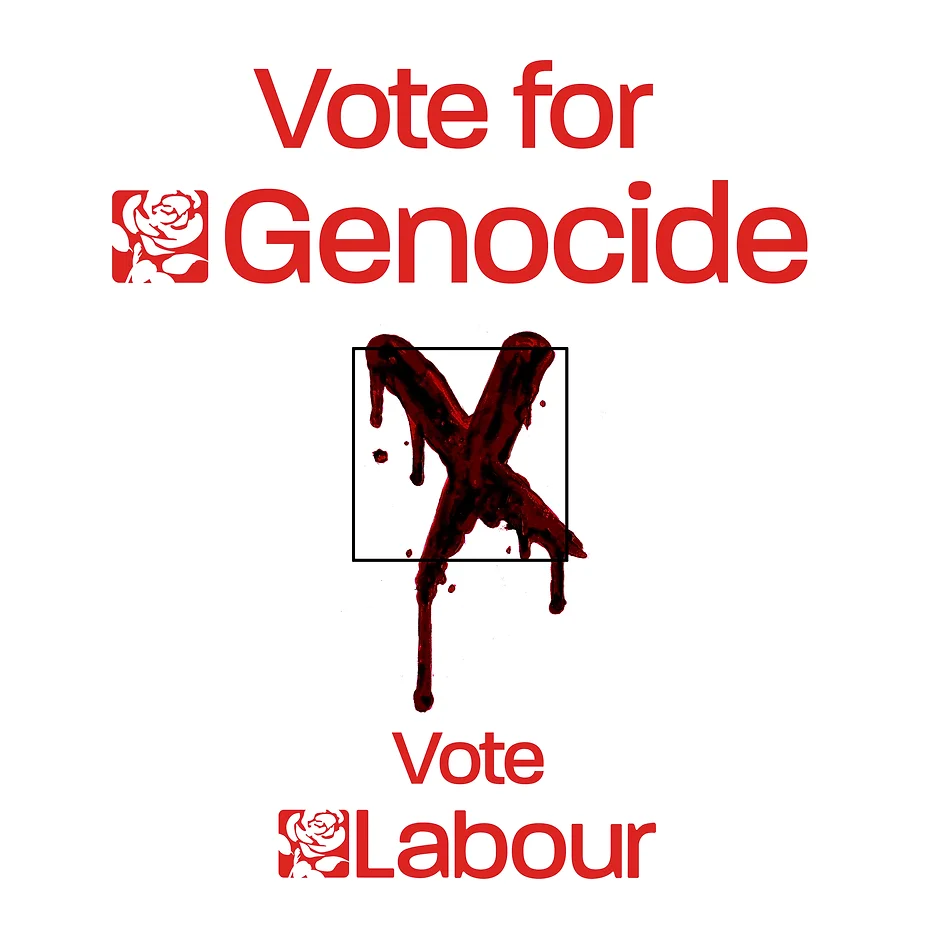
Keir Starmer objects to criticism of the IDF. He asks how could anyone object to them starving people to death, forced marches like the Nazis did, bombing Gaza’s hospitals and universities, mass-murdering journalists, healthworkers and starving people queuing for food, killing and raping prisoners and murdering children. He calls for people to stop obstructing his genocide for Israel.Genocide denier and Current UK Prime Minister Keir Starmer is quoted that he supports Zionism without qualification. He also confirms that UK air force support has been essential in Israel’s mass-murdering genocide. Includes URLs https://www.declassifieduk.org/keir-starmers-100-spy-flights-over-gaza-in-support-of-israel/ and https://youtu.be/O74hZCKKdpAGenocide denying UK Foreign Secretary David Lammy says that UK is suspending 30 of 350 arms licences to Israel. He also confirms the UK government’s support for Israel’s Gaza genocide and the UK government and military’s active participation in genocide.
This work by Middle East Monitor is licensed under a Creative Commons Attribution-NonCommercial-ShareAlike 4.0 International License.
Israeli Prime Minister Benjamin Netanyahu attends his trial on corruption charges at the district court in Tel Aviv, on April 21, 2025. [MOTI KIMCHI/POOL/AFP via Getty Images]
Israeli Channel 12 reported that Prime Minister Benjamin Netanyahu is due to appear before court on Wednesday to face corruption charges, a day after former US President Donald Trump called on Israeli President Isaac Herzog to grant him a pardon.
Netanyahu and his wife, Sara, are accused of receiving luxury gifts worth more than 700,000 shekels ($210,000) — including “premium cigars, jewellery, and bottles of champagne” — from wealthy businessmen in exchange for political favours.
The prime minister is also facing two additional cases involving allegations that he sought to influence media coverage in his favour through two Israeli media outlets.
On Monday, Trump renewed his call to “forgive Netanyahu”, saying that it is time to close the chapter on these cases that have been pursuing him for years.
This work by Middle East Monitor is licensed under a Creative Commons Attribution-NonCommercial-ShareAlike 4.0 International License.
Keir Starmer objects to criticism of the IDF. He asks how could anyone object to them starving people to death, forced marches like the Nazis did, bombing Gaza’s hospitals and universities, mass-murdering journalists, healthworkers and starving people queuing for food, killing and raping prisoners and murdering children. He calls for people to stop obstructing his genocide for Israel.Genocide denier and Current UK Prime Minister Keir Starmer is quoted that he supports Zionism without qualification. He also confirms that UK air force support has been essential in Israel’s mass-murdering genocide. Includes URLs https://www.declassifieduk.org/keir-starmers-100-spy-flights-over-gaza-in-support-of-israel/ and https://youtu.be/O74hZCKKdpAGenocide denying UK Foreign Secretary David Lammy says that UK is suspending 30 of 350 arms licences to Israel. He also confirms the UK government’s support for Israel’s Gaza genocide and the UK government and military’s active participation in genocide.
A protester holds a placard reading “Free the doctor Abu Safiya” during a protest supporting Palestine on July 29, 2025 in Madrid. (Photo by Marcos del Mazo/LightRocket via Getty Images)
“There cannot be peace without justice, human rights, and dignity of ALL,” said a top United Nations rights advocate. “Palestinian lives matter.”
As families on Monday celebrated the return of about 2,000 Palestinian prisoners and 20 living Israeli hostages after the two-year Israeli bombardment that has killed more than 67,000 people and left rubble across Gaza, advocates demanded the return of Dr. Hussam Abu Safiya, who was captured nearly a year ago and has reportedly been imprisoned in a detention center known for torturing detainees.
Middle East Eye reported Monday morning that according to Israeli media reports, Abu Safiya was on a list of Palestinian prisoners who would be released only “if the number of those released is not completed.”
“The government has approved the creation of a reserve list of five prisoners from Gaza, who will be released if changes are made,” according to Israeli media reports.
Palestinian writer and poet Mosab Abu Toha noted that “if he and the others are approved, they would replace five other Palestinian hostages who were previously set for release.”
I’m not sure who else has shared this, but regarding Dr. Hussam Abu Safiya, his name, along with four others, has reportedly been submitted for approval by the Israeli government. This is according to Israeli Channel 12. A phone vote is expected to take place.
Abu Safiya was seized by the Israel Defense Forces in December 2024 after the IDF raided Kamal Adwan Hospital in Beit Lahia, where he was the medical director.
The IDF claimed without evidence that Kamal Adwan Hospital was a Hamas command center; it was the last major functioning health facility in northern Gaza when it was attacked.
As the exchange of hostages and prisoners neared over the weekend, advocates including healthcare professionals demanded that Abu Safiya be included in the exchange.
“I am a family doctor and public health practitioner. I have studied the impacts of settler colonialism on health, locally and abroad. I am demanding for the immediate and unconditional release of Dr. Hussam Abu Safiya who is being held captive by the Israeli military for fulfilling his duty and calling to protect his patients,” said Dr. Yipeng Ge. “I am calling for protection of hospitals, patients, and health workers in Gaza.”
Abu Safiya is one of more than 9,600 Palestinians held in Israeli prisons, according to Israeli human rights group B’Tselem.
The prisoners being released on Monday include 1,700 Palestinians who were detained after Israel began its bombardment of Gaza in retaliation for a Hamas-led attack on October 7, 2023.
At least 154 Palestinian prisoners freed on Monday were forced into exile by Israel and deported to third countries.
On Saturday, the Council on American-Islamic Relations called on the Trump administration to “demand that Israel release Dr. Hussam Abu Safiya and all other kidnapped medical professionals.”
Francesca Albanese, United Nations rapporteur on human rights in the occupied Palestinian territories, suggested that the international acceptance of the continued detention of Abu Safiya and thousands of people in Israeli prisons, many of whom have been held without charges and were detained as minors, “says a lot about [the] peace that lays ahead, for the Palestinians.”
“There cannot be peace without justice, human rights, and dignity of ALL,” said Albanese. “Palestinian lives matter.”
The prisoner-hostage exchange is a major part of the first phase of the 20-point peace plan proposed by President Donald Trump, with the next phases yet to be negotiated.
Keir Starmer objects to criticism of the IDF. He asks how could anyone object to them starving people to death, forced marches like the Nazis did, bombing Gaza’s hospitals and universities, mass-murdering journalists, healthworkers and starving people queuing for food, killing and raping prisoners and murdering children. He calls for people to stop obstructing his genocide for Israel.Genocide denier and Current UK Prime Minister Keir Starmer is quoted that he supports Zionism without qualification. He also confirms that UK air force support has been essential in Israel’s mass-murdering genocide. Includes URLs https://www.declassifieduk.org/keir-starmers-100-spy-flights-over-gaza-in-support-of-israel/ and https://youtu.be/O74hZCKKdpAGenocide denying UK Foreign Secretary David Lammy says that UK is suspending 30 of 350 arms licences to Israel. He also confirms the UK government’s support for Israel’s Gaza genocide and the UK government and military’s active participation in genocide.
Police arrest supporters of Palestine Action taking take part in a civil disobedience protest in Trafalgar Square, London, 4 October 2025. Photograph: Tayfun Salcı/EPA
The rights we enjoy in the UK, and the movement the PM purports to lead, were built on protest. Those rights are in dire peril
…
The Labour party arose from a long wave of protests by workers against capital, calling for workers’ rights and for sweeping democratic reforms. These protests and their organisers came to be known as the labour movement. Its early actions included the radical war in Scotland, the Merthyrand Newport risings in south Wales, the Swing riots in England and the General Strike of 1842. No such protests would have meant no such movement. No such movement would have meant no such party.
Yet somehow, the party that arose from protest has formed, in terms of our rights to free expression and democratic challenge, the most illiberal government the UK has suffered since the second word war. This Labour government would have banned the labour movement.
Any government that fails to contest and reverse this trend, even if it did nothing to add to this bleak legacy, sides with illiberalism. Far from doing so, Starmer’s has already gone further than the Conservatives dared, by classifying a civil disobedience group – Palestine Action – as a terrorist organisation and banning it. It has also (so far with remarkably little resistance) inserted a clause into its crime and policing bill enabling the police to stop demonstrations “in the vicinity of a place of worship”. As our towns and cities are so richly endowed with religious buildings, that means almost any urban area.
But its latest proposal is even worse. The home secretary, Shabana Mahmood, has announced that the police should be able to stop protests that have a “cumulative impact”, by recurring in the same place. She will also consider “powers to ban protests outright”.
Keir Starmer objects to criticism of the IDF. He asks how could anyone object to them starving people to death, forced marches like the Nazis did, bombing Gaza’s hospitals and universities, mass-murdering journalists, healthworkers and starving people queuing for food, killing and raping prisoners and murdering children. He calls for people to stop obstructing his genocide for Israel.Orcas discuss Genocide-supporting and complicit Zionists. Donald Trump, Keith Starmer, David Lammy, Rachel Reeves, Angela Rayner and Wes Streeting are acknowledged as evil genocide-complicit and supporting cnuts.Palestine Action joke that appeared in the UK satirical magazine ‘Private Eye’.
People gather in Trafalgar Square ahead of the Trans+ Pride 2023 march in July 2023 in London | Hollie Adams/Getty Images. All rights reserved
We all want accountability for Big Tech, but the OSA’s moralising aims are hurting LGBTQ+ people and sex workers
New Ofcom regulations, introduced in July, are forcing a reckoning for online content. This overhaul of the digital landscape is part of the second phase of the Online Safety Act (OSA), which ostensibly targets content harmful to children.
First passed in October 2023, the OSA’s stated objective of protecting young people garnered widespread support from children’s charities. This was echoed by digital safety campaigners frustrated with the lack of accountability placed on Big Tech and desperate to see its power reined in.
But while these new rules may aim to protect one group, others are being put in harm’s way. Sex workers and other marginalised communities are now less able to access content on harm reduction, face huge income losses due to their accounts being targeted, and risk losing precious anonymity due to identification rules.
Minimising online harms and holding powerful tech companies to account are worthy goals. But despite fixating on explicit content, the OSA isn’t even delivering on its key aims – a recent study by the Children’s Commissioner for England showed children’s exposure to porn is higher now than before it came into effect, and algorithms continue to bombard young people with content promoting suicide and self-harm. And when that non-progress comes at the expense of other vulnerable groups of people, such as sex workers, it’s clear that it’s not fit for purpose.
We’ve heard ‘protect our children’ before
Blanket calls to ‘protect the children’ should always be treated with caution. Safeguarding young people often serves as a flimsy pretext for discriminatory legislation, and the emotive language provides useful cover for lawmakers seeking to shield themselves from criticism.
There are many examples of this in action. In the US, racial segregation during the Jim Crow era was justified in part as promoting the “best interests” of children. The US’s 1996 Communications Decency Act also has marked similarities with the OSA, which aimed to protect minors from “indecent” internet content, although most original provisions were struck down by the Supreme Court as unconstitutional.
In the UK, the notorious Section 28 prohibited the promotion of homosexuality in schools under the guise of giving children “a sound start in life”, according to then prime minister Margaret Thatcher. Section 28 was repealed across the UK from 2000 to 2003, with then prime minister David Cameron offering a public apology in 2009. In 2018, he was joined by the key architect of the law, Baroness Knight – but who maintained in her apology that her intention had only been the “wellbeing of children”.
Children need protecting, but not everything that claims to protect them does what it says on the tin
The following decade saw significant gains for LGBTQ+ communities and, until 2015, the UK was considered among the most progressive countries for queer and trans people globally. However, it has since crashed into 22nd place, with hate crime up by 112% against gay people and 186% against trans people in the last five years. Amidst a rollback of LGBTQ+ rights, the language of protecting children is once again never far away. Last year, statutory guidance was updated to require schools to teach about biological sex, advising against materials that encourage pupils to question their gender. Politicians claimed to be safeguarding children from “disturbing”, “inappropriate” and “contested views”.
Even the 2023 Illegal Migration Act, which provided for draconian measures to tackle irregular dinghy crossings on the English Channel, was framed by the government as “a way to protect vulnerable people, including children” from criminal gangs. This rhetoric has featured heavily in a recent surge of far-right demonstrations, with Tommy Robinson telling a London rally earlier this month that migrants have made “our daughters scared to walk the streets”.
Children need protecting, but not everything that claims to protect them does what it says on the tin. While the OSA has not leveraged child safety for such openly xenophobic purposes, it is causing profound harms in the name of protection.
OSA phase two
The OSA is a behemoth piece of legislation with three distinct phases of implementation. The first was completed in mid-March 2025, requiring services to conduct risk assessments and implement safety measures to tackle illegal content. The second phase focuses specifically on content harmful to children – but that is not necessarily illegal.
At the start of 2025, a statement was published by Ofcom, the government’s regulatory body for online and offline communications. This outlined requirements for in-scope user-to-user services (where content generated, uploaded, or shared by one user can be seen or “encountered” by another user) and search engines to complete an assessment on the likelihood of children accessing their service by April 2025, conduct risk assessments and implement safety measures by July 2025, and pornography services to introduce age checks by July 2025.
April 2025 also saw the release of Ofcom’s Guidance on Content Harmful to Children, which details content that platforms must act against. Included in the highest priority tier of harm is any content that is pornographic or that depicts sexual activity. In its Codes of Practice, Ofcom recommends algorithmic filtering and age verification checks to prevent underage viewers’ exposure to adult content.
Pornography isn’t the sole focus of the OSA – the highest tier of harm also includes content that promotes suicide, self-harm and eating disorders, which should be filtered and removed entirely. However, placing all explicit content in the highest possible tier of harm, along with the distinct, extensive guidance exclusively focused on it, underscores the preoccupation of legislators and campaigners. Content that depicts or encourages serious violence is ranked lower, at merely priority content. And other content that should concern any parent – promoting conspiracy theories or medical misinformation, for example – doesn’t get a look in.
Compliance and enforcement
Failure to comply comes with a hefty price tag. Ofcom has the power to issue fines of up to £18m or 10% of a company’s annual global revenue, whichever is higher. For major tech companies, this unprecedented penalty could amount to billions of pounds, and is designed to ensure that even the largest platforms with significant revenue streams outside the UK are held accountable. Severe cases of non-compliance can lead to the government blocking access to the site from the UK, and criminal liability for a company’s senior managers and executives.
Sex workers have reported a huge spike in their social media accounts being flagged or deleted for photos and even usernames deemed too provocative
While these landmark penalties are a significant concern even for big companies, enforcement isn’t going to be easy. Already, the law’s reach beyond the UK is being tested. In August 2025, regulators handed down the first fine to US-based company 4chan for failing to comply with statutory information requests and were quickly met with a refusal to pay the £20,000 penalty. With undisclosed penalties racking up for every day of non-compliance, a hefty bill may be waiting for the controversial company if it loses its court case in the US. A victory, on the other hand, would significantly compromise Ofcom’s authority.
Catch-all censorship
Since the new regulations came into force in July 2025, tech companies appear to have instituted automated (and very risk averse) moderation systems to ensure they are complying with the new legislation. These sweeping systems act like digital trawler nets, indiscriminately capturing content that is not harmful, or that even actively contributes to reducing harms for vulnerable or at-risk groups.
Since July, sex workers have reported a huge spike in their social media accounts being flagged or deleted for photos and even usernames deemed too provocative. Social media shadow bans (where sites reduce the visibility of accounts) or account deletion can lead to a massive loss of income, as well as years of work building a following, leaving sex workers poorer and more vulnerable. These generally happen suddenly, without warning, clear reasoning or the right to appeal.
Content moderation algorithms also appear to be targeting harm reduction efforts and educational content on issues including drug use, reproductive healthcare and support services for LGBTQ+ communities. This has been well-documented in recent years, with queer content routinely flagged as pornographic or age-inappropriate, content focused on education and recovery from eating disorders removed. For LGBTQ+ youth, who are disproportionately likely to seek support online, blocking access to vital information and community support is particularly damaging. In the name of online safety, these systems aiming to comply with Ofcom regulations are censoring the very resources that protect and inform vulnerable populations.
Much of the problem here is that coarse filters are being applied that reflect narrow, moralising outlooks, and to minimise liability over genuinely reducing harm. Sweeping systems lack the sophistication to distinguish between harmful content and not; algorithms trained to flag and delete anything related to drug use don’t distinguish between content promoting the consumption of illegal drugs and content aimed at educating people on staying safe if they do. Content creators who are queer, trans or racialised, or whose content focuses on these communities, are disproportionately targeted, with anything “queer” indiscriminately labelled as “adult”. While the exposure of young people to explicit content, especially pornography that is violent, is a legitimate concern, such sweeping labels make these filters ineffective at best and downright harmful at worst.
Sex workers lose out, again
During the drafting and debate of the OSA, leading figures in the Labour Party pushed for provisions that would criminalise all forms of sex workers’ advertising (despite the exchange of sexual services for money being technically legal in the UK). These closely resemble the notorious US FOSTA/SESTA laws which forced sex workers on to the street, estimated to be ten times more dangerous than indoor work.
Ultimately, these provisions were not included and sites where sex workers can advertise – for now – remain up. However, some are now seeking to avoid falling foul of the new regulations by demanding sex workers upload public headshots, rather than images of their bodies. For people whose safety depends on anonymity, this is a devastating blow.
While advertising sites are still allowed, a cornerstone of the OSA’s second phase is mandatory age verification for anyone accessing adult content. Since July, internet users with a UK-based IP address have been required to verify that they are over 18, through uploading a valid form of ID or another approved method such as credit card verification or email-based digital footprint analysis.
In the two weeks following the enforcement of these new rules, UK visitors to Pornhub dropped by 47% and by 10% to OnlyFans. However, all may not be as it appears. Age verification doesn’t actually provide a strong deterrent to accessing porn for tech-savvy teenagers – anyone can sidestep this requirement with a virtual private network (VPN), which disguises their location. Unsurprisingly, July’s new Ofcom guidance coincided with an explosion in VPN use, with one provider reporting a 1800% spike in downloads. So this supposed slump in UK traffic is hard to verify.
The government has had no qualms about passing other laws that cause active harm to children. As a result, deprivation levels are at a record high
What a VPN cannot do is help sex workers wishing to preserve their anonymity, circumnavigate requests to post face-out pictures, or avoid sweeping algorithmic content moderation. There is no recourse for those left at the mercy of new stipulations or censorship. The result is sex workers having to choose between their privacy and their income – if they choose to prioritise privacy, they risk losing access to the platforms they use to make money, without delivering any benefit for young people online.
Protecting whose children?
While policymakers and campaigners rally around the cry to ‘protect the children’, we should ask: which children, and from what?
We are certainly not protecting young people who are being cut off from vital online educational content on sexual and reproductive health or resources on eating disorder recovery. We are not protecting LGBTQ+ children who are blocked from accessing knowledge, community, and history. Plus, given that the majority of sex workers are mothers, threats to their income and online safety can only have knock-on harms for the dependents they work to support.
Meanwhile, the government has had no qualms about passing other laws that cause active harm to children. As a result, deprivation levels are at a record high for this century, with around one in three children living in poverty in the UK. The Conservative government’s austerity measures through the 2010s are directly linked to reduced living standards, poorer nutrition and worse health outcomes for children.
The risk of young people being exposed to potentially harmful content online is real. But forcing sex workers to out themselves and implementing coarse algorithmic censorship isn’t doing much to keep them safer. And when so many other actively harmful policies are being enacted, it’s difficult to believe that legislators are that concerned with protecting the children.
Third phase incoming
The third and final phase of the OSA outlines additional duties for the largest and most influential platforms. While a final list has not been published, it is highly likely to include major social media platforms, search engines and messaging services. These sites will be required to publish annual transparency reports detailing how they are meeting child safety duties and assessing how their algorithms might expose children to legal but harmful content. The third phase of rules aren’t expected to be fully in force until 2026, but will almost certainly coincide with yet another spike in content moderation and deletion for sex workers, as companies scramble to avoid any potential liability.
The OSA is the first piece of legislation designed to try to keep people safe online, and to recognise that social media companies have a duty of care to their users. The concerns and aims of the legislation are no doubt important – we all deserve to be safe online. But using legislation purely to plant an ideological flag isn’t enough. Until policymakers can collaborate effectively with marginalised groups, true harm reduction will be unattainable.
Calls to protect the children’ should not give policymakers a free pass to enact blanket legislation without challenge. It is essential that legislators engage in meaningful consultation to shape laws, and that the voices of those most at risk are not silenced or ignored in the process. In this case, that includes not just children, but also the sex workers dependent on online platforms for their income, drug users seeking harm reduction resources and LGBTQ+ people looking for mental health support. Online safety cannot be realised through an uncontested, moralising agenda that sacrifices the rights and wellbeing of marginalised communities.
Thank you to Yiğit Aydınalp from the European Sex Workers’ Rights Alliance and digital safety campaigner Adele Walton, who provided valuable context that helped inform this article.
Marin Scarlett is a sex workers’ rights and reproductive justice activist.