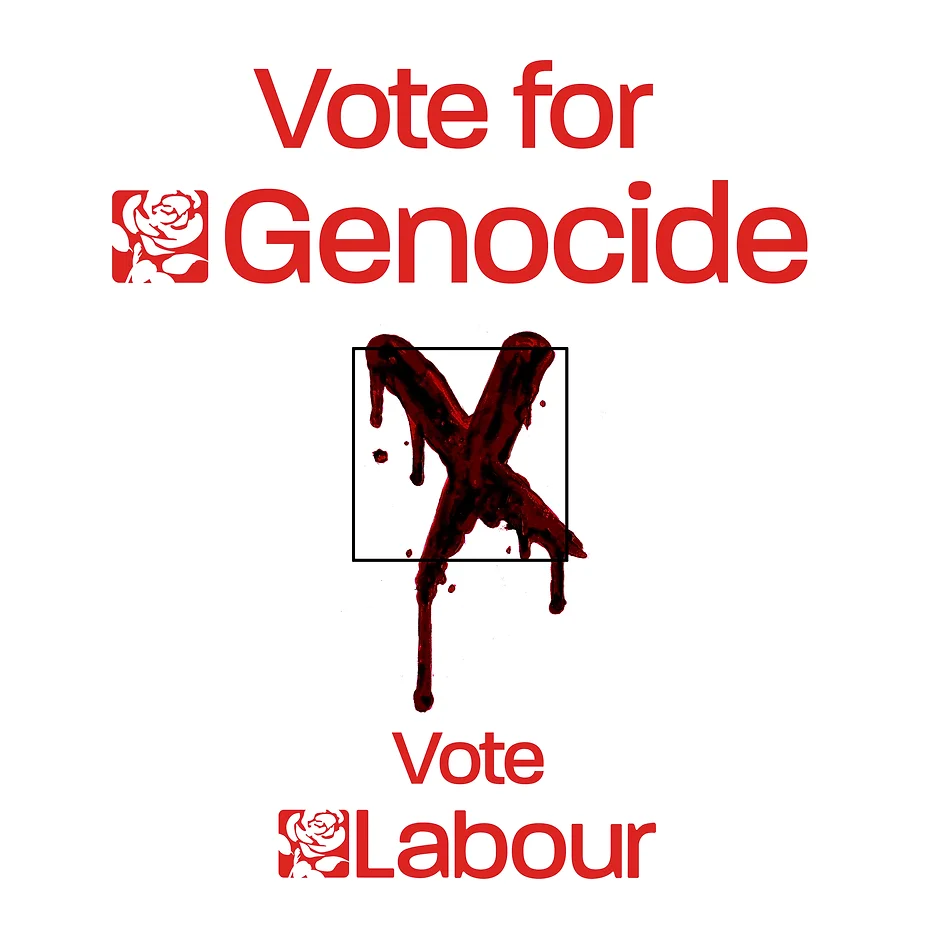
- Post author:dizzy
- Post published:11 June 2025
- Post category:crap pretend Labour/David Lammy/Fascism/Labour Party/Zionism
- Post comments:0 Comments
Spending review: Rachel Reeves is about to make a £600 billion gamble on growth

Steve Schifferes, City St George’s, University of London
UK chancellor Rachel Reeves faces her biggest test with the government’s departmental spending plans for the three years from next April until the general election. With nearly £600 billion a year to spend, her decisions will impact on every aspect of public life and shape the political weather for years to come.
She believes the key to reviving Labour’s fortunes as its poll ratings tumble lies in boosting economic growth.
So the government has promised that its policies will increase the UK’s anaemic growth rate and enhance productivity. Reeves is looking to capital spending on big projects that will boost the economy, such as the £14.2 billion government investment in a new nuclear power plant at Sizewell in Suffolk.
Last year she revised the government’s fiscal rules to give herself the space to borrow an extra £113 billion over three years to transform Britain’s ageing infrastructure. She has already made it clear that she wants to boost transport investment outside of London, as well as invest in research and development, including green energy.
But there are challenges ahead. In the first place, the effect of infrastructure investment takes a long time to feed through. This is partly because of the lag between planning the projects and when they come on-stream.
It will take time before the full effect will be felt on productivity, which has been growing more slowly than expected. The Office for Budget Responsibility (OBR) suggested in March that the latest government plans for planning reform might increase productivity by just 0.2% in the longer term.
There are also some real trade-offs as to where the increased capital investment will go – and which sectors will benefit most. The chancellor has emphasised her commitment to putting more money into projects outside London and south-east England that have had less public investment in the past.
But London and the south-east is where productivity is highest and where further investment might have a bigger effect on economic growth.
It appears that there may be less funding for social housing, which may threaten the government’s ambitious target of building 1.5 million homes over the parliament. There may also be less available to repair schools and hospitals.
And the plans to boost defence spending on expensive military equipment – such as frigates and fighter planes – will also count as capital spending. As such, it could further reduce the amount available for infrastructure investment.
The departmental trade-offs
Despite the relative abundance of cash for infrastructure, the tighter fiscal rules on day-to-day spending mean that many departments are facing a squeeze on their budgets. The government plans to allow total day-to-day departmental spending on average to rise by just 1.2% per year in real terms during the next three years. This probably spells a real-terms cut for some “unprotected” departments.
This is because the money will not be distributed equally. The Department of Health and Social Care gets 40% of all departmental spending and is likely to be the big winner.
It has already received a big increase in the last spending round, with an 11% increase in capital spending is likely to get even more to realise an ambitious ten-year plan for improving services in the NHS in England.
If health spending were to go up by 2.5% (well under its historic average), this could mean very little increase for many other government departments. And if it is increased by 3.5% this will imply real-terms cuts for other areas.
The situation is made more difficult by the government’s decision to prioritise two other areas: defence and schools. For defence, it is committed to raising spending to 2.5% by 2027 and to 3% in the next parliament.
And for education, Reeves has pledged an extra £4.5 billion per year for more teachers, childcare places and free school meals. The decisions have a strong political dimension, as health and education tend to be the most popular spending priorities among the public.

The spending review, however, only covers half of total government spending. The more unpredictable part is annually managed expenditure, mainly on benefits and interest payments on government debt.
The Treasury sets an overall target (known as the spending envelope) on how much will be spent in these areas. But it now faces a crunch point over the unpopular decisions to cut disability benefits and keep the two-child benefit cap.
Reeves’ partial U-turn on the winter fuel payment, which will now be paid to 9 million pensioners, will cost an additional £1.25 billion a year but may have been a political necessity.
But a full U-turn on the two other issues will be much more expensive. Taken together, such a change might breach the fiscal rules, which give only £10 billion of “headroom” in a total government budget of more than £1.2 trillion. So while there will be some rowing back, the finances suggest any more major U-turns are unlikely.
To make matters worse, these spending plans are based on an economic forecast made by the OBR in March. This did not include the effect of US president Donald Trump’s tariff plans. Since then, both the IMF and the OECD downgraded their UK growth forecasts for both 2025 and 2026, and despite a recent small upgrade by the IMF, growth is still significantly lower than previously expected.
Even though Britain seems to have secured a deal with the US, the effect of tariffs on global growth will still damage the UK’s prospects as a trading nation.
This will make it harder for the government to meet its fiscal targets in the autumn budget while sticking to the departmental spending plans. The chancellor will then have three options. She can look for more cuts in benefits spending.
She could try to find other sources of tax revenue, for example by tweaking the rules on taxing pensions or extending the freeze on upgrading tax bands. Or, more radically, she could modify the fiscal rules to give herself more flexibility – for example by having only one economic forecast a year, as the IMF has suggested.
Ultimately Labour’s electoral prospects will depend on whether it has succeeded in boosting living standards. While the productivity drive could work, the UK economy remains at the mercy of wider global economic forces.
Steve Schifferes, Honorary Research Fellow, City Political Economy Research Centre, City St George’s, University of London
This article is republished from The Conversation under a Creative Commons license. Read the original article.
At Least 14 More Palestinians Killed at Aid Points as Israel Detains Humanitarian Volunteers
Original article by Julia Conley republished from Common Dreams under Creative Commons (CC BY-NC-ND 3.0).

“The almost daily massacres of starving Palestinian families desperately seeking food denied to them by the Israeli-imposed campaign of intentional starvation are crimes against humanity,” said one advocate.
As activists who had been headed for Gaza with humanitarian aid remained in Israeli custody Monday, Palestinian rights advocates condemned reports that the death toll at aid distribution points set up by a private Israel-backed company continued to grow.
The Associated Pressreported that “Israeli forces and allied local gunmen” were behind gunfire that killed at least 14 Palestinians who were taken to local hospitals on Monday, and roughly 100 people were injured.
The people killed were the latest among a total of at least 127 Palestinians who have been killed as they’ve approached distribution points set up by the Gaza Humanitarian Foundation, a private group staffed by U.S. defense contractors and supported by the Israeli and U.S. governments—but rejected by the United Nations and groups that have long provided aid in Gaza, who say the GHF is not a neutral party and is endangering Palestinians by forcing them to walk several miles through their war-torn enclave to retrieve food boxes weighing 44 pounds each.
At Al Jazeera, Hind Khoudary reported that as Palestinians have approached the aid points in recent days, “the Israeli army starts opening fire, Israeli quadcopters hover above their heads, and Israeli tanks proceed to bear down on the aid seekers.”
Among the people killed at a distribution point in Rafah near al-Mawasi was “a woman named Hanan who was solely responsible for feeding her kids and family,” reported Khoudary.
“These distribution sites are in the middle of nowhere, where Israeli bulldozers destroyed residential homes,” Khoudary added. “It’s totally chaotic. Israeli forces have been firing live ammunition as well as tear gas canisters to disperse starving Palestinians.”
The Israel Defense Forces (IDF) have previously admitted to opening fire on Palestinians at GHF sites, but have claimed “shots were directed near individual suspects who advanced toward the troops.”
The APreported that men from a local militia called the Popular Forces, led by Yasser Abu Shabab, opened fire at a distribution site in Khan Younis after the men tried to organize the crowd and people “pushed forward.”
Israeli Prime Minister Benjamin Netanyahu said last week that his government has armed Abu Shabab’s militia as part of an effort to undermine Hamas. Abu Shabab denied the claim. Aid workers have said the Popular Forces have long looted trucks carrying humanitarian relief—something Israel has repeatedly accused Hamas of doing as it has entirely cut off aid to Gaza since March.
An eyewitness named Hussein Shamimi told the AP that his 14-year-old cousin was killed in the attack on Monday.
“There was an ambush,” said Shamimi, “the Israelis from one side and Abu Shabab from another.”
At least four people were shot in the neck, another witness told the outlet.
Nihad Awad, national executive director of the Council on American Islamic Relations in the U.S., called for an “immediate end” to the U.S. government’s “complicity” in Israel’s assault on Gaza, which has killed more than 54,000 Palestinians since October 2023, and in the attacks on people at GHF aid points.
“The almost daily massacres of starving Palestinian families desperately seeking food denied to them by the Israeli-imposed campaign of intentional starvation are crimes against humanity carried out with the complicity of our own government,” said Awad. “Food and other humanitarian supplies must enter Gaza unimpeded, without Israel being allowed to use starvation as a weapon of war and a tool for ethnic cleansing.”
Also in Khan Younis on Monday, a Palestinian child became the latest to die of malnutrition at the Children’s and Maternity Hospital.
At least 58 children in Gaza have died of malnutrition since Israel began its total blockade of aid in early March.
Meanwhile, organizers with the Freedom Flotilla Coalition reported Monday they had been unable to contact 12 international activists and volunteers who were aboard the Madleen, bound for Gaza, for 19 hours.
The activists, including Swedish climate leader Greta Thunberg, had been sailing to Gaza to deliver humanitarian aid.
“These citizens were sailing peacefully under international law, in international waters, and Israel went and forcibly abducted them,” Huwaida Arraf toldAl Jazeera. “This was done, as Israel puts it, to ‘maintain a maritime closure of Gaza’—which it has no authority to do.”
Original article by Julia Conley republished from Common Dreams under Creative Commons (CC BY-NC-ND 3.0).


French MPs denounce Israel’s ‘illegal’ interception of Gaza-bound aid ship
This work by Middle East Monitor is licensed under a Creative Commons Attribution-NonCommercial-ShareAlike 4.0 International License.

French lawmakers today demanded the release of detained activists following Israel’s interception of the aid ship Madleen in international waters as it was making its way to break the siege on Gaza.
Leftist France Unbowed (LFI) said in a statement that detaining activists on the aid ship is a “clear violation of international law.”
The British-flagged ship Madleen aimed to break a crippling blockade imposed by Israel on Gaza, where nearly 55,000 Palestinians have been killed as a result of the occupation state’s brutal onslaught since October 2023.
The ship carrying aid, including food and baby formula, was intercepted and boarded by Israeli forces in international waters in the early hours of today before reaching the Gaza shore. It was later towed to Ashdod Port in Israel. The LFI noted that this is a violation of international maritime law.
READ: Israel’s interception of Gaza aid ship ‘violation of international law’: Amnesty
They also called on the international community to strongly condemn the interception and called on Israel to immediately and unconditionally release the activists.
Meanwhile, the Greens (EELV) slammed Israel’s actions, saying they violate international law.
The party emphasised that reactions to the detention of activists must be turned into global mobilisation, and urged the French government, the EU, and the UN to take action.
The Freedom Flotilla Coalition sent the 18-metre Madleen from Catania, Sicily, Italy, to break the blockade in Gaza and deliver aid.
A total of 12 people are on board, including 11 activists and one journalist.
Among them are Swedish climate activist Greta Thunberg, French-Palestinian Member of the European Parliament Rima Hassan, Yasemin Acar from Germany, Baptiste Andre, Pascal Maurieras, Yanis Mhamdi and Reva Viard from France, Thiago Avila from Brazil, Suayb Ordu from Turkiye, Sergio Toribio from Spain, Marco van Rennes from the Netherlands and Omar Faiad, a journalist with Al Jazeera Mubasher, also from France.
The ship is carrying urgently needed supplies for the people of Gaza, including baby formula, flour, rice, nappies, women’s sanitary products, water desalination kits, medical supplies, crutches, and children’s prosthetics, according to its organisers.
READ: Spain summons top Israeli envoy over Gaza flotilla raid


This work by Middle East Monitor is licensed under a Creative Commons Attribution-NonCommercial-ShareAlike 4.0 International License.
Delegates from 32 nations march to Gaza, call for end to blockade and genocide
This work by Middle East Monitor is licensed under a Creative Commons Attribution-NonCommercial-ShareAlike 4.0 International License.

An international solidarity march set off towards the Gaza Strip yesterday, aiming to break the ongoing blockade and demand an end to what participants describe as the genocide being committed by Israel since 7 October 2023.
Thousands of supporters from 32 countries are taking part in the march, with plans to reach Gaza’s border through the Rafah crossing with Egypt. Their goals include delivering humanitarian aid and expressing support for the Palestinian people.
Organisers said the participating convoys are expected to gather in Cairo on Thursday, before heading to the city of Arish in north-eastern Egypt. From there, participants will continue on foot towards the Rafah border crossing, where protest tents are planned to be set up.
The main organisers, the “Global March to Gaza”, said it has representatives in most European, North and South American countries, as well as in several Arab and Asian nations. This, it said, reflects growing international momentum in support of the Palestinian cause.
READ: Spain summons top Israeli envoy over Gaza flotilla raid
Leading the march is Algeria’s “Caravan of Steadfastness,” which departed from the capital Algiers yesterday towards Tunisia. From there, it will join the Tunisian convoy and continue through Libya to Egypt, with the aim of eventually reaching Gaza.
“The Caravan of Steadfastness set off on Sunday towards Tunisia. It will join the Tunisian convoy, travel through Libya to Egypt, and from there to Gaza via Rafah,” said Sheikh Yahya Sari, head of the Algerian Initiative to Support Palestine and Aid Gaza, in a statement.
This work by Middle East Monitor is licensed under a Creative Commons Attribution-NonCommercial-ShareAlike 4.0 International License.