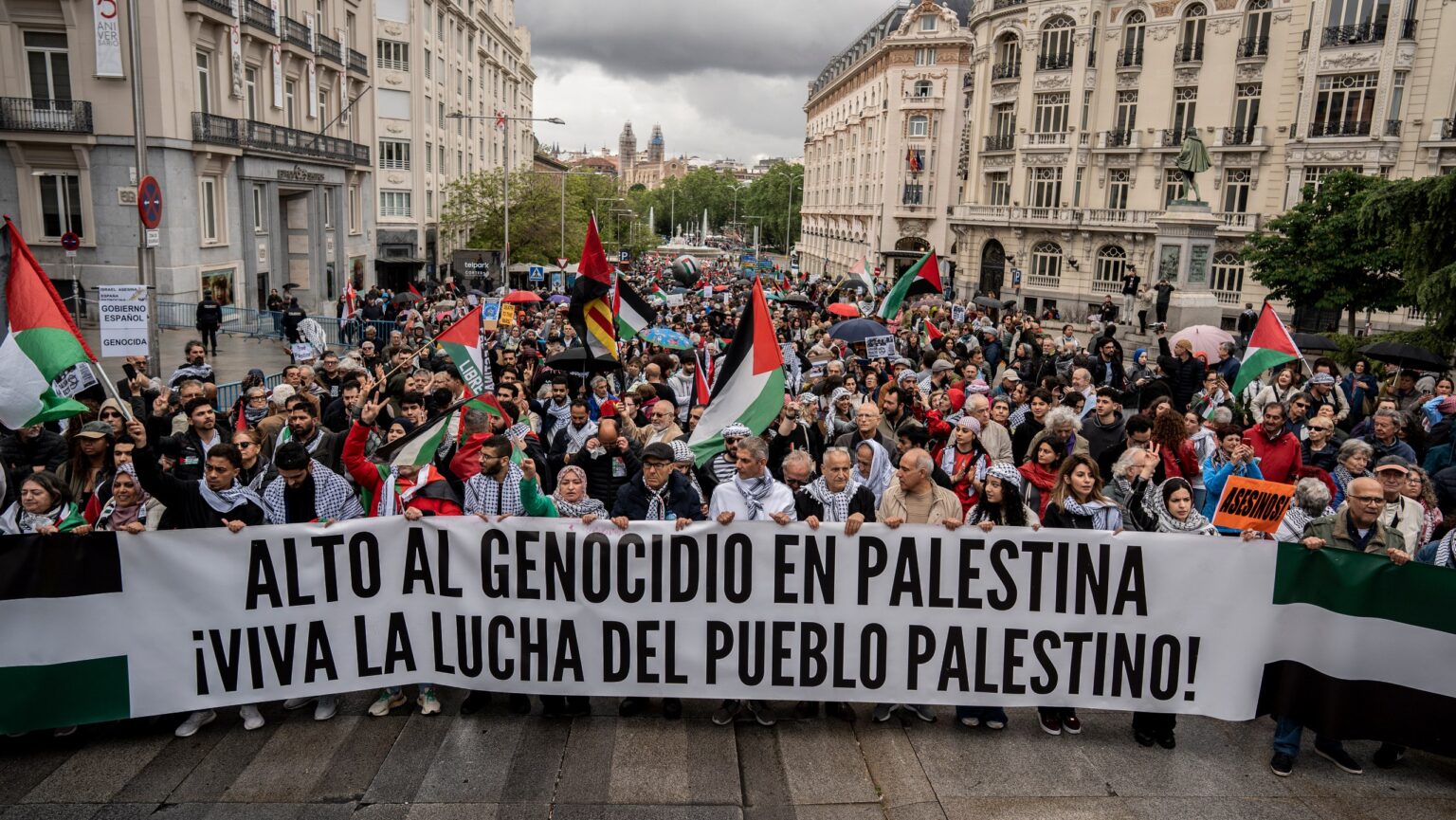
Palestine solidarity rally in Spain, May 2025. Source: Communist Party of Spain/X
Following Parliament’s motion for an arms embargo on Israel, activists are pressuring the Sánchez government to turn words into action on Gaza genocide
On Tuesday, May 20, a majority of representatives in the Spanish Parliament voted in favor of a motion calling for an arms embargo on Israel. Spearheaded by the progressive blocs Podemos, Sumar, and the Republican Left of Catalonia, everyone but the right-wing supported the motion – including Prime Minister Pedro Sánchez’s Socialist Workers’ Party (PSOE).
While the news undoubtedly marks an important achievement for the months-long grassroots Palestine solidarity mobilizations in Europe and beyond, many activists caution against interpreting it as a decisive sign of Spain’s concrete commitment to halting the genocide in Gaza. “The Spanish government has the power to introduce a full arms embargo on Israel as early as tomorrow via Royal Decree,” warned the End Arms Trade with Israel campaign, which has rallied behind this demand since 2024 with the backing of over 600 organizations. “Why hasn’t it acted? What’s holding it back?”
Business as usual beneath the surface?
Since October 7, 2023, Sánchez and his cabinet have made several statements clearly more critical of Israel than those of most other European governments. In contrast to declarations by high-level European officials like Ursula von der Leyen and Kaja Kallas, who continue to invoke “Israel’s right to self-defense” even as it starves tens of thousands of children and obliterates healthcare infrastructure, Spain’s rhetoric has, at times, sounded outright progressive. The Prime Minister recently suggested expelling Israel from the Eurovision contest – a topic surprisingly dear to many Europeans – and his administration claimed to have ceased trading in military goods with the occupation power in late 2023. However, this claim has been refuted by multiple reports and port calls by ships transporting military or dual-use goods to Israel.
Further doubt has been cast on the government’s narrative by the Ministry of Defense, whose representatives recently said that implementing a full embargo would be “difficult in practice” due to the importance of Israeli technology in cybersecurity and artificial intelligence. These sources have essentially admitted that they view the arms embargo debate as more politically symbolic than practically feasible.
Contrary to the government’s progressive image and declarations, “Spain has never imported more [from Israel] than after October 7, 2023,” the Delàs Center for Peace Studies warned in a recent report. “Since October 7, Israeli defense and security companies, their subsidiaries, or third-party companies linked to Israeli products have been awarded at least 46 contracts by Spanish institutions, with a total value more than €1.044 million.”
While Palestine solidarity groups identified some of these contracts and pushed against them, the scale of trade between Spain and Israel throughout the genocide has remained significant, according to updates from Delàs Center. Even now, as the parliamentary debate on introducing an arms embargo moves forward, warnings continue about ships carrying ammunition and other potentially military-use equipment bound for Israel via Spanish ports. One such vessel, the Danica Violet, is expected to pass through Cartagena in the coming days.
“Contracts with the Israeli arms industry remain in force and have yet to be canceled. Weapons stained with blood continue to pass through our ports and airports. We continue to finance and facilitate genocide, occupation, and apartheid in Palestine,” wrote the End Arms Trade with Israel campaign.
Palestine solidarity movement to push for more than tokenism
The campaign and its supporters have reiterated calls for the government to act urgently and decisively by imposing a full arms embargo immediately. Similar demands have been voiced in neighboring countries, where political leaders have recently signaled minor shifts in their approach to Israel. Following announcements by British, Canadian, and French leaders that they would consider introducing sanctions on Israel if it failed to halt illegal settlement expansion in the West Bank, Palestine solidarity groups warned that such measures would be nowhere near sufficient. “While these statements may reflect a symbolic political shift, they are far too late and fall dangerously short of meeting these states’ legal obligations under international law, including the Genocide Convention and the Apartheid Convention,” said the Palestinian BDS National Committee (BNC).
“We will continue to organize and build people power to transform tokenism and empty threats into tangible and effective accountability measures, starting with a two-way military embargo and full-scale trade and diplomatic sanctions,” the BNC stated.
UK Labour Party government ministers Keir Starmer, Angela Rayner and Rachel Reeves explain that they are partners complicit in Israel’s Gaza genocide. The UK has provided Israel with arms, military and air force support. They explain that they don’t do gas chambers but do do forced marches, starvation, destroy hospitals, mass-murders of journalists and healthcare workers.Genocide denier and Current UK Prime Minister Keir Starmer is quoted that he supports Zionism without qualification. He also confirms that UK air force support has been essential in Israel’s mass-murdering genocide. Includes URLs https://www.declassifieduk.org/keir-starmers-100-spy-flights-over-gaza-in-support-of-israel/ and https://youtu.be/O74hZCKKdpA
(Left to right) members of Kneecap, Liam Og O Hannaigh (Mo Chara), JJ O’Dochartaigh (DJ Provai) and Naoise O Caireallain (Moglai Bap) attending the IFTA Awards Ceremony at the Dublin Royal Convention Centre, February 14, 2025
IRISH rap trio Kneecap hit out today over the charging in Britain of one of the group’s members with a terrorism offence, branding it “political policing” and a “carnival of distraction.”
Liam Og O hAnnaidh, known by his stage name Mo Chara, was charged under anti-terror laws for allegedly displaying a Hezbollah flag during a gig at the O2 Forum in Kentish Town, north London, on November 21.
The 27-year-old is due to appear at Westminster magistrates’ court on June 18.
In a statement, the group said that “14,000 babies are about to die of starvation in Gaza, with food sent by the world sitting on the other side of a wall, and once again the British Establishment is focused on us.
“We deny this ‘offence’ and will vehemently defend ourselves; this is political policing, this is a carnival of distraction.
“We are not the story, genocide is. As they profit from genocide, they use an ‘anti-terror law’ against us for displaying a flag thrown on stage.”
Genocide denier and Current UK Prime Minister Keir Starmer is quoted that he supports Zionism without qualification. He also confirms that UK air force support has been essential in Israel’s mass-murdering genocide. Includes URLs https://www.declassifieduk.org/keir-starmers-100-spy-flights-over-gaza-in-support-of-israel/ and https://youtu.be/O74hZCKKdpAUK Labour Party government ministers Keir Starmer, Angela Rayner and Rachel Reeves explain that they are partners complicit in Israel’s Gaza genocide. The UK has provided Israel with arms, military and air force support. They explain that they don’t do gas chambers but do do forced marches, starvation, destroy hospitals, mass-murders of journalists and healthcare workers.
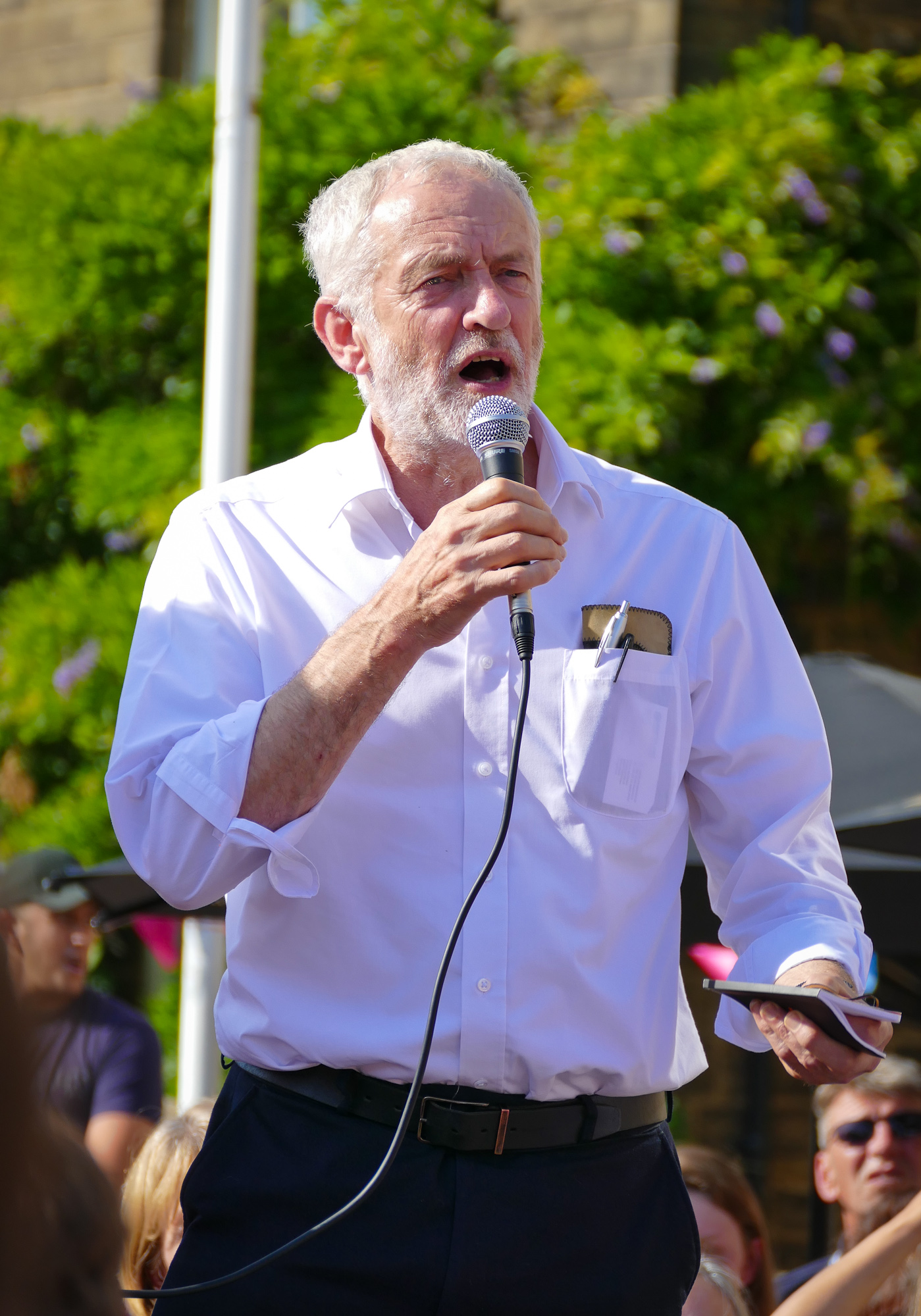
JEREMY Corbyn will table legislation for a Chilcot-style public inquiry into the UK’s role in Israel’s bombardment of Gaza.
The Independent MP and former Labour leader will present the Gaza (Independent Public Inquiry) Bill on Wednesday, June 4, having secured a 10-minute-rule bill.
…
In his letter to Starmer, Corbyn pointed to the Chilcot inquiry finding serious failings within the UK Government.
It said: “History is repeating itself. Today, the death toll in Gaza has exceeded 61,000. Two Israeli officials are now wanted by the International Criminal Court (ICC) for war crimes and crimes against humanity.
“Britain has played a highly influential role in Israel’s military operations, including the sale of weapons, the supply of intelligence and the use of Royal Air Force (RAF) bases in Cyprus.
“Transparency and accountability are cornerstones of democracy. Therefore, we are demanding an independent, public inquiry into the UK’s involvement in Israel’s military assault in Gaza.
Genocide denier and Current UK Prime Minister Keir Starmer is quoted that he supports Zionism without qualification. He also confirms that UK air force support has been essential in Israel’s mass-murdering genocide. Includes URLs https://www.declassifieduk.org/keir-starmers-100-spy-flights-over-gaza-in-support-of-israel/ and https://youtu.be/O74hZCKKdpAUK Labour Party government ministers Keir Starmer, Angela Rayner and Rachel Reeves explain that they are partners complicit in Israel’s Gaza genocide. The UK has provided Israel with arms, military and air force support. They explain that they don’t do gas chambers but do do forced marches, starvation, destroy hospitals, mass-murders of journalists and healthcare workers.
Prime Minister Keir Starmer speaks to members of staff during a visit to Leonardo, one of the biggest suppliers of defense and security equipment to the UK MOD, on May 2, 2025, in Luton, England. Henry Nicholls – WPA Pool / Getty Images
Pro-Palestine advocates say the announcement is a publicity stunt that will do little to end the genocide.
The U.K. government said on Tuesday that it is suspending free trade talks with Israel and imposing sanctions on some settlements in the occupied West Bank over Israel’s recent escalation in Gaza — an announcement being slammed by pro-Palestine advocates as “grotesquely inadequate.”
In remarks to Parliament, Foreign Secretary David Lammy criticized Israel’s recent escalation of its assault on Gaza and its lengthy total aid blockade on the region. He said that Israel’s plan to forcibly displace all Palestinians from Gaza is “morally unjustifiable” and “wholly disproportionate.”
“History will judge them,” Lammy said, ignoring the role of the U.K. and leaders of his own party in allowing Israel’s genocide to reach this point. “Blocking aid. Expanding the war. Dismissing the concerns of your friends and partners. This is indefensible. And it must stop.”
He said that the government is levying sanctions on three individuals and four entities involved in settlement expansion in the occupied West Bank.
The announcement came after U.K. Prime Minister Keir Starmer said he was “horrified by the escalation,” following a joint statement with the French and Canadian governments threatening “concrete action” against Israel and calling for a ceasefire on Monday.
The U.K. has been in negotiations for a new free trade agreement with Israel since 2022, launched under conservative Prime Minister Boris Johnson. Lammy said the existing trade agreement between the two governments is still in effect.
The U.K. has long faced criticism from advocates for Palestinian rights for the government’s support of Israel.
The Labour government announced shortly after taking control last year that it was suspending 29 of the U.K.’s 350 arms licenses to Israel, in a departure from the conservative government. However, data analyzed by pro-Palestine groups has shown that the U.K. has exported thousands of munitions to Israel since the suspension took effect — raising questions over whether the U.K. continued supposedly suspended shipments of F-35 jet parts.
Advocates for Palestinian rights said that the government’s actions do not erase the U.K.’s deep complicity in the genocide.
“Today could be a turning point, where the government begins to undo the depths of its complicity in Israel’s genocide, by treating Israel not as an ally, but as a rogue state carrying out atrocities. Or, without further action, it will be recognised as just a last ditch attempt to salvage its reputation as a government that has enabled these crimes,” the group said.
“Suspending the trade negotiations is a positive step forward but without bolder action this will have little impact. Without suspending parts for Israeli F-35 fighter jets, the UK Government remains complicit in the deaths of thousands of civilians across Gaza,” said Halima Begum, Oxfam GB’s executive director, in a statement.
“The Foreign Secretary should now suspend all arms exports to Israel and impose a full package of sanctions on political leaders and settlers in Israel who are seeking to erase Palestine from the map,” Begum went on.
Meanwhile, following Lammy’s announcement, left-wing members of Parliament grilled Lammyto account for arms exports to Israel, which have soared under Labour, but he refused to answer.
“I just asked the Foreign Secretary why arms sales to Israel under this Labour government now exceed those under the Tories. He dismissed it as ‘clickbait,’” said MP Zarah Sultana on social media. “There’s nothing clickbait about genocide. He has Palestinian blood on his hands.”
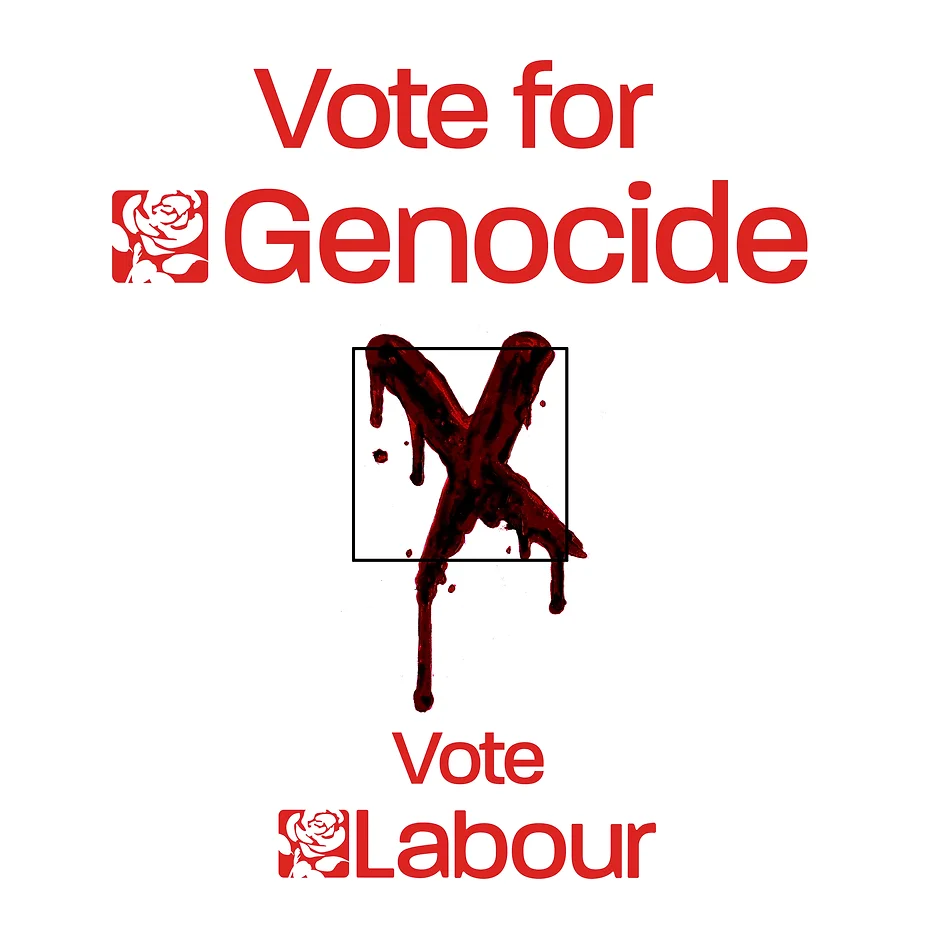
UK Labour Party government ministers Keir Starmer, Angela Rayner and Rachel Reeves explain that they are partners complicit in Israel’s Gaza genocide. The UK has provided Israel with arms, military and air force support. They explain that they don’t do gas chambers but do do forced marches, starvation, destroy hospitals, mass-murders of journalists and healthcare workers.Genocide denier and Current UK Prime Minister Keir Starmer is quoted that he supports Zionism without qualification. He also confirms that UK air force support has been essential in Israel’s mass-murdering genocide. Includes URLs https://www.declassifieduk.org/keir-starmers-100-spy-flights-over-gaza-in-support-of-israel/ and https://youtu.be/O74hZCKKdpAVote For Genocide Vote Labour.
How anti-protest legislation eroded democratic rights | Illustration by James Battershill
Conservative ministers loudly championed free speech – right up until they outlawed it. Now, we’re all at risk
Paul Raithby had been arrested before, but today was supposed to be different.
A veteran environmental activist and a member of Just Stop Oil and Extinction Rebellion (XR), Raithby had ended up in cells after climate actions such as blocking roads, tunnelling, slow marching and protesting at London’s Heathrow Airport.
But today, Raithby’s job was simple. Drive a red van loaded with cleaning products and water sprayers to Lloyd’s insurance market in central London, where his fellow activists were staging an ‘Insure Our Future’ action, part of a global campaign to ask companies to stop insuring fossil fuel projects. The activists planned to clean up after themselves to prevent the fake ‘oil’ – a mix of water, food dye and cornstarch – spilling off the tarpaulin where their ‘drowning in oil’ protest performance piece was taking place.
But officers raided the van and arrested Raithby, claiming – among other things – that an empty paint pot in the back of the van was part of a conspiracy to commit criminal damage. “The police saw the pot containing dried paint, the water sprayers, and put two and two together and made five.” Raithby said.
“I was on the rota to drive the XR van that day,” Raithby told openDemocracy. “We loaded up the van, including the water sprayers. I didn’t know what they were going to be used for, but you’d struggle to cause any criminal damage with the things. They aren’t like fire extinguishers, they are low-pressure, backpack water sprayers. We drove to the drop-off point, and the police were all over us.
“The police said the van had been seen handing out flares the day before, which was not true. Then they tried to say I was not insured to drive the van. Then they tried to say the van was not roadworthy even though it had passed its MOT the month before. So they impounded the van, and I ended up in the crown court accused of planning criminal damage.”
If it sounds ridiculous, that’s because it is. As solicitor Raj Chada, a partner at Hodge, Jones and Allen who has represented protesters including Raithby in recent years, said: “Nothing illustrates the absurdity of prosecution decisions when it comes to protest cases than the decision to prosecute Paul Raithby for having a canister full of water”.
But stringent new protest laws introduced by the Conservatives, first under the Police, Crime, Courts and Sentencing Act 2022 and then the Public Order Act 2023, mean this is the new, surreal reality for anyone who chooses to protest or gets caught up in a protest in England and Wales. A whole raft of legislation has made it harder to take part in protest, intensified the punishment for anyone guilty of protest offences, and clogged up courts with cases such as Raithby’s, where there is little to no chance of conviction.
In my younger days, I was a feminist activist. I remember jumping up onto a bench, loudhailer in hand, shouting statistics about men’s violence against women and girls to a bemused crowd. Reading about the new legislation made me wonder whether the actions that I used to do unthinkingly would now be unthinkable. I wanted to find out what impact the new protest laws have on our freedom to protest and therefore on our democratic rights. In essence, is the old adage, ‘if you do nothing wrong, you have nothing to fear’, still true today?
That’s why I have spent the past six months investigating the extent of the new anti-protest laws and their impact on democratic freedoms. I sent dozens of Freedom of Information requests to police forces, universities and government departments; interviewed dozens more activists, lawyers and former police officers; attended protests, and scoured through parliamentary debates, all to understand how a government that proclaimed to be a defender of free speech instead created the greatest threat to our civil liberties for generations.
“We used to have protests where some people would be the ‘arrestables’,” said Kristin, an XR activist who asked openDemocracy not to publish her surname. “They would be the ones who would volunteer to do the part of the action that could lead to arrest.”
She took a deep sigh.
“Now, we are all arrestables.”
And “all” means us all – not just climate protesters willing to glue themselves to tarmac, or throw washable powder on Stonehenge.
“What authoritarian governments and regimes do is take a wedge issue and use it as the thin end of the wedge,” Labour MP Clive Lewis told openDemocracy. “They pick particular issues which they feel a section of the public may be exasperated about, or have concern about, or there’s been a media storm about, and they then use that to prise open your rights, and to change the law.
“They can say – you have nothing to worry about. It’s these other people we’re after. The climate protesters, Gaza protests, Black Lives Matter; these are the people we’re going after. You don’t have to worry about your project. But it doesn’t work like that, because once the law is there, the law can then expand to target anyone, depending on any new government front that opens up.
“Liberty is something to be protected, and it has to be universal, otherwise next it will be your liberties that will be attacked and undermined,” he said.
New laws, new powers
In 2019, parts of central London were temporarily brought to a halt as a group of climate protesters gathered on Tower Bridge, demanding a global rebellion against the climate crisis. The protest was joyful, with one woman who attended recalling “a real warm and feminine energy”.
Similar rebellions, often with theatrical and artistic elements, spread to cities across the country, in London, Brighton, Bristol, Leeds, Glasgow and elsewhere. Though police officers were often present, the atmosphere was quite jovial, according to various activists who attended. “The police have the same worries about the climate we have,” said Raithby. “We used to have chants reaching out to the police and saying we are doing this for their children too.”
The following year, another wave of protests hit the UK’s streets – this time in response to the murder of George Floyd by a police officer in the US. Black Lives Matter marches and vigils took over cities, and in Bristol led to the pulling down of a controversial statue of the notorious enslaver Edward Colston.
The Conservative government had a dilemma. Its MPs had built up a reputation as defenders of free speech against what they described as woke, “cancel culture”-driven snowflakes intent on shutting down debate. In 2020, the Conservatives had condemned a failed attempt by a Labour MP to introduce buffer zones around abortion clinics – spaces where anti-abortion protests are banned – as an affront to free speech and protest. But they also wanted to stop the climate and BLM protests that challenged their policy platform, and which they perceived as threatening both the economy and their rule.
The answer was a two-pronged attack. The first was a wholesale culture war against ‘social justice’, which presented BLM, climate, feminist and migrant rights activists as a fifth column determined to bring the country to a halt. The second was passing new and draconian legislation to tackle this so-called left-wing ‘threat’.
People arrested for protesting outside court say Suella Braverman’s latest clampdown won’t deter them
On 9 March 2021, Braverman’s predecessor as home secretary, Priti Patel, introduced the Police, Crimes, Sentencing and Courts (PCSC) Bill, naming both XR and BLM protests as its targets. The act became law in early 2022, creating a new definition of “serious disruption” to give the police licence to ban actions that prevent or disrupt people’s daily activities, including journeys and goods deliveries, “in a way that is more than minor”.
The legislation also got rid of the common law offence of public nuisance, creating the more serious and more broad offence of “intentionally or recklessly causing public nuisance”. The new law criminalised an action that “creates a risk of or causes serious harm to the public or a section of the public, or prevents the public or a section of the public from exercising their rights.”
“Take a protest action such as obstructing a highway, maybe one of the London bridges,” said Nic Harries, a retired solicitor who works closely with XR. “Under the old laws, a conviction for such obstruction would incur nothing more than a fine. Now, under Section 78 of the PCSC, such protest activity could well be considered to be a public nuisance, which carries a maximum ten-year prison sentence.”
The changes in the law have had a “chilling effect”, Harries added. “There will always be a hardcore of activists who will be up for getting arrested no matter what. But there are far more people who are anxious about not being arrested and not going through the court process and ending up with a conviction.
“It’s very hard for people who want to go and participate as there can never be an assurance that you’ll never be arrested, because now you just don’t know.”
I asked the 43 police forces across England and Wales how they were implementing the new laws, requesting data on arrests made for the offences of “intentionally or recklessly causing a public nuisance” and “wilful obstruction of a highway”.
Unsurprisingly, the results were variable, with some forces policing more protests than others.
Between summer 2022 and 30 November 2024, 30 forces made 1,151 arrests for public nuisance. Seven forces made no arrests, while the remaining six refused to answer my request. In the same time period, 28 forces made 1,234 arrests for obstructing the highway. Nine forces made no arrests for that offence and six refused the request on grounds that it would cost too much in staff’s time to compile the data.
London’s Metropolitan Police made the largest number of arrests for both offences: 174 for public nuisance and 955 for highway obstruction.
I also asked police forces how often they have used powers introduced in Section 75 of the act that allow police to prevent protests causing serious disruption, such as noise or property damage. Five forces had used the powers a total of 39 times, with Wiltshire police having used the powers the most frequently: 26 times.
Wiltshire was also the only force in England and Wales to confirm it had used new powers to restrict one-person protests that cause serious disruption, having done so on 10 occasions. Five forces refused to answer the request, and the remaining 33 had not used the power.
Katie Burrell is an XR activist who became one of the first protesters caught up in the new legislation, when she took part in a 2023 action that interrupted a women’s golf tournament sponsored by the AIG insurance firm – part of the group’s campaign to encourage insurance firms to divest from fossil fuel projects.
“We thought if we were arrested it would be for aggravated trespass,” said Burrell, a 51-year-old who spent her career working in communications. “Then they told us it was for public nuisance. At first, I thought that’s not so bad, that sounds better than trespass. Until I looked it up and saw it meant a maximum of ten years in prison.”
The case was set for June 2026, three years after the action took place, with Burrell put on bail. “So you can imagine having that hanging over you for all that time,” Burrell said. The charges against her were eventually dropped due to a lack of evidence.
Burrell does not believe the public is on board with the crackdown on protest. “I took part in a road sit-in, in Clapham [in south London], in 2021 so before the new laws,” she said. “We chose a place where you could drive around us if needed. And I remember, this woman came out and I thought she might be annoyed but she actually brought me a glass of water and said that what we were doing was brilliant. A dad was watching us and talking to his children about the suffragettes.”
Then a police car arrived. Two officers got out and physically dragged Burrell off the road as members of the public looked on.
“It really upset the spectators, to see the police dragging a woman in this way.” Burrell said. “It’s just a form of oppression. It’s another form of oppression.”
Katie Burrell at an XR protest in London | Crispin Hughes/supplied by Katie Burrell/XR
The PCSC also introduced new penalties to “conspire” to cause a public nuisance, an offence that hung over Just Stop Oil activist James Skeet for two years before he and five of his fellow activists were acquitted in Southwark Crown Court in March 2025, with two of his colleagues found guilty. The group had been arrested for activities relating to a planned blockade of the M25, the motorway that encircles most of Greater London and is one of the busiest roads in the UK.
“I was staying in a house that got hit by a SWAT team,” Skeet told openDemocracy, recalling the night of his arrest in 2022. “The door got kicked in, and I got pinned to the sofa, at 1am.”
In the years between his arrest and court date, Skeet remained confident that the charges would not stick. “There’s no evidence of what they are alleging, and I know that because no evidence exists. But obviously it’s still a bit scary,” he said when we spoke in the run-up to his trial.
At the time, Skeet was on bail. “My bail conditions mean I can’t take part in any protest,” he explained. “So my right to protest has basically been curtailed since 2022.” He also expressed concerns that he and Just Stop Oil had been placed under a “pervasive surveillance campaign” while he awaited court. As the new anti-protest laws are categorised as far more serious offences than their predecessors, they allow for greater police surveillance. ‘It’s sort of terrifying,” he said.
Skeet owns his house and told me he felt “under duress” to plead guilty or to go to court without legal representation in order to protect his financial assets – pointing out that this “is counter to the right to a fair trial in the convention of human rights”.
As with everyone I spoke to, Skeet’s fear was real but his main concerns were not for his own safety, but the safety of the planet and the ways in which these new laws deny people the chance to take to the streets and fight for their future.
“It’s all pretty stressful and I haven’t been sleeping that well,” he said. “The way that I’ve tried to make peace with it is, if my experience of the climate crisis is some time in prison or a threat to my property, I think that that still leaves me in quite a privileged position.
“Because look, 30 million people got displaced in Pakistan in 2022 because of flooding, mothers in Valencia are having to drag their babies from the mud due to floods, there are floods in Manchester where people have lost everything. I can still count myself lucky.”
I couldn’t help but admire his statement of compassion for those suffering around the world. I am not sure I, facing a spell in prison for protest, would be quite so caring or philosophical.
Despite the crackdown that led to Burrell and Skeet’s arrests, the PCSC failed to stop protests. At least seven major climate demonstrations – including on the M25 – took place in the first four months after the law was passed in January 2022.
Faced with this reality, the Conservative government felt the legislation had not gone far enough. Rambunctious debates in the House of Commons and the Lords had defeated multiple powers that it wanted to introduce in the law, such as the ability to ban individuals from a protest and a ban on locking on (when protesters attach themselves to another person, land or an object in order to make it more difficult to remove them).
Ministers were not happy with the act they had ended up with. So they tried again.
Back to the benches
In May 2022, just months after the PCSC came into law, Patel launched her second attempt to crackdown on protest: the Public Order Act (POA).
“The Public Order Act is crazy,” Skeet said. “You basically had laws in the PCSC rejected by Parliament and the home secretary comes back and tries to crowbar them back in.”
Where the PCSC had failed, the POA was determined to achieve. It introduced a new definition of “serious disruption”, expanded the list of “key infrastructure” to make it a crime to disrupt ‘B’ roads (secondary, non-motorway roads), and forced through previously defeated offences such as locking on or being equipped to lock on, such as carrying a bike lock or ties.
It also reintroduced Serious Disruption Prevention Orders, which allow police to pre-emptively stop someone from taking part in a protest. An FOI request I submitted revealed these powers had not yet been used by the 40 forces that responded to my request, nor the transport and military police.
The effort to bring previously rejected laws back from the dead caused unrest in the House of Lords. During a debate in the upper chamber in November 2022, Green Party peer Jenny Jones remarked: “This is actually a zombie bill that the government have dragged out of its grave because they do not like opposition at all.”
Labour peers Peter Hain, Vernon Coaker and Shami Chakrabarti also expressed frustration over the POA, warning that it would criminalise a vast, law-abiding majority. But the law even troubled traditional antagonists of “woke” culture, such as Claire Fox, a crossbench peer who was appointed to the Lords by Tory prime minister Boris Johnson.
“When I explained to some people, including two Conservative councillors, how this bill could be used against the protests against low-traffic neighbourhoods [a climate initiative that involves closing some roads], they said, ‘Don’t be ridiculous. This bill is about stopping Extinction Rebellion,’” Fox told the House of Lords.
She added: “The government are […] shooting themselves in the foot and confusing members of the public, who think that this will be directed only at one type of protester. It will not.”
But this wasn’t a mistake, it’s what the government was counting on. By focusing relentlessly on how the new laws would target unpopular protests, such as Just Stop Oil blocking the M25, it created a public enemy of climate activists, ‘social justice warriors’ and ‘activist’ lawyers. This was the plan when then-home secretary Suella Braverman branded protesters the “tofu-eating-wokerati”, and when her boss prime minister Liz Truss called them the “anti-growth coalition”. The government turned protest into a culture war, an us vs them fight. The woke snowflakes vs the strongmen trying to protect the public from disruption.
Only, that’s not how laws work. These are sweeping powers that have taken away all of our civil liberties, not just the protest rights of people we don’t like. Politicians and commentators who supported the anti-protest legislation have since criticised its use to convict anti-abortion protesters for demonstrating in the ‘buffer zones’ that were introduced around reproductive health clinics in 2023.
Lewis, the Labour MP, is concerned that the government’s focus on climate protests is helping to normalise opposition to tackling the climate crisis. “It’s made the ground fertile for far-right arguments against net zero,” he said. “We’ve shut down a legitimate area where those peaceful protests were keeping the climate crisis in the public eye and keeping pressure on the government. That’s been taken out of the picture, in effect, and that’s had a chilling effect on the debate more generally.”
Despite the objections by peers from all parties, the Public Order Act 2023 was passed on 3 May 2023.
Three days later, at King Charles’ coronation, republicans felt the full force of the new powers. Sixty-four people were arrested in London, including one royalist who was falsely identified as a Just Stop Oil protester and detained for 13 hours. The Met Police later expressed “regret” that its officers had arrested six people from anti-monarchy campaign group Republic, releasing them without charge.
As with the PCSC, I submitted Freedom of Information requests to police forces in England and Wales to see how often the new anti-protest powers have been used.
Once again, it was a variable picture. The majority of arrests made under the POA between the law being passed in May 2023 and November 2024 when I submitted my FOI requests, were for interfering with the operation of key infrastructure, such as roads: 36 of the 43 forces had made 786 arrests, of which 729 were by the Met.
Thirty-five forces said they had made a total of 87 arrests for locking on, with seven forces having made a combined 43 arrests for being equipped to lock on. There was one arrest, in Northamptonshire, for obstruction of major transport works. The majority of those arrested, where data was recorded, were white British individuals.
There are real concerns, however, about the potential racialised impact of the new laws. The POA gave police new powers to stop and search without suspicion if an officer “reasonably believes” a protest offence may be committed. Crossbench peer David Pannick told the House of Lords that these powers risked disproportionately impacting “Black people, in particular, many of whom feel that those in Parliament do not represent them, and for whom peaceful protest is even more important”.
He continued: “You are seven times more likely to be stopped and searched by the police using ‘with suspicion’ powers, and 19 times more likely to be stopped and searched by the police using ‘without suspicion’ powers, if you are Black than if you are white.” He pointed out that both ‘suspicion-led’ and ‘suspicionless’ powers – measures the Lords rejected when the government previously tried to pass them in the PCSC bill – were included in the POA.
The chilling effect
“The mood and the approach of the policing of that action was very different to how it was in 2019,” said Lindsay Parkin, an experienced activist and Greenpeace member. “The public perception of climate protest has been managed in ways that mean it is now legitimate to shut us up and put us in prison.”
In September last year, Parkin was one of 20 activists arrested during a protest outside Unilever’s London office – the first mass arrest for locking on. He later told openDemocracy that he had been “curious” to see how the new offences would be policed when he volunteered to take part. The case against him was eventually dropped for lack of evidence.
Parkin is concerned about the chilling effect the new legislation has on protesters. “I think it will probably be effective in suppressing participation in these kinds of activities or, to put it another way, our own government might succeed in frightening people out of challenging them,” he said.
The chilling effect, warned Paul Stephens and Richard Ecclestone – former police officers who now act as protest liaisons for XR – is also linked to how the new laws have given forces new licence to police protests more aggressively than they have in the past. This is, in part, because protests have been placed in the criminal sphere, rather than a human right.
Ecclestone says the approach to managing protest has changed since he was policing animal rights protests in the 1990s. “We were never there to arrest people and put them before the court and get them convicted,” he said. “Our role was to get them out of the road so the trucks could get through – it was all about safety.”
Now, Ecclestone said the police’s goal is to find reasons to arrest. “When XR started, you felt safe as a protester,” he said. “You felt able to express your right to protest without the risk of ending up with a massive fine and a criminal record, or even going to prison, which is what people face now.
“The difference five years has made to being able to express your view in public has changed beyond all recognition. That is the terrifying thing because if ordinary people can’t go and protest, what’s the difference between the UK and Russia?”
“If ordinary people can’t go and protest, what’s the difference between the UK and Russia?”Richard Ecclestone
“The new laws have led to a shift from policing with consent, to enforcement,” warned Stephens. He added that the legislation is vague enough that people are being arrested “on spurious grounds”.
“Recently, we’ve had two cases where the police have gone into an office building where an XR sit-in is taking place – no obstruction, no intimidation – and they’ve arrested the people inside and we knew that there was not going to be a charge because it’s not sufficient for aggravated trespass. But the police try to argue intimidation, and then the person arrested is put on bail and has to live under bail conditions for months.”
What’s crucial to this, Stephens explained, “is the police were quite happy to arrest people knowing they weren’t going to get charged. They were arresting people, not for putting them before court, but in order to disrupt that protest and to deter them from doing it next time. In addition, with every arrest they record fingerprints, DNA, facial image and personal details. From the perspective of ‘chilling protest’ it is a win-win for police. From the perspective of healthy democracy, it is dire, and will ultimately serve to radicalise people beyond peaceful protest.”
This trend of looking for reasons for arrest, Stephens said, goes beyond protest and impacts other forms of public gatherings.
“Did you hear about the carol service?” Stephens asked me. “You should talk to the people at the carol service.”
The carol service
On 14 December 2024, a group of pro-Palestine carol singers gathered on a street corner near Westminster’s Parliament Square, a grassy area outside the British Parliament where political demonstrators often gather to protest or attract the attention of politicians to their cause. The group was made up of Christians, Jewish people and Muslims, as well as people from other faiths and those with no faith.
“We were a vigil, not a protest,” said Ruby Rehamn from Newham’s Palestinian Solidarity Campaign. “To recognise the victims of genocide. There were plans to have carols, to have blessings and readings, speeches and poetry. All quite beautiful really. We wanted it to be a healing experience.”
There were two police officers on the scene, and Rehman asked them if it was okay to do some carol singing. “We were on the pavement, not on the grass of Parliament Square. The police seemed to be appreciating it, and they were listening to the children singing.”
Rehman said she spoke to police at around 4.15pm, as her group was setting up. At the time, she said, officers were fine with the group’s plans.
But it was not long before the mood changed. The police started to gather around a lot more and surrounded the protestors.
“When I explained that we had asked and been told it was okay to sing some carols, they said that we couldn’t be there past 4.30pm.” Rehman said. “They hadn’t told us that before.”
By this point, Helen Burnett, a priest in the Church of England and a member of Christians for Palestine, was reading a blessing to the gathering. “The police started accusing us of shouting and being angry,” said Rehman. “We were taken aback, we were not shouting! They became really aggressive with us. I actually hugged Helen as I could hear the stress in her voice. It was emotional. We were upset because we were being asked to stop but we were not getting angry.
“There were children that were shaking trying to pack up the candles, these little electronic candles, and they had to switch them off, and they were just panicking doing that,” said Rehman. “And I related to them, because the thought of their mums being arrested was just horrifying. There were elderly people there. Parents with their children. There were four nuns present. It was just how hard and how angry they were that we were there, singing carols.
“I said to a police officer: please don’t arrest these people, we’ve done nothing wrong.”
What Rehman says happened next is extraordinary. The police officer on the scene told her that he was not going to arrest them – “they even looked a bit awkward, asking us to pack our stuff away” – but she could hear someone whom she presumed to be a police commander over the radio shouting, “arrest them all”.
“The police accused us of being part of a separate rally,” Rehman explained. “But we kept saying to them that we are a different group, we have different leaflets, we are just singing carols. It didn’t matter, we had to pack up and go.”
Burnett was another of the organisers. “I could hear the word arrest [from panicked attendees],” she said. “I was aware that I needed to try and hold the circle and to hold the space that we created. Because I’ve got people here who have not turned out expecting to be arrested. So this isn’t something where we’re going to go, well, we’re going to stay, come what may. We had to keep everybody safe.”
“These things are peaceful,” she said. “They bring solace. But I think they saw us as dangerous, an interfaith carol service against genocide. We are standing together and they want us to be a binary.”
The police used new powers granted in Section 14 of the Public Order Act 1986, which allows for the dispersal of a static protest. The PCSC updated the section to gives officers powers to disperse if they “reasonably” believe a protest may result in “serious” public disorder, damage to property or disruption, or will create noise that has “a relevant impact on persons in the vicinity”.
“We weren’t protesting, we were singing carols,” said Diana Neslen, a Jewish woman who co-organised the event. “They seemed to be psyched up about people who support Palestine just as they are psyched up about climate protesters.”
The group complied with police and left without any arrests being made, but were left shaken at being forced to cut their peaceful vigil short. Rehman told openDemocracy she still has “arrest nightmares”.
Neslen submitted a complaint to the Met Police about its actions. “They investigated and they couldn’t find why there was a problem,” she said, with obvious frustration. “Then they gave reasons allied with Section 14, which is normally used when the crowd is being unruly or unsafe or going on to the road, or if you’re upsetting a group.”
“Who were we upsetting?” Rehman asked. “Nobody. It was just us and the police.”
Daughter of terror attack victim Makram Ali says politicians are ‘fuelling fire’ by equating Muslims with extremism
The Metropolitan Police said in a statement provided to openDemocracy: “On 14 December 2024, police officers were present at a number of public events taking place across Westminster. The event in question was subject to conditions under Section 14 Public Order Act. This requires a public event to commence and conclude at specified times and to only gather at a location approved by police. A number of attendees breached these conditions. Officers engaged with these individuals and they dispersed willingly. No arrests were made.”
The Met also said that, as far as it is aware, at no point was an order given for officers to make mass arrests.
“If it was Section 14, they should have been told what the grounds were,” Stephens said. “If it was a dispersal, they should have received the grounds in writing. They had no grounds. You’ve got a multi faith carol singing that’s been shut down with no reason given. If you’re going to start closing down things like that, and then not give any reason why you did it, that’s sinister.”
Down the Strand
My journey with this story ends on a bright, freezing January day in central London. The white, 19th century buildings of the Royal Courts of Justice are cut out against a frosty blue sky. Below, a crowd of 1,000 protesters – ranging in age from pensioners to those barely out of their teens – sit on the cold hard road outside, blocking traffic in both directions along the Strand.
Members of the group hold placards featuring images of political prisoners past and present. Raithby is there, as is Stephens, who is liaising with the vast police presence who remonstrate with protesters to move on and return to the designated area of protest, a small sliver of road outside the courts.
“The police are behaving themselves,” Stephens quipped. “When they have the world’s best human rights lawyers watching through the windows.”
Even so, I have prepared for this event expecting trouble. A journalist from LBC radio station was wrongfully arrested when covering a Just Stop Oil protest and so I’m equipped with a full security briefing. It’s a long way from my youthful feminist protest days, when my colleague squared up to a beat officer who tried to prevent us from reclaiming the night from men’s violence.
The action outside the courts that I have come to report on is in solidarity with the ‘Lord Walney 16’, a group of imprisoned Just Stop Oil protesters serving a combined sentence of 41 years for their roles in a number of different actions. Their case is being heard in the Court of Appeal, where the prosecuting barrister tells the panel of three judges that the appellants’ right to protest does not protect them from their criminal activities.
The bustling activity outside is at odds with the grandeur of the wooden-panelled room with wine-coloured velvet curtains. Speakers addressing the protesters include Frank Hewetson, who was held in a Russian jail in 2013 following a Greenpeace action, a rabbi and a quaker, and activists linking the repression of the Palestinian people with the climate crisis. A sound system plays a comedy dance track celebrating nature TV presenter Chris Packham, who is taking part, as is celebrity chef and campaigner Hugh Fearnley Whittingstall.
Paddy, a young climate activist who asked that we don’t publish his surname, tells me he has come down from Glasgow to join the sit-in. “My friend was imprisoned for her involvement in a Palestinian Action protest,” he said. “Law and democracy in this country is being corrupted by the oil and arms industry.”
Another attendee is Rebecca Johnson, who tells me she took part in demonstrations at the Royal Air Force’s Greenham Common station in Berkshire in the 1980s. Back then, feminist peace activists camped out at the RAF base to successfully campaign against nuclear arms. “We showed that non-violent activism works,” Johnson explained.
“My first sentence was for 14 days in prison for basically standing up and saying, ‘I will not accept a legal bind over not to live at Greenham Common, because the work that we’re doing is keeping the peace’. Today, these people are facing years in prison,” she added. “From teenagers right up to elderly women with children, with grandchildren, who are doing their utmost to prevent the combination of climate destruction and breakdown.”
The action outside the courts today is peaceful and well-attended. There is some bafflement from passers-by, and a group of young professionals behind me are having a robust debate about the purpose of protest and the impact of the anti-protest laws. If even the suits in central London are against the POA, then who are these new laws for, I wonder.
But polling suggests the new legislation is popular with the general public, who have seemingly been persuaded by politicians and the UK’s largely right-wing media that protest is against them, rather than a human right that protects them. The Labour Party, which entered office at last summer’s election, has given no sign it will repeal the laws, with the party’s home secretary Yvette Cooper continuing an appeal launched by her Tory predecessor against a High Court ruling declaring the anti-protest legislation unlawful.
That appeal was ultimately unsuccessful. The Court of Appeal ruled against the government this month, backing a legal challenge launched by human rights NGO Liberty in 2023 over the powers handed to the police to prevent any protest deemed to cause “more than minor disruption” in the POA. Liberty argued this was unlawful as Parliament had already democratically rejected the powers just a few months earlier in the PCSC.
The courts will decide in the coming weeks if the relevant parts of the legislation will be quashed.
“We launched this legal action two years ago to ensure that governments are not able to sneak in legislation via the back door that weakens the rights of all of us,” said Liberty lawyer Katy Watts. “This judgment is a victory for Parliament and the rule of law. The regulations are just one of many anti-protest laws introduced in recent years which have criminalised protesters and clamped down on the ways we can make our voices heard.
“Protest is a fundamental right and the cornerstone of our democracy. It must not be undermined by governments who want to shut down the ways we hold them to account.”
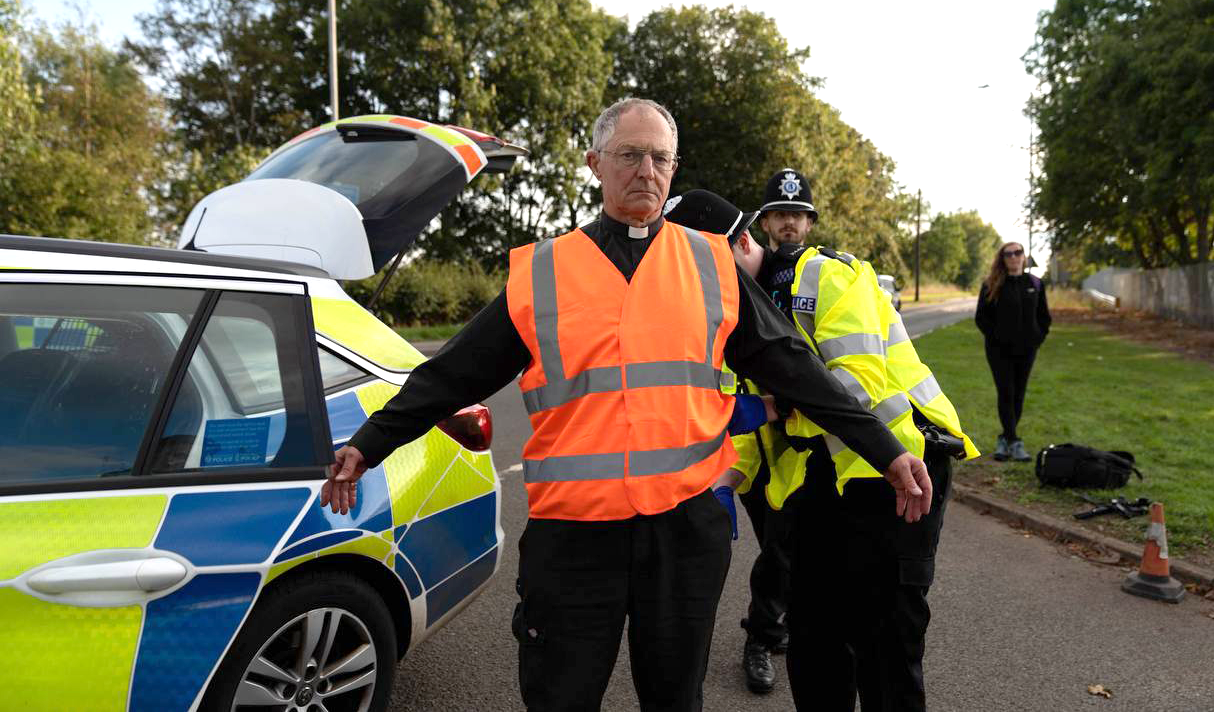
Keir Starmer confirms that his government is cnutier than Suella Braverman on killing the right to protest.A Just Stop Oil participant getting arrested at Kingsbury oil terminal. A JSO / Vladamir Morozov image.


 (Left to right) members of Kneecap, Liam Og O Hannaigh (Mo Chara), JJ O’Dochartaigh (DJ Provai) and Naoise O Caireallain (Moglai Bap) attending the IFTA Awards Ceremony at the Dublin Royal Convention Centre, February 14, 2025