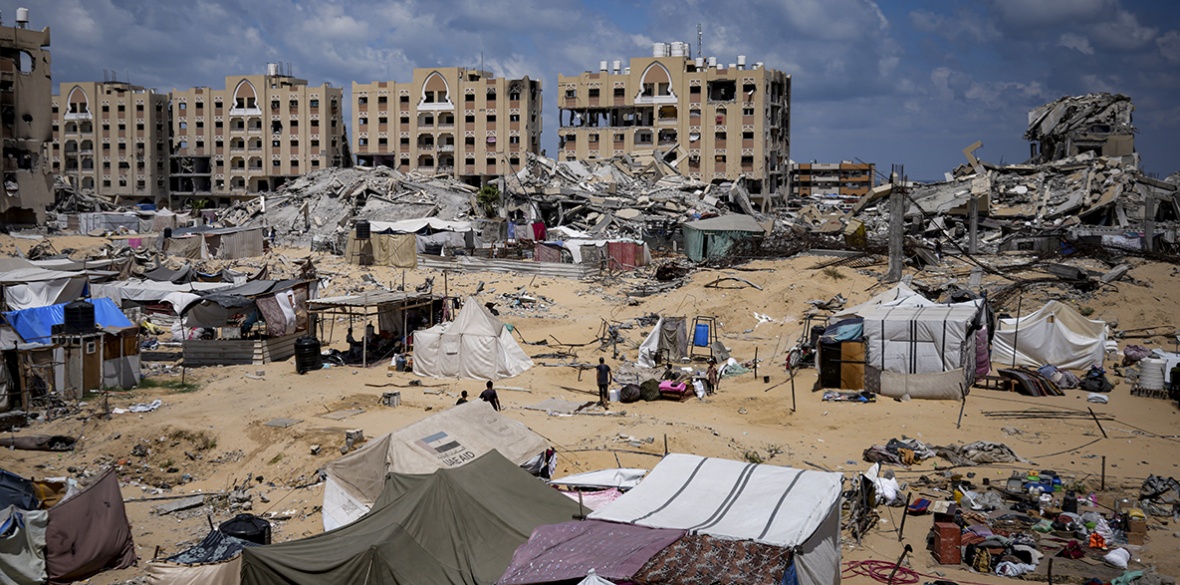
Palestinians displaced by the Israeli air and ground offensive on the Gaza Strip flee from Hamad City, following an evacuation order by the Israeli army to leave parts of the southern area of Khan Younis, August 11, 2024
A CALL by Prime Minister Keir Starmer for “de-escalation and regional stability” in the Middle East has been criticised by Palestine rights campaigners.
Sir Keir made the plea alongside French and German leaders Emmanuel Macron and Olaf Scholz who urged Iran and its allies not to “jeopardise the opportunity to agree a ceasefire and the release of hostages” in Gaza.
But the Palestine Solidarity Campaign said the call “rings hollow when these same leaders maintain their complicity in Israel’s genocide in Gaza.”
PSC said: “40,000 Palestinians have now been killed in Israel’s genocidal assault. Every day we wake up to new scenes of Israel’s latest massacre of displaced Palestinian men, women and children.
“Starmer, Macron and Scholz are all complicit in these atrocities so long as they continue to sell arms to Israel and provide diplomatic cover for its war crimes.
“The quickest way for our leaders to bring about the ceasefire that they claim to want is to immediately ban all arms trade with Israel.”
The fuse may have been set alight by online disinformation and secretive social media channels, but this explosion of far-right violence has been decades in the making. And while Stephen Yaxley-Lennon (AKA Tommy Robinson) and his mob of far-right agitators are its immediate instigators, much of Britain’s political and media class is complicit in laying the groundwork for this eruption of hate.
This truth of how we reached this point flips the normal classist narrative about racism in Britain. The reality is that racism isn’t a bottom-up expression of popular discontent, but a top-down project propagated by people in positions of power.
Or think how Conservative politicians normalise far-right rhetoric, dehumanising people and spreading hate. From “one nation” Conservatives such as David Cameron who as prime minister described migrants as a “swarm”, to the likes of Suella Braverman who as home secretary said there was a migrant “invasion”. Rishi Sunak’s “Stop the boats” slogan is now a far-right chant andjust this week the Tory party leadership hopeful Robert Jenrick said the police should “immediately arrest” people shouting “Allahu Akbar” on the street, the Arabic phrase meaning “God is great” – the equivalent of a Christian saying “hallelujah”.
This rhetoric was propagated further by the privately educated, former City trader Nigel Farage, who claims to be a man of the people. In the general election campaign, he said many Muslims didn’t share “British values” and this week promoted the “two-tier policing” conspiracy.
But it’s not just rightwing politicians, pundits and publications at fault. So-called centrists too often refuse to push back against this hate as well, sometimes peddling the same dangerous tropes or dismissing the concerns of those subject to this hatred.
I was confronted by this painful reality just this week. On Monday morning I was invited on to ITV’s Good Morning Britain to talk about the recent racist riots, only to be interrogated – and it did feel like an interrogation – about why I, a Muslim MP, thought it was important to call the recent racist violence Islamophobic. “Why is it important to use that specific word?” Kate Garraway repeatedly questioned me.
Almost before I could answer, and behaving with the same sneering condescension he did throughout the segment, the former Labour shadow chancellor and now broadcaster Ed Balls repeatedly interrupted me, seemingly incredulous that I thought this hate should be called by its proper name. The show has now been hit with more than 8,200 Ofcom complaints about that morning’s episode, many of them about his handling of my interview.
The far-right – emboldened by UK politicians & media – are attacking Black and brown people in the UK. When politicians play the race card, minorities pay the price. We stand with migrants & people of colour against racism & Islamophobia & oppose those who divide working people. pic.twitter.com/FKTVWCDzsj
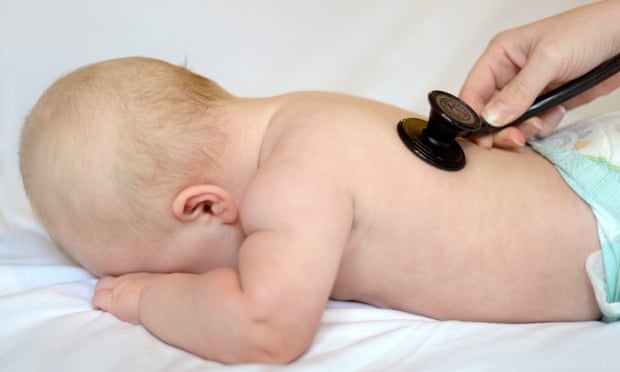
A poverty reduction of 35% on 2023 levels could avoid 293 infant deaths, 458 childhood admissions with nutritional anaemias and 32,650 childhood emergency admissions. Photograph: Andrew Matthews/PA
England research shows huge benefits with resulting savings for NHS and councils
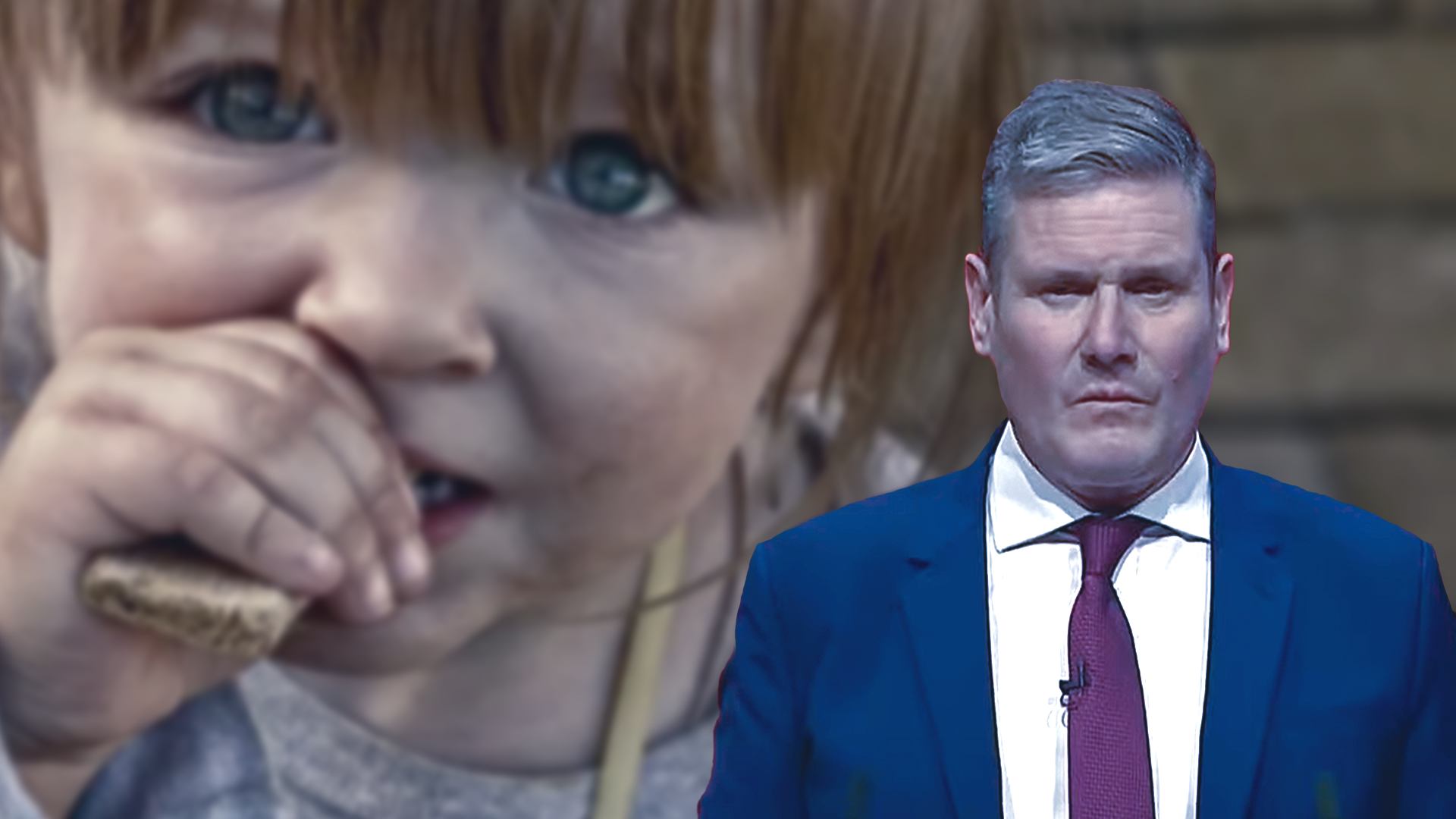
Curbing child poverty by scrapping the two-child benefit cap would save hundreds of lives a year and avoid thousands of admissions to hospital, the largest study of its kind suggests.
Keir Starmer has faced repeated demands from within Labour ranks and opposition leaders to abolish the policy, which was announced in 2015 by George Osborne, then chancellor. Almost half of all children in some towns and cities now live below the breadline.
Now researchers from the universities of Glasgow, Liverpool and Newcastle have shown for the first time the extraordinary impact that reducing child poverty with measures such as ditching the two-child benefit cap could have in England.
Tackling it would substantially cut the number of infant deaths and children in care, as well as rates of childhood nutritional anaemia and emergency admissions, with the most deprived regions, especially in north-east England, likely to benefit the most, the projections indicate.
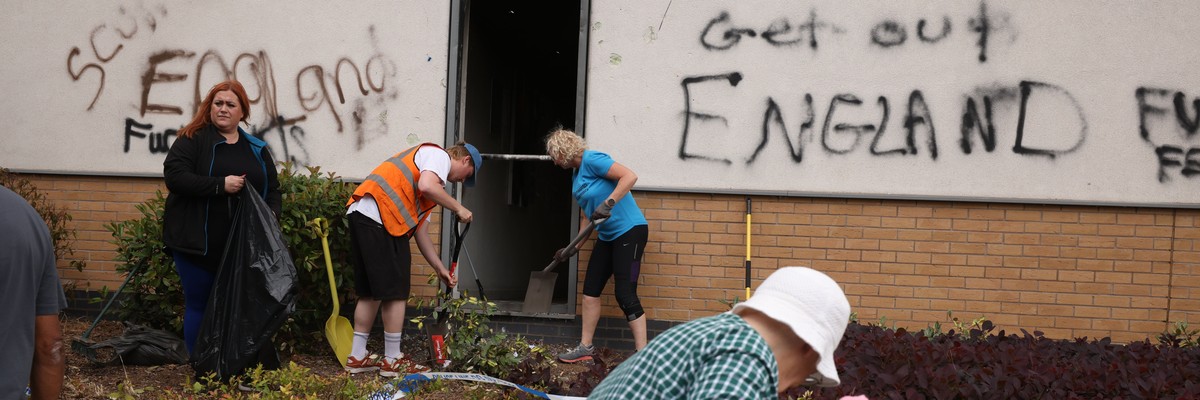
People clean up debris outside a Holiday Inn Express whose walls bear graffiti reading “Get Out England” and a racial epithet on August 5, 2024 in Tamworth, England.
“There are politicians and there are journalists who have played an active role in fanning the flames of hate and division, and we are seeing that play out,” said Zarah Sultana.
As British Prime Minister Keir Starmer covened an emergency security meeting on Monday to respond to violent attacks on immigrant and Muslim communities that have spread across the United Kingdom in recent days, progressive MP Zarah Sultana said the crisis—fueled by rampant disinformation and xenophobia—must serve as a reckoning for politicians and journalists who have “fanned the flames” of hatred for years.
Sultana, who represents Coventry South in the House of Commons, appeared on ITV’s “Good Morning Britain” to discuss the violent riots that have taken place in at least a dozen cities across the U.K. in recent days, mostly in England, with far-right protesters attacking mosques, libraries, and a hotel housing asylum-seekers.
The attacks have been in response to disinformation that has pinned the blame for a deadly stabbing attack on a children’s dance class in Southport, England last week on undocumented immigrants. The suspect was born and raised in the U.K., according to police.
“Rather than saying, this is the result of political decisions made by consecutive governments, people have blamed and scapegoated minorities.”
Sultana said that the violent attacks in cities including Blackpool, Leeds, and Manchester “shouldn’t be a surprise,” considering the years the British government—led for 14 years by the Conservative Party until the Labour Party won last month’s elections—has spent pushing anti-immigration policies and demonizing asylum-seekers, with the help of national news outlets.
“There is decades of work by the right-wing press and by politicians who have fanned the flames of this hate,” said Sultana in a panel discussion that also included journalists from The Daily Mail. “When we look at the role that media outlets like GB News has played, that The Daily Mail has played… There are politicians and there are journalists who have played an active role in fanning the flames of hate and division, and we are seeing that play out.”
The media and political class is complicit in the far right, racist and Islamophobic violence we’re seeing across our country.
Andrew Pierce of The Daily Mail took issue with Sultana’s remarks, demanding that she provide examples of anti-Muslim news stories in the paper.
The lawmaker did so after the broadcast, posting an image of 16 front pages from the outlet, including ones that asked “how many more” migrants the U.K. can take, referred to asylum-seekers as “illegals,” and claimed that migrants are taking the majority of jobs in the U.K. and sparking a “housing crisis.”
Here’s just a few examples of Daily Mail headlines that have fanned the flames of hate and normalised Islamophobic and anti-migrant rhetoric #GMBpic.twitter.com/kqzQqewnGk
Sultana added that former Home Secretary Suella Braverman referred to refugees arriving in the U.K. as an “invasion” and far-right Reform UK leader Nigel Farage said in May that British Muslims do not share “British values.”
“So when we look at the complicity,” said Sultana, “there’s a lot of mirrors that people have to be looking into.”
Sultana also implored politicians and the British media to explicitly refer to the riots over the weekend as Islamophobic, noting that Prime Minister Keir Starmer and others have denounced the attacks as racist but have not clearly expressed solidarity with the Muslim communities that have been targeted.
“Naming it as Islamophobia is really important because that allows us to shape our response,” said Sultana. “If we’re not identifying what is happening, the language that is being used and what this is about, we’re not going to be able to address this fundamentally.”
“Why is there such controversy around calling it Islamophobia?” asked Sultana after “Good Morning Britain” host Ed Balls dismissed her concerns, displaying what the lawmaker called “sneering contempt.”
The sneering contempt of ‘journalists’ will never stop me from calling out racism and Islamophobic hate. pic.twitter.com/cQoNKDzJ78
The interview took place a week after three children were killed and 10 were injured in a knife attack in Southport. The 17-year-old suspect, Axel Rudakubana, was born and raised in Britain, according to authorities, who took the unusual step of making his identity public to counter disinformation that quickly spread online and fueled riots that first began in Southport the day after the crime.
The first riot included anti-Muslim and anti-immigrant demonstrators throwing bricks at a mosque in the town, setting cars on fire, and damaging a convenience store.
The authorities’ decision to disclose the suspect’s identity did not stop the violence from escalating over the weekend, with rioters setting a library on fire in Liverpool, burning books, and attempting to block firefighters from putting out the flames on Saturday.
In Rotherham, an anti-immigration mob broke into a hotel housing asylum-seekers and attempted to set the building on fire while blocking exits.
Nearly 150 people were arrested for taking part in the attacks, and Starmer warned Sunday that “those who have participated in this violence will face the full force of the law.”
“This is not protest. It is organized, violent thuggery,” said Starmer.
BJ Harrington, the National Police Chiefs’ Council lead for public order, said in a statement Sunday that “disinformation is a huge driver of this appalling violence and we know a lot of those attending these so-called protests are doing so in direct response to what they’ve read online.”
“Often posts are being shared and amplified by high profile accounts. We’re working hard to counteract this,” added Harrington. “They won’t win.”
While calling on the government and media to directly confront the Islamophobia that has been fomented in the U.K. in recent decades, Sultana said the new Labour government should also correct the austerity policies that have caused unrest and scapegoating of immigrants and Muslim communities.
“The economic system which has allowed inequality to exacerbate in this country, has brought down living standards,” said Sultana. “Our communities have faced the brunt of Tory austerity, and what has happened on the right-wing side of politics, in the media and in politics, is that migrants, Muslims, and trans people have been blamed for people not being able to access council housing, not being able to get [National Health Service] appointments, not being able to find school places for their kids. Rather than saying, this is the result of political decisions made by consecutive governments, people have blamed and scapegoated minorities.”