The world no longer needs new fossil fuels – and the UK could lead the way in making them taboo

Spread the love
Savva_25/Shutterstock

Greg Muttitt, UCL; Fergus Green, UCL, and Steve Pye, UCL

North Sea oil and gas has become a battleground issue in the UK general election.

The Labour party’s manifesto promises an end to issuing new licenses for finding oil and gas. The Conservative party meanwhile proposes a law that would require the next government to hold a licensing round every year.

Our recent study found that new fossil fuels are not needed, and that stopping the extraction of new coal, oil and gas is among the best ways to tackle the climate crisis.

Scientific assessments tell us that global warming above 1.5°C will mean escalating danger to the environment, human health and the economy. We found that, in a world that limits warming to 1.5°C, remaining global demand for fossil fuels could be met by assets that have already been built.

This means that Labour’s plans do not go far enough. Even under existing licenses, new oil and gas fields need not be opened, nor new platforms and pipelines built.

Surplus to requirements

Our research confirms an earlier finding of policy experts at the International Energy Agency (IEA): that no new fields are needed to meet energy demand as the world attempts to achieve net zero emissions. However, our analysis goes further by demonstrating that no new fossil-fuelled power stations are needed either.

If governments stop new projects, the production and consumption of fossil fuel will gradually decline over coming decades as existing assets reach the end of their lifespans. This gradual transition will give time to plan the process, to protect and create jobs and to build solar and wind farms that meet energy demand as fossil fuels are phased out.
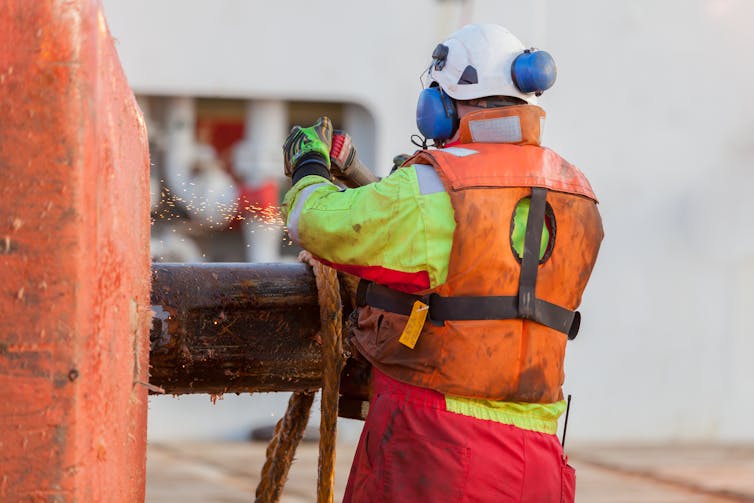
A seaman working on an offshore rig.
Winding down the fossil fuel industry should allow workers time to retrain.
Arild Lilleboe/Shutterstock

A stop to new fossil fuel projects is essential to “transitioning away” from coal, oil and gas, which is what governments agreed to do in December 2023 at the COP28 climate summit in Dubai. This is a necessary commitment, but since it is expressed as a vague and collective goal with an indeterminate end point, it is easy for governments to pay lip service to it while maintaining business-as-usual.

The IEA recently reported that global investment in fossil fuels has increased every year since 2020, even as governments announced net zero emissions targets. An investigation by campaign group Global Witness found that the United Arab Emirates signed over US$100 billion of oil deals in 2023 while it presided over climate negotiations.

Commitments to no new fossil fuels, such as Labour’s plan to end new licensing, are less prone to obfuscation because they are specific and immediate. What’s more, it is clear for everyone to see if a new fossil fuel project is being built. Making commitments that are easily verifiable is a proven recipe for building international trust and cooperation around a shared goal.

There are also political advantages to stopping new fossil fuel projects. Coalitions that support fossil fuels, including oil firms and their employees, are more capable of organising against the closure of existing assets than the cancellation of those yet to be built. Opposing coalitions, including communities living with the pollution and disruption of oil and gas extraction, tend to be more successful when mobilising against planned projects.

The new norm

By making a “no new fossil fuels” commitment, governments can help establish a new norm.

A norm is an expected standard of behaviour, like the norm against smoking in indoor public places, or the international norm against slavery. The more states and global institutions adopt a norm the more social pressure it places on others to follow suit. Once a critical mass has adopted the norm, its spread is self-sustaining.

Arguably, this process is well underway for coal – the dirtiest fossil fuel. The Powering Past Coal Alliance, a group of governments committed to phasing out coal power, was founded in 2017 by the UK and Canada. Already the alliance has expanded to include 60 national governments, including major coal consumers Germany and the US.
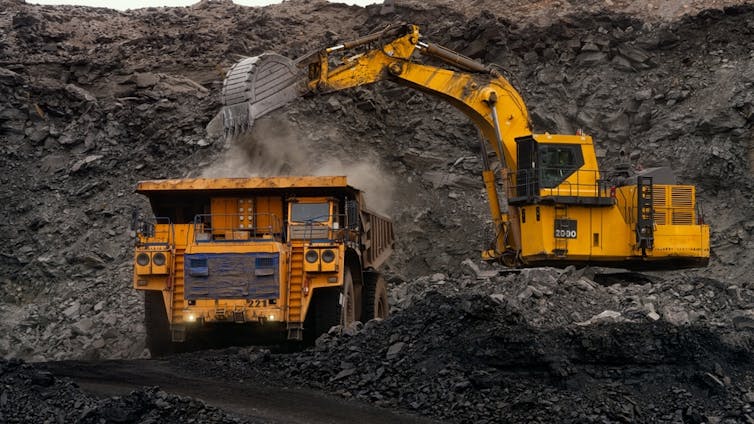
An excavator piles coal onto a truck.
Global coal demand rose when gas prices spiked in 2021 and 2022.
Roman Vasilenia/Shutterstock

The process of norm-building is gathering pace for other fossil fuels too. Governments that become core members of the Beyond Oil and Gas Alliance, which so far numbers 15, commit to issuing no new licenses for oil and gas exploration on a path to the total phase-out of fossil fuel production.

The Clean Energy Transition Partnership, comprising 41 governments and financial institutions, commits to ending international lending for fossil fuel projects. And in the private sector, 22 financial institutions have pledged to stop financing new oil and gas projects.

Were a future UK government to commit to stopping new oil and gas fields, it would lend considerable momentum to the norm, given the UK’s role in the history of the oil industry and the fact that is home to BP and Shell, two of the world’s five “supermajor” oil companies.

The UK Climate Change Committee, the government’s independent advisers, has noted that stopping new oil and gas projects would send an important signal to other countries. Such a move would also restore the UK’s reputation as an international leader on tackling climate change, at a critical time when the climate-denying far right is making inroads.


Imagine weekly climate newsletter

Don’t have time to read about climate change as much as you’d like?

Get a weekly roundup in your inbox instead. Every Wednesday, The Conversation’s environment editor writes Imagine, a short email that goes a little deeper into just one climate issue. Join the 30,000+ readers who’ve subscribed so far.The Conversation


Greg Muttitt, Honorary Research Fellow, Energy & Climate Change, UCL; Fergus Green, Lecturer in Political Theory and Public Policy, UCL, and Steve Pye, Associate Professor in Energy Systems, UCL

This article is republished from The Conversation under a Creative Commons license. Read the original article.

Continue ReadingThe world no longer needs new fossil fuels – and the UK could lead the way in making them taboo

Labour’s imposed candidate in Islington North ducks health debate with Jeremy Corbyn

Spread the love

https://morningstaronline.co.uk/article/labours-imposed-candidate-in-islington-north-ducks-health-debate-with-jeremy-corbyn

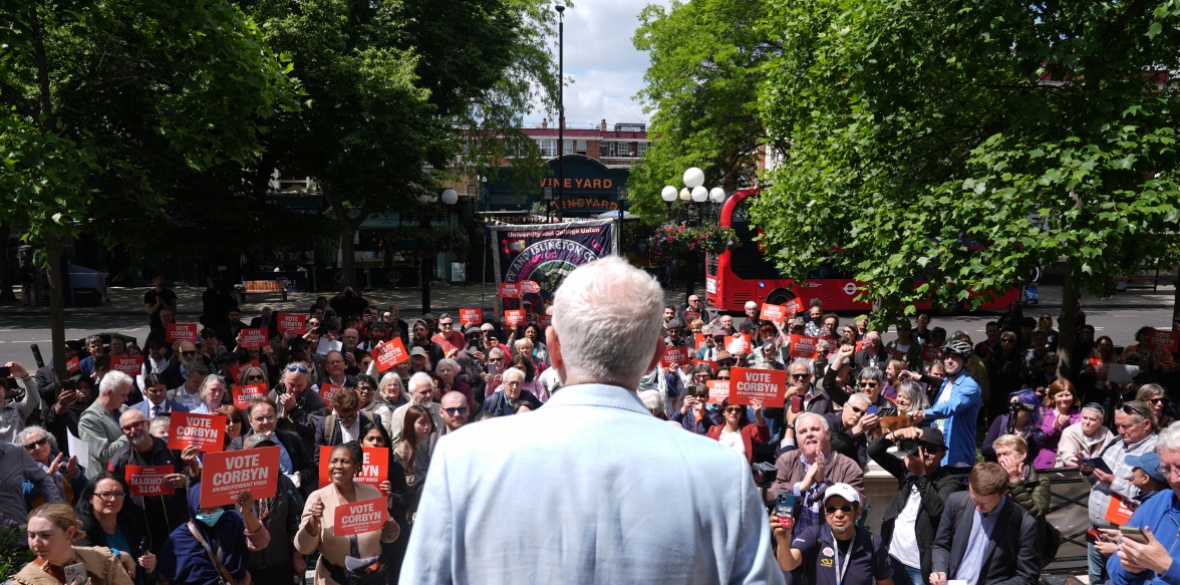
Jeremy Corbyn addresses supporters outside Islington Town Hall, north London, after handing in his nomination papers for the General Election on July 4, June 5, 2024

Praful Nargund, who is bidding to unseat Mr Corbyn, is a private health entrepreneur and has said privatisation is needed in the NHS

LABOUR’S imposed candidate in Islington North, Praful Nargund, has refused to attend hustings organised by Keep our NHS Public, forcing their cancellation.

The move is no surprise since Mr Nargund, bidding to unseat Jeremy Corbyn, is a private health entrepreneur who has said privatisation is needed in the NHS.

The no-hope Tory candidate for the seat also decided to duck the debate, forcing its cancellation.

Mr Corbyn, by way of contrast, spoke to hundreds at a rally in support of the NHS held in the constituency at the weekend.

Canvassing reports indicate massive support for the former Labour leader, particularly in the working-class areas of the constituency.

And in neighbouring Holborn and St Pancras, held by Mr Corbyn’s successor as Labour leader, independent challenger Andrew Feinstein is outgunning Sir Keir Starmer on the streets.

Continues at https://morningstaronline.co.uk/article/labours-imposed-candidate-in-islington-north-ducks-health-debate-with-jeremy-corbyn

Continue ReadingLabour’s imposed candidate in Islington North ducks health debate with Jeremy Corbyn

Scrap to the two-child benefit cap urge Greens

Spread the love
Green Party Co-leader Adrian Ramsay. Wikipedia CC.

The IFS (The Institute for Fiscal Studies) have today warned that 250,000 children will be hit by the two-child benefit cap next year, rising to an extra half a million by 2029. Green Party Co-Leader, Adrian Ramsay, responded saying, 

“Greens have unequivocally pledged to scrap the two-child benefit cap in our fully costed manifesto.

“Today I am urging the Labour Party to show real strength and conviction and join us in making this pledge.

“This one decision could lift 250,000 children out of poverty.

“The power to do this will be in Labour’s hands.

“But I want to be very clear.

“If they fail to do this, elected Green MPs will not let this rest.

“We will push them every day of the next parliament demanding that they do what is right.

“That is what a Green vote will enable – voices in parliament to keep Labour honest on these important issues.”

Continue ReadingScrap to the two-child benefit cap urge Greens

BRITAIN SPENDS £12,000 A MINUTE ON NUCLEAR WEAPONS

Spread the love

https://www.declassifieduk.org/britain-spends-12000-a-minute-on-nuclear-weapons/

Britain tested nuclear weapons in the Pacific in the 1950s. (Photo: Yui Mok / Alamy)

The lavish spending would continue under Labour.

Britain spends a larger portion of its military budget on nuclear weapons than any other state, a major report published today reveals.

Rishi Sunak’s government is putting 12 per cent of defence expenditure – equivalent to £12,000 every minute – towards the UK’s arsenal of at least 225 warheads.

Sunak increased spending on nuclear weapons last year by 17 per cent to £6.5 billion – a greater increase than any other nuclear power except the US. 

Over the last five years UK expenditure rose by a staggering 43 per cent.

The startling figures appear in new research by the International Campaign to Abolish Nuclear Weapons (ICAN), a widely respected group that was awarded the Nobel Peace Prize in 2017.

ICAN calculates that Britain is the world’s fourth highest spender on nuclear weapons after the US, China and Russia.

Nuclear Starmer

The group’s report comes at a time when the Labour leadership is championing nuclear weapons. The party’s manifesto states: “Our commitment to the UK’s nuclear deterrent is absolute.”

This spending commitment is in stark contrast to Keir Starmer’s extreme caution when it comes to investing in public services. 

The party describes the “independent nuclear deterrent” as “the bedrock of Labour’s plan to keep Britain safe”.

However, it is far from independent. Regular flights from the US carry material that are essential ingredients of Britain’s Trident nuclear missile system.

A Mutual Defence Agreement (MDA) between Britain and the US enshrines Whitehall’s reliance on the Pentagon for essential technology. 

The agreement, which is due to be renewed this year, is incorporated in US law. Yet it has no legal status in Britain and has never been the subject of a substantial debate or vote in parliament.

The Liberal Democrats’ policy is identical to those of the Conservatives and Labour, saying they will “maintain the UK’s nuclear deterrent with four submarines providing continuous at-sea deterrence”. 

The Scottish National Party has a long record of being opposed to nuclear weapons, which it says are “wrong strategically, morally and financially.” 

It adds that it supports long-term investment in the Trident submarine base in Faslane as a conventional military base.

The Green party says it would “dismantle Britain’s entire Trident nuclear deterrent and remove all foreign nuclear weapons from UK soil.”

https://www.declassifieduk.org/britain-spends-12000-a-minute-on-nuclear-weapons/

Continue ReadingBRITAIN SPENDS £12,000 A MINUTE ON NUCLEAR WEAPONS

Labour and Tories would ‘both leave NHS worse off than under austerity’

Spread the love

https://www.theguardian.com/society/article/2024/jun/15/labour-and-tories-would-both-leave-nhs-worse-off-than-under-austerity-says-thinktank

NHS emblem
NHS emblem

Analysis by leading experts the Nuffield Trust reveals that main parties’ manifestos would squeeze health spending

Labour and the Conservatives would both leave the NHS with lower spending increases than during the years of Tory austerity, according to an independent analysis of their manifestos by a leading health thinktank.

The assessment by the respected Nuffield Trust of the costed NHS policies of both parties, announced in their manifestos last week, says the level of funding increases would leave them struggling to pay existing staff costs, let alone the bill for massive planned increases in doctors, nurses and other staff in the long-term workforce plan agreed last year.

The Nuffield Trust said that “the manifestos imply increases [in annual funding for the NHS] between 2024-25 and 2028-29 of 1.5% each year for the Liberal Democrats, 0.9% for the Conservatives and 1.1% for Labour.

“Both Conservative and Labour proposals would represent a lower level of funding increase than the period of ‘austerity’ between 2010-11 and 2014-15.

“This would be an unprecedented slowdown in NHS finances and it is inconceivable that it would accompany the dramatic recovery all are promising. This slowdown follows three years of particularly constrained finances.”

The trust added that the planned funding increases “would make the next few years the tightest period of funding in NHS history”.

Sally Gainsbury, senior policy ­analyst at the Nuffield Trust and a leading authority on NHS funding, said: “They will struggle to be able to pay the existing staff, let alone the additional staff set out in the workforce plan. It’s completely unrealistic.”

https://www.theguardian.com/society/article/2024/jun/15/labour-and-tories-would-both-leave-nhs-worse-off-than-under-austerity-says-thinktank

Continue ReadingLabour and Tories would ‘both leave NHS worse off than under austerity’