Category: Margaret Thatcher

  • UK public has paid £200bn to shareholders of key industries since privatisation

    Spread the love

    https://www.theguardian.com/politics/2025/sep/16/uk-public-paid-200bn-to-shareholders-of-key-industries-since-privatisation-study

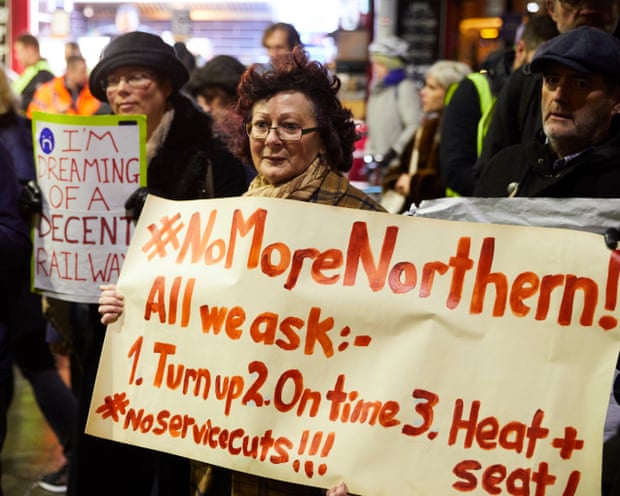
    Northern Rail passengers protest over poor service in Manchester in 2019 Photograph: Christopher Thomond/The Guardian

    Analysis reveals ‘privatisation premium’ of £250 per household per year paid to owners of water, rail, bus, energy and mail services since 2010

    The public has paid almost £200bn to the shareholders who own key British industries since they were privatised, research reveals.

    The transfer of tens of billions of pounds to the owners of the privatised water, rail, bus, energy and mail services comes as families face soaring bills, polluted rivers and seas, and expensive and unreliable trains and buses.

    As a result, citizens have been paying a “privatisation premium” of £250 per household per year since 2010 alone, the analysis found.

    Recent focus has been on the privatised water industry, which has run up long-term debts of £73bn and paid out dividends of £88.4bn in the past 34 years at the same time as overseeing record sewage spills, according to the latest figures.

    But for the first time the thinktank Common Wealth has drawn together the haemorrhaging of billions of pounds to shareholders across four key sectors, most of which were privatised from the 1980s and 1990s by Margaret Thatcher’s Conservative government – energy, transport, water and mail.

    …

    Article continues at https://www.theguardian.com/politics/2025/sep/16/uk-public-paid-200bn-to-shareholders-of-key-industries-since-privatisation-study

  • Morning Star Editorial: The neoliberal model of privatised water is sunk

    Spread the love

    https://morningstaronline.co.uk/article/neoliberal-model-privatised-water-sunk

     A tanker from Thames Water

    INVESTMENT in Britain’s water utilities took a dive under Thatcher’s government. By 1980 investment by the regional water authorities dropped by two-thirds as the neoliberal straitjacket into which public expenditure was confined limited their ability to raise capital.

    Contrast this to the present situation where the now privatised water companies have racked up millions in loans that seem more valued as a source of ready cash to pay bonuses, dividends and sweeteners than infrastructure investment.

    The total debt burden of the dozen privately owned water companies stands at £65 billion which this year’s Commons report says is perilously close to the 70 per cent gearing at which commercial credibility is compromised.

    Jo Maugham, director of the Good Law Project, which has been involved in legal challenges to a number of water companies, says: “The water sector has been poorly regulated for decades. It has been poorly regulated primarily by allowing water companies to over extract water from aquifers and reservoirs but also cash from operating entities within the water companies, and they’ve been allowed to underinvest in water infrastructure.”

    …

    The logical case for public ownership is sometimes challenged by the suggestion that taking these failing enterprises into public ownership would be prohibitively expensive.

    This is, of course, true if these enterprises were to offered for sale at the price their owners value them. A socialist government armed with a popular mandate and backed by a working class armed with both resolve and the necessary instruments of coercion might simply dispossess these rapacious incompetents and instruct them, individually and as a class, to find an alternative way of making a living freed of the responsibilities of ownership.

    …

    https://morningstaronline.co.uk/article/neoliberal-model-privatised-water-sunk

  • England to sell eight times more council homes than it built last year, report finds

    Spread the love

    https://www.theguardian.com/society/2025/aug/20/england-to-sell-eight-times-the-council-homes-it-built-last-year-report-finds

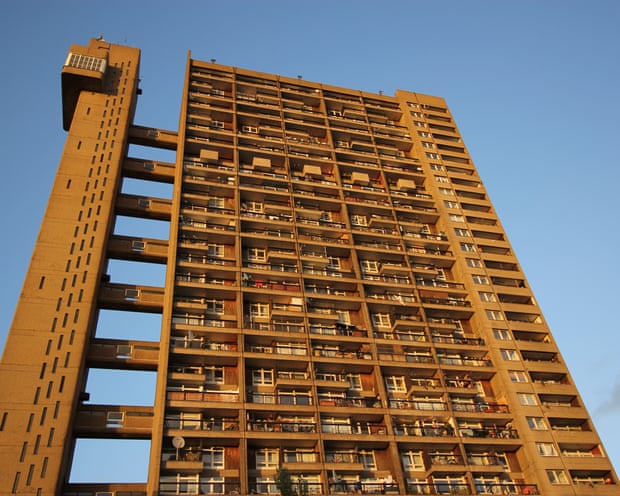
    London’s Trellick Tower. The Common Wealth report urged the state to buy back and restore homes sold off under right to buy. Photograph: Chris Morphet/Getty

    Depletion of social housing stock spurs calls for councils to have first refusal to buy ex-council homes entering market

    England will sell off more than eight times as many council homes in 2025-26 as were constructed the previous year, research has found.

    Right to buy is depleting council housing stock more quickly than public housing can be replaced, forcing people to spend more money on private market rents and obtain less secure tenancies, a report from the thinktank Common Wealth finds.

    Its analysis of government data in England found that 38,170 social homes and 2,850 council homes were constructed by the government in 2023-24. In 2024-25, 2,260 council homes were built. There were 13,966 sell-offs of council houses through right to buy in 2023-24 and 8,656 in 2024-25. An analysis in the i Paper estimated that 18,500 council homes will be sold off in 2025-26 – more than eight times more than the number built in 2024-25.

    The report concludes that if the government wants to increase the supply of social rental housing quickly, it must invest in buying back and restoring homes sold off under right to buy, alongside more council housebuilding.

    Adam Peggs, the report’s author, said: “We need to pull every effective lever we can find to expand public housing. Council housing gave people secure, low-cost homes in the past. With the right framework, it can give people high-quality, genuinely affordable homes, with real democratic voice in the future too. But we need to build the political will to make it happen.

    …

    Article continues at https://www.theguardian.com/society/2025/aug/20/england-to-sell-eight-times-the-council-homes-it-built-last-year-report-finds

  • Right to buy in England ‘fuelled housing crisis and cost taxpayers £200bn’

    Spread the love

    https://www.theguardian.com/society/2025/aug/03/right-to-buy-england-fuelled-housing-crisis-cost-taxpayers-common-weath-report

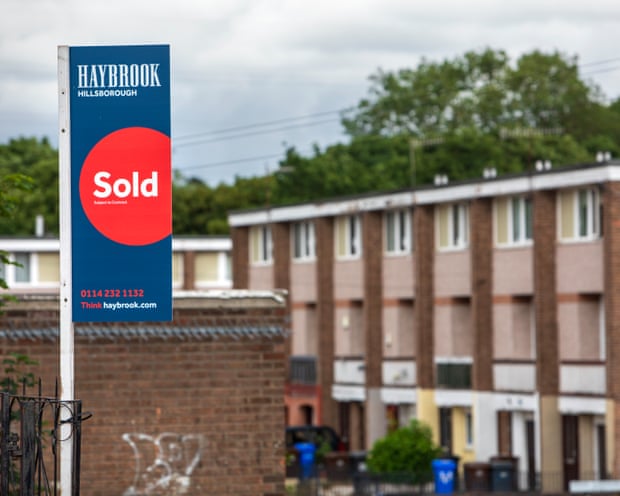
    Many ex-council homes are now rented privately to tenants on housing benefit that costs taxpayers £20bn a year. Photograph: Gary Calton/The Guardian

    Common Wealth report calls discounted sales of council homes one of the ‘largest giveaways in UK history’

    Margaret Thatcher’s right-to-buy scheme has cost UK taxpayers almost £200bn, according to a report into the policy’s contribution to Britain’s housing crisis.

    In its report into the sale of millions of council homes to their tenants at steep discounts since 1980, the Common Wealth thinktank said the policy had fuelled vast shortages in social housing and turbocharged inequality.

    Describing it as one of the “largest giveaways in UK history”, it said the sale of 1.9m council homes in England had contributed to a situation where one in six private tenants in England now rents a former local authority home.

    …

    Calculating the “opportunity cost” of the sales, Common Wealth said the former council homes were now worth an estimated £430bn after taking account of inflation and the surge in property prices since 1980.

    Of this sum, the thinktank said £194bn represented the value that was effectively given away when the homes were sold at a discount. Between the years 1980-81 and 2023-24, the discount averaged 43% on the prevailing market price.

    …

    See the original article at https://www.theguardian.com/society/2025/aug/03/right-to-buy-england-fuelled-housing-crisis-cost-taxpayers-common-weath-report