NHS news review

Spread the love

NHS news review:

Speculation concerning the future of the Destroy the NHS bill and the coalition government.

The King’s Fund response to the Destroy the NHS Bill proposes greater intergation and collaboration to improve services.

Further health funding cuts in Manchester.

Waiting times rise.

NHS Central Lancashire is considering making GPs redundant.

Lansley admits that the NHS Bill may be delayed by further scrutiny by MPs.
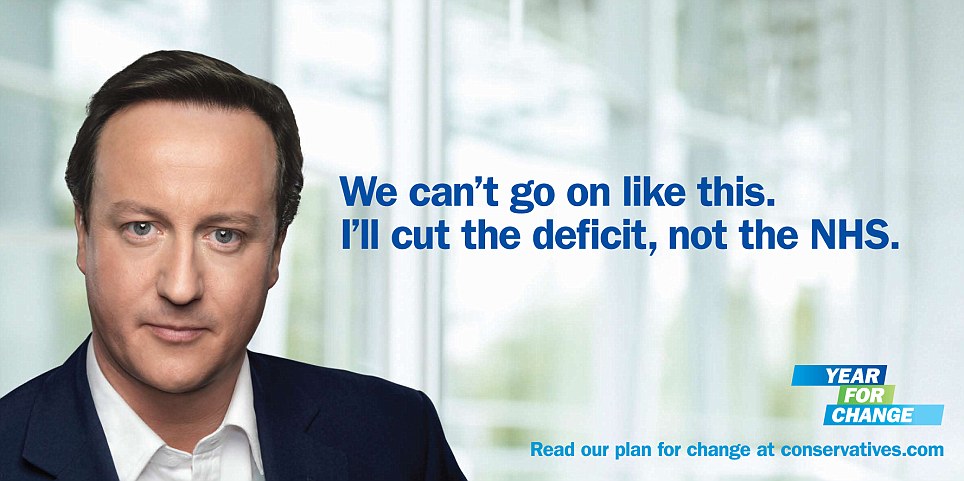
Conservative election poster 2010

A few recent news articles concerning the UK’s Conservative and Liberal-Democrat coalition government – the ConDem’s – brutal attack on the National Health Service.

Will the Liberal Democrats really save the NHS? » Hospital Dr

The Lib Dems have a lot to answer for when it comes to the deeply unpopular Health and Social Care Bill. The Orange Book wing of the Lib Dems, of which Nick Clegg is a key member, actually supports the idea of a social insurance scheme with private providers to replace the NHS, which is a key objective of the current bill.

The Lib Dem election manifesto promoted the idea of a market-based healthcare system and abolition of SHAs. The coalition agreement on health reform was signed by Nick Clegg and reviewed by Danny Alexander. The final page of the Bill itself (p367) has the Lib Dem names of Nick Clegg, Vince Cable, Danny Alexander and Paul Burstow as supporters the Bill.

Finally, Lib Dem MPs have fully supported the Bill through its first two readings in Parliament.

However, the political landscape changed when the scale of the public and professional opposition became clear. The Lib Dem’s Spring conference, along with other factors such as the Royal College of Nursing vote of no confidence in health secretary Andrew Lansley, was crucial in terms of changing Nick Clegg’s stance on the reforms and gaining a natural “pause” in the Bill.

Major changes to health reforms needed to deliver ‘new model’ of care says The King’s Fund – The King’s Fund

The King’s Fund has called for significant changes to the government’s health reforms to enable the NHS to provide a ‘new model’ of care that meets the challenges of the future.

In its response to the government’s listening exercise on the Health and Social Care Bill, the Fund says it supports the need for reform but argues that it must be based on a clear diagnosis of NHS performance and the challenges it faces. It calls for the NHS to be re-orientated to deliver a new model of ‘integrated’ care, based on stronger collaboration between health professionals and more effective co-ordination of services.

The response argues that integrated care offers the best prospect of improving services for patients and addressing the key challenge facing the NHS – demographic change and the increasing number of people with long-term conditions such as diabetes, asthma and dementia. It draws on evidence from the NHS and the United States showing that integrated care delivers better outcomes for patients with long-term conditions and improves the quality of specialist services such as cardiac, cancer and stroke care.

The Fund calls for a number of significant changes to the Health and Social Care Bill and wider health policy to deliver integrated care.

“NHS is under-managed but over-administered” » Hospital Dr

The NHS is under-managed but over-administered, a report from the King’s Fund finds.

It calls for a new style of leadership to overcome unprecedented financial pressures and adapt to future challenges.

High-quality, stable management is be key to high-performing health services, it finds. Yet across the NHS, the average chief executive spends just 700 days in post. In part, this reflects a culture where ‘heroic’ leaders grapple with problems only from the top of the organisation, or are ‘parachuted in’ to replace individual managers and ‘turn around’ troubled NHS services. The report advocates a new type of ‘shared leadership’ involving leaders at different levels of the workforce working collaboratively with all those involved in patient care to lead change and improve services, rather than only tackling problems inside specific institutions.

The report criticises the government for not assessing the future needs of the NHS before imposing a 45% cut in NHS management posts and 33% cut in administration costs.

It says: “There is no persuasive evidence that the NHS is over-managed, and a good deal of evidence that it may be under-managed. While administration and management costs will have to take at least their fair share of the pain as real-terms growth in NHS spending ceases, a more sophisticated approach to the reduction in both is needed.”

Health chiefs in new bid to save another £20m | Manchester Evening News – menmedia.co.uk

Health chiefs say they will have to save more than £20m from Manchester’s NHS budget this year. It comes after £30m in cuts in spending last year.

NHS Manchester is now drawing up plans including slashing management costs by £3.7m and cutting £2m by rationing treatment.

A new system for GPs’ referrals is being credited with helping make savings last year.

All treatment apart from mental health, obstetrics and urgent care, now has to go through a ‘referral gateway’ before being approved.

Pulse – Waiting times on the rise

The number of patients waiting more than 18 weeks from referral to treatment is greater than at any time since mid-2008, the latest NHS statistics for England reveal.

More than 35,000 patients waited more than 18 weeks for treatment in March, breaking the NHS constitution-enshrined right for 18 week waits for the second month running.

The figures show that 10.4% of patients waited for more than 18 weeks from referral to treatment in March, up from 10.2% in February.

The numbers of patients waiting for more than 18 weeks has increased steadily since ministers removed the formal target of admitting 90% of patients within 18-weeks last summer. The target had been strictly enforced until last June but still remains a patient right under the NHS Constitution.

Figures for non-admitted patients showed the numbers being treated within 18 weeks had stayed stable on around 97% since the beginning of the year. Some 25,578 non-admitted patients waited for longer than 18 weeks in March.

Pulse – GPs to be made redundant as managers cut costs

Exclusive: Salaried GPs employed by a PCT face being made redundant as NHS managers charged with cutting costs turn their attention to general practice.

NHS Central Lancashire has placed a series of salaried GP positions under review as the PCT looks to restructure the organisation and realign costs.

Dr Edoardo Cervoni, a full-time permanent salaried GP employed by the PCT to work in practices in Preston and Ormskirk, is one of several GPs to be told their contracts are due to be terminated by the trust.

Dr Cervoni was informed in April that salaried GP positions had been placed under review and has now been told to expect to be made redundant at the end of July.

‘I was told that the PCT was going to stop providing clinical services and it had been planned that salaried GP positions “had to go”,’ said Dr Cervoni, a GP specialist in ENT medicine with 17 years’ experience.

‘Being made redundant is not nice and it has a negative impact on your career and particularly on your family life. I hope I may remain one of the very few GPs to have to experience the feeling, but it really seems that the process of dismantling the NHS is well on the go.’

NHS bill may need fresh scrutiny from MPs after ‘listening exercise’ | Society | The Guardian

The changes to the government’s flagship NHS bill could be so substantial that it has to undergo fresh scrutiny by MPs – delaying its passage through the Commons, the health secretary said on Monday.

The bill has already passed through the committee stage, where it was scrutinised line by line by MPs, but the proposals have been paused for a “listening exercise” with NHS staff and the public. A panel of experts, known as the Future Forum, was tasked with hearing concerns about the bill – a process that ends next week.

In an online question and answer session with Guardian readers, the health secretary, Andrew Lansley, answered a post about “recommitting” the bill to the house. “We won’t decide that until we have received the NHS Future Forum report and have responded to that. I told the House of Commons on 4 April that we would ensure proper scrutiny of the bill – we have done that so far and we will continue to do so,” he wrote.

Continue ReadingNHS news review

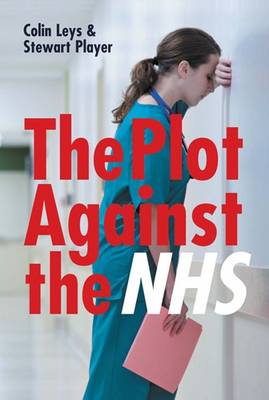
The Plot Against the NHS

Spread the love

The plot against the NHS

The Plot Against the NHS by Colin Leys and Stewart Player – review | Society | The Guardian

A year ago Peter Martin, the chief executive of Tribal Group plc, which describes itself as a “leading provider of commissioning services to the NHS“, presented his view of the future for the health sector in England. He was bullish. Although he described market conditions as “challenging”, he saw an “improved flow of service delivery opportunities” that would significantly support Tribal’s revenue growth. Andrew Lansley’s 2010 white paper would bring “major changes in structure of UK health markets”. Martin’s goal was to focus Tribal’s health business on the profit-making opportunities these reforms would create. He set out five growth priorities: commissioning for GP consortia, clinical support services, patient management services, informatics outsourcing and hospital management services.

This is the future for the NHS that David Cameron and Nick Clegg have planned for us since the launch of the coalition. Despite their claims to the contrary, they have been laying the ground for wholesale privatisation of the NHS, the destruction (without any democratic mandate) of one of Britain’s most cherished and effective postwar institutions, and the transfer of its stewardship and operations to organisations concerned only with maximising revenues and reducing costs. The word “quality” appears nowhere in Tribal’s vision as communicated to investors.

How has the NHS arrived at this moment of crisis? Colin Leys and Stewart Player provide an indispensable guide to understanding the origins of what they call a plot against the NHS. Surely this is an exaggeration? Not so. Cameron, Clegg and Lansley are merely continuing two decades of policies – begun by Tony Blair, endorsed by Gordon Brown, and supported by successive Labour governments – aimed at introducing markets into the health service. Where Labour tried to hide its intentions, the only difference with the Conservative-Liberal alliance is their shameless transparency.

Looking back at Labour health policy now, I have to ask myself how so many of us were unable to see through the mists of what Leys and Player call the “misrepresentation, obfuscation, and deception” perpetrated by Blair, Brown, and a host of health ministers all too willing to genuflect to the market zeitgeist. Too many of us – whether doctors, nurses, or just members of the public – were willing to be bewitched by Labour’s mellow language of reform. The words are all too familiar now: modernisation, choice, empowerment, diversity, plurality, improvement, contestability, and, most beguiling of all, patient-led.

The Department of Health created a commercial directorate to oversee the plan to privatise the NHS. A group of passionate market advocates were hired to transform a public sector institution into a target for private sector takeover. People such as Mark Britnell, who was the Department of Health’s director general for commissioning when Labour was in office and who later joined KPMG – able to sell his experience in government to the world of management consulting – have now been outed as agents for the merciless dismemberment of the NHS. There was a revolving door between civil servants in the department and McKinsey, KPMG and Deloitte. Ex-ministers, such as Patricia Hewitt and Lord Warner, traded their knowledge of NHS privatisation with those who could benefit in the commercial sector.

Doctors’ leaders were little better. The British Medical Association’s John Chisholm and Simon Fradd, who led negotiations with government to revise the GP contract in 2002, won a huge victory by making out-of-hours care for patients optional. Nine out of 10 GPs stopped offering services to patients from 6.30pm to 8am. This withdrawal of NHS care allowed private providers to step in and take over. After Chisholm and Fradd had succeeded in putting out-of-hours care out for private tender, they set up Concordia Health, a private company, that offered to run those very same services, only now at a profit to themselves.

The networks of health institutions that propped up the case for marketisation and privatisation of the NHS were intricate. They include private providers, such as UnitedHealth (whose president of global health, Simon Stevens, was once a key Labour adviser); thinktanks, such as the King’s Fund (whose trustees have included Stevens and Julian Le Grand, his successor in Number 10); and lobbyists, including several NHS outsourcing and private equity businesses.

Having anatomised the diseased political corpus that has begun to infect the NHS with a commercial ethos that will increase costs, cut services and reduce quality, Leys and Stewart try to look to the future. They mount a strong defence, claiming there is no evidence the NHS is in urgent need of fundamental reform. Given the statement by Steve Field, who is leading Cameron and Clegg’s pause to review the Lansley reforms, that the current Bill could “destroy key services” and destabilise the NHS, it seems that the gathering momentum for markets as the solution to whatever ills the NHS might have could be about to stall.

Selected excerpts from ‘The Plot Against the NHS’ by Colin Leys and Stewart Player. Chapter One is available here. I highly recommend this book available from Merlin Press for £10.

The Plot Against the NHS #1

The Plot Against the NHS #2

Continue ReadingThe Plot Against the NHS

NHS news review

Spread the love

NHS news review:

A protest by doctors in York.

HospitalDr reports on the actually widely known outsourcing of NHS treatment under Labour to reduce waiting lists. Private companies were paid regardless of whether they actually did the operations.

Cuts to Diabetic Specialist Nurses adversely affects treatment of Diabetes.

Staff cuts at Epsom General Hospital.

A claim that coalition conflict is damaging the NHS.

Guardian Comment is Free praises Nick Clegg. I suggest that it is important to realise that Clegg is not outright opposing competition in the NHS or the issue that the Health Secretary should provide a comprehensive healthcare system. Clegg has until recently been a wholehearted supporter of this bill. We could do with a fact check as to whether Clegg & Co are complying with the resolution of their Spring Conference. I suspect that they are not. Interesting comments to this article.

Conservative election poster 2010

A few recent news articles concerning the UK’s Conservative and Liberal-Democrat coalition government – the ConDem’s – brutal attack on the National Health Service.

Health cuts protesters march through York streets (From York Press)

A MARCH organised by York doctors concerned about NHS reforms took place in the city centre at the weekend.

About 150 people worried about the scale of the Government’s NHS changes attended the protests, organised by Defend Our NHS York.

The march made its way to Parliament Street where the speakers included Baroness Haleh Ashar, a member of the House of Lords and professor of politics and women’s studies.

Protesters were joined by shoppers and tourists when speeches were made by the fountain in Parliament Street followed a chorus of “three cheers for the NHS” led by Dr James Chan.

Speaking to the crowd, Dr Chan, who is based at York Hospital, said: “We are here to stop these cuts because they are going to destroy the NHS.

“This is York’s voice against these reforms, which are the wrong plan at the wrong time, and you are all NHS heroes.”

Baroness Afshar said “There are times when the public knows best, and this is one of those times.

“These reforms make no sense and what we want is more transparency.

“I don’t know any GP who supports these reforms because they do not have the expertise and they do not have the information.

“It is nonsense from beginning to end, so I urge you to please, please protect our NHS.”

£500m wasted in private treatment centres for NHS » Hospital Dr

Private firms were paid millions for operations that never took place in overly generous contracts drawn up by the Department of Health, in a Labour plan to cut waiting times and improve choice.

The independent providers – ISTCs – received more cash for their buildings when contracts came to an end, and were even paid compensation when a second wave of clinics was cut back, a study by the Bureau of Investigative Journalism has found.

Another part of the £1.5billion scheme intended to allow busy workers to see doctors near offices – or polyclinics as they became known – but the new walk-in centres were under-used and most are closing down.

As controversial reforms to the NHS will provide even greater opportunities for private providers, it is feared that more public money will be wasted on similar projects to the doomed Independent Sector Treatment Centre initiative.

Diabetics are put at risk as NHS cuts hit specialist nursing posts | Society | The Observer

The number of diabetic specialist nurse (DSN) posts unfilled across the service has doubled within a year. A survey of 385 hospital trusts and primary care trusts (PCTs) by Diabetes UK found that 218 jobs were vacant last year, even though the number of people with diabetes is rising by 150,000 a year.

“At a time when numbers of people with diabetes are increasing, a decrease in the number of diabetes specialist nurses is very concerning,” said the charity’s chief executive, Barbara Young. “This will mean longer waiting times for specialist support, more unnecessary amputations, more people losing their sight and far poorer health outcomes. This is simply not acceptable.”

The research also reveals that the proportion of DSN posts lying unfilled because of cost-saving programmes had risen to 43% – up from 34% in 2009. PCTs and hospitals in England have increasingly been reducing their staff and cutting back on the services they provide as they struggle with the demands of a £20bn NHS efficiency drive, flat budgets and rising costs. The new findings confirm a growing tendency among bosses of cash-strapped NHS organisations not to replace specialist nurses – who also help patients with cancer, multiple sclerosis, Parkinson’s disease and other conditions – when they retire, move on or are made redundant. However, these nurses are popular with patients and their families, have a proven record of clinical success and an ability to save the NHS money by helping patients stay at home rather than in hospital.

BBC News – Epsom and St Helier NHS savings put 115 jobs at risk

An NHS trust with hospitals in Surrey and London has set out savings plans that could see the loss of 115 posts including 26 doctors.

Epsom and St Helier University Hospitals NHS Trust has begun a 90-day consultation with staff and unions.

The trust said it wanted to save £18.7m by March 2012 but it would still be left with a £19.3m deficit at the end of the financial year.

The public sector Unison has not yet commented on the savings plans.

Coalition must resolve divisions over NHS, says King’s Fund | Society | The Guardian

David Cameron and Nick Clegg have been told to end their public “arm-wrestling” over the NHS because their divisions are worrying health professionals.

They should resolve the coalition’s deepening difficulties on the issue and make the service’s future clear as soon as possible.

The sharply-worded intervention in the increasingly fractious debate between the Conservatives and Liberal Democrats comes from Prof Chris Ham, chief executive of the King’s Fund health thinktank and a member of Downing Street’s “kitchen cabinet” on health policy.

“These arguments between the political leaders are worrying and unsettling people in the NHS. If you are running a hospital or primary care trust or pathfinder consortium of GPs you are now very unclear about the direction that the government is going in on these reforms,” Ham said.

“Everything is back in the melting-pot. We are worried about the adverse effects on the NHS if this current uncertainty continues much longer.”

NHS shakeup: From malignant to muddled | Comment is free | The Guardian

*

Nick Clegg is making a real difference. These are not common words to read these days, and yet they are becoming hard to dispute with the stalled English health reforms. It is true that the deputy prime minister would be better placed to claim credit if he had not initially nodded Andrew Lansley’s bill through, and true, too, that not all the sweeping concessions he now demands fit with the scepticism about the NHS he has sometimes shown in the past. Nonetheless, Mr Clegg has responded decisively to his party’s democratic will, and is training his sights on the heart of the Lansley plans.

First, he drew a red line around the crucial clause that tasks the regulator with “promoting competition”, and he has now done the same with the legislative invitation for “any qualified provider” to take on the NHS. The deputy PM must now apply a third veto to the unacceptable plan to allow private firms to discharge the core public function of spending health service money. He will then have removed the three greatest drivers of privatisation from among the 80-odd clauses that create an NHS market. Assuming, of course, that he can strong-arm the Conservatives into agreeing. He can afford no compromise. Savaged in Scotland, ravaged in the referendum and trashed in town halls, Mr Clegg retains a grip over his parliamentary party that surprises many outsiders. To keep it, however, he simply has to win this fight.

One reason to be optimistic is that the tide of opinion seems to have decisively turned. Marketising medicine had been steadily becoming entrenched as the orthodoxy, ever since Tony Blair made it his millennial mission. The bust-up over the bill, however, has made the whole approach controversial again. Suddenly Labour’s John Healey, who spent a lonely autumn developing all the criticisms of the Lansley blueprint that medics and Lib Dems now voice with such passion, concedes that his own party wrongly pursued “competition for its own sake” through overpriced and underutilised private treatment centres.

Continue ReadingNHS news review

NHS news review

Spread the love

Nick Clegg is demanding the following changes to the Destroy the NHS Bill: These are are from a paper from Clegg to Prime Minister Cameron. It’s immediately noticable that there is not a demand that the Health Secretary continues to be responsible for providing a comprehensive health service – the Bill relieves the Health Secretary of that responsibility.


Clegg demands health reform changes as price of Lib Dem support – UK Politics, UK – The Independent

  • * “We must ensure that GPs only get involved in commissioning decisions once they are ready and willing”
  • * “The removal of any suggestion that we are pursuing a dogmatic obsession with competition [rather than] the best healthcare system in the world”
  • * “Preventing the cherry-picking of services by private providers to make sure NHS providers are not needlessly pushed into financial trouble and NHS research and training can thrive”
  • * “Enhancing governance and local accountability so decisions are transparent to all”

Clegg’s paper also reads “It is clear that the NHS does need to be updated if it is to meet patients’ needs and provide world class health care in the future. But the reforms as originally set out would not achieve that goal, would not protect and sustain our NHS and have clearly very little support among NHS staff or the wider public. I will not ask my parliamentary colleagues to support legislation on the NHS until I am personally satisfied that the reforms have been substantially changed to ensure our NHS is secure for the future.”

Without the Health Secretary continuing to be reponsible for providing a comprehensive health service, the NHS is not “… secure for the future” and is to be abolished.

This article is a very good summary should you need to get up to date on the proposed changes.The NHS Bill: take action on an unprecedented pause | openDemocracy

Increases in waiting times are blamed on cuts

Conservative election poster 2010

A few recent news articles concerning the UK’s Conservative and Liberal-Democrat coalition government – the ConDem’s – brutal attack on the National Health Service.Health Service.

Clegg demands health reform changes as price of Lib Dem support – UK Politics, UK – The Independent

Nick Clegg has warned David Cameron he will not ask Liberal Democrat MPs and peers to support the Government’s health reforms unless they are “substantially changed”.

In a paper sent to the Prime Minister and seen by The Independent, Mr Clegg demanded four radical changes to the NHS and Social Care Bill during the “pause” the Government has called as it tries to allay fears about the reforms.

He warned that ministers must kill the impression that they have a “dogmatic obsession with competition” inside the NHS. And he said GPs should not be forced to commission services until they are ready – which would mean abandoning the Government’s April 2013 deadline for this to happen.

Mr Clegg’s strongly worded demands reflect his determination to claim credit for the changes expected to be announced next month as he seeks to convince his party and the public that the Liberal Democrats enjoy real influence on a key policy area.

The NHS Bill: take action on an unprecedented pause | openDemocracy

Professor Wendy Savage argues that the pause in the passage of the Health and Social Care Bill, which claims to reform the NHS, is just a cynical PR exercise — but citizens should exploit it and act now to save the NHS.

The white paper ‘Equity and Excellence: Liberating the NHS’ was published in July 2010. The 6000 responses to the flawed consultation have not been published but many, if not most, of the responses were critical of the Bill. The Bill had it first reading on 10th January. Its second reading on 31st January was passed by a majority of 86. Voting was strictly on party lines with Labour voting against the Bill and coalition MPs voting for it — apart from one Lib Dem, Andrew George, who abstained.

NHS budget squeeze to blame for longer waiting times, say doctors | Society | The Guardian

Doctors are blaming financial pressures on the NHS for an increase in the number of patients who are not being treated within the 18 weeks that the government recommends.

New NHS performance data reveal that the number of people in England who are being forced to wait more than 18 weeks has risen by 26% in the last year, while the number who had to wait longer than six months has shot up by 43%.

In March this year, 34,639 people, or 11% of the total, waited more than that time to receive inpatient treatment, compared with 27,534, or 8.3%, in March 2010 – an increase of 26% – Department of Health statistics show.

Similarly, in March this year some 11,243 patients who underwent treatment had waited for more than six months, compared with 7,841 in the same month in 2010 – a 43% rise.

NHS chiefs ‘care more about costs than lives’ – Health News, Health & Families – The Independent

Health service chief executives care more about managing their budgets than saving the lives of their patients, the head of the country’s medicines watchdog said yesterday.

Professor Sir Michael Rawlins, chairman of the National Institute of Clinical Excellence (Nice), said NHS managers would prefer that some new drugs were not invented at all so they wouldn’t have to pay for them.

He was backed by Sir John Bell, President of the Academy of Medical Sciences, who described the NHS as a “repulsive force to innovation”.

Speaking in his capacity as head of the Academy’s working party on health research, Sir Michael said: “The traditional attitude of an NHS chief executive when he hears there is a new drug [which] may save lives but is going to cost him money is: ‘Oh my God another new drug, another hit on my budget and I really wish that the company who manufactured it had never done so.'”

Lansley guarantees cancer networks (From Your Local Guardian)

Health Secretary Andrew Lansley has guaranteed the future of key teams of cancer experts after heavy criticism that his NHS reforms would put them at risk.

In a U-turn arising from the Government’s “pause” on the widely criticised Health and Social Care Bill, he announced England’s 28 NHS cancer networks would be funded beyond 2012.

Previously he has refused to guarantee their future, despite criticism from cancer campaigners and doctors, saying it would be up to the proposed new GP consortia to decide whether to commission the networks’ expertise.

The networks, consisting of up to 15 cancer specialists, provide GPs and hospitals with targeted advice and support on improving care.

27/11/13 Having received a takedown notice from the Independent newspaper for a different posting, I have reviewed this article which links to an article at the Independent’s website in order to attempt to ensure conformance with copyright laws.

I consider this posting to comply with copyright laws since
a. Only a small portion of the original article has been quoted satisfying the fair use criteria, and / or
b. This posting satisfies the requirements of a derivative work.

Please be assured that this blog is a non-commercial blog (weblog) which does not feature advertising and has not ever produced any income.

dizzy

Continue ReadingNHS news review

NHS news review

Spread the love

NHS news:

Nick Clegg has split from his coalition partners on the role of the health regulator, Monitor.

Clegg also seems to be having a dig at his coalition partners:”People get confused when one day they hear politicians declare how much they love the NHS and the next they hear people describing themselves as government advisers saying that reform is a huge opportunity for big profits for health care corporations.”

Chartered Society of Physiotherapy Chief Executive Phil Gray claims that the destroy the NHS bill always intended to turn the NHS into a state insurance provider.

Cameron distances himself from his adviser Mark Britnell after remarks about turning the NHS into a “state insurance provider, not a state deliverer” of care.

Conservative election poster 2010

A few recent news articles concerning the UK’s Conservative and Liberal-Democrat coalition government – the ConDem’s – brutal attack on the National Health Service.

Clegg: NHS regulator must work on co-operation not competition | News

Nick Clegg today demanded a concession in the NHS reforms by saying that an official regulator should promote co-operation rather than competition between health providers.

The Deputy Prime Minister’s intervention piqued some supporters of Health Secretary Andrew Lansley, who said his plans had always been focused on “quality” rather than price.

He also criticised David Cameron at a private meeting of Liberal Democrat MPs for declaring his “love for the NHS” while taking advice from people talking up the potential for private profits. Mr Cameron was said to be relaxed at the comments made by his Liberal Democrat deputy.

Mr Lansley appeared willing to give ground for the sake of the Coalition, saying: “This is not Henry V on St Crispin’s Day – a one man on horseback approach.” Under the NHS plans, the independent regulator will get a new role as an “economic regulator”. Mr Clegg said there should be a duty to promote collaboration, which might ease pressure on struggling units.

He also said: “People get confused when one day they hear politicians declare how much they love the NHS and the next they hear people describing themselves as government advisers saying that reform is a huge opportunity for big profits for health care corporations.”

Nick Clegg: NHS regulation re-think just the beginning – Channel 4 News

Nick Clegg is expected to propose further amendments to the Health Bill over the next few weeks as he attempts to appease his party over the scale and pace of the reforms, writes Victoria Macdonald.

On Tuesday night, the Deputy Prime Minister presented a page-long document to the weekly meeting of his parliamentary party in which he singled out the role of Monitor, the NHS regulator, as the area of the Bill needing the most substantial change.

The document, which was later leaked, suggests removing all references to Monitor being an economic regulator.

“Instead of having a duty to promote competition, Monitor’s main duty should be explicitly to protect and promote the interests of patients,” Nick Clegg wrote.

He said the decision to establish it as an economic regulator was clearly a misjudgment and that the NHS could not be treated as if it were just a utility “like electricity or telephones”.

But his party has tabled more than 21 substantial amendments to the Bill and while Mr Clegg has picked out one of the key elements, which goes to the heart of the legislation, Lib Dem insiders say they expect him to deal with issues such as accountability of the commissioning boards, and conflicts of interest where GPs buying care for patients also have financial interests in companies providing treatments.

Threat to NHS made clear | The Chartered Society of Physiotherapy

CSP chief executive Phil Gray argues that the government’s NHS reform plans always intended to turn the NHS into a state insurance provider, not a state deliverer.

Writing in a letter to the Guardian, published today, Mr Gray says health secretary Andrew Lansley made clear his objectives in his white paper and the subsequent Health and Social Care Bill.

Mr Gray was writing in response to David Cameron’s speech on Monday, setting out the case for the NHS reforms.

David Cameron ‘had never heard’ of adviser who warned on NHS reforms | Politics | guardian.co.uk

David Cameron has distanced himself from Mark Britnell, a member of the “kitchen cabinet” advising him on health, after he said the government’s reforms would transform the NHS into a “state insurance provider, not a state deliverer” of care.

Cameron said he had never heard of Britnell before the weekend, despite the fact that the adviser – the head of health at accountancy giant KPMG – was invited to join a group of senior health policy experts in Downing Street earlier this month. The “kitchen cabinet”, which includes former NHS executives and the former Department of Health permanent secretary Lord Crisp, was assembled by Cameron’s special adviser on health, Paul Bate.

“He [Britnell] is not my adviser,” Cameron told MPs, insisting he had “never heard about this person in my life” before it emerged on Sunday that Britnell told a conference of executives from the private sector last year that future reforms would show “no mercy” to the NHS.

Britnell also told the conference, held in New York, that the reforms would offer a “big opportunity” to the for-profit sector and suggested the NHS could be improved by charging patients.


Continue ReadingNHS news review