NHS news review

Spread the love

Claims that NHS pay is too expensive. There is already anger amoung NHS staff and unions about changes to public sector pensions needing higher contributions for lower pensions.

Groups of commissioning GPs are concerned that they are required to be large groups and that they may inherit legacy debt.

Lib Dem health minister confirmed amendments to the Destroy the NHS / Health and Social Care Bill will be taken in the Lords.

Private firms offer GPs poor contracts.

Patients waiting weeks for GP appointments.

Private medical companies are trying to profit from the ConDem’s attack on the NHS.

There are also a few articles on Lib-Dem peer Baroness Williams demanding further changes. I find it rather hypocritical that Baroness Williams is demanding changes to a bill that was produced and supported by her own Tory party.
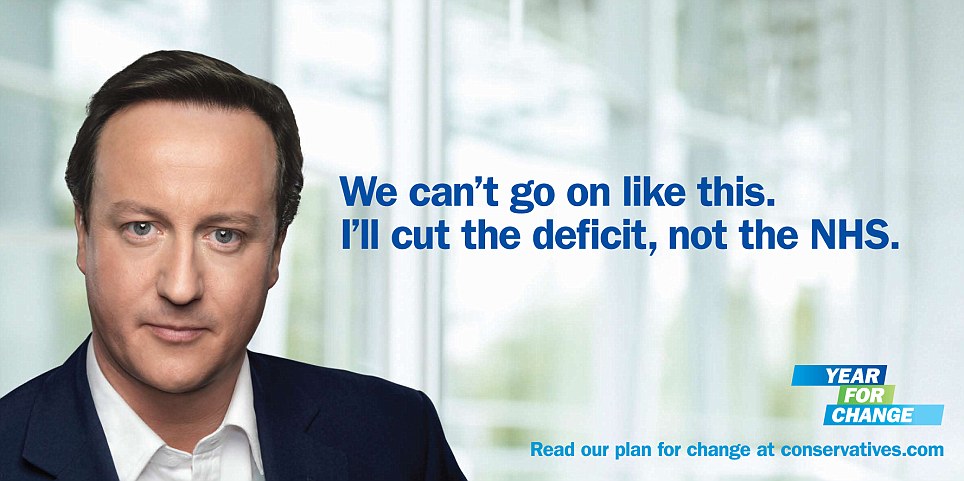
Conservative election poster 2010

A few recent news articles about the UK’s Conservative and Liberal-Democrat coalition government – the ConDem’s – brutal attack on the National Health Service.

NHS leaders say salary bill is unsustainable | Society | The Guardian

Leaders of 1.5 million NHS staff are poised for confrontation with health service employers and ministers over proposed pay and pensions changes that unions claim would seriously damage their incomes.

The NHS already faces the prospect of more than 500,000 staff taking industrial action on 30 November as part of the national day of action against government plans to overhaul public sector pensions. A series of ballots in coming weeks is expected to see paramedics, radiographers, physiotherapists, chiropodists and a host of non-clinical staff such as cooks and cleaners participating in as yet unspecified action.

NHS staff, most of whom are experiencing a two-year freeze on their pay, are furious that ministers are seeking to compel them to work longer and contribute more for ultimately smaller pensions. Unions such as Unison, Unite and the GMB have pledged to ballot their members, although the British Medical Association, Royal College of Nursing and Royal College of Midwives are reluctant to do so.

But the organisation NHS Employers has increased the prospect of another money wrangle by declaring that the NHS salary bill is unsustainable and that local pay deals are needed to bring down costs. It claims that, despite the pay freeze for all NHS staff earning over £21,000, the cost to its members “ such as hospital and mental health trusts “ of employing staff is rising by 2.4% a year.

BBC News – Commissioning groups ‘concerned’ about size and budgets

A survey of the groups due to take over commissioning NHS care is highlighting fears about their size and budgets.

The questions were answered by 131 leaders, out of 253 new Clinical Commissioning Groups (CCGs).

A third said they felt under pressure to become larger, and two-thirds expressed fears that they might inherit debt.

The Department of Health said it expected parts of the NHS to work together to resolve any deficits.

The survey was organised by NHS Alliance and the National Association of Primary Care, which have joined forces to represent CCGs, who will take over buying and organising NHS services.

36% of GPs and other leaders who responded to the survey said they were under pressure from NHS managers to become bigger, so they could pass a viability test next month.

And 67% suspect they will have to deal with some legacy debt from former primary care trusts (PCTs) when the new system begins in England in April 2013.

Health bill changes in Lords will be accepted, says Lib Dem minister | Politics | guardian.co.uk

The government is to accept further changes to its health plans after Lady Williams, the veteran Liberal Democrat, warned that peers are prepared to hold up the health and social care bill in the House of Lords.

As a leading Lib Dem rebel in the Commons condemned the bill as a “huge strategic mistake”, the health minister Paul Burstow admitted that peers would improve the bill next month.

Peers are to consider the bill after more than 1,000 amendments were rushed through the House of Commons earlier this month in the wake of the government’s “listening exercise”.

Burstow, the Lib Dem health minister, said the government was still open to change. “We didn’t stop listening when the listening exercise ended,” he told the Lib Dem conference in a question and answer session on health.

Private firm offers GPs just two weeks’ sick pay – newsarticle-content – Pulse

Exclusive The company behind the UK’s largest network of privately run GP practices is offering its doctors less than half the paid sick leave they would receive under the BMA’s model contract.

Wait weeks to see a GP: Some patients face delays of more than a fortnight for appointment with family doctor | Mail Online

Many patients are having to wait up to three weeks or more to see their GP, a survey has revealed.

A poll of more than 2,000 patients has found that well over two-thirds are not able to see their family doctor within two days.

More than a quarter cannot get an appointment within a week, including some who are made to wait longer than a fortnight or even three weeks.

Aggressive marketing blitz by private firms seeking to gain from NHS cuts – mirror.co.uk

PRIVATE firms have launched an aggressive marketing blitz as they aim to profit from the cuts made to the NHS.

They are trying to lure patients away by highlighting rising waiting lists and the chaotic reorganisation.

One, BMI Healthcare, has placed adverts in local papers and put a waiting times map on its website to encourage NHS patients to go private.

Shadow Health Secretary John Healey said: “Firms are clearly lining up to cash in on damaging policies. It’s the same old Tory choice, wait longer or pay to go private.”
Continue ReadingNHS news review

NHS news review

Spread the love

GP magazine returns to the often recurring theme of NHS changes driving away GPs.

The Royal College of Nursing repeat their opposition to the Destroy the NHS / Health and Social Care Bill and say that MPs are not listening.

Health workers consider non-cooperation.

Health unions warn that a toxic combination of increasing demand, shrinking resources and the pay freeze, are putting staff under severe pressure.

Conservative election poster 2010

A few recent news articles about the UK’s Conservative and Liberal-Democrat coalition government – the ConDem’s – brutal attack on the National Health Service.

GPC update: NHS reforms are driving GPs away | GPonline.com

GP leaders have hit out at the government over its handling of the implementation of NHS reforms and warned even enthusiastic GPs were now being driven away.

GPC chairman Dr Laurence Buckman condemned the government’s failure to scrap plans to offer successful clinical commissioning groups (CCGs) a ‘quality premium’ bonus payment.

‘We are not going to have one. It is in the Bill still – it should not be, it is an inappropriate use of public money.’

Dr Buckman said the quality premium was ‘ethically dubious’ and not acceptable, suggesting that if the government had spare cash to hand out, it should ‘give it to the poor’.

‘We think it is utterly immoral to take some of the money out of patient care and give it to GPs.’

GPC negotiators questioned the logic behind growing pressure on CCGs not to form around small population sizes, and warned that the government was rapidly pushing the NHS back into structures similar to the ones it had just spent billions of pounds to dismantle.

In addition, many experienced managers ‘who know how to run an NHS’ had been expensively laid off and lost to the health service.

He pointed out that the government had initially had a ‘laissez-faire’ approach to the establishment of CCGs but had now performed a volte-face and was dictating how they should look.

RCN monitoring Health and Social Care Bill – Health News – News – ChronicleLive

AT the Royal College of Nursing, we have been keeping a close eye on the Health and Social Care Bill, as it works its way through Parliament.

And despite reforms to the Bill, in response to a public outcry, it seems politicians still haven’t listened.

While MPs say the new Health Bill will reform the NHS and provide considerable efficiency savings, we fear these promises could prove hollow, and it will be the quality of care in the North East that suffers as a result.

Hospital Trusts throughout the North East are already struggling to make unprecedented budget cuts, after NHS CEO Sir David Nicholson demanded the NHS in the North East save £800m over four years, as part of a £20b national cost efficiency drive.

At the same time, we are facing the dissolution of our Primary Care Trusts and Strategic Health Authority, which are being replaced by a large number of untested Clinical Commissioning Groups.

Ironically, the administration costs of running this new system of CCGs is forecast to be more expensive, and more complicated, than the one it is replacing. And if we get the commissioning of NHS services wrong, the delivery of care will not happen efficiently.

What this will mean for patients is a worryingly uncertain future for healthcare provision.

At the RCN, we’ve already identified the Government’s efficiency savings will result in 40,000 frontline NHS jobs being cut. This will result in understaffed and overstretched wards and practice centres across the country.

On top of this, the new Health Bill would remove the income cap for private patients, meaning there will no longer be a limit on the amount of money hospitals can make from private patients.

As a consequence, the access NHS patients have to services could become more limited.

The Government also hope by allowing ‘any qualified provider’ to supply healthcare services, they will drive up quality through competition.

However, this new policy could end up being a race to the bottom, with private sector companies undercutting the approved service tariffs of NHS providers.

At the RCN, we believe it is vitally important the new Health Bill puts safety guards in place to ensure the quality of patient care is not harmed by forced price competition.

Unions may call on members to resist reforms through ‘non-cooperation’ | News | Nursing Times

Unions may consider non-cooperation action against the government’s NHS reforms, a midwife leader has said.

Royal College of Midwives general secretary Cathy Warwick was asked about the prospect of action at a fringe event hosted by the Trades Union Congress at the Liberal Democrat autumn conference in Birmingham yesterday.

She said the organisation was still consulting with members about non-cooperation, although it was more likely to be in response to planned changes to pensions.

But she said: “It [non-cooperation] is something I think we maybe should be thinking about.”

Professor Warwick said the RCM was “close to thinking the only way forward is to ask for this [Health] Bill to be withdrawn”.

Her concerns include fragmentation of services and privatisation.

Ron Singer, a GP and Unite representative on the British Medical Association GP’s committee, said GPs were very unlikely to take action but it was becoming more likely in other health professions.

UNISON Press | Press Releases Front Page

Health unions* are warning today (20 September) that a toxic combination of increasing demand, shrinking resources and the pay freeze, are putting staff under severe pressure. The impact of the proposed pension changes and the massive programme of NHS reforms in the Health and Social Care Bill, are adding even more to the stress felt by staff.

In their joint evidence to the NHS Pay Review Body, the unions, which represent staff including nurses, midwives, paramedics, therapists, porters, cooks and cleaners, highlight increasing concerns about how they can maintain the quality of patient care.

High inflation and the Government’s pay freeze have resulted in a big drop in the value of NHS pay over the last few years. Many NHS staff are suffering financial hardship and the £250 given to the lowest paid has been soaked up by the impact of changes to tax credits, childcare fees and the rising cost of basic essentials such as food and fuel.

Christina McAnea, UNISON, NHS Staff-Side Chair said:

“Stability is vital in any workforce – more so during a period of change. The current turmoil in the NHS is undermining staff morale and threatening the delivery of high quality patient care. On top of job cuts and ward closures, growing waiting lists and an attack on their pension, staff face a reorganisation on an unprecedented scale.

“By imposing a pay freeze for the second year running, the Government is adding insult to injury. Pay has never been generous in the NHS and, with inflation rising, many families are struggling to cover the costs of even basic essentials.

Josie Irwin, RCN, Staff-Side Secretary said:

“Coalition policy means that nurses face suffering a second year of pay cuts. This comes on top of unprecedented change and upheaval in the NHS – leading to low morale, uncertainty and insecurity. The RCN calls on the pay review body to recognise that further attacks on pay will only do more damage to recruitment and retention in the NHS.”

Stephen Austin, Head of Employment Relations for the BDA Trade Union said:

“For years the public have supported the workers in the NHS to get a fair rate of pay for the caring and committed work that they do and this was achieved by the last government, but the current government under the disguise of necessary cuts are returning health workers back into the position of being poorly paid”.

Rehana Azam GMB National Officer, Head of NHS said

“At a time when working people are dealing with their own deficits as the cost of living increases including the essentials like childcare, fuel and food. Wage stagnation and the position directed from Government to Pay Review Bodies is unhelpful and unfair.

“Public Sector workers are being attacked on a daily basis by this Government and the propaganda distributed about public sector workers with the attempts to put private sector workers against public sector workers will reveal that this Government’s only agenda is to undermine the hard working people of this country by making them pay for a deficit which was not their making. All employers in this country are expected to negotiate, consult and agree changes to employment terms and conditions and the bullying tactics applied by this Government in imposing changes to public sector workers terms and conditions will be challenged and stopped”.

Rachael Maskell, Head of Health, Unite, said:

” The Pay Review Body continues to play an important role in providing independent and robust evidence on the remuneration of NHS employees. The NHS workforce are facing unprecedented challenges to their pay, in the midst of mass re-organisation and cuts, in some cases losing 25% in pay as a result. These cuts to services and employment terms are causing morale in the NHS to fall significantly. We are hopeful that this year’s Pay Review Body will ensure that NHS staff are remunerated fairly to ensure that they stop falling behind other sections of the workforce and economy. Unite further hopes that the Pay Review Body will address the recruitment and retention challenges for pharmacists, and estates and maintenance workers in this year’s review.”

*British Association of Occupational Therapists, British Dietetic Association, British Orthoptic Society, Chartered Society of Physiotherpists, Federation of Clinical Scientists, GMB, Royal College of Midwives, Royal College of Nursing, Society of Chiropodists and Podiatrists, Society of Radiographers, UCATT, UNISON, Unite.

Continue ReadingNHS news review

Voting Lib-Dem and police issues

Spread the love
Cleggeron

The Liberal-Democrats are engaging in allsorts of illiberal and anti-democratic gymnastics to avoid a vote on abolishing the NHS.

I’m sorry to admit that I actually voted(1) Liberal-Democrat at the last general election. I could never vote Tory and I couldn’t bring myself to vote Labour even though it was no longer hijacked by Blair & Co. I’m going to have real problems ever voting Labour. They willingly allowed themselves to be hijacked by a Fascist, psychopathic nutter totally divorced from reality and any concept of truth who quite clearly pursued an alien agenda for so many years. Unison and Unite were so supportive of Him. Is it so important to remain in power that you prostitute all your values? Today, the Liberal Democrats may be following the same path.

Back to voting Liberal-Democat at the last general election. It was a tactical vote but I’m pleased to say that it had no effect since my constituency is certain to return a Labour MP.

As I’m sure that you’re aware – while there was no overall winning party at the General Election the Conservatives and the Liberal-Democrats formed a coalition government, the ConDems. I was pleased that New Labour was eventually defeated and out of power and initially hoped that the Liberal-Democrats would restrain the Tories. No such luck. It turns out that Clegg is a Tory in everything except political party. A European Tory, immensely rich and privilleged and – although exactly the type that are repeatedly appointed – entirely the wrong person to hold any political office. Why oh why did they listen to the press and dump Campbell?

The ConDem coalition – essentially a Tory government – shit on the electorate. Tuition fees, the Education Maintenance Allowance that was so important to poor families and now the NHS. “No top down reorganisation”. What a Blair-faced lie that one was. “We’re not privatisng the NHS”. Well, you’re not selling shares but in every other sense the NHS is getting privatised. Foreign and UK companies running hospitals, the profitable bits getting cherry-picked and a cash-starved shell of an NHS having to pick up the pieces. Health insurance, pay or go without – isn’t that privatisation?. Opposed by all major healthcare associations and yet they continue in destroying the NHS.

“No top-down reorganisation”. There is quite obviously no mandate for change.

The Lib-Dems will and are getting blamed for this. Without them it would not be happening. The toxic comments they get on newspaper articles are instructive. Will it be fatal for them? I expect to be campaigning against the Lib-Dems with anti-Blair vigour unless they change their ways pretty quickly.

(1) To be continued.

19/9/11

DRAFT: to be expanded – particularly murders by police, the role of ACPO.

There are many issues.

I am regarded by oppressive state authorities as an anarchist and potential violent terrorist. This is really quite strange since I consider it important to vote and participate in the democratic process. There is something quite clearly wrong here.

It is clear that I regularly vote as some simple searches will demonstrate. Why then am I regarded as an anarchist? How can the official assessment be so absurdly wrong? Similarly, it is clear that I participate in the democratic process and that I have always participated within the discourse of politics. Why then am I regarded as a potential terrorist – a potential violent extremist? Again, how can the official assessment be so absurdly wrong?

I consider that a huge proportion of it is to do with my perspective and activity. As somebody who rejects fake, manufactured terrorism I have been cast as the enemy. As somebody who recognises and is able to identify the real terrorists, I am the enemy of those terrorists.

Accusations of terrorism used to involve issues such as making bombs and using bombs and the threats of such things. We have seen – particularly over the last decade – that terrorism is used by strong vested interests to promote and pursue a particular agenda. Accusations of terrorism are now cheapened and directed at those that oppose such strong vested interests.

Oppressive state authorities promote the official ideology of fake, manufactured terrorism while the true anti-terrorist is cast as the terrorist. Accusations of terrorism have come to be directed at percieved opponents of some powerful interest group.

The official assessment is so absurdly wrong because the world has been turned on its head. Those that should be concerned with fighting terrorism are the terrorists and those that are accused of being terrorists are the anti-terrorists.

20/9/11 Still in Draft: may be altered and to be expanded

The question remains: Why is the official police assessment of me so absurdly wrong despite clear and obvious evidence to the contrary?

While it is accepted that the police are capable of staggering incompetence, there is more than that. I think that the answer is harassment – it is obvious that suspected terrorists can be violently killed by police with complete impunity at any time. This is a continuation of the harassment I endured from Ian Blair and John Reid. The same bullshit is involved – homegrown terrorists, liquid explosives, etc.

I think that many murders by police that are similar to me are intended to reinforce this point i.e. we can kill people similar to you so we can kill you. The police involved and their superiors are responsible for these murders by police and they are likely to continue until they are held to account.


Continue ReadingVoting Lib-Dem and police issues

NHS news review

Spread the love

“Liberals” and “Democrats” to meet with whole-hearted NHS abolitionist and orange-booker (Tory) Nick Clegg.

Conservative election poster 2010

Nick Clegg faces stormy conference as activists vent fury at NHS reform – UK Politics, UK – The Independent

Nick Clegg faces a challenge to his authority at the Liberal Democrats’ annual conference as party activists plan to rebel over four of the Coalition Government’s policies.

by Andrew Grice

When the Birmingham meeting opens tomorrow, grassroots members will challenge a ruling by conference managers to deny delegates a vote on the Government’s controversial NHS reforms. Although Mr Clegg extracted concessions from David Cameron, some Lib Dems believe they did not go far enough.

A conference vote in favour of further amendments to the NHS and Social Care Bill could undermine Mr Clegg’s attempt to convince the public that the Lib Dems are punching above their weight inside the Coalition.

The party is more democratic than the Conservatives or Labour and their conference decides party policy. Some activists fear that the current plan to stage a health debate without a formal vote would mark the first step towards the event becoming a “Conservative-style rally.”

Evan Harris, vice chairman of the party’s federal policy committee, said yesterday: “There is a lot of anxiety among party activists that the conference is being turned into an event where votes are avoided. That’s not our style.” Grassroots revolts are also in prospect over the Government’s plans to cut £350m from the legal aid budget and reduce state benefits for cancer patients and over its response to last month’s riots.

Lawyers plan to confront Mr Clegg over the withdrawal of legal aid from most cases of family breakdown, medical negligence, immigration, debt and welfare benefit, and to make claimants to pay legal fees out of compensation payments. The moves were rejected in a vote at the party’s spring conference.

Alistair Webster, chairman of the Liberal Democrat Lawyers’ Association, said: “I don’t think that, either inside the Government or in the parliamentary party, people have done anything like enough to push the [party’s] agenda. I’m more than disappointed – I’m appalled.”

27/11/13 Having received a takedown notice from the Independent newspaper for a different posting, I have reviewed this article which links to an article at the Independent’s website in order to attempt to ensure conformance with copyright laws.

I consider this posting to comply with copyright laws since
a. Only a small portion of the original article has been quoted satisfying the fair use criteria, and / or
b. This posting satisfies the requirements of a derivative work.

Please be assured that this blog is a non-commercial blog (weblog) which does not feature advertising and has not ever produced any income.

dizzy

Continue ReadingNHS news review

NHS news review

Spread the love

Colin Leys – co-author of ‘The Plot Against the NHS’ – has an article at Opendemocracy.

The NHS will be privatised – it doesn’t matter what the British people want | openDemocracy

In voting for the third reading of Andrew Lansley’s Health and Social Care Bill last week MPs voted to replace the NHS as a public service with a system of competing businesses – foundation trusts, social enterprises and for-profit corporations.

The government’s claim that the Bill does not mean privatisation is plainly specious: the truth of the matter is to be found in what Lansley’s health minister, Lord Howe, told a meeting of private health businessmen on the day the Bill was approved. He said it presented ‘huge opportunities’ for the private sector, and noted that commissioners of health care would be barred from favouring NHS providers. The truth is also to be found in the government’s leaked plans to hand over the management of NHS hospitals to private companies, and in the current and promised large-scale opening up of NHS work to ‘any qualified provider’.

Conservative election poster 2010

Lord Howe reiterated Tony Blair’s dictum that it doesn’t matter who provides care, so long as it is free to the patient. What this does is to treat as irrelevant everything that follows from introducing market dynamics. The basic fact about health care is that high quality care depends on a sufficient ratio of skilled staff to patients, whereas in the long run profits can only be made by reducing the skill-mix (to lower the wage bill) and cutting staff ratios. The resulting decline in care quality is already evident in privatised long term care and home care, and is now beginning to be seen in community health services and GP services. Once NHS trusts have to compete with for-profit companies they will be forced to follow suit.

The erosion of quality will be reinforced by two other powerful factors: a) the cuts being imposed in the NHS budget, leading to the withdrawal of some services and the scaling back of others; and b) rising costs due to marketisation.

The costs of market-based health care – from making and monitoring multiple and complex contracts, to advertising, billing, auditing, legal disputes, multi-million pound executive salaries, dividends, fraud, and numerous layers of regulation – will eventually consume 20 per cent or more of the health budget, as they do in the US. Neither the Care Quality Commission nor NHS Protect (the former NHS Counter-Fraud Unit) is remotely resourced enough, or empowered enough, to prevent the decline of care quality or the scale of financial fraud that the Bill will introduce.

The effect will be that people with limited means will be offered a narrowing range of free services of declining quality, and will once again face lengthening waits for elective care. To get high quality and more comprehensive care people will have to pay for private insurance and private care, if they can afford to. More and more NHS hospital beds will be occupied by private patients, further reducing the resources available for free care. Fixed personal budgets, like those already given to people for social care, are to be introduced for a growing range of chronic conditions, allowing those with resources to top up their allocations while leaving the rest to make do with ‘basic’ NHS provision.

None of this is wild speculation. It is either already happening or announced or readily foreseeable on the basis of current policy. To deny that the Bill means privatisation and the end of the NHS as a comprehensive service equally available to all is like denying that the earth is round.

The fact that MPs have nonetheless endorsed the Bill reveals something more serious than an ideological blind spot. It shows that they don’t really care that they are flouting the wishes of the electorate. Cameron promised categorically that there would be no further top-down reorganisation of the NHS, but is pushing through a reorganisation that amounts to a destruction of it, against the known wishes of a large majority of voters. Governments, we are told, must often take unpopular decisions. But this is not some incidental measure. We are talking about something fundamental to what, for more than half a century, has played a key part in making Britons equal citizens, and Britain a civilised and humane country. If democracy doesn’t mean that governments have to respect public opinion on something as important as this, what does it mean?

It is no less depressing that the Department of Health has been reduced to peddling more and more brazen lies, such as its ‘Department of Health Myth Buster’ document, published to coincide with the Third Reading debate. The principle seems to be that that if an official lie – such as that the Health Bill does not mean privatisation – is repeated often enough, most people will feel it must be true. Democracy depends on voters having trustworthy information. If we cannot trust departments of state, run by public servants, to tell the truth, who can we trust?

Selected excerpts from ‘The Plot Against the NHS’ by Colin Leys and Stewart Player. Chapter One is available here. I highly recommend this book available from Merlin Press for £10.

The Plot Against the NHS #1

The Plot Against the NHS #2

Continue ReadingNHS news review