Milei suffers a resounding defeat in Buenos Aires provincial elections

Spread the love

Original article by Pablo Meriguet republished from peoples dispatch under a Creative Commons Attribution-ShareAlike 4.0 (CC BY-SA) license.
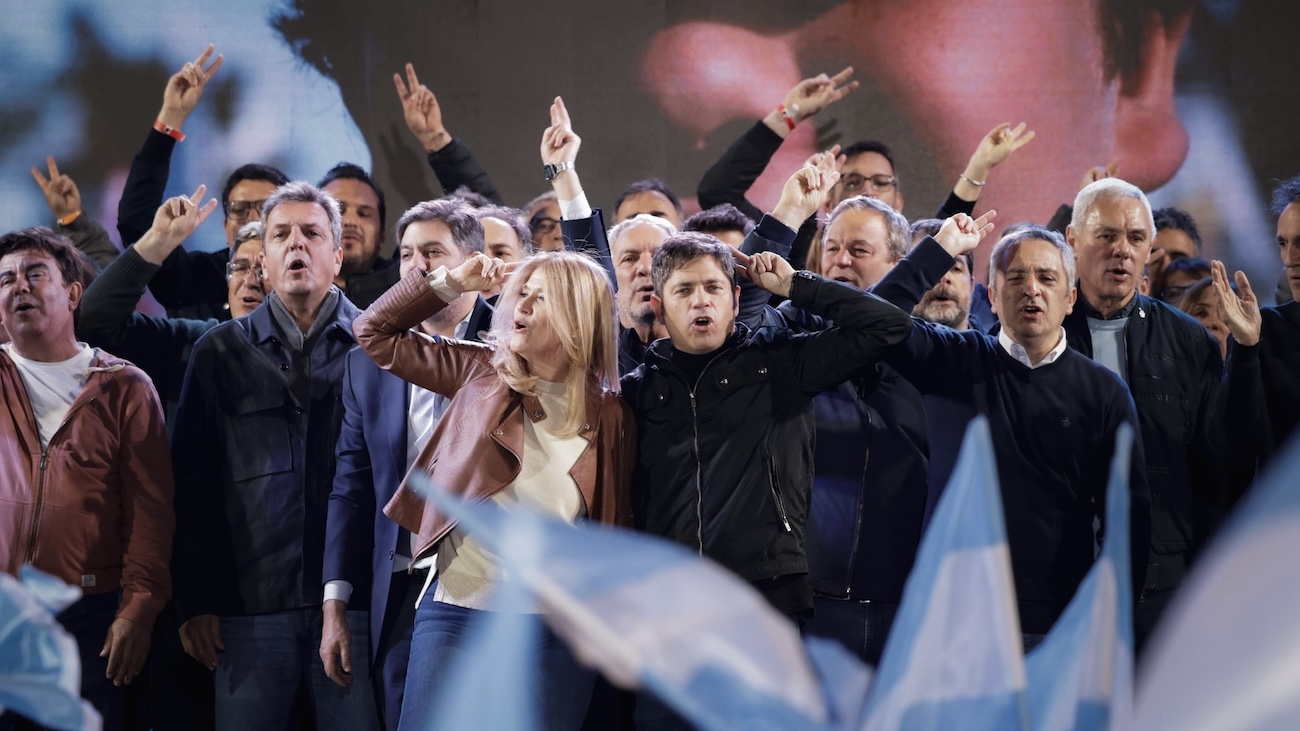
Axel Kicillof and other Peronist leaders in Buenos Aires celebrating their victory on Sunday, September 7. Photo: Fuerza Patria / X

Despite the president taking a front-line role in the election campaign and predicting victory for his party (“Buenos Aires will be painted purple,” Milei claimed), the figures speak for themselves. Voter turnout is estimated at almost 61%.

On September 7, 2025, the province of Buenos Aires dealt a crushing defeat to the right-wing libertarian project of President Javier Milei, who, after learning the results of the provincial elections, said: “Today we have suffered a clear defeat and we must accept it.”

The people of Buenos Aires province, which accounts for 38% of the country’s population, elected senators, deputies, and delegates of their municipalities. Peronism decided to join forces and form a large anti-Milei alliance called Fuerza Patria (Homeland Force), which, according to official data, obtained almost 47% of the valid votes. Meanwhile, La Libertad Avanza, Milei’s party that allied itself with the PRO (the party of former president Mauricio Macri), reached almost 34%. In third and fourth place were the centrist SOMOS and the Left Front, respectively, which each obtained almost 5%. The rest of the votes were divided among the other contenders.

In other words, Peronism won by more than 13 points over the far right, allowing it to take six of the eight electoral districts. La Libertad Avanza only managed to win the fifth and sixth districts. In addition, Peronism swept the municipal elections, winning 95 of the 135 municipalities in the province.

Milei says he will not back down

Despite the resounding defeat, Milei stated that while the necessary political mistakes must be corrected, he will not back down from his neoliberal project. “We will not back down one millimeter in the government’s policy; we will accelerate the course even more. If we have made political mistakes, we will process them and do better to win in October… We will continue to defend fiscal balance.”

He also took the opportunity to criticize his primary opposition, “They have put all the Peronist apparatus that they have been managing for 40 years into play, and this [result] is the floor for us and the ceiling for them.”

Peronism celebrates

For its part, the main opposition force, Peronism, celebrated the results. Former President Cristina Fernández, who is currently under house arrest, wrote on her X account: “Did you see that, Milei? Trivializing and vandalizing the ‘Never Again’ movement, which represents the darkest and most tragic period in Argentine history, does not come without a price. Neither is laughing at the death and pain of your opponents. But pointing fingers and stigmatizing the disabled, while your sister charges a 3% kickback on their medications, is lethal. And I’d better not even tell you how the rest (of those who still have jobs) are doing. Indebted for food, rent, expenses, or medications, and on top of that, with maxed-out credit cards. Get out of your bubble, brother.”

Read more: “We will return,” former Argentine president Cristina Fernández tells supporters

The Peronist governor of the province of Buenos Aires, Axel Kicillof, said to his supporters after learning the results: “The message from the polls is that you can’t govern for outsiders, for those who have the most. Milei: You have to govern for the people.” Furthermore, looking ahead to future elections, including the presidential election, Kicillof stated: “The elections have shown that there is another way, and today we are beginning to follow it.”

What is the reason for the crisis of ultraliberalism?

There are several elements which can help explain the defeat of Milei and his party on Sunday.

One of them is the recent speculation and suspicion about the alleged involvement of the president’s sister, Karina Milei, in a corruption scheme involving the purchase of medicine. Many believe this directly affected Milei’s decline in popularity, which in turn affected his candidates in the province of Buenos Aires.

Other interpretations also point to an increasingly difficult management of the economy. The government has implemented a radical neoliberal policy that is in line with the demands of the International Monetary Fund (IMF). This has brought some stability to inflation, but it has also caused enormous social unrest, such as that of retirees who have taken to the streets every week to protest against government cuts to health care and freeze pensions.

Read more: Argentine pensioners face heavy repression in weekly march

In this regard, journalist Federico Rivas Molina wrote in El País: “The economic team is finding it increasingly difficult to maintain the value of the peso against the dollar. To prevent the dollarization of peso portfolios, it first raised rates to 80%, triple the inflation forecast for this year. Then it raised bank reserve requirements to 50% to reduce the amount of pesos in circulation. In the middle of last week, the floating bands it had agreed with the International Monetary Fund and sold dollars from the Treasury. Milei then blamed the turbulence on what he called ‘the kuka risk,’ that is, the fear of a Kirchnerist victory that had investors terrified. With the prophecy fulfilled, the scenario is now much more hostile than it was on Friday.”

Along these lines, Erika Gimenez, a journalist at ARG Medios, told Peoples Dispatch that Milei’s economic plan is not working and the people know it. She explained, “No one feels that their economic situation has improved under Milei’s government; quite the contrary: inflation is rising, salaries are insufficient, pensions for retirees and disabled people are being cut, among other cruel policies implemented by Milei. He is not convincing a sector that previously voted for him.”

She also expressed her opinion that Peronism, which has several internal tendencies (not always compatible), could sustain this alliance in the medium term thanks to the emergence of a figure who can bring together the different internal forces: “I think that Axel Kicillof’s leadership [in Peronism] is indisputable.”

Regarding the immediate future of Milei’s government, Gimenez said that a process of internal crisis is coming: “The figure of his sister is weighing on Milei, and despite this, he is not going to remove her. In addition, some ministers are going to resign or be fired, although it is not known which ones. There is a kind of political instability and instability in the Milei government’s economic project. It is most likely that between now and October, when there will be national legislative elections in which everyone in the country votes, political and economic stability will be at stake.”

Original article by Pablo Meriguet republished from peoples dispatch under a Creative Commons Attribution-ShareAlike 4.0 (CC BY-SA) license.

Continue ReadingMilei suffers a resounding defeat in Buenos Aires provincial elections

The Caribbean on a knife’s edge: Trump’s military buildup threatens Venezuela

Spread the love

Original article by Manolo De Los Santos republished from peoples dispatch under  a Creative Commons Attribution-ShareAlike 4.0 (CC BY-SA) license.
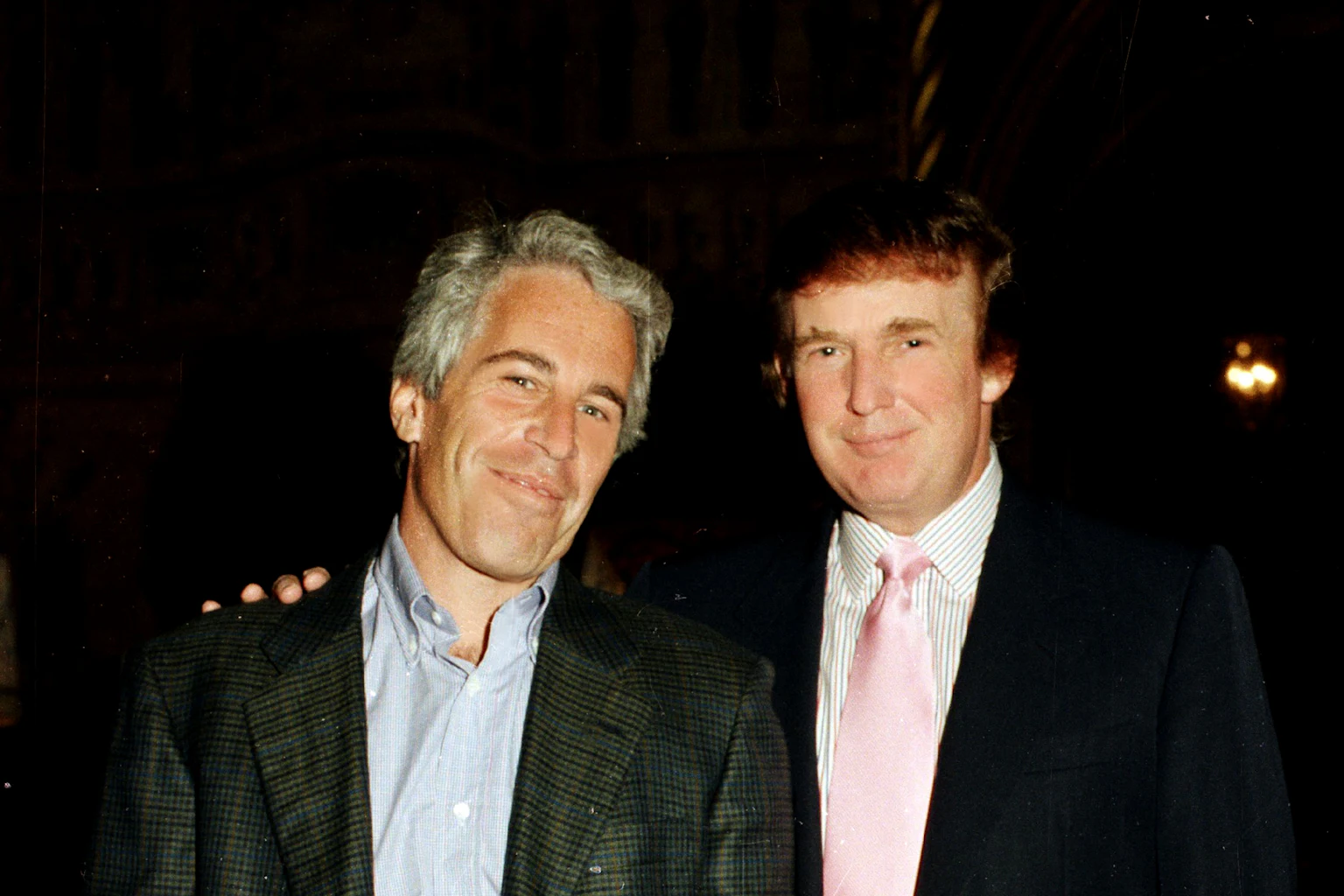
US President Donald Trump, Venezuelan President Nicolás Maduro. Photos via Presidential Press

The war drums beating in Washington are not just a threat to a distant nation; they are a symptom of a political system that thrives on the distraction of war abroad to cover its internal crises.

The sun glints off the gray hull of the USS Iwo Jima, a massive amphibious assault ship cutting through the Caribbean Sea. Secretary of War Pete Hegseth, a key architect of the Trump administration’s “maximum pressure” policies, stands on deck before a group of sailors and marines. His voice, amplified by the ship’s public address system, is a low, serious rumble that carries across the choppy waters. “What you’re doing right now is NOT training,” he says, in a scene reminiscent of George W. Bush’s staged landing to declare victory in Iraq. “This is a REAL-WORLD EXERCISE on behalf of the vital national interests of the United States of America, to end the POISONING of the American people.” His words hang heavy in the air, a dramatic prelude to what some suspect is an impending invasion of Venezuela.

The history of the Caribbean is a bloody one, stained by the imperial ambitions of European powers and the United States. The region now sits on the verge of another bloody chapter. As the great writer and historian Juan Bosch once observed, this region of Latin America is a battleground where empires have fought to seize the rich lands of its peoples and to claim what other empires had already conquered.

Today, the Caribbean is again being transformed into a stage for imperial aggression.

In a dangerous and dramatic escalation, the government of the United States, through its aptly renamed Department of War, has amassed a formidable naval force and deployed advanced fighter jets to the waters off Venezuela. This military buildup, consisting of at least eight warships, 4,000 sailors and marines along with P-8 spy planes and at least one nuclear submarine, is a clear threat to Venezuelan sovereignty and a blatant crime against international law. Washington is hiding behind a well-worn, cynical pretext: the “war on drugs”.

A sordid history of manufactured pretexts

The latest act of lawlessness came on September 2, when US forces in the Caribbean allegedly interdicted a “drug trafficking” vessel. Instead of following international protocols, the US Coast Guard and DEA agents opened fire, destroying the boat and killing all 11 people on board. This extrajudicial execution at sea is a clear violation of international law, which mandates that law enforcement actions must prioritize arrest and the preservation of life. The use of lethal force is only permitted as a last resort in cases of immediate self-defense. Though the US is not a signatory to the United Nations Convention on the Law of the Sea, the US military’s legal advisors have previously said that the US should “act in a manner consistent with its provisions”. To destroy a vessel and summarily execute its occupants without due process is not law enforcement; it is a state-sanctioned massacre, a crime that echoes other massacres in American military missions abroad. Recently, Professor Michael Becker of Trinity College in Dublin told the BBC that the US action “stretches the meaning of the term beyond its breaking point”.

This act of violence is not an anomaly but part of a deliberate pattern of provocation. The US Southern Command (SOUTHCOM) has significantly bolstered its presence with additional destroyers and littoral combat ships. Meanwhile, the US Air Force has sent F-35 fighter jets, aircraft designed for air dominance and striking high-value targets – not for intercepting drug runners – to its base in Puerto Rico, an island under US colonial domination. This military posture has nothing to do with curbing narcotics flow and everything to do with encircling and intimidating a nation that has defiantly resisted Washington’s hegemony for over two decades.

The historical context is inescapable. The United States has a long and sordid history of fabricating justifications for military action to achieve its political ends. The sinking of the USS Maine, the Gulf of Tonkin incident, and the non-existent “Weapons of Mass Destruction” used to justify the invasion of Iraq are all well-worn chapters in the same playbook. The current administration, with its bellicose rhetoric, is drafting a new one. Key architect of Trump-era maximum pressure policies, Secretary of State Marco Rubio, has consistently agitated for regime change, framing the Venezuelan government as a “narco-state”.

Exposing the “narco-state” smokescreen

The “narco-state” narrative collapses under the weight of its own fiction. According to the United Nations Office on Drugs and Crime (UNODC) and the US State Department’s own annual reports, the vast majority of cocaine leaving South America originates from and passes through US-allied nations like Colombia, Ecuador, and Peru. Venezuela is not a significant producer of cocaine. The narrative is a convenient smokescreen, a lie sold to the public to manufacture consent for aggression. The hypocrisy is further exposed by Rubio’s recent tour of Ecuador, a nation with extremely high levels of collaboration with US anti-drug agencies. Despite this collaboration, Ecuador has been plunged into a devastating crisis of drug trafficking and gang violence, proving that US intervention solves nothing and only fuels instability.

Read more: Noboa opens door to US military bases, backs Rubio’s FTO designation for Ecuadorian gangs

The true goal of this military buildup is clearly the overthrow of Venezuela’s government and the seizure of its vast oil reserves. The threats emanating from Washington are not veiled. They range from scenarios of massive bombing campaigns to the outright kidnapping or assassination of President Maduro. Donald Trump’s past musings about a “military option” for Venezuela are now being operationalized.

The Venezuelan people prepare for resistance

In the face of this existential threat, the Venezuelan people are preparing to defend their homeland. President Maduro has called for a “people in arms”, and an estimated 8 million Venezuelans have joined citizen militias. Across the country, young people, students, workers, and retirees are training in basic combat, emergency response, and civil defense. Their resolve is a powerful testament to the spirit of resistance.

Read more: Venezuela mobilizes 4.5 million militia members as US deploys troops to the Caribbean

“We are not an army for aggression, but an army for peace, for the defense of our sacred land,” said Maria Delgado*, a 20-year-old university student and new militia member in Caracas. “They think that because we are young or because we are not professional soldiers, we will be afraid. They are wrong. We know what is at stake: our sovereignty, our future, and the project of justice that our parents built.”

President Maduro has framed this mobilization in stark terms: “Venezuela is facing its greatest threat in 100 years. Having defeated all forms of hybrid warfare, they [United States] have opted for the worst mistake.”

The war drums beating in Washington are not just a threat to a distant nation; they are a symptom of a political system that thrives on the distraction of war abroad to cover its internal crises. The billions spent on deploying F-35s and destroyers to the Caribbean are billions stolen from the right to healthcare, education, and housing of ordinary Americans at home.

*Name changed

Manolo De Los Santos is Executive Director of The People’s Forum and a researcher at Tricontinental: Institute for Social Research. His writing appears regularly in Monthly Review, Peoples Dispatch, CounterPunch, La Jornada, and other progressive media. He coedited, most recently, Viviremos: Venezuela vs. Hybrid War (LeftWord, 2020), Comrade of the Revolution: Selected Speeches of Fidel Castro (LeftWord, 2021), and Our Own Path to Socialism: Selected Speeches of Hugo Chávez (LeftWord, 2023).

Original article by Manolo De Los Santos republished from peoples dispatch under  a Creative Commons Attribution-ShareAlike 4.0 (CC BY-SA) license.

Orcas discuss how Trump was re-elected and him being an insane, xenophobic Fascist.
Continue ReadingThe Caribbean on a knife’s edge: Trump’s military buildup threatens Venezuela

Here’s Trump’s Birthday Letter to Epstein—With His Signature on It

Spread the love

https://newrepublic.com/post/200153/trump-birthday-letter-jeffrey-epstein-signature

Davidoff Studios/Getty Images

Remember that letter Trump swore doesn’t exist? Well, the Epstein estate just released it.

At the height of Donald Trump’s scandal surrounding notorious late sex criminal Jeffrey Epstein, the Wall Street Journal in July reported that the president had written a cryptic message wishing Epstein a happy 50th birthday in 2003. The note was reportedly contained within a marker drawing of a woman’s naked torso.

Trump insisted this was a “fake thing.” “I never wrote a picture in my life. I don’t draw pictures of women,” he told the Journal. “It’s not my language. It’s not my words.” Vice President JD Vance called it “complete and utter bullshit.”

The president filed a lawsuit against the newspaper in hopes of, in his words, suing owner Rupert Murdoch’s “ass off, and that of his third rate paper.”

Murdoch and the Journal’s asses may live to see another day, as the paper on Monday released a photo of the letter.

Article continues at https://newrepublic.com/post/200153/trump-birthday-letter-jeffrey-epstein-signature

Orcas discuss how Trump was re-elected and him being an insane, xenophobic Fascist.
Donald Trump urges you to be a Climate Science denier like him. He says that he makes millions and millions for destroying the planet, Burn, Baby, Burn and Flood, Baby, Flood.
Donald Trump decrees forbidden terms denying sexual diversity
Continue ReadingHere’s Trump’s Birthday Letter to Epstein—With His Signature on It

Plans to ‘maximise extraction’ of North Sea oil and gas would soon run into geological limits

Spread the love
North Sea oil is in its geological twilight. James Jones Jr / shutterstock

Mark Ireland, Newcastle University

“We are going to get all our oil and gas out of the North Sea”, Conservative Party leader Kemi Badenoch said recently. Her promise to “maximise extraction” sets up a clash between political ambitions, economic reality and geological limits.

Reform UK has also said drilling for more oil and gas in the North Sea would be a “day one” priority. But even if the Conservatives or Reform were to be elected and lifted the current moratorium on new exploration licenses, there might not be the promised prizes of oil and gas under the seabed – or enough appetite from investors – to deliver on that promise.

BP, in those days British Petroleum, first extracted gas from under the North Sea in 1967. It marked the start of what was to become, for decades, one of the most valuable sectors of the UK economy, with more than 400 separate oil and gas fields developed to date.

But production peaked in 1999 and the North Sea now produces less than half as much as in its heyday.

It is now a “mature” basin: most of the biggest and easiest-to-develop fields have already been discovered and depleted. What remains are smaller, sometimes more remote, and often more technically challenging or expensive resources and reserves.

This is typical of ageing oil and gas provinces, where production declines even as operating costs rise. New projects must compete with oil and gas extracted from other parts of the world where it is easier and cheaper and more appealing to investors.

Finding oil and gas

Historically, only one in eight exploration wells in the North Sea led to a field producing oil and gas. That ratio has improved: between 2008 and 2017, a bit more than one in four wells led to a commercial success.

But far fewer wells are being drilled today. Even with the advances in technology, such as improved geophysical imaging which allows us to better define opportunities ahead of drilling, the big discoveries were probably made decades ago.

UK exploration wells vs offshore fields by year:

Graph showing wells and oil fields by year
The number of exploration wells is down hugely from its peak in the 1980s and early 90s. Mark Ireland / NSTA

The UK government’s North Sea Transition Authority estimates there could still be around 3.5 billion barrels of oil equivalent in more than 400 undeveloped prospects. But most of these potential fields are small, isolated or technically complex. Developing them will require high oil and gas prices, fiscal stability, and a lot of investor confidence.

Politics vs geology

Even if a future government relaxes exploration licensing rules, geology will remain the bigger constraint. The North Sea is simply not as cheap as it was, and global fossil fuel giants have many other options. It is currently far cheaper to produce oil and gas in other regions, the Middle East or North Africa for example. Projects in these countries are all competing for the same capital.

Volatility in the energy sector will continue to make investors cautious. The 2015 oil price crash cut activity in the UK sector to its lowest level in decades, and it has never fully recovered. As fossil fuels are sold on the global market, political volatility, international and national, can lead to rapid shifts in investor confidence.

In the UK the introduction of a windfall tax in 2023 and changing requirements for environmental impact assessments are all making decision making on long-term projects riskier. And while the UK still needs considerable volumes of gas in future (and more modest amounts of oil) both are declining as our energy system evolves and renewable energy expand.

The UK’s mix of economic uncertainty, mature geology and smaller discoveries will make it harder to attract major international energy firms.

The future of the North Sea

That doesn’t mean the North Sea has finished as a source of oil and gas. For instance, undeveloped discoveries – where oil or gas has been confirmed but not yet produced – represent a lower-risk opportunity. But returns may be modest as many are relatively small and isolated from existing infrastructure.

New exploration licenses, if issued, might extend production modestly, but they are unlikely to deliver another game-changing discovery.

Some analysts argue that future licensing should be highly strategic, limited to projects with clear economic importance or climate compatibility. That approach could reduce reliance on imported gas, which tends to be more carbon-intensive than gas produced domestically. This would certainly make more sense than restarting fracking. But it would still not recreate the industry’s heyday.

Easy oil is over

The North Sea will still produce oil and gas for years to come, but its role will shrink. Even with friendlier policies, the era of big discoveries and rapid growth isn’t coming back.

Maximising extraction may sound appealing to politicians, but geology, economics and climate commitments all point to the North Sea’s best oil and gas days being behind it. The real challenge now is managing the investment during decline while investing in the cleaner solutions that will replace it.


Don’t have time to read about climate change as much as you’d like?
Get a weekly roundup in your inbox instead. Every Wednesday, The Conversation’s environment editor writes Imagine, a short email that goes a little deeper into just one climate issue. Join the 45,000+ readers who’ve subscribed so far.

Mark Ireland, Senior Lecturer in Energy Geoscience, Newcastle University

This article is republished from The Conversation under a Creative Commons license. Read the original article.

UK Conservative Party leader Kemi Badenoch explains her reality that the Earth is flat, the Moon is made of cheese and that she was born from Unicorn horn dust
UK Conservative Party leader Kemi ‘not a genocide’ Badenoch explains her reality that the Earth is flat, the Moon is made of cheese and that she was born from Unicorn horn dust
Continue ReadingPlans to ‘maximise extraction’ of North Sea oil and gas would soon run into geological limits