U.S. Energy Secretary Chris Wright Backs Coal and Attacks ‘Sinister’ Climate Targets at ARC Conference 

Spread the love

Original article by Adam Barnett republished from DeSmog.

U.S. Energy Secretary Chris Wright speaking at the 2025 Alliance for Responsible Citizenship conference. Credit: ARC / YouTube

The Trump appointee and fossil fuel executive called the transition to renewable energy “lunacy” at an event packed with climate science deniers.

Donald Trump’s new energy secretary has today vowed to “get out of the way” of coal, oil and gas, and called the UK’s 2050 net zero target “a sinister goal” that would “impoverish” people.

Chris Wright, an oil and gas industry executive appointed by U.S. President Trump, was speaking via video link at the Alliance for Responsible Citizenship (ARC) conference in London, a right-wing forum run by fierce opponents of climate policies. 

He also downplayed the threat from extreme weather, and suggested that climate action is part of a plot to “grow government power” and “shrink human freedom”. 

The ARC conference, taking place this week at the ExCel centre in east London, includes speeches by Conservative Party leader Kemi Badenoch, Republican Party Speaker of the House Mike JohnsonReform UK leader Nigel Farage, and Canadian psychologist and ARC founder Jordan Peterson

As DeSmog revealed on Monday, a leaked guest list for the event includes executives from oil and gas giants, including BP, Koch Inc., Valero Energy, and Energy Transfer. 

Until his appointment, Wright was the CEO of the fracking services company Liberty Energy. According to its 2023 tax filing, Wright was also a director of the Western Energy Alliance (WEA), a trade group representing more than 300 companies in the oil and gas industry. WEA has historically lobbied against oil and gas industry restrictions. 

In a video posted to LinkedIn in January 2023, Wright said, “There is no climate crisis”.

‘Sinister Agenda’

Wright told the ARC audience today that he wanted to “increase the supply of affordable, reliable energy” by lifting the pause on natural gas and scrapping regulations on nuclear energy. 

When asked about coal, oil and gas, he said: “Oh absolutely. The world today runs on coal oil and gas, and it’s been a tremendous success. I should have said number one [of his plan] is get out of the way of the production, export and enhancement of our volumes of coal, oil and gas.” 

The energy secretary also attacked the UK’s legally-binding target of cutting emissions to net zero by 2050.

“Net zero 2050 is a sinister goal”, he said. “It’s a terrible goal. It’s both unachievable by any practical means, but the aggressive pursuit of it – and you’re sitting in a country that has aggressively pursued this goal – has not delivered any benefits, but it’s delivered tremendous cost.”

He added: “This is not energy transition, this is lunacy. This is impoverishing your own citizens in a delusion that this is somehow gonna make the world a better place. It’s not.”

The world’s foremost climate science body, the UN’s Intergovernmental Panel on Climate Change (IPCC), has stated that – without achieving net zero by 2050 and limiting warming to 1.5C – the world will struggle to contain the worst effects of climate change. These include droughts, flooding, poverty, and mass displacement. 

Wright went on to claim that “We’re scaring children all the time with stories of extreme weather” when “deaths from extreme weather have plummeted for 100 years”. 

Better forecasting and preparation have cut extreme weather deaths over this period, but the number and intensity of extreme weather events have increased, and they continue to be disproportionately fatal in the least developed countries. 

The energy secretary also claimed that “climate-obsessed people […] know very little about the climate data”, before alluding to the conspiracy theory that climate change is being used to impose a green tyranny. 

“I think the agenda might be different here than climate change”, he said. “It’s certainly been a powerful tool used to grow government power, top down control, and shrink human freedom. This is sinister.”

Oil and Gas at ARC

Senior representatives from several major fossil fuel producers will be at the ARC event, according to a leaked list of attendees viewed by DeSmog.

Billed as an effort to “re-lay the foundations of civilization,” the conference will feature panels about energy and environment that are filled with prominent deniers of the climate crisis.

That includes Vivek Ramaswamy, a former contender for the U.S. Republican presidential nomination, who has referred to the “climate agenda” as a “hoax,” as well as Nigel Farage, who has called for the UK’s 2050 net zero emissions policies to be “scrapped” entirely. 

They will be joined by representatives of prominent climate denial organizations including the CO2 Coalition, and libertarian anti-climate think tanks such as the Cato Institute.

“I had a chance to sit down one-on-one with Chris in 2022 in his Denver office,” claimed Gregory Wrightstone, executive director of the CO2 Coalition, in a newsletter in late 2024. 

Wrightstone “was impressed with his [Wright’s] knowledge and views on energy philosophy, which aligned closely with those of the CO2 Coalition.”

“The key takeaway is that he’s a big supporter of the continuing use of fossil fuels, including coal, oil, and natural gas,” Wrightstone said. 

ARC is backed by the UAE-based investment firm Legatum Group and British hedge fund millionaire Paul Marshall, who together own the right-wing broadcaster GB News. Marshall provided £1 million in funding to ARC in 2023, which is run by Conservative peer and UK government advisor Baroness Philippa Stroud.

Speaking to the Financial Times ahead of the conference, Marshall claimed that Britain is “going bust” in its pursuit of net zero. As revealed by DeSmog, Paul Marshall’s hedge fund held £1.8 million worth of shares in fossil fuel companies – including in oil and gas giants Chevron, Shell, and Equinor – as of June 2023. One of Marshall Wace’s biggest investors, U.S. private equity firm KKR, also has a large fossil fuel portfolio, including 188 assets in oil, gas, and coal.

Original article by Adam Barnett republished from DeSmog.

Neo-Fascist Climate Science Denier Donald Trump says Burn, Baby, Burn.
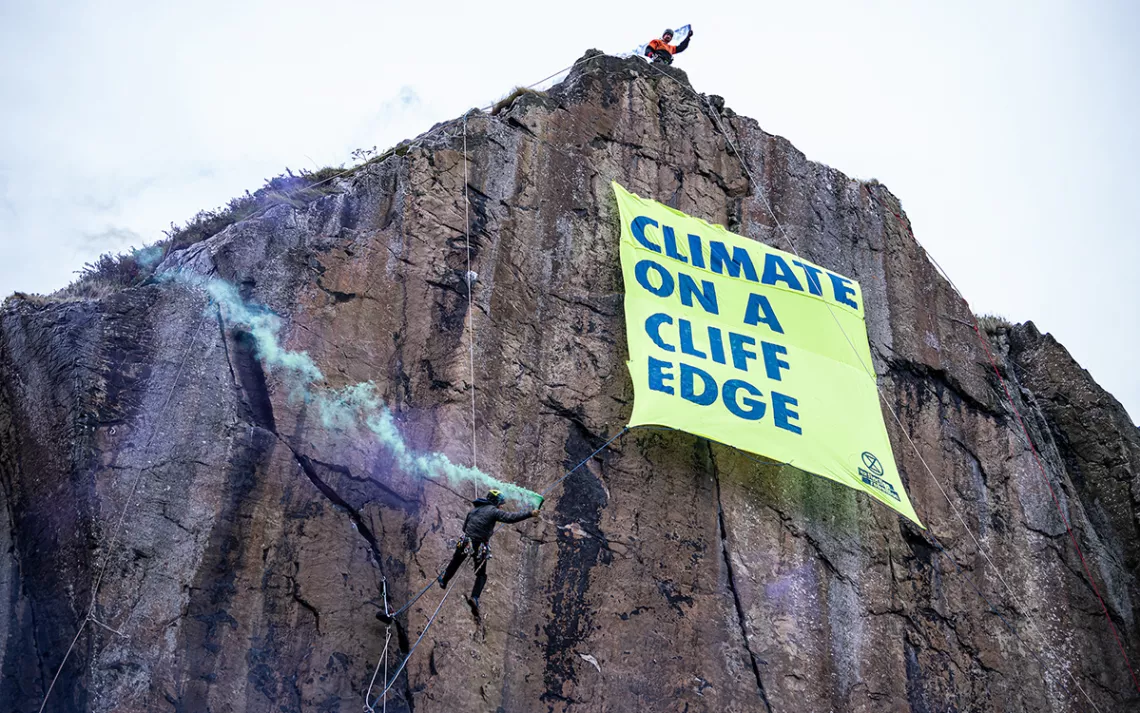
Experienced climbers scale a rock face near the historic Dumbarton castle in Glasgow, releasing a banner that reads “Climate on a Cliff Edge.” One activist, dressed as a globe, symbolically looms near the edge, while another plays the bagpipes on the shores below. | Photo courtesy of Extinction Rebellion and Mark Richards
Continue ReadingU.S. Energy Secretary Chris Wright Backs Coal and Attacks ‘Sinister’ Climate Targets at ARC Conference 

Will Trump’s entire presidency be as damaging as his first month?

Spread the love

Original article by Paul Rogers republished from Open Democracy under a Creative Commons Attribution-NonCommercial 4.0 International licence

Ater a disastrous press conference, it may be Trump, not Zelenskyy, who needs to watch his back
 | Andrew Harnik/Getty Images

From blowing up at Zelenskyy to fast-tracking Executive Orders, what can we learn from Trump’s recent behaviour?

Donald Trump’s presidency has barely entered its second month, and the change he has brought about has already been so significant and so rapid that it is hard to imagine how his administration will evolve in the long term.

The substantial changes are, in part, due to the extensive planning done in anticipation of his winning a second term. The 900-page Project 2025 put together by the Heritage Foundation has provided a blueprint for Trump’s far-right conservatism that, combined with the decision to act very fast, has allowed him to already issue more than sixty Executive Orders – catching opponents off-guard.

Looking to the future may be better helped by understanding both Trump’s behaviour and his overall outlook on life, with two recent examples pointing the way. Some commentators see the president as an unpredictable figurehead who is hardly able to direct affairs, but that doesn’t face up to his being the locus of power for now and, in any case, he has plenty of determined advisers who have been waiting years for his second presidency.

The first example of Trump’s behaviour was shown by his reaction to a tragedy that happened just after his inauguration, when an American Airlines flight and a US Army helicopter collided and crashed into the Potomac River close to Ronald Reagan National Airport in Washington, DC. All 67 people on board the two aircraft were killed.

While the cause of the crash is still under investigation, within hours Trump had blamed the diversity-linked hiring policies of previous Democrat administrations, claiming they had lowered personnel standards in air traffic control. A tragedy became an occasion for immediate political point scoring.

More recently, we have seen Trump use social media to promote the new ‘Trump Gaza’. The president shared a bizarre AI-generated video in which the area had been ethnically cleansed of its Palestinian population and transformed into “the Riviera of the Middle East”. Perhaps most telling is the full-colour representation of the main street, which Trump envisages as being dominated by a 60-foot high golden statue of himself.

Together, these instances point to someone who is comprehensively self-obsessed. He might be seen as an egotist or narcissist but certainly has an element of the solipsist in his make-up as well. He is, in other words, beyond egocentric.

But Trump’s impact on the world stage has to reckon with how the world is already changing, especially the rise of the global oligarchy, with vast power concentrated in the hands of a few hundred super-rich individuals. It’s clear that the president views these people as the true exemplars of success – he has formed a singularly powerful group of them around him.

Most notable among Trump’s circle of favoured oligarchs is Elon Musk, who supported his 2024 election campaign to the tune of $277m and has since been given an unofficial role in government and attended Cabinet meetings and Oval Office press conferences.

The wealth of Musk and two other oligarchs close to Trump, Jeff Bezos and Mark Zuckerberg, extends to $905bn, as US Senator Bernie Sanders reminded us last month. Writing in the Guardian, Sanders pointed out that this is “more wealth than the bottom half of American society – 170 million people”, adding that “since Trump’s election their wealth has grown by $217bn”.

This is in line with the findings in Oxfam’s 2025 Davos Report, which last week reported that while the number of people in poverty has remained near stagnant for the past 35 years, extreme wealth is surging. Four more people become billionaires each week, and the world is now on course to have five trillionaires and well over four thousand billionaires within the next decade.

The rising global oligarchy is not easily mapped with precision. Some members of the super-rich stay well out of the public eye, a few become patrons of the arts and philanthropists, but many others are heavily involved in the use of political power.

Though a degree of oligarchic power is evident in many countries worldwide, there are particular concentrations in a handful of nations, particularly Russia, China, India and the US – where Mark Twain’s quip about having “the best government money can buy” still stands.

Between Trump’s personality and his billionaire associates, the best guide to the next four years is to simply assume that ‘self’ and ‘wealth’ will be the president’s constant driving forces. It is not a happy prospect and will require persistent opposition, combined with repeated expressions of more positive ways forward. But is there anything that might limit him as he works to remake the US?

The first answer might just be his very associates. Many incredibly wealthy people are used to getting their own way, which could easily lead to disagreements sufficient to unbalance the administration. That will be much to the dislike and anger of Trump, who may well end up causing great disruption as he finds and disposes of the scapegoats who can keep the blame well away from him.

Then there is internal opposition stemming from numerous legal challenges that are already being mounted, many of them in recognition of the mass use of executive orders, which may undermine the authority of Article II of the US constitution.

Trump is also likely to run into problems due to the huge and vast array of experience and knowledge that will have been lost as a result of his administration’s decision to fire many thousands of federal employees from the Internal Revenue Service, Department of Energy, the Department of Agriculture, the Forestry Service, National Parks, US AID and elsewhere. This is eventually likely to lead to numerous mistakes and delays right across government.

Then there is the matter of US foreign policy, where the ‘Trump Gaza’ fiasco is the clearest possible indicator that Trump just does not have a clue how many people feel. Beyond that, though, is the question of Trump’s view of Vladimir Putin. It is becoming uncomfortably clear that either the Russian president has some kind of hold over Trump or else Trump really does see him as simply another very powerful and hugely rich person just like himself – a kindred spirit in a new oligarchic world of disorder.

This leads to one other question: how long will Trump even be in the White House? A clue may come from Friday’s notorious press conference with Ukrainian president Volodymyr Zelenskyy. People across the world will have seen clips of Zelenskyy being hung out to dry by Trump and his vice-president, JD Vance, but watching the entire 45-minute video, not just the blow-up, reveals a rather different element.

The conference was largely good-natured for the first 35 minutes, with Zelenskyy comfortably holding his own and Trump even praising Ukraine while doing his usual trick of claiming to be the greatest American since George Washington. It is only at the end that Vance moves in aggressively on Zelensky in a manner seemingly designed to get Trump to lose his cool.

Perhaps it is Trump, not Zelensky, who should be worried when reflecting on the experience – and who should watch his back. It may have been on the last day of February but Vance’s behaviour was not too far from the Ides of March.

Original article by Paul Rogers republished from Open Democracy under a Creative Commons Attribution-NonCommercial 4.0 International licence

Continue ReadingWill Trump’s entire presidency be as damaging as his first month?

‘This Guy Is a Leech on the Public’: AOC Rips Musk Over Attack on Social Security

Spread the love

Original article by Jake Johnson republished from Common Dreams under Creative Commons (CC BY-NC-ND 3.0).

Elon Musk attends a Cabinet meeting at the White House on February 26, 2025 in Washington, D.C. (Photo: Andrew Harnik/Getty Images)

“No matter how many billions he gets in tax cuts and government contracts, it will never be enough for him,” said Rep. Alexandria Ocasio-Cortez. “Now he’s going after the elderly, the disabled, and orphaned children.”

Progressive lawmakers and advocates hit back on Sunday after Elon Musk parroted the long-debunked right-wing claim that Social Security is a Ponzi scheme, the billionaire’s latest false attack on the nation’s most effective anti-poverty program.

Musk made the comments during an appearance on the “Joe Rogan Experience” podcast over the weekend, and the episode has already racked up nearly 8 million views as of this writing.

“Social Security is the biggest Ponzi scheme of all time,” Musk said. “If you look at the future obligations of Social Security, it far exceeds the tax revenue.”

The advocacy group Social Security Works noted in response that Social Security—which is 90% funded for the next quarter-century—”hasn’t missed a payment in 89 years” and accused Musk of “defaming” the program as part of an effort to “cut benefits and otherwise destroy Social Security.”

Musk’s comments came as the Trump administration, with the assistance of the billionaire Tesla CEO’s lieutenants, is working to gut the already-understaffed Social Security Administration, an effort that could result in benefit delays and disruptions.

“This guy is a leech on the public,” Rep. Alexandria Ocasio-Cortez (D-N.Y.) wrote on social media after a clip of Musk’s remarks on Rogan’s podcast circulated. “No matter how many billions he gets in tax cuts and government contracts, it will never be enough for him.”

“Now he’s going after the elderly, the disabled, and orphaned children so he can pocket it in tax cuts for himself,” Ocasio-Cortez added. “It’s disgusting.”

Rep. Greg Casar (D-Texas), chair of the Congressional Progressive Caucus, wrote that “a guy who makes $8 million a day off the government thinks seniors getting $65 a day they worked their whole lives to earn is a ‘Ponzi scheme.'”

“Protect Social Security,” Casar wrote. “Fire Elon Musk.”

Sen. Bernie Sanders (I-Vt.) also weighed in on Musk’s comments during an appearance on NBC‘s “Meet the Press” Sunday morning, calling the billionaire’s attack on Social Security “totally outrageous.”

“That’s a hell of a Ponzi scheme when for the last 80 years, Social Security has paid out every nickel owed to every eligible American. Quite a Ponzi scheme,” said Sanders, who called on lawmakers to support his proposal to expand Social Security benefits by lifting the cap on income subject to payroll taxes.

“You lift that cap, we can extend the solvency of Social Security for 75 years,” the Vermont senator said. “And you can raise benefits.”

Last week, as Common Dreams reported, Sanders attempted to pass his Social Security expansion bill through the Senate via unanimous consent, but Sen. Mike Crapo (R-Idaho) objected, blocking the legislation.

A previous version of this story improperly identified “Meet the Press” as an MSNBC show.

Original article by Jake Johnson republished from Common Dreams under Creative Commons (CC BY-NC-ND 3.0).

Elon Musk urges you to be a Fascist like him, says that you can ignore facts and reality then.
Neo-Fascist Climate Science Denier Donald Trump says Burn, Baby, Burn.

Continue Reading‘This Guy Is a Leech on the Public’: AOC Rips Musk Over Attack on Social Security

Pathways Carbon Capture Project Is Not Viable, Expert Warns

Spread the love

Original article by Taylor Noakes republished from De Smog.

‘Public funding of CCS is a costly gamble,’ said IEEFA energy finance analyst Mark Kalegha. Credit: IEEFA

New report says CCS proposal is a subsidy-dependent ‘financial risk’ with ‘limited revenue potential.’

Pathways Alliance’s flagship carbon capture and storage project is not financially feasible without massive and consistent subsidies.

This is according to the most recent analysis of the venture, conducted by the Institute for Energy Economics and Financial Analysis (IEEFA), which identified multiple financial challenges.

The Pathways Alliance, a lobby group representing Canada’s six largest tar sands oil producers, proposed a massive carbon capture and storage (CCS) hub based near Cold Lake, Alberta, in 2022. The build-out includes a 400-kilometer pipeline network connecting the CCS hub with 13 tar sands facilities. The group’s members are responsible for approximately 95 percent of the tar sands’ annual output.

“The growing realization that carbon capture and storage projects are likely to require permanent government subsidies resets the discussion about the viability of CCS as a tool to effectively reduce carbon emissions,” Mark Kalegha, the IEEFA’s energy finance analyst for Canada and author of the report, said in a statement. 

“Public funding of CCS is a costly gamble that may not yield tangible returns on Canada’s journey towards achieving net-zero emissions,” Kalegha stated. 

“This is a financial risk the government should reconsider taking on.”

Among the study’s key findings, the IEEFA determined that the total costs — such as interest, insurance, depreciation, and taxes — for existing commercial-scale carbon capture plants in Alberta are approaching thresholds that threaten profitability. In addition, operating costs are increasing at roughly twice the rate of the amount of carbon dioxide that’s captured. 

Critics argue that Pathways will actually use the project for enhanced oil recovery (EOR), which is what carbon capture technology was initially developed to do in the 1970s. Companies have used other notable CCS projects explicitly in this way. In fact, Pathways Alliance has publicly stated on several occasions that it hopes its decarbonization efforts could result in increased oil production. Critics argue the oil industry proposes using carbon capture for EOR as a means to prolong fossil fuel production while appearing to work towards emissions reduction. Canadian federal and provincial governments have enthusiastically supported carbon capture initiatives by the oil and gas sector, despite the concerns and objections of environmentalists. 

But Kalegha is not convinced the Pathways project would be used for EOR. Instead, he believes the alliance’s business case is based on the use of Emission Performance Credit (EPCs) under Alberta’s TIER (Technology Innovation and Emissions Reduction) carbon pricing system. That said, the IEEFA isn’t certain the necessary operating revenue will manifest.

“An effective cap on emission performance credit (EPC) pricing of $170 (CAD) per tonne limits project revenue potential, while a looming oversupply of carbon EPCs is an example of risks to project cash flows,” the IEEFA report states. 

The report further notes that the option to combine Clean Fuel Regulation credits with EPCs is available to the ACTL (Alberta Carbon Trunk Line—one of the two operational carbon capture projects the IEEFA study investigated), but that this significant financial benefit is not currently available to the Pathways project.

The report warns that “without substantial efficiency improvements, the cost per tonne of CO2 captured is likely to exceed the revenue that the project can generate for each tonne captured.”

Kalegha noted that there is no guarantee carbon credits will trade for $170 and their value could face a limitless fall. “There is a severe oversupply risk, and over time, operating costs will likely increase while potential revenue will be stagnant,” he said.

The report indicates that an underperforming and unprofitable carbon capture project would invariably “struggle to bring lasting positive economic benefits to host communities and become dependent on external financial subsidies to maintain operations.”

Even under optimal conditions, “the Pathways project may struggle to break even,” the IEEFA noted. It further stated that real-world carbon capture operations are rarely optimal, echoing analysis by the International Institute for Sustainable Development (IISD), which also concluded carbon capture’s costs are persistently high in Canada, and unlikely to come down. 

Though details about Pathways’ project are scant — which the IEEFA noted in its report — the institute determined that Pathways could have an estimated annual carbon dioxide storage capacity of 10 to 12 million tonnes. If completed, it would be among the largest carbon capture facilities in the world.

Safety Risks

Whether storing such a large amount of CO2 is safe is a vitally important but unanswered question. The release of an estimated 100,000 to 300,000 tons of CO2 at Lake Nyos, Cameroon, in 1986 killed about 1,700 people and 3,500 livestock animals. The rupture of a CO2 pipeline near Satartia, Mississippi, in 2020, resulted in dozens of hospitalizations, the town’s evacuation, and a chaotic emergency response that underlined the public’s unfamiliarity with large-scale carbon dioxide poisoning.

A May 2024 article in The Narwhal revealed that Pathways Alliance made it clear to the federal government that it fully expects to depend on federal government subsidies in the tens of billions of dollars

In a letter to several federal ministers — including then-Finance Minister Chrystia Freeland and Environment Minister Steven Guilbeault — Pathways requested the government cover 50 percent of its estimated operating costs. The same letter also asked if the project would be eligible to generate Clean Fuel Regulation (CFR) for bitumen and crude oil exported using carbon capture technology. Pathways also demanded the federal government forgo an environmental impact assessment. At the provincial level, Pathways broke its project into 126 parts to avoid triggering an automatic environmental assessment.

Despite the growing body of evidence against the plan, it nonetheless maintains considerable political support in Canada. In October 2024, the Globe and Mail reported that the Canada Growth Fund (CGF) proposed funding support for the project. The CGF is a public fund of $15 billion (CAD) that supports implementing new technologies to reduce emissions, managed by the Public Sector Pension Investment Board.

“The Pathways Alliance has been in negotiations with the CGF for over a year, and wants the CGF to provide carbon contracts to mitigate financial risks and guarantee revenues,” Julia Levin, associate director of national climate with Environmental Defence, wrote in a statement to DeSmog. Levin noted that those negotiations ramped up last fall, and a decision is expected soon.

Despite Pathways’ request to abandon the environmental impact assessment, Levin also noted that the federal government is reviewing the project.

“In late November, following the Government of Alberta’s denial to conduct an impact assessment of the project, eight First Nations submitted a request that the federal government exercise its discretion to designate the Pathways Project for a federal impact assessment, given their concerns about the project impacts and the lack of a robust regulatory framework,” said Levin. “Minister Guilbeault has until the beginning of March to decide whether or not to designate the project.”

Little evidence exists showing carbon capture is effective at reducing emissions among Canada’s few extant commercial CCS projects and CCS projects worldwide.

Video rendering of Shell’s Quest carbon capture project. Credit: Shell / YouTube

“Neither Quest nor the Alberta Carbon Trunk Line (ACTL) have managed to keep up with projected capture rates,” said Kalegha during a recent IEEFA webinar, referring to Shell’s massive Quest CCS facility in Alberta. “Boundary Dam is struggling as well,” he added, referring to the Saskatchewan coal plant that received a $1 billion retrofit to capture carbon. The IEEFA estimates that the Boundary Dam CCS effort has never exceeded a 60 percent capture rate, despite claims by CCS advocates that it captures carbon at a rate exceeding 90 percent.  

“There’s a global trend of underperformance when it comes to carbon capture,” he noted.  

Kalegha’s analysis also points to considerable risk factors. He said that operating costs at ACTL and Quest appear to have doubled, while capture rates at both facilities have remained relatively flat. In addition, Pathways Alliance’s project will have to grapple with the combined performance of 13 separate carbon capture facilities.

While the oil and gas industry claims carbon capture technology is improving, Kalegha doesn’t see any data to support this.

“Current CCS projects in Canada are heavily subsidized by the public, anywhere between 50 to 85 percent,” he said during an IEEA online seminar. “This is a very expensive, subsidy-dependent technology experiencing severe technological challenges. The question is who should bear this risk?” 

Julia Levin is doubtful the Pathways Alliance partners are sincerely interested in committing any of their own funds to the project. She noted in a statement to DeSmog that Canadian Natural Resources Limited (CNRL) only committed $90 million to carbon capture in its 2025 budget, compared with $45 million to move offices.

“CNRL’s 2025 budget reveals that the Pathways Alliance has no plans to invest their own funds into carbon capture and storage, instead insisting the public cover over $12 billion of their costs,”  Levin noted. 

“Ninety-million dollars is an insignificant amount of money, compared with the cost of carbon capture projects, as well as CNRL’s operating budget and yearly profits,” she added 

“If these companies seriously believed in carbon capture as a waste management solution for their operations and were intent on moving these projects forward, they would be willing to invest more of their own funds,” Levin pointed out. “Instead they’re using the promise of capturing emissions one day as a rationale to delay the energy transition and weaken climate policy.” 

Original article by Taylor Noakes republished from De Smog.

Continue ReadingPathways Carbon Capture Project Is Not Viable, Expert Warns

Capitalism’s Free Speech Trap: Bezos Shows How Billionaires Set the Boundaries of Debate

Spread the love

Original article by Peter Bloom republished from Common Dreams under Creative Commons (CC BY-NC-ND 3.0). 

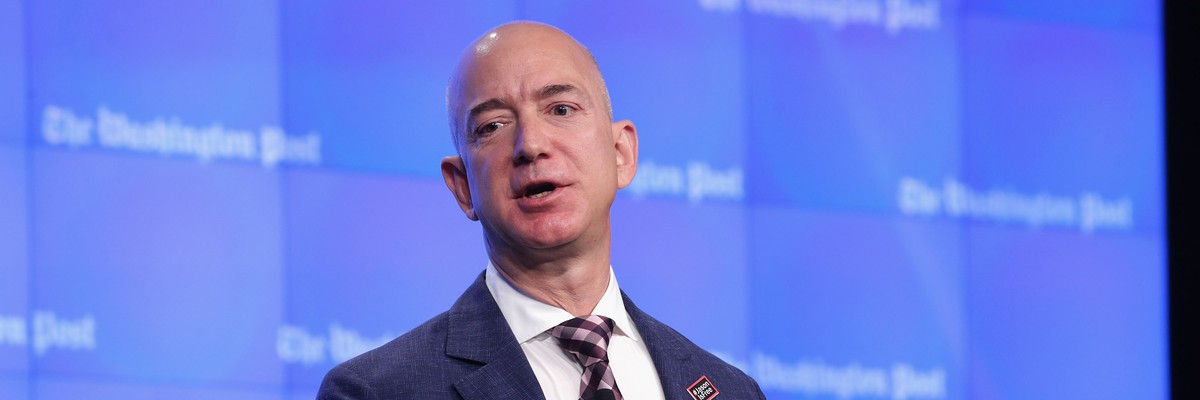
Amazon founder and Washington Post owner Jeff Bezos delivers remarks during the opening ceremony of the media company’s new location January 28, 2016 in Washington, D.C. (Photo: Chip Somodevilla/Getty Images)

The Washington Post’s shift toward free-market advocacy is not simply an editorial decision; it is a strategic move to reinforce the dominant ideological framework that benefits the billionaire class.

The recent directive by Jeff Bezos that The Washington Post editorial section should promote “personal liberties and free markets” is a stark reminder of how freedom under capitalism often boils down to the freedom of economic elites to dictate the parameters of public discourse. While Bezos has suggested that social media provides alternative perspectives, thus absolving his newspaper of the responsibility to represent diverse viewpoints, his decision is part of a broader trend of billionaire media ownership shaping acceptable discourse.

This phenomenon is visible across digital platforms as well. Elon Musk’s control over X (formerly Twitter) has demonstrated how ownership can shape public debate—both through direct interventions, such as the alleged suppression of progressive perspectives, and through more subtle changes to platform algorithms. Similarly, Mark Zuckerberg’s Meta has faced repeated allegations of privileging certain political narratives while suppressing others, including ending its “fact checking” policy that could challenge far-right viewpoints.

Perhaps the most glaring contradiction in Bezos’ advocacy for free markets is the extent to which he, and other billionaires like him, have benefited from state intervention as part of an intentional strategy of “corporate welfare.”

In each case, the rhetoric of “free speech” is selectively applied. While these platforms and newspapers claim to support open debate, their policies ultimately reflect the ideological preferences of their owners. This demonstrates a fundamental truth: In capitalist societies, freedom of expression is often contingent on the interests of those who control the means of communication. The Washington Post’s shift toward free-market advocacy is not simply an editorial decision; it is a strategic move to reinforce the dominant ideological framework that benefits the billionaire class.

The Myth of Meritocracy and the Far-Right’s War on DEI

Bezos’ framing of free markets as inherently linked to personal liberties exposes a deeper ideological assumption—namely, that economic success is the result of individual talent and merit rather than systemic privilege. This assumption is not unique to Bezos but is foundational to the way many economic elites understand their own wealth and influence.

The logic behind Bezos’ editorial direction is similar to the arguments used by the contemporary far-right to attack Diversity, Equity, and Inclusion (DEI) initiatives. The opposition to DEI is rooted in a desire to preserve the myth that success is determined purely by hard work and ability, rather than by racial, gender, or class privilege. By rejecting policies that acknowledge structural inequalities, The far-right seeks to uphold a narrative that justifies existing economic and social hierarchies.

This worldview is deeply intertwined with the ideology of neoliberalism, which insists that markets are neutral mechanisms that reward the most capable individuals. However, history shows that markets are anything but neutral. The barriers faced by marginalized groups are not simply the result of individual shortcomings; they are the product of centuries of systemic exclusion. The far-right’s attack on DEI serves to obscure these realities, just as Bezos’ insistence on free markets seeks to erase the role of privilege and power in determining economic outcomes.

By positioning The Washington Post as a champion of free markets, Bezos is promoting the idea that capitalism functions as a pure meritocracy. This serves not only to legitimize his own position but also to delegitimize calls for policies that challenge structural inequality, whether in the form of DEI programs, labor protections, or wealth redistribution measures.

The Illusion of the Free Market and Its Political Implications

Perhaps the most glaring contradiction in Bezos’ advocacy for free markets is the extent to which he, and other billionaires like him, have benefited from state intervention as part of an intentional strategy of “corporate welfare.” The notion of a truly free market, where economic actors compete on equal footing without government interference, is a fantasy. In reality, corporations like Amazon have thrived not because of unregulated competition, but because of significant government support.

From tax incentives to government contracts, Amazon has received billions in subsidies that have allowed it to dominate the retail and logistics industries. Moreover, the U.S. government plays a critical role in enforcing corporate-friendly trade policies, suppressing labor movements, and protecting the interests of multinational corporations abroad. These interventions are rarely acknowledged in discussions of free markets, yet they are crucial to understanding the power dynamics of contemporary capitalism.

If freedom under capitalism ultimately means the freedom of the wealthy to dictate the terms of discourse, then the very concept of free speech is in jeopardy.

Politically, Bezos’ editorial directive at The Washington Post serves to strengthen a broader ideological alignment between neoliberal economics and far-right nationalism. By framing free-market capitalism as an essential component of personal liberty, Bezos is laying the groundwork for a political agenda that fuses economic libertarianism with nationalist conservatism. This is significant because it provides an ideological foundation for challenging emerging economic policies that deviate from neoliberal orthodoxy—such as the rise of protectionism in response to globalization.

This alignment between free-market ideology and far-right nationalism is not new. Historically, neoliberalism has often coexisted with reactionary politics, as seen in the economic policies of figures like former U.S. President Ronald Reagan and former U.K. Prime Minister Margaret Thatcher. Today, this synthesis is being revived as right-wing populists seek to defend corporate interests while simultaneously appealing to nationalist sentiments. Bezos’ intervention in The Washington Post should be understood within this broader context: It is not just about shaping editorial policy but about consolidating an ideological framework that benefits economic elites while limiting the scope of acceptable political debate.

The Dangers of Billionaire-Controlled Media

Bezos’ decision to impose a free-market ideology on The Washington Post is not an isolated event; it is part of a larger trend in which media ownership is used to shape public discourse in ways that serve elite interests. This phenomenon extends beyond traditional journalism to social media platforms, where billionaires like Musk and Zuckerberg wield immense power over the flow of information.

At its core, this issue is about more than just media bias—it is about the fundamental tension between democracy and concentrated economic power. A truly free and open society requires a diversity of perspectives, yet the dominance of billionaire-controlled media threatens to constrain the range of acceptable debate. If freedom under capitalism ultimately means the freedom of the wealthy to dictate the terms of discourse, then the very concept of free speech is in jeopardy.

The consolidation of media power in the hands of a few ultra-wealthy individuals raises urgent questions about the future of democratic debate. If we are to challenge the ideological hegemony of economic elites, we must first recognize the mechanisms through which they shape public discourse. Bezos’ editorial mandate is not just about The Washington Post—it is a reflection of the broader struggle over who gets to define the boundaries of political and economic debate in the 21st century.

Original article by Peter Bloom republished from Common Dreams under Creative Commons (CC BY-NC-ND 3.0). 

Continue ReadingCapitalism’s Free Speech Trap: Bezos Shows How Billionaires Set the Boundaries of Debate