U-turn over energy efficiency rules could risk 30,000 jobs

Spread the love

http://www.theguardian.com/environment/2013/nov/19/energy-efficiency-jobs

Scrapping programme will result in massive job losses and huge costs in lost savings, green association warns

Scrapping the government’s commitment to key measures to bring energy efficiency improvements to homes would cost tens of thousands of future UK jobs, research obtained by the Guardian has shown.

The energy companies obligation (Eco) is likely to provide 46,000 jobs within the next two years, according to the Association for the Conservation of Energy, in an analysis using the government’s own estimates of employment.

Most of those jobs – the majority of which are “blue collar” jobs in installing insulation, new boilers and construction projects – are now potentially at risk following government backtracking.

If the scheme were abandoned, as some have called for, at least 30,000 of these jobs would be at risk.

Scaling back the scheme, rather than abandoning it, would also result in significant job losses: halving the main requirements would cut employment by 10,000 people in the next year and an additional potential 7,500 future jobs would be foregone. Removing one of the main components of the scheme, which is aimed at people on low incomes, would see 28,000 jobs lost.

Andrew Warren, director of the Association for the Conservation of Energy, said: “The vast majority of these jobs would be blue collared, and often semi-skilled. They would frequently be not even in SMEs, but in micro-businesses, precisely the companies that the government is relying upon to ensure economic recovery. Hammering these home improvement schemes makes no sense.”

The future of the Eco scheme – which is designed to help people on low-incomes and those with hard-to-treat homes requiring expensive measures such as solid wall insulation – has been thrown into doubt after David Cameron pledged to “roll back” the green measures that are added to consumer energy bills.

Eco was targeted after government legal experts pointed out that the UK has obligations under EU law to generate about 15% of energy from renewable sources by 2020, and that any moves to scrap the current subsidy regime could lead to the coalition being sued by renewable energy companies. Eco is currently paid for out of additions to energy bills, and one of the options that some energy company bosses have espoused is to move it into general taxation.

EDF came under fire for “blackmailing” the government over the scheme when it announced it would raise its prices by 3.9% – significantly less than rivals – but saying that the rise would be increased unless Eco was scrapped.

But Eco could help hundreds of thousands of people out of fuel poverty, according to the Local Government Association. It calculates that Eco could deliver £2.5bn in savings on energy bills for low-income and vulnerable households, but at present only about £1bn is being realised, because of foot-dragging by the energy companies in carrying out Eco installations in homes.

The estimates of likely job losses follow the revelation that energy companies have netted £1bn from consumer bills to pay for Eco, while spending only about £400m on the scheme. On one of the three key components of the scheme, designed to help the most vulnerable people, Ofgem has said energy companies have delivered only 3% of what needs to be achieved by March 2015.

Continue ReadingU-turn over energy efficiency rules could risk 30,000 jobs

UK failing on green commitments, conservation groups say

Spread the love

http://www.theguardian.com/environment/2013/nov/19/uk-green-commitments-wildlife

The government is failing to make good progress on five in six of its promises to protect nature and wildlife, according to a report produced by every large conservation group in Britain.

While praising moves to tackling damaging fishing practices and the ash dieback epidemic, the 41 groups say the government is failing to protect the green belt, reverse declines in wildlife, and improve the welfare of farm animals.

David Cameron promised the greenest government ever. Using the government’s own promises as a yardstick, today’s findings show he’s failed to stick to his plan,” said Dr Elaine King, director of Wildlife and Countryside Link, which represents 41 groups including the WWF, the Wildlife Trusts, the RSPCA, the RSPB, the Campaign to Protect Rural England and the Marine Conservation Society. Only one in three people polled thought the government took the natural environment or scientific advice into account when making decisions and just one in five thought the government was “the greenest ever”.

“We’re told an economy in crisis is a higher priority than nature in crisis. Yet the government is missing a huge opportunity – a healthy environment helps the economy and enhances people’s health and wellbeing,” said King.

The report says the crisis in nature “translates into a crisis for people too, because the environment is the foundation of our lives and livelihoods, and a source of great joy and fulfilment for many millions of people across the country”.

The first full assessment of the UK’s natural environment, published by the government in 2011, found that looking after green spaces better is worth at least £30bn a year in health and welfare benefits.

The Nature Check report analysed 25 promises made by the government, in its coalition agreement, mid-term review, and plans published by departments. It concluded “good progress” was being made on four: reform of EU fisheries rules, especially on the killing of seabirds; a timely ash dieback response; and international support for a ban on whaling and moves against ivory sales.

But nine promises were judged as failing, including protecting the green belt, promoting high standards of welfare for farm animals, especially in intensive dairy farming, and improving flood defences.

The failure to implement the government’s strategy to “halt the overall loss of England’s biodiversity by 2020” is said to be of extreme concern, while the badger cull is criticised as being “neither balanced nor science-led”. The creation of just 31 of the 127 recommended marine conservation zones means it is not ecologically coherent, the report said.

On the government’s support for its farmer-led review of regulations, the report says “an unrelentingly deregulatory approach to farming is damaging and will harm environmental protection and animal welfare”.

Continue ReadingUK failing on green commitments, conservation groups say

Surveillance technology out of control, says Lord Ashdown

Spread the love

http://www.theguardian.com/world/2013/nov/18/surveillance-technology-out-of-control-ashdown

Image of GCHQ donught building

The technology used by Britain’s spy agencies to conduct mass surveillance is “out of control”, raising fears about the erosion of civil liberties at a time of diminished trust in the intelligence services, according to the former Liberal Democrat leader Lord Ashdown.

The peer said it was time for a high-level inquiry to address fundamental questions about privacy in the 21st century, and railed against “lazy politicians” who frighten people into thinking “al-Qaida is about to jump out from behind every bush and therefore it is legitimate to forget about civil liberties”. “Well it isn’t,” he added.

Ashdown talks frequently to the deputy prime minister, Nick Clegg, and is chair of the the Liberal Democrats‘ general election team. Though he said he was speaking for himself, his views are understood to be shared by other senior members of the Liberal Democrats in government, who are also keen for some kind of broad inquiry into the subject.

This idea is also supported by Sir David Omand, a former director of GCHQ. He told the Guardian he was in favour of an inquiry and thought it would be wrong to “dismiss the idea of a royal commission out of hand”. It was important to balance the need for the agencies to have powerful capabilities, and the necessity of ensuring they did not use them in a way parliament had not intended, Omand added.

Ashdown is the latest senior politician to demand a review of the powers of Britain’s intelligence agencies – GCHQ, MI5 and MI6 – and the laws and oversight which underpin their activities.

In an interview with the Guardian, Ashdown said surveillance should only be conducted against specific targets when there was evidence against them. Dragnet surveillance was unacceptable, he added.

Ashdown made clear revelations in the Guardian about GCHQ and its American counterpart, the National Security Agency, had raised important issues that “could not be ignored or swept aside in a barrage of insults”.

He also criticised the Labour party, which was in power when the agencies began testing and building many of their most powerful surveillance capabilities. Labour’s former home secretary Jack Straw was responsible for introducing the Regulation of Investigatory Power Act 2000 (Ripa), which made the programmes legal.

“Ripa was a disgraceful piece of legislation,” Ashdown said. “Nobody put any thought into it. Labour just took the words they were given by the intelligence agencies. I don’t blame the intelligence agencies.

Pantsdown continues in the article to discuss witnessing the steaming open of envelopes by spooks. In line with the full disclosure policy of this blog I can reveal that nowadays they use endescopes to read letters. The tell-tale sign is a small rip to the seal of the envelope at one end.

[19/11/13  The tell-tell sign of the use of an endescope will usually be on the right-hand side of the envelope’s seal and occasionally on the left-hand side. Why is that?

Continue ReadingSurveillance technology out of control, says Lord Ashdown

Child sex abusers evade justice as police send fewer cases to prosecutors

Spread the love

http://www.theguardian.com/society/2013/nov/18/child-sex-abusers-police-prosecutors

Figures uncovered by shadow home secretary show one-third fewer cases referred to Crown Prosecution Service since 2011

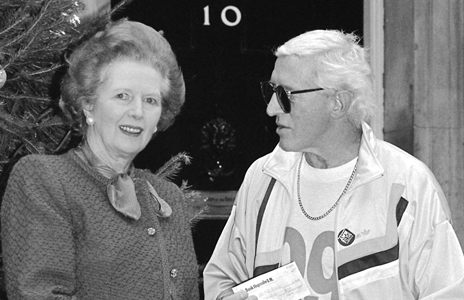
Image of Jimmy Savile and Margaret Thatcher
Jimmy Savile and Margaret Thatcher

Sex offenders are evading justice because the number of child sex abuse cases being sent for prosecution by the police has dropped by nearly one-third over the past two years, according to official figures uncovered by the shadow home secretary, Yvette Cooper.

The detailed statistics from the solicitor-general, Oliver Heald, show the number of child sexual abuse cases being referred to the Crown Prosecution Service by police forces across England and Wales has fallen by 28% from a peak of 13,018 in 2010-11 to 9,381 in 2012-13. This is the lowest level for more than five years and comes over a period when the number of such cases reported to the police has risen steadily to a record high of 18,915 in 2012-13.

The rise has partly been a consequence of victims coming forward following publicity surrounding the high-profile Operation Yewtree investigation into widespread allegations of child abuse by Jimmy Savile, who died in 2011, and others.

The detailed figures, based on a Commons written answer by the solicitor-general, show the proportion of reported sexual offences against children that have led to a pre-charge decision being made against a suspect has fallen from 75% in 2008-09 to just under 50% in 2012-13.

The fall in the rate of child sex abuse cases being considered for prosecution mirrors similar patterns in rape and domestic violence cases, where an increasing number of cases are being reported to the police but fewer are being referred for prosecution.

Cooper said the figures showing the sharp fall in the number of child sex abuse cases being sent by the police for prosecution were “extremely shocking”, and that a reduction in specialist police child protection units was a possible explanation.

“This is an appalling drop of nearly a third in the number of child abuse cases that the police are referring for prosecution, even though more cases are coming forward. It shows the disgraceful way the police have been hollowed out by Theresa May, with so many specialist child protection units also being cut, letting victims down and letting abusers off,” she said.

Continue ReadingChild sex abusers evade justice as police send fewer cases to prosecutors