In other news: disability and workfare

Spread the love

Independent living for disabled at risk from cuts, say MPs

Independent living for disabled people is being put at risk by the combined impact of cuts to social care and benefits, MPs and peers warned today.

Cuts to care and different benefits are interacting in a “particularly harmful” way for disabled people and many service users fear they will be forced into residential care as a result, Parliament’s joint committee on human rights said in a report.

It cited increases in eligibility thresholds for social care, the closure of the Independent Living Fund to new claimants, cuts to housing benefit and the replacement of disability living allowance by personal independence payment, which will see 500,000 people lose out on the benefit.

The committee called on the government to assess the cumulative impact of these cuts on disabled people and consider the introduction of a right to independent living.

Your top ten disability cuts

1) Scrapping disability living allowance and replacing it with the personal independence payment from 2013 for working-age adults. This reform, which will include a new assessment system, is designed to cut the number of claimants by 20%, meaning 360,000 people will lose out on support, saving the government £360m in 2013-14 and £1.075bn in 2014-15.

2) Scrapping the mobility component of disability living allowance – worth up to £50 a week –  for publicly-funded care home residents and children in residential special schools. This money pays for transport for residents to leisure activities or to visit friends. It will affect 80,000 people, saving the government £135m a year.

3) Cutting social care support for severely disabled people through the Independent Living Fund. The ILF is now closed permanently to new clients. This means that people who would previously have had their council social care packages topped up by the ILF will have this no longer. The ILF itself will be scrapped from 2015 onwards, raising questions about the future funding of existing claimants.

4) Social care cuts. Councils with social services responsibilities in England face average cuts in their budgets of 4.7% next year on the government’s figures. Many are increasing eligibility thresholds or means-tested charges, both of which will hit disabled people’s access to care and income levels.

5) Supporting People cuts. Councils are planning average cuts next year of 17% from their funding of supported housing schemes for groups including people with learning disabilities or mental health or substance misuse problems, a survey has found.

6) Welfare cuts for incapacity benefit claimants following reassessment. 1.5m incapacity benefit claimants will be reassessed on their fitness to work from 2011-14, using the controversial work capability assessment. The government expects 23% to be deemed fit for work, meaning they will be transferred to jobseeker’s allowance, meaning they will lose £25 a week or more.

7) Cuts for employment and support allowance (ESA) claimants. This is a big one. The government expects to save £2bn in 2014-15 by time limiting ESA (the successor benefit to incapacity benefit) for some claimants to one year. Those losing out will be those found to have some future prospect of working, with support, who claim ESA on the basis of national insurance contributions not on the basis of their low incomes. This comes in from 2012.

8) Cutting the rate at which benefits increase each year. This apparently technical change – it means the value of benefits will increase in line with the consumer price index rather than the typically higher retail index – will net the government almost £6bn a year. This will affect DLA, attendance allowance, carer’s allowance and employment and support allowance and make many disabled people and their carers poorer than they would otherwise have been.

9) Cutting mortgage interest relief. The National Housing Federation has estimated that 64,000 disabled homeowners could be at risk of losing their homes due to the government’s decision to reduce support with mortgage interest payments for them by cutting the interest rate at which support is given.

10) Housing benefit. Many disabled people will be affected by the cuts to housing benefit, and there have been warnings that many will be driven into further poverty and possible homelessness. An estimated two million disabled people live in the private rented sector and many will be affected to the cuts to the benefit, which include capping payments and cutting housing benefit levels by 10% for those who have been on jobseeker’s allowance (and many more disabled people will be on JSA due to point 6 above).


Youth contract ‘only helping one in ten’

Only one in ten young people will be aided by the government’s youth contract policy, the Trade Union Congress (TUC) claims in a report released today.

The report also claims the unpaid work experience scheme is not helping young people find work.

The government, it says, needs to be more ambitious if it is to reverse some of the highest rates of young unemployment in years.

Paul Bivand, who authored the report, said: “It is vitally important that actions to help young people can be shown to work. Young people themselves want to know this, so do co-workers in the workplace, and so do the employers who are placing their reputations at risk.

“We would hope that good quality work experience with training would have a small positive effect compared to Jobcentre Plus support, but the evidence needs to stand up to critique. We are not there yet.”

It recommended the introduction of a job guarantee scheme, the strengthening of regulations on apprenticeships and the establishment of a government goal that by 2020 young people in Britain should be as well qualified for jobs as those in any other developed country.

The report also claimed that 51% of young people who have been on the Work Experience program are no longer claiming benefits after 13 weeks. This figure, however, is roughly the same for all young people.

TUC general secretary Brendan Barber said that the government’s austerity policies like tuition fees and the scrapping of the EMA have made things worse for young people.

He echoed the fears that the new youth contract would not be nearly sufficient.


“The sanction regime remains in place”

It is reported that sanctions have been removed from the DWP’s “Work Experience” scheme, which is one of five workfare schemes which compel people to work without pay on threat of welfare sanctions. But is this another example of the DWP’s willingness to mislead the public?

There is no sign that sanctions have been lifted in the DWP’s press release which states: “The sanction regime remains in place.” Chris Grayling seems to be painting a murkier picture in TV interviews. Speaking to Sky, he first claimed “If somebody sits down with [the employer] after a couple of weeks and says ‘This really isn’t working out, I don’t want to carry on’, they wouldn’t be sanctioned. I was happy to agree to that.” But by the end of the interview, he offers an example which suggests that it will be in exceptional cases only that sanctions won’t be applied.


With workfare, the devil is in the detail, and until the DWP publishes some we’re inclined not to trust a department which this week has edited official documents to remove references to workfare being mandatory. If DWP Work Experience were no longer compulsory on threat of benefit sanction, then this would be a big step in the right direction, and we could expect jobseekers to receive letters like this one (currently sent to 16-17 year olds who are not mandated to take part) rather than its usual letter. But it does not seem that this is the case and either way we should beware that George Osborne said of the scheme: “Young people who don’t engage with this offer will be considered for mandatory work activity”.

Thousands of people of all ages are still forced to take part in workfare schemes that compel people to work unpaid. 850,000 people are expected to be referred to the Work Programme, which can include six months of workfare, by the end of this year alone. Another 24,000 people have already been placed on Mandatory Work Activity, and the Community Action Programme criminalises the unemployed by sentencing them to six months of unpaid community service. It is not at all clear whether today’s news affects the Work Experience component of the Sector Based Work Academies, a fifth mandatory scheme.

Importantly, today DWP also reported that they would expect people on ESA – a benefit for sick and disabled people – to begin on the Work Programme within 3 months. People placed in the “Work Related Assessment Group” by ATOS can face unlimited workfare placements.

Most people have two problems with workfare: that it is forced and that it is unpaid. There is evidence that workfare replaces paid work and no evidence that workfare schemes have created a single new job. The companies who continue involvement with the government’s schemes can afford to pay the people doing the work but they choose not to.

In fact, businesses should beware that legally they may owe jobseekers working in their stores the minimum wage. Until the last week’s cover-up, the government advice for Work Programme providers stated: “Where you are providing support for JSA participants, which is work experience you must mandate participants to this activity. This is to avoid the National Minimum Wage Regulations, which will apply if JSA participants are not mandated.” (See the chapter 3, point 14 of the guidance before and after.)

The government is clearly under pressure: in the last two weeks, thousands of people have taken action to end forced unpaid work in the UK and the campaign continues to gather momentum. Workfare affects all of us: it is replacing paid work and undermining the minimum wage. That is why this issue will not go away.

Thirty actions against workfare are taking place across the UK on Saturday 3rd March. Asda, Barnardos, British Heart Foundation, Holiday Inn, Pizza Hut, Savers and Wilkinsons are using workfare through the Work Programme. There are hundreds of others. Take action with us!


Continue ReadingIn other news: disability and workfare

NHS news review

Spread the love

Cabinet colleagues on board with NHS shakeup, insists Andrew Lansley

Health secretary says Liberal Democrats instrumental in making reforms ‘stronger’


The Liberal Democrats were fundamental in helping to make the controversial NHS reforms “stronger”, embattled health secretary Andrew Lansley has said.

Lansley insisted his cabinet colleagues were on board with the massive shakeup – despite claims that three fellow Tories had deep concerns about the plans – and praised the input of his party’s coalition partners.

“If there had been a Conservative government, we would have started out in a different place,” he told BBC2’s Newsnight. “The bill is better as a result of the coalition coming together to shape it.”

He admitted he had always known there would be uproar over the bill, noting that all previous health secretaries who had attempted to push through changes had faced the same response.

“There’s always noise,” he said. “The NHS matters so people make a lot of passionate remarks about it. Ken Clarke, who is a fabulous communicator, far better than I am, he tried reform in the early 1990s and the BMA [British Medical Association] said that it was the end of the NHS as we know it.

“There is no way of undertaking major reform imagining that you’re not going to be misrepresented and distorted … We’ve reached the stage where quite a lot of the disinformation out there is a problem, because people are saying things that are literally not true.”


Living on borrowed time? The changing frontiers of the NHS debate


What do you think those determined to save the NHS can do at this stage?

The important thing is not to let up. Everyone should just intensify what they are already doing. The time between now and the end of the parliamentary session is critical. People are tired, but so are the government. They are badly rattled. A good illustration of this was the ill-judged so-called summit with representatives of the medical professions called by Cameron on 20 February, to which only representatives of the few who support the bill were invited. This was so obvious that as a public relations exercise it proved seriously counter-productive. Government spokespeople were left lamely claiming that there would be other summits to which (they implied) those who had been excluded would be invited. The more people show that their opposition is deep and will be long-lasting, the more rattled the government will become.

The charade of the report stage in the Lords, which is about to begin, needs to be exposed. The media are already describing the new amendments as important when they are not. Pressure needs to be kept on the media, and not least the BBC, to show some objectivity and balance their coverage by inviting genuine expert critics of the bill to take part in their panel discussions of it.

It is important to focus on the Lib Dems. Lansley’s ham-fistedness has attracted most of the flak but the Lib Dem MPs and peers are providing him with cover by going through the motions of obtaining ‘concessions’ while in reality enabling the bill to be passed. The Lib Dem President, Tim Farron, has already blinked, calling for the competition chapter of the bill to be removed, while acknowledging that this may not go far enough for Lib Dem activists (it won’t). Delegates to the Lib Dem conference, and Lib Dem councillors standing in the forthcoming local elections, need to be heavily lobbied. Everyone should also write a letter to as many Lib Dem MPs and peers as they can, and get others to do the same.

The bill wasn’t in the Conservatives’ election manifesto, let alone in the Lib Dems’, nor was it in the coalition agreement. It has no electoral mandate. It is a private sector ramp, masterminded by McKinsey.  Lib Dems must be left under no illusions. They need to understand that if they allow the Conservatives’ bill to become law they are morally and electorally finished.


Continue ReadingNHS news review

NHS news review

Spread the love

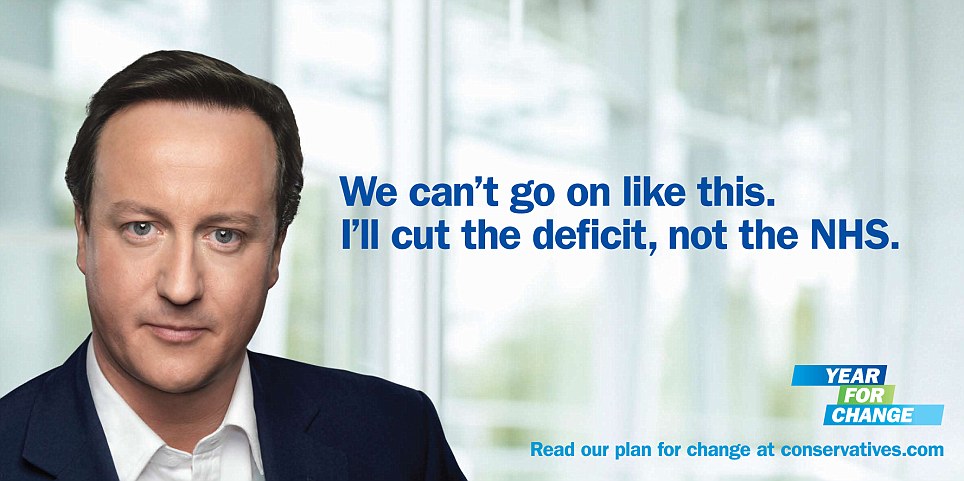
Conservative election poster 2010

A few recent news articles about the UK’s Conservative and Liberal-Democrat(Conservative) coalition government – the ConDem’s – brutal attack on the National Health Service.

Pulse reported yesterday that Tower Hamlets CCG (Care Commissioning Group) have called on the government to drop the Health and Social Care / Destroy the NHS Bill. This huge news story has received very little attention by the corporate press.  From the Guardian’s NHS reforms live blog.

Breaking news – and it’s another plea for the government to drop the health and social care bill altogether, not simply amend it further. Tower Hamlets clinical commissioning group in east London has become the first CCG to ask for the legislation to be withdrawn.

While a growing list of medical organisations has already adopted the same position, including the BMA and various medical royal colleges, this CCG’s action is significant because David Cameron has sought to portray the spread of CCGs across England as evidence of GPs’ enthusiasm for the NHS shake-up.

Plus, this particular vote of no-confidence has been authored by no less than Dr Sam Everington, a widely respected GP who used to advise Andrew Lansley, and whose Bromley-by-Bow surgery in Tower Hamlets hosted the health secretary’s first speech soon after the 2010 general election.

Pulse, the magazine and website for GPs, has an exclusive story that reports that Everington, the chair of the NHS Tower Hamlets Clinical Commisisoning Group, has written to the prime minister asking for the bill to be scrapped because his “rolling restructuring of the NHS compromises our ability to focus on what really counts”. Efforts to further improve patient care through clinically-led commissioning – a key element of the bill – could still be made “without the bureaucracy generated by the bill”, Everington adds.

As Pulse reports: “The moves marks the first time a CCG has publicly called for the bill to be withdrawn and comes after Pulse revealed last month [that] some commissioning leaders were concerned that the government had ‘lost the narrative’ on the reforms.”

The letter states: “We support a strong role for clinical involvement in commissioning decisions that lead to better health outcomes for our patients. We do this already in Tower Hamlets. An Act of Parliament is not needed to make this happen.”

In what Pulse deputy editor Steve Nowottny calls “a big blow to the government”, Everington goes on to say that his CCG does “share the concerns” about “the long-term implications of the bill made by our professional representative organisations, the Royal College of GPs and the British Medical Association”. As both those bodies are now firmly in the “drop the bill” camp, his deliberate association with them makes Everington’s letter even more embarrassing for ministers and Number 10.

Lib-Dem Deputy Prime Minister Nick Clegg and Shirley Williams wrote a joint letter yesterday to Liberal Democrat parlimentarians. They’re demanding further changes to the Destroy the NHS Bill having been scared by Lib-Dem activist demands. I’m bored with this – read about it here.


Continue ReadingNHS news review

NHS news review

Spread the love

The Royal College of Physicians (RCP) , representing hospital doctors, has chosen to ballot its 26,000 members on the Health and Social Care / Destroy the NHS Bill.


At the Royal College of Physicians, we believe the NHS bill is beyond repair

We were told that this bill will make the NHS less bureaucratic, more cost effective and provide more choice for patients. It won’t

Today the Royal College of Physicians joined the growing ranks of opposition to the government’s health and social care bill.

We were told that the bill would make the NHS more efficient and more cost effective. It won’t. Management costs in the NHS are about 5% of the total budget. In the US healthcare system, where the market rules, they are above 25%. If the bill is passed, management consultants such as McKinsey and KPMG will make millions from the NHS budget “advising” clients on both sides of the purchaser/provider split, with additional contracts “advising” government and health regulators how to cope with the tangled web of contracts the new system would create.

We were told that the bill would make things less bureaucratic. It won’t. It will replace three layers of management in the NHS with at least six new ones, and a seventh if you count the health and wellbeing boards to be established at the local authority level. For example, 152 primary care trusts will be replaced with well over 200 clinical commissioning groups. Almost half the staff of primary care trusts have already gone, but many are returning to work for the commissioning groups and commissioning support services, often as consultants on a higher rate than their previous salaries.

We were told that the bill was essential to control spiralling healthcare costs. It isn’t. Britain spends less per head on healthcare than most other European Union countries, and far less than the United States. Market competition in health is inherently wasteful, because it implies the existence of spare capacity in the system. It is likely to drive up costs for each patient, as charges for healthcare have to rise to ensure that providers can carry the costs of under-used people, building and equipment.

We were told that the bill means more choice for patients and more control over their healthcare. It doesn’t. Instead, it will strain to breaking point the essential relationship of trust between doctors and their patients. GPs in particular will be put in the invidious position of having on the one hand to diagnose their patients and recommend the best course of treatment, and on the other hand to refuse to supply it because as commissioners their budgets are under pressure.

For all these reasons and others, doctors, nurses and other health professionals have finally concluded that the bill is beyond rescue. Opinion polls show that view is shared by a large majority of the British public.

NHS care to be severely rationed. People will need health insurance like the United States.


NHS bill: goodbye comprehensive healthcare, hello private insurance

Services are already being pulled in an unannounced, piecemeal way. If the bill passes, the health secretary won’t be accountable

Under the bill the range of what is available for free seems certain to contract further. Commissioning groups will have fixed budgets. The for-profit “support organisations” that are being lined up to do most of the commissioning for them will have a strong incentive to limit costs, and therefore the treatments to be paid for. CCGs also look likely to be free to decide that some treatments recommended by hospital specialists are “unreasonably” expensive, and refuse to pay for them, as health maintenance organisations do in the US.

A core of free NHS services will remain, but they will be of declining quality, because for-profit providers will cherry-pick the most profitable services. NHS hospitals will be left with the more costly work, so staffing levels and standards of care will be forced down and waiting times will get longer. To be sure of getting good healthcare people will increasingly take out private insurance, if they can afford it. At first most people will take out the cheaper insurance plans now on offer that cover just what is no longer free from the NHS, but gradually insurance for most forms of care will become normal. The poor will be left with a limited package of free services of lower quality.

What is available on the NHS should be determined nationally, in a transparent and democratic way, not by unelected local bodies. The bill will allow the secretary of state to deny responsibility when good, comprehensive, free care has become a thing of the past.

Majority of GPs expect to see more rationing of care in NHS

85% of family doctors think health service will have to cut back on provision

More than eight in ten GPs believe that there will be greater rationing of care in the NHS as a result of the financial challenges facing the health service.

Research published this week suggests that 85% of family doctors believe that the government will have to set out more clearly what care is – and is not – freely available on the NHS in England.

A survey of 821 English GPs carried out by the Nuffield Trust, an independent health think tank, and doctors.net.uk found that only half of GPs believe that the NHS will be able to improve efficiency enough over the next five years to avoid having to scale back on the services that are currently funded.

In addition, the vast majority of GPs (83%) believe handing responsibility to local clinical commissioning groups for setting priorities for spending NHS funds will be likely to lead to greater variations in what services are provided to patients throughout England.

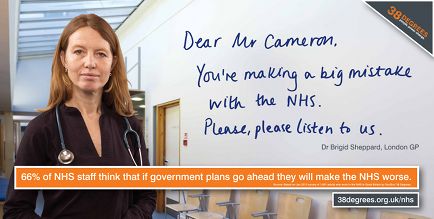
Campaign group 38degrees is appealing for donations to place billboard adverts in London to make the ConDems’ attack on the NHS an issue in the elections for the Mayor of London.


Lib-Dem activists force Nick Clegg to make further demands for changes to the bill. It should be recognised that Nick Clegg is and has been fully supportive of plans to destroy the NHS.

Lib Dem activists in last-ditch attempt to scupper NHS reforms bill

Party members to press ahead with emergency motion at spring conference despite changes advanced by Clegg and Williams

Clegg breaks ranks to demand more amendments to NHS Bill

Attempt to appease party faithful comes on day PM asserts: ‘there will be no more big changes’

Tavistock service for vulnerable children at risk, expert warns


The future of a prestigious health service which helps children suffering severe abuse is in doubt because of government cuts, a mental health expert has warned.

The Tavistock’s Monroe Assessment Service provides treatment for families going through care proceedings and assesses many children subjected to sexual and physical abuse or neglect.

But a new cap on the amount of funding these expert court witnesses receive has left the prestigious service operating at a loss, and many families without adequate support, a consultant social worker has warned.

Tim Kent said: “We are seeing the highest number of applications for care orders in the family courts for a decade, but the work of expert witnesses has been hit by savage cuts.

“Cases are getting stuck in the legal system and children’s lives are on hold for longer. We fear that the risk of courts making bad decisions about the best interests of the child is growing.


27/11/13 Having received a takedown notice from the Independent newspaper for a different posting, I have reviewed this article which links to an article at the Independent’s website in order to attempt to ensure conformance with copyright laws.

I consider this posting to comply with copyright laws since
a. Only a small portion of the original article has been quoted satisfying the fair use criteria, and / or
b. This posting satisfies the requirements of a derivative work.

Please be assured that this blog is a non-commercial blog (weblog) which does not feature advertising and has not ever produced any income.

dizzy

Continue ReadingNHS news review

I’ve been thinking …

Spread the love

… about looking at opportunities for young people to get into work.

I’ve not been thinking about poor people …

I’ve been thinking about rich people … and looking at the difficulties they face – or possibly do not – face getting into work.

In fact I’m probably going to concentrate on those people who are very rich and have a privileged backgrounds and see if any of them are forced into slave labour.

I would expect to find that they’re not and that these are the same ****s that are are so enthusiastic about slave labour.

edit: I need to look at Ian Duncan Smith’s work experience. He’s very keen on work experience. I wonder what work experience he’s got apart from being upper class.

edit: not a good target but still a tory shit


Continue ReadingI’ve been thinking …