NHS news review

Spread the love

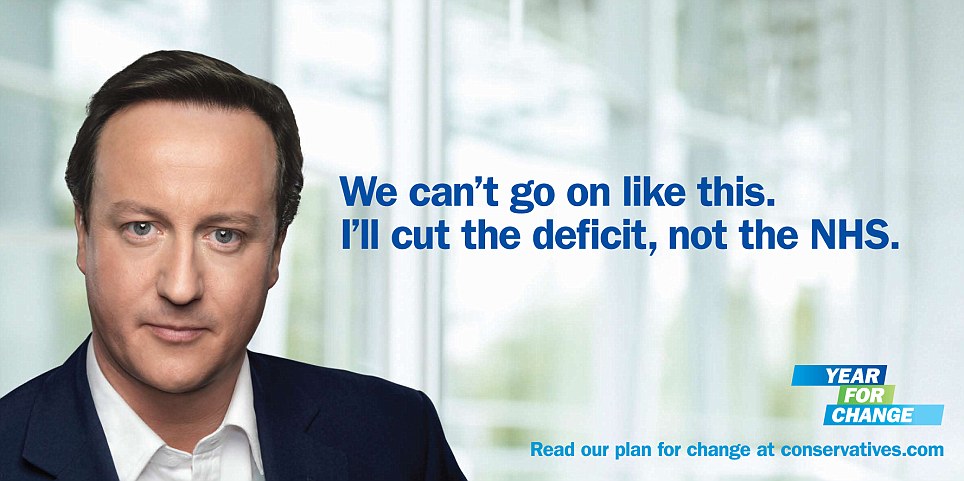
Conservative election poster 2010

A few recent news articles concerning the UK’s Conservative and Liberal-Democrat coalition government – the ConDem’s – brutal attack on the National Health Service.

NHS ‘shocking’ in parts, says Andrew Lansley – Telegraph

Speaking to members of the NHS Confederation, which represents healthcare managers, Andrew Lansley said that variation between areas was evidence that the service could be “so much better”.

He cited a recent report on care for the dying by Tom Hughes-Hallet, the chief executive of Marie Curie Cancer Care, which found some health authorities spend more than £6,000 on palliative care for each dying person, while one spent just £186.

He told the annual conference of the NHS Confederation in Manchester: “I know people are generally satisfied with the NHS. But if people were only aware of the variations in the quality, they’d be shocked!

GPs paid £100 an hour for new NHS duties – Main Section – Yorkshire Post

TAXPAYERS are forking out premium rates of up to £100 an hour for GPs in the region to take on new duties under the Government’s landmark NHS reforms, the Yorkshire Post can reveal.

The rate for roles commissioning services is equivalent to around £180,000 a year – more than the annual pay for most NHS chief executives.

Doctors in North Lincolnshire are being paid the highest £100 an hour fee which is twice as much as in neighbouring Doncaster.

Across the region, rates vary significantly for duties on new GP commissioning groups, which will each take charge of hundreds of millions of pounds in NHS spending.

Ministers claim their plans for health service reconfiguration will save taxpayers billions of pounds by axing layers of bureaucracy but doubts have already been raised about the likely impact.

Unison and private companies clash over any qualified provider policy | GPonline.com

Unison has renewed its attack on the policy to allow any qualified provider to deliver NHS care after the government said it would push ahead with its plans.

The public sector union claimed the policy was ‘perverse’ at a time of NHS cuts and said it was privatisation by the back door.

But private companies defended the proposal saying it would allow charities to take a bigger role in delivering NHS services.

The any qualified provider policy will see NHS and private providers compete for contracts based on quality and cost. The government says it will improve patient choice.

The NHS Future Forum opted to retain the policy in its recommendations on the Health Bill last month.

Karen Jennings, head of health at Unison, debated the plans during a lively exchange at the UK Faculty of Public Health’s annual conference in Birmingham on Monday.

Ms Jennings told attendees: ‘We are moving towards wholesale competition in the NHS.’

If the any qualified provider policy is adopted, ‘we will have an NHS based on pure, unfettered market’, she warned.

She claimed plans to increase patient choice could actually raise NHS costs if they opt for more expensive options and was ‘perverse’ at a time of stringent cuts.

The choice agenda is a first step towards co-payments for some care, she added, which will eventually lead to a US-style health insurance model.

‘This is the road to ruin for the NHS,’ she said.

Continue ReadingNHS news review

NHS news review

Spread the love

Jacqueline Davis has an article in the Guardian arguing that the ‘listening exercise was a PR coup for the government. “Very little of significance had changed and the bill is still on course to achieve its underlying intention, accelerating the privatisation of the health service, turning the NHS into a kitemark attached to a ragbag of competing and largely private providers.”

Spending cuts and resulting longer waiting times.

Longer waiting times for diagnostic tests.

Top heart specialist Professor Roger Boyle said he planned to retire, partly in protest at government reform of the health service. He launched an angry attack on health secretary Andrew Lansley’s plans, saying they would abolish ‘large chunks of the NHS’.

Conservative election poster 2010

A few recent news articles concerning the UK’s Conservative and Liberal-Democrat coalition government – the ConDem’s – brutal attack on the National Health Service.

This NHS U-turn was a fake | Jacqueline Davis | Comment is free | The Guardian

Andrew Lansley’s privatisation remains on track, hidden by a public relations smokescreen

After the so-called “listening exercise” many commentators are talking about a humiliating U-turn by the government over the NHS “reforms” and claiming there have been significant changes to Andrew Lansley’s health and social care bill. But they are the victims of a massive PR coup by the government, which must be delighted with its strategy.

A well-orchestrated political storm greeted the report of the Future Forum, with Liberal Democrats claiming they had ticked nearly all their boxes and Conservative backbenchers complaining that the “reforms” had been betrayed by their coalition partners. Even Alan Milburn was dusted off to say that the “reforms” were now a “car crash” as a result of being watered down too much.

But, if you had listened carefully while all this was going on, you would have heard Lansley reassuring his backbenchers that the core principles of the bill remained in place and that no red lines had been crossed, and he was quite right. Very little of significance had changed and the bill is still on course to achieve its underlying intention, accelerating the privatisation of the health service, turning the NHS into a kitemark attached to a ragbag of competing and largely private providers.

All the mechanisms to do this are still in place. Private companies can still be involved in commissioning NHS services and these services will still be delivered by any “qualified” provider. Thus the commercial sector can still hold the budget and provide the care. Competition, the aspect of the reforms that most worries doctors, emerges almost intact.

The rhetoric has been toned down and been rebranded as “choice”. However, the code of practice that governs it will be put on a statutory footing, and the responsibility for ensuring that competition trumps other considerations is passed to the Orwellian Co-operation and Competition Panel. They move into Monitor, so claims that Monitor is no longer concerned with competition are premature, if not misleading.

Foundation trust timetables have been relaxed but there is still no cap on their private income, meaning that many will be tempted to boost their dwindling resources by increasing private patient numbers, inevitably at the expense of NHS patients. The secretary of state’s “duty to provide” comprehensive health care is now so obscure that teams of lawyers are working their way through the legalese in an attempt to understand it. If this is meant to be straightforward, why not return to the original wording? Worrying evidence is also emerging that the bill will specifically make provision for private equity companies to buy NHS facilities and asset strip them. Is this really what David Cameron intended when he claimed that he loved the NHS?

Spending cuts will mean longer waiting times, say NHS managers – UK Politics, UK – The Independent

Hospital waiting times will grow and patients’ access to treatments will be limited because of the squeeze on health spending, more than half of NHS chief executives and chairmen believe.

The warning from the heads of nearly 250 health providers comes as the NHS sets out to save £20bn from its budget over four years. Yesterday Andrew Lansley admitted that the NHS would have to find £4bn of savings next year because of the increased demands on the service.

“We are taking steps to cut the costs of administration and focus resources on the front line,” he said.

But in the first survey of NHS organisations since the Government’s efficiency drive was implemented, managers said reducing administration costs alone would not be enough and that tough decisions on cutting and merging services would have to be made.

One in five said they believed the quality of care their institutions offer will decrease over the next 12 months while almost a third thought care would get worse over the next three years.

Nearly 50 per cent said the financial situation facing their organisation was “the worst they had ever experienced”, while an additional 47 per cent said it was “very serious”.

NHS waiting times increase for diagnostic tests | Society | The Guardian

Patients’ health and treatment could suffer because NHS waiting-times for x-rays, cardiology tests and ultrasound scans are increasing sharply, doctors are warning.

Longer waits to access diagnostic tests could cause anxiety for patients and mean that identification of serious illnesses such as cancer is delayed, they say.

Their warning comes as new NHS figures show that 15,667 patients waited more than six weeks to undergo a diagnostic procedure in May alone – a more than fourfold increase on the same month in 2010, when 3,378 did so.

The figures again call into question David Cameron’s promise to ensure that waiting times do not rise, despite the growing demand for healthcare and tough financial climate in the NHS. He made that one of his “five personal pledges” to voters on the NHS last month.

The flagship 18-week target for patients to be treated after first consulting a GP is also under pressure. Quarterly data in that area, due next week, is expected to show another fall. Performance on other waiting-time markers is also slipping, such as the four-hour wait to be seen in A&E.

The latest statistics covering access to diagnostic procedures, covering May 2011, showed that 2.7% of patients were left waiting for six weeks or longer for diagnosis results. A further 1,800 patients waited more than three months – an almost tenfold increase on last year’s figure of 217. Average waiting times also increased year-on-year, but to a lesser degree. The typical wait for diagnosis increased to 1.9 weeks in May 2011 versus 1.8 weeks a year before.

Top heart specialist quits NHS role in protest at reforms | Manchester Evening News – menmedia.co.uk

The expert charged with reviewing heart services at a Greater Manchester hospital is quitting his role with the NHS.

The country’s top heart specialist Professor Roger Boyle said he planned to retire, partly in protest at government reform of the health service.

He launched an angry attack on health secretary Andrew Lansley’s plans, saying they would abolish ‘large chunks of the NHS’.

His announcement threw a question mark over his review of heart services at Rochdale Infirmary – but bosses told the MEN his report has been completed and will still be used by hospital chiefs.

Prof Boyle visited the hospital in March and said major cutbacks at the Rochdale heart unit – the third biggest in the region – had made it unsafe.


27/11/13 Having received a takedown notice from the Independent newspaper for a different posting, I have reviewed this article which links to an article at the Independent’s website in order to attempt to ensure conformance with copyright laws.

I consider this posting to comply with copyright laws since
a. Only a small portion of the original article has been quoted satisfying the fair use criteria, and / or
b. This posting satisfies the requirements of a derivative work.

Please be assured that this blog is a non-commercial blog (weblog) which does not feature advertising and has not ever produced any income.

dizzy

Continue ReadingNHS news review

NHS news review

Spread the love

There is a great deal of NHS news today so I’ve tried to impose some order out of chaos™.

  • There are many articles about the 63rd birthday of the NHS yesterday.
  • Health Secretary Andrew Lansley was evasive while appearing before the Health Select Committee hearing yesterday. Lansley reveals that the bill does not address competition law which is left to be decided by the courts.
  • Waiting times and cuts are to increase despite Prime Minister David Cameron’s commitments that they would not.
  • Massive increase in NHS bureaucracy as a result of NHS reforms despite the claimed intention of the reforms to reduce bureaucracy.

Conservative election poster 2010

A few recent news articles concerning the UK’s Conservative and Liberal-Democrat coalition government – the ConDem’s – brutal attack on the National Health Service.

NHS 63rd Birthday

Happy birthday NHS / Britain / Home – Morning Star


TUC general secretary Brendan Barber said: “Despite some amendments to the controversial NHS reforms, many of the most damaging aspects of the Health and Social Care Bill remain. The changes presented to us by the government after its recent listening exercise amount to little more than smoke and mirrors.

“The government’s proposals go against the very principle of our NHS, in which care is based on need not ability to pay.

“They mean private providers will be able to increase their role in the NHS, simply cherry-picking the most lucrative parts for their own private profit to the detriment of the overwhelming majority of patients.”

Happy 63rd Brithday NHS

Rehana Azam GMB National officer for NHS said “GMB wishes the NHS a happy 63rd birthday today.

The Tory plan is to get the guts of the measures on the statute book and then by stealth break up the National Health Service.

The NHS was designed to be a cradle to the grave health and care service free at the point of use until the Tories in 1990 changed it to be a cradle to nursing home service. That is what people want and that is what politicians should respect and deliver.”

Campaigners celebrate 63 years of NHS – Local news – Worksop Guardian


Spokesperson for Bassetlaw Protecting our People and Services group Ann Donlan said: “Before the NHS they had to pay for medicine, pay for doctors and pay for treatment.”

“Since the NHS came in we have had first class service and an excellent hospital. We are here to remind people of its importance, we do not want to see it privatised again.”

Spokesperson for Bassetlaw Protecting our People and Services group Ann Donlan said: “Before the NHS they had to pay for medicine, pay for doctors and pay for treatment.”

“Since the NHS came in we have had first class service and an excellent hospital. We are here to remind people of its importance, we do not want to see it privatised again.”

Birthday cake and banners at NHS protest over reforms – Health – The Star


Campaign member Andy Turner said: “It is clear that the Department of Health is planning for the Health Bill to go through largely unchanged. It has clearly been a cynical exercise to take the heat out of the situation.

“We are gravely worried that the proposed changes will favour private healthcare providers accountable to shareholders and not patients, promote competition and not co-operation, and lead to drastic reductions in quality of patient care.”

Increased Bureaucracy

Leaked paper says new NHS board with £20bn budget will direct health reforms | Society | The Guardian

A new NHS commissioning board employing 3,500 staff and with a £20bn commissioning budget will oversee the government’s reforms to the health service, according to a leaked Department of Health document.

Labour said the document showed the government was planning to create a new layer of NHS bureaucracy, raising questions about the health secretary Andrew Lansley’s claim to be streamlining the management of the health service.

The document, which carries a warning “confidential draft – not for circulation” – was drawn up by the NHS chief executive, Sir David Nicholson, as he outlined the duties of an independent NHS commissioning board.

Nicholson said the new board will:

• Employ about 3,500 staff. It will have a chair and five non-executive directors. A chief executive will head a team of five executive directors – the four others will be a nursing director, a medical director, a director of commissioning development and a director of finance, performance and operations

• Directly commission £20bn of services and hold about 33,000 contracts for primary care services

• Oversee the new clinical commissioning groups across the country that will take responsibility for £80bn of the NHS budget.

England will be split into four “commissioning sectors” – with London as one of the “distinct” areas, raising questions about whether strategic health authorities are being reconfigured.

Nicholson proposed that the new board should be called NHS England, though he admitted that this might be a step too far.

The chief executive added in his report that his proposals would lead to savings because the board’s 3,500 staff would take over the duties currently performed by 8,000 workers.

Liz Kendall, the shadow health minister, said: “The government is wasting precious NHS resources on its huge re-organisation.

“Their original plan was going to cost at least £2bn. Their new plan will cost even more as the number of NHS organisations balloons from 160 to more than 500.”

Kendall also criticised Simon Burns, the health minister, who told the Commons committee examining the health and social care bill that it was premature to comment on staffing levels.

She added: “Today the minister Simon Burns told me it was ‘premature’ to say how much their new super quango, the NHS commissioning board, will cost and how many staff it will employ.

“Yet we now know from this leaked document it will employ at least 3,500 staff. The government must now come clean and spell out the true costs of their chaotic NHS plans.”

“Massive bureaucracy” increase due to Health Bill » Hospital Dr

The government’s NHS reforms are set to treble the number of statutory NHS organisations, the Royal College of GPs’ chair Dr Clare Gerada warned MPs.

Giving evidence to the Parliamentary Health and Social Care Committee last week, Dr Gerada warned the reforms will send the number of statutory NHS organisations soaring from 163 to 521.

Gerada complained that NHS bureaucracy was being “massively increased”, while the revised bill had become “very incoherent”.

“It is neither liberating nor controlling. It neither allows for GPs to be innovative, nor does it give them tight restraints.”

The RCGP’s tally of new quangos includes 300 commissioning groups, 150 health and wellbeing boards, 50 PCT clusters, 15 clinical senates, four SHA clusters, the National Commissioning Board and the Department of Health.

Gerada said: “We are deeply concerned that commissioning consortia are going to be so bound up in bureaucracy that they will simply not be able to deliver the system leadership required.”

Cuts and related Increased Waiting Times

Managers warn of worsening access to NHS care – Main Section – Yorkshire Post

PATIENT access to NHS care will worsen in coming years as the health service faces “unprecedented” financial pressures, health bosses warn today.

In a survey of nearly 300 chief executives and chairmen, four in 10 say the financial situation facing their organisations is the “worst they had ever experienced” and another 47 per cent say it is “very serious”.

More than two thirds fear the pressures will intensify over the next three years, partly due to the impact of cuts by local councils, and that waiting times will worsen.

In a stark message, NHS Confederation chief executive Mike Farrar will today tell the annual conference of managers in Manchester that key decisions taken in the next 18 months over future health service reforms would determine “if the NHS is a going concern for future organisations to inherit”.

related: BBC News – NHS chiefs warn of rising hospital waiting times Pledges on NHS waiting times in doubt | Society | guardian.co.uk Spending cuts will mean longer waiting times, say NHS managers – UK Politics, UK – The Independent

Lansley

Irritated MPs interrogate Lansley over NHS Bill / Britain / Home – Morning Star

Frazzled MPs spent a frustrating two hours today trying to cajole Health Secretary Andrew Lansley into revealing how much competition will be unleashed in the NHS.

Mr Lansley went round in circles before grudgingly admitting to Lib Dem MP Andrew George that many of the amendments to the Health and Social Care Bill were cosmetic.

Some amendments were introduced to address “misplaced concerns,” while others were to “reflect more accurately” the principles proposed in the Bill, explained the minister.

“Some of them are genuine changes,” he added chirpily in an appearance before the health select committee.

Parrying questions on the changes, he insisted: “It was not recommended to us by the NHS Future Forum that we should depart from the principles of the Bill.”

The forum had said that there was “widespread support” for the measure, he crowed.

Labour MP Valerie Vaz joined West Cornwall Lib Dem Mr George in trying to smoke out the minister over his latest emphasis on giving wide powers to a NHS National Commissioning Board, charged with promoting “integration” and improving quality.

NHS chief executive Sir David Nicholson confessed that the enhanced National Commissioning Board did not actually have any members yet.

“It’s just me at the moment,” he said.

There was a lot of “preparatory work” to do and adverts for a chair and a non-executive director would appear after the summer break.

Playing with words, Mr Lansley declared that NHS regulator Monitor would in future be using competition “as a means to an end” rather than the earlier intention of promoting competition as “an end in itself.”

HealthInvestor – Article: NHS competition rules ‘still open to debate’, admits Lansley

There remains a lack of clarity about how competition law will be applied in the reformed NHS, the health secretary has admitted.

Speaking at a Health Select Committee hearing, Andrew Lansley said the full application of competition law in the health service would be determined gradually by the courts, rather than by his amended Heath and Social Care Bill.

“If you’re trying to establish with certainty what the boundary of the application of competition law is, then it’s a matter of debate and it will be something that will only be determined over time as there are cases brought before the courts,” he said.

At present, EU competition rules only apply to ‘undertakings’, meaning enterprises engaged in ‘economic activities’. This means that while it applies to private providers in the NHS, it tends not to cover public sector bodies. There remains considerable legal debate about what constitutes an ‘economic activity’ in public healthcare provision, especially amid efforts to introduce a genuine internal market within the NHS.

The health minister, giving evidence on the government’s response to the NHS Future Forum report, said clarity on competition law was not contained within his amended Health Bill and would only emerge as providers challenged decisions in the courts.


27/11/13 Having received a takedown notice from the Independent newspaper for a different posting, I have reviewed this article which links to an article at the Independent’s website in order to attempt to ensure conformance with copyright laws.

I consider this posting to comply with copyright laws since
a. Only a small portion of the original article has been quoted satisfying the fair use criteria, and / or
b. This posting satisfies the requirements of a derivative work.

Please be assured that this blog is a non-commercial blog (weblog) which does not feature advertising and has not ever produced any income.

dizzy
Continue ReadingNHS news review

NHS news review EXTRA: NHS Birthday

Spread the love

The NHS is 63 today. Health professionals are united in their opposition to the ConDem coalition government’s Health and Social Care Bill which has the intention of destroying the NHS.

UNISON Press | Press Releases Front Page

UNISON General Secretary, Dave Prentis, delivered a giant birthday card to the Department of Health today (5 July), to mark 63 years since the NHS was founded.

The chief of the UK’s largest union, joined other union heads and health workers, to warn the Government that the NHS would not make its 64th birthday if plans set out in the Heath and Social Care Bill go ahead.

The plans will lead to the break-up of the NHS and private companies grabbing huge chunks of the NHS birthday cake.

Across the UK, health workers and members of the public are also hosting birthday events and campaigning against the reforms.

Dave Prentis said:

“For 63 years doctors, nurses and other health workers have made the NHS the national treasure it is.

“Now the Government is trying to destroy the health service and open it up to private companies, who will put patients before profits.

“The Bill should be binned and started from scratch, as it is a recipe for disaster.

“The NHS must be safeguarded, so it can celebrate its 64th birthday.”

The card, which was signed by the TUC General Council and senior union officials, along with many members, said:

“We need to safeguard the future of the health service for generations to come.

The greeting inside the card reads: ‘The Health and Social Care Bill sets out hugely damaging changes to the NHS. We are worried that they could mean taxpayers’ money for the NHS diverted to big business, and competition instead of the increased collaboration patients need. We want to safeguard our NHS and make sure that there is a 64th birthday to celebrate too.”

Happy 63rd birthday NHS – Royal College of Midwives

RCM general secretary Cathy Warwick this morning joined representatives from the TUC and unions representing health workers, and helped hand deliver a giant birthday card to the Department of Health to celebrate 63 years of the NHS.

The card will be delivered to health secretary Andrew Lansley at Whitehall. Carrying a four-foot card, the union leaders will highlight concerns that the changes the government is proposing in the Health and Social Care Bill will fundamentally undermine the founding principles of the NHS.

Cathy Warwick said: ‘The NHS is a national treasure and should be protected not dismantled. Midwives are some of its many unsung heroines. They work long hours because they want to be with women before, during and after childbirth. The erosion of midwives’ pay and conditions, however, is making working conditions unsatisfactory for midwives because they are not able to give the care they want to women.

‘Meanwhile, there are not enough midwives to deliver the care that women need now. I have real fears that maternity care could suffer as trusts struggle to cope with health reforms and the profound change in its structure.’

Listen to Cathy Warwick talking about delivering the card and her concerns about the Health Bill in the RCM Communities vlog.

Continue ReadingNHS news review EXTRA: NHS Birthday

NHS news review

Spread the love

Celebrations of the 63rd birthday of the NHS today are concerned for its future. The TUC highlights concerns about the Health and Social Care Bill (Destroy the NHS Bill) while Ozzy Osbourne pays tribute to the NHS and says that without the NHS’s dedication he could not have continued his career as the Prince of Darkness.

Conservative election poster 2010

A few recent news articles concerning the UK’s Conservative and Liberal-Democrat coalition government – the ConDem’s – brutal attack on the National Health Service.

Trades Union Congress – Campaigners celebrate the 63rd birthday of the National Health Service


Despite the government’s response to the recent NHS Future Forum report, unions still have key concerns about the Health and Social Care Bill. These include fears about a vast and damaging extension of competition, and concerns that the abolition of the private patient income cap will see NHS patients pushed to the back of the queue as waiting lists grow and trusts prioritise care for paying patients.

Unions also have concerns relating to the clinical commissioning process. Many groups of staff will still have no voice within the process and it is also likely to mean mass subcontracting to private companies, and an overly complex system at local level.

Transparency and accountability remain a concern. Although the Bill requires trusts to hold their meetings in public, no such requirement will exist for private and voluntary sector providers of health services.

Commenting on the birthday celebrations, TUC General Secretary Brendan Barber said: ‘Despite some amendments to the controversial NHS reforms, many of the most damaging aspects of the Health and Social Care Bill remain. The changes presented to us by the government after its recent listening exercise amount to little more than smoke and mirrors.

Ozzy in tribute to ‘dedicated’ NHS – Scotsman.com News


The former Black Sabbath frontman, who was born five months after the service was created on this day in 1948, was one of the first generation of NHS babies.

The singer was also treated by NHS staff in 2003 after a near-fatal accident at his Buckinghamshire home left him with a fractured neck vertebra, eight fractured ribs and a broken collarbone.

He said: “If it wasn’t for the hardworking staff of the NHS following my serious quad bike accident, I may not be here today to continue my career as the Prince of Darkness.

“I want to say a big thank you to all of the dedicated doctors, nurses and everyone else who makes up the NHS across the country – from Birmingham to Berkshire. Just like me, it’s still going strong after 63 years. Long may we both keep it up.”[!]

Britain/Health service – An update on the British government’s piecemeal privatisation of healthcare

[NB This is a long article very useful for background]

[9.45a.m. 5/7/11edit:  This article while mostly accurate is partly outdated by changes following the Future Forum’s ‘listening exercise’

e.g. this section is outdated re: exclusion of hospital doctors and nurses

Instead the Bill proposes that £80 billion of commissioning budgets are to be devolved to local consortia of GPs, which will decide how best to spend the money. The Bill lays down no specific requirements in terms of the size of population to be covered by a consortium, the organisational structure of a consortium, or for any public or non-GP involvement. The Bill specifically excludes hospital doctors however senior, and nursing staff and other health professionals from any specific role in this new management structure.]

The situation in England’s health care system reflects the broader picture on the European and a world scale. Healthcare is the world’s biggest industry with a turnover in excess of $5 trillion annually, 85% of which is spent in the wealthiest countries, in most of which the majority of spending takes place through tax funded systems all through social health insurance. The private sector, looking to rebuild its profit margins, is determined to recapture a larger share of this health budget, especially in Europe.

But because of the political obstacles to most European governments being seen to break up and privatise healthcare systems, which currently deliver near- universal care – in general with few copayments or charges at point of use – the privatisation process has been of a special kind.

This is very different from the process of privatisation in the UK and in other countries in the 1980s, in which whole utilities such as gas and telecoms and electricity were sold off to shareholders and became private for-profit businesses.

There are three reasons for this: the first is the political sensitivity of the issue for parties, which in general are trying to appear different from the old style Thatcherite neoliberal parties of the 1980s: and in a political climate in which there is little sympathy for the private sector and privatisation.

The second rason is that the private sector itself has limited interest in taking over the whole of healthcare systems: their focus is primarily on cherry picking those parts of the system which appeared to offer them a profit, primarily uncomplicated elective surgery – the mainstay of private medicine around the world. Certainly in England there has been very little pretence from private sector companies of any interest in taking over for example work on accident and emergency services, complex and risky surgery, or chronic care for older people and community services of any type.

And finally there is the issue of resources in the private sector: healthcare systems are far larger than the utilities of the 1980s, while the private health care sector is centred on small-scale hospitals and providing services to an elite wealthy minority of the population: it therefore has nowhere near the management or capital resources required to contemplate a takeover of the entire health systems.

In England the process of slicing off particular sections of health care for privatisation began in the mid-1980s with Margaret Thatcher’s government deciding to put non-clinical hospital services such as cleaning, catering, porters and other services out to competitive tender. The result of this was to stimulate the emergence of a new range of small-scale and untested private companies, and in the context of labour intensive and generally low paid work, these companies attempted both to undercut existing costs to win contracts and at the same time make a profit focused on employing fewer staff, working harder, and offering them worse pay and conditions.

This in turn brought the virtual casualisation of hospital cleaning in much of the UK, but also undermined staffing levels and standards of cleaning and hygiene, even in those hospitals where services remained in-house, since public sector managers were obliged to compete with the low standards and low wages of the private sector.

A generation later the legacy of this privatisation is still haunting the National Health Service in much of the UK, and especially in England, where fewest services have been brought back in-house in recent years. Hospital-borne infections, poor standards poor morale and gaps in staffing levels continue to create problems and often to dump work which should be done by private companies onto nursing and other staff who have other responsibilities as well.

BBC News – Social care costs ‘should be capped at £35,000’

Social care costs in England should be capped so people do not face losing large chunks of their assets, an independent review says.

Council-funded home help and care home places for the elderly and adults with disabilities are currently offered only to those with under £23,250 of assets.

The Dilnot report said the threshold should rise to £100,000 and a £35,000 lifetime cap on costs would be “fair”.

UNISON Press | Press Releases Front Page

UNISON, the UK’s largest union, said today that the Dilnot Commission’s report could be a stepping stone in the right direction towards an NHS style model of care for the elderly, free at the point of use. Raising the means-testing threshold and capping private contributions draws a line in the sand, but the public will want to see that cap move downwards towards tax-funded care, otherwise it will always be a hostage to political fortunes.

The union called on the government to act now on the recommendations, making sure every penny goes towards public care not private profit, and urged it to tackle the wider issues of quality in the system. And warned that public trust in an insurance based model will be low, given the poor track record of the financial services industry.

Healthcare Locums probes two execs over ‘misconduct’ | Business

Two senior recruiters at crisis-riven healthcare employment agency Healthcare Locums have been suspended pending investigations into serious misconduct allegations that will fuel criticism of the use of profit-driven private contractors by the NHS.

One executive, Christian Mansfield-Osborne, is being investigated for alleged “irregular invoicing” in an affair which has involved the company reimbursing one NHS trust in Birmingham with £200,000.

The other, Scott Whitehead, is being probed over allegations that ancillary staff were sent out to work for the NHS without having undergone the required checking procedures.

It is not clear which checks were allegedly not carried out, but the kind of paperwork required for such contractors include Criminal Records Bureau searches, right-to-work documentation and professional qualifications.

Continue ReadingNHS news review