Vulnerable kids are being placed in caravans and AirBnBs by a social care system that puts ‘profit above protection,’ Children’s Commissioner warns
Vulnerable kids are being placed in caravans and AirBnBs by a social care system that puts ‘profit above protection,’ Children’s Commissioner warns
BRITAIN’S most vulnerable children are being placed in caravans and Airbnbs by a social care system that puts “profit-making above protection.”
In a heartbreaking report, the Children’s Commissioner for England Dame Rachel de Souza slammed the “stark failure of the children’s social care system” as she told of an autistic teenager left in an Airbnb for nine months.
The girl was put there under supervision by her council following pressure to discharge her from hospital having not met the criteria to be held under the Mental Health Act.
Dame Rachel also described how a teenage girl who suffered parental domestic violence and neglect being given a supervised crisis placement in a caravan, before being housed in a children’s home 120 miles from her grandparents.
The commissioner called for “radical investment in creating new and safe places for children to live” and an end to “profiteering in children’s social care.”
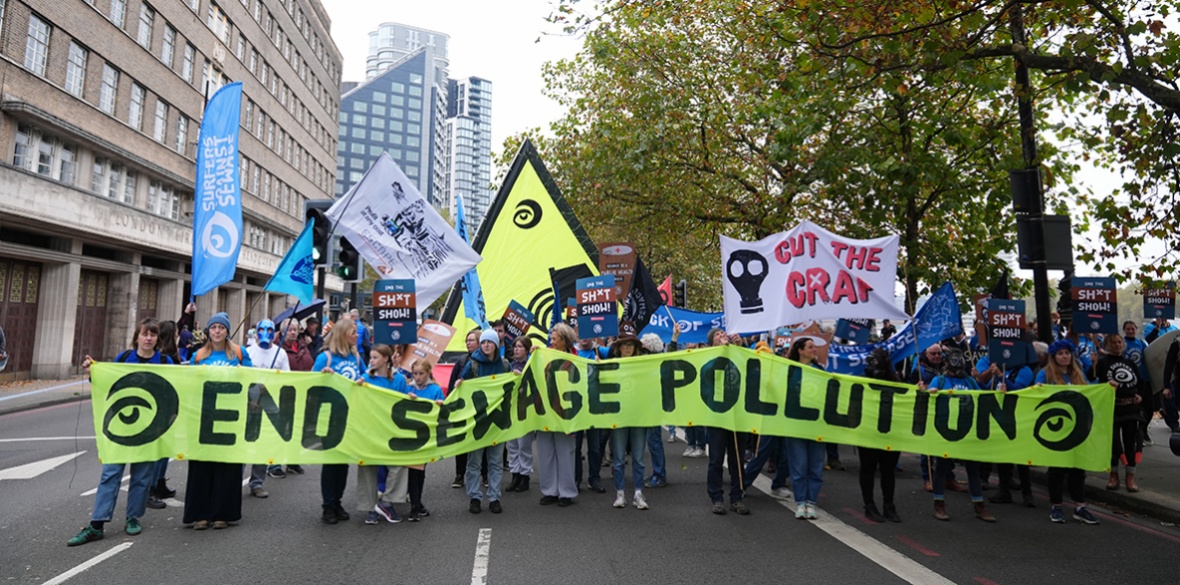
People take part in the Clean Water march in central London, to demand tougher action on keeping the UK’s rivers and seas clean, November 3, 2024
THE River Action campaign has hired a top litigator as it intensifies efforts to hold polluters account and restore Britain’s waterways.
Emma Dearnaley, previously legal director at the Good Law Project, will join the group as its new head of legal in January.
She fought several cases in her former job, including a successful challenge against the Department for Environment Food and Rural Affairs that led to the government expanding the scope of its Storm Overflows Discharge Reduction Plan to include coastal waters.
River Action chief executive James Wallace said: “This is a shot across the bow for polluters and the government alike.
“The law is one of our strongest tools, not only to compel polluters to repair and update their infrastructure but also to compel the government to adequately fund environmental regulators.
“After 14 years of budget cuts, it’s time for the Environment Agency to have the resources to enforce the law against agricultural, sewage and chemical polluters and for Ofwat to stop water companies polluting for profit.”
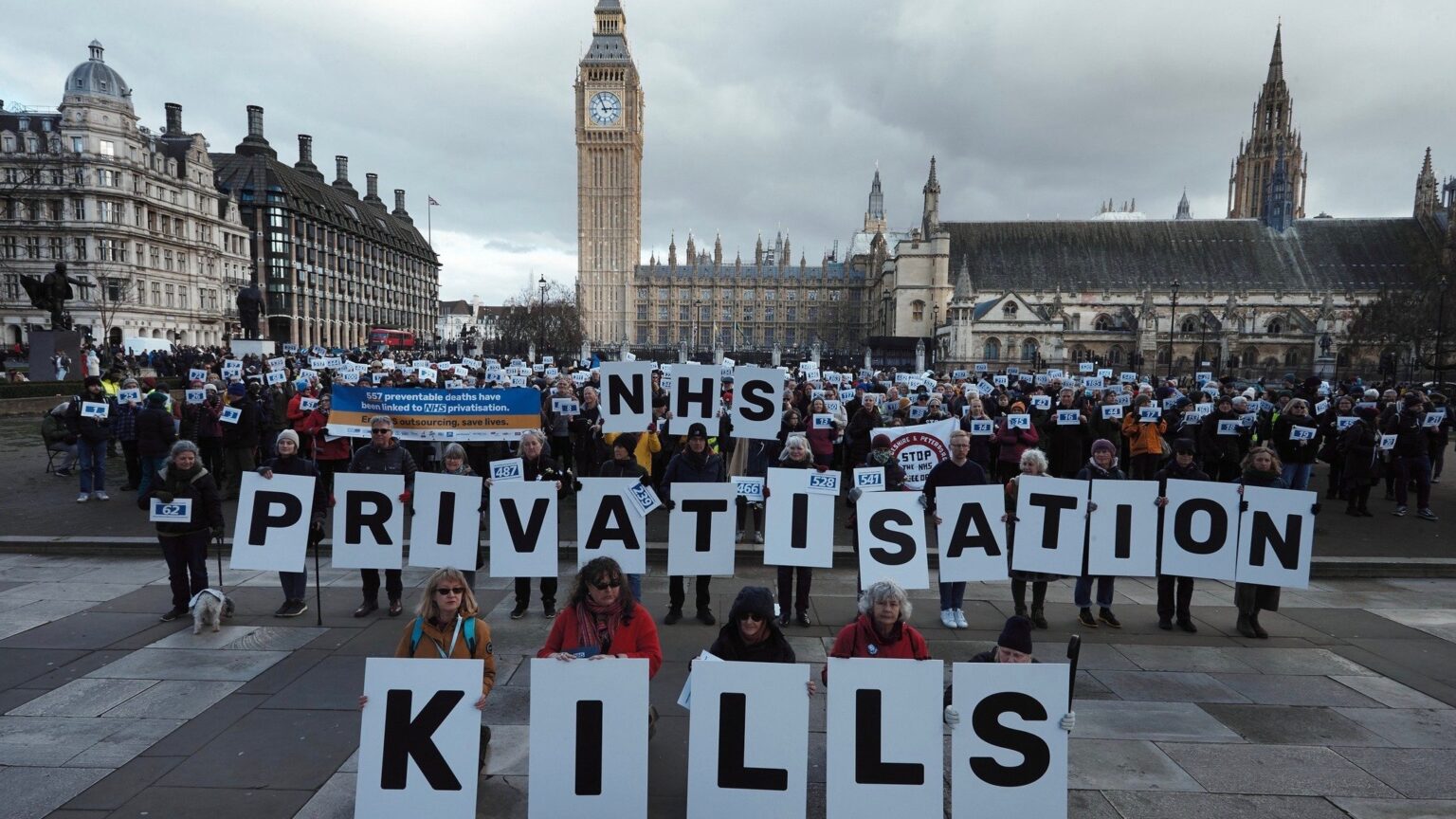
Protest against privatization of the NHS in the UK, February 25, 2023. (Photo: We Own It)
The UK Labour government is considering increasing the role of private healthcare providers, weakening NHS capacities
The Labour Party is considering a major expansion of the private sector’s involvement in the National Health Service (NHS) as it attempts to reduce waiting lists in the United Kingdom. Recently, the Independent Healthcare Providers Network (IHPN) wrote to Keir Starmer’s government, stating that private providers are ready to spend £1 billion to accommodate more NHS patients—if the government guarantees them long-term work.
While the offer has been welcomed by officials from the Department of Health, health activists have raised alarms over the plan. The We Own It campaign warned that a resurgence of the Private Finance Initiative (PFI) policy, as essentially proposed by the private sector, would lead to higher debt, staffing shortages, and diminished NHS training capacities.
This wouldn’t be the first time private capital has been welcomed by a Labour administration. When Tony Blair was Prime Minister, PFI entrusted the private sector with financing the construction of hospitals to fill gaps in the NHS network. The NHS would then pay back the costs of building such infrastructure—with interest—over the course of 25 years or more, eventually becoming the owner.
However, earlier reports indicated that while the NHS gained £13 billion in assets through PFI, it also ended up with £80 billion in debt. This meant that until at least 2022, some NHS trusts spent more on servicing debt to the private sector than on medical supplies.
There is no indication that the current government would introduce stronger safeguards when implementing a new phase of the initiative, dubbed PFI 2.0. If anything, the situation might worsen. While the previous round of PFI left some infrastructure for the public sector, PFI 2.0 foresees nothing of the sort. The additional capacities would be entirely private, with the only public involvement being the money paid to them.
“PFI 2.0 would not only drastically expand private provision in the health service, it will also dramatically increase how much is sucked out of the NHS in profits,” We Own It suggested in its analysis. Currently, private companies siphon £10 million weekly from the NHS. Guaranteeing even more private contracts would add to that burden, leaving fewer funds to invest in the NHS’s own capacities.
Labour fails to grasp importance of publicly-owned NHS
According to a recent inquiry, these capacities are in dire need of strengthening, as health activists have claimed for decades. The inquiry indicated that years of austerity have left a deep mark on the NHS, and it was this—not staff inefficiency—that led to the crisis. Unfortunately, the inquiry failed to underline the importance of breaking ties with the private sector and keeping the NHS publicly-owned, according to the group Keep Our NHS Public.
Even if it did, it is highly likely that Health Secretary Wes Streeting would not understand the importance of such a strategy. Speaking at a party conference in September, Streeting expressed enthusiasm about “reform,” a code word used by governments for “anything but public investment in public capacities.”
“Reform or die. We choose reform,” the Health Secretary said. His approach has left activists understandably worried that the government is sticking to a vague health reform agenda instead of making material commitments to protect the NHS.
Rather than pursuing a shift from “analog to digital,” Keep Our NHS Public argued, the government should pledge to move away from underfunding, fragmentation, and outsourcing. As health workers and their trade unions have raised multiple times, a true strategy to protect the NHS must also include a commitment to improving working conditions and ensuring fair salaries.
If the private sector’s role is expanded, this would not be a realistic option. “The private sector does not have its own staff,” We Own It warned. “They steal staff, trained at huge public expense, from the NHS.”
Further involvement of the private sector would also reduce the NHS’s capacity to train new staff, the group stated. The procedures usually handled by the private sector are often critical for the hands-on experience needed by medical trainees. With fewer procedures of this kind being performed in NHS hospitals, these learning opportunities would disappear, condemning new generations of health workers to lower-quality education and undermine patient care.
“If PFI 1.0 was one of the nails in the coffin of the NHS as we know it, PFI 2.0 is the true end of our NHS as a public service that works for patients, not profit,” We Own It warned.
People’s Health Dispatch is a fortnightly bulletin published by thePeople’s Health Movement and Peoples Dispatch. For more articles and to subscribe to People’s Health Dispatch, clickhere.
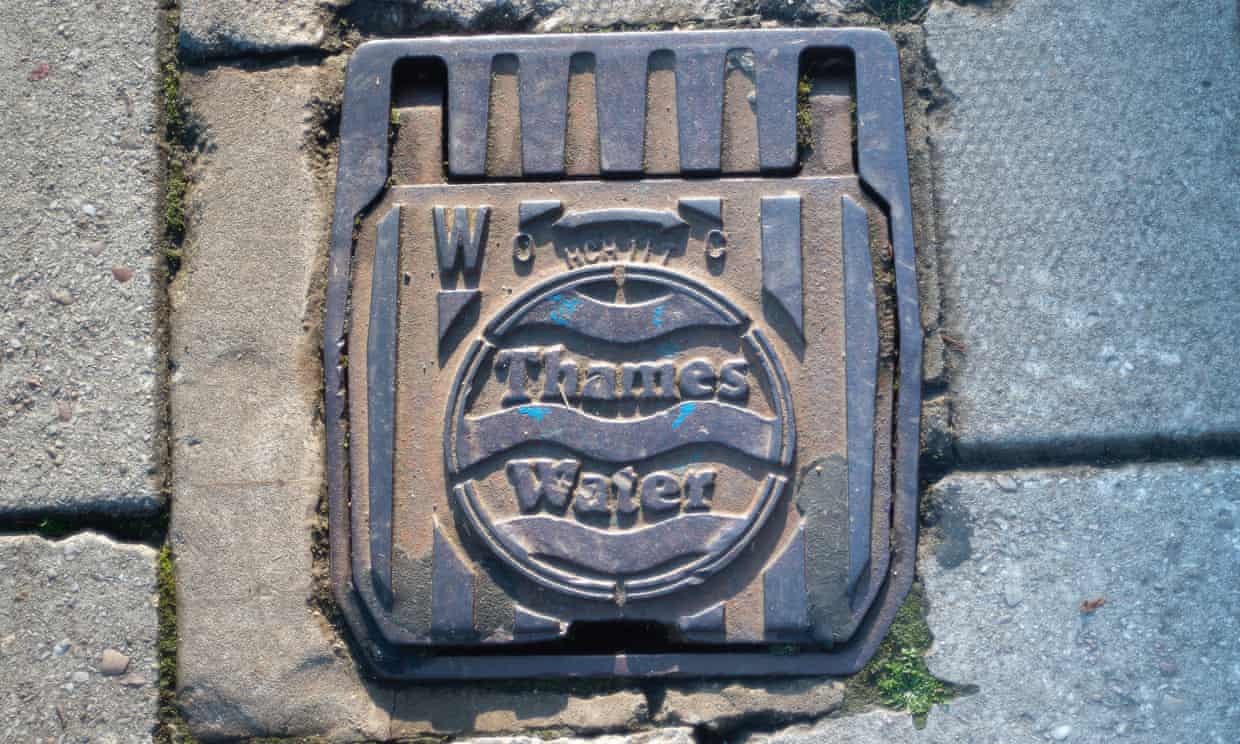
Thames Water is seeking to raise the funds it needs to avoid short-term nationalisation. Photograph: Maureen McLean/Rex/Shutterstock
‘Economically illiterate’ Defra letter sent to anti-sewage groups cites 2018 report commissioned by water companies
Labour used “economically illiterate” analysis paid for by water companies in order to argue against the nationalisation of the sector, the Guardian can reveal.
In an official letter recently sent to anti-sewage groups, civil servants cited a paper by the Social Market Foundation as a reason to avoid nationalisation as part of its review of the sector. The report from 2018 was commissioned by United Utilities, Anglian Water, Severn Trent and South West Water.
The letter, sent by the Department for Environment, Food and Rural Affairs (Defra) to the Rivers Trust, Surfers Against Sewage, River Action UK and Greenpeace states: “The Social Market Foundation calculated the likely cost of renationalisation to be £90bn, drawing on publicly available data from Ofwat, the London Stock Exchange and the annual accounts of the water companies. Renationalisation would impose a huge burden on the public purse at a time when public finances are already stretched.”
Sir Dieter Helm, a leading economist, called the analysis “economically illiterate”.
Moody’s rating agency has disputed this figure and estimated that nationalisation could actually cost £14.5bn – a fraction of the analysis amount.
Earlier this month, Steve Reed, the environment secretary, announced a review into the water companies and the regulators, but said nationalisation was firmly off the table. He said it would cost “billions of pounds” and would not solve the sewage crisis.
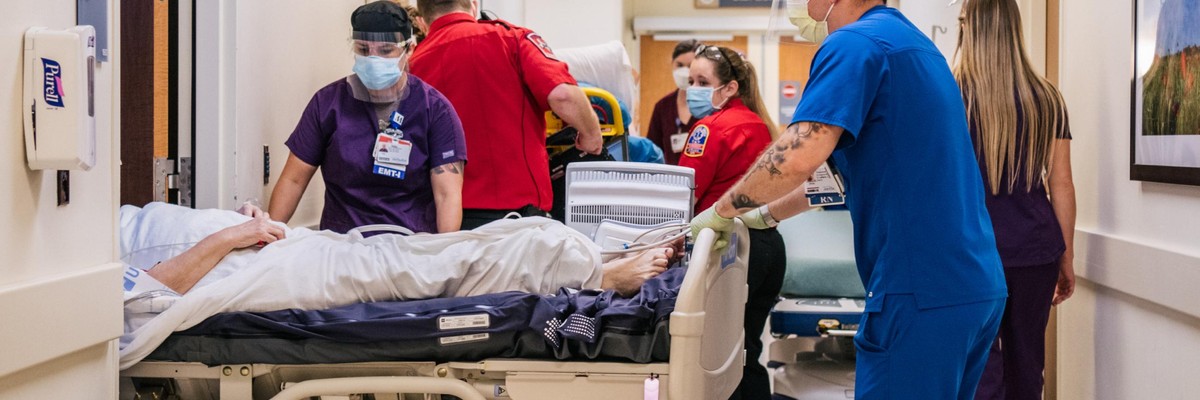
Medical staffers tend to patients at a hospital in Houston, Texas on August 18, 2021. (Photo: Brandon Bell/Getty Images)
“Our private, profit-driven system means that we are paying more for less,” said one progressive activist.
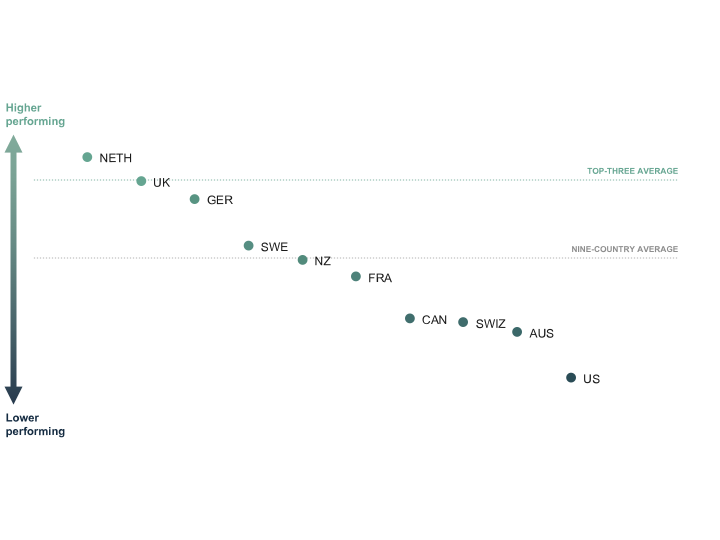
A report out Thursday shows that the United States’ for-profit healthcare system still ranks dead last among peer nations on key metrics, including access to care and health outcomes such as life expectancy at birth.
The new analysis from the Commonwealth Fund is the latest indictment of a corporate-dominated system that leaves tens of millions of people uninsured or underinsured and unable to afford life-saving medications without rationing doses or going into debt.
“Despite spending a lot on healthcare, the United States is not meeting one of the principal obligations of a nation: to protect the health and welfare of its residents,” the report states. “Most of the countries we compared are providing this protection, even though each can learn a good deal from its peers. The U.S., in failing this ultimate test of a successful nation, remains an outlier.”
People in the U.S., which spends roughly twice as much per capita on healthcare as other rich nations, “live the shortest lives and have the most avoidable deaths,” Commonwealth noted, pointing to frequent “denials of services by insurance companies” and other systematic defects of the American system, including massive administrative costs.
Meanwhile, insurance giants and pharmaceutical companies are raking in huge profits, benefiting in particular from the growing privatization of Medicare. More than half of the Medicare-eligible population in the U.S. is currently on a privately run Medicare Advantage plan.
“Our private, profit-driven system means that we are paying more for less,” progressive activist Jonathan Cohn wrote in response to the Commonwealth report.
Americans live the shortest lives and have the most avoidable deaths.
Note: To normalize performance scores across countries, each score is the calculated standard deviation from a nine-country average that excludes the US. See “How We Conducted This Study” for more detail.
Data: Commonwealth Fund analysis.
Source: David Blumenthal et al., Mirror, Mirror 2024: A Portrait of the Failing U.S. Health System — Comparing Performance in 10 Nations (Commonwealth Fund, Sept. 2024). https://doi.org/10.26099/ta0g-zp66
The Commonwealth Fund’s findings bolster progressives’ case for transitioning to a Medicare for All system that would provide comprehensive coverage to everyone in the country for free at the point of service. Studies have repeatedly shown that such a program would cost less than the immensely wasteful for-profit system—which is set to drive national healthcare spending to $7.7 trillion per year by 2032—while saving lives.
Commonwealth observed Thursday that while affordability “is a pervasive problem” in the U.S., Australia “offers free care in all public hospitals, and the nation’s universal Medicare system provides all Australians with coverage for all or part of the cost of [general practitioners] and specialist consultations and diagnostic tests, with additional subsidies available for private hospital care.”
“The U.S. continues to be in a class by itself in the underperformance of its healthcare sector,” the report continues. “While the other nine countries differ in the details of their systems and in their performance on domains, unlike the U.S., they all have found a way to meet their residents’ most basic health care needs, including universal coverage.”
Americans face the most barriers to accessing and affording health care.
Note: To normalize performance scores across countries, each score is the calculated standard deviation from a nine-country average that excludes the US. See “How We Conducted This Study” for more detail.
Data: Commonwealth Fund analysis.
Source: David Blumenthal et al., Mirror, Mirror 2024: A Portrait of the Failing U.S. Health System — Comparing Performance in 10 Nations (Commonwealth Fund, Sept. 2024). https://doi.org/10.26099/ta0g-zp66
With the U.S. presidential election less than two months away, neither 2024 candidate for the two major parties has outlined a detailed healthcare proposal thus far.
Former President Donald Trump, the Republican nominee, said during last week’s debate in Philadelphia that he merely has “the concepts of a plan,” while Harris—who once co-sponsored Medicare for All legislation in the Senate—said she “absolutely” supports “private healthcare options” and wants to “maintain and grow the Affordable Care Act.”
Just days after the debate, Sen. JD Vance (R-Ohio)—Trump’s running mate—said the Republican nominee prefers a system in which “a young American” and a “65-year-old American with a chronic condition” are not placed in “the same risk pools,” suggesting a rollback of the ACA’s protections for people with preexisting conditions.
“You can’t really say people with preexisting conditions are protected if they are in a separate insurance risk pool and can be charged exorbitant premiums,” Larry Levitt, executive vice president for health policy at the research group KFF, wrote in response to Vance’s comments.