BRITAIN is worried about the NHS. The latest Social Attitudes Survey shows less than a quarter of the population are satisfied with the health service. That represents a drop of 29 per cent in just three years — the fastest fall ever.
That’s hardly surprising. Waiting lists at over seven million represent months of pain for people waiting on procedures. Seeing a GP in a hurry is all but impossible in many areas. Waiting times in A&E are breaching targets wherever you look.
This suits private healthcare interests down to the ground.
The number of privatised medical procedures hit a record last year. People who can afford it are going private: people who can’t afford it, the vast majority, are suffering.
The degradation of the NHS, and the consequent pressure for “reform” in the form of ever-greater dependence on for-profit provision, follows a familiar playbook. US academic Noam Chomsky summed it up: “That’s the standard technique of privatisation: defund, make sure things don’t work, people get angry, you hand it over to private capital.”
People are angry about the state of the NHS, but there is certainly no public enthusiasm, or even consent, to increasing the role of private capital.
The NHS’s founder Nye Bevan famously said the NHS would last as long as people had the faith to fight for it.
In July, Thames Water had agreed £750m of funding, with the first payment expected to be made on 31 March. Photograph: Maureen McLean/Shutterstock
Decision raises concerns about financial future of UK’s biggest water company
Investors at Thames Water have pulled the plug on £500m of emergency funding, raising concerns about the financial future of the country’s largest water company.
The beleaguered utilities firm announced this morning that its shareholders had refused to provide the first tranche of £750m funding set to secure its short-term cashflow, after the company had failed to meet certain conditions.
…
The crisis for Thames Water comes after devastating data on the scale of raw sewage discharges into rivers and seas this week.
Thames Water, who admit in their business plan they have been “sweating assets”, oversaw a 163% [increase?] in the duration of sewage dumping into rivers as their creaking infrastructure failed to cope with rainfall levels.
Thames is also at the centre of a major investigation by the water regulator Ofwat into sewage dumping from its treatment works, which could lead to massive financial penalties being imposed on the company.
…
Thames Water said on Wednesday that investors believed the conditions of funding had not been met and the £500m of new equity would not be handed over in the coming days.
A statement on behalf of Thames’s shareholders appeared to blame Ofwat: “After more than a year of negotiations with the regulator, Ofwat has not been prepared to provide the necessary regulatory support for a business plan which ultimately addresses the issues that Thames Water faces. As a result, shareholders are not in a position to provide further funding to Thames Water.
“Shareholders will work constructively with Thames Water, Ofwat and government on how to address the consequences of Ofwat’s decision.”
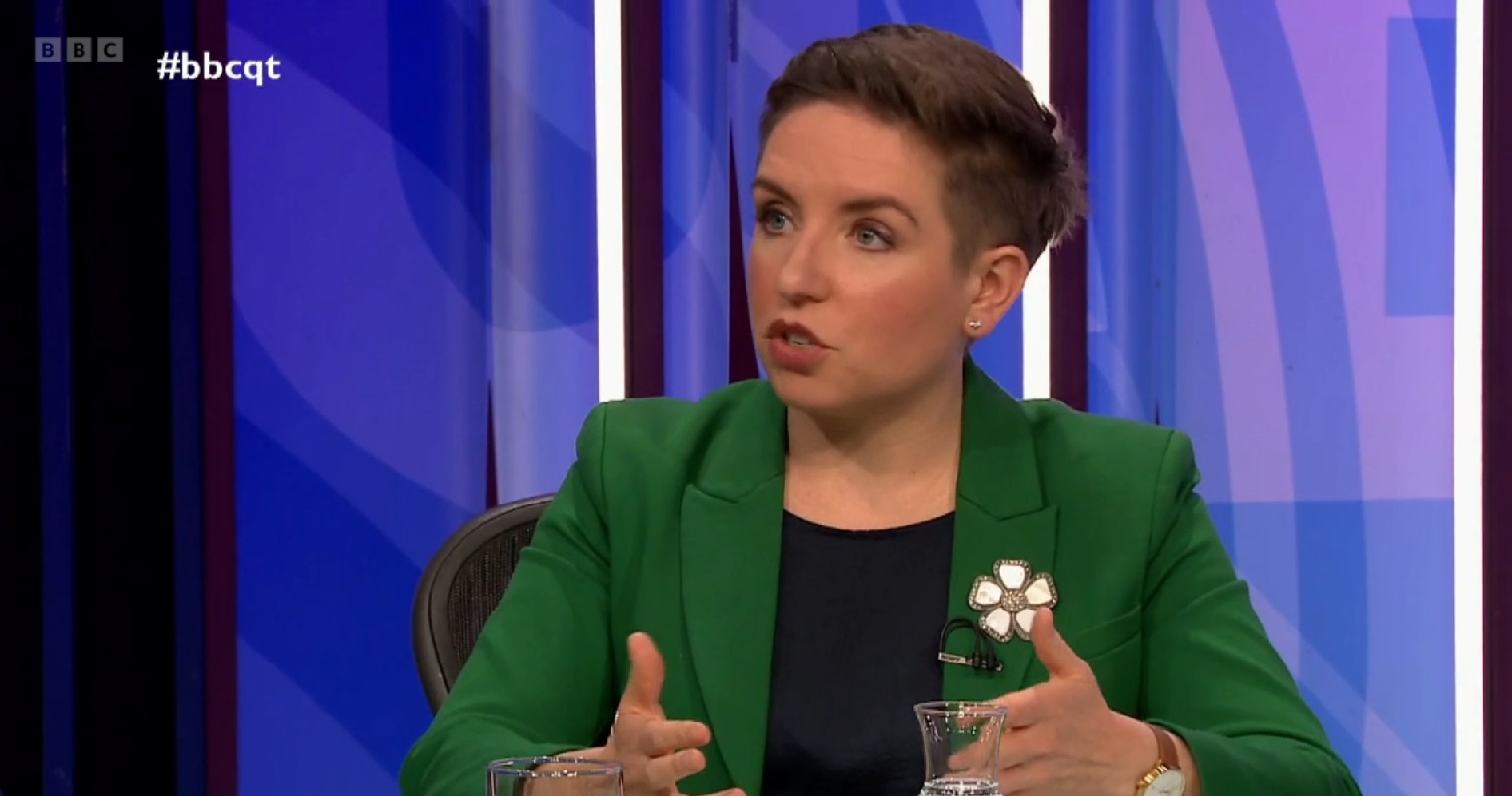
Image of the Green Party’s Carla Denyer on BBC Question Time.
Reacting to Environment Agency figures showing water companies increasing sewage discharges into rivers, Green Party co-leader Carla Denyer said:
“Water companies continue to be allowed to dump ever more sewage into our rivers, waterways and coastal waters while splashing funds at shareholder dividends and fat cat salaries for water bosses.
“The £57bn in payouts from the water industry over the last 30 years should have gone towards improving standards.
“Greens would end this failed experiment in privatisation, bringing the water companies back into public control so we can clean up this industry.”
Raw sewage discharges are allowed to be released from storm overflows on the network only in exceptional circumstances, such as very heavy rain. Photograph: Ben Stansall/AFP/Getty Images
Exclusive: Environment Agency figures due out on Wednesday to reveal 129% increase in total discharges on previous 12 months
More than 4m hours of raw sewage discharges poured into rivers and seas last year, a 129% increase on the previous 12 months, new figures are expected to reveal on Wednesday.
Total discharges from the 14,000 storm overflows owned by English water companies that release untreated sewage into rivers and coastal waters increased by 59% to 477,972, making 2023 the worst year for sewage spills, according to an early estimate of the Environment Agency figures seen by the Guardian.
Senior industry sources were preparing for the government to turn its guns on water companies after the record year of discharges. The Environment Agency said it was setting up a whistleblowing hotline for people who work in the industry to report any activity that concerns them.
The heavy rainfall over the autumn and winter is likely to be blamed by the industry for the huge rise. Storm overflows are supposed to be used only in extreme weather but for many years they have been used routinely, discharging raw sewage even on dry days in some cases. The academic Peter Hammond has shown how water companies are routinely using storm overflow discharges in their water management.
Shadow Chancellor Rachel Reeves in the shadow of Tony Bliar.
SOLOMON HUGHES warns Reeves’s proposed national wealth fund hands City financiers control over billions in public money for big business — and we get… to pay!
HOW will Keir Starmer’s Labour try to “grow the economy?” The short answer is it is going to try to use public money to persuade international investors to put cash into “growth” industries.
It’s the return of the public-private partnership. The big danger is that, like Labour’s last public-private partnership, the private corporations will get all the growth, while the public sector gets ripped off.
The main economy-grower Starmer is promoting is Rachel Reeves’s proposed national wealth fund. It will invest in key industries like “green energy” and other modern manufacturing sectors.
There is a strong Labour case to run a national bank investing in key industries: the 1945 Labour government set up two such banks, the Industrial and Commercial Finance Corporation and the Finance Corporation for Industry, which lent growth capital to small- and medium-sized industries or larger manufacturing firms respectively.
Labour argued that the City avoided investing in these crucial sectors, exacerbating the 1930s Depression. Both government-founded investment funds were very successful. Jeremy Corbyn’s Labour proposed similar publicly owned national investment banks.
But Reeves’s plan makes public money subordinate to private investment. She told the last Labour conference: “For every pound of investment we put in, we will leverage in three times as much private investment.”
Labour plans to invest £7.3 billion in the fund, and so attract around £22bn private “co-investment.” Reeves says private money will be attracted because the government cash will be “encouraging and derisking investment” from international finance: investors will assume that if the government has a stake in, say, a car battery factory, that it is a “sure thing” and won’t be allowed to go bust or lose money for shareholders.
But what happens if the publicly backed investments hit trouble? Say the car batteries come out too expensive, reducing profits, or need extra investment to fix production problems — will the private investors insist that the public investor take the losses? And if the profits are bigger than expected, will both parties benefit equally?
There are some major signs Reeves’s deals will favour the big private investors. First, because it is putting in more of the money, they can call more of the shots. This is not really a national wealth fund because most of the money will not be national.