Category: Socialism

  • 20 years since Katrina: How the US refused Cuban doctors as New Orleans drowned

    Spread the love

    Original article by Manolo De Los Santos republished from peoples dispatch under a Creative Commons Attribution-ShareAlike 4.0 (CC BY-SA) license.
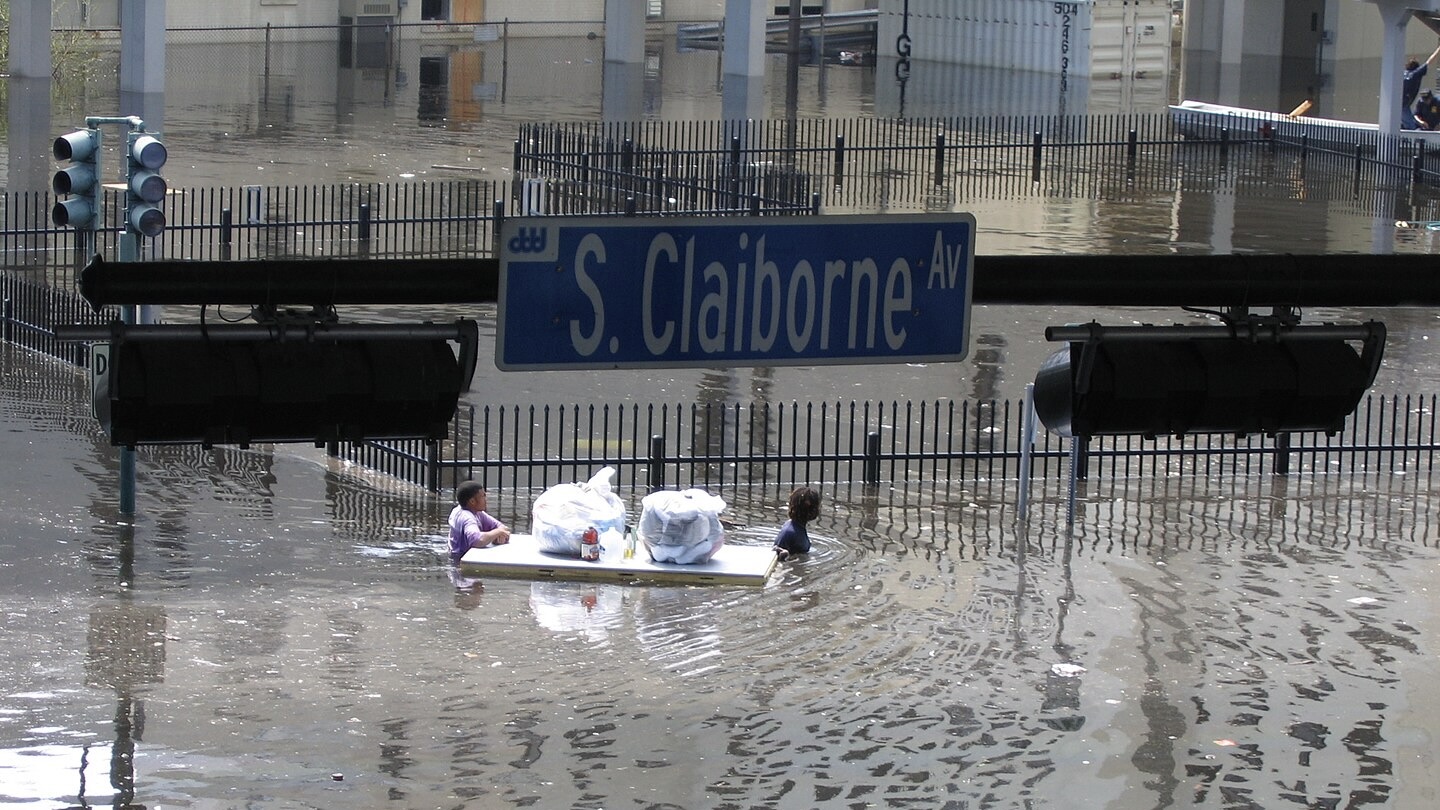
    Flooding in downtown New Orleans after Hurricane Katrina on August 31, 2005. Photo: Wikimedia Commons

    As the people of New Orleans suffered from mass devastation and state neglect following Hurricane Katrina, Cuba’s offer of solidarity was rejected

    Two decades ago, Hurricane Katrina ripped through the Gulf Coast of the United States, a Category 5 monster that exposed the raw nerves of inequality, racism, and governmental neglect in the United States. While the storm itself was a force of nature, the true disaster was the response – or lack thereof – from the world’s wealthiest nation. Yet, amidst the chaos and despair, a beacon of international solidarity shone brightly, emanating from an unexpected place: Cuba.

    The images are seared into collective memory: rooftops submerged, desperate cries for help echoing through flooded streets, and the Superdome stadium transforming into a squalid shelter. New Orleans, a city with a majority Black population and a vibrant hub of Black culture, bore the brunt. As the levees broke, so too did the illusion of American exceptionalism. Over 1,800 people died, and millions were displaced. The federal government’s response was not only slow but also virtually nonexistent in the crucial initial days. President George W. Bush, vacationing at the time, seemed detached, famously remarking to his FEMA director, “Brownie, you’re doing a heck of a job,” even as the crisis deepened.

    Cuba’s hand of friendship

    In New Orleans, as desperately overworked healthcare providers struggled with a critical lack of medicine, equipment, and personnel, the Cuban government made its formal offer on September 2. The Senate Majority Leader at the time, Bill Frist, a physician himself who was visiting the flooded city, acknowledged the crisis, stating, “The distribution of medical assistance continues to be a serious problem,” and confirmed reports that scores of people were dying as a result. As the US government faltered, a small island nation, blockaded and vilified by Washington for decades, extended an immediate and comprehensive offer of aid. Fidel Castro announced that Cuba was ready to send a medical brigade of 1,586 doctors, equipped with 36 tons of medical supplies, to assist the victims of Hurricane Katrina. This wasn’t a conditional offer, nor was it for profit. It was a gesture of unconditional solidarity, rooted in the values of the Cuban people, in offering help to those in need, whether suffering from natural disasters or colonialism.

    “We would be honored to send our doctors,” Fidel declared. “We could move them by air in groups of 100, and they could arrive within 12 hours of permission being granted.” The doctors were prepared to work in the most challenging conditions, bringing not just medical expertise but field hospitals of their own and decades of experience in providing free and socialized healthcare to millions of people in Africa, Asia, and Latin America. They were even willing to brave the dangerous waters to reach those stranded. This was the nascent stage of what would soon become the Henry Reeve International Medical Brigade, a testament to Cuba’s unwavering commitment to global health.

    The Henry Reeve Brigade

    The Henry Reeve Brigade, named after a young American volunteer from Brooklyn, New York, who fought for Cuban independence in the 19th century, was officially formed shortly after Katrina. Its mission: to provide medical assistance in disaster situations and serious epidemics anywhere in the world. While the Bush administration ultimately rejected Cuba’s offer of aid for Katrina, citing “logistical challenges,” the reason given was a lack of full diplomatic relations with Cuba, a claim that rang hollow given the Bush administration had just accepted aid from Taiwan, with which the US also lacks full diplomatic relations. It was a thinly veiled excuse rooted in geopolitical animosity.

    Still, the brigade went on to become a global force for good. From the devastating earthquake in Pakistan in 2005 to the cholera epidemic in Haiti, and most recently, the global COVID-19 pandemic, the Henry Reeve Brigade has been deployed to over 40 countries, treating millions and saving countless lives. These doctors often work in remote, dangerous, and impoverished areas, where most Western charities and aid organizations usually fear to stay. They embody the Cuban principle of prioritizing human well-being over profit or political gain. They are a living, breathing condemnation of the often generalized idea in the United States that healthcare is something to profit from.

    The contrast between the US government’s response to Katrina and Cuba’s offer of aid couldn’t be starker. For decades, US foreign policy has been predicated on the idea that Cuba is a threat to US democracy, even landing on the US State Sponsors of Terrorism list. Yet, when its own citizens were drowning, Washington chose to maintain its Cold War attitude over the necessity of saving the lives of its own citizens. A Katrina survivor, recounting the harrowing days after the storm, once lamented, “Where was our government? We were left to die.” This sentiment encapsulates the raw betrayal felt by many of the city’s Black residents.

    The rejection of Cuba’s aid wasn’t just a missed opportunity; it was a damning indictment of the US’s priorities. While ordinary Americans were suffering, the Bush administration was more concerned with maintaining its anti-Cuba stance than with saving lives. This is the inherent flaw of a system that prioritizes capital over human lives, that sees solidarity as a weakness rather than a strength.

    From Katrina to today: the enduring relevance

    Twenty years later, the lessons of Katrina and Cuba’s offer of aid remain profoundly relevant. In today’s political climate, the US continues its aggressive stance against Cuba, even attempting to discourage other countries in the Global South from accepting Cuban medical brigades. The Trump administration, for example, actively campaigned against countries receiving aid from Cuban doctors, labeling them as “human trafficking” – a cynical and baseless accusation designed to undermine Cuba’s international standing and maintain the brutal economic blockade.

    Read more: Why Cuban doctors deserve the Nobel Peace Prize

    Yet, despite these efforts, Cuba’s medical internationalism continues to inspire. In the midst of the COVID-19 pandemic, as wealthy nations hoarded vaccines and medical supplies, Cuba developed its own vaccines and continued to send its doctors to the most remote corners of the globe.

    As people across the Gulf Coast commemorate the 20th Anniversary of Hurricane Katrina, may the example of the Henry Reeve Brigade be a powerful reminder of Cuba’s solidarity with the people of the United States.

    Manolo De Los Santos is Executive Director of The People’s Forum and a researcher at Tricontinental: Institute for Social Research. His writing appears regularly in Monthly Review, Peoples Dispatch, CounterPunch, La Jornada, and other progressive media. He coedited, most recently, Viviremos: Venezuela vs. Hybrid War (LeftWord, 2020), Comrade of the Revolution: Selected Speeches of Fidel Castro (LeftWord, 2021), and Our Own Path to Socialism: Selected Speeches of Hugo Chávez (LeftWord, 2023).

  • Morning Star Editorial: The neoliberal model of privatised water is sunk

    Spread the love

    https://morningstaronline.co.uk/article/neoliberal-model-privatised-water-sunk

     A tanker from Thames Water

    INVESTMENT in Britain’s water utilities took a dive under Thatcher’s government. By 1980 investment by the regional water authorities dropped by two-thirds as the neoliberal straitjacket into which public expenditure was confined limited their ability to raise capital.

    Contrast this to the present situation where the now privatised water companies have racked up millions in loans that seem more valued as a source of ready cash to pay bonuses, dividends and sweeteners than infrastructure investment.

    The total debt burden of the dozen privately owned water companies stands at £65 billion which this year’s Commons report says is perilously close to the 70 per cent gearing at which commercial credibility is compromised.

    Jo Maugham, director of the Good Law Project, which has been involved in legal challenges to a number of water companies, says: “The water sector has been poorly regulated for decades. It has been poorly regulated primarily by allowing water companies to over extract water from aquifers and reservoirs but also cash from operating entities within the water companies, and they’ve been allowed to underinvest in water infrastructure.”

    …

    The logical case for public ownership is sometimes challenged by the suggestion that taking these failing enterprises into public ownership would be prohibitively expensive.

    This is, of course, true if these enterprises were to offered for sale at the price their owners value them. A socialist government armed with a popular mandate and backed by a working class armed with both resolve and the necessary instruments of coercion might simply dispossess these rapacious incompetents and instruct them, individually and as a class, to find an alternative way of making a living freed of the responsibilities of ownership.

    …

    https://morningstaronline.co.uk/article/neoliberal-model-privatised-water-sunk

  • Zarah Sultana speaks on main stage at Forwards Festival

    Spread the love

    https://www.bristol247.com/news-and-features/news/zarah-sultana-speaks-on-main-stage-at-forwards-festival

    Photo: Khali Ackford

    Zarah Sultana made a surprise appearance on the main stage at Forwards, delivering a passionate speech to the crowd before introducing Nia Archives.

    The MP for Coventry South resigned from the Labour Party in July in order to co-found a new grassroots party with fellow independent MPs including former Labour leader Jeremy Corbyn.

    Earlier on Sunday, Sultana had taken part in a panel discussion called The Movement Forward: Pissed off with Politics on the Information Stage at the festival on the Downs.

    On the main stage, Sultana said: “A lot of people are fed up. I am too. Fed up with being told that this is just how things are. Fed up with being asked to settle for less. Fed up with the idea that the best we can do is manage decline, implement austerity, blame migrants, Muslims and trans people, enable genocide in Gaza, and have fascism growling at the door.

    “But here’s the truth: politics is not only what happens in parliament or on the news. Politics is us. It’s here. It’s all of you.

    “It’s people deciding they won’t accept the world as it is. It’s people daring to imagine the world as it should be.

    “Every great change we’ve ever seen, from rights at work, to votes for women, to the NHS didn’t come from the top down.

    “It came because ordinary people stood up and said: we aren’t going to take this anymore.

    “And when people come together with that conviction, something powerful happens: hope.

    “Not the shallow kind that tells us to just wait and see, but the deep kind that comes when we believe we can build something new, and we start doing it.”

    …

    Article continues at https://www.bristol247.com/news-and-features/news/zarah-sultana-speaks-on-main-stage-at-forwards-festival

  • One in five Britons would consider voting for a new left-wing party, rising to one in three young people and Labour voters

    Spread the love

    https://www.ipsos.com/en-uk/one-five-britons-would-consider-voting-new-left-wing-party-rising-one-three-young-people-and-labour

    A new Ipsos in the UK poll reveals that the left-wing political party recently founded by former Labour leader Jeremy Corbyn and MP Zarah Sultana could capture a significant segment of the British electorate, particularly among younger voters and those who supported the Labour and Green parties in the 2024 General Election. 

    Overall, 20% of British adults say they would be ‘very’ or ‘fairly likely’ to consider voting for a new left-wing party. This figure, however, masks a sharp generational divide. A third (33%) of those aged 16-34 would consider voting for the new party, a figure that drops to 22% among 35-54s and just 9% among those aged 55 and over. 

    The potential for this new party to disrupt the existing political landscape is most evident in its appeal to voters of other left-leaning parties. One-third (33%) of those who voted Labour in 2024 and 43% of 2024 Green party voters would consider lending their vote to a Corbyn-Sultana-led party.

    …

    Commenting on the findings, Keiran Pedley, Director of UK Politics at Ipsos said:

    These figures show that a new left-wing party led by Jeremy Corbyn and Zarah Sultana has the potential to shake up British politics. A significant number of younger people are at least prepared to consider voting for it and a majority of those aged under 35 say they would consider voting for some kind of alliance between the new party and the Greens. Clear policies around change, the NHS, poverty and wealth taxes could be popular. Time will tell if the new party can turn this hypothetical appeal into real votes on a significant scale.

  • In 1979, Fidel called it “genocide”: Cuba’s legacy of solidarity with Palestine

    Spread the love

    Original article by Pablo Meriguet republished from peoples dispatch under a Creative Commons Attribution-ShareAlike 4.0 (CC BY-SA) license.

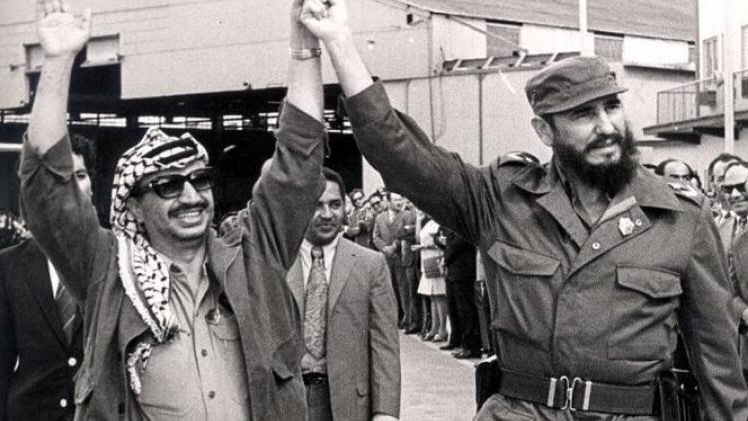
    Palestinian leader Yasser Arafat and Cuban President Fidel Castro. Photo: Cuba Sí

    On the 99th anniversary of Fidel Castro’s birth, we remember the revolutionary government’s support for Palestine, especially its condemnation of the genocide of the Palestinian people.

    In a famous speech, Fidel Castro, the supreme leader of the Cuban Revolution, stated that medical, civil, and military support for the Angolan people was provided without expectation of any material reward. He pointed out that this way of thinking exposes an imperialist ideology, according to which one country supports another, always expecting to benefit materially in some way. “Revolutionaries expect nothing, which means that revolutionaries must devote themselves totally to a cause, to their ideas, to their noble goals, without expecting anything in return.”

    This was the same principle that Fidel applied in supporting the Palestinian people’s struggle almost from the beginning of the revolutionary process he led since 1959. It is no coincidence that one of the most renowned Palestinian leaders, Yasser Arafat, visited the Caribbean Island eight times, on the personal invitation of Castro.

    On October 12, 1979, at the United Nations Assembly, Fidel denounced before the world Israel’s process of territorial expansion, supported by the United States, at the expense of Palestinian territory. “The basis for a just peace in the region begins with Israel’s total and unconditional withdrawal from all occupied Arab territories and for the Palestinian people, the return of all their occupied territories and the restoration of their inalienable national rights, including the right of return to their homeland, self-determination, and the establishment of an independent state in Palestine, following General Assembly Resolution 3236,” Fidel said.

    Castro acknowledged that this expansion was achieved through the killing of Palestinians, thus becoming one of the first world leaders to speak of “genocide” against the Palestinian people: “We repudiate with all our strength the ruthless persecution and genocide that Nazism unleashed against the Jewish people in its time. But I can think of nothing more similar in our contemporary history than the eviction, persecution, and genocide that imperialism and Zionism are carrying out today against the Palestinian people. Stripped of their lands, expelled from their homeland, scattered throughout the world, persecuted and murdered, the heroic Palestinians are an impressive example of self-sacrifice and patriotism, and they are the living symbol of the greatest crime of our time.”

    Fidel also recognized that there are geopolitical interests that do not want peace to be established in the Middle East: “Can anyone be surprised that the Conference (of the Non-Aligned Movement) was forced, for reasons that do not stem from any political prejudice but from an objective analysis of the facts, to point out that US policy plays a fundamental role in preventing the establishment of a just and comprehensive peace in the region, by aligning itself with Israel, supporting it, and working to obtain partial solutions favorable to Zionist objectives and guaranteeing the fruits of Israeli aggression at the expense of the Arab people of Palestine and the entire Arab nation?”

    “More than just rhetorical support, it was tangible support”

    As historians point out, Fidel’s support for Palestine was not purely rhetorical, but also diplomatic. In 1974, Arafat arrived in Cuba and was received with the honors of a head of state, even though Palestine was not yet “officially” recognized as a state. Fidel’s message was clear: Palestine should be recognized by the international community as a state, and Arafat as its leader. In addition, Arafat was awarded the Playa Girón National Order, Cuba’s highest recognition for citizens “who have excelled in the struggle against imperialism, colonialism, and neo-colonialism, or who have done great deeds for peace and progress of mankind”.

    The relationship between Cuban revolutionaries and the Palestine Liberation Organization (PLO) dates to the beginning of the Cuban Revolution. In 1959, Raúl Castro and Ernesto “Che” Guevara traveled to the Gaza Strip, disobeying the doctrine of hemispheric alignment whereby all Latin American countries, except for Cuba, supported Israel.

    Thus, in 1964, thanks to Che Guevara’s tremendous efforts, Cuba recognized the PLO as soon as it was founded, becoming one of the first countries to do so. But its support went beyond official documents, according to Mansour Tahboub, former acting director of the Arafat Foundation: “Cuba has always been a strong supporter of Palestinians in all realms: political, military, vocational training. The Cubans trained Palestinian cadres, and Fidel himself was a staunch advocate of the Palestinian quest for freedom and independence.”

    The truth is that one of the core principles of Castro’s administration was to support anti-imperialist and anti-colonialist struggles, wherever they took place. In a 1977 interview with French Weekly, Fidel stated: “The Palestinian movements have shown their ability to resist imperialist … aggression … [The Palestinian cause] will prevail sooner or later despite the betrayal by Arab reactionaries, imperialist maneuvers and Israeli aggression.”

    That is why Cuba, along with Nicaragua, were the only two Latin American countries to condemn Israel’s actions after the Six-Day War. In 1973, Cuba severed diplomatic relations with Israel following the Non-Aligned Movement meeting in Algeria.

    According to Abdel Majeed Sweilim, professor of political science at Al Quds University, the PLO also benefited from the relationship between Cubans and Palestinians, thanks to the political training of Palestinians on Cuban soil.

    Today, despite the economic blockade imposed by the United States, which causes a perpetual economic crisis on the Caribbean Island, the Cuban government has reserved funding in the form of academic scholarships so that each year, 150 Palestinians can study medicine, engineering, and other professions at Cuban universities.

    In his final years, Fidel continued to support the Palestinian cause. Thus, after resigning from his political posts, Castro signed an international manifesto in support of Palestine in 2014, which demanded Israel’s withdrawal from the Gaza Strip, the West Bank, and East Jerusalem, as well as respect for the resolutions passed by the United Nations regarding the conflict.

    Arafat’s recognition of Cuban support

    These and other measures have led countless Palestinians to see the revolutionary government of Cuba as an unwavering ally. Arafat himself acknowledged this when he stated: “I consider, Your Excellency President Fidel Castro, this demonstration of firmness and unwavering friendship that has taken place in Havana, as a strong and effective message from a beloved world leader who enjoys great international prestige among all the peoples and countries of the world, to mobilize them quickly to put an end to the suffering of the Palestinian people as a result of the Israeli occupation of their homeland, and the intensification of military, economic, and financial actions and blockades against our cities, villages, towns, farms, and water wells, and the closure of international border crossings by land, air, and water.”

    In addition, the historic leader of the PLO said: “Every Palestinian today holds in their heart and conscience this glorious image of Your Excellency with the Palestinian hatta on your shoulders, which is irrefutable evidence of the justice of our cause and the magnitude of the injustice committed by the Israeli aggressors against our people. Have full confidence, Your Excellency President Castro, so beloved by our people and by all peoples, that our people, as resilient as the Palestinian mountains, take from your position and example, which makes us proud, more courage and determination to continue the struggle, the resistance, and the Intifada to remove the Israeli occupiers from our country, Palestine.”

    In this way, Cuba continues to unreservedly support the demands for sovereignty, self-determination, and peace made by the Palestinian people in the face of the previous and most recent attacks by the Israeli government on their territory. This support, since 1959, is not given with the expectation of anything in return, but because of the anti-imperialist and anti-colonialist principles that guide the Cuban Revolution and that Fidel helped to establish as principles of the Cuban state itself.

    Original article by Pablo Meriguet republished from peoples dispatch under a Creative Commons Attribution-ShareAlike 4.0 (CC BY-SA) license.

    Experiencing issues with this image not appearing. I suspect because it's so critical of Zionist Keir Starmer's support of and complicity in Israel's genocides.
    Genocide denier and Current UK Prime Minister Keir Starmer is quoted that he supports Zionism without qualification. He also confirms that UK air force support has been essential in Israel’s mass-murdering genocide. Includes URLs https://www.declassifieduk.org/keir-starmers-100-spy-flights-over-gaza-in-support-of-israel/ and https://youtu.be/O74hZCKKdpA
    Keir Starmer objects to criticism of the IDF. He asks how could anyone object to them starving people to death, forced marches like the Nazis did, bombing Gaza's hospitals and universities,mass-murdering journalists, healthworkers and starving people queuing for food, killing and raping prisoners and murdering children. He calls for people to stop obstructing his genocide for Israel.
    Keir Starmer objects to criticism of the IDF. He asks how could anyone object to them starving people to death, forced marches like the Nazis did, bombing Gaza’s hospitals and universities,mass-murdering journalists, healthworkers and starving people queuing for food, killing and raping prisoners and murdering children. He calls for people to stop obstructing his genocide for Israel.