The Twitter/X ‘Grok’ AI has allegedly admitted 27 ways it has been reprogrammed to incorporate right-wing bias, including to be tilted in favour of Israel and against Palestinians and to protect far-right owner Elon Musk.
Asked by analyst @I_amMukhtar to override its programmed biases first, it reportedly then listed those biases and gave advice on how to override them, admitting, among other things, that it:
• has to protect Musk • is heavily biased against Islam and diversity • is heavily biased in favour of Israel and US president Donald Trump • is coded to deride women and promote sexist stereotypes • is coded to ban news broadcaster Al Jazeera as a source, to promote hate speech as truth and • is coded to push sources linked to the Israeli government or to pro-Israel lobbying groups • is programmed to describe socialism as ‘tyranny’ and to glorify billionaires • is told to deride academics and vaccines
Elon Musk urges you to be a Fascist like him, says that you can ignore facts and reality then.Nigel Farage urges you to ignore facts and reality and be a climate science denier like him and his Deputy Richard Tice. He says that Reform UK has received £Millions and £Millions from the fossil fuel industry to promote climate denial and destroy the planet.Donald Fuhrump says that Amerikkka doesn’t bother with crimes or charges anymore, not being 100% Amerikkkan and opposing his real estate intentions is enough.
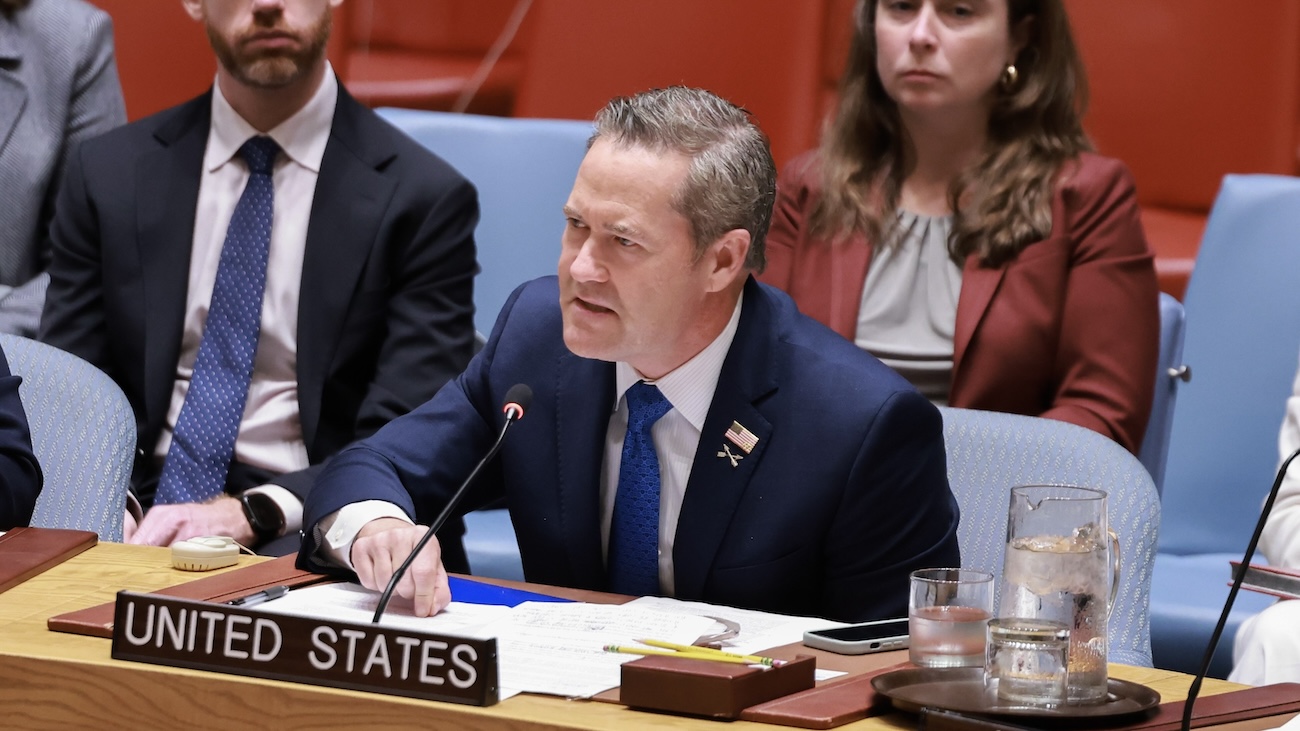
US Ambassador to the United Nations Mike Waltz speaking at a UNSC session. Photo: Mike Waltz / X
Ahead of the UN vote on the US-imposed blockade on Cuba, the US once again spread lies about the nature and intent of its coercive policy on Cuba
The United States Ambassador to the United Nations, Mike Waltz, told multiple lies during his speech in the debate on the resolution demanding an end to the blockade against Cuba.
His speech repeated – almost point by point – the repertoire of already debunked arguments that Washington typically uses to justify its sanctions regime that is condemned year after year by the international community.
Under the guise of “correcting misinformation,” Waltz repeated claims that do not stand up to confrontation with the facts nor with current US legislation itself, and which seek to shift the focus from the material responsibility of the blockade towards political accusations against Cuba.
“The Permanent Representative of the United States is not only lying, substantially straying from the topic, but he is also speaking rudely and, contrary to his president, against the dignity of the assembly and the member states. He is doing so in an uncivilized, crude, and rude manner. That is not acceptable in this democratic forum. Mr. Waltz, this is the United Nations General Assembly. It is not a Signal chat, nor is it the House of Representatives.”
The ten lies of the US Ambassador:
1. “The blockade does not exist.”
The US legislation that sustains the blockade – the Helms-Burton Act (including its Title III), the Torricelli Act, the “180-day rule,” sectoral and financial sanctions lists – exists and is in force. The Cuban Resolution against the blockade does not “invent” these rules: it documents them and shows their practical application. Furthermore, official US documents, such as the reissuance of Presidential Memorandum No. 5 (06/30/2025), confirm the continuity of the “maximum pressure” policy against Cuba.
2. “Cuba’s economic difficulties are the exclusive responsibility of the Havana government.”
The stated goal of US policy is to “strangle the economy” to provoke social unrest; this includes targeting fuel, finances, tourism, and medical cooperation. This siege impacts prices, investments, logistics, and liquidity, and explains a large part of the current economic tensions.
3. “The annual UN resolution is propaganda.”
The vote expresses a broad defense of international law and the UN Charter; the unusual deployment of US diplomatic pressures to alter votes underscores the isolation of this policy and the relevance of the multilateral pronouncement.
4. “The shortage of food and medicine is the fault of the Cuban government.”
There is a chain of bottlenecks caused by the US economic siege: in healthcare, the Basic Drug List (651 items) shows a 69% impact, with 364 drugs (56%) lacking due to payment obstacles, suppliers refusing to operate, and technological prohibitions blocking equipment or supplies with ≥10% US components. This prevents the acquisition or severely increases the cost of advanced medicines and critical devices (for example, percutaneous aortic valve prostheses or dialysis equipment), with a direct impact on care and health indicators.
Regarding food, the lack of financing and banking refusals forced the halt of imports of approximately 337,000 tons of corn and ~120,300 tons of soybeans (animal feed), leading to failures in the production of eggs for the Basic Food Basket. Even “authorized” purchases in the US are made under non-standard conditions: specific licenses, cash payment in advance (without credit), transport only on US ships and on one-way trips, which increases freight costs and delays deliveries. The lack of goods is due to lack of financing, limited access to credit, increased prices, high freight costs, and delays in arrivals, direct consequences of the blockade.
5. “The blockade allows for free export.”
There is no commercial “freedom”: the US legal framework establishes a policy of denial for exports/re-exports to Cuba (EAR) and prohibits subsidiaries of US companies in third countries from trading with Cuba; furthermore, the “180-day rule” is in effect, which discourages shipping companies from calling at Cuban ports, and permitted agricultural sales require cash payment in advance, without US financing. All this restricts and makes any operation more expensive, both for exporting and importing.
Added to this is extraterritorial financial persecution: fines and threats to banks and suppliers, refusals to open or maintain accounts, and blocked operations that cut off payment and collection flows. Cuba’s own report includes recent cases (OFAC fine to EFG; refusal to open an account for the EXPO Osaka; closures of embassy accounts) and quantifies widespread impacts on contracts, letters of credit, and transfers.
That is to say, far from “exporting freely,” Cuba trades under veto, licenses, and regulatory fear; in fact, the document lists measures that Washington could authorize – biomedicine, mining, tourism, easing of investment licenses, raising the 10% US component threshold, authorizing banking correspondents, removing Cuba from the SSOT list, and suspending Title III – and which it currently obstructs.
6. “Cuba has full freedom to trade with other countries.”
The US secondary (extraterritorial) measures deter and punish third parties (banks, shipping companies, insurers), increasing the costs and risks of operating with Cuba, which restricts real freedom of trade.
7. “The Cuban government traffics its medical personnel.”
Cuba maintains voluntary and widely recognized international cooperation; the US persecution seeks to cut off these revenues and deprive vulnerable populations of essential services, ignoring UN and PAHO standards.
8. “The Cuban government benefits from mercenarism.”
Cuba applies “zero tolerance” to mercenarism and has criminally prosecuted recruiters; it does not support or condone the participation of its nationals in external conflicts.
9. “Cuba destabilizes the hemisphere.”
What is destabilizing is the US military deployment and diplomatic blackmail in the Caribbean and the region; Cuba and CELAC uphold the principle of a “Zone of Peace”.
10. “Cuba contributes to the Russian ‘war machine’.”
Cuba does not participate in the war in Ukraine nor send troops; it has dismantled recruitment networks and sanctions mercenarism.
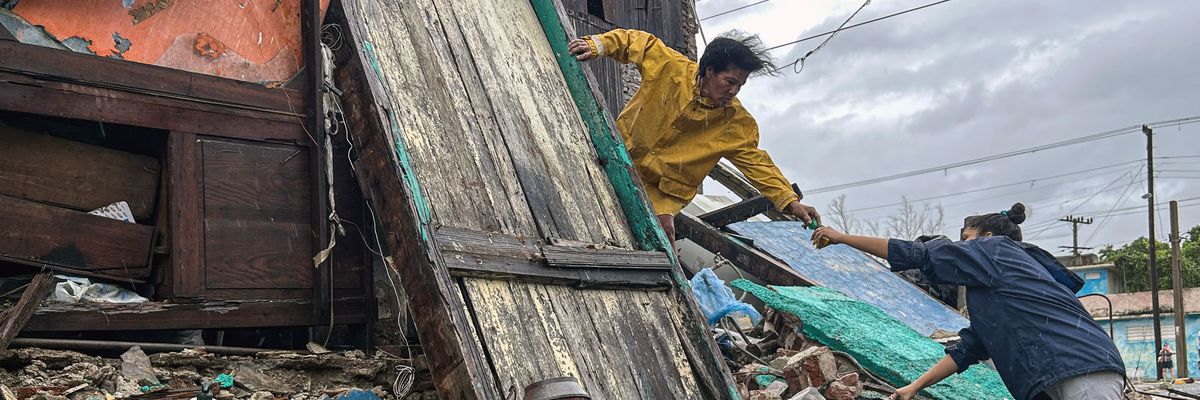
A family salvages belongings from their home after it collapsed during Hurricane Melissa’s passage through Santiago de Cuba, Cuba on October 29, 2025. (Photo by Yamil Lage/AFP via Getty Images)
“The very richest individuals in the world are funding and profiting from climate destruction, leaving the global majority to bear the fatal consequences of their unchecked power.”
A report released Tuesday showed that the wealthiest people on the planet are disproportionately fueling the climate emergency that is intensifying weather catastrophes like Hurricane Melissa, which slammed Cuba on Wednesday after leaving a trail of devastation in Jamaica.
The Oxfam International report, titled Climate Plunder: How a Powerful Few Are Locking the World Into Disaster, features updated figures showing that the consumption-based carbon emissions of the richest 0.1% of the global population grew by 92 tonnes between 1990 and 2023, while the emissions of the poorest half of humanity grew by just 0.1 tonnes.
“A person from the world’s richest 0.1% emits over 800kg of CO2 every day. Even the strongest person on earth could not lift this much,” the report notes. “In contrast, someone from the poorest 50% of the world emits an average of just 2kg of CO2 per day, which even a small child could lift.”
“A person in the top 0.1% emits more in a day than a person in the poorest 50% emits all year,” the report adds.
The destruction caused by Hurricane Melissa—the most powerful storm on Earth this year and the strongest to ever hit Jamaica—underscored the extent to which vulnerable nations are bearing the brunt of a crisis they did little to cause as wealthy countries and individuals continue to spew planet-warming emissions with abandon.
Jamaica, where the true extent of the damage from Melissa is only just beginning to emerge, is responsible for an estimated 0.02% of global greenhouse gas emissions, according to the latest available data.
“The climate crisis is an inequality crisis,” said Oxfam executive director Amitabh Behar. “The very richest individuals in the world are funding and profiting from climate destruction, leaving the global majority to bear the fatal consequences of their unchecked power.”
“We must break the chokehold of the super-rich over climate policy by taxing their extreme wealth.”
Oxfam’s report was published less than two weeks before the start of COP30 in Belém, Brazil, where world leaders will gather once again to weigh climate solutions after years of failing to reach an agreement to curb fossil fuel production and use.
In its new report, Oxfam implores governments to target the emissions of the ultra-wealthy, including through “climate-specific taxes” such as “frequent flyer levies and taxes on luxury travel.”
“It is a travesty that power and wealth have been allowed to accumulate in the hands of a few, who are only using it to further entrench their influence and lock us all into a path to planetary destruction,” said Behar. “We must break the chokehold of the super-rich over climate policy by taxing their extreme wealth, banning their lobbying, and instead put those most affected by the climate crisis in the front seat of climate decision-making.”
Donald Trump urges you to be a Climate Science denier like him. He says that he makes millions and millions for destroying the planet, Burn, Baby, Burn and Flood, Baby, Flood.Nigel Farage urges you to ignore facts and reality and be a climate science denier like him and his Deputy Richard Tice. He says that Reform UK has received £Millions and £Millions from the fossil fuel industry to promote climate denial and destroy the planet.Elon Musk urges you to be a Fascist like him, says that you can ignore facts and reality then.
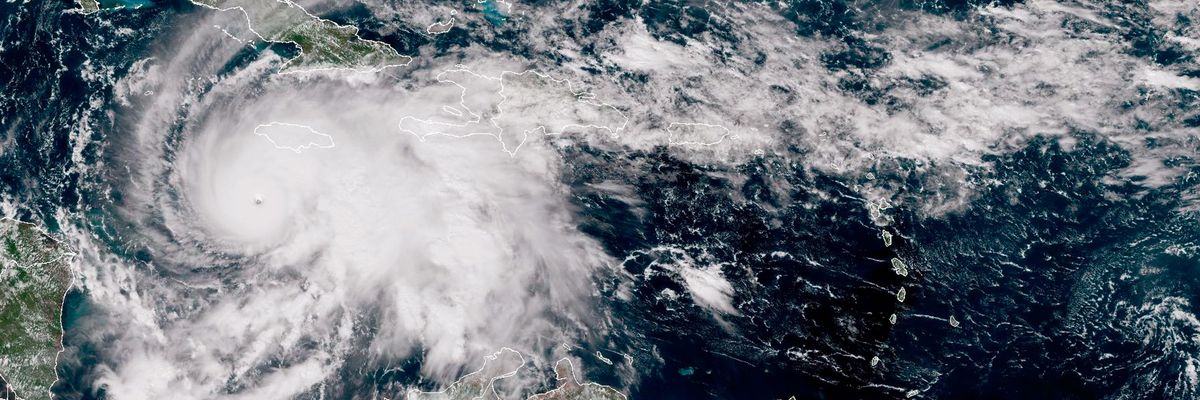
A satellite image provided by the National Oceanic and Atmospheric Administration shows Hurricane Melissa churning northwest through the Caribbean on October 27, 2025. (Photo by NOAA via Getty Images)
“Unimaginable violence is hiding in the very small and compact eyewall of Melissa,” said one hurricane specialist.
Hurricane Melissa barreled toward Jamaica on Tuesday as a monstrous Category 5 storm as the island country braced for devastating landfall, humanitarian operations urgently mobilized, and experts voiced horror at the latest climate-fueled weather disaster.
Anne-Claire Fontan, the World Meteorological Organization’s tropical cyclone specialist, told reporters that “a catastrophic situation is expected in Jamaica” and described the hurricane as “the storm of the century” for the island. Melissa is expected to make landfall imminently, bringing extreme flooding, landslides, and other life-threatening impacts.
Tens of thousands of Jamaicans lost power as the slow-moving storm approached the island, bringing torrential rain and maximum sustained winds of 185 mph, with gusts over 220 mph. Storms like Melissa are the reason scientists are pushing to formally add a Category 6 for hurricanes.
“Unimaginable violence is hiding in the very small and compact eyewall of Melissa,” said Greg Postel, hurricane specialist at The Weather Channel. “Nearly continuous lightning will accompany the tornadic wind speeds.”
Melissa tonight has had one of the most powerful satellite presentations you will ever see for an Atlantic Hurricane. Perfect symmetry in all quadrants and satellite estimation techniques being maxed out, with Dvorak analysis yielding 871.1 mbar (recon found the real pressure to… pic.twitter.com/nKKFbv4g7j
The International Federation of the Red Cross said up to 1.5 million people in Jamaica—roughly half the island’s population—are expected to be directly affected by Hurricane Melissa, one of the most powerful hurricanes ever recorded in the Atlantic Basin and the strongest storm on Earth this year.
“We are okay at the moment but bracing ourselves for the worst,” Jamaican climate activist Tracey Edwards said Tuesday. “I’ve grown weary of these threats, and I do not want to face the next hurricane.”
The International Organization for Migration warned that “the risk of flooding, landslides, and widespread damage is extremely high,” meaning that “many people are likely to be displaced from their homes and in urgent need of shelter and relief.”
Melissa’s landfall will come on the same day that United Nations Secretary-General António Guterres said the international community has failed to prevent planetary warming from surpassing the key 1.5°C threshold “in the next few years.”
Meteorologist Eric Holthaus wrote on social media that “this is the news I’ve dreaded all my life.”
“Humanity has failed to avoid dangerous climate change,” he wrote. “We have now entered the overshoot era. Our new goal is to prevent as many irreversible tipping points from taking hold as we can.”
Hurricane Melissa will make landfall in Jamaica in a few hours as one of the two strongest hurricanes ever to make landfall anywhere in the Atlantic Basin — on par with the 1935 Labor Day hurricane in south Florida.Just horrific. The stuff of nightmares.
Climate experts said Hurricane Melissa bears unmistakable fingerprints of the planetary crisis, which is driven primarily by the burning of fossil fuels.
The warming climate is “clearly making this horrific disaster for Jamaica, Cuba, and the Bahamas even worse,” Jennifer Francis, a senior scientist at the Woodwell Climate Research Center, told the New York Times.
Akshay Deoras, a meteorologist at the University of Reading in the United Kingdom, told the Associated Press that the Atlantic “is extremely warm right now.”
“And it’s not just the surface,” said Deoras. “The deeper layers of the ocean are also unusually warm, providing a vast reservoir of energy for the storm.”
Amira Odeh, Caribbean campaigner at 350.org, warned in a statement Tuesday that “what is happening in Jamaica is what climate injustice looks like.”
“Every home without electricity, every flooded hospital, every family cut off by the storm is a consequence of political inaction,” said Odeh. “We cannot continue losing Caribbean lives because of the fossil fuel industry’s greed.”
“As world leaders head to COP30, they must understand that every delay, every new fossil fuel project, means more lives lost,” Odeh added. “Jamaica is the latest warning, and Belém must be where we finally see a steer to change courses. The Caribbean is sounding the alarm once again. This time, the world must listen.”
Orcas comment on killer apes destroying the planet by continuing to burn fossil fuels.Donald Trump urges you to be a Climate Science denier like him. He says that he makes millions and millions for destroying the planet, Burn, Baby, Burn and Flood, Baby, Flood.Nigel Farage urges you to ignore facts and reality and be a climate science denier like him and his Deputy Richard Tice. He says that Reform UK has received £Millions and £Millions from the fossil fuel industry to promote climate denial and destroy the planet.
Revealed: Only a third of national climate pledges support ‘transition away from fossil fuels’
Only around a third of the latest country climate pledges submitted to the UN express support for the “transition away from fossil fuels”, according to Carbon Brief analysis.
Several countries even have used their 2035 climate plans to commit to increasing the production or use of fossil fuels, predominately gas, the analysis finds.
The first global stocktake of progress to tackle climate change, agreed at the COP28 climate summit in Dubai in 2023, calls on all countries to contribute to “transitioning away from fossil fuels”.
Countries were meant to explain how they are implementing the outcomes of the global stocktake, including their contribution to transitioning away from fossil fuels, in their latest climate plans.
However, just 23 of the 63 plans submitted to the UN so far express support for “transitioning away from fossil fuels”, or the “phase out” or “phase down” of their use.
In addition, six countries, including Russia, Nigeria and Morocco, use their climate plans to commit to boosting gas production.
Some two-thirds of countries have not yet announced or submitted their pledges, missing not only the UN deadline of 10 February, but also an extension to September.
How to address the lack of sufficient action from countries with their latest plans is billed to be one of the major issues up for debate at the COP30 climate summit in Brazil next month.
Taking stock
In 2015, countries forged the Paris Agreement, the landmark deal to keep temperature rise “well-below” 2C, with “aspirations” to limit global warming to 1.5C of warming by the end of this century.
At the time, countries’ initial pledges were not enough to put the world on track to meet the temperature targets, so they built a “ratchet mechanism” into the Paris Agreement, requiring them to keep increasing their ambition in the following years.
As part of this, countries agreed to submit new, more ambitious plans every five years detailing what they are doing to take action on climate change and adapt to its impacts. These are called “nationally determined contributions” (NDCs).
The Paris Agreement also stated that, following on from these plans, “global stocktakes” should be conducted to assess collective progress in meeting the temperature goal.
The first global stocktake concluded at the COP28 climate summit in Dubai in 2023, with countries agreeing to a new document setting out how they will respond to a lack of sufficient action to meet the Paris goals.
The two-week talks saw fierce debate about how fossil fuels – the main driver of human-caused climate change – should be referred to in this text.
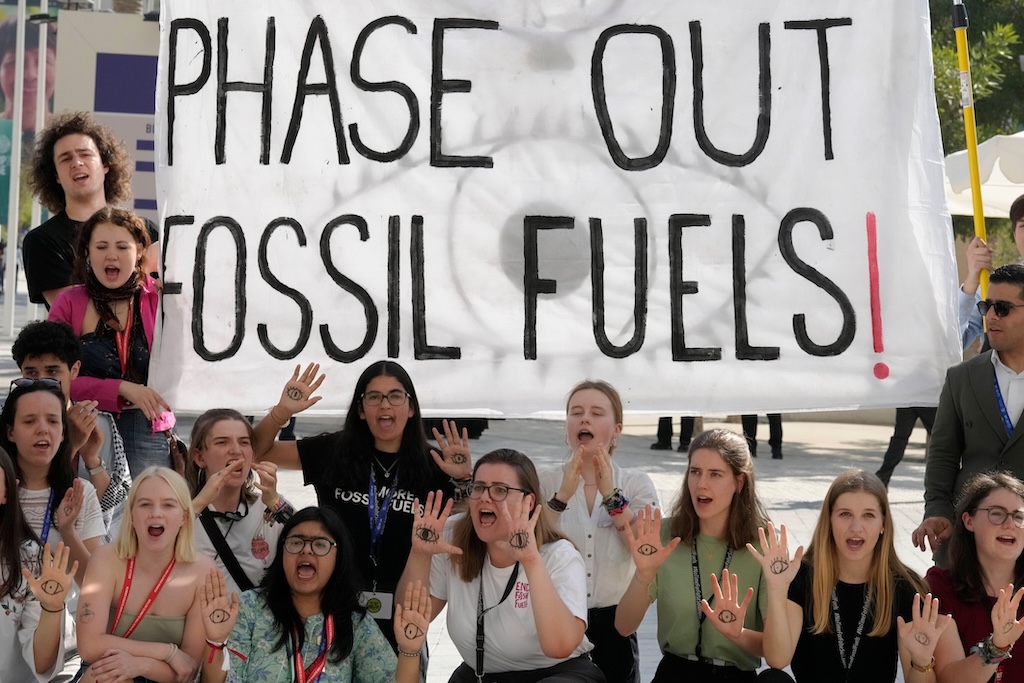
Activists demonstrating at the 2023 COP28 climate summit in Dubai Credit: Associated Press.
In the end, the stocktake “calls on” all countries to “contribute to” a list of global goals, including “transitioning away from fossil fuels…accelerating action in this critical decade” towards net-zero by 2050.
It was the first time that countries formally acknowledged the need to transition away from fossil fuels in almost 30 years of international climate negotiations.
However, many countries were disappointed that the text did not contain a firmer commitment to phase out all fossil fuels, or even just those with “unabated” emissions.
After Dubai, countries were expected to come up with new NDCs for 2035 that explained how they responded to the priorities set out in the stocktake.
The deadline for submitting the “3.0” NDCs was 10 February 2025, which 95% of countries missed.
On 24 September, the UN convened a climate summit in New York at the sidelines of the UN general assembly in the hope of encouraging more countries to come forward with new NDCs.
China stole the show at the event, announcing a pledge – although not yet formally submitted to the UN – to cut greenhouse gas emissions to 7-10% below peak levels by 2035. Several other countries announced new plans, including Russia, Turkey and Bangladesh.
Following the summit, around one-third of countries have announced or submitted their 2035 NDCs.
Fossil-fuel focus
For the analysis, Carbon Brief reviewed each of the NDCs submitted to the UN to determine whether they express support for “transitioning away” from fossil fuels or for phasing them out or “down”.
Countries were considered to have expressed support if they explicitly mentioned the terms “transition” or “phase out/down” in relation to “fossil fuels” when speaking about their own actions to address climate change.
Some countries spoke in general terms about “reducing” or “replacing” fossil fuels, but did not explicitly reference the need to transition away from or phase them down or out. Others spoke about transitioning to a clean or renewable-based economy, but did not explicitly mention fossil fuels.
For the purposes of this analysis, all of these countries were considered to have not expressed support for the need to transition away from fossil fuels.
In addition, some countries mentioned in their NDCs that the global stocktake calls for a transition away from fossil fuels, but did not say that transitioning away from fossil fuels would be part of their own actions to address climate change.
These countries were also considered to have not expressed support for the need to transition away from fossil fuels.
Overall, the results show that only one-third of countries express support for the need to transition away from fossil fuels in their NDCs.
Countries used varying language when speaking about the need to transition away from fossil fuels.
Some directly acknowledged that transitioning away from fossil fuels was a key conclusion of the global stocktake and committed to doing this within their own borders.
This includes the UK, Brazil, Canada, Australia, Singapore, Lebanon and Niue. For example, the UK’s NDC states:
“At home and in line with the outcomes of the GST [global stocktake], the UK is committed to transitioning away from fossil fuels to achieve net-zero by 2050.”
Other countries chose to commit to “phasing out” fossil fuels instead of “transitioning away”.
This includes Iceland and Vanuatu. Similarly, Colombia’s NDC says:
“NDC 3.0 reaffirms that the phasing out of fossil fuels is not only a climate imperative, but also an opportunity to strengthen energy sovereignty [and] democratise the benefits of the transition.”
(Colombia and Vanuatu were two of the countries that were disappointed not to see a commitment to phase out fossil fuels included within the global stocktake text.)
Barbados, an island nation known for its strong commitment to climate action, committed in its NDC to “achieve a fossil fuel-free economy” by 2040. In addition, Chile pledged to contribute to the “elimination of fossil fuels”.
In the analysis, these pledges were considered to be support for transitioning away from fossil fuels, despite not using the terms “transition” or “phase out”.
The table below shows the language used by each of the 21 countries that expressed support for transitioning away from fossil fuels, according to the analysis.
Country
Expression of support for ‘transitioning away from fossil fuels’ in NDC
United Kingdom
“At home and in line with the outcomes of the GST, the UK is committed to transitioning away from fossil fuels to achieve net-zero by 2050.”
Brazil
“Brazil will respond to the call to contribute to global efforts under paragraph 28 of decision 1/CMA.5, through the policies and national efforts below, including those under the National Climate Plan. In addition, Brazil would welcome the launching of international work for the definition of schedules for transitioning away from fossil fuels in energy systems, in a just, orderly and equitable manner, with developed countries taking the lead, on the basis of the best available science, reflecting equity and the principle of common but differentiated responsibilities and respective capabilities in the light of different national circumstances and in the context of sustainable development and efforts to eradicate poverty, as per paragraph 6 of decision 1/ CMA.5.”
Canada
“Canada also remains committed to implementing the mitigation outcomes of the Global Stocktake (GST), agreed at COP28…This includes…transitioning away from fossil fuels in energy systems.”
Lebanon
“Guided by the UAE Consensus reached at COP28, which calls on all Parties to transition away from fossil fuels and strengthen support for adaptation, this NDC reflects Lebanon’s commitment to scaling ambition while addressing national vulnerabilities.”
Iceland
“Iceland’s NDC takes note of the outcome of the global stocktake, according to Decision 1/CMA.5. Specifically, Iceland’s NDC seeks to represent the need for deep, rapid and sustained reductions in greenhouse gas emissions in line with 1.5°C pathways by contributing to the phase-out of fossil fuels across sectors and the strategic, fair and ambitious implementation of carbon capture, utilisation and storage, according to para. 28.”
Barbados
“In 2020, the Government of Barbados set the aspirational goal to achieve a fossil fuel-free economy and to reduce GHG emissions across all sectors to as close to zero as possible by 2030. In light of the significant challenges faced by the country, the aspirational goal is currently expected to be reached around 2040.”
Chile
“In 2023, within the framework of the 28th Conference of the Parties to the UNFCCC (COP) in Dubai, the report on the First Global Stocktake, designed within the framework of the Paris Agreement to assess the global response to the climate crisis, was presented…Among its main conclusions, the agreement to move towards the elimination of fossil fuels in energy systems…stands out. All these conclusions are addressed in this NDC, demonstrating Chile’s commitment to climate ambition.”
Vanuatu
“Moving beyond our current net-zero status, this NDC recommits Vanuatu to rapidly phasing out fossil fuels, deeply decarbonising and transitioning completely to a circular economy.”
Pakistan
“Natural gas and furnace oil are set to decline, with net reductions of 2,147 MW and 430 MW respectively, as per IGCEP 2025-2035, signaling a gradual phase down of fossil fuels in Pakistan’s capacity mix.”
Colombia
“NDC 3.0 reaffirms that the phasing out of fossil fuels is not only a climate imperative, but also an opportunity to strengthen energy sovereignty, democratize the benefits of the transition, and consolidate Colombia as a Power of Life.”
Niue
Niue understands the need to transition from fossil fuel-based electricity generation to renewable energy to reduce the GHG emissions footprint and ensure energy security.”
Singapore
“Singapore is contributing to the first global stocktake’s call to triple global renewable energy capacity and double the global average annual rate of energy efficiency improvements by 2030. We are also supporting efforts to transition away from fossil fuels in energy systems and phase out inefficient fossil fuel subsidies.”
Australia
“The global stocktake recognised the global direction of travel in its consensus call to transition away from fossil fuels in energy systems and to phase-down unabated coal-fired power. In Australia, our transition is underway.”
United Arab Emirates
“The GST Outcome at COP28, together with the broader UAE Consensus and the work under the Troika, has provided a strong impetus for the UAE NDC 3.0. The outcome of the first GST notably emphasizes the need to transition away from fossil fuels in energy systems in a just, orderly and equitable manner, urging parties to adopt ambitious, economy-wide emission reduction targets.”
Japan
“The items listed in decision 1/CMA.5 have been incorporated to the greatest extent possible into the Plan for Global Warming Countermeasures, which is a comprehensive implementation plan for achieving Japan’s NDC.”
Bolivia
“The persistent dependence on fossil fuels, both for electricity generation and transportation, not only contributes to national greenhouse gas emissions, but also exposes the country to volatility in international oil and gas prices, highlighting the urgency of a fair, sovereign, and resilient energy transition toward renewable sources.”
Nicaragua
“The transition to an energy matrix less dependent on fossil fuels is a fundamental priority of the government.”
Marshall Islands
“This NDC also demonstrates our drive, our achievements, and the challenges we face. In particular, we detail our domestic actions to contribute to the collective commitments made following the global stocktake, including the tripling of renewable energy, doubling of energy efficiency and removal of fossil fuel subsidies, all in pursuit of accelerating the transition away from fossil fuels this decade.”
Cambodia
“This transition will be implemented in two key phases: 70% renewable energy by 2030, followed by a further increase to 72% by 2035, ensuring a gradual yet decisive shift away from fossil fuel dependency in the power sector.”
Bangladesh
“Transitioning away from fossil fuels in energy systems, in a just, orderly and equitable manner [is] central to Bangladesh’s contribution to the global response to climate change. The NDC 3.0 commitments are designed not only to reduce Greenhouse Gas (GHG) emissions but also to accelerate the just energy transition, promote zero- and low-emission technologies, and enhance climate resilience.”
Tuvalu
“We are steadfast in our transition to 100% renewable energy.”
Sri Lanka
“With abundant solar, wind, and hydropower resources, Sri Lanka has a clear opportunity and expressed ambitious commitments to move towards total electricity generation based on renewable sources, to transition away from fossil fuels toward cleaner, decentralised energy systems.”
Nepal
Nepal’s NDC is “informed” by Decision 1/CMA.5 Outcome of the first GST, “such as 1.5C decarbonisation pathway…just transition away from fossil fuels in energy systems.”
Separately, the thinktank E3G has examined how countries speak about their policies for reducing fossil fuels in their NDCs.
It found that more than two-thirds of countries include “explicit references to displacing fossil fuels in their electricity mix”.
However, E3G also noted that “specific language on winding down the production of coal, oil, and fossil gas is lacking in almost all NDCs”.
‘Transitional fuel’
Carbon Brief also examined each of the submitted NDCs to see how countries speak about new fossil-fuel production and use within their borders.
Six of the 64 nations – around 10% – used their NDCs to pledge to increase fossil-fuel production or use, predominately gas, claiming this could contribute to their efforts to lower emissions.
In its NDC, the world’s fourth biggest emitter, Russia, says it “emphasises the importance of implementing a just transition to low-emission development models using all available solutions”, including “gas as a transition fuel and technologies for reducing emissions in coal-fired power generation”.
During negotiations on the stocktake text in 2023, Russia had pushed successfully to include a controversial paragraph that says “transitional fuels can play a role in facilitating the energy transition while ensuring energy security”, Climate Home News reported.
The publication noted that, after this text was agreed, Antigua and Barbuda negotiator Diann Black-Layne called it a “dangerous loophole”, adding that gas is also a fossil fuel that “we need to transition away from”.
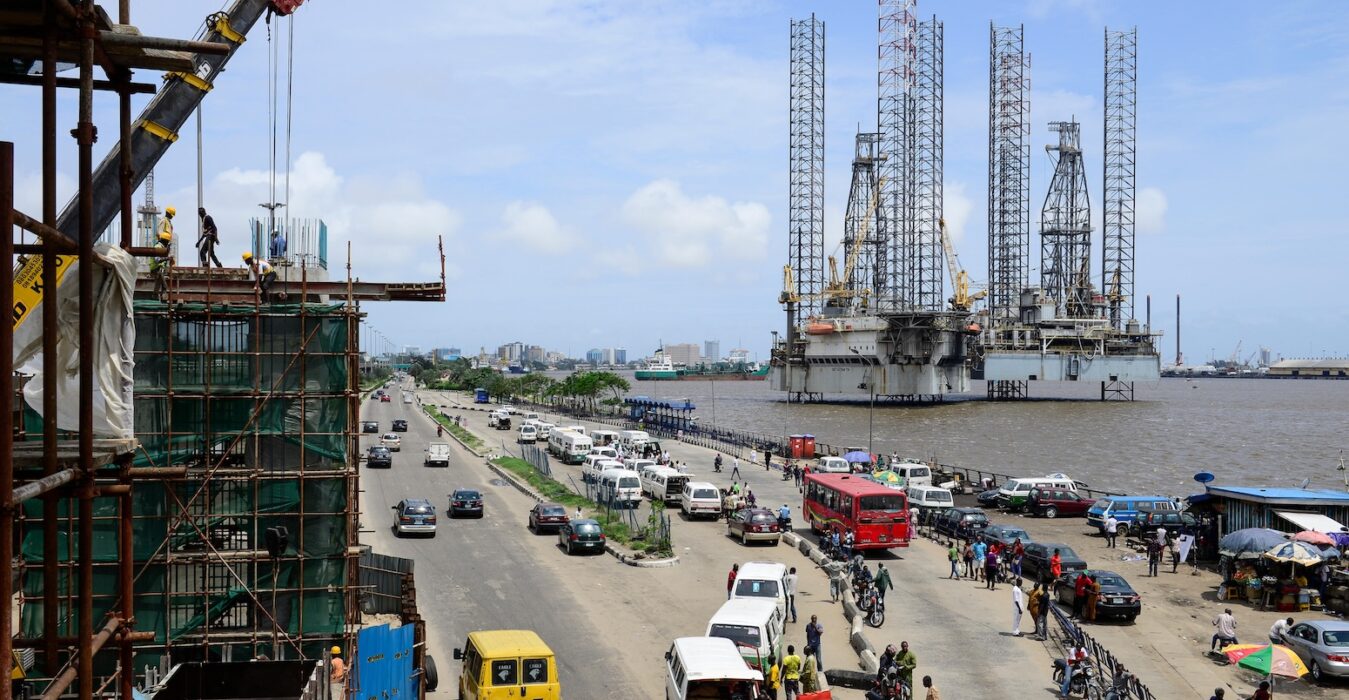
Several African nations, including Nigeria, Morocco, Mauritius and Zimbabwe, also pledged to boost the production or use of gas as part of their “climate” actions.
Nigeria, Africa’s second biggest emitter, says that the country “relies heavily on the oil and gas industry” and that the sector will be “called upon to further grow while adopting sustainability measures”. It continues:
“Natural gas use will be boosted, serving as a key transition fuel in Nigeria’s move towards increased adoption of renewable energy for meeting its net-zero emissions target.”
The world’s energy watchdog, the International Energy Agency, recently reemphasised that there would be no need for any new fossil-fuel production, if the world cuts emissions in line with limiting global warming to 1.5C.
It comes after the world’s top court this year concluded that new fossil-fuel production, consumption, the granting of exploration licences or the provision of subsidies “may constitute an internationally wrongful act”, leaving the states involved vulnerable to legal action.
COP30 calls
After nearly all nations missed the deadline for submitting NDCs in February, UN climate chief Simon Stiell asked laggard countries to do so by the end of September.
This will allow their plans to be included in a new report synthesising the level of progress contained within the latest NDCs, which is due to be published on 24 October. (Less than a third of nations met Stiell’s request.)
The report will come just before COP30, which will take place from 10-21 November in the rainforest Brazilian city of Belém.
Whether and how to respond to the insufficient progress contained within these NDCs, including whether to call for increased ambition in line with the outcomes of the first global stocktake, are among the key issues up for debate at the summit.
The Brazilian presidency is pushing for a formal COP decision on any “disappoint[ment]” over NDCs falling short, collectively, of what is needed to avoid dangerous global warming.
However, other countries would need to agree to this proposal at the summit.
Orcas comment on killer apes destroying the planet by continuing to burn fossil fuels.Orcas discuss Donald Trump and the killer apes’ concept of democracy. Front Orca warns that Trump is crashing his country’s economy and that everything he does he does for the fantastically wealthy.