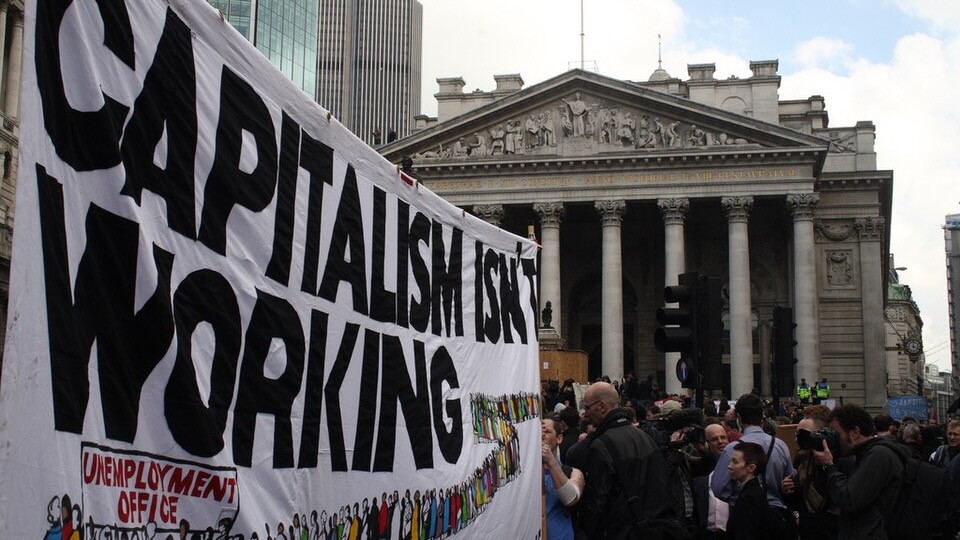
People take part in a protest outside a Tesla Pop-Up at Future Stores on Oxford Street in London, April 5, 2025
BRITISH sales of Tesla electric vehicles continue to plummet following its billionaire owner Elon Musk’s involvement with Donald Trump’s presidency and far-right figures in Europe.
Tesla’s new car sales dropped by nearly 60 per cent to just 987 cars in July, down from 2,462 a year ago, according to the Society of Motor Manufacturers and Traders (SMMT).
The electric car company has slashed its monthly lease fee in Britain to boost weakening demand, offering discounts of up to 40 per cent to the country’s car leasing companies, citing a lack of storage space due to unsold Tesla vehicles in Britain.
Elon Musk urges you to be a Fascist like him, says that you can ignore facts and reality then.A parody ‘Tesla – The Swasticar’ advert posted at a London bus stop. Photograph: People vs Elon
Original article by Carmen Navas Reyes republished from peoples dispatch under a Creative Commons Attribution-ShareAlike 4.0 (CC BY-SA) license.
Protesta por la crisis del G20 en Londres en abril de 2009. Foto: Wiki commons
Between capitalism in decline, expressed in wars and neo-fascism, and the left calling for reconstruction, people resist.
The famous quote by Italian Marxist philosopher Antonio Gramsci seems to have been written for the moment humanity is currently experiencing: “The old is dying, and the new cannot be born. In this interregnum, monsters arise.”
The world is going through a civilizational crisis in which the neoliberal capitalist order, although mortally wounded, continues to impose its predatory logic, that of the use of force and the resurgence of fascism, while emancipatory alternatives fail to consolidate. In this vacuum, monsters proliferate: wars and attempts at recolonization, climate crisis, structural hunger, collapse of multilateralism and international law placed at the service of the world’s powers that be.
Capitalism and its “terminal crisis”
According to Brazilian theologian Leonardo Boff, the globalized capitalist system has been showing terminal signs for more than a decade: the obscene concentration of wealth, parasitic financialization, planetary catastrophes, and the precariousness of life have led to this crisis, but it has not been strong enough to finally bury this system. Western imperialism – today embodied in NATO and its imposition of increased war budgets on member countries, in the US economic war, especially against China, and in the European Union’s sanctions against Russia – can no longer flaunt itself as before, but it refuses to die. Its decline is evident in global inflation, the return of Cold War geopolitics, and the rise of neo-fascisms as fictitious “solutions” to inequality.
Is the left also in crisis?
While capitalism seems to be moving towards its decomposition, the left is unable to articulate a hegemonic project. Progressive experiences in Latin America face economic siege, blockades, unilateral coercive measures and judicialization, divisions and popular demobilization; European social democracy is surrendering to neoliberalism and anti-capitalist alternatives still lack global strength. Fragmentation and what appears to be a lack of strategies in the face of new forms of domination (such as the digital divide, corporatist government, and the rule ofBig Tech) weaken the possibility of the emergence of a new order.
Wars and neocolonialism: Ukraine, Palestine, Sudan, the Sahel, conflicts where resources are plundered under the rhetoric of “defending democracy” or simply betting on chaos and the disappearance of states.
Environmental catastrophe: Capitalism has turned nature into a “commodity,” and now the planet is suffering countless fires, floods, and desertification.
The failure of international law:The International Criminal Court prosecutes Africans but ignores the crimes of Israel and the US, while the Security Council has become a veto club. Furthermore, reform of the United Nations has become a key issue for the Global South, as seen at the last BRICS meeting in Rio de Janeiro, Brazil.
Criminalization of migrants: In the first six months of his second term, President Donald Trump has launched a strong public campaign against the presence of migrants, especially Latin Americans, in the United States. This campaign has also been the basis for an aggressive anti-immigration policy that ranges from the revocation of programs such as Humanitarian Parole, the cancellation of Temporary Protected Status (TPS), mass deportations, family separation, and the removal of infants from their parents, to the establishment of a highly sophisticated international prison system that violates human rights.
However, this policy is not exclusive, nor was it initiated by the Trump administration, as noted in the testimony of Gladys Caricote, one of the Venezuelan women deported from the United States to Venezuela. In her testimony, she details the discriminatory policy of US governments after being held in an immigration detention center (ICE) for more than 10 months, which means that it was under the administration of Joe Biden, the 46th President of the United States (Democratic Party, 2021-2025), when this restrictive policy towards migrants from Venezuela was tightened.
Is there a way out?
What is needed to build alternatives? How can the Global South help? Is there any point in creating new forms of democracy, popular organization, and class internationalism?
The BRICS summit held in Rio de Janeiro, Brazil, on July 6 and 7 was a key event, as it represented a counterweight to the Western-dominated economic and political order, Similarly, its progressive expansion (in 2023-2024, the BRICS accepted new members such as Egypt, Ethiopia, Iran, Saudi Arabia, and the United Arab Emirates), despite differing criteria among member countries on this issue, has meant greater representation for the Global South, even if it is not without tensions, such as Brazil’s opposition to Venezuela’s entry.
This summit, which issued a 126-point declaration, was quickly responded to by President Donald Trump, who described the proposal to de-dollarize the group’s economic transactions, promoting payments in local currencies and mechanisms such as the New Development Bank (NDB), as a threat to the United States and threatened to increase tariffs on countries that support this action.
Another important event, highlighted in the final declaration of this meeting, was the session of the Civil Council, which the movements present in Brazil have called the “BRICS People’s Council,” promoted at last year’s meeting in Kazan, Russia, as a Civil Forum, even though it is not institutionalized in any instance of the political bloc. However, the potential of this Council, not only for the BRICS countries themselves, but also for our countries in the South, is summed up in the reading of the Council’s consensus statement by João Pedro Stedile, of the National Coordination of the Landless Rural Workers’ Movement (MST) and the Political Coordination of ALBA Movements, who summarized that “the formal participation of the People’s Council is historic because it consolidates a method. Everyone agrees that the problems facing the peoples will not be solved by government initiatives alone.” However, everyone seems to be clear that it will not be an easy process, given that the rotating presidencies of the group determine the approaches.
Next year, the presidency will go to India, which may have a different view of the role of popular organizations in BRICS, but the important thing is that it is already a decision of the popular organizations to accompany this geopolitical instance as an alternative to the crises already raised, this being another way in which popular movements and organizations are standing up to the monsters that have emerged at this stage, as they have also done with mass actions against the attacks on Iran, Israel’s extreme violence in Gaza and throughout Palestine, the kidnapping of migrants, in defense of the sovereignty of the Sahel countries, etc.
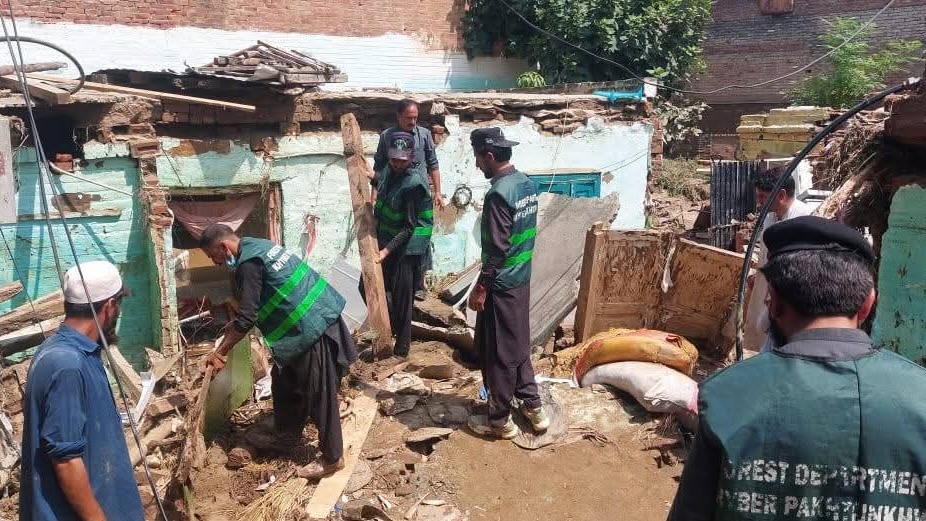
The Lower Swat Forest Division team of the Forest Department is engaged in rescue and relief activities in the flood-affected areas of Mingora, KP. Photo: Pir MusavirPTI/X
Pakistan has witnessed frequent heavy rains and floods in recent times causing massive human and material loss claimed to be the result of human-induced global changes in the climate
Pakistan is yet again facing heavy casualties and massive destruction due to unusual heavy rains and floods across the country this year. According to the country’s National Disaster Management Authority (NDMA), more than 650 people have been killed and over 900 others have been injured in rain-related incidents across the country since June 26.
The flash floods in mostly the northeastern parts of the country have also displaced hundreds of thousands with scores still reported missing.
It is estimated that Pakistan has already received 50% more rain this year in comparison to last year. The country’s meteorological department has warned that the current spell of heavy rains is expected to last until August 19 with three more spells of heavy rains through September after that.
The upcoming spells may cause massive flooding in the areas along the Indus river in the coming days, Pakistani authorities have warned.
Though death and destruction from the floods have been recorded across all the provinces of Pakistan, including the capital Islamabad, the northeastern Khyber Pukhtunkhwa (KP), and Gilgit-Baltistan have been hit the hardest.
Last week, huge flash floods washed away villages and communication networks at various places in the hilly region of KP and Gilgit-Baltistan. Heavy rains and cloud bursts have destroyed roads, railway lines, schools, hospitals, and other essential civilian infrastructure in KP, Gilgit-Baltistan, and other parts of Pakistan.
Buner in KP, which witnessed a cloud burst last week, has been the hardest-hit district, amassing more than half of all deaths recorded in the province with scores of people still missing.
According to the NDMA, KP recorded the highest number of people killed at 390, followed by Punjab, Pakistan’s largest province, which has recorded 164 deaths. Even the drier regions such as Balochistan have recorded over a dozen deaths due to the heavy rain and flash flooding.
Fresh heavy rains on Monday have made the relief and rescue operations difficult, particularly in the most affected regions in the hills.
Effects of climate change
Residents in Pakistan’s hilly areas who lost their houses in the flash floods say there were no early warnings of the heavy rains which multiplied the loss of lives and property.
Inam Haider Malik, head of the NDMA, claimed in a press conference in Islamabad on Sunday that it is difficult to predict cloud bursts and flash floods and warned that at least three more spells of heavy rain in the coming days may cause flooding in the lower areas in Pakistan. He emphasized that the “scale of loss is part of the climate change impacts”.
Pakistan’s chief meteorologist Zaheer Babar also claimed that the unusually heavy rains are a result of climate change. However, he also underlined that the impact of erratic rain is multiplied due to haphazard construction near the river valleys and unscientific disposal of waste in the river beds, Geo Tvquoted Babar saying.
“The situation in Khyber Pukhtunkhwa and Gilgit Baltistan is devastating. We are in the midst of a climate emergency,” claimed Ammar Ali Jan, leader of the Haqooq-e-Khalq Party (HKP). In his posts on X, Ammar also demanded “Pakistan should receive climate reparations, including debt relief” as it is a victim of “fossil-fuel driven model of Western development.”
Taimur Rahman, leader of the Mazdoor Kisan Party (MKP), underlined the failure of the Pakistani state to treat all its citizens equally, resulting in disproportionate losses to the poor during such floods.
Taimur claimed that the government in the country uses most of its resources on developing flood preventive mechanisms around richer localities while ignoring the needs of the majority of people.
Pakistan has faced repeated floods in the last few years with an increase in the overall rainfall during the monsoon season in particular. In 2022, in a similar situation, floods killed over 1,700 across Pakistan and affected over 33 million people, badly impacting the peoples livelihoods and the overall economy of the country as it tried to recover from the effects of COVID-19. The floods also destroyed crops, intensifying the overall food insecurity in the country.
Donald Trump urges you to be a Climate Science denier like him. He says that he makes millions and millions for destroying the planet, Burn, Baby, Burn and Flood, Baby, Flood.Nigel Farage urges you to ignore facts and reality and be a climate science denier like him. He says that Reform UK has received millions and millions from the fossil fuel industry to promote climate denial and destroy the planet.
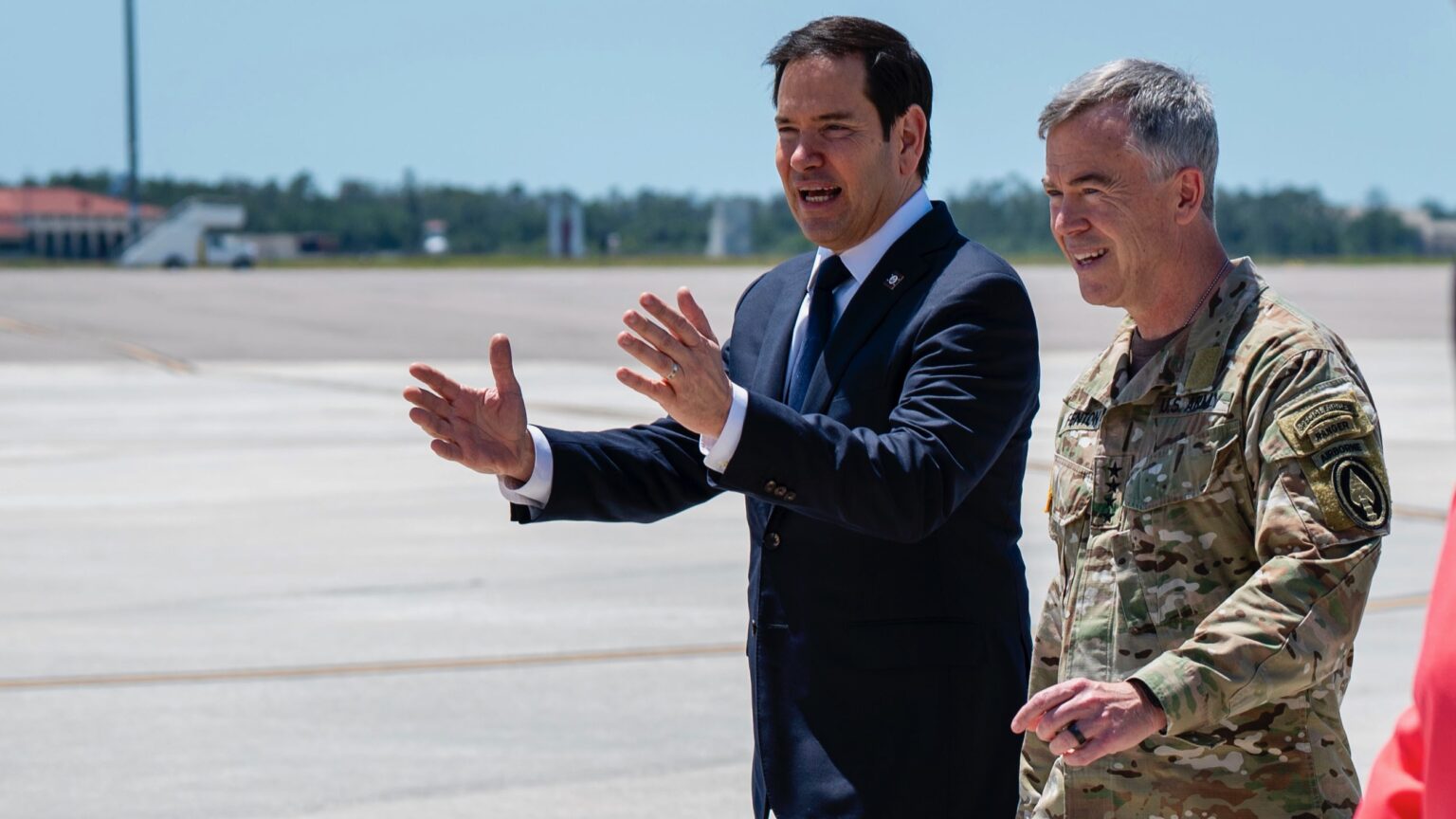
Secretary of State Marco Rubio meets with US Special Operations Command in April, 2025. Photo: X
The action was announced by Secretary of State Marco Rubio, who called the Venezuelan government a “criminal organization”.
US Secretary of State Marco Rubio confirmed Thursday, August 14, that he is sending troops to the southern Caribbean Sea to carry out military operations in the region. He said the goal is to arrest Latin American drug traffickers and linked one of these groups to Venezuelan President Nicolás Maduro.
Rubio reinforced, without presenting evidence, the White House narrative that Maduro is the leader of the Cartel de los Soles (Cartel of the Suns), an alleged criminal organization. On July 25, the US State Department classified the group as an international terrorist group.
Now, Rubio has stepped up his game, stating that he is sending air and naval troops to control cartels that bring “poison” to the US. He stated that drug trafficking is a threat to US security and again called the Maduro government a “criminal organization”.
“These are groups that are operating with impunity in international waters, simply exporting to the United States poison that is killing, that is destroying communities… The Cartel de los Soles is one of the largest criminal organizations that exist in the hemisphere, which unfortunately has not been given enough attention. It is a cartel that today is indicted in the federal courts of the United States. It is not a government, the Maduro regime is not a government, it is a criminal organization,” Rubio said in a statement.
The Secretary of State did not provide details of the operation, but said the goal is to intercept the flow of drugs in the region.
Venezuelan military personnel interviewed by Brasil de Fato do not believe the United States could launch a military attack against the country. Sectors within the Armed Forces say they have not definitively ruled out any possibility, but understand the dispatch of planes and ships as yet another threat and a show of force by the White House.
Henry Navas Nieves, head of the Master’s program in Military History at the Bolivarian Military University of Venezuela, agrees with this thesis and states that the US learned from the wars in Iraq and Afghanistan, two conflicts that had a very high political, military, and economic cost for people in the United States.
“Since Obama, a new model of US warfare against expanding countries has emerged. They have abandoned direct armed confrontations and learned that it was possible to overthrow Muammar Gaddafi in Libya without deploying any soldiers. And they apply and replicate this. The use of their own military forces is inconvenient in these cases, and they resort to harassment and unilateral coercive measures,” Nieves told Brasil de Fato.
The military understands that the White House’s logic is based on encouraging conflicts and attacks by paramilitary and far-right groups in Venezuelan territory.
This week, the Venezuelan government announced that it had demobilized a new attempted attack against strategic structures in Venezuela. Interior Minister Diosdado Cabello said on Tuesday, August 12, that security forces had identified terrorist plans organized by far-right sectors in conjunction with paramilitaries.
According to him, explosives were seized that had the capacity to hit targets at a distance of up to 1.2 kilometers and were intended to be used to attack hospitals, gas stations, and political figures.
One of the targets was Venezuela Plaza in downtown Caracas. According to Cabello, the group intended to blow up the Monument to the Victory of the Great Patriotic War against Nazism, a memorial to the Soviet Union, which was inaugurated in the first half of this year.
Navas claims that these new US military threats are “inexplicable” because they are based on an unfounded accusation: that Maduro leads a criminal organization.
“The Venezuelan government has actually dealt a severe blow to drug trafficking. These aggressive measures also respond to Venezuelan police operations against the far right, which attempted to organize terrorist attacks, something that was denounced and dismantled by security forces, in addition to the tons of explosives seized,” he stated.
Escalation in threats
Since the July 27 municipal elections, the US has increased its attacks on the Venezuelan government. In an interview with Fox News, US Attorney General Pamela Bondi said that more than USD 700 million in Maduro’s assets had been seized. She said that these were “mansions, cars, planes, and jewelry”, but presented no evidence and gave no indication of the location of these assets.
Navas argues that this escalation of threats is the result of a profound crisis the US is experiencing, involving a struggle between different conservative wings. He believes Rubio’s group seeks dominance in the region to regain the “sympathy” of its support base in Florida, where the Latin American far-right living in the US is concentrated.
“There is a mosaic of interests in the US vying for space and seeking to control the White House’s political decisions. Rubio leads one of them, and he is putting pressure on the government to launch an offensive against Venezuela in an attempt to overthrow the government. This is an escalation and a response to the Maduro government’s advance, which has seen significant victories in the recent regional, legislative, and municipal elections,” he said.
Last week, the US announced an increase to USD 50 million (approximately R$270 million) in the reward for information leading to the arrest of President Nicolás Maduro. The message was promptly responded to by the Venezuelan government. Foreign Minister Yván Gil called the announcement “a ridiculous political propaganda operation and a joke.”
Another speaker was Defense Minister Vladimir Padrino López. He called this “immoral” and emphasized that criminal groups operating in Venezuela, such as the Aragua Train, have been “completely dismantled”.
Maduro also refuted the accusations and said that the Venezuelan response could be “the beginning of the end of the American empire”. This Thursday, August 14, the president called the US advance a “war of declarations”.
The heightened tension also resonated with the Venezuelan far right. Former extreme-neoliberal congresswoman and opposition figure María Corina Machado thanked the Republican president on Thursday for “pressuring to defeat this criminal organization”.
Elon Musk urges you to be a Fascist like him, says that you can ignore facts and reality then.Donald Fuhrump says that Amerikkka doesn’t bother with crimes or charges anymore, not being 100% Amerikkkan and opposing his real estate intentions is enough.
Shut the System activists cut the electricity to Barclays’ Barclaycard’s Northampton headquarters, August 18, 2025
ACTIVISTS sabotaged utilities infrastructure at the offices of major fossil fuel investors today, declaring the start of “disruption like never before” against fossil fuel finance.
Shut The System cut cables and superglued electrical service cabinets at JPMorganChase and Allianz in London, demanding they stop financing the climate emergency and genocide in Gaza.
At Barclaycard’s Northampton headquarters, activists cut the 5G communications mast serving the building.
The underground climate campaign said the action marked the launch of a period of sustained sabotage against financial institutions deemed “key culprits” in the climate crisis, running until the end of September.
It urged civilians to join a “Summer of Sabotage” by destroying the property and operating systems of institutions providing “critical support to deadly industries globally.”
Donald Trump urges you to be a Climate Science denier like him. He says that he makes millions and millions for destroying the planet, Burn, Baby, Burn and Flood, Baby, Flood.Nigel Farage urges you to ignore facts and reality and be a climate science denier like him. He says that Reform UK has received millions and millions from the fossil fuel industry to promote climate denial and destroy the planet.

 People take part in a protest outside a Tesla Pop-Up at Future Stores on Oxford Street in London, April 5, 2025