Grassroots immigrant rights activists challenge federal claims about the circumstances of the ICE raid that lead to the farmworker’s death
Jaime Alanís succumbed to injuries sustained amid an ICE raid at Glass House Farms, where he had labored for over a decade
On July 10, 2025, while being pursued by ICE agents during a violent raid at Glass House Farms in Camarillo, California, 57‑year‑old farmworker Jaime Alanís fell nearly 30 feet from a greenhouse roof and succumbed to his injuries two days later.
A devoted husband, father, and the sole breadwinner for his family, Alanís had labored at the farm for over a decade. On July 12, the worker became the first known casualty of the Trump administration’s intensified ICE raids.
His death ignited a fierce public outcry. While the Department of Homeland Security maintains he was not actively being chased and climbed the roof on his own accord, his family, as well as immigrant rights activists, contend he was fleeing from the violence of Trump’s ICE agents, who have terrorized immigrant communities across the country.
The Department of Homeland Security denies that Alanís was being pursued at all, although this does not explain why the worker ended up climbing 30 feet onto the roof of a greenhouse. DHS also claims that the raid resulted in the rescue of children from “potential exploitation, forced labor, and human trafficking.”
To some immigrant rights activists, Alanís’ death has become a poignant symbol of the human cost of aggressive immigration enforcement tactics, and the policies that make them possible.
On July 9, the US Secretary of Agriculture Brooke Rollins announced that there would be “no amnesty” for undocumented farmworkers, and that the Trump administration is seeking a workforce composed entirely of those from the US. Rollins plans to accomplish this via automation and mobilizing the “34 million able-bodied adults in our Medicaid program.”
Trump has recently signed legislation that would create the first-ever federally mandated work requirements for those covered by Medicaid, the US’s public health insurance program. According to a May report by the healthcare policy group KFF, 92% of those on Medicaid under age 65 and not receiving SSI or SSDI benefits and not covered by Medicare, were either working full or part-time, or not working due to caregiving duties, illness or disability, or attending school.
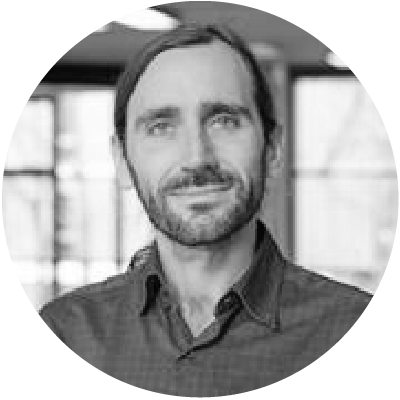
Peoples Dispatch spoke to Ventura County activist Elaine Yompian, part of the immigrant rights coalition VC Defensa, for more on the fight for justice for Jaime Alanís and the millions of immigrant workers with targets on their backs.
“We understand that even though this wasn’t an immediate death, his injuries and the danger that he was put in is a direct result of the ICE operation and the brutality in which agents were conducting this raid,” Elaine told Peoples Dispatch. “We’re calling it the first murder that has happened in an ICE operation.”
Read the full interview here:
Peoples Dispatch: Can you describe what took place during the raid at Glass House Farms and the surrounding events?
Elaine Yompian: The same day as the raid, there was a huge protest that broke out in defense of the community. We kind of put out a call for people to immediately show up.
That’s been one of the key things that we’ve been doing, mobilizing people to take action wherever ICE is present so that their actions don’t go unnoticed or unchecked.
We didn’t know how big the raid was when it started. We put out a call for emergency mobilization to that location, and soon we saw that the National Guard was coming in. We kept making calls for people to just show up to declare that we wanted ICE out of the county, and away from our neighbors and family members.
We were there for over six hours, standing basically in front of the ICE agents, hoping that they wouldn’t pass, hoping that they wouldn’t take more people. Amid the chaos, we have heard of four US citizens that were taken, two of which were our volunteers, and one is a person that we know.
All four have been released so far. One of them was our volunteer, she’s a mother, and she was held for over 10 hours. She was beaten up, then taken to the hospital. And when she was taken to the hospital, we called for a protest there, for them to release her, and ICE agents actually tried to enter the hospital and were pushing the hospital staff to try to get in. A lot of the staff held their ground because of HIPAA compliances and everything, and the ICE had no warrants.
Eventually ICE agents did get in, apparently someone let them in, and then they took her again and she saw all kinds of really horrible things while in their custody. They tried to intimidate her, but eventually they released her with no charges.
The other US citizen that was detained, Jonathan Anthony Caravello, is a labor organizer and a volunteer of ours. He is math and philosophy professor at California State University, Channel Islands, and he was also taken and detained for several days. They released him recently.
Another US citizen who was detained is a US Army veteran, George Retes, who we met during the first raid that happened in June, and he was also detained and freed yesterday.
We stayed back at the site of the raid for a very long time, even after the agents had left, to help those who were hiding with farm workers, to get back to their cars or get back home.
After the raid, our hotline was getting back to back calls of families who were looking for their loved ones. We had a family search team, trying to find where they were taken, if they were taken, or if they were just missing – whether they had been detained or were still hiding somewhere, and we needed to go find them. We were doing all that work, as well as doing food distribution for families that have been affected.
With Jaime Alanís’ family in particular, we got in contact pretty quickly because the news reports were saying that he had died during the raid. The family was pretty upset that the media was saying that he had already passed away when he was still on life support.
When I spoke to his niece, who was his immediate family member in the US., her goal is to eventually sue the DHS for his murder.
PD:How does the violence deployed during the ICE raid in Camarillo compare to tactics used in other Trump-era ICE raids, such as militarization or arrests of noncriminals? How do these raids compare to raids under past administrations?
EY: Raids have always been a form of human torture. It’s always involved family separation, and the level of trauma and impact that it has on our communities has never really shifted, depending on whether it’s a Democratic president or a Republican president in office. It’s always been something that has caused incredible amounts of pain to the families and to the people being taken.
The use of force has also always been brutal. The conditions within detention centers have always been truly horrific. There’s no other word to describe them other than torture.
Now with Trump, it’s definitely intensified, we’re not going to deny that.
PD:DHS is justifying this raid by claiming that children were rescued from potential violations of child labor laws and human trafficking taking place at the farm. What is your response to this justification?
EY: It’s a common tactic for the US to claim that they’re doing this for the safety of the community, for the well-being of children. Let’s even say that the farm had conditions that DHS claims. However, these conditions are also caused by systems of injustice. The reason why so many people go into jobs that have these extreme amounts of physical labor for very low pay is a result of capitalist exploitation.
But the solution for that would never be a one time intervention on one farm in one county in the middle of California. That is not going to solve the larger issue.
So if the government wants to say we’re doing this because we were trying to protect children from working these conditions, the finger should be pointed right back at the government itself and the capitalist system, because that’s what’s causing these conditions and that’s what’s allowing for this to happen.
Starmer and Macron agree on ‘one in, one out’ deal during the first French state visit to the UK since Brexit | Ludovic Marin/POOL/AFP/Getty Images. All rights reserved
Don’t be fooled by Labour’s show of providing safe migration routes. It’s justifying a cruel trade in people
Yesterday afternoon, British Prime Minister Kier Starmer and French President Emmanuel Macron announced a new migration deal to respond to Channel crossings.
After three days of discussions between the two leaders, Starmer promised “hard-headed, aggressive action on all fronts” to “smash the gangs” who he says are responsible for people crossing the Channel on dinghies.
The deal? A “one in, one out” system, which will return to France some of the people who cross the Channel irregularly. In exchange, France will send people to the UK who, for example, are seeking to reunite with family members here.
Since then, however, Labour has done what they said they wouldn’t – introduce performative gimmicks to convince voters they’re in ‘control’ of migration. They announced plans to invest £75m in a new ‘Border Security Command’, which was quickly criticised as a simple rebranding of what came before. And in a move straight out of Trump’s playbook, they also began televising deportation flights.
Starmer and Macron say the scheme will help deter people from making the crossing by reducing their chances of settling in the UK. But there is no evidence to support this. Time and time again, successive British governments have increased their cruelty towards people arriving on ‘small boats’. Yet people have continued to make the journey.
“New deterrents” are not the solution. This new deal will cause considerable further harm, resulting in the forcible transfer of people back to France. Labour are falling into the same trap that contributed to the Conservatives’ last general election defeat.
‘Safe routes’ used to justify hostility
While details are not yet available, the new deal proposes a ‘safe route’ for some people trying to reach the UK from France. It’s been reported that the ‘one in’ element would target those with family in the UK, enabling them to reach the country without having to risk their lives.
The problem is, for nearly everybody else waiting to cross the Channel, no other route exists for them to seek safety in the UK. This agreement will not, in any meaningful way, solve this issue. People will continue to cross in dinghies in the absence of other, safer routes. If anything, it may fuel demand for crossing the Channel, as those forcibly returned by the ‘one out’ element could try again to reach the UK.
Piecemeal ‘safe and legal routes’ like this should not replace people’s ability to claim asylum if they arrive on UK soil. Yet this is exactly what is happening. The UK is replacing its legal and moral obligations to people seeking asylum with a discretionary ‘pick-your-own’ approach based on national self-interest. Then, they use these ‘safe routes’ to justify hostility towards asylum seekers who do arrive irregularly.
This agreement will result in the punitive trade in human beings across Europe
We don’t yet know what will happen to people after they’ve been returned to France. It’s possible that those returned would then be transferred onwards across Europe. An EU law called the Dublin Regulation means that France could return them back to the first country in Europe they entered. Five of those states – Cyprus, Greece, Italy, Malta and Spain – have written to the European Commission warning that the deal could increase pressure on them. They argue it sets a dangerous precedent for migration governance across the bloc.
Above all else, this agreement will result in the punitive trade in human beings across Europe.
The deterrence delusion
The proposed ‘one-for-one’ pilot scheme continues a 30-year pattern of UK-France agreements to ‘deter’ irregular crossings by increasingly hostility. Deterrence is the convenient, common-sense logic used to justify increasingly cruel policies. It possesses a dangerous self-reinforcing quality: when harsh policies fail to reduce arrivals, this is always attributed to the insufficient severity of the deterrent. Rather than questioning the logic itself, the much easier conclusion to reach is that even more severe measures are necessary.
Yet, even according to the Home Office’s own analysts, there is no evidence that harsh measures deter people from trying to reach the UK to seek asylum. And while some don’t know about the UK’s ever-changing policies, many are aware and still judge the journey to be worth the risk, because there is no other option available.
The government refuses to acknowledge this, so we find ourselves caught in a cycle with no end in sight.
‘Deterrence’ has been used to justify a series of rights-eroding legislation in recent years. The Nationality and Borders Act changed the meaning of ‘refugee’ in British law, making it a harder definition to qualify for. It also introduced powers which enabled the home secretary to deem the asylum claims of irregular arrivals to the UK inadmissible.
The 2022 law also introduced the new crime of ‘illegal arrival’, which criminalised seeking asylum for the first time in the UK. The move was criticised by the UN refugee agency (UNHCR), who said it breached the UK’s obligations under the Refugee Convention: refugees should not be penalised for the way they arrive in a country to seek asylum. In spite of this, at least 500 people have been convicted for ‘illegal arrival’ since June 2022, including refugees, victims of trafficking and torture, and children wrongly assessed to be adults.
‘Deterrence’ does not work. This is not because the policies are not ‘tough enough’, but because people will continue to move when it is not safe for them to stay still
Then in 2023, the Illegal Migration Act rolled back refugee rights even further. It legislated that people whose asylum claims are rejected could never have a future claim assessed in the UK and could not be granted any form of leave. It also created a mandatory duty for the home secretary to remove people deemed inadmissible for asylum – either to their own country, or to a ‘safe third country’. However, post-Brexit, the UK had very few agreements regarding removals. In desperation, the previous government hatched its ill-fated Rwanda plan – which ultimately proved to be a costly, unlawful disaster.
Despite these punitive efforts, people have continued to make the difficult journey across the Channel. Almost 20,000 people crossed in the first half of 2025, a significant increase from the same period in both 2024 and 2023. It’s clear that ‘deterrence’ does not work. This is not because the policies are not tough enough, but because people will continue to move when it is not safe for them to stay still.
Following the money: what happens in France?
While often justified as necessary to prevent the loss of life at sea, evidence strongly suggests that British spending in northern France has in fact increased the risks for people crossing.
Restrictions to the supply of dinghies has forced more people onto fewer crafts, resulting in deadly overcrowding. Footage released by the Guardian and the BBC has shown French police using violent tactics both on land and in the water, including creating waves to flood dinghies, threatening people with pepper spray, and using knives to slash boats in the water. Men, women and children have died in northern France, on land and in the shallows, as a direct result of these tactics.
Alongside the “one in, one out” deal, Macron argued that new tactics were needed on French beaches to respond to people smugglers. It has been rumoured that new powers are being considered which would enable French officers to intervene with dinghies up to 300m from the coastline. However, police unions are resisting, with concerns that this might breach laws regulating the treatment of boats in distress at sea. These are the same concerns which ultimately ended the previous UK government’s plans to ‘push-back’ dinghies at sea.
If passed, this measure will clearly endanger people further. British-funded policing efforts have resulted in record numbers of people drowning in the French shallows – 82 people died last year, including at least 14 children. While the government scapegoats young asylum seekers for these deaths, we must continue to call the UK and France to account for how money is being spent on the beaches.
No more gimmicks?
Starmer’s promise to end the “gimmicks and gestures” has proven hollow. Despite the promise of something new, his plans represent a direct continuation of the Conservative’s cruel approach.
In a dangerous escalation in rhetoric, Labour have argued that Channel crossings must be treated using “counter-terror style powers”. Its new Border Security, Asylum and Immigration Bill – currently in the parliamentary committee stage – proposes several new immigration offences, modelled on terrorism offences. These include the possession of information or objects that could be used for “immigration crime”.
Performative measures will not bring an end to death and despair in the Channel. These are policies not based on evidence or concerns for human life, but rather on a desire to appear “tough” on migration.
As people have continued to cross the Channel, both Labour and Conservative governments have resorted to increasingly cruel, often violent policies in their attempts to “stop the boats”. As continued cycles of policies have shown, they will not work. Instead, they will bring further harm to people seeking a better life in the UK. We must resist the state-supported trade in human beings and break the cruel cycle of deterrence.
Keir Starmer chases Nigel Farage’s racist bigot vote.Nigel Farage explains the politics of Reform UK: Racism, Fake anti-establishmentism, Deregulation, Corporatism, Climate Change Denial, Mysogyny and Transphobia.Nigel Farage urges you to ignore facts and reality and be a climate science denier like him. He says that Reform UK has received millions and millions from the fossil fuel industry to promote climate denial and destroy the planet.
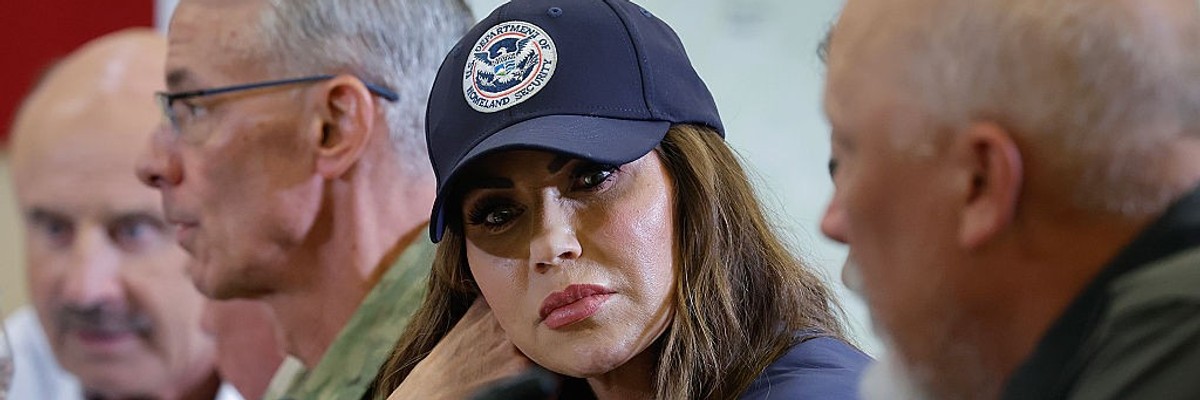
U.S. Secretary of Homeland Security Kristi Noem participates in a round table event with President Donald Trump at the Hill Country Youth Event Center to discuss last week’s flash flooding on July 11, 2025 in Kerrville, Texas. (Photo: Chip Somodevilla/Getty Images)
“They are intentionally breaking government—even the parts that help us when we are deep in crisis,” said Sen. Chris Murphy.
Outrage continues to grow against U.S. Secretary of Homeland Security Kristi Noem over her response to the deadly floods that ravaged Texas last week.
According to a Friday report from The New York Times, more than two-thirds of phone calls to the Federal Emergency Management Agency (FEMA) from flood victims went unanswered after Noem allowed hundreds of contractors to be laid off on July 5, just a day after the nightmare storm.
According to The Times, this dramatically hampered the ability of the agency to respond to calls from survivors in the following days:
On July 5, as floodwaters were starting to recede, FEMA received 3,027 calls from disaster survivors and answered 3,018, or roughly 99.7 percent, the documents show. Contractors with four call center companies answered the vast majority of the calls.
That evening, however, Noem did not renew the contracts with the four companies, and hundreds of contractors were fired, according to the documents and the person briefed on the matter.
The next day, July 6, FEMA received 2,363 calls and answered 846, or roughly 35.8 percent, according to the documents. And on Monday, July 7, the agency fielded 16,419 calls and answered 2,613, or around 15.9 percent, the documents show.
Calling is one of the primary ways that flood victims apply for aid from the disaster relief agency. But Noem would wait until July 10—five days later—to renew the contracts of the people who took those phone calls.
“Responding to less than half of the inquiries is pretty horrific,” Jeffrey Schlegelmilch, director of the National Center for Disaster Preparedness at Columbia University, told The Times.
“Put yourself in the shoes of a survivor: You’ve lost everything, you’re trying to find out what’s insured and what’s not, and you’re navigating multiple aid programs,” he added. “One of the most important services in disaster recovery is being able to call someone and walk through these processes and paperwork.”
The lapse is a direct result of a policy introduced by Noem last month, which required any payments made by FEMA above $100,000 to be directly approved by her before taking effect. Noem, who has said she wants to eliminate FEMA entirely, described it as a way of limiting “waste, fraud, and abuse.”
Under this policy, Noem allowed other critical parts of the flood response to wait for days as well. Earlier this week, multiple officials within FEMA told CNN that she waited more than 72 hours to authorize the deployment of search and rescue teams and aerial imaging.
Following TheTimes’ piece, DHS put out a statement claiming that “NO ONE was left without assistance, and every call was responded to urgently.”
“When a natural disaster strikes, phone calls surge, and wait times can subsequently increase,” DHS said. “Despite this expected influx, FEMA’s disaster call center responded to every caller swiftly and efficiently, ensuring no one was left without assistance. No call center operators were laid off or fired.”
This is undercut, however, by internal emails also obtained by TheTimes, which showed FEMA officials becoming frustrated and blaming the DHS Secretary for the lack of contracts. One official wrote in a July 8 email to colleagues: “We still do not have a decision, waiver, or signature from the DHS Secretary.”
Democratic lawmakers were already calling for investigations into Noem’s response to the floods before Friday. They also sought to look into how the Trump administration’s mass firings of FEMA employees, as well as employees of the National Weather Service (NWS) and the National Oceanic and Atmospheric Administration (NOAA) may have hampered the response.
Following The Times’ revelations, outrage has reached a greater fever pitch.
Sen. Richard Blumenthal (D-Conn.) called it “unforgivable and unforgettable” and an “inexcusable lapse in top leadership.”
“Sec. Noem shows that dismantling FEMA impacts real people in real time,” he said. “It hurts countless survivors & increases recovery costs.”
In response to the news, Sen. Elizabeth Warren (D-Mass.) simply wrote that “Kristi Noem must resign now.”
Others pointed out that Noem has often sought to justify abolishing FEMA by characterizing it as slow and ineffectual. They suggested her dithering response was deliberate.
“She broke it on purpose,” said Rep. Jared Moskowitz (D-Fla.) in an interview on MSNBC. “So that when it fails this summer, she can say, ‘Oh, see, we told you—FEMA doesn’t work.'”
Moskowitz: "Kristi Noem doesn't know what she is doing. She has no idea what she is doing when it comes to FEMA … what she did is she broke it, and she broke it on purpose so that when it fails this summer, she can say, 'Oh, see, we told you — FEMA doesn't work.'" pic.twitter.com/nHN8Dhv41z
“It’s not really incompetence because they know what they are doing,” said Sen. Chris Murphy (D-Conn.). “They are intentionally breaking government—even the parts that help us when we are deep in crisis.”
Donald Trump urges you to be a Climate Science denier like him. He says that he makes millions and millions for destroying the planet, Burn, Baby, Burn and Flood, Baby, Flood.Orcas discuss how Trump was re-elected and him being an insane, xenophobic Fascist.Nigel Farage urges you to ignore facts and reality and be a climate science denier like him. He says that Reform UK has received millions and millions from the fossil fuel industry to promote climate denial and destroy the planet.
Kai Cunningham speaking to YouTuber Wesley Winter. Credit: Wesley Winter/YouTube
This ‘may come across as racist’.
A far-right activist who said Britain needs a “national socialist government” has been suspended from Reform UK following a Novara Media investigation.
In April, a reporter from Unherd, a news and commentary website owned by GB News owner Paul Marshall, went to Dagenham, Essex to report on the insurgent rise of Reform UK.
According to Unherd’s dispatch, in a tense meeting in Rainham working men’s club where a party seeking to professionalise met with a “lagered-up, pissed-off crowd”, one voice cut through the atmosphere. “There’s no point squabbling,” Kai Cunningham is reported to have said, to the loudest cheer of the night. “Reform is our only chance. The country is broken. Barking and Dagenham is broken, and all the lefties need to hear us say it’s broken, and realise we’re still here advocating for our country.”
Cunningham was described by Unherd as “representative of the new Reform”, but he also appears to be representative of something else.
In May, Cunningham was filmed among the small number of attendees at a “remigration” rally in Birmingham organised by far-right party Britain First.
In comments to a YouTuber who was filming the event, Cunningham said: “What Britain needs is a national socialist government.”
He then promoted the political group White Vanguard. “White Vanguard are the only British national socialist activist group. That’s what’s going to bring change – the only change.”
“National socialism is on the rise. It’s the only thing that’s going to save Britain,” he said.
…
When approached by Novara Media, a Reform UK spokesman said: “Kai Cunningham’s membership has been suspended with immediate effect pending the outcome of an internal investigation. We will never tolerate those with extreme views in our party.”
Nigel Farage explains the politics of Reform UK: Racism, Fake anti-establishmentism, Deregulation, Corporatism, Climate Change Denial, Mysogyny and Transphobia.Nigel Farage urges you to ignore facts and reality and be a climate science denier like him. He says that Reform UK has received millions and millions from the fossil fuel industry to promote climate denial and destroy the planet.
Last week, hundreds of scientists, policymakers and journalists flocked to the University of Exeter to attend an international conference on “tipping points”.
Attendees also explored “positive tipping points” – large-scale, self-propelling social changes that would reduce the impact of humans on the climate.
(For more on the key talking points, new research and ideas that emerged from the four-day event, see Carbon Brief’s full write-up of the event.)
On the sidelines of the conference, Carbon Brief asked a wide range of delegates which tipping point concerns them the most.
These are their responses, first as sample quotes, then, below, in full:
Prof Gabi Hegerl: “I am particularly worried about tipping points that involve the biosphere and humans due to breaching thresholds for heat or drought that then ripple into food availability, livelihood and ecosystems.”
Prof Carlos Nobre: “The Amazon is a very serious tipping point, because [dieback] could release around 250bn tonnes of CO2 by 2100 – which will make it impossible to [limit global warming] at 1.5C.”
Gaia Vince: “I would say that we have already passed the tipping point for coral reef ecosystems…As a scuba diver, I find it a tragedy because I love coral reef ecosystems, but it’s also a tragedy for human systems.”
Dr Andrew Hartley: “The tipping point I’m most concerned about is Amazon forest dieback…because of the significance of the carbon cycle and the feedback to the global climate. Also [due to] the effects that Amazon tipping has on food security, both locally and globally.”
Prof Tim Lenton: “The Atlantic Meridional Overturning Circulation, or AMOC, for sure. The consequences of crashing that would be devastating globally – and also for where I live in the UK.”
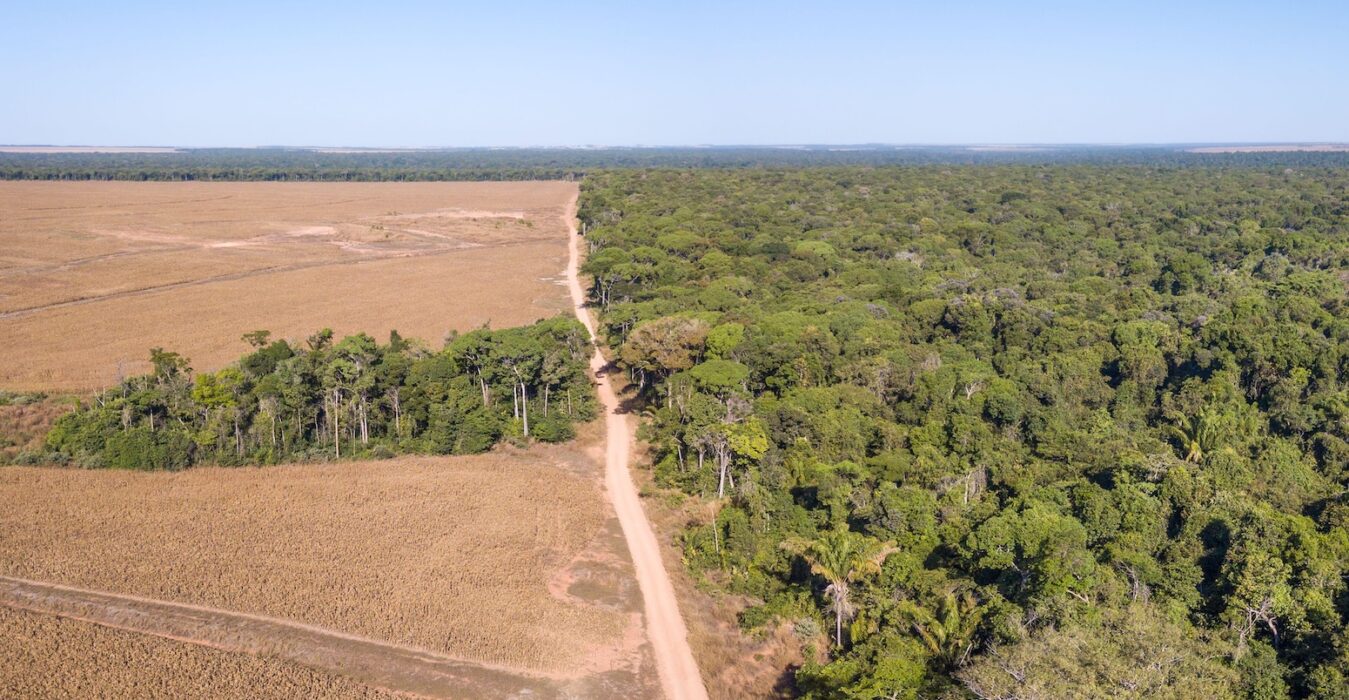
Prof Peter Cox: “The one that I’ve worked on most and worries me most at the moment is Amazon dieback. And that’s because we’ve got two things, two stressors, going on at once that push it in the wrong direction. Climate change is one, deforestation is another.”
Prof Johan Rockström: “The tipping element that worries me most is coral reef systems, for the simple reason that the scientific uncertainty range is very limited.”
Dr Patricia Pinho: “For me, it is the Amazon…I think it’s going to be a really profound, irreversible change that will affect the global population in the most dramatic way.”
Prof Ricarda Winkelmann: “I’m mostly concerned about the Greenland and West Antarctic ice sheets. This is because we know that, even at lower warming levels, they are already at risk of transgressing tipping points in certain regions.”
Dr Nico Wunderling: “The tipping element that worries me most is the Amazon rainforest. This is because the Amazon rainforest is not only threatened by climate change, but also by deforestation at the same time.”
Dr Rebecca Shaw: “The coral reef tipping point…It signals the end of the most colourful and biodiverse ecosystem which supports the nutrition and livelihoods of over one billion people.”
Dr David Obura: “The ice [tipping elements] – because they are the first ones to go that have cascading impacts on other tipping elements.”
Dr David Armstrong McKay: “The Amazon is actually probably closer to a deforestation-induced tipping point than to a climate change-induced tipping point. So, I actually think that could be potentially in the offing sooner than we would like.”
Kate Raworth: “The tipping point that I fear we will fail to cross is [the social tipping point] around transforming our mindsets.”
Prof Gabi Hegerl Chair in climate system science in the school of geosciences at the University of Edinburgh
I am worried about all of them, but for the immediate future, I am particularly worried about tipping points that involve the biosphere and humans due to breaching thresholds for heat or drought that then ripple into food availability, livelihood and ecosystems. The Earth system tipping points will do that too, but maybe a little bit later. Examples [of this] are the coral diebacks triggered by marine heatwaves, forest change and fires, and droughts threatening livelihoods and putting people on the move.
I did a research project on the US Dust Bowl and the trigger [for that event] was drought causing vegetation and crop dieback, [which led to] extreme heat and dust storms in response – and migration, as memorialised in [the 1939 John Steinbeck novel] The Grapes of Wrath. And, now with warming, all droughts get supercharged.
Prof Carlos Nobre Scientist and meteorologist who spearheaded the multi-disciplinary, multinational large-scale biosphere-atmosphere experiment in Amazonia
The Amazon is a very serious tipping point, because [dieback] could release around 250bn tonnes of CO2 by 2100 – which will make it impossible to [limit global warming] at 1.5C. We could also lose the largest [host to] biodiversity on the planet, which would induce a tremendous, large number of epidemics and several pandemics. Also, of course, the Amazon forest controls aspects of the global climate. In South America, the climate is entirely controlled by the Amazon forest.
I’m most worried about Amazon [dieback] because I have worked on it for 40 years. But the other tipping points deeply concern me. The melting of the permafrost will release more than 200bn tonnes [of greenhouse gases], mostly methane. Ice sheet melt in Greenland is a very serious tipping point because it could raise sea level rise by three metres in 200 years. The melting of Greenland has already started. Species extinction is also very serious.
One thing that was not much talked about [at this conference] is that when the ocean heats up, particularly the Arctic Ocean, then a tremendous amount of methane is released. And if that happens – if the Arctic Ocean warms up by 3-4C – the amount of methane that would be released could see [air] temperatures reach 8-10C [above pre-industrial levels]. At 8-10C, the only inhabitable places for us humans will be the top of the Alps, the Andes and the north and south poles. The rest of the planet would be uninhabitable.
I would say that we have already passed the tipping point for coral reef ecosystems, for example. That really is a tragedy. As a scuba diver, I find it a tragedy because I love coral reef ecosystems, but it’s also a tragedy for human systems. They are the nursery for our fisheries. And, of course, they’re not just fisheries – they are a valid ecosystem and a biodiversity hotspot. This will have untold consequences and cascading impacts for other parts of the ecosystem, for example, the cycling of nutrients and coral reefs are really important to stop coastal erosion. And they actually provide sand, the lovely white sand that people go on holiday for.
Dr Andrew Hartley Climate impacts scientist at the Met Office Hadley Centre
The tipping point I’m most concerned about is Amazon forest dieback and reduction in the function of the Amazon forest, because of the significance of the carbon cycle and the feedback to the global climate. Also [due to] the effects that Amazon tipping has on food security, both locally and globally, because of [the Amazon’s] contribution to major commodity markets, such as soybean and maize.
This might interact with climate change in the future to lead to more severe events, particularly in populated areas of Brazil. If an Amazon tipping point were to occur, it might lead to more severe events on the coast of Brazil which would affect a much larger population. There are negative impacts across the forest from the drying of the forest, for example for the Indigenous communities, but also globally.
Prof Tim Lenton Founding director of the Global Systems Institute and chair in climate change and Earth system science at the University of Exeter
The Atlantic Meridional Overtoning Circulation, or AMOC, for sure. The consequences of crashing that would be devastating globally – and also for where I live in the UK. By our own calculation, we could have less than half the viable area for growing a couple of major staple crops, wheat and maize worldwide. We would have a widespread water crisis. We could have collapses of the monsoons in West Africa and India that would displace hundreds of millions of people. It is hard to see that as anything other than a catastrophe.
Prof Peter Cox Professor of climate system dynamics in mathematics and director of the Global Systems Institute at the University of Exeter
The one that I have worked on most and worries me most at the moment is Amazon dieback. And that’s because we’ve got two things, two stressors going on at once that push it in the wrong direction. Climate change is one, deforestation is another. You can imagine crossing the boundary in various ways – but, if you push diagonally, you get there quicker.
If I had spoken to you 25 years ago, I would have said I’m really worried about [Amazon dieback]. Then I went through a phase of thinking that the models have overdone it. And now I’m thinking the models that don’t include land-use change are underdoing it. So, I’m more concerned about that one.
There are others as well, but that is the one that is also quite fast. The other [tipping points] we worry about, we’re worried about a long-term commitment. It takes a while for the AMOC to shut down, it really does. It takes a while for the Greenland ice sheet to melt. We’ve done work that suggests you can overshoot even a little bit for these slow systems. The Amazon forest is a decadal dieback, especially if it is fire driven.
Prof Johan Rockström Director of the Potsdam Institute for Climate Impact Research (PIK) and professor in Earth system science at the University of Potsdam
There is not a simple answer to this – there is a two-part answer.
The tipping element that worries me most is coral reef systems, for the simple reason that the scientific uncertainty range is very limited. We have, unfortunately, ample evidence that at 1.5C we’re very likely to knock over, potentially, the entire tropical coral reef system on Earth. [This threatens] the livelihoods of 400 million people and a fundamental nursing ground for the whole ocean food web. So that is one deep concern. It is the canary in the coal mine – the first kid on the block to fall over. We’re so close.
The second one is AMOC – the whole overturning of heat in the Atlantic, which connects the entire ocean system. Not only is the latest science showing that we are going from low likelihood to uncomfortably high likelihood, but we also know – with very little uncertainty – that this would cause a catastrophic impact across the entire world, and it would go fast. So the AMOC, I would argue, is today the most important scientific message to the world. If you want a really hard-hitting reason to act at a level of planetary emergency, it is the AMOC. That is the second one.
From a planetary boundary perspective, it is important to recognise that – on climate science grounds – the Amazon basin is not at risk of tipping until 3-5C of warming. But as soon as you factor in loss of biodiversity, deforestation and changes in hydrology – then the temperature risk goes down to between 1.5-2C. So suddenly – when taking a more integrated [assessment] approach – the conclusion is that it is also very close to a tipping point.
Dr Patricia Pinho Deputy science director at the Amazon Environmental Research Institute (IPAM)
For me, it is the Amazon. When we think of the planetary crisis, we think about the Amazon and all the regulating climate services it provides. This is not only regionally, but we know it’s a global “climate good”, if you will. But it is highly sensitive to land-use change and increasing temperature. So, if we transition to a point of no return – Amazon dieback – and transforming or transitioning to another ecosystem, the function of the forest will not be doing what it has been doing for the past millennium and so on. And then we cannot revert this loss. I think it is going to be a really profound, irreversible change that will affect the global population in the most dramatic way.
Of course, we have the people on the front line that I’m working with – Indigenous people, traditional population – that are safeguarding this resource, but they are also at the front line of climate risks and the impacts that we already observe. If we miss this opportunity of really reverting from increasing greenhouse emissions and increasing temperature, we’re going to miss the window of opportunity to really protect the region, protect the ecosystem and the forest for the global society.
Prof Ricarda Winkelmann Founding director of the Max Planck Institute of Geoanthropology and professor of climate system analysis at PIK and the University of Potsdam
So I am thinking about this from a risk perspective – so both the likelihood as well as the impacts – and I think the answer depends on that. Because when it comes to the likelihood and the particular threshold – and we know about those – I’m mostly concerned about the Greenland and the West Antarctic ice sheets. This is because we know that, even at lower warming levels, they’re already at risk of transgressing tipping points in certain regions.
But when it comes to the impacts and also the timescales over which those play out, there are other tipping elements that worry me most. In particular, regional tipping elements. So if we think of the mountain glaciers, for instance, these impacts are already experienced right now and several mountain glaciers are undergoing these accelerated changes. And so thinking about the timescales when it comes to the impacts is also incredibly important.
Dr Nico Wunderling Junior professor at the Center for Critical Computational Studies at Goethe University Frankfurt and researcher at the Potsdam Institute for Climate Impact Research.
The tipping element that worries me most is the Amazon rainforest. This is because the Amazon rainforest is not only threatened by climate change, but also by deforestation at the same time. So that means that the critical threshold from climate change alone, at around 3-4C of global warming, can come down to 1.5-2C. Climate change and deforestation basically go hand-in-hand to lower the [Amazon’s tipping] threshold because of this double threat.
Dr Rebecca Shaw Chief scientist and senior vice-president at WWF
The coral reef tipping point – it comes first because of warming surface waters, and then the outcome is sealed by ocean acidification. It signals the end of the most colourful and biodiverse ecosystem which supports the nutrition and livelihoods of over one billion people and has captured the imagination of more people than any other through the characters like Nemo the clownfish, SpongeBob SquarePants, and, of course, Frank the coral [a character from an educational YouTube video].
If humanity is not motivated to act in the face of the loss of coral reefs, is there hope that we will act in time to prevent the Amazon and glacier tipping points?
Dr David Obura Chair of the Intergovernmental Science-Policy Platform on Biodiversity and Ecosystem Services and founding director of CORDIO East Africa
The ice [tipping elements] – because they are the first ones to go that have cascading impacts on other tipping elements. When [ice masses] reduce, we lose their albedo, waters heat up more [and] the AMOC can collapse. That has the biggest impact across the planetary system, including the Amazon.
My own [research], of course, is coral reefs. So, in a way, the coral reef tipping point does concern me the most. [But] it doesn’t have cascading impacts on other tipping elements. It does on people, in socioeconomic terms – but not on other system elements. So, in a sense, it is the least worrying one.
Dr David Armstrong McKay Lecturer in geography, climate change and society in the school of global studies at the University of Sussex and lead author on an influential tipping points assessment, published in Science in 2022
One of the tipping systems that concerns me the most is Amazon rainforest dieback. Because even though we assessed it a few years ago as having a warming threshold that’s a bit higher than what we might be seeing – we’ve thought it is maybe at a best estimate of 3.5C – there’s also deforestation as well. The Amazon is actually probably closer to a deforestation-induced tipping point than to a climate change-induced tipping point. So I actually think that could be potentially in the offing sooner than we would like. That would have huge impacts for biodiversity, for South America as a whole, by shifting rainfall patterns, which would really affect a lot of people for agriculture or ecosystems. Also, the Amazon as an ecosystem is so incredibly biodiverse and amazing in itself, it would be a tragedy to lose it.
Kate Raworth Senior visiting research associate and lecturer at the University of Oxford’s Environmental Change Institute and co-founder and conceptual lead of Doughnut Economics Action Lab
The tipping point that I fear we will fail to cross is [the social tipping point] around transforming our mindsets. We need to move from the extractive, degenerative economy towards a regenerative one. This all starts within our head and it underlies everything.
[A failure to do this] is what is driving us towards all these [Earth system tipping points].
Donald Trump urges you to be a Climate Science denier like him. He says that he makes millions and millions for destroying the planet, Burn, Baby, Burn and Flood, Baby, Flood.Orcas discuss how Trump was re-elected and him being an insane, xenophobic Fascist.Nigel Farage urges you to ignore facts and reality and be a climate science denier like him. He says that Reform UK has received millions and millions from the fossil fuel industry to promote climate denial and destroy the planet.