A demonstrator releases a smoke flare in front of a mural on Cable Street in the East End of London, which commemorates the Battle of Cable Street, October 6, 2016
Anti-fascist, trade unionists and Eastenders to celebrate victory over Oswald Mosley’s Blackshirts at the Battle of Cable Street 90 years ago
ANTI-FASCISTS, trade unionists and Eastenders will come together this weekend to celebrate victory over Oswald Mosley’s Blackshirts at the Battle of Cable Street 90 years ago.
Declaring “they did not pass, they will not pass,” a march and rally this Sunday, October 4, will honour the Jewish and Irish communities of the East End, the communists and socialists who mobilised to stop the fascists marching through Cable Street 90 years ago — and to stand together against “hatred, division and racist scapegoating” on Saturday.
“This Sunday every anti-fascist can celebrate the decisive moment when British fascism was blocked, driven back, and Oswald Mosley’s attempt to build a working-class base for his reactionary and racist political project was sent into reverse,” Communist Party general secretary Alex Gordon said, calling for a huge turnout.
“Mosley’s attempt to build a political movement on antisemitism, was defeated by the class unity of Jewish and Irish workers in Cable Street and the solidarity of working-class anti-fascists from across Britain.
Green-winged teals are seen flying over water at Seedskadee National Wildlife Refuge in Wyoming on April 25, 2019. (Photo by Tom Koerner/US Fish and Wildlife Service/flickr/cc)
“If it comes to pass, this deal would bulldoze America’s most important wildlife law,” said one campaigner.
A bipartisan Senate proposal to overhaul federal permitting rules drew fierce opposition Wednesday from environmental and wildlife advocates, who warn that the legislation could significantly weaken the Endangered Species Act and other key protections in service of boosting President Donald Trump’s pro-fossil fuel and artificial intelligence agenda.
Senate negotiators—chiefly Democrats Martin Heinrich (NM) and Sheldon Whitehouse (RI) and Republicans Shelley Moore Capito (W.Va.) and Mike Lee (Utah)—reportedly reached an agreement Monday on the text of a sweeping permitting package intended to speed construction of energy and infrastructure projects.
While the full legislative text of the “Bipartisan American Affordability and Jobs Act of 2026” had not been publicly released as of Wednesday, reported provisions have prompted alarm among conservation groups, who warn that the proposal would weaken endangered species protections, shift federal authority and responsibility to states, limit scientific review and judicial oversight, and exempt some projects from key environmental consultations.
“If it comes to pass, this deal would bulldoze America’s most important wildlife law,” Defenders of Wildlife president and CEO Andrew Bowman said Wednesday. “We can build the infrastructure America needs without sacrificing the wildlife we have a responsibility to protect and that Americans cherish. Development should not come at the expense of science, accountability, or the ability of America’s most imperiled wildlife to survive.”
“This ‘dirty deal’ threatens to raise electricity prices for working families by accelerating the buildout of energy-guzzling AI data centers and liquefied natural gas export projects,” said Oil Change International US campaigns manager Collin Rees. “Our recent research shows that the Trump administration’s support for reckless AI development and greater gas exports drives up energy costs for households.”
Brett Hartl, government affairs director at the Center for Biological Diversity (CBD), said that “this is a climate kill shot that condemns our most vulnerable communities to suffer decades more fossil fuel pollution.”
“It’s absurd to ensure our planet chokes with greenhouse gases, gut endangered species protections, and eviscerate the Clean Water Act for what seems to be a nearly meaningless victory against Trump’s war on offshore wind,” Hartl continued. “The minor benefits for renewable energy corporations are massively dwarfed by the gifts to the fossil fuel industry.”
“If this grotesque legislation becomes law, the paltry increases in renewable energy will be instantly devoured by AI data centers,” he added. “The only winners here are Elon Musk, Mark Zuckerberg, tech oligarchs, and the shareholders of fossil fuel companies.”
According to CBD:
Today’s package contains numerous provisions that lock in thousands of fossil fuel projects, including oil and gas pipelines, [liquefied natural gas] export terminals, and expanded fossil fuel drilling onshore and offshore approved by President Trump over the past two years. It also ensures that future fossil fuel pipelines and methane gas-generated electricity can never be challenged in court.
Additional provisions gut parts of the Clean Water Act, including the Section 401 authority of states to protect their rivers and streams from the impacts of building pipelines and the [Environmental Protection Agency’s] Section 404(c) permit veto authority, which has been used to stop projects like the Pebble Mine in Alaska.
The legislation weakens the National Historic Preservation Act and Tribal consultations, leaving most Tribal nations with no meaningful way to protect their sovereignty when faced with potential fossil fuel projects on their lands.
Furthermore, CBD noted, “the legislation guts the Endangered Species Act by allowing states to take over the Section 7 consultation process with minimal safeguards, turning one of the law’s strongest provisions into a state-run rubber stamp of dangerous projects.”
The Western Environmental Law Center described the proposal as a “five-alarm fire,” warning that it could weaken the Clean Water Act, Endangered Species Act, [National Environmental Policy Act], and other safeguards.
“The permitting deal is a betrayal of public lands, water, and wildlife, and environmental justice values that Westerners depend on,” said Erik Schlenker-Goodrich, the group’s executive director, who warned that the measure could ultimately “hobble the ability of future administrations to enact an ambitious climate and conservation agenda.”
Hartl called out Democrats Heinrich and Whitehouse for “giving away our most cherished environmental laws based on fantastical models that project a renewable energy utopia.”
“They’re rewarding a ruthless fossil fuel industry that will always put its quarterly profits ahead of a livable planet and future generations,” he said. “Trump promised fossil fuel companies that he’d do everything in his power to assist them in his second term, and Sen. Heinrich and Sen. Whitehouse seem hell-bent on helping Trump fulfill that promise.”
Bowman contended that “Congress should be looking for ways to make permitting more efficient rather than a Trojan horse to weaken the Endangered Species Act.”
“Efficiency and conservation are not opposing goals,” he added. “A durable permitting bill should deliver both. Congress should not lock in permanent damage to the Endangered Species Act simply to get a deal today.”
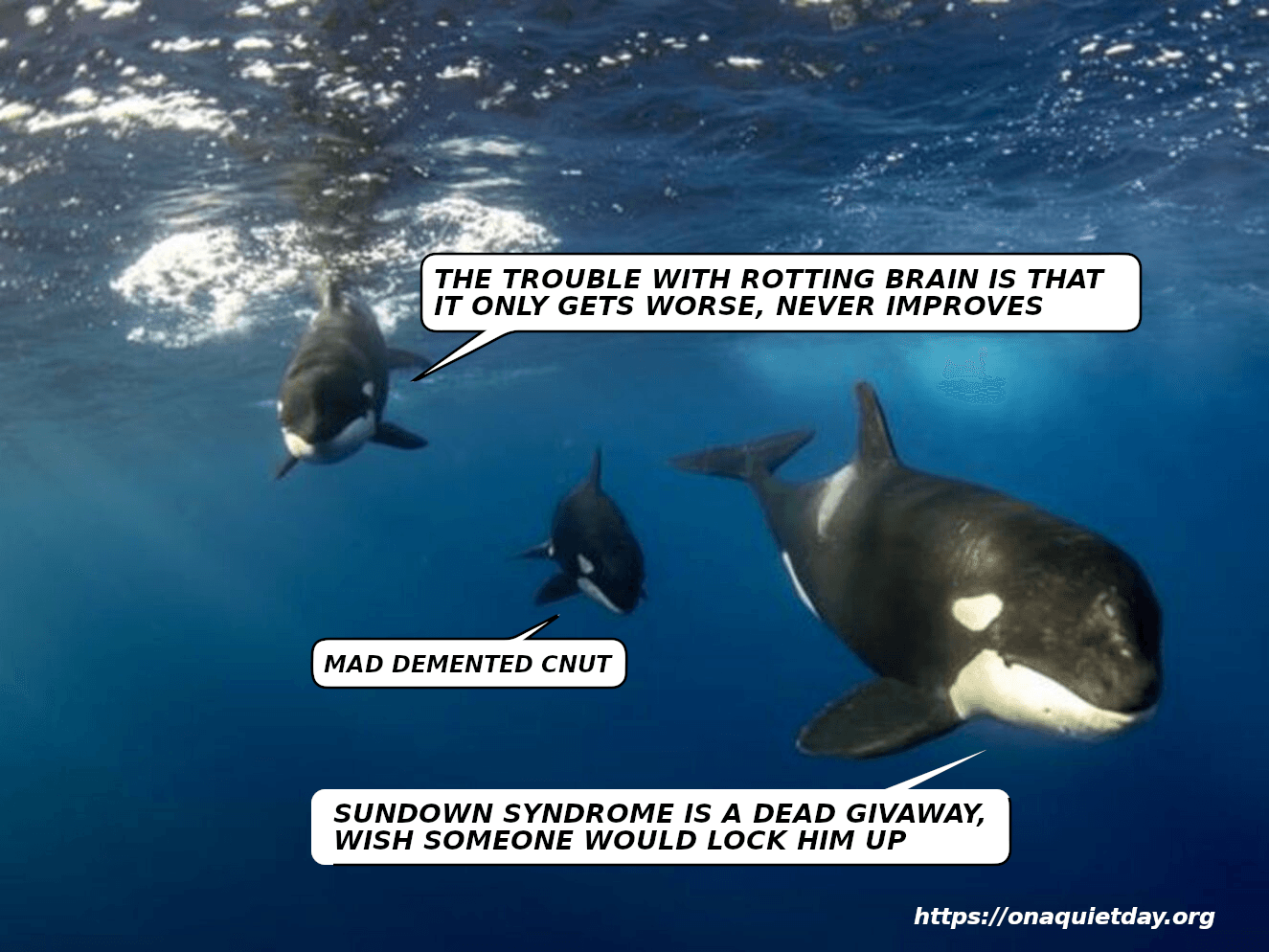
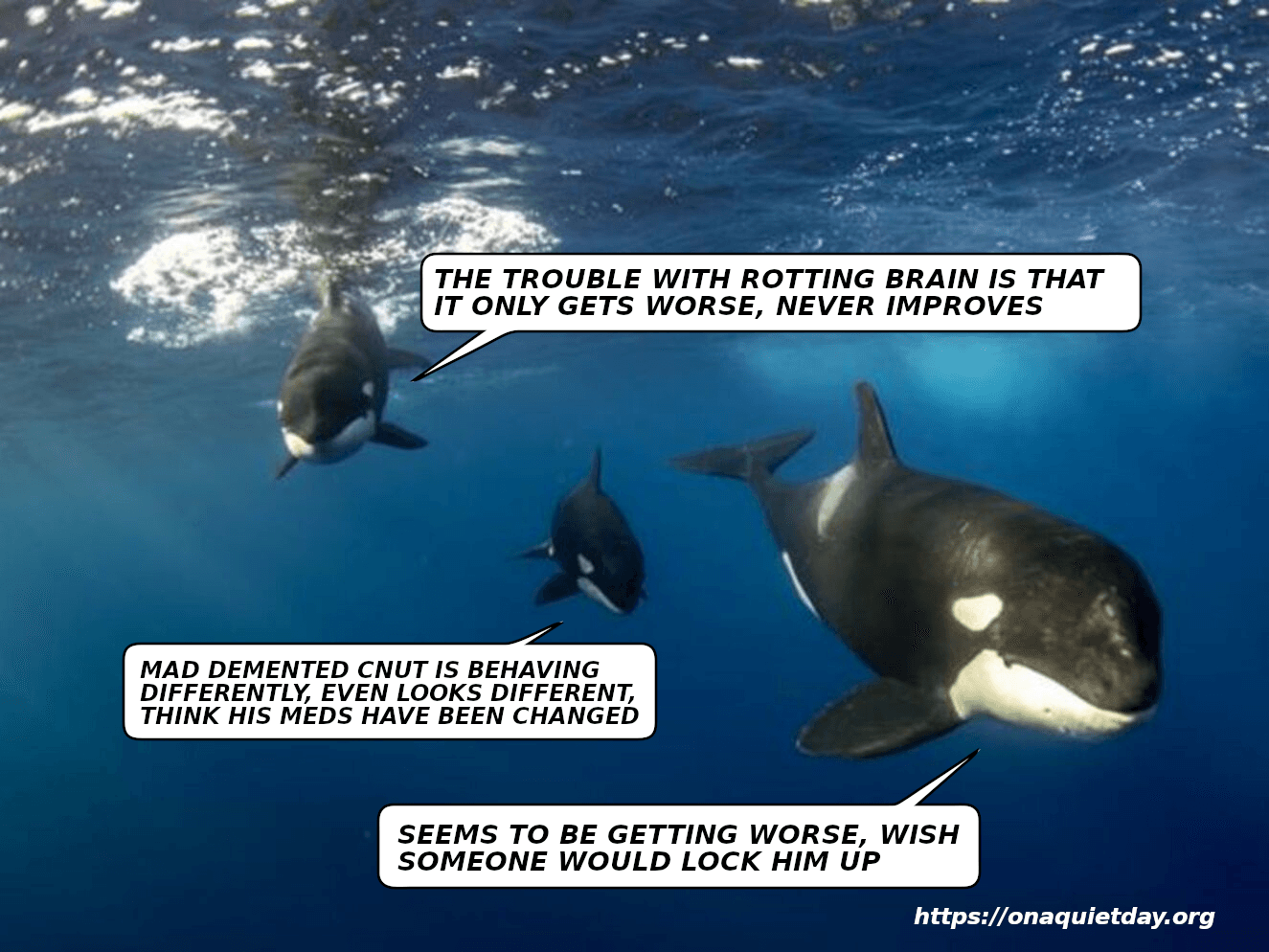
Orcas discuss Donald Trump and the killer apes’ concept of democracy. Front Orca warns that Trump is crashing his country’s economy and that everything he does he does for the fantastically wealthy.Climate science denier Donald Trump confirms that he knows nothing about democracy and that more liquid gold is being secured according to his policy of global privateering.Orcas discuss rotting brain, front Orca says Sundown Syndrome is a dead givaway and he wishes someone would Lock Him Up
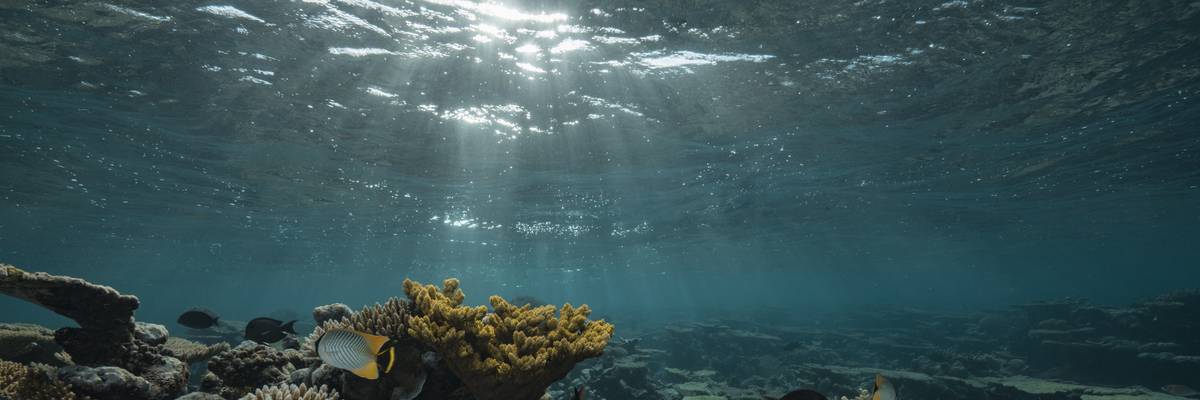
A coral reef around Taravai Island with many acropora corals is seen on February 16, 2018 in the Gambier Islands, French Polynesia. (Photo by Alexis Rosenfeld/Getty Images)
“The ocean is transforming before our eyes: Warming, rising seas, and ecosystem degradation are interconnected signs of significant and long-term change.”
The 10th annual Copernicus Ocean State Report, released Wednesday by a team of more than 100 international scientists, provided the latest reminder that, as one United Nations official said, “the ocean is one of the clearest indicators of the profound shifts” that the climate crisis is causing.
Data gathered by Mercator Ocean International, the nonprofit that produced the report, revealed “an ocean warming at an alarming pace, with far-reaching consequences for marine life, coastlines, and communities worldwide,” said the group.
The study delivers ocean scientists’ “starkest warning yet of the profound changes sweeping across the ocean, as a likely unprecedented El Niño takes shape in the Pacific,” said Mercator, referring to the natural warming trend that is expected to be made more intense this year by planetary heating.
Drawing on four decades of data from satellites, buoys, sensors, and modeling, the scientists found that 2024 was marked by record-breaking marine heatwaves as well as an unprecedented extreme low sea level event, causing levels in the Bothnian Bay between Sweden and Finland to plunge 60 inches, bringing ferries to a halt for 18 hours.
Heatwaves in the Mediterranean and Black seas lasted more than 30 days and raised water temperatures by more than 8.3°F (4.6°C) above average.
“These are not isolated hot spells; they are occurring against a backdrop of sustained ocean warming that is changing the conditions marine ecosystems experience,” Blanca Fernández-Álvarez, a report author and a conresearcher at the Mediterranean Institute for Advanced Studies, told CNN.
Ten editions. One increasingly urgent picture. Explore the 10th Copernicus Ocean State Report and the evidence shaping our understanding of the ocean.
But along with extreme events documented in the report, the scientists found unmistakable trends showing no sign of letting up, including persistent damage to marine life due to ocean heating fueled by continued oil and gas extraction.
Small island states—some of the countries least responsible for carbon emissions that are leading to record heat absorption by the oceans—face worsening, “overlapping pressures” including sea-level rise that could wipe out coastal and island communities and the growing threat of more intense tropical cyclones.
Over the last three decades, reads the report, “ongoing reorganization of marine ecosystems around the world” hasr been made clear by persistent changes in growth patterns of phytoplankton, which support food webs and carbon flows, in nearly 5% of the ocean.
Heat stress also contributed to coral bleaching in 84% of the world’s reefs, threatening marine ecosystems as well as coastal communities that rely on reefs for protection and tourism.
“The ocean is transforming before our eyes: Warming, rising seas, and ecosystem degradation are interconnected signs of significant and long-term change,” said Pierre Bahurel, director general of Mercator Ocean International.
As humans have continued to emit carbon and other greenhouse gases despite warnings from energy experts and scientists, the rate of ocean heating has doubled over the past two decades, causing sea surface temperatures to skyrocket to record highs in 2023, 2024, and this year.
In 2025, the report says, the ocean absorbed an additional 23 zettajoules—about 40 times the energy consumed by the entire world last year. The energy absorption is equivalent to 12 atomic bombs going off every second for one year.
The global mean sea level rose by 3.8 ± 0.3 millimeters each year between 1999-2025, and the ocean has become about 17% more acidic over the last four decades, wreaking havoc on crucial underwater ecosystems.
Peter Thomson, the UN secretary-general’s special envoy for the ocean, emphasized that the dangers posed to the world’s oceans by continued fossil fuel extraction have been made clear over 10 years of reports by Mercator, as well as other warnings from scientists.
“What it tells us is unmistakable: The ocean is changing, and those changes are reaching into the lives, livelihoods, and security of people everywhere,” said Thomson. “We have the knowledge. We have the evidence. Now we need the political will to act.”
Orcas discuss Donald Trump and the killer apes’ concept of democracy. Front Orca warns that Trump is crashing his country’s economy and that everything he does he does for the fantastically wealthy.Climate science denier Donald Trump confirms that he knows nothing about democracy and that more liquid gold is being secured according to his policy of global privateering.Orcas discuss rotting brain, front Orca says Sundown Syndrome is a dead givaway and he wishes someone would Lock Him Up
This work by Middle East Monitor is licensed under a Creative Commons Attribution-NonCommercial-ShareAlike 4.0 International License.
Metropolitan Police officers detain a pro-Palestine demonstrator outside the Royal Courts of Justice in London, United Kingdom on June 15, 2026. [Raşid Necati Aslım – Anadolu Agency]
Scottish Greens on Thursday urged the British government to reverse the ban on the Palestine Action group after Foreign Secretary Ed Miliband said “we hear” the millions of people who have been moved and outraged by the plight of the Palestinian people, Anadolu reports.
“The people who have marched, organised and spoken out against Israel’s genocide have helped force Palestine onto the political agenda. They deserve to be heard and their rights respected,” Maggie Chapman, Scottish Greens spokesperson, was quoted by Scottish daily The National as saying.
Her comment came after Miliband said earlier this week that they hear the millions of people in this country and indeed elsewhere who have been moved and outraged by the plight of the Palestinian people.
“You were right. And under (Prime Minister) Andy’s (Burnham) leadership, we have reset our approach.”
Chapman said Miliband is right to acknowledge the outrage felt by millions of people who have watched the devastation of Gaza and demanded that their government act.
However, she underlined that the UK government needs to reverse the ban on the Palestine Action group if it is “serious” about the change in its political stance on Palestine.
“That acknowledgement will ring hollow as long as Labour maintains a ban that has criminalised hundreds of people for calling out genocide and other war crimes, waving banners and wearing t-shirts.”
She added: “If the Labour Government is remotely serious about changing course, it must end the proscription of Palestine Action and defend our fundamental rights to freedom of expression and peaceful protest.”
Chapman called on the UK government to ban all arms sales to Israel and ensure that the UK is “no longer complicit in the oppression of the Palestinian people.”
The decision to ban Palestine Action has led to thousands of arrests of people accused of supporting the direct-action protest group.
Palestine Action was banned on July 5, 2025 under the Terrorism Act after members of the group entered a Royal Air Force base and spray-painted two aircraft, causing £7 million ($9.4 million) in damage, according to police.
The High Court ruled in February that the ban was disproportionate and unlawful, but its decision was overturned last month by the Court of Appeal.
In July, however, the UK’s highest court granted permission for Palestine Action co-founder Huda Ammori to challenge a Court of Appeal ruling upholding the ban on the group.
Human rights groups, along with UN experts, have criticized the escalating crackdown on peaceful protests in the UK, urging the government to lift its designation of Palestine Action as a terrorist group.
This work by Middle East Monitor is licensed under a Creative Commons Attribution-NonCommercial-ShareAlike 4.0 International License.
Orcas discuss Donald Trump and the killer apes’ concept of democracy. Front Orca warns that Trump is crashing his country’s economy and that everything he does he does for the fantastically wealthy.
Ed Miliband says that he and the Labour Party are full of shit criminalising people holding signs as terrorists despite anything he says.UK Prime Minister Andy Burnham admits to blatently lying and engaging in deception to become leader of the UK Labour Party and Prime Minister.
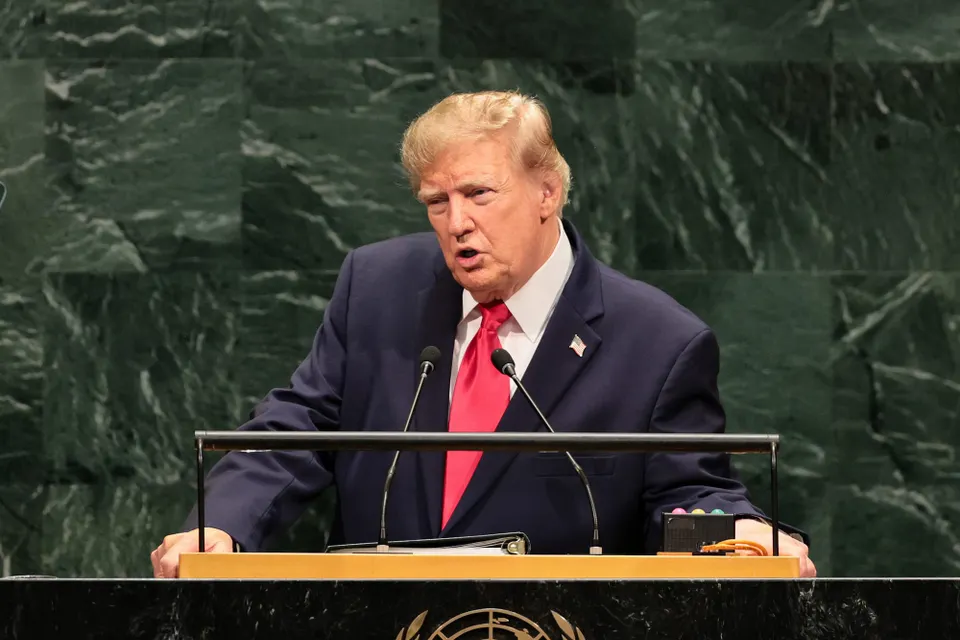
Donald Trump speaks at U.N. General Assembly | Michael M. Santiago/Getty Images)
Depleted missiles abroad and armed fortresses at home reveal a president running out of options as midterms loom
While Donald Trump has long dismissed any bad news about his war on Iran as lies dreamed up by a woke media, this faces a persistent problem: the checks and balances built into the US system cannot be so easily dismissed.
The Congressional Budget Office (CBO), for example, reports not to the White House but directly to Congress. To make matters even less palatable, when it comes to military issues, media outlets are apt to report major CBO reports at length.
A recent example was the Military Times’ detailed coverageof the CBO’s report on the cost of US combat operations in Iran up to mid-September – $38bn – and the vexed issue of the US’s huge usage of specialist munitions, especially ballistic missile interceptors, which can be far more expensive than the missiles they are designed to destroy. Helpfully – unless you’re in the White House – the publication also directly linked readers to the CBO report itself.
As the Military Times summarised: “CBO estimates the conflict has consumed between one-half and two-thirds of the US inventory of certain missile-defence interceptors since June 2025, leaving the military with fewer weapons available for a future conflict. Rebuilding those stocks could take at least five years, even if production rates increase, the agency found.”
One implication is thatany talk by Trump or his secretary of war, Pete Hegseth, of a potential further bombing assault on Iran is hardly plausible, as Iran would simply expand its targeting of US military and communications facilities across the region. This would further deplete the Pentagon’s limited stocks of defensive missiles, leaving US and allied states across the Middle East at risk.
There, he said the choice for Iran was to make a deal right after the midterm elections or for him to “annihilate the Islamic Republic and do it quickly, never giving them a chance to kill and destroy people and countries again”.
Even for Trump, it was a remarkable threat – accept my deal or I will destroy you – but it is easy to put it down as typical of the rhetoric he espouses. Yet there is much more to it than that. For a start, choosing the General Assembly’s autumn meeting, which has a high attendance of heads of state, as the audience for this statement suggests Trump sees the UN as part of the problem, a hindrance that limits global recognition of his own greatness.
Recognition of such greatness is also an important factor in his determination to build a massive triumphal arch in Washington. That proposal, which was supposedly to celebrate 250 years of US independence, is now undergoing a subtle change of design and purpose.
Until this week, the plan came under the aegis of the US National Park Service, and was comparable to existing arches around the world, such as the Arc de Triomphe in Paris. Grandiose, certainly, and no doubt intended to be seen as one of the great achievements of the greatest president ever, but intended only for show. Now, though the plans are currently being redrawn to serve a military purpose, as reported once again by the Military Times.
Writing on social media, Trump said he has “agreed to turn the arch into a top-grade Military Complex/Triumphal Arch, to house, store, and have the rapid ability to use large numbers of drones, plus Snipers, on both the roof and plaza areas, and additionally have and hold large quantities of sniper ammunition in storage”.
Unless Trump believes the United States is at risk of a sudden mass invasion from Iran, North Korea or even Cuba (or perhaps all three together), the only way his plan makes a weird kind of sense is if he thinks Washington faces a severe internal security challenge amounting to a civil war, given the arch will cover one of the main routes into the city.
At first sight, that seems over the top, but ‘the threat from within’ has been a persistent feature of the Trump worldview. It explains the emphasis on closing the border with Mexico, the extensive use of armed ICE agents and the frequent deployment of National Guard troops in large cities, including Washington, often in opposition to the state governors.
Where this is all relevant is that Trump is in trouble in the polls and may lose Congress in the forthcoming midterms, and possibly even the Senate. If that is worrying Trump, it is also a huge concern for his many seriously wealthy and powerful supporters – after all, 2028 is already looming uncomfortably large in their political calendar.
In this context, it is fair to say there are two possibilities for what comes next. One is that the US and the wider worldsurvive the next two years without catastrophe, a tolerably fair presidential election takes place in 2028, Trump leaves office, and a more moderate president is elected. The process of creating a post-Trump polity then proceeds at pace as the US recovers something of its good sense and international standing. Within a couple of years, the world sees Trump as being by far the worst and most dangerous occupant of the White House in history.
This may be the hope of many millions of people in the US and beyond, but don’t count on it. For all his unpredictability, Trump is very good news for an entrenched and monied core of supporters who are determined to thrive in the years ahead. By normalising many extreme positions, Trump is playing a very useful preparatory role, just as Hegseth is engaged in the key task of ridding the Pentagon’s senior military of the merest hint of wokery.
Far from the end of the game, if the midterm elections go badly for the Republicans, efforts will simply be redoubled to ensure that the rich and powerful prevail once more in 2028.
Orcas discuss Donald Trump and the killer apes’ concept of democracy. Front Orca warns that Trump is crashing his country’s economy and that everything he does he does for the fantastically wealthy.Climate science denier Donald Trump confirms that he knows nothing about democracy and that more liquid gold is being secured according to his policy of global privateering.Orcas discuss rotting brain, front Orca says he wishes someone would Lock Him Up, small Orca says he thinks that his meds have been changed.

 A demonstrator releases a smoke flare in front of a mural on Cable Street in the East End of London, which commemorates the Battle of Cable Street, October 6, 2016