



The head of one of Scotland’s foremost disability rights charities says she turned down an MBE in the recent new year honours because the UK government was “fuelling hatred, blame and scapegoating of people with disabilities”.
Tressa Burke, chief executive officer of the Glasgow Disability Alliance, had been recommended by the prime minister for the honour for her services to people with disabilities. Over two decades, Burke has grown the organisation from seed into a nationally recognised voice for disabled people in Scotland’s largest city, and supported more than 5,000 members through the pandemic.
But in her letter declining the proposed award, seen by the Guardian, Burke told the Cabinet Office: “I feel that I cannot accept a personal honour because disabled people are being so dishonoured at this time.
“In fact we are being demonised, dehumanised and scapegoated for political choices and policy failures by consecutive governments.”
…
Burke, who emphasises she means no disrespect to colleagues in the voluntary sector who have accepted similar honours, explains that she received the letter of recommendation on the day of the UK budget, which introduced stricter assessments for personal independent payments, frozen or reduced universal credit health top-ups and cuts to the Motability scheme.
“The budget was an opportunity to send out a signal not about how much disabled people cost but about how much disabled people are worth and are valued by society.”
Instead, she says, it has “supercharged the inequalities and unfairness disabled people face”.
…

Original article by Brett Wilkins republished from Common Dreams under Creative Commons (CC BY-NC-ND 3.0).
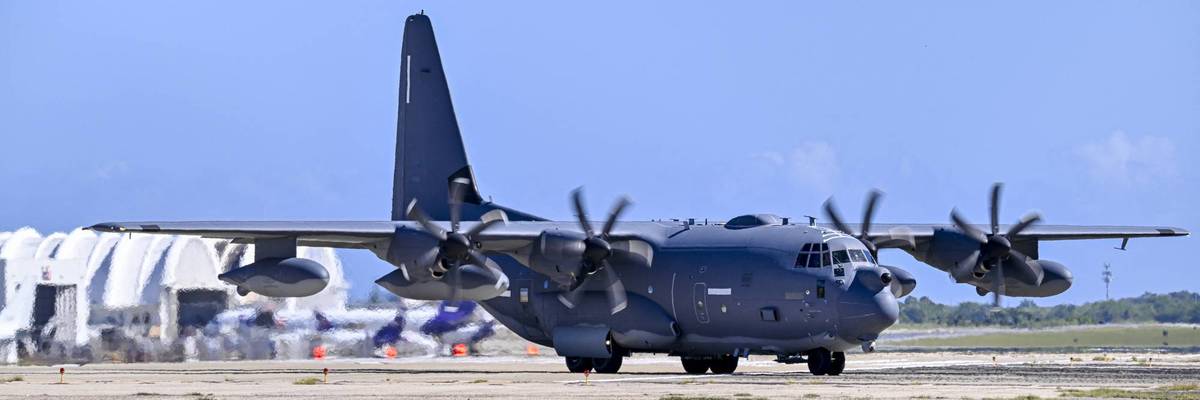
President Donald Trump claimed during a recent discussion about his high-seas boat bombing blitz that US forces took out “a big facility” as part of the Venezuela-centered campaign—but no one seems to know what he’s talking about.
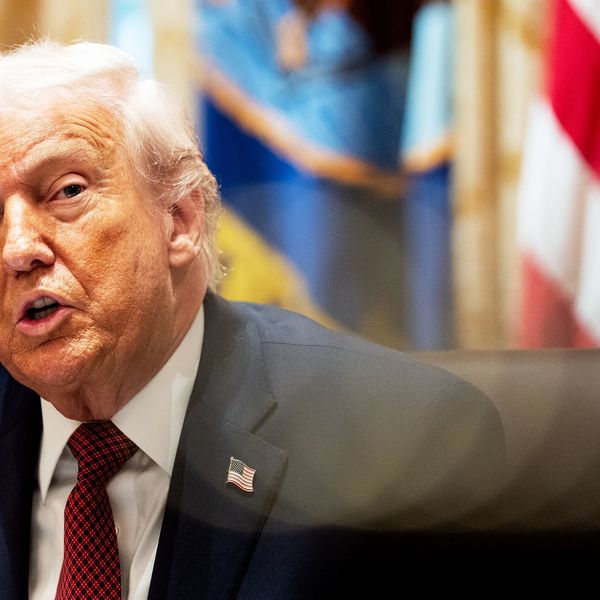
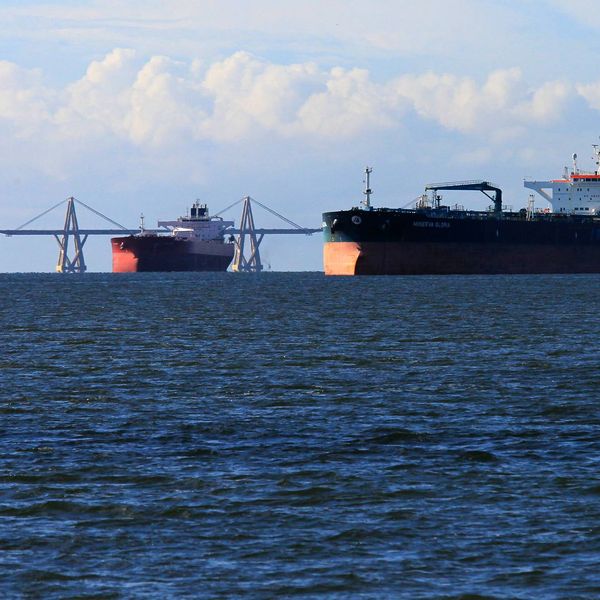
Trump said Friday during an apparently impromptu phone call to billionaire supporter John Catsimatidis—who owns and hosts programming on WABC radio in New York—that South American narcotraffickers “have a big plant or a big facility where the ships come from,” and that “two nights ago, we knocked that out.”
RECOMMENDED…
“We hit them very hard,” the president added.
On Monday, Trump was asked during a meeting with fugitive Israeli Prime Minister Benjamin Netanyahu to clarify Friday’s claim.
“There was a major explosion in the dock area where they load the boats up with drugs,” the president said, “so we hit all the boats and now we hit the area. It’s the implementation area. That’s where they implement, and that is no longer around.”
Neither Trump nor anyone in his administration offered any evidence to support the claim. There have also been no public statements from any Venezuelan government official regarding any US attack.
Trump did say during a Christmas Eve call to troops taking part in escalating hostilities against Venezuela—whose socialist leader, President Nicolás Maduro, has long been in Trump’s regime-change crosshairs—that, after more than two dozen boat strikes, “now we’re going after the land.”
Threats by Trump to bomb targets inside Venezuela—or even invade the oil-rich South American nation in order to oust Maduro—are nothing new. The president has deployed an armada of warships and thousands of US troops to the region and has also authorized covert Central Intelligence Agency action against Maduro. Earlier this month, Trump vowed that the US would attack Venezuela “on land,” and “very soon, too.”
However, Trump’s remarks on Friday left observers scratching their heads and scouring news reports in a fruitless effort to make sense of the president’s claim.
One US official interviewed by the Intercept on condition of anonymity said the US targeted a “facility”—but declined to disclose its location, or whether it was attacked by US forces.
“That announcement was misleading,” the official said of Trump’s claim last week.
There is some speculation that a Christmas Eve explosion and fire at a warehouse on the grounds of a Primazol chemical plant in Zulia state may have been caused by a US strike. However, the site—which reportedly makes products including chicken feed—is not located directly on any coast, and Primazol issued a statement “categorically” rejecting claims that the facility was bombed.
If Trump did order any bombing of targets in Venezuela, it would be a major escalation and clear act of war by a man who, while billing himself as “the most anti-war president in history,” has now, with last week’s attack on Nigeria, bombed more countries than any president in history.
Original article by Brett Wilkins republished from Common Dreams under Creative Commons (CC BY-NC-ND 3.0).

Original article by Brett Wilkins republished from Common Dreams under Creative Commons (CC BY-NC-ND 3.0).
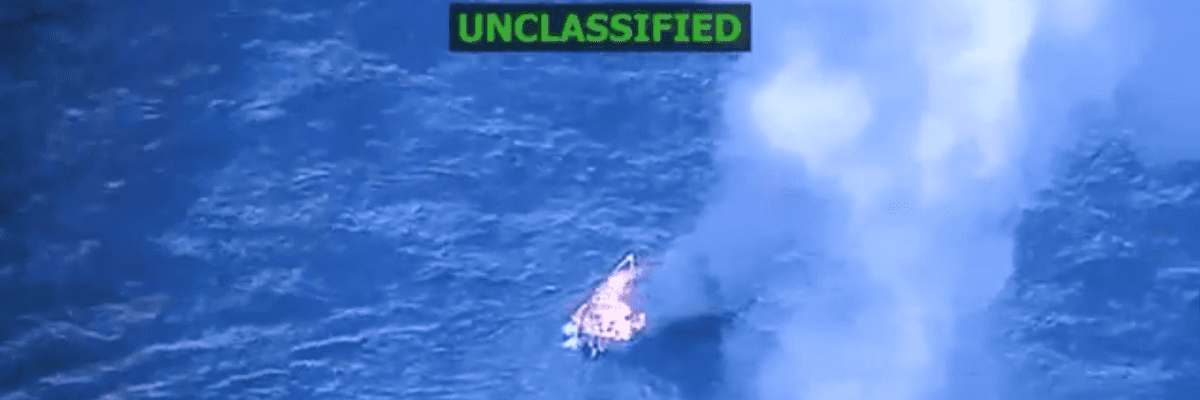
The US military said Monday that two alleged drug smugglers were killed in the bombing of another boat in the eastern Pacific Ocean, but—as has been the case throughout 30 such strikes—offered no verifiable evidence to support its claim.
US Southern Command (SOUTHCOM) said on X that, on orders from Defense Secretary Pete Hegseth, “Joint Task Force Southern Spear conducted a lethal kinetic strike on a vessel operated by Designated Terrorist Organizations in international waters.”
RECOMMENDED…
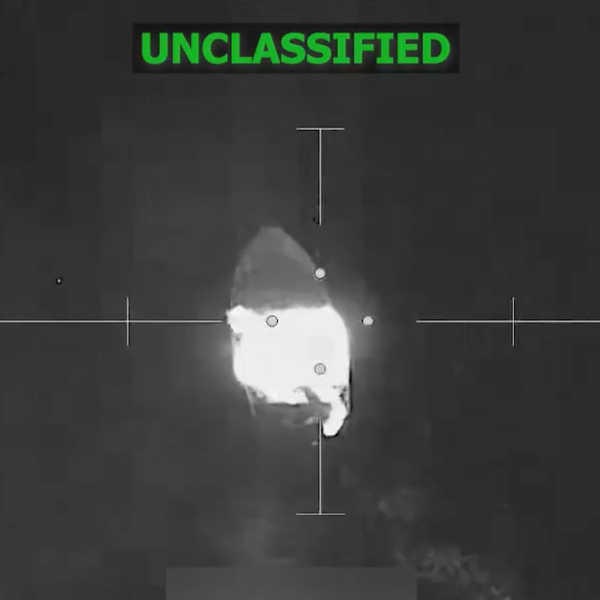
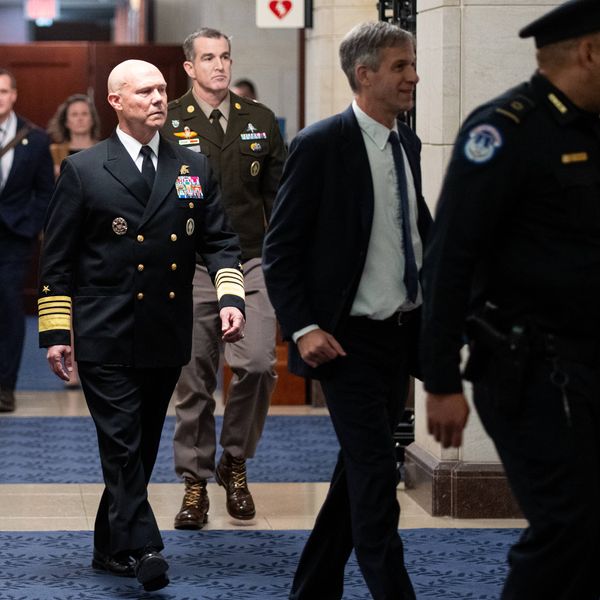
“Intelligence confirmed the vessel was transiting along known narco-trafficking routes in the eastern Pacific and was engaged in narco-trafficking operations,” SOUTHCOM added. “Two male narco-terrorists were killed. No US military forces were harmed.”
According to the Trump administration’s figures, at least 107 people have been killed in 30 boat strikes since early September. The administration has tried to justify the strikes to Congress by claiming that the US is in an “armed conflict” with drug cartels, while legal scholars and Democratic US lawmakers counter that the bombings are likely war crimes.
War powers resolutions aimed at reining in President Donald Trump’s ability to extrajudicially execute alleged drug traffickers in or near Venezuela failed to pass the Senate in October and the House earlier this month.
Monday’s strike came amid Trump’s escalating aggression against Venezuela, including the deployment of warships and thousands of US troops to the region, authorization of covert CIA operations targeting the country’s socialist government, and threats to launch ground attacks.
Trump claimed Monday without providing evidence that US forces destroyed a “big facility” in an unspecified country where narco-traffickers’ “ships come from.”
Original article by Brett Wilkins republished from Common Dreams under Creative Commons (CC BY-NC-ND 3.0).
Original article by Jake Johnson republished from Common Dreams under Creative Commons (CC BY-NC-ND 3.0).
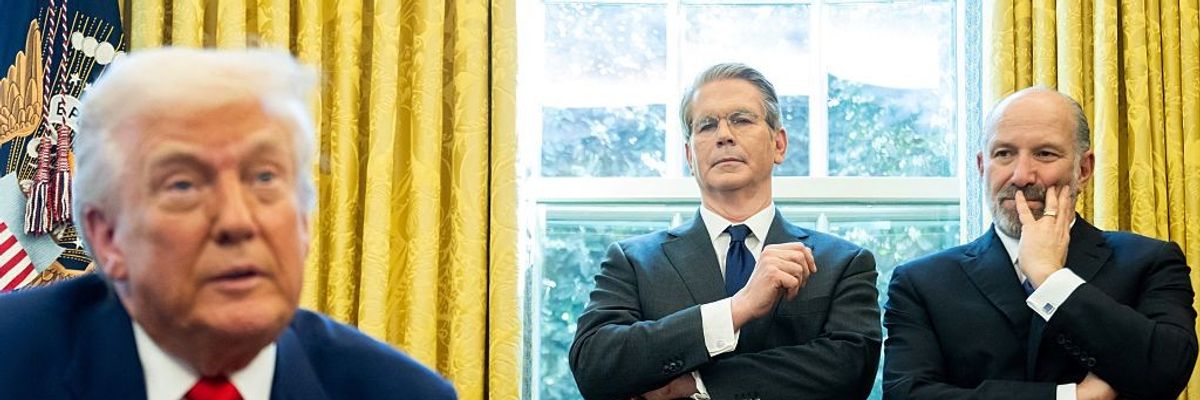
Businesses in the United States have filed for bankruptcy this year at a level not seen since 2010 as President Donald Trump’s tariff regime has jacked up costs for companies in manufacturing and other major sectors.
Citing data from S&P Global Market Intelligence, the Washington Post reported over the weekend that at least 717 US companies filed for bankruptcy through November 2025, the highest figure recorded since the aftermath of the Great Recession and a 14% increase compared to the same period last year.
RECOMMENDED…


“Companies cited inflation and interest rates among the factors contributing to their financial challenges, as well as Trump administration trade policies that have disrupted supply chains and pushed up costs,” the Post noted. “But in a shift from previous years, the rise in filings is most apparent among industrials—companies tied to manufacturing, construction, and transportation. The sector has been hit hard by President Donald Trump’s ever-fluid tariff policies—which he’s long insisted would revive American manufacturing.”
Recent data shows that the US has lost 49,000 manufacturing jobs since Trump’s return to office.
The bankruptcy figures add to the growing pile of evidence showing that Trump’s tariffs and broader policy agenda have harmed the US economy—weakening job growth, driving the unemployment rate up to the highest level since the Covid-19 pandemic, and worsening the nation’s cost-of-living crisis.
Democrats immediately seized on the new reporting as evidence of Trump’s failed stewardship of the US economy, messaging that’s likely to be central as the 2026 midterms approach.
Ken Martin, chair of the Democratic National Committee, said Monday that “when Donald Trump signed his Big Ugly Bill into law, he cemented the Republican Party as the party of billionaires and special interests—not working families, farmers, or small business owners.”
“While millions of working families are already being squeezed to afford groceries, utilities, and rent, Trump chose to strip them of their healthcare and food assistance just so he could give his ultrawealthy friends and donors an extra buck,” said Martin. “Make no mistake: Trump’s ‘signature achievement’ will be the nail in the coffin for the Republican majority when voters head to the polls next November.”
Original article by Jake Johnson republished from Common Dreams under Creative Commons (CC BY-NC-ND 3.0).