Category: Uncategorized

  • Israel Killed 28 Lebanese Medical Workers in 24 Hours, 73 Since War’s Start: WHO

    Spread the love

    Original article by Brett Wilkins republished from Common Dreams under Creative Commons (CC BY-NC-ND 3.0). 

    A broken stethoscope and surgical glove are seen after Israeli warplanes bombed a building in the Bachoura area of Beirut, Lebanon on October 3, 2024. (Photo: Murat Sengul/Anadolu via Getty Images)

    “I’m afraid first about my safety and about my family’s safety because there’s no safe place in Lebanon now,” said one physician.

    The head of the United Nations World Health Organization said Thursday that Israeli forces killed 28 healthcare workers in Lebanon over the previous 24 hours, and that 73 medical personnel are among the nearly 2,000 Lebanese killed during Israel’s bombing and invasion of its northern neighbor.

    “In southern Lebanon, 37 health facilities have been closed, while in Beirut, three hospitals have been forced to fully evacuate staff and patients, and another two were partially evacuated,” WHO Director-General Tedros Adhanom Ghebreyesus said during a press conference in Geneva. “And yet healthcare continues to come under attack. In Lebanon alone, 28 health workers have been killed in the last 24 hours.”

    Tedros said the WHO “calls on urgent facilitation of flights to deliver health supplies to Lebanon,” adding, “Lives depend on it!”

    Lebanese Health Minister Firas Al-Abiad said separately Thursday that more than 40 paramedics and firefighters have been killed by Israeli forces over the previous three days.

    Dr. Abdinasir Abubakar, the acting WHO representative in Lebanon, said that “most of those healthcare workers killed in the last 24 hours, most of them—actually, all of them—were on duty.”

    “Some of them were in the ambulances, some of them were in the health facilities,” Abubakar added. “They were on duty trying to help civilians who have been wounded in the conflict.”

    Dr. Fathalla Fattouh, the head cardiovascular and thoracic surgeon at Rafik Hariri University Hospital (RHUH) in Jnah, just outside Beirut, described the chaos he witnessed firsthand, including “a surge of nearly identical injuries—amputations, eye trauma, and shattered hip and femur bones—straining the hospital’s capacity to a near-breaking point.”

    “We were forced to make difficult decisions,” he added. “I believe that we did our best relying on available capacities, but with the escalation of events we need to plan for the worst.”

    Sara, a surgeon at the hospital, said that “there are only two hospitals in Lebanon prepared to treat burn patients, and once they were at capacity, we were left with nowhere to send the patients we received.”

    “It was a feeling of helplessness that we had never experienced before,” she added.

    Some doctors admitted fearing for their lives.

    “It’s hard to work in fear,” Dr. Mohammad Taoube, who heads the emergency room at an undisclosed hospital in southern Lebanon, told Sky News on Wednesday. “I’m afraid first about my safety and about my family’s safety because there’s no safe place in Lebanon now.”

    According to figures provided by the WHO Regional Office for the Eastern Mediterranean, Israeli forces have killed 1,974 people in Lebanon—including at least 127 children—while wounding 9,384 others in recent weeks.

    At least one American has been killed by Israeli bombing of Lebanon this week. Hajj Kamel Ahmad Jawad, 56, of Dearborn, Michigan was killed Tuesday while in Nabatieth in southern Lebanon caring for his sick mother and volunteering to help elderly, disabled, and injured patients at a local hospital.

    The Nabatieth area has come under heavy Israeli bombardment. Local journalists said the city’s main hospital “came under direct Israeli fire” on Friday and that two nurses were killed.

    Lebanese officials said Friday that more than 1.2 million people have been forcibly displaced amid Israel’s recent bombing and invasion of their country. The Israeli campaign comes amid attacks by the political and paramilitary group Hezbollah, whose rockets and other projectiles have killed or wounded scores of Israelis and forced tens of thousands from their homes.

    Residents of southern Lebanon described the terror of coming under Israeli bombardment and having to flee for their lives. One woman, Fatima, and her 14-year-old daughter Zeinab said they were in their home preparing for a school exam when the shelling started.

    “My mother told us to pack our things quickly, and we left in a rush,” Zeinab told the U.N. Children’s Fund on Thursday. “My siblings were crying. The journey was terrifying.”

    “The shelling was all around us, and the sound of explosions echoed everywhere,” she said while crying. “We miss home dearly and yearn to return.”

    Tedros noted that since last October, when Hezbollah began launching rockets at Israel in solidarity with Gaza after Hamas-led militants attacked Israel, over 1 million Lebanese have been displaced, with many seeking refuge in neighboring Syria.

    He also said that “since the 7th of October last year, more than 1,500 people have been killed in Israel, almost 42,000 in Gaza, and more than 700 in the West Bank.”

    “In addition,” Tedros added, “more than 10,000 people are missing in Gaza, and 1.9 million people are displaced, while 101 hostages taken from Israel remain in Gaza.”

    Hundreds of Palestinians working in the health sector have been killed in Gaza by Israeli forces, who have deliberately targeted medical workers. Israeli troops have also allegedly tortured doctors and other medical workers after kidnapping them from the coastal enclave.

    Tedros on Thursday stressed the need for “deescalation of the conflict; for healthcare to be protected and not attacked; for access routes to be secured and supplies delivered; and for a cease-fire, a political solution, and peace.”

    “The best medicine,” he said, “is peace.”

    Original article by Brett Wilkins republished from Common Dreams under Creative Commons (CC BY-NC-ND 3.0). 

  • The UK’s £22 billion bet on carbon capture will lock in fossil fuels for decades

    Spread the love
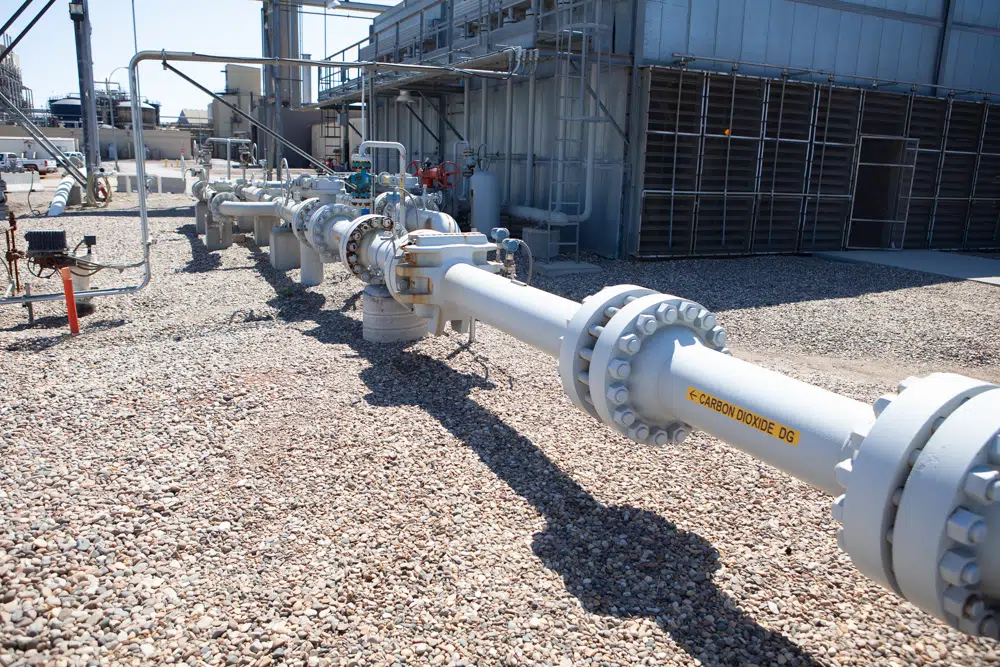
    Carbon dioxide runs through pipes at a North Dakota CCS plant. Credit: Buchsbaum Media.
    Carbon dioxide runs through pipes at a North Dakota CCS plant. Credit: Buchsbaum Media.

    Mark Maslin, UCL

    The UK government has announced it will invest almost £22 billion in carbon capture and storage (CCS) projects over the next 25 years. The technology works by capturing CO₂ as it is being emitted by a power plant or another polluter, then storing it underground.

    This sounds great in theory. However, it seems Labour has been swayed by the fossil fuel lobby, which has pushed CCS for years. This announcement represents a massive bet on a still unproven technology, and will lock the UK into fossil fuel dependence for decades to come. The Climate Change Act mandates the UK should achieve net zero emissions by 2050, yet this will be impossible if carbon capture leads to the UK building new gas power stations instead of wind and solar farms.

    I was one of several leading climate scientists who recently signed a letter to the energy security and net zero secretary, Ed Miliband, in which we pointed out the many issues with the current plans.

    Even if the technology worked perfectly, it still locks the UK into a reliance on natural gas (which is basically methane, a potent greenhouse gas) for generations to come. This will result in the UK being reliant on imported natural gas past 2050, which has significant upstream emissions from methane leaks, transport and processing.

    That then exposes the UK to the continued volatility of the global energy markets, which in part caused the country’s cost of living crisis. (Renewables don’t have this problem, since the wind and sun don’t need to be imported from overseas.)

    Overpromising, underdelivering

    In the letter, we pointed out that carbon capture projects have a very poor track record of overpromising and underdelivering. Most current CCS capacity is within natural gas processing facilities, where CO₂ must be separated out to produce marketable products. Almost 80% of the CO₂ captured is reinjected into oil fields to facilitate oil extraction.

    The track record of adding carbon capture to power plants is much worse, with the vast majority of projects abandoned. Just two commercial-scale coal-fired power plants are operating with CCS: Boundary Dam in Canada and Petra Nova in the US. Both have experienced consistent underperformance, recurring technical issues and ballooning costs.

    In any case, Britain just closed down its last coal power plant. And it’s actually harder to capture CO₂ from gas power plants than from coal, since CO₂ is found in lower concentrations in the emitted gases.

    Large power plant cooling towers
    Britain’s last coal power station, Ratcliffe-on-Soar, has been shut down. Chris Dukes / shutterstock

    One argument for CCS is that it can be used in the production of so-called “blue hydrogen”, which is derived from natural gas and can in theory be used to heat homes or power cars. Yet many projects doing this around the world have been abandoned.

    A wide range of uses have been promoted for hydrogen, but not all are practical or competitive. The claim that hydrogen should have a significant role in heating buildings has been comprehensively disproved, while direct electrification is increasingly emerging as a better solution for industrial process heating.

    Better ways to spend £22 billion

    That £22 billion earmarked for CCS projects should instead be invested in proven technologies such as renewable energy, and on upgrading the UK national grid.

    We do not deny that both carbon capture and “green” hydrogen (derived from water not methane) may be needed for specific uses in a zero-carbon economy. Carbon capture and storage should be used on existing fossil fuel infrastructure to reduce its emissions as it is phased out, while green hydrogen will be an important way of storing and transporting green energy around the world. It will also be essential to reduce the emissions from steel production.

    But the science is very clear: it makes no sense to use hydrogen as a way of heating buildings or driving our transport systems.

    As the world leaders agreed and declared at the most recent UN climate summit, COP28 in Dubai, we must transition away from fossil fuels in a just, orderly and equitable manner in order to achieve net zero by 2050. This will not happen if the UK and other countries lock themselves into a fossil fuel-based pathway with inevitable upstream emissions, displacing genuinely zero or low-carbon electricity generation.

    Mark Maslin, Professor of Natural Sciences, UCL

    This article is republished from The Conversation under a Creative Commons license. Read the original article.

    Local opposition to CCS projects have delayed their construction. Credit: Matt Hrkac/Flickr (CC BY NC ND 2.0)
    Local opposition to CCS projects have delayed their construction. Credit: Matt Hrkac/Flickr (CC BY NC ND 2.0)
  • Technical issues

    Spread the love
    DDT1 test card
    DDT1 test card

    Experiencing some technical issues with the blog today which I’m trying to resolve. Looks like I’ve lost formatting although mobile appears ok.

    edit: Think that it’s now resolved.

  • George Monbiot: As the waters rise, a two-year sentence for throwing soup. That’s the farcical reality of British justice

    Spread the love

    https://www.theguardian.com/commentisfree/2024/oct/01/prison-uk-justice-system-fossil-fuel-industry

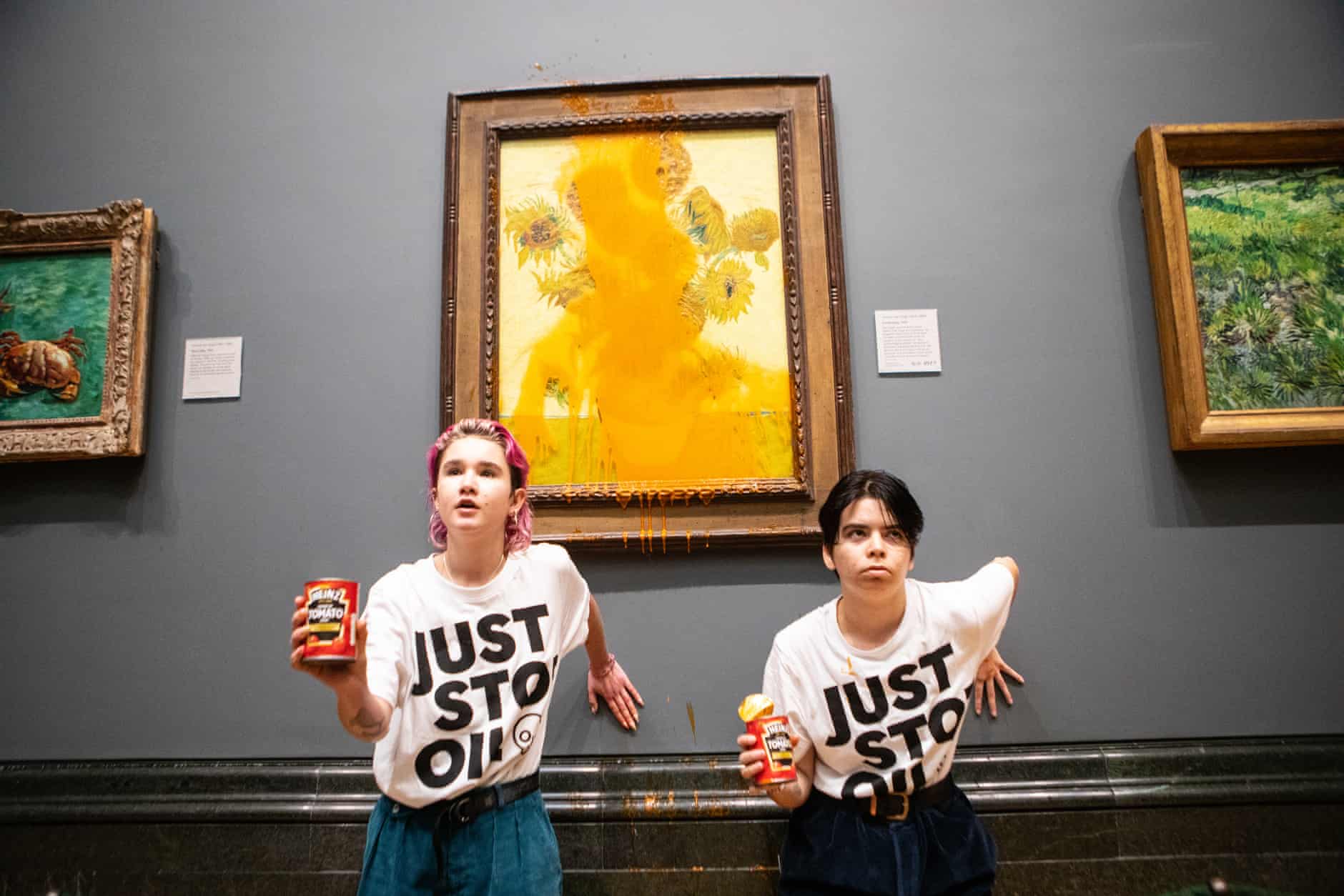
    Phoebe Plummer (left) and Anna Holland were sentenced to two years and 20 months, respectively, for throwing soup at the glass protecting Van Gogh’s Sunflowers at the National Gallery in London in 2022. Photograph: Antonio Olmos/the Guardian

    Why do the mass killers of the fossil fuel industry walk free while the heroes trying to stop them are imprisoned?

    The sentences were handed down just as Hurricane Helene hit North Carolina. As homes were smashed, trucks swept down roads that had turned into rivers and residents were killed, in the placid setting of Southwark crown court two young women from Just Stop Oil, Phoebe Plummer and Anna Holland, were sentenced to two years and 20 months, respectively, for throwing tomato soup at the glass protecting Van Gogh’s Sunflowers. No prison terms have been handed to the people whose companies deliver climate breakdown, causing the deaths of many thousands and destruction valued not at the £10,000 estimated by the court in damage to the painting’s frame but trillions.

    Everywhere we see a farcical disproportion. The same judge, Christopher Hehir, presided over the trial of the two sons of one of the richest men in Britain, George and Costas Panayiotou. On a night out, they viciously beat up two off-duty police officers, apparently for the hell of it. One of the officers required major surgery, including the insertion of titanium plates in his cheek and eye socket. One of the brothers, Costas, already had three similar assault convictions. But Hehir gave them both suspended sentences. He also decided that a police officer who had sex in his car with a drunk woman he had “offered to take home” should receive only a suspended sentence. Hehir said he wanted “to bring this sad and sorry tale to its end with a final act of mercy”. The solicitor general referred the case to the court of appeal for being unduly lenient, and the sentence was raised to 11 months in jail.

    Hehir also handed a suspended sentence to a man who rammed his car into the gates of Downing Street and was then found by police to have extreme child abuse images on his phone. By contrast, in July Hehir – the Judge Jeffreys of our time – gave five climate protesters who blocked the M25 jail terms of four and five years. It looks to me as if justice itself is suspended in Southwark crown court.

    …

    https://www.theguardian.com/commentisfree/2024/oct/01/prison-uk-justice-system-fossil-fuel-industry

  • Climate Movement Says ‘Hurricane Helene Must Be a Wake-Up Call’

    Spread the love

    Original article by Jessica Corbett republished from Common Dreams under Creative Commons (CC BY-NC-ND 3.0). 

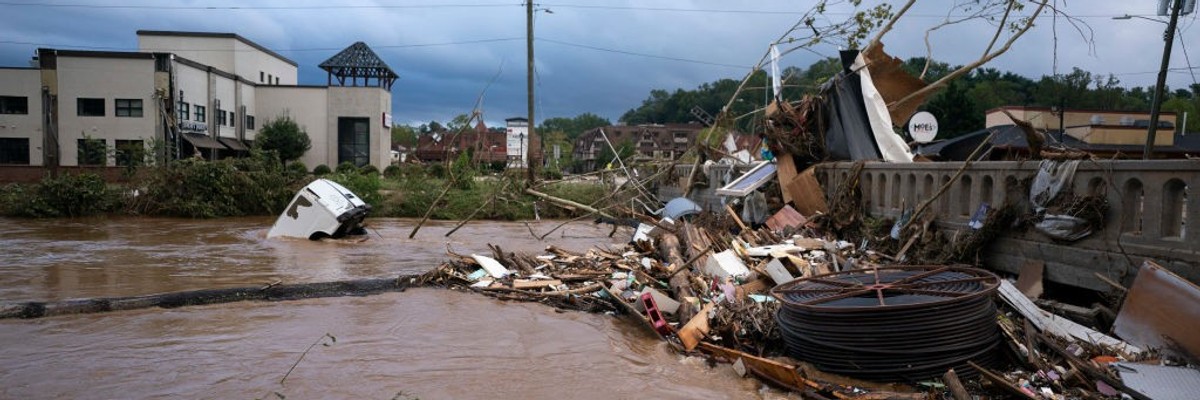
    A van flows in floodwaters near the Biltmore Village in the aftermath of Hurricane Helene on September 28, 2024 in Asheville, North Carolina. (Photo: Sean Rayford/Getty Images)

    “To those insisting that, ‘This is not the time!’ to have those other conversations, I say: This is *exactly* when we need to be having them,” said one climate scientist.

    As emergency crews have worked through the weekend to rescue people and restore essential services across several southeastern U.S. states, green groups in recent days have pointed to the death and damage from Hurricane Helene as just the latest evidence of the need for sweeping action on the climate emergency.

    Helene made landfall as a Category 4 hurricane with 140 mph winds in Florida’s Big Bend region late Thursday, then left a path of destruction across hundreds of miles of Georgia, the Carolinas, and Tennessee. As of early Sunday, at least 64 people are confirmed dead—including at least two people in Virginia—though that figure is expected to rise.

    “Moody’s Analytics said it expects $15 billion to $26 billion in property damage,” The Associated Press reported Sunday on what is now a post-tropical cyclone. “AccuWeather‘s preliminary estimate of the total damage and economic loss from Helene in the U.S. is between $95 billion and $110 billion.”

    The youth-led Sunrise Movement said Sunday that “any reporting about Hurricane Helene needs to be clear—this is not normal. This is not just a tragedy. This is a crime. Fossil fuel companies have known this would happen for the last 50 years. They lied to the public and bought out our government just to make a profit. Make them pay.”

    Greenpeace USA similarly declared on social media Saturday that “#HURRICANE HELENE MUST BE A WAKE-UP CALL FOR CLIMATE JUSTICE!”

    “We are heartbroken,” the group said, noting the dozens of people killed. “Communities have been devastated. The corporations heating the climate must be held accountable.”

    Dozens of communities across the United States have already launched climate liability lawsuits against Big Oil, which knew for decades that fossil fuels would heat the planet but promoted disinformation and raked in huge profits. Recently there have been calls for legal action by the U.S. Department of Justice and potential homicide cases brought by state and local prosecutors.

    “Our hearts and solidarity go out to everyone facing the devastation. Please support mutual aid relief efforts and demand oil companies #StartDrillingStartPaying!” Greenpeace said Saturday.

    Sunrise executive director Aru Shiney-Aja on Sunday offered a “friendly reminder that fossil fuel companies get 20 BILLION dollars in [government] subsidies every year,” while the Federal Emergency Management Agency (FEMA) “runs out of money to respond to disasters like Helene.”

    Both Shiney-Aja and Greenpeace shared footage from Asheville, North Carolina, which endured what Ryan Cole, the assistant director of Buncombe County Emergency Services, described as “biblical flooding.”

    Just two years ago, The New Lede reported that “from wildfires racing through the drought-stricken West, to heavy flooding in the central and eastern regions of the United States, extreme weather events are spurring many Americans to seek refuge in more environmentally stable cities, so-called ‘climate havens,’” including Asheville.

    This weekend, Asheville—which is over 2,000 feet above sea level and more than 250 miles from the coast—and surrounding communities are contending with disrupted water, power, and communications services due to what officials are reportedly calling “Buncombe County’s own Hurricane Katrina.”

    Noting Asheville’s elevation and distance from the coast, Lucky Tran, director of science communications and media relations at Columbia University in New York City, said Sunday that “no place is safe from climate change. We all suffer the consequences. We must all take action. We are all in this together.”

    https://twitter.com/alixabeth/status/1840218797942140960?ref_src=twsrc%5Etfw%7Ctwcamp%5Etweetembed%7Ctwterm%5E1840218797942140960%7Ctwgr%5E7dbf1c26106a7e3716bda71eeb630f7eafe840b0%7Ctwcon%5Es1_c10&ref_url=https%3A%2F%2Fwww.commondreams.org%2Fnews%2Fhurricane-helene

    As The New York Times reported Sunday:

    People across western North Carolina chainsawed their way to loved ones and drove for hours Saturday on dwindling gas tanks in search of food and power, in what one resident described as a “mini-apocalypse” after Hurricane Helene.

    Authorities said the region was facing a historic disaster a day after the powerful storm swept through the Southeast, downing power lines and washing out highways. Landslides, spotty cellphone service, and a gas shortage complicated rescue and recovery efforts. Some stranded people were being airlifted to safety.

    Antonia Juhasz, a leading climate and energy journalist and author, said Saturday that “Asheville, North Carolina is being wiped off the map by the worst storm to hit the region in a generation. This is what the climate crisis looks like: the production and use of fossil fuels changes the climate, intensifying extreme weather events and making them more frequent.”

    As hurricane scientist Jeff Masters detailed Friday, fossil fuel-driven climate change “makes the strongest hurricanes stronger,” boosts rainfall from such storms, leads to more rapid intensification, and causes sea-level rise that increases storm surge damage.

    In an effort to emphasize the climate change connection to extreme weather, from heatwaves to hurricanes, some climate campaigners have suggested naming such events after oil and gas companies.

    “What did a Helene ever do to deserve getting this horrific hurricane named after her? We should be naming hurricanes after fossil fuel CEOs instead. How about Hurricane Darren?” said Fossil Free Media director Jamie Henn, taking aim at ExxonMobil’s Darren Woods.

    Daniel Swain, a climate scientist focused on extreme weather, said on social media Saturday, “The images and stories just beginning to emerge from eastern TN and western NC in the aftermath of widespread catastrophic flooding wrought by Helene are genuinely horrifying, and the full scale of the disaster is likely as yet untold.”

    “This was, by far, the most extreme rain event in observed record across much/most of the region, where reliable records date back over 100 [years]. Unsurprisingly, the flooding which resulted has also been widespread, historic, and generally catastrophic across a broad region,” he explained. “These floods, which were concentrated in valleys containing rivers and typically modest creeks and streams, involved extremely large volumes of water moving downhill at high velocity. This was not a gradual or ‘gentle’ inundation by any means.”

    Swain stressed that “sometimes ‘worst-case’ scenarios really do come to pass, and I think we often lack the collective imagination to fully envision what that looks like. That’s a problem, because being honest about risks that exist is [the] first step toward mitigating them and preventing harm!”

    “Ultimately, there many folks in FL, GA, NC, and TN who are in need of urgent assistance—and that is/should be foremost priority,” he added. “But to those insisting that, ‘This is not the time!’ to have those other conversations, I say: This is *exactly* when we need to be having them.”

    The AP reported that “in Atlanta, 11.12 inches (28.24 centimeters) of rain fell over 48 hours, the most the city has seen over two days since record-keeping began in 1878,” while “in Florida’s Big Bend, some lost nearly everything they own, emerging from the storm without even a pair of shoes.”

    Along Florida’s Gulf Coast, “Helene shoved a wall of water estimated at least 10 feet high into the lowest-lying areas of Steinhatchee,” according to USA Today.

    South of there, in Pinellas County, officials have identified over 18,000 homes damaged by Helene—and at least 11,000 are “uninhabitable,” as the Tampa Bay Times put it.

    Highlighting the connection between climate change and more intense hurricanes, Congressman Maxwell Frost (D-Fla.) said Thursday that “the climate crisis is here. We must act to save lives.”

    Original article by Jessica Corbett republished from Common Dreams under Creative Commons (CC BY-NC-ND 3.0).