A Royal Air Force Typhoon FGR4 takes off to carry out air strikes against Houthi military targets in Yemen, from RAF Akrotiri, Cyprus, January 22, 2024
BRITAIN faced condemnation today after carrying out further bombing raids with the US over Yemen.
Royal Air Force jets took part in a second wave of joint US-British action against Houthi forces on Monday night after the movement’s attacks on shipping in the Red Sea and Gulf of Aden continued.
Four RAF Typhoons and a pair of Voyager tankers were involved in the latest action.
…
A summary of the British government’s legal position said the nation is permitted under international law to use force “in such circumstances where acting in self-defence is the only feasible means to deal with an actual or imminent armed attack.”
Stop the War Coalition national officer John Rees said that the action was the “largest raid so far on Yemen,” adding: “We were told there was no need for a vote in Parliament because [January 11] was a one-off raid. Well, this is now the second one-off raid.
“We should be under no illusion that we are not at war with Yemen. We are.
…
“The violent repercussions of Israel’s war on Gaza are spreading across the Middle East and west Asia, threatening a much wider conflict. We must stop bombing Yemen.”
Palestinians gather at Nelson Mandela Square in Ramallah to demonstrate appreciation to South Africa. (Credit: ramallahmunicipality)
At the International Court of Justice, South Africa spoke on behalf of the billions of people who oppose Israel’s genocide in Gaza — and put Western governments to shame for their deplorable complicity.
‘There is no safe space in Gaza and the world should be ashamed.’
Blinne Ní Ghrálaigh’s closing speech at the International Court of Justice will stay with me forever. Devastating and forensic in equal measure, Ní Ghrálaigh spoke for millions of people around the world who have been utterly appalled by the horrors unfolding live on our screens. ‘This is the first genocide in history where its victims are broadcasting their own destruction in real time,’ she said, ‘in the desperate and so far vain hope that the world might do something.’
Here was an Irish lawyer — who had previously worked on the Bloody Sunday Inquiry — speaking on behalf of South Africa, in support of the Palestinian people. For the Irish and the South Africans, the plight of occupied peoples is only too familiar. It should not come as any surprise, then, that South Africa’s case opened by placing Israel’s latest activity ‘within the broader context of Israel’s 25-year apartheid, 56-year occupation and 16-year siege imposed on the Gaza Strip.’ It was remarkably refreshing to hear South Africa articulate something so obvious yet routinely ignored by politicians in this country. Exposing the shallow state of our own political system, the hearing will go down in history as a momentous display of international solidarity from a people who know what it’s like to endure — and dismantle — apartheid.
This solidarity has grown and grown; South Africa’s case eventually gained the support of many countries, including Bolivia, Brazil and Colombia, as well as interstate actors like The Arab League. Politicians in this country can deny it all they want: millions of people around the world are desperate to see an end to the massacre of human beings, and will continue to support efforts to build a just and lasting peace.
We were required to be at the Court before 6am to gain entry, queuing in desperately cold weather. The International Court of Justice in the Hague is a beautiful building. It was built after the First World War, when there was real hope that the League of Nations and its judicial system would bring about peace. There was something poignant about Palestinian people who had lost relatives in Gaza and the West Bank, who were outside the Court to bear witness in search of justice.
South Africa presented its case against Israel under the Genocide Convention. The hearing was devastating — horror after horror, laid out in plain sight for all to see. The arguments were brilliantly marshalled by South Africa, and they should be commended for doing so. It is regrettable that most of our media did not deem these arguments important enough to broadcast. The BBC did not provide a live stream of South Africa’s case, choosing instead only to show Israel’s response the next day. It is to the credit of Al Jazeera that they not only live-streamed the hearing, but provided continuous and accurate coverage of the conflict, despite witnessing the deaths of their colleagues in the process.
South Africa pointed out that the Genocide Convention existed to protect all people, and that the Israeli action met the requirements of the convention in its deliberate and systematic destruction of civilian life in Gaza. South Africa also cited several statements from Netanyahu and other Israeli politicians pledging to diminish the population of Gaza by at least 90 percent. South Africa demonstrated what Palestinians have been trying to tell us all along: this was not a war of equals, but the systemic slaughter of the Palestinian people.
South Africa is determined not only to be on the right side of history, but change the course of it — and if the International Court of Justice was true to its name, it would give due consideration to South Africa’s case. It would find that the bombardment is wrong, the bombardment is illegal, and the bombardment represents the collective punishment of the Palestinian people. And it would rule that acts of genocide have been committed by the Israeli Government.
In the meantime, the South African case asked for interim relief, which would require a rapid call for an immediate ceasefire. It is a call that should be made by any political representative anywhere in the world committed to the protection of civilian life. It is to the great shame of the British and American political systems that relatively few elected representatives in either country have supported this call for an end to the loss of human life.
There is no way forward other than a ceasefire observed by all sides, which would present the opportunity then to map out a just and peaceful future. This is a decision to be made by the Palestinian people, not by those of us who support them. Acts of solidarity cannot entail telling others what to do.
Outside, after the hearing finished, the fantastic team of lawyers took questions from a huge group of journalists on the steps of the ICJ, in utterly freezing conditions. I was there on behalf of the Progressive International. We held a media event in the street in front of us, and made the case that the popular voice of ordinary people around the world is one of peace, and that we would campaign for as long as it takes to bring about justice for the Palestinian people.
‘We did what we could. Remember us.’ Ní Ghrálaigh finished her address by showing two photos of a whiteboard at a hospital in Gaza. The first showed a handwritten message on it by a doctor. The second photo was of the same whiteboard after an Israeli strike on the hospital. It showed the board completely destroyed. The author of the message had been killed.
Millions are appalled, watching in real time the destruction of human life in Gaza. History will not forget those who refused to treat Palestinian and Israeli lives with equal worth. But neither will it forget those who are determined to campaign for a more peaceful world.
About the Author
Jeremy Corbyn MP, former leader of the Labour Party
Jeremy Corbyn is the member of parliament for Islington North.
I’ve quoted all Jeremy Corbyn’s article, hope that nobody objects. Authors: It’s likely that you are able to use a Creative Commons licence despite being published by others.
I need to start opposing USUK’s intention to start WW3 in support of Israel and the status quo, injustice, genocide, war crimes, and in opposition to human rights and democracy, about how UK not only does not have a mandate but is acting despite huge demonstrated opposition to it’s actions.
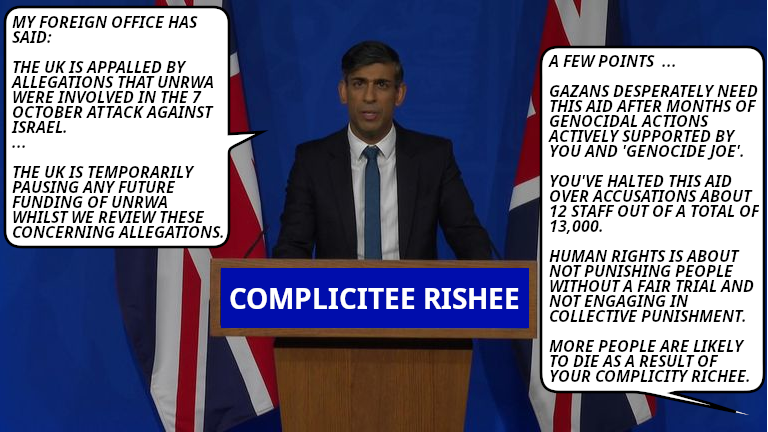
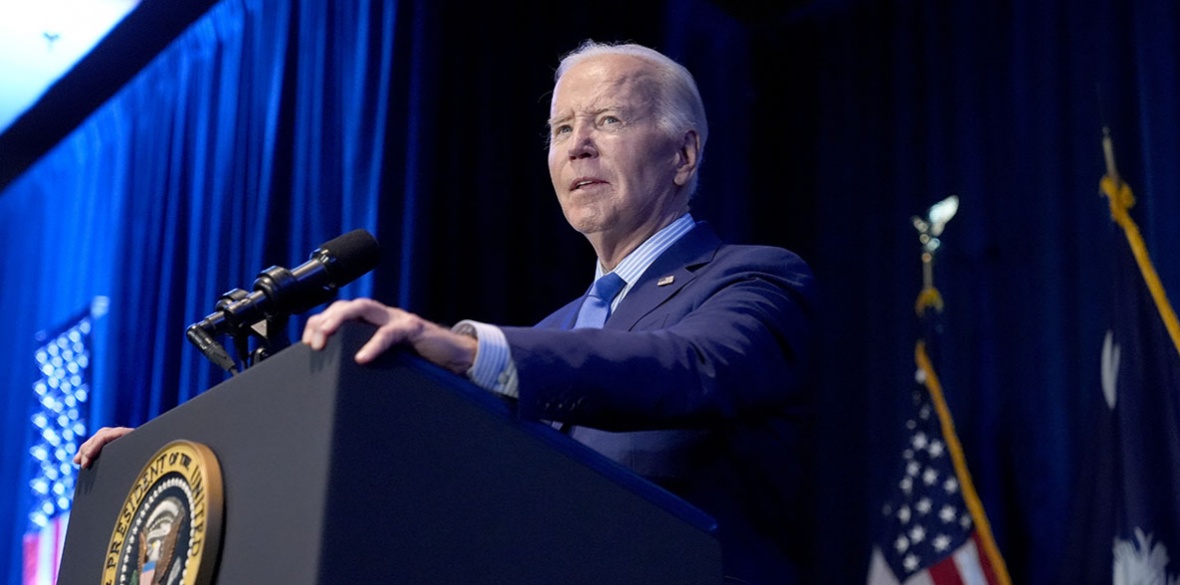
Prime Minister Rishi Sunak (left) and US President Joe Biden speak at the start of the meeting of the North Atlantic Council (NAC) during the Nato Summit in Vilnius, Lithuania, July 11, 2023
Peace campaigners outraged after Britain and US launch air strikes on Yemen
ANTI-WAR campaigners expressed outrage today after Britain launched a targeted strike in Yemen along with the US, further escalating tensions in the region.
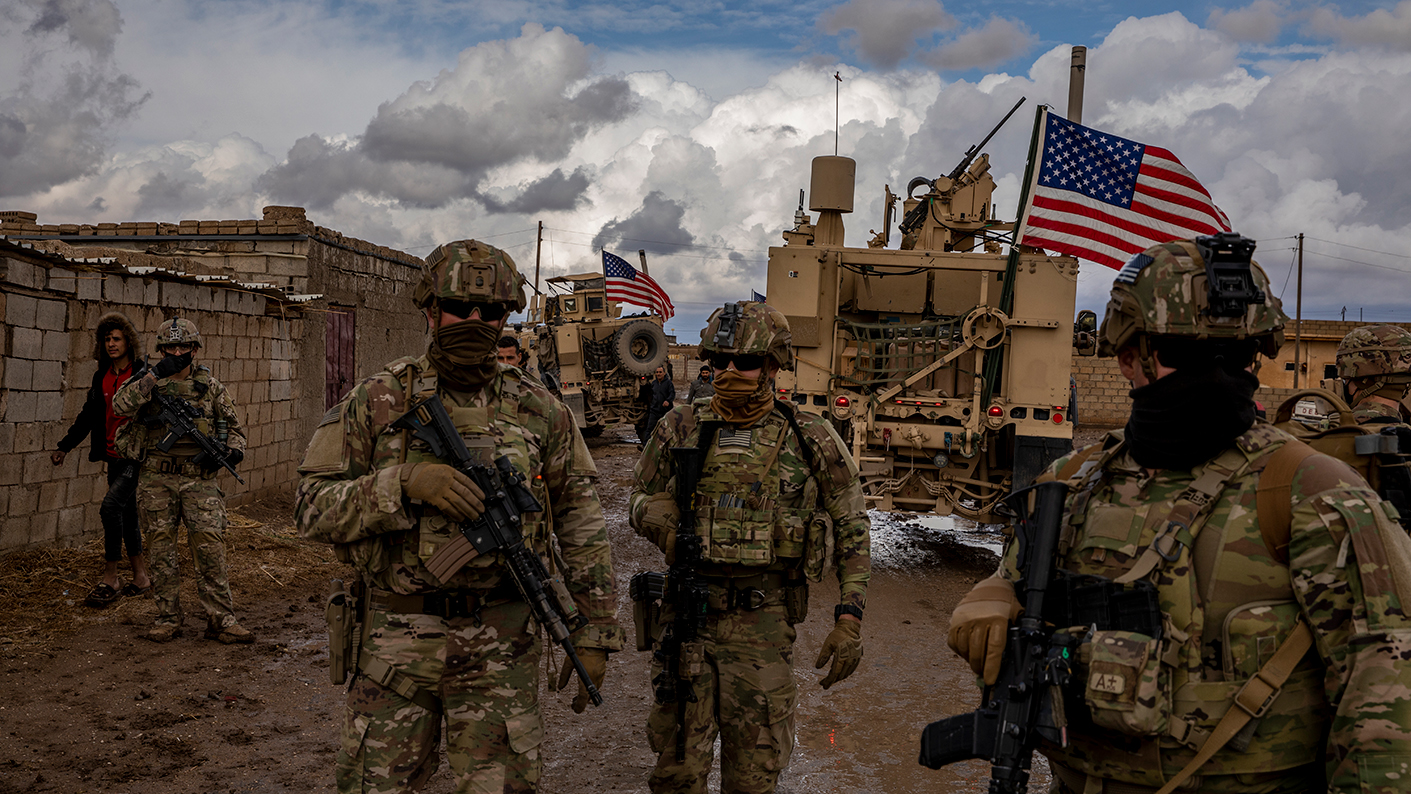
British and US forces bombed military facilities used by the Houthi movement in Yemen, with Prime Minister Rishi Sunak saying the action sent a “strong signal” that the group’s actions in the Red Sea cannot be carried out with “impunity.”
The Houthis have been targeting vessels in the key international trade route in response to the bombardment of Gaza, saying their action only stopped Israel-linked shipping.
Mr Sunak insisted that the two nations acted in “self-defence” and that allies would not hesitate to ensure the safety of commercial shipping through the region.
But the Stop the War Coalition (StWC) and the Campaign for Nuclear Disarmament (CND) warned that the attack on Yemen is a “dangerous escalation” of the war in the Middle East, calling it a “direct consequence” of Britain, the US and their allies’ support for Israel’s three-month attack on Palestine.
South African Justice Minister Ronald Lamola speaks at a press conference outside the International Court of Justice in The Hague on January 11, 2024. (Photo: Dursun Aydemir/Anadolu via Getty Images)
“Whatever the outcome, we are witnessing an amazing moment of rule of international law history,” said Amnesty International secretary general Agnès Callamard.
Human rights defenders and legal experts on Thursday lauded what many called South Africa’s “compelling” opening presentation at the International Court of Justice in The Hague in a case accusing Israel of genocide against Palestinians in the embattled Gaza Strip.
In a bid to obtain an ICJ emergency order for the suspension of Israel’s relentless 97-day assault on Gaza, South African jurists including Justice Minister Ronald Lamola argued that Israel is violating four articles of the Convention on the Prevention and Punishment of the Crime of Genocide, commonly called the Genocide Convention. The landmark 1948 treaty—enacted, ironically, the same year as the modern state of Israel was born, largely through the ethnic cleansing of Palestine’s Arabs—defines genocide as acts intended “to destroy, in whole or in part, a national, ethnical, racial, or religious group.”
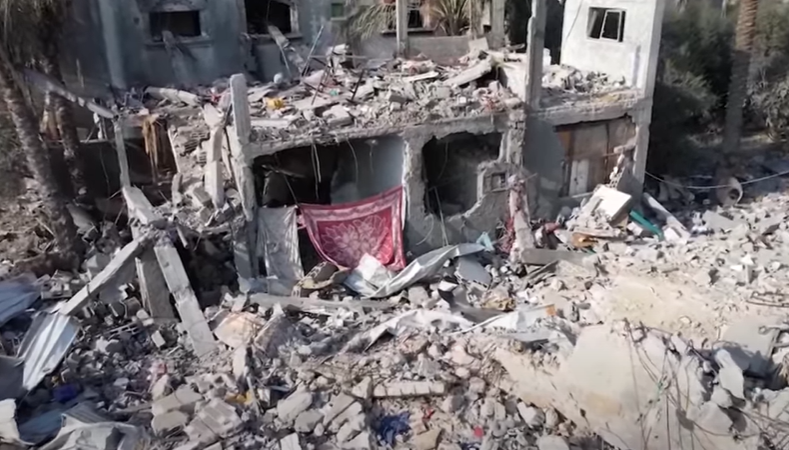
South African lawyers detailed Israel’s conduct in the war, including the killing and wounding of more than 80,000 Palestinians, mostly women and children, forcibly displacing over 85% of the besieged enclave’s 2.3 million people, and inflicting conditions leading to widespread starvation and disease. They also cited at length statements by Israeli officials calling for the destruction and even nuclear annihilation of Gaza in their presentations, which eschewed graphic imagery in favor of arguing “clear legal rights.”
Today's ICJ hearing was devastating. Horror after horror, laid out in plain sight for all to see.
South Africa spoke for millions around the world desperate for this massacre to end — and put the UK & US government to shame for their deplorable silence, cowardice and complicity.
“In its opening argument thus far, South Africa has made a compelling case showing how the genocidal statements by [Israeli Prime Minister Benjamin] Netanyahu and other senior officials were interpreted as official orders by Israeli forces in their attacks against Gaza,” U.S. investigative journalist Jeremy Scahill said on social media.
“Beyond the citations of the vast civilian deaths and injuries caused by Israel in Gaza, [South Africa’s] lawyers argued effectively that Israel’s ‘evacuation’ orders were in and of themselves genocidal, demanding the immediate flight of a million people, including patients in hospitals,” Scahill continued.
“What becomes crystal clear listening to the openly genocidal words of Netanyahu and other Israeli officials is that they know exactly what they are saying,” he added. “And they are comfortable saying these things publicly because they know the U.S. will shield them from accountability.”
South Africa makes its showing of genocidal intent from the repeated statements of senior Israeli officials, repeated by troops on the ground, and the massive death, destruction, and deprivation in Gaza that reflects the implementation of that intent. https://t.co/yGBESCNQR4
Left-wing author and activist and former South African parliamentarian Andrew Feinstein said that “South Africa’s presentation to the ICJ thus far has been exceptional, overwhelming, and devastating,” opining that “the only way the ICJ doesn’t impose interim measures is if the judges are open to pressure from ‘the West.'”
“South Africa’s lawyers have done the nonracial, post-apartheid country proud,” he added.
Legal scholar Nimer Sultany, a Palestinian citizen of Israel, called South Africa’s presentation “compellingly argued and powerfully presented.”
Minister of Justice reminded the world that violence and suffering did not begin on 7 oct. Palestinians have been subjected to violence and dispossession for 75 years, and for every day since 7 oct. That Gaza is occupied, because Israel has effectively controlled it.
“Given the court’s case law, and given the lower threshold required for issuing provisional measures, it will be very surprising if the court does not issue provisional measures against Israel,” Sultany asserted.
“This also should prompt reflection amongst all those governments and media outlets who supported [Israel’s war,] because they have been supporting a genocide,” he added.
Sultany and numerous other observers said the most powerful presentation of the day was made by Irish lawyer and case adviser Blinne Ní Ghrálaigh, who delivered South Africa’s closing statement.
Absolutely wow, I am speechless at the strength of the argument.
“This is the first genocide in history where people themselves are broadcasting it.”
“The world should be absolutely horrified, there is no safe space in Gaza. The world should be ashamed.” pic.twitter.com/jUnVwngOqn
Israel—some of whose officials have condemned South Africa’s case as a meritless “blood libel”—is scheduled to present its defense on Friday. Israeli jurists are expected to focus heavily on the atrocities committed by Hamas-led attackers who killed more than 1,100 Israelis and took around 240 others hostage on October 7. They will likely argue that the country has a right to defend itself, and that it is seeking to eliminate Hamas, not the Palestinian people.
While an emergency order from the World Court would not be enforceable, it would represent a major international embarrassment for Israel, which is increasingly isolated on the world stage. A growing number of nations including Brazil, Pakistan, Turkey, Malaysia, Venezuela, Colombia, Saudi Arabia, Bolivia, Jordan, and Bangladesh are supporting South Africa’s case, as are the Arab League, more than 1,250 international human rights and civil society group, and progressive U.S. Congresswomen Rashida Tlaib (D-Mich.) and Cori Bush (D-Mo.).
The United States, UK, and Israel were among the last countries to end their support for the apartheid regime in South Africa.
The legacy of a liberated South Africa lives on as a country that defeated apartheid takes the Israeli apartheid regime to The Hague for genocide.
“Whatever the outcome, we are witnessing an amazing moment of rule of international law history,” saidAmnesty International secretary general Agnès Callamard.