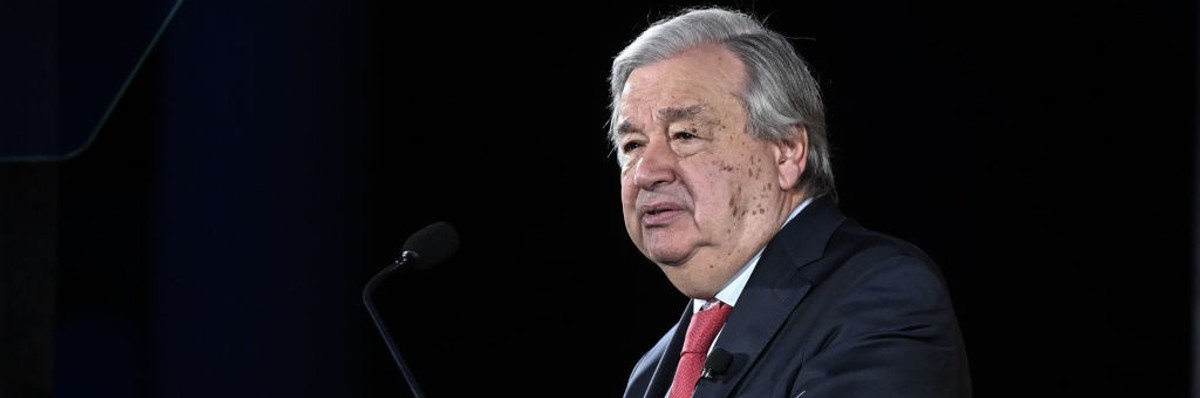
United Nations Secretary-General Antonio Guterres delivers a special address on climate action in New York in June 2024. (Photo: Fatih Aktas/Anadolu via Getty Images)
“I must call out the flood of fossil fuel expansion we are seeing in some of the world’s wealthiest countries,” U.N. Secretary-General António Guterres said. “Countries must phaseout fossil fuels—fast and fairly.”
United Nations Secretary-General António Guterres on Thursday criticized the world’s wealthiest countries for expanding fossil fuel production, one day after an analysis in The Guardian showed that five Western countries are leading a global surge in oil and gas development.
Guterres’ remarks came as part of a “call to action” on extreme heat at a press conference in New York, after record-setting world temperatures earlier in the week and a series of deadly heatwaves across the world this year.
Guterres, who has long been outspoken on the need for climate action, called extreme heat one of the “symptoms” of a “disease” that is the “addiction” to fossil fuels.
“I must call out the flood of fossil fuel expansion we are seeing in some of the world’s wealthiest countries,” he said nine minutes and 53 seconds into his remarks. “In signing such a surge of new oil and gas licenses, they are signing away our future. The leadership of those with the greatest capabilities and capacities is essential. Countries must phaseout fossil fuels—fast and fairly.”
The U.N. chief’s comments may have been based on Wednesday’s findings that five Western countries—the United States, the United Kingdom, Canada, Australia, and Norway—have significantly scaled up oil and gas licensing this year, despite their international climate commitments. The findings came from an analysis of industry data conducted by the International Institute for Sustainable Development and published in The Guardian.
The analysis found that the five countries together have licensed or plan to license projects in 2024 that will emit 11.9 billion metric tons of greenhouse gas emissions over their lifetimes. The news renewed discussions about whether countries such as the U.S., though they claim to be climate leaders, should be considered “petrostates“—a contemptuous term formerly reserved for countries such as Saudi Arabia and Russia.
Guterres has long been outspoken on the issue of fossil fuels. At the COP28 U.N. climate change summit in Dubai last year, he spoke forcefully about the need for phasing them out and meeting the 1.5°C target set in the Paris agreement.
“The 1.5°C limit is only possible if we ultimately stop burning all fossil fuels,” he said. “Not reduce. Not abate. Phase out—with a clear timeframe aligned with 1.5°C.”
The loophole-ridden deal that emerged from Dubai didn’t match Guterres’ ambitions, but did call for “transitioning away from fossil fuels.”
His call to action on Thursday included a four-part plan for dealing with extreme heat: caring for the most vulnerable, protecting workers, boosting resilience, and limiting further temperature rise by phasing out fossil fuels and scaling up renewables.
Leaders across the board must wake up and step up their #ClimateAction.
That means governments – especially #G20 countries – as well as the private sector, cities and regions.
They must #ActNow as though our future depends on it – because it does.
Guterres warned that 70% of the global workforce—over 2.4 billion people—is at substantial risk of experiencing extreme heat, and the situation is especially dire for workers in Africa and the Middle East. He called for strong laws to protect workers, which some countries are enacting. The Biden administration recently moved to set the first national workplace heat safety protections in the U.S.
Republican vice presidential nominee and U.S. Sen. J.D. Vance (R-Ohio) speaks at a campaign rally at Radford University on July 22, 2024 in Radford, Virginia. (Photo: Alex Wong/Getty Images)
Vance “meant no disrespect to cats, but he did mean to demean women and still holds the view in 2024 that they should be punished for not having children.”
After days of condemnation from critics including actress Jennifer Aniston and Transportation Secretary Pete Buttigieg, U.S. Sen. JD Vance was given the opportunity on Thursday to clarify his remarks from 2021 in which he said the Democratic Party was run by “childless cat ladies.”
Instead, the Ohio Republican and running mate of former President Donald Trump assured SiriusXM host Megyn Kelly on “The Megyn Kelly Show” that while he has “nothing against cats,” he meant what he said in terms of “the substance” of his argument.
Vance made it clear, said Aaron Fritschner, deputy chief of staff for Rep. Don Beyer (D-Va.), “that he meant no disrespect to cats, but he did mean to demean women and still holds the view in 2024 that they should be punished for not having children.”
The comments in question were made by Vance to then-Fox News host Tucker Carlson when Vance was running for the Senate.
Calling out Buttigieg—who, the secretary disclosed this week, was struggling at the time to adopt a child with his husband—and Vice President Kamala Harris, a stepmother of two and the Democratic Party’s presumptive presidential nominee, Vance said people without biological children “don’t really have a direct stake in” the future of the country and therefore shouldn’t hold higher office.
In separate remarks that same year, Vance said parents should “have more power” at the voting booth and that “if you don’t have as much of an investment in the future of this country, maybe you shouldn’t get nearly the same voice.”
He also specifically categorized people who don’t have children as “bad” in an interview in 2021, saying the government should “reward the things that we think are good” and “punish the things that we think are bad,” with people taxed at a lower rate if they have children.
While a spokesperson for Vance told ABC News that the senator’s taxation proposal was “basically no different” than the child tax credit supported by the Democratic Party, Democrats who have pushed for the credit have heralded its proven ability to slash child poverty rates and help families afford groceries, childcare, and other essentials, rather than viewing the tax savings as a way to reward people for procreating.
In his interview with Kelly on Thursday, Vance attempted to pivot away from his own comments, saying his point was to criticize “the Democratic Party for becoming anti-family and anti-child” and claiming without evidence that the Harris campaign had “come out against the child tax credit”—a signature policy of the Biden-Harris administration.
“I’m proud to stand for parents and I hope that parents out there recognize that I’m a guy who wants to fight for you,” said Vance. “The Democrats, in the past five, 10 years, Megyn, they have become anti-family. It’s built into their policy, it’s built into the way they talk about parents and children. I don’t think we should back down from it, I think we should be honest about the problem.”
Vance and Kelly went on to lament the anxiety “hardcore environmentalists” and progressive lawmakers such as Rep. Alexandria Ocasio-Cortez (D-N.Y.) have expressed about the damage fossil fuel extraction is doing the planet, accusing them of pushing people to forgo having families—but said nothing about Republican policies that have made child-rearing less accessible.
In recent years, the entire Republican caucus in Congress was joined by conservative then-Democratic Sen. Joe Manchin of West Virginia in blocking the extension of the enhanced child tax credit, which had been credited with cutting the national child poverty rate in half. Republicans also allowed a pandemic-era universal school meal program to expire, while several Democratic-led states have passed state-level programs to ensure all children can have meals at school, regardless of their family’s income.
Under Republican abortion bans, numerous stories have cropped up of pregnant people who have been forced to carry pregnancies to term despite finding out that their fetuses had fatal abnormalities and would die soon after birth—as have stories of children who were forced to give birth or had to cross state lines in order to get abortion care.
As with his position that nonparents should be “punished” for not having children, “who else does ‘pro-child/family’ Vance think should ‘face consequences and reality’ by way of curtailing choices, rights, and freedoms?” asked writer Alheli Picazo. “Women and girls who become pregnant through rape/incest.”
University of North Carolina law professor Carissa Byrne Hessick said that one could test “empirically” Vance’s claim that Democratic policies are anti-family.
“But I haven’t heard the GOP talk much about things that would help my family and my kids,” she said, “like reducing childcare and tuition costs.”
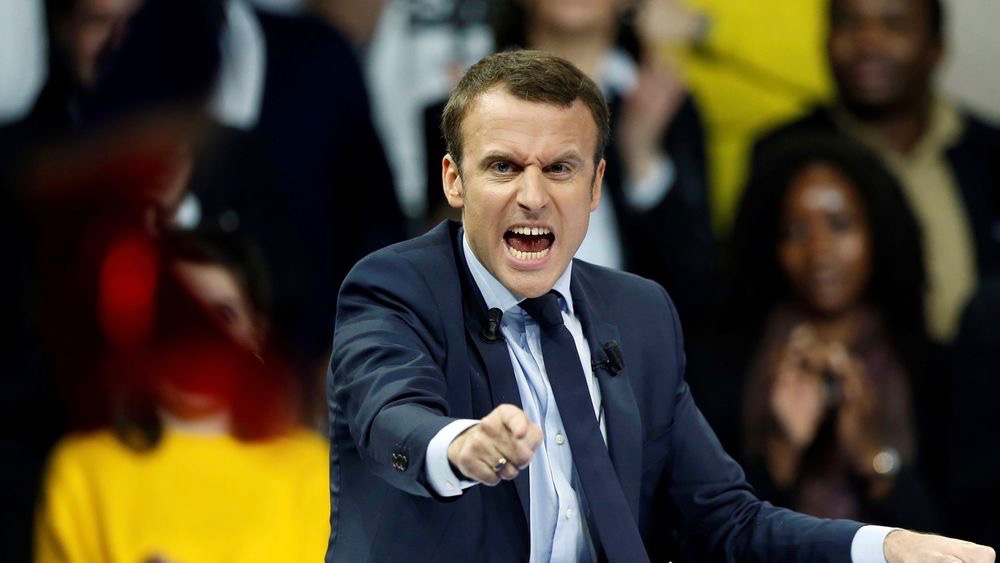
Emmanuel Macron continues to stall the post-election process in France, ignoring the New Popular Front’s calls to nominate their prime ministerial candidate
Nearly a month after the snap election in France, President Emmanuel Macron continues to delay recognizing the electoral victory of the left-progressive alliance New Popular Front (NFP). Following extensive consultations, the NFP recently named Lucie Castets as their prime ministerial candidate, urging Macron to formally nominate her. Instead, Macron has called for a “political pause” until mid-August, apparently to allow the nation to focus on the Olympic Games.
Castets, a 37-year-old expert in tax evasion and fraud intelligence, expressed her determination to see the nomination through. Even more than her economic expertise, her dedication to public services and opposition to privatization make her a logical choice for the NFP. Reacting to the NFP nomination, she stated that she would fully implement the coalition’s program of rupture, ending cuts imposed by Macron over the years.
As a member of the collective Our Public Services, Castets analyzed parties’ programs during the last election. Reflecting on the materials collected throughout this process, she vocally criticized the far-right National Assembly, debunking claims that their program would benefit the working class. On the contrary, the collective’s report indicated that the course would remain largely unchanged by what was set by Macron’s liberals. This would lead to further reductions in access to essential services and cuts targeting migrants in particular.
Castets also said she aims to repeal Macron’s controversial pension reform. NFP parliamentarians have already submitted a bill to reverse the rising retirement age, in line with announcements made during the election campaign.
Despite having the largest number of representatives in the National Assembly, the NFP faces challenges to consolidate their power as President Macron continues to exercise his executive power to block them. The president has not only avoided recognizing the left’s victory and kept former PM Gabriel Attal in a caretaker role while calling for the “political pause,” but Macron’s liberals also collaborated with the right-wing Republicans to re-elect Yaël Braun-Pivet as president of the National Assembly, a move criticized by progressive circles. However, most new parliamentary functionaries are from the NFP, giving the coalition significant leverage for future discussions.
France Unbowed criticized Macron for “confiscating” democracy. “The theft of democracy we are witnessing risks putting into power a hard-right coalition aligned with the Macronists, paving the way for the National Rally and resulting in deeply antisocial policies that are hostile to workers and trade unions,” the party wrote following Macron’s refusal to nominate Castets.
Closing campaign rally of Nicolás Maduro in Caracas. Photo: Zoe Alexandra
Numerous international media outlets have stepped up attacks against Nicolás Maduro in a seemingly scripted manner with key messages that they seek to establish as the truth
On Sunday, the people of Venezuela will head to the polls to elect their next president. The 21 million eligible voters in Venezuela have the opportunity to pick between 10 candidates from a broad range of political parties and currents. The two projected front runners however, are from completely opposite ends of the spectrum: incumbent President Nicolás Maduro and candidate for the right-wing Unitary Democratic Platform, Edmundo González.
As election day comes closer, and international mainstream media pays more attention to what is happening in the Caribbean country, several dominant patterns have emerged in the discourse and messages of these outlets.
First of all, several media outlets have carried profiles of the leading candidates, and presented a very stark dichotomy. Maduro is authoritarian, González is democratic. Maduro is oppressive, González is free. In these profiles, when talking about Maduro, they will talk about the alleged amount of money and properties that he owns, but when profiling González, no such questions are asked.
When speaking of González, another type of framing is used, namely, that of the chosen one who was able to bring about the unity of an opposition that has historically had enormous difficulties in reaching minimum agreements. In this way, they want to present a worn out, questioned and “possibly” corrupt candidate (Maduro), while on the other hand, they want to show a peaceful, conciliatory, and ethically pristine candidate (Gónzález). This framing also erases the other eight opposition candidates who are running in these elections who also represent important political sectors. This has a very clear political intention, although not explicitly stated.
It goes without saying that there is almost no mention of the ferocious hybrid war which Venezuela has been subjected to for the last decade and how the Maduro government has endured coup attempts, assassination attempts, a near complete blockade on the country’s economy and oil production, and attempted invasions by paramilitary groups. In this situation of an almost constant political and economic siege, Maduro and his party United Socialist Party of Venezuela (PSUV) have not only been able to initiate remarkable economic recovery, but also have forged unity amongst the diverse political progressive tendencies which are under the broad umbrella of Chavismo. During the last several months, the socialist candidate has traveled to dozens of cities and towns across the country to meet with the people, listen to them, and hear their demands of the government and the Bolivarian process. These multitudinous rallies and meetings have received almost no media attention.
Qué impresionante fue ver a mi gente de Valencia y La Victoria en la calles, donde cantamos, bailamos y entregamos obras para el Pueblo. El 28 de julio vamos a triunfar y colocaremos la canción profunda: Viva #Venezuela, mi Patria Querida. ¡Viva la #patria! ¡Viva Carabobo y… pic.twitter.com/6NicWbDrah
Another type of premise that hegemonic media outlets have tried to establish is that of an almost certain electoral fraud if the candidate of the PSUV wins. At the same time they state that if the opposition wins, Maduro will not recognize the results (even though the government has repeatedly publicly stated that it will respect the results, whatever they may be).
That is to say, the media perspective acquires the structure of an informal fallacy called “false dilemma”, in which, according to the hegemonic narrative, either the opposition wins and Maduro ignores the results, or Maduro wins but only through electoral fraud.
For almost a month, these media outlets have also sought to express that the so-called opinion polls (carried out by corporate, right-wing pollsters) give such a wide advantage to González that Maduro will be unable to subtract such difference, implicitly stating that, for almost a month, the election has already been decided. This fatalism also relies on the false premise that election results are absolute and defined several weeks before voting day – completely undermining the people’s will and sovereignty to decide their future.
Furthermore, it is intentionally not said that other polls have put Maduro ahead in terms of voting intentions, thus reinforcing their message that either González wins overwhelmingly or that Maduro carries out electoral fraud. Hence, it is justified, in a somewhat bizarre way, when far-right opposition leaders like María Corina Machado that are backing the candidacy of González, say that the only result they will accept is the victory of their candidate. These figures continue to denounce that Chavismo would only accept a victory of its own. Ironically, only the PSUV has affirmed that it would accept the result, whatever it may be.
This type of Manichean media attitude provokes an evident polarization and increases the tension in a country that already suffered right-wing political violence and tensions after electoral processes.
With all eyes on Venezuela this Sunday, these predetermined media narratives are important to identify and debunk. It will not be the mainstream media outlets like the New York Times, CNN, InfoBae, Voz de América and others that will determine Venezuela’s future, it will be the Venezuelan people.
The Conservative candidate has changed his tune on climate action, recently attacking Labour’s net zero policies and arguing for new fossil fuel extraction.
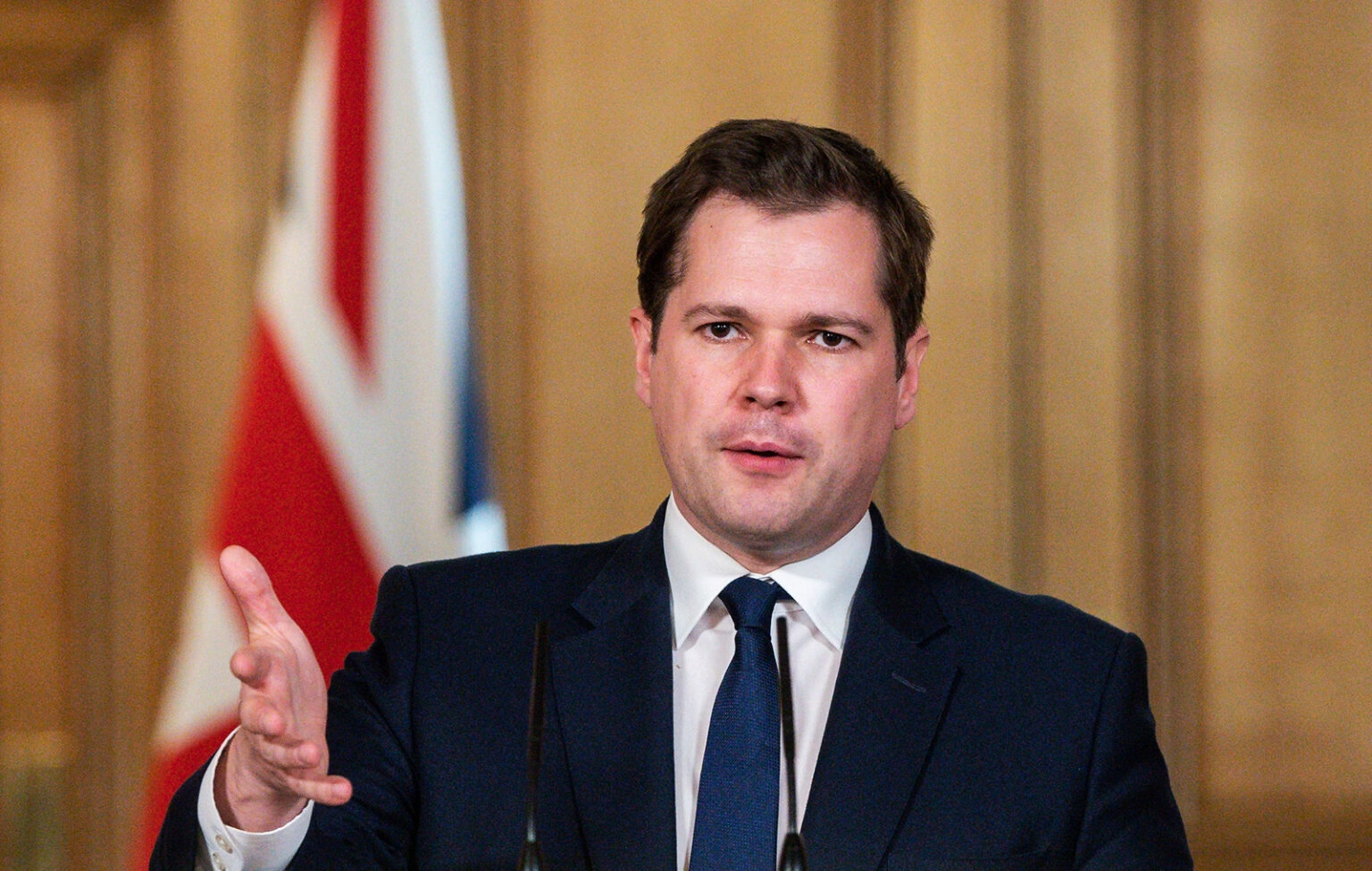
Former Conservative minister Robert Jenrick, who has today entered the race to lead the Tory party, has a growing record of attacks on climate action.
The MP for Newark – who saw a 23.9 percent swing against him in the general election, and served as secretary of state for immigration under former prime minister Rishi Sunak – has attacked what he calls “net zero zealotry”, and has labelled the UK’s net zero target “dangerous fantasy green politics unmoored from reality”.
This is despite Jenrick having hailed the UK’s “world-leading commitment to net zero by 2050” as recently as 2020.
Jenrick has also called for the building of “new gas power stations” and supports new fossil fuel extraction, including North Sea oil and gas, and the opening of new coal mines.
His candidacy follows the Conservative Party losing a landslide election on 4 July against a Labour Party committed to climate action, during which the Tories supported new North Sea oil and gas extraction, and the delaying of key climate reforms.
Almost half of voters (49 percent) believe renewable energy would lower household bills, while only 14 percent say the same for more fossil fuels, according to polling by More in Common.
This week saw what climate scientists believe could be the hottest day on record thanks to climate change. The world’s leading climate science group, the UN’s Intergovernmental Panel on Climate Change (IPCC), has said that there is “a brief and rapidly closing window of opportunity to secure a liveable and sustainable future for all”.
Attacks on Labour’s Climate Agenda
In his response to the announcement of Labour’s legislative agenda in the King’s Speech last week (19 July), Jenrick used an address in the House of Commons to launch an attack on the government’s climate policies, spreading familiar misinformation.
Jenrick said that “despite being only responsible for one percent of global emissions, we find ourselves with a government pursuing for ideological reasons a net zero policy which is going to make it harder for our own consumers to afford their bills, [and] which is further going to erode our industrial base”.
Downplaying a country’s emissions is a “widely deployed” tactic used to delay international climate action, according to academics. Contrary to Jenrick’s claims, the UK’s cost of living crisis has been made worse by its dependence on fossil fuels, according to the International Monetary Fund (IMF).
And rather than “eroding our industrial base”, net zero policies are already creating new jobs and economic development. The UK’s net zero economy grew nine percent in 2023 to £74 billion – equivalent to 3.8 percent of the total UK economy, and supported more than 765,000 jobs, according to the Energy and Climate Intelligence Unit (ECIU).
Jenrick also attacked Labour’s green investment vehicle, Great British Energy – launched today – as a quango “which serves no apparent purpose”, warned that new solar farms would “despoil our countryside”, and claimed that “200,000 jobs in the oil and gas sector have been put in danger”, using a widely debunked figure.
The chief advisor to the National Farmers Union (NFU) has said solar farms “do not in any way present a risk to the UK’s food security”, while NFU president Tom Bradshaw has attacked the claims made by Jenrick and others as “sensationalist”.
On 11 July, when Labour announced its decision not to defend the new proposed coal mine in Cumbria in the High Court, Jenrick posted on X: “First the oil and gas industry, now coking coal for the steel industry. Less than a week in and jobs and economic growth are already being sacrificed on the altar of Labour’s net zero zealotry.”
In 2021, Jenrick decided not to challenge the planning application for the new mine – the UK’s first deep coal mine in more than 30 years, which would extract 2.8 million tonnes of coking coal a year, emitting an estimated 220 millions tonnes of greenhouse gases over its lifetime.
Net Zero U-Turn
Jenrick’s attacks on Labour’s green policies mirror his growing criticism of climate action – despite having previously celebrated the Conservatives Party’s support for net zero.
In February, Jenrick wrote an article for The Telegraph – a newspaper that regularly publishes attacks on climate science and net zero reforms – claiming that voters are sick of the “dishonesty” from politicians about “what net zero entails”.
He said that the UK’s 2050 net zero ambition was decided upon in the summer of 2019, “while the country was occupied by Brexit debates”, and was “nodded through the Commons with fewer than 90 minutes of debate”.
At the time, Jenrick, who was Treasury minister, welcomed the adoption of the target. In 2020, while serving as communities secretary under Boris Johnson, Jenrick praised the UK’s “world-leading commitment to net zero by 2050”. Ahead of the 2019 general election, he said that voters should support the Conservatives on the basis that the UK was the “first advanced economy in the world to pass a net zero target”.
Yet, in the February 2024 Telegraph article, Jenrick wrote that it was obvious to him “at the time” that the costs associated with net zero “were likely to be astronomical.” The article went on to claim that “reaching net zero by 2050 requires us to overhaul the material foundations of our economy in just three decades”, and that the result “is a dangerous fantasy green politics unmoored from reality and that lacks the buy-in of the public”.
Climate Denial Links
Jenrick’s campaign for Tory leader is being run by fellow Conservative MP Danny Kruger.
Kruger is the chair of the New Conservatives faction in Parliament – a group that advocates for more socially conservative, right-wing ideas within the Tory party, campaigning against “woke” culture, and immigration.
It also appears that New Conservative press officer Sam Armstrong is serving as one of Jenrick’s campaign aides, although Armstrong neither confirmed nor denied his role when approached for comment.
As DeSmog has revealed, the New Conservatives received £50,000 in December from the Legatum Institute, a free market think tank that formerly employed Kruger as a senior fellow.
In May of this year, Jenrick gave a speech to the Legatum Institute’s ‘Free Market Roadshow’ event at the group’s London office, where he called for new fossil fuel plants. He said: “We are smothering our ability to build new nuclear power stations, to build new gas power stations, which we’ve got to have to have the base capacity that we need as a country, in this mesh of regulation.”
The Legatum Institute’s parent company is UAE-based investment firm Legatum Group, which co-owns the right-wing broadcaster GB News. The outlet frequently spreads climate denial, both via its presenters and guests.
Kruger is also on the advisory board of another Legatum project, the Alliance for Responsible Citizenship (ARC), alongside some of the world’s most high-profile climate science deniers.
Jenrick has pledged to win back voters who have switched from the Tories to Reform UK, the right-wing populist party led by Nigel Farage, which is bankrolled by climate deniers and polluting interests, and campaigns to “scrap all of net zero”.
Polling from the Conservative Environment Network, a green caucus backed by dozens of Tory MPs, found that only two percent of voters who planned to switch from the Conservative to Reform saw climate change as the most important issue for them in July’s election.