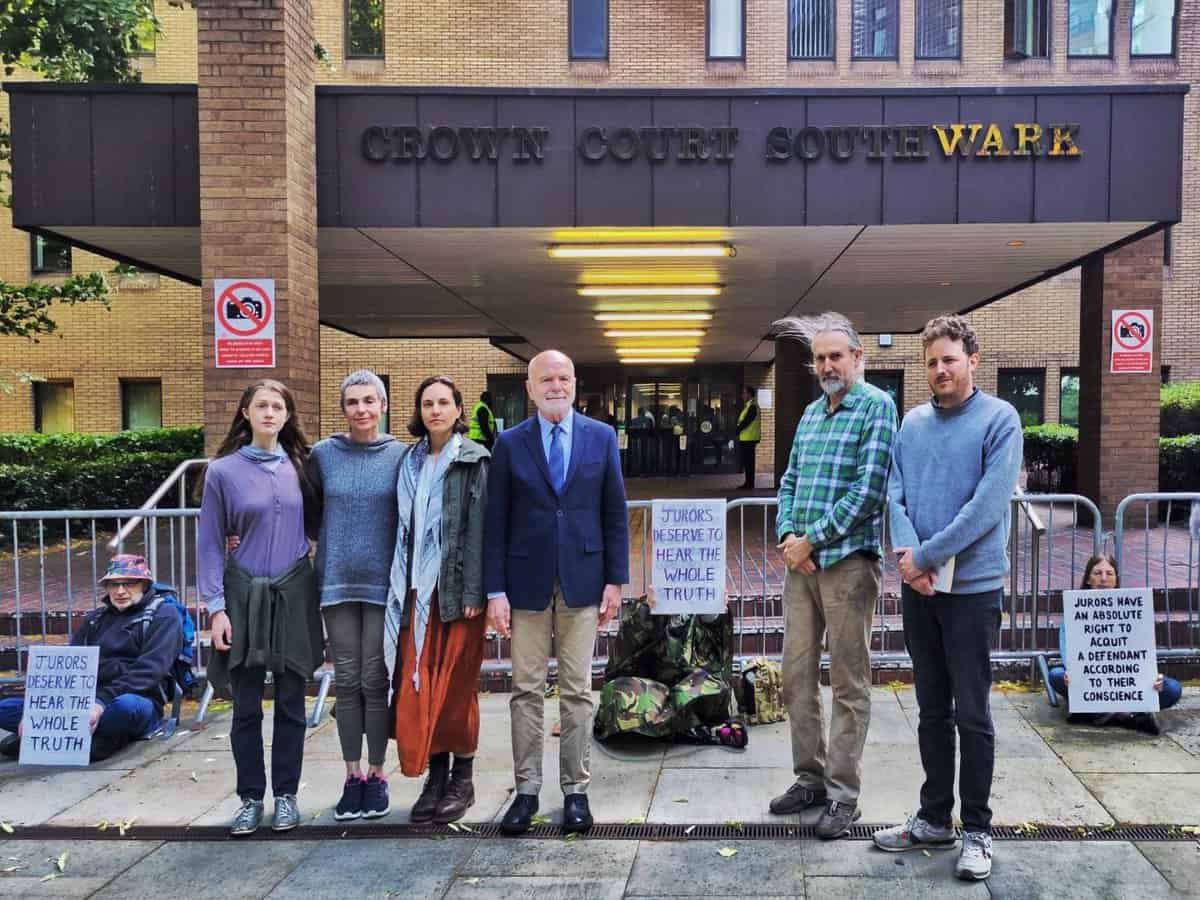
Roger Hallam, on trial for conspiring to block traffic on the M25 in 2022, said he wanted to ‘speak the whole truth’. Photograph: Ollie Millington/Getty
Accused speak out of turn about climate threat and challenge judge who orders jury to leave
There was chaos in the courtroom at a climate protest trial when two defendants stood and made statements defying the authority of the court.
At separate points during the trial on Thursday, Roger Hallam and Daniel Shaw, charged along with three others with conspiring to block traffic on the M25 in 2022, stood up in front of the jury and spoke out of turn.
Hallam, whose evidence was discontinued on Wednesday, stood up just as court got under way on Thursday and said: “I wish to communicate to the jury and the court that I was forcibly removed from the court yesterday for refusing to break my oath and speak the whole truth.”
Later on, while Louise Lancaster, a co-defendant, was in the witness box, Shaw, whose evidence was also discontinued on Wednesday, stood up from his place in the court and directly challenged the judge.
He said: “Climate change represents an existential threat to humanity. The court agrees with that. Why are you not trying the people causing this crisis?”
Each time the defendants continued speaking as the judge, Christopher Hehir, ordered the jury to leave the court.
Lancaster refused to submit to cross-examination by the prosecution, as Shaw and Hallam had done the previous day, prompting Hehir to discontinue her evidence.
Hehir told jurors: “Members of the jury, in your absence I had a discussion in open court with Miss Lancaster. In frank and straightforward terms she has told me she is not prepared to submit to cross-examination. In those circumstances her evidence is at an end.”
UN Special Rapporteur on Environmental Defenders under the Aarhus Convention and former UN Special Rapporteur on Human Rights Defenders Michel Forst is attending the ongoing trial of five Just Stop Oil supporters at Southwark Crown Court today. He is attending as an observer because of his serious concerns.
The special rapporteur’s office released a statement on 24th June detailing his views regarding the criminal prosecution of Daniel Shaw in this trial. The statement can be read here.
The Aarhus Convention, to which the UK is a signatory, aims to promote environmental democracy by ensuring public access to information, participation in decision-making, and access to justice in environmental matters. The Special Rapporteur monitors the implementation of the convention’s provisions by its parties, ensuring compliance with obligations related to access to justice. Additionally, the Special Rapporteur investigates complaints from individuals or groups alleging violations of their rights under the Aarhus Convention, assesses specific cases, and makes recommendations to ensure compliance.
Daniel Shaw, Cressie Gethin, Lucia De-Abreu-Whittaker, Louise Lancaster and Roger Hallam are currently on trial at Southwark Crown Court, charged with conspiracy to cause a public nuisance in connection with the M25 gantry actions in November 2022. They were arrested either pre-emptively in police raids at their homes after attending a Zoom call in which a Sun journalist was present, or arrested travelling near the M25 respectively. The Sun alleged it had ‘infiltrated’ the meeting and boasted of tipping off the police and enabling National Highways to secure a public injunction.
Some of these five were imprisoned for up to 113 days without trial. They were released subject to stringent conditions including a 10 pm to 7 am house curfew, not to be within a one-mile radius of the M25, no contact with other defendants and not to participate in any climate change demonstration.
In another trial involving Just Stop Oil supporters, which was the first under the new Public Order Act 2023 for a Section 7 offence, Judge Hehir who is overseeing the current proceedings barred all legal defences from the defendants and prohibited any mention of the climate crisis to the jury. This trial concluded with a conviction, and Judge Hehir is expected to sentence the defendants at a future date.
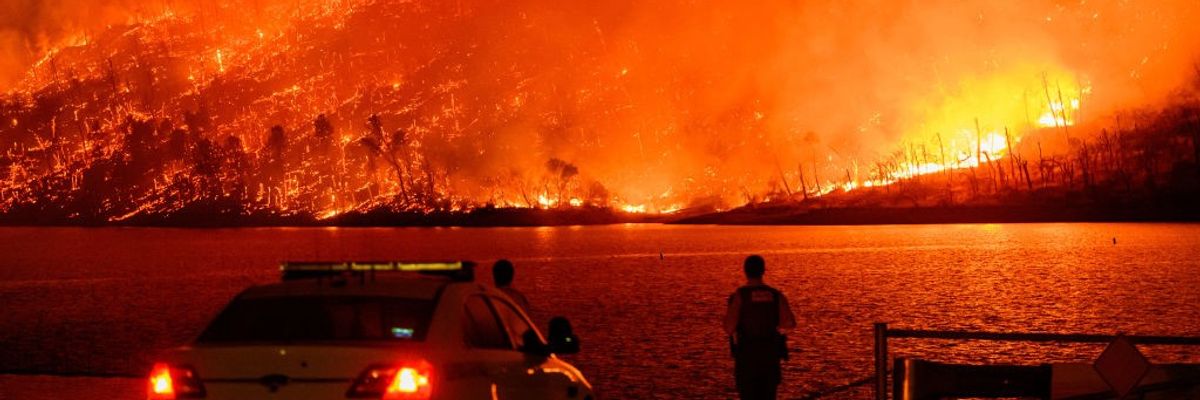
Law enforcement officers watch as the Thompson Fire burns over Lake Oroville in Oroville, California on July 2, 2024. (Photo: Josh Edelson/AFP via Getty Images)
“It cannot be stressed enough that this is an exceptionally dangerous and lethal situation,” the National Weather Service warned.
California Gov. Gavin Newsom on Wednesday declared a state of emergency in a northern county where a major wildfire has burned thousands of acres and forced the evacuation of thousands of residents amid near-record heat throughout much of the Golden State fueled by human-caused global heating.
The California Department of Forestry and Fire Protection (CAL FIRE) said shortly after noon local time Wednesday that the Thompson Fire, which began Tuesday morning in Butte County, had burned 3,568 acres with no containment in and around the city of Oroville, home to more than 20,000 people.
Citing an “imminent threat to life,” Newsom, a Democrat, issued an emergency declaration and said that “we are using every available tool to tackle this fire and will continue to work closely with our local and federal partners to support impacted communities.”
Millions of Californians are under an excessive heat warning FOR THE NEXT TEN DAYS with temps up to 115 degrees.
CAL FIRE said that more than 1,400 firefighters using 199 engines, 46 dozers, eight helicopters, and other equipment are battling the blaze. More than 28,000 Oroville area residents have been evacuated.
Red flag conditions are being exacerbated by low humidity and near-record temperatures throughout California. Oroville is expected to hit a high of 110°F on Wednesday, with daytime highs forecast to remain in the 110s through the holiday weekend. Dozens of daily, monthly, and all-time records could be broken throughout the state.
“It cannot be stressed enough that this is an exceptionally dangerous and lethal situation,” the National Weather Service’s (NWS) San Francisco Bay Area branch cautioned as it extended the red flag warning through Friday while preparing the public for the possibility of further extensions.
Daniel Swain, a climate scientist at the University of California, Los Angeles, said during a video briefing, “I’m not so sure that really any of us will have seen this many days at this sustained level of heat, both daytime and most importantly nighttime heat.”
Commenting on the wildfire and heatwave, Fossil Free Media director Jamie Henn said on social media that “we need the California Legislature to pass their climate superfund bill NOW to #MakePollutersPay for these fossil-fueled disasters.”
Introduced in April by California state Sen. Caroline Menjivar (D-20) but shelved the following month, S.B. 1497—the Polluters Pay Climate Cost Recovery Act—would require major fossil fuel producers to pay for their historic carbon emissions.
"We`ve seen a lot of comments & replies downplaying the severity of the heat we are expecting, & even accusing ourselves & other offices of "fearmongering". Make no mistake, this heat wave is extreme, and will likely be deadly as the days of extreme heat continue" – @NWSBayAreapic.twitter.com/mYOUhwN4Kz
The NWS said that as of Wednesday, more than 110 million people across the United States were facing either a heat advisory, watch, or warning. So far, 2024 has been the hottest year on record. Climate Central, a nonprofit news organization focusing on the worsening planetary emergency, said climate change has made the current California heatwave at least five times likelier.
Relief workers distribute food in Gaza City, Gaza on March 14, 2024. (Photo: Dawoud Abo Alkas/Anadolu via Getty Images)
Providing aid to Gaza and ensuring the reconstruction of the strip must not be a political item for negotiations. It is a basic human right that must be honored under any circumstance.
Humanitarian aid should never be politicized though, quite often, the very survival of nations is used as political bargaining chips.
Sadly, Gaza remains a prime example. Even before the current war, the Gaza Strip suffered under a 17-year hermetic blockade, which has rendered the impoverished area virtually “unlivable.”
That very term, “unlivable” was used by the then-United Nations Special Rapporteur for the Situation of Palestine, Michael Lynk, in 2018.
Scenes and images of thousands of starving Palestinians chasing after boxes of aid parachuted into Gaza will remain etched in the collective memory of humanity as an example of our failed morality.
As of mid-December of last year, “nearly 70% of Gaza’s 439,000 homes and about half of its buildings have been damaged or destroyed,” The Wall Street Journal reported, citing experts who conducted a thorough analysis of satellite data.
As tragic as the situation was in December, now it is far worse.
Sixty-seven percent of Gaza’s water, sanitation facilities, and infrastructure have been destroyed or damaged, according to a statement by the United Nations Agency for Palestinian Refugees, UNRWA, on June 19, leading to the spreading of infectious diseases, which has ravaged the beleaguered population for months.
The spread of disease is also linked to the accumulation of garbage everywhere in Gaza. Earlier, the refugees agency reported that “as of June 9, over 330,000 tons of waste have accumulated in or near populated areas across Gaza, posing catastrophic environmental (and) health risks.”
The situation was already disastrous. Indeed, three years before the war, the Global Institute for Water, Environment, and Health (GIWEH) said, in a joint statement with the Euro-Mediterranean Human Rights Monitor, that 97% of Gaza water was undrinkable and unfit for human consumption.
Yet, so far, any conversation on allowing aid to Gaza, or the rebuilding of Gaza after the war, has been placed largely within political contexts.
By shutting down all border crossings, including the Egypt-Gaza Rafah Crossing—which, on June 17, was set ablaze—Israel has politicized food, fuel, and medicine as tools in its war in the strip.
This is not a mere inference, but the actual statement made by Israeli Minister of Defense Yoav Gallant, who on October 9 declared that he had ordered a “complete siege” and that “there will be no electricity, no food, no fuel, no water” entering Gaza.
The timing of the statement, which has indeed been put into action from the first day of the war, suggests that Israel did not apply the strategy as a last resort. It was one of the most important pieces in the war stratagem, which remains in effect to this day.
Instead of pressuring Israel, Washington tried to obtain its own political leverage, also by politicizing aid. On March 2, the U.S. Air Force started airdropping aid into northern Gaza. A far more conducive and less humiliating option for Palestinians, however, would have been direct U.S. pressure on Israel to allow access to aid trucks arriving through Rafah, Karem Abu Salem Crossing, or any other.
Scenes and images of thousands of starving Palestinians chasing after boxes of aid parachuted into Gaza will remain etched in the collective memory of humanity as an example of our failed morality.
News reports spoke of people who were killed under the weight of the dropped “aid,” much of which had fallen in the Mediterranean, never to be retrieved.
Even the Gaza pier, constructed by the U.S. military on the Gaza shore in May, did little to alleviate the situation. It merely transported 137 aid trucks, according to the U.S.’ own estimation, enough to cover Gaza’s need for food for a few hours only.
During the years of siege, an average of 500 trucks arriving daily in Gaza has kept the 2.3 million population of the strip alive, though malnourished.
To deal with the outcome of the war, and to stave off current starvation, especially in the north, the number of aid trucks would have to be much higher. Yet, whole days would pass without a single truck making its way to the suffering population. This is unacceptable.
Not only did the international community fail at ending the war, it has also failed in delinking humanitarian aid from political and military objectives.
The problem with politicizing aid is that innocent civilians become a bargaining chip for politicians and military men. This goes against the very foundation of international humanitarian law.
According to the International Committee of the Red Cross, citing the Hague Regulations, “international humanitarian law is the branch of international law that seeks to impose limits on the destruction and suffering caused by armed conflict.” In Gaza, no such “limits” have been “imposed” by anyone.
Providing aid to Gaza and ensuring the reconstruction of the strip must not be a political item for negotiations. It is a basic human right that must be honored under any circumstance.
Meaningful pressure must be placed on Israel to end the Gaza siege, and urgent plans must be drafted, starting today, by representatives of U.N. humanitarian institutions, the Arab League, and Palestinian and Gaza authorities to be the entities responsible for delivering aid to Gaza.
Humanitarian aid to Gaza must not be used as political leverage, or a tool in a cruel war, whose primary victims are millions of Palestinian civilians.
Zionist Keir Starmes is quoted “I support Zionism without qualification.” He’s asked whether that means that he supports Zionism under all circumstances, whatever Zionists do.
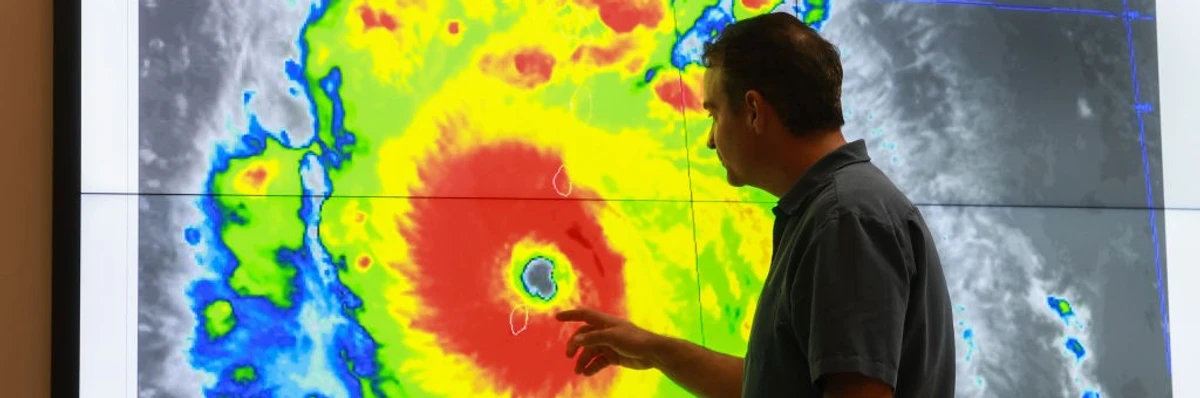
John Cangialosi, senior hurricane specialist at the National Hurricane Center, inspects a satellite image of Hurricane Beryl on July 1, 2024 in Miami, Florida. (Photo: Joe Raedle/Getty Images)
“Beryl isn’t ‘unbelievable,'” one expert said. “it’s what happens when you heat up the planet with fossil fuel pollution for decades.”
As Hurricane Beryl barreled toward Jamaica on Tuesday after killing at least four people in the Caribbean’s Windward Islands, climate scientists warned the record-breaking Category 5 storm is a present-tense example of what’s to come on a rapidly heating planet.
Even before the Atlantic hurricane season began on June 1, the U.S. National Oceanic and Atmospheric Administration predicted an 85% chance of above-normal activity and 17-25 total named storms this year. Matthew Cappucci, a meteorologist for The Washington Post‘s Capital Weather Gang, highlighted some records Beryl has already broken.
“There is a strong, well-documented link between the effects of human-induced climate change and the development of stronger, wetter storms that are more prone to rapidly intensify,” he wrote Tuesday. “Beryl sprung from a tropical depression to a Category 4 hurricane in just 48 hours, the fastest any storm on record has strengthened before the month of September.”
Hurricane Beryl has achieved the following: – Earliest Category 4 on record in Atlantic – Earliest Category 5 on record in Atlantic – Fastest intensification before September in Atlantic – Southernmost Category 4 on record
— Matthew Cappucci (@MatthewCappucci) July 2, 2024
Beryl is also the earliest Category 4 and 5 hurricane on record in the Atlantic, Cappucci pointed out. Previously, the earliest storm to reach the top level of the Saffir-Simpson Hurricane Wind Scale was Emily, in mid-July of 2005.
The Capital Weather Gang reported that Beryl “strengthened more Monday night, its peak winds climbing to 165 mph. It has surpassed Emily (2005) as strongest July hurricane on record. It’s early July but Atlantic is acting like late August.”
Certified consulting meteorologist Chris Gloninger emphasized that “the climate crisis has led to well-above-average ocean water temperatures and helped this storm explode.”
As Stefan Rahmstorf of the Potsdam Institute for Climate Impact Research and Potsdam University explained: “The heat in the upper ocean is the energy source for tropical cyclones. This heat is at record level, mainly caused by emissions from burning fossil fuel. That’s why an extreme hurricane season has been predicted for this year. It’s off to a bad start!”
Colorado State University meteorologist Philip Klotzbach on Monday shared graphics showing that “Caribbean ocean heat content today is normally what we get in the middle of September.”
One reason why #Hurricane#Beryl intensified to a Category 5 hurricane over two weeks earlier than any other Atlantic Cat. 5 on record is due to extremely high ocean heat content levels. Caribbean ocean heat content today is normally what we get in the middle of September. pic.twitter.com/dmEY7EFrLs
While some expressed disbelief over the storm, CNN extreme weather editor Eric Zerkel stressed that “Beryl isn’t ‘unbelievable’ or ‘defying all logic,’ it’s what happens when you heat up the planet with fossil fuel pollution for decades. The oceans store roughly 90% of that excess heat. The ocean is as warm as it typically is… when Category 4 storms form. June is now August.”
Acknowledging Beryl’s strength, Steve Bowen, a meteorologist who serves as chief science officer at the global reinsurance firm Gallagher Re, concluded that “this is a massive warning sign for the rest of the season.”
Looking beyond this hurricane season, which ends in November, University of Hawaii at Mānoa professor and [C]Worthy co-founder David Ho said, “Let’s remember that things are just going to get [worse] as we continue to consume nearly 100 million barrels of oil every day.”
The “historic” storm is sparking calls for action to phase out fossil fuels across the globe. Noting how Beryl “is breaking records and leaving a trail of destruction throughout the Caribbean,” the U.S.-based Sunrise Movementargued that “we must prosecute Big Oil for their role in causing devastation like this.”
In response to a climate scientist who shared a photo of some damage Beryl has already caused, Rahmstorf expressed hope that people around the world won’t “wait with voting for climate stabilization until extremes hit their homes.”
Let's hope that most people do not wait with voting for climate stabilisation until extremes hit their homes. Because then it's too late. https://t.co/0tjusPJuIu
— Prof. Stefan Rahmstorf 🌏 🦣 (@rahmstorf) July 2, 2024
Beryl made landfall Monday as a Category 4 hurricane on Carriacou, a Grenada island, and also affected St. Vincent and Grenadines. According to The Associated Press, at least four people were killed.
The U.S. National Hurricane Center said Tuesday afternoon that on its current path, “the center of Beryl will move quickly across the central Caribbean Sea today and is forecast to pass near Jamaica on Wednesday and the Cayman Islands on Thursday. The center is forecast to approach the Yucatan Peninsula of Mexico on Thursday night.”