Extinction Rebellion spray paint the offices of The Sun, Daily Mail and The Telegraph and call out suppression of truth on climate crisis

Extinction Rebellion has been taking on the tabloid media this morning in a series of actions calling out their blatant suppression of crucial news on the climate and ecological crisis. In London, three people met The Sun’s political investigative reporter Amir Razavi in a sting operation, where they posed as whistleblowers there to provide him with top secret information. The group questioned Razavi about his climate ethics, asking him to explain his newspaper’s 30-year campaign of climate lies and misinformation.

The Extinction Rebellion citizen journalists took the rare opportunity to ask why The Sun continues to withhold, deny and downgrade vital information on the scale of the climate crisis and its root causes, just days after Antonio Guterres likened the latest IPCC report to a “survival guide for humanity”.

Extinction Rebellion image, the Lightscraper

While this was happening, at the headquarters of Rupert Murdoch’s News UK at London Bridge, the Telegraph HQ in Victoria and the offices of the Daily Mail in Kensington, several people spray painted the buildings with green washable paint using fire extinguishers. A large banner with the words ‘CORRUPT AS FUCK’ was attached to multiple helium filled balloons at News UK and was floated up in front of the office windows on higher floors to highlight the destructive influence of media moguls such as Rupert Murdoch on democracy.

Steve Tooze of Extinction Rebellion and former Sun and Daily Mail journalist, said: “The mainstream media has a major role to play in delivering the truth to the general public about the climate and ecological emergency. They could and should be helping all of us come together around the clear need for change and providing people with the facts so we can work out how to transition away from fossil fuels and build a future that is safer, fairer, better for everyone. Instead, their business model thrives on division and click bait culture that sets people against one another. The reality is, the billionaire owned media uses this strategy to uphold the status quo so that those with power can hold on tightly to that power. 

“Extinction Rebellion is saying we’re not going to accept this anymore. People need to set aside their differences and come together if we’re going to stave off the worst of the climate crisis and build a better society, so we’re inviting everyone to join us at Parliament from 21st April to start creating the change we need. The mainstream press has a responsibility to help people find a way to achieve this rather than profiting from our division.”
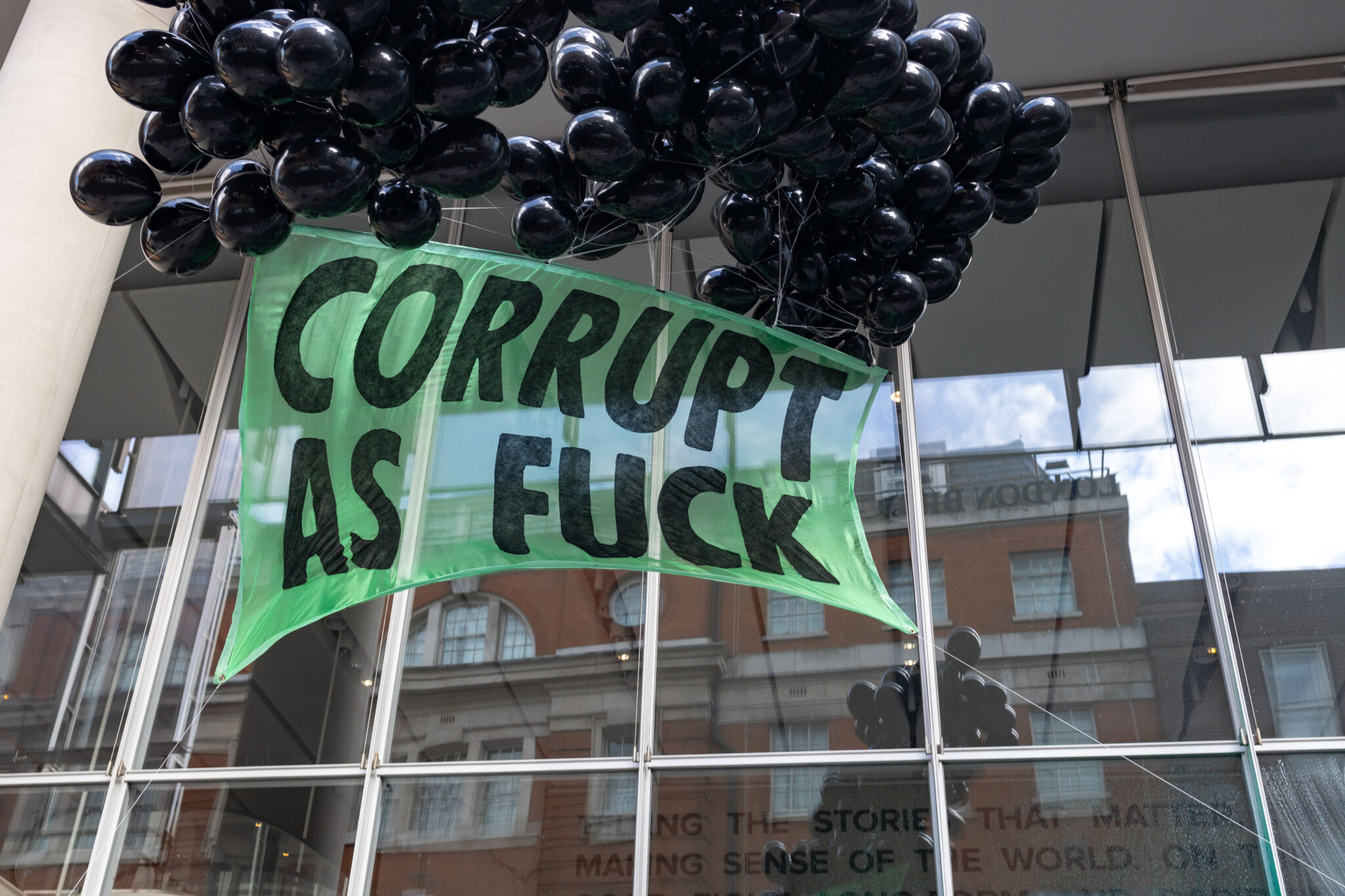
Extinction Rebellion image by Denise Laura Baker

Climate solutions are readily available, as outlined in the IPCC report. What is lacking is media reporting and government support, with the Telegraph suggesting for example that Monday’s IPCC report was “nothing but confected hysteria” and the The Daily Mail accused the authors of using “hysterical language”. The Sun devoted less than half a column on page two to the report. The Daily Mail has repeatedly published misleading or outright false information on the climate crisis. The Telegraph platforms and emboldens known climate deniers, and none of our national papers give this crisis the attention appropriate to the scale of the emergency.

Anna, a photographer from London who took part in the action, said: “I am taking this action to highlight the Daily Mail’s inadequate response to the climate and ecological crises. From editorials calling for an end to net zero policies, to their support of fracking, the Mail makes itself an enemy of our planet and the humans who depend on it. The news shapes our minds, and without honest reporting we risk sleepwalking into an unnecessarily difficult future.”

Tom Masters, Civil Servant from Bristol, said: “Extinction Rebellion demands that people tell the truth about the climate emergency.  This shouldn’t be too much to ask of a national newspaper that exerts significant influence over its readership and over the British government.

The Telegraph has been described as ‘Fleet Street’s last dinosaur of climate change denial’ by climate science expert Dr Bob Ward, and with good reason. Only this week they downplayed the severity of the IPCC report and labelled it as hysterical. I undertook today’s action to highlight the irresponsibility of mainstream press and their unwillingness to do their job and tell people the truth and hold power to account for their inaction.”
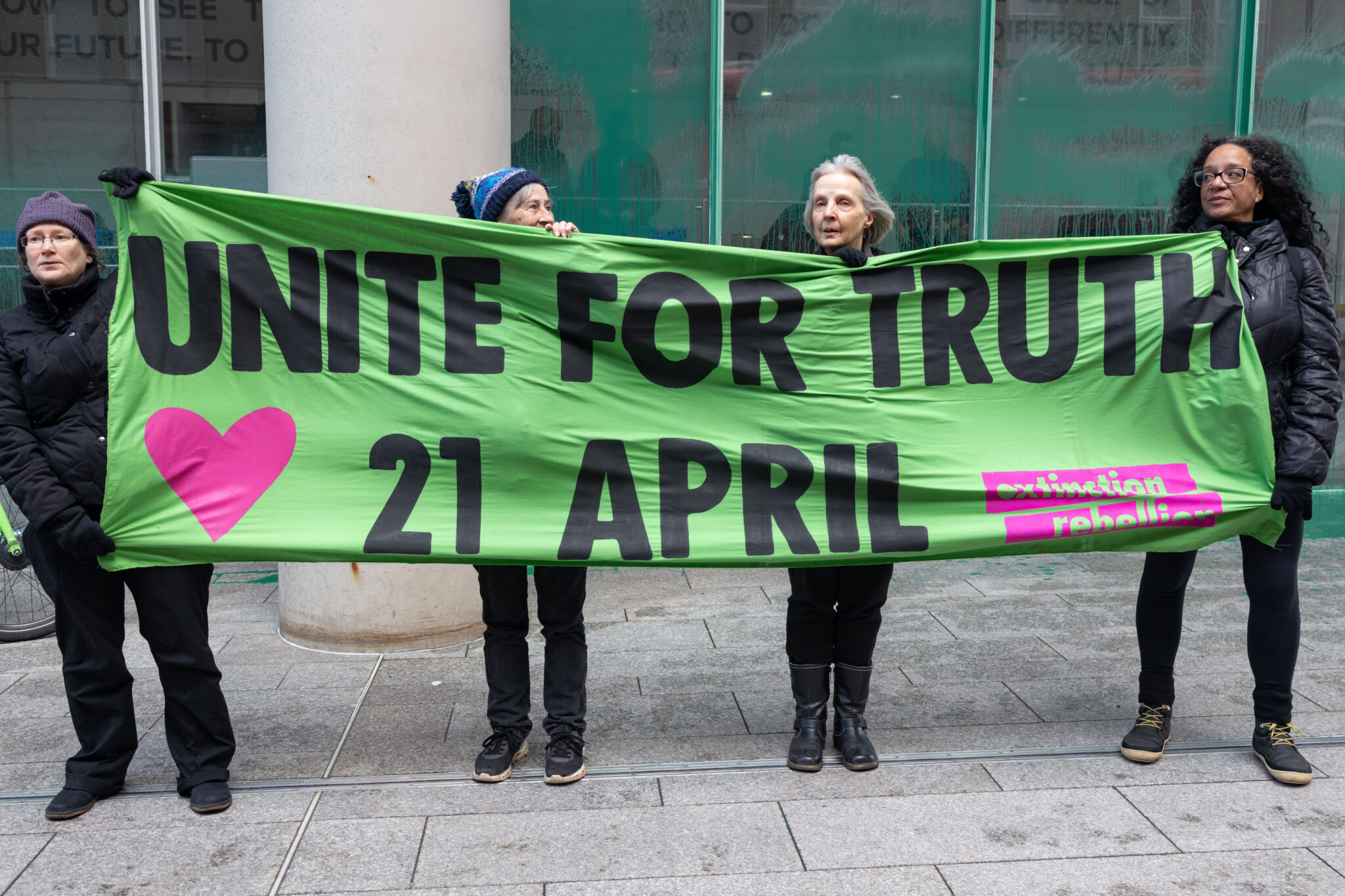
Protesters from Extinction Rebellion spray paint on the windows of News Corp, the headquarters of The Sun, in protest at their failure to report on the climate crisis, London, England, UK. Extinction Rebellion image by Denise Laura Baker

These actions are just 30 days before thousands will descend on Parliament for four days for The Big One. On Monday this week, dozens of major NGOs, trade unions, justice movements and more made their commitment to stand with Extinction Rebellion in April to face the intersecting crises of climate breakdown, the cost of living, attacks on democracy, and the shredding of essential public services, together.
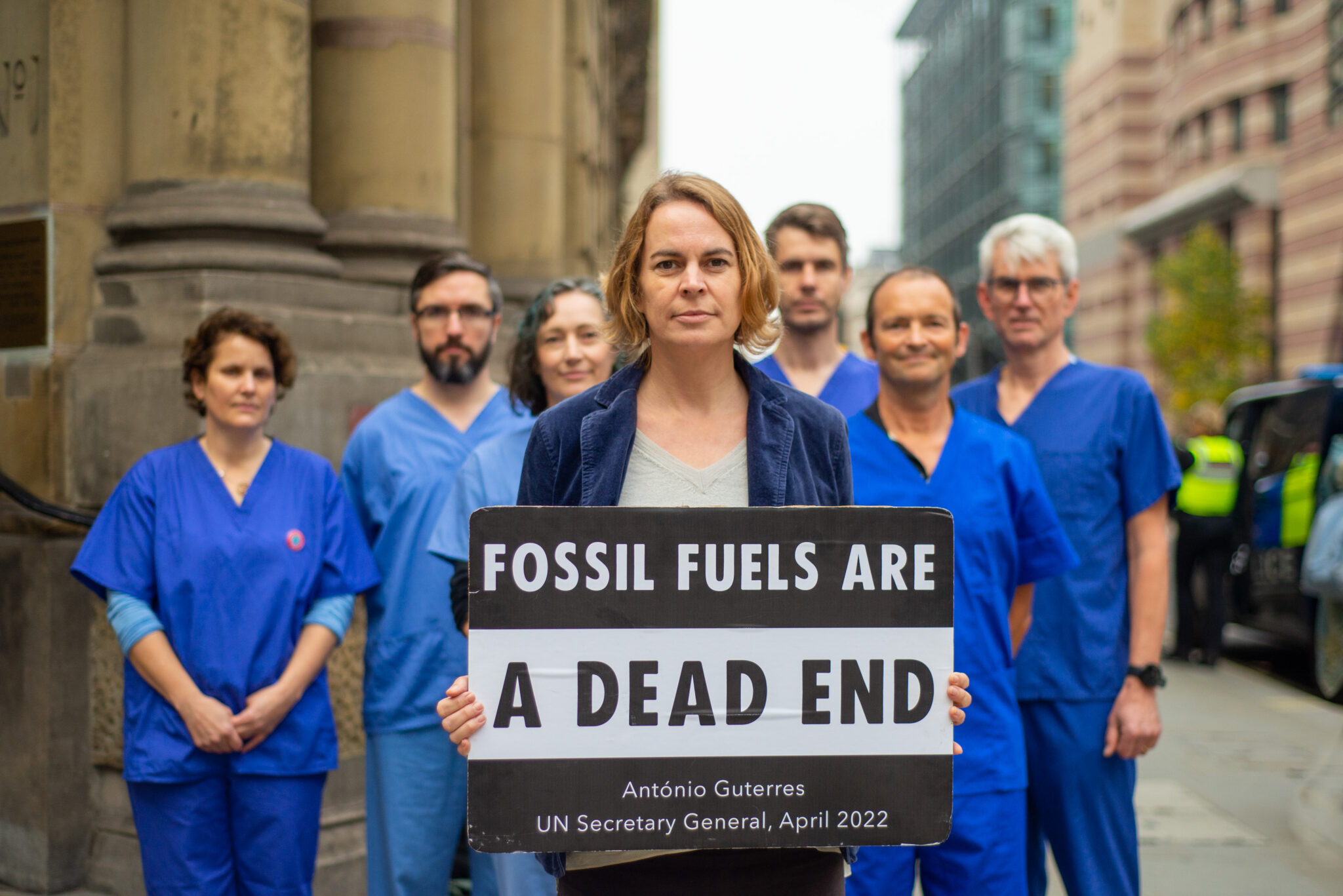

Continue ReadingExtinction Rebellion spray paint the offices of The Sun, Daily Mail and The Telegraph and call out suppression of truth on climate crisis

Latest IPCC climate report banished from the news

The latest IPCC climate report published yesterday at about 4pm [ed about 12 or 1pm] UK time is banished from the news – there’s not a mention of it this morning. It’s because it says that we have to just stop oil and gas expansion, we have to switch to alternative sources of energy now, that rich countries and energy companies have to dig into their pockets…

Continue ReadingLatest IPCC climate report banished from the news

Humanity at the climate crossroads: highway to hell or a livable future?

Humanity at the climate crossroads: highway to hell or a livable future?

Damian Carrington

The choice in the new IPCC report is stark: what we do in the next few years will determine our fate for millennia

After a 10,000-year journey, human civilisation has reached a climate crossroads: what we do in the next few years will determine our fate for millennia.

That choice is laid bare in the landmark report published on Monday by the Intergovernmental Panel on Climate Change (IPCC), assembled by the world’s foremost climate experts and approved by all the world’s governments. The next update will be around 2030 – by that time the most critical choices will have been made.

The report is clear what is at stake – everything: “There is a rapidly closing window of opportunity to secure a liveable and sustainable future for all.”

“Continued emissions will further affect all major climate system components, and many changes will be irreversible on centennial to millennial time scales,” it says. To follow the path of least suffering – limiting global temperature rise to 1.5C – greenhouse gas emissions must peak “at the latest before 2025”, the report says, followed by “deep global reductions”. Yet in 2022, global emissions rose again to set a new record.

Humanity at the climate crossroads: highway to hell or a livable future?

Continue ReadingHumanity at the climate crossroads: highway to hell or a livable future?

Dozens of civil society groups to stand with Extinction Rebellion for days of protest at Houses of Parliament

https://www.independent.co.uk/climate-change/news/extinction-rebellion-nhs-union-protest-b2303933.html

14.11.22_XR Docs_City of London Mags_Helena Smith_7224

NHS Workers Say No and Public and Commercial Services Union, one of the UK’s largest, among dozens of groups forming alliance with climate movement

NHS workers, trade unionists, anti-racism campaigners and climate activists will stand together in their thousands next month to protest the UK government’s apathetic and failed response to tackle interlocking crises, The Independent can reveal today.

Extinction Rebellion (XR) has called on 100,000 people to join days of demonstration dubbed “The Big One” at the Houses of Parliament in London from 21 to 24 April.

On Monday, the event received a major boost after dozens of groups, representing a diverse cross-section of society and interests, confirmed their participation.

XR said it would focus on “attendance over arrest and relationships over roadblocks” to call for the UK government to adequately address a multitude of interwoven crises – climate change, the cost of living, attacks on democratic norms, and the shredding of essential public services.

Continue ReadingDozens of civil society groups to stand with Extinction Rebellion for days of protest at Houses of Parliament

Airlines downplayed science on climate impact to block new regulations

Original article by Ben Webster and Lucas Amin republished from openDemocracy under a Creative Commons Attribution-NonCommercial 4.0 International licence.

Campaigners say the lobbying tactics used to argue against tougher measures on emissions echo those of the 20th century tobacco industry

Image of a dirty passenger aircraft

Airlines have been accused of using a “typical climate denialist” strategy after downplaying decades of scientific research on aviation emissions to block tougher regulations.

Campaigners said the lobbying tactics echoed those of the 20th century tobacco industry, which fought stricter measures by magnifying minor doubts on the health risks of smoking.

Documents obtained by openDemocracy show airlines and airports privately told the government there was too much uncertainty about the additional warming effects of flights to justify introducing new policies to tackle them.

But senior climate scientists contradicted the industry’s claims, saying the science is well established on what are known as aviation’s “non-CO2 effects”.

These are caused by emissions at high altitude of water, nitrous oxides, sulphur dioxide and particulate matter, with aircraft vapour trails, also known as contrails, a particular problem because they form clouds at high altitude that trap heat radiated from the Earth.

The Intergovernmental Panel on Climate Change estimated in a special report in 1999 that the total historic impact of aviation on the climate was two to four times greater than from its CO2 emissions alone.

Research in 2021 largely confirmed those findings and concluded aviation emissions were warming the climate at “approximately three times the rate of that associated with aviation CO2 emissions alone”. An EU study from 2020 also found non-CO2 emissions warm the planet about twice as much as CO2 emissions, but acknowledged there were “significant uncertainties”.

The Department for Transport considered regulating these non-CO2 impacts and asked for views on the issue in a consultation in 2021 on its proposed “Jet Zero strategy”.

Responses from airlines and airports, obtained under FOI by openDemocracy, reveal several used the same tactic of arguing the science was too uncertain to justify policies to address non-CO2 effects. Several recommended instead that the government should limit its action on the issue to funding further research into it.

‘A bit of a joke’

Airlines UK, a trade body that lobbies for airlines including British Airways (BA), easyJet and Virgin Atlantic, told the DfT that “the science around these [non-CO2 impacts] is not yet robust enough to form reduction targets”.

When asked during the Jet Zero consultation what could be done to tackle non-CO2 impacts, Ryanair said it was “too early to say until impact is better understood”.

Low-cost airline Wizz Air told the DfT: “There is too high a level of uncertainty of non-CO2 emission contribution to climate change for a policy to be formed.”

Airlines UK, Ryanair and Wizz – alongside others across the industry – called on the DfT to instead fund further research into the science of non-CO2 impacts.

The tactic appears to have worked, with the DfT announcing in the Jet Zero strategy last year that more work would be done with scientists and the industry to understand the issue.

The DfT did, however, say the government was “exploring whether and how non-CO2 impacts could be included in the scope of the UK ETS (emissions trading scheme)”.

Professor Piers Forster, an atmospheric physicist and member of the independent Climate Change Committee, told openDemocracy it was “completely wrong” for the aviation industry to claim the science on aviation’s non-CO2 effects was too uncertain to address them.

He said: “It’s a bit of a joke to say the effects are too uncertain to do anything about. We see their contrails and we’ve known for over 20 years that they are warming the planet. The industry should not hide behind uncertainty.”

He added that “the non-CO2 effects absolutely have to be accounted for in some way and action should be taken to reduce them”.

Milan Klöwer, a climate physicist at Massachusetts Institute of Technology, said airlines were adopting a “typical climate denialist strategy” by overstating the level of uncertainty about non-CO2 effects.

“Even in the best case they roughly double the effect of CO2 emissions on the climate,” he said.

He called on airlines to start accounting for their non CO2 effects and invest more in solutions, such as alternative fuels, which reduced those effects.

Rob Bryher, aviation campaigner at climate charity Possible, said: “These documents show that airlines cannot be trusted to decarbonise on their own. Demand management solutions like a frequent flyer levy, introducing fuel duty, carbon pricing, or management of airport capacity are going to be crucial.”

Matt Finch, UK policy manager of campaign group Transport & Environment, said: “Aviation’s non-CO2 impacts are somewhere between huge and absolutely massive. But the industry doesn’t want you to know that. Instead of confronting its environmental problems head-on, the industry copies the tobacco industry of the ’50s and the oil industry of the ’70s in casting doubt and disbelief around the science.”

BA said it was working with academics and experts on non-CO2 impacts of flying while Sustainable Aviation, an industry group that includes airlines, said it was committing to addressing them but reiterated more research was needed. Wizz Air said it was already addressing the impacts through a range of measures.

Some airlines ignore non-CO2 effects in schemes they support to help passengers calculate and offset the emissions of their flights.

BA’s emissions calculator states a one way flight from London Heathrow to New York emits 348kg CO2E (carbon dioxide equivalent) and charges £3.97 for offsetting.

Atmosfair, a German non-profit organisation which supports the decarbonisation of flying, calculates the same journey on a Boeing 777-200 – an aircraft type used by BA – emits 896kg and charges 21 euros (£18.37) for offsetting. Atmosfair’s emissions total comprises 308kg of CO2 emissions and 587 kg equivalent for “climate impact of contrails, ozone formation etc”.

While the DfT has so far failed to act on non-CO2 effects, they are mentioned in official advice to companies from the Department for Business Energy and Industrial Strategy on how to report their emissions.

It says: “Organisations should include the indirect effects of non-CO2 emissions when reporting air travel emissions to capture the full climate impact of their travel.”

A DfT spokesperson said: “Our Jet Zero Strategy confirmed our aim of addressing the non-CO2 impacts of aviation, by developing our understanding of their impact and possible solutions, and the UK is one of the leading countries working to address this issue.”

Sustainable Aviation Fuel

International Airlines Group (IAG), which owns BA, Vueling and Aer Lingus, told DfT’s Jet Zero consultation it could address non-CO2 emissions by supporting “sustainable aviation fuel” (SAF).

SAF is a jet fuel made from sources which the industry claims are sustainable, including cooking oil and animal fat. It performs in a similar way to kerosene but can produce up to 80% less CO2 depending on how it is made. It potentially also reduces contrails.

IAG told the Jet Zero consultation SAF was “the only viable solution for decarbonising medium and long haul flights”, which account for about 70% of global aviation emissions.

But further documents obtained by openDemocracy reveal IAG then lobbied the DfT to water down its SAF mandate.

In response to a separate consultation, IAG argued the SAF mandate should only cover flights within the UK or to the EU, and not the long haul flights on which British Airways makes most of its profits.

IAG also lobbied against a proposal to ban airlines from dodging the mandate by filling their tanks with cheap kerosene at overseas airports – a practice known as “tankering”.

A BBC Panorama investigation in 2019 revealed tankering by BA and other airlines was creating small financial savings but unnecessary carbon emissions.

IAG also argued against a proposal aimed at building demand for “power-to-liquid” jet fuel, which is produced by combining hydrogen made by renewable energy with carbon captured from the atmosphere.

Unlike other so-called sustainable jet fuels, power-to-liquid fuel does not involve a feedstock needed by other industries to decarbonise, such as used cooking oil or animal fat.

IAG called it “a very expensive pathway to directly decarbonise aviation”.

Sustainable Aviation, an industry group that includes airlines, said: “We are committed to addressing [non-CO2] impacts based on the scientific evidence, but further research is key to developing effective mitigation solutions, for example the use of sustainable aviation fuels (which contain lower contrail forming particulates), alongside steps such as optimising flight routes to avoid contrail formation.”

BA, IAG’s principal airline, said: “We are actively engaging with academics, experts within the industry and the government’s Jet Zero Council to take proactive steps to look into non-CO2 impact.”

Wizz Air said it was mitigating non-CO2 effects “through route optimisation and jet fuel improvements” and by using Airbus A321neo aircraft which reduced NOx emissions by 50%.

Ryanair did not respond to a request for comment.

Original article by Ben Webster and Lucas Amin republished from openDemocracy under a Creative Commons Attribution-NonCommercial 4.0 International licence.

Continue ReadingAirlines downplayed science on climate impact to block new regulations