Flying shame: the scandalous rise of private jets
https://www.theguardian.com/environment/2023/jan/26/flying-shame-the-scandalous-rise-of-private-jets
It was a Labour spokesperson who said the prime minister was behaving “like an A-list celeb”, after Rishi Sunak made his third trip by private jet in 10 days. Last week, he flew from London to Blackpool in a 14-seat RAF jet – a 230-mile journey that would have taken about three hours by train. The week before, he did the same to Leeds, which he could have done in two and a half hours by train, but which wouldn’t have looked nearly so glamorous – to go by the ludicrous photograph of him looking important and being saluted as he boarded the aircraft.
Private planes are up to 14 times more polluting, per passenger, than commercial planes and 50 times more polluting than trains, according to a report by Transport & Environment, a European clean transport campaign organisation. “It goes against the fact that the government has committed to net zero by 2050,” says Alice Ridley, a spokesperson for the Campaign for Better Transport. “They have said they want to see more journeys by public transport, walking and cycling. Taking a private jet is extremely damaging for the environment, especially when there are other alternatives that would be far less polluting and would also be cheaper.”
Private planes carry far fewer passengers, while about 40% of flights are empty, simply getting the aircraft to the right location. Flying short distances also means planes are less fuel-efficient.
“A private jet is the most polluting form of transport you can take,” says Matt Finch, the UK policy manager for Transport & Environment. “The average private jet emits two tonnes of carbon an hour. The average European is responsible for [emitting] eight tonnes of carbon a year. You fly to the south of France and back, that’s half a year in one trip.”
…
Shareholder Resolutions Push Big Banks to Phase Out Fossil Fuel Financing
Original article republished from Common Dreams under Creative Commons (CC BY-NC-ND 3.0).
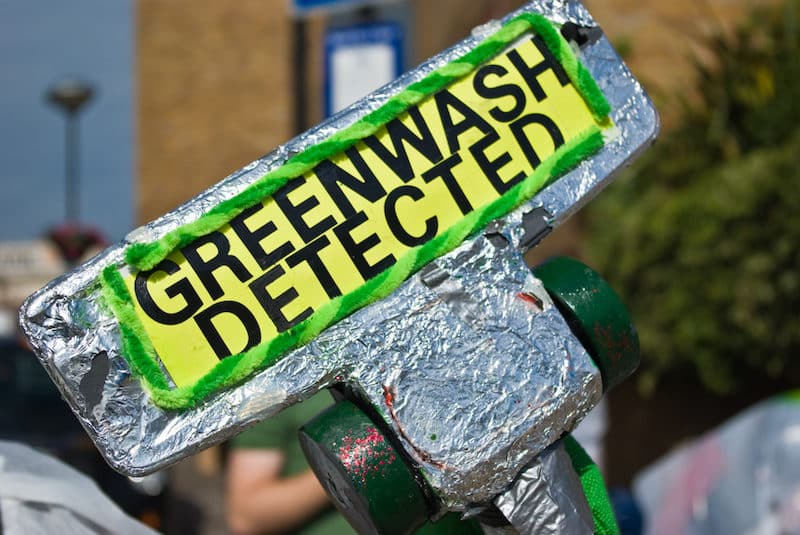
Any climate commitment from a bank that is still financing fossil fuel expansion is greenwashing, pure and simple,” said a Stop the Money Pipeline campaigner.
BRETT WILKINS Jan 24, 2023
Taking aim at Wall Street banks financing the oil, gas, and coal extraction fueling the climate crisis, a coalition of institutional investors on Tuesday announced the filing of climate-related shareholder resolutions in an effort to force “more climate-friendly policies that better align with” the firms’ public commitments to combating the planetary emergency.
In the resolutions, members of the Interfaith Center on Corporate Responsibility (ICCR) and Harrington Investments asked six banks—Bank of America, Goldman Sachs, JPMorgan Chase, Morgan Stanley, Citigroup, and Wells Fargo—to enact policies phasing out fossil fuel finance, disclose plans for aligning their financing with their stated near-term emissions reduction goals, and to set absolute end-of-decade emissions reduction targets for their energy sector financing.
Shareholders also filed climate resolutions at four companies—Chubb, Travelers, The Hartford, and Berkshire Hathaway—that insure fossil fuel projects.
“Each of the major banks has publicly committed to aligning its financing with the goals of the Paris agreement to achieve net-zero emissions by 2050, a target widely considered imperative to avoid catastrophic climate impacts and financial losses,” ICCR said in a statement. “Scientific consensus shows that new fossil fuel expansion is incompatible with achieving net-zero by 2050, yet these banks continue to invest billions of dollars each year in new fossil fuel development—a fact corroborated by a new Reclaim Finance report released last week.”
As Stop the Money Pipeline—a coalition of over 200 groups seeking to hold “financial backers of climate chaos accountable”—noted:
A slate of resolutions calling for policies to phase out financing for fossil fuel expansion was filed by the same investors at U.S. banks in 2022. They received between 9% and 13% support, which was a significant milestone for these first-of-their-kind proposals. This year’s fossil fuel financing proposals have been updated to encourage banks to finance clients’ low-carbon transition so long as those plans are credible and verified. The previous resolutions were supported by many major institutional investors, including the New York State and New York City Common Retirement Funds.
New in 2023 are the resolutions on absolute emissions reduction targets for energy sector financing filed by the New York City and New York State comptrollers, and the resolutions calling for disclosure of climate transition plans filed by As You Sow. The day before the resolutions were filed, Denmark’s largest bank, Danske, announced a phaseout of corporate financing for companies engaged in new coal, oil and, gas development.
“Any climate commitment from a bank that is still financing fossil fuel expansion is greenwashing, pure and simple,” Arielle Swernoff, U.S. banks campaign manager at Stop the Money Pipeline, said in a statement. “By supporting these resolutions, shareholders can hold banks accountable to their own climate commitments, effectively manage risk, and protect people and the planet.”
Dan Chu, executive director of the Sierra Club Foundation—which led the filing at JPMorgan Chase—lamented that “all major U.S. banks continue to finance billions of dollars for new coal, oil, and gas projects every year. Such financing undermines the banks’ net-zero commitments and exposes investors to material risks.”
“These shareholder resolutions simply ask banks to align their promises with their actions and to adopt policies to phase out the financing of new fossil fuel development,” Chu added.
Referring to a warning from the International Energy Agency, Kate Monahan of Trillium Asset Management—which spearheaded the Bank of America filing—said that “we will not be able to achieve the Paris agreement’s goal of limiting warming to 1.5°C if banks continue to finance new fossil fuel exploration and development.”
“Bank of America has publicly committed to the Paris agreement but continues to finance fossil fuel expansion with no phaseout plan, exposing itself to accusations of greenwashing and reputational damage,” Monahan contended. ” By continuing to fund new fossil fuels, Bank of America and others are taking actions with potentially catastrophic consequences.”
Our work is licensed under Creative Commons (CC BY-NC-ND 3.0). Feel free to republish and share widely.
Original article republished from Common Dreams under Creative Commons (CC BY-NC-ND 3.0).
‘Spectacular Failure of Climate Leadership’: Biden Outpaces Trump on Oil and Gas Permits
Original article republished from Common dreams under Creative Commons (CC BY-NC-ND 3.0).
Although President Joe Biden vowed on the campaign trail to phase out federal leasing for fossil fuel extraction, his administration approved more permits for oil and gas drilling on public lands in its first two years than the Trump administration did in 2017 and 2018.
According to the Center for Biological Diversity’s analysis of federal data released Wednesday, the Biden White House greenlit 6,430 permits for oil and gas drilling on public lands in 2021 and 2022—a 4.2% increase over former President Donald Trump’s administration, which rubber-stamped 6,172 drilling permits in its first two years.
“Two years of runaway drilling approvals are a spectacular failure of climate leadership by President Biden and Interior Secretary Deb Haaland,” said Taylor McKinnon of the Center for Biological Diversity. “Avoiding catastrophic climate change requires phasing out fossil fuel extraction, but instead we’re still racing in the opposite direction.”
Of the drilling authorized so far by the Biden administration, nearly 4,000 permits have been approved for public lands in New Mexico, followed by 1,223 in Wyoming and several hundred each in Utah, Colorado, California, Montana, and North Dakota.
According to the Center for Biological Diversity, these “Biden-approved drilling permits will result in more than 800 million tons of estimated equivalent greenhouse gas pollution, or the annual climate pollution from about 217 coal-fired power plants.”
Just last week, United Nations Secretary-General António Guterres told the elites gathered at the World Economic Forum in Davos that “fossil fuel producers and their enablers are still racing to expand production, knowing full well that their business model is inconsistent with human survival.”
Reams of scientific evidence show that pollution from the world’s existing fossil fuel developments is enough to push temperature rise well beyond 1.5°C above the preindustrial baseline. Averting calamitous levels of global heating necessitates ending investment in new oil and gas projects and phasing out extraction to keep 40% of the fossil fuel reserves at currently operational sites underground.
As a presidential candidate, Biden pledged to ban new oil and gas lease sales on public lands and waters and to require federal permitting decisions to weigh the social costs of additional planet-heating pollution. Although Biden issued an executive order suspending new fossil fuel leasing during his first week in office, his administration’s actions since then
have run roughshod over earlier promises, worsening the deadly climate crisis that the White House claims to be serious about mitigating.
“The president and interior secretary have the power to avoid a climate catastrophe, but they need to change course rapidly.”
The U.S. Department of Interior (DOI) argued on August 24, 2021 that it was required to resume lease auctions because of a preliminary injunction issued by U.S. Judge Terry A. Doughty, a Trump appointee who ruled in favor of a group of Big Oil-funded Republican attorneys general that sued Biden over his moratorium. In a memorandum of opposition filed on the same day, however, the U.S. Department of Justice (DOJ) asserted that while Doughty’s decision prevented the Biden administration from implementing its pause, it did not compel the DOI to hold new lease sales, “let alone on the urgent timeline specified in plaintiffs’ contempt motion.”
Just days after Biden called global warming “an existential threat to human existence” and declared Washington’s ostensible commitment to decarbonization at the COP26 climate summit in Glasgow, the DOI ignored the DOJ’s legal advice and proceeded with Lease Sale 257. The nation’s largest-ever offshore auction, which saw more than 80 million acres of the Gulf of Mexico offered to the highest-bidding oil and gas giants, was blocked in January 2022 by a federal judge who wrote that the Biden administration violated environmental laws by not adequately accounting for the likely consequences of resulting emissions.
Despite Biden’s pledge to cut U.S. greenhouse gas pollution in half by the end of this decade, the DOI’s Bureau of Land Management held lease sales in several Western states in 2022, opening up tens of thousands of acres of public land to fossil fuel production. The DOI has so far announced plans for three new onshore oil and gas lease sales in 2023. The first will offer more than 261,200 acres of public land in Kansas, Nebraska, New Mexico, and Wyoming to the highest-bidding drillers. The second and third will put a total of 95,411 acres of public land in Nevada and Utah on the auction block.
In addition, the Biden administration published a draft proposal last summer that, if implemented, would permit up to 11 new oil and gas lease sales for drilling off the coast of Alaska and in the Gulf of Mexico over a five-year period.
The president’s 2021 freeze on new lease auctions was meant to give the DOI time to analyze the “potential climate and other impacts associated with oil and gas activities on public lands or in offshore waters.” Nevertheless, the agency’s long-awaited review of the federal leasing program effectively ignored the climate crisis, instead proposing adjustments to royalties, bids, and bonding in what environmental justice campaigners described as a “shocking capitulation to the needs of corporate polluters.”
The U.S. Geological Survey has estimated that roughly 25% of the country’s total carbon dioxide emissions and 7% of its overall methane emissions can be attributed to fossil fuel extraction on public lands and waters. According to peer-reviewed research, a nationwide prohibition on federal oil and gas leasing would slash carbon dioxide emissions by 280 million tons per year.
The Biden administration “has not enacted any policies to significantly limit drilling permits or manage a decline of production to avoid 1.5°C degrees of warming,” the Center for Biological Diversity lamented. The White House even supported the demands of right-wing Democratic Sen. Joe Manchin (W.Va.)—Congress’ leading recipient of fossil fuel industry
cash and a long-time coal profiteer—to “add provisions to the Inflation Reduction Act that will lock in fossil fuel leasing for the next decade.”
On numerous occasions, including earlier this month, progressive lawmakers and advocacy groups have implored the Biden administration to use its executive authority to phase out oil and gas production on public lands and in offshore waters. A petition submitted last year came equipped with a regulatory framework to wind down oil and gas production by 98% by 2035. According to the coalition that drafted it, the White House can achieve this goal by using long-dormant provisions of the Mineral Leasing Act, Outer Continental Shelf Lands Act, and the National Emergencies Act.
“The president and interior secretary have the power to avoid a climate catastrophe, but they need to change course rapidly,” McKinnon said Wednesday. “Strong executive action can meet the climate emergency with the urgency it demands, starting with phasing out fossil fuel production on public lands and waters.”
Our work is licensed under Creative Commons (CC BY-NC-ND 3.0). Feel free to republish and share widely.
KENNY STANCIL Kenny Stancil is a staff writer for Common Dreams. Full Bio >
Original article republished from Common dreams under Creative Commons (CC BY-NC-ND 3.0).
Ken Loach blasts Sir Kir as a ‘tool of the establishment’ in new documentary
https://morningstaronline.co.uk/article/b/ken-loach-blasts-sir-keir-tool-of-the-establishment
LABOUR leader Sir Keir Starmer is a “tool of the Establishment” who deliberately undermined Jeremy Corbyn’s leadership of the party, legendary film director Ken Loach has charged.
In excerpts from his interview in the upcoming documentary film Oh Jeremy Corbyn — The Big Lie, the award-winning film-maker said the ex-shadow Brexit secretary acted like an “undercover spy cop” at his predecessor’s top table.
…
In the film, due to receive its premiere in central London next month, Mr Loach says: “Every now and then, to show that we’re a democracy, there’s a change of government.
“The party changes, but it’s so important from the Establishment’s point of view that the alternative party won’t change anything — and that’s what Starmer is proving now.”
…
https://morningstaronline.co.uk/article/b/ken-loach-blasts-sir-keir-tool-of-the-establishment