The realities of outsourcing: court interpreters mean miscarriages of justice

http://www.opendemocracy.net/ourkingdom/joel-sharples/realities-of-outsourcing-court-interpreters-mean-miscarriages-of-justice

Since court interpreting has been outsourced, wages have plummeted, quality of interpreting has dropped to a dangerous level, and the justice system has often ground to a halt. A foretaste of what to expect from outsourced services across the country?

Prior to February 2012 interpreters would be paid a flat rate of £85 for a court hearing, plus £15 an hour for travel time and reimbursement of the travel fare. When Crapita took over they slashed the rates to £16-22 an hour with no payment for travelling or waiting time. Bob described what this means in practice for interpreters. “For example, they might phone up and say, ‘We have a job for an Italian interpreter in central London. There will be about three hours work there.’ There might be, or there might not be, but it will take you an hour to get there from the suburbs, it will cost you £6 to get there and back, and when you get there you might only have an hour’s work.”

In this case, the interpreter could take home just £10 for three hours of their working day after travel expenses are deducted. Bob estimates that interpreters now earn between 25 and 40 percent of their previous rate for a court hearing. “If you’re only there for one hour, less your fare, less your national insurance, less your tax – forget it; it’s a waste of time.” In one particularly extreme example, a Vietnamese interpreter traveled from Newcastle to Sussex – a 560 mile round trip – only for the hearing to be adjourned after eight minutes.

The impact that these changes have had on court proceedings is also concerning. “Normally you would get there early because you need to be available for a conference before the hearing starts – a discussion in private with the lawyer and the client. Now you won’t be paid for that, so what happens is people turn up at 10am when the court starts, not at 9.30am when the conference starts. The lawyer will say to the court, ‘I haven’t had a chance to discuss things with my client because the interpreter wasn’t there,’ and the judge will say ‘All right, we’ll adjourn it for now and you can go down and talk to your client.’”

That’s if the interpreter shows up at court at all. In the first year of the contract over 600 trials were abandoned due to Capita failing to provide an adequate interpreter, and Crapita also received 6,417 complaints about the standard of the service they were providing – over 25 per working day! Bob describes their approach to interpreting as “like selling cabbages: pile ‘em high, sell ’em cheap, and you make more money. But interpreters are not cabbages. You need to be able to stand up to questioning in court. You need to be able to instantly interpret accurately for a long period of time. You need to understand the subtleties and the cultural and linguistic differences between the foreign language and the English language.”

The changes in pay and conditions have led to an exodus of experienced and qualified interpreters from the courts. Bob told me that many of his former colleagues have returned to their country of origin, no longer able to afford life in Britain, while others have turned to walking dogs, babysitting and cleaning in order to pay the bills. Others have found part-time teaching or written translation work, but at a fraction of their former salary.

As a result of this refusal to accept their terms, Capita have been forced to employ people with no experience of interpreting, let alone of working in a high-pressured court environment. A survey of Crapita interpreters conducted by Involvis found that 44.5% had not been asked to undergo any kind of assessment of their interpreting skills before being offered jobs by Capita. In one of the more farcical episodes of this mostly tragic saga one interpreter managed to register her pet rabbit as an interpreter with Applied Language Solutions (the company that was granted the initial contract before being taken over by Capita).

Continue ReadingThe realities of outsourcing: court interpreters mean miscarriages of justice

Theresa May must not further erode Britons’ rights to citizenship

http://www.theguardian.com/commentisfree/2013/nov/14/theresa-may-erode-britons-citizenship-right

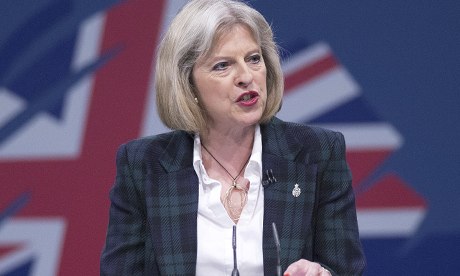
Image of UK Home Secretary Theresa May

Theresa May has said she wants to extend her powers to strip citizenship from suspected terrorists, even if doing so renders them stateless. Under current law the home secretary may denaturalise anyone with dual nationality whose UK citizenship is deemed by her to be “not conducive to the public good”. But if May has her way, even British-only nationals will lose their citizenship. The consequences will be profound.

In her first 30 months in office, May deprived 16 Britons of their citizenship, almost all of them on grounds of being linked to terrorist activities. One such ex-Briton is Mahdi Hashi, a Somali-born UK citizen who grew up in Camden, north London, and subsequently became involved in the al-Shabaab group. The home ecretary ordered that he be stripped of citizenship while he was in Somalia, cancelling his passport and right to re-enter Britain, and leaving him vulnerable to rendition to the US. Hashi now languishes in jail in New York on terror charges.

The vast majority of these former citizens were outside the UK at the time, giving the lie to their right to appeal to a UK court, and freeing the home secretary from full scrutiny. Few of them have ever been charged in a British court with any criminal offence. The protections that each and every British citizen should have against arbitrary decision-making and against a life without citizenship have been gradually and deliberately stripped away.

During the dark days of the second world war, when Britain was in mortal danger, only four people were stripped of citizenship. Theresa May has denaturalised more than four times that number of in the last three years alone. Now she wants to increase the state’s power further by consigning British-only citizens she deems undesirable to statelessness. We would do well to note the refugee scholar Hannah Arendt’s observation that one can measure the extent to which authoritarianism has infected a government by the number of denaturalisations it orders. This growing erosion of the security of UK citizenship needs to be reversed.

[It’s important to realise that we are discussing suspects. It is likely that there is little or any evidence against them and that action to deny nationality is essentially arbitrarily applied.]

Continue ReadingTheresa May must not further erode Britons’ rights to citizenship

Tony Blair kept Cabinet in the dark over Iraq ‘deliberately’ as ministers evaluated case for war in 2003

http://www.independent.co.uk/news/uk/politics/tony-blair-kept-cabinet-in-the-dark-over-iraq-deliberately-as-ministers-evaluated-case-for-war-in-2003-8937814.html

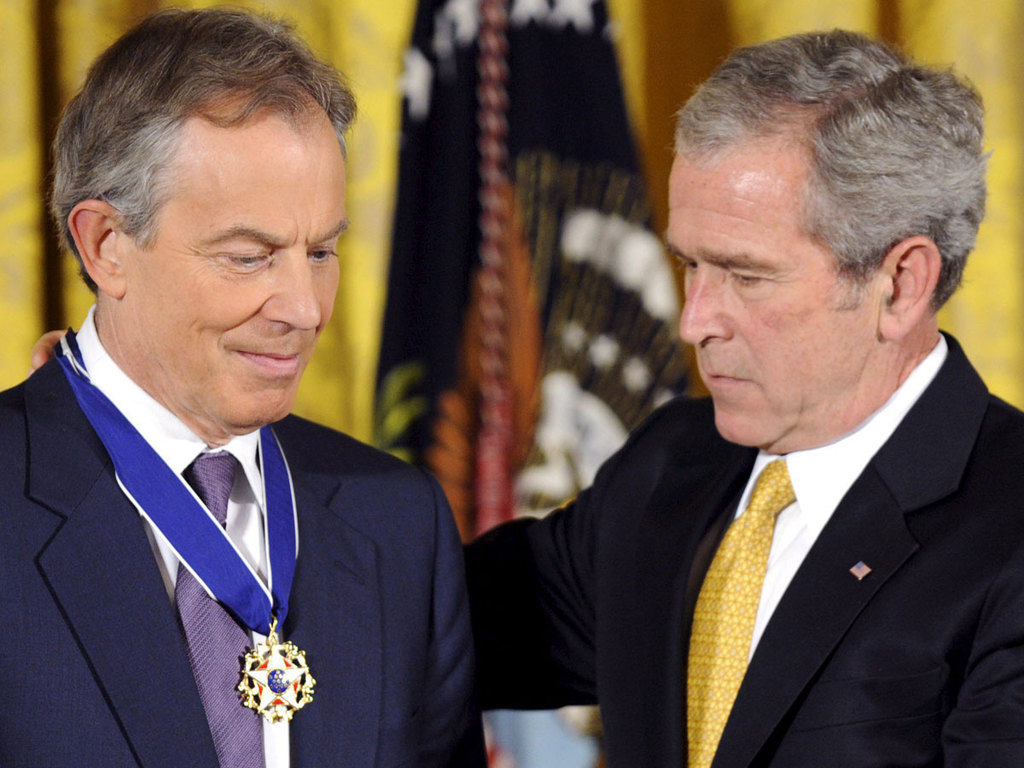
Traitor Tony Blair receives the Congressional Gold Medal of Honour from George 'Dubya' Bush
Tony Blair receives the Congressional Gold Medal of Honour from George ‘Dubya’ Bush

Members of Tony Blair’s Cabinet were “deliberately” excluded from seeing key documents drawn up by officials examining the case for war against Iraq, a former head of the Civil Service has claimed.

Lord Butler, who led the Review of Intelligence on Weapons of Mass Destruction in the aftermath of the invasion, said there was no shortage of “very good” information available to help ministers evaluate the case for war in 2003.

But in remarks to a Foreign Office seminar, Lord Butler suggested that the former Prime Minister had intentionally kept the documents away from the majority of the Cabinet. “A lot of very good official papers were prepared,” he said. “None was ever circulated to the Cabinet, just as the Attorney General’s advice [on the legality of the war] was not circulated to the Cabinet.

“So, the Cabinet was not as well-informed as the three leading protagonists: the Prime Minister, the Defence Secretary and the Foreign Secretary… I think that was deliberate, and it was a weakness of the machinery that underlay that particular decision.”

[This was obvious at the time.]

27/11/13 Having received a takedown notice from the Independent newspaper for a different posting, I have reviewed this article which links to an article at the Independent’s website in order to attempt to ensure conformance with copyright laws.

I consider this posting to comply with copyright laws since
a. Only a small portion of the original article has been quoted satisfying the fair use criteria, and / or
b. This posting satisfies the requirements of a derivative work.

Please be assured that this blog is a non-commercial blog (weblog) which does not feature advertising and has not ever produced any income.

dizzy

Continue ReadingTony Blair kept Cabinet in the dark over Iraq ‘deliberately’ as ministers evaluated case for war in 2003

Bedroom tax affected more than 522,000 people, first figures show

http://www.theguardian.com/society/2013/nov/13/bedroom-tax-figures-august

The government has released the first statistics showing the impact of the controversial subsidy withdrawal in August

More than 522,000 housing benefit claimants were subject to the bedroom tax in August and had their housing benefit reduced by an average of £14.50 a week, official figures show.

The Department for Work and Pensions (DWP) said the figures were the first official returns on the impact of the controversial tax, or bedroom subsidy withdrawal.

They show more than 429,000 people were penalised for having one bedroom too many, losing an average of £12.66 a week; more than 92,000 were penalised for having two excess bedrooms, and were losing an average of £23.43 a week.

The government said there had been a steady fall in the number of households affected, with 24,000 fewer claimants affected than in May.

Continue ReadingBedroom tax affected more than 522,000 people, first figures show

The Tories attempt to delete all pre-2010 speeches from the internet

[Related to a later post about the Conservative Party allowing access to historical material on its website.]

http://www.newstatesman.com/politics/2013/11/tories-attempt-delete-all-pre-2010-speeches-internet

The party’s commitment to transparency and freedom of information is wearing thin.

George Eaton

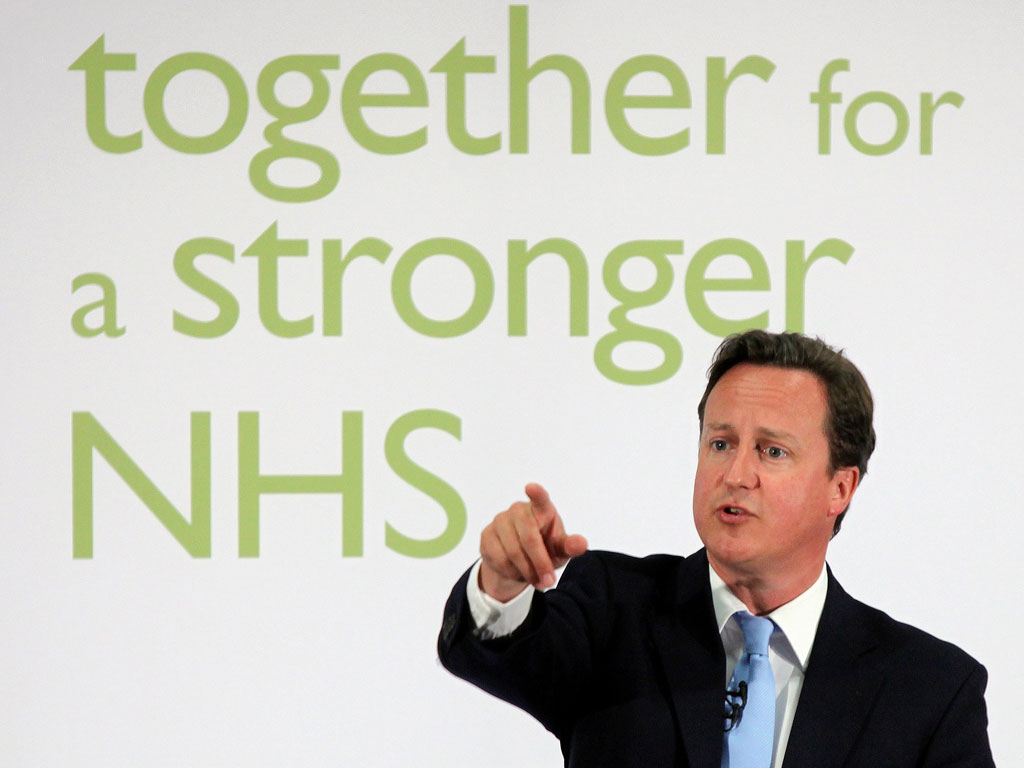
Image of David Cameron in front of a Conservative lie on the NHS

How’s David Cameron’s pledge to be the “most transparent” leader ever working out? Not very well judging by an extraordinary story from Computer Weekly. The site reports that the Conservatives have attempted to erase all speeches and press releases issued between 2000 and until May 2010 from the internet. That’s right; not just from their own site but from the Internet Archive, the largest publicly available digital library.

Mark Ballard reports:

“Sometime after 5 October, when Computer Weekly last took a snapshot of a Conservative speech from the Internet Archive, the Tory speech and news archive was eradicated.

Conservatives posted a robot blocker on their website, which told search engines and the Internet Archive they were no longer permitted to keep a record of the Conservative Party web archive…The erasure had the effect of hiding Conservative speeches in a secretive corner of the internet like those that shelter the military, secret services, gangsters and paedophiles.

The Conservative Party HQ was unavailable for comment. A spokesman said he had referred the matter to a “website guy”, who was out of the office.”

And before their words disappear down the memory hole, here’s what Cameron and George Osborne had to say about transparency and freedom of information before 2010.

Cameron told Google’s Zeitgeist Europe Conference on 22 May 2006:

“You’ve begun the process of democratising the world’s information. Democratising is the right word to use because by making more information available to more people, you’re giving them more power. Above all, the power for anyone to hold to account those who in the past might have had a monopoly of power – whether it’s government, big business, or the traditional media.”

On 11 October 2007, he told another Google conference in San Franciso:

“It’s clear to me that political leaders will have to learn to let go. Let go of the information that we’ve guarded so jealously.”

In an article for the Telegraph in 2011, he wrote:

“Information is power. It lets people hold the powerful to account, giving them the tools they need to take on politicians and bureaucrats. It gives people new choices and chances, allowing them to make informed judgments about their future. And it lets our professionals judge themselves against one another, and our entrepreneurs develop new products and services.”

As for Osborne, he declared in a speech on “Open Source Politics” at the Royal Society of Arts on 8 March 2007:

“We need to harness the internet to help us become more accountable, more transparent and more accessible – and so bridge the gap between government and governed.

The democratization of access to information…is eroding traditional power and informational imbalances.

No longer is there an asymmetry of information between the individual and the state, or between the layperson and the expert.”


The pre-election pledges that the Tories are trying to wipe from the internet

“No frontline cuts”, “no top-down NHS reorganisations”, “no VAT rise” – why the Conservatives are trying to erase all pre-May 2010 speeches and press releases from the internet.

he Tories have attempted to erase all pre-May 2010 press releases and speeches from the internet, but what could they possibly have to hide? Here are some suggestions.

1. No cuts to front-line services

As remarkable as it may seem, Cameron told Andrew Marr the weekend before the general election that a Conservative government would not cut any front-line services.

“What I can tell you is, any cabinet minister, if I win the election, who comes to me and says: “Here are my plans,” and they involve front-line reductions, they’ll be sent straight back to their department to go away and think again. After 13 years of Labour, there is a lot of wasteful spending, a lot of money that doesn’t reach the front line.”

Since then, 5,870 NHS nurses, 7,968 hospital beds, a third of ambulance stations, 5,362 firefighters and 6,800 frontline police officers have been cut.

2. “We have absolutely no plans to raise VAT”

In an interview with Jeremy Paxman on 23 April 2010, Cameron said: “We have absolutely no plans to raise VAT. Our first Budget is all about recognising we need to get spending under control rather than putting up tax.”

VAT was subsequently raised from 17.5 per cent to a record high of 20 per cent in George Osborne’s emergency Budget.

3. Cameron on child benefit: “I wouldn’t means-test it”

At a pre-election Cameron Direct event, the Tory leader issued this “read my lips” pledge: “I’m not going to flannel you, I’m going to give it to you straight. I like the child benefit, I wouldn’t change child benefit, I wouldn’t means-test it, I don’t think that is a good idea.” The coalition went on to abolish the benefit for higher earners in the Spending Review and froze it for three years.

4. NHS: “no more top-down reorganisations”

Perhaps most infamously, the Conservatives repeatedly promised before the general election that there would be no more “top-down reorganisations” of the NHS (Andrew Lansley, Conservative Party press release, 11 July 2007). In a speech at the Royal College of Pathologists on 2 November 2009, Cameron said: “With the Conservatives there will be no more of the tiresome, meddlesome, top-down re-structures that have dominated the last decade of the NHS.”

The coalition went on to launch the biggest top-down reorganisation of the service in its history.

(continues)

[Related to a later post about the Conservative Party allowing access to historical material on its website.]

Continue ReadingThe Tories attempt to delete all pre-2010 speeches from the internet