NHS news review
Caesarian section on demand, woman allergic to almost everything…
There’s very little NHS news so far today.
Caesarian section on demand, woman allergic to almost everything…
There’s very little NHS news so far today.
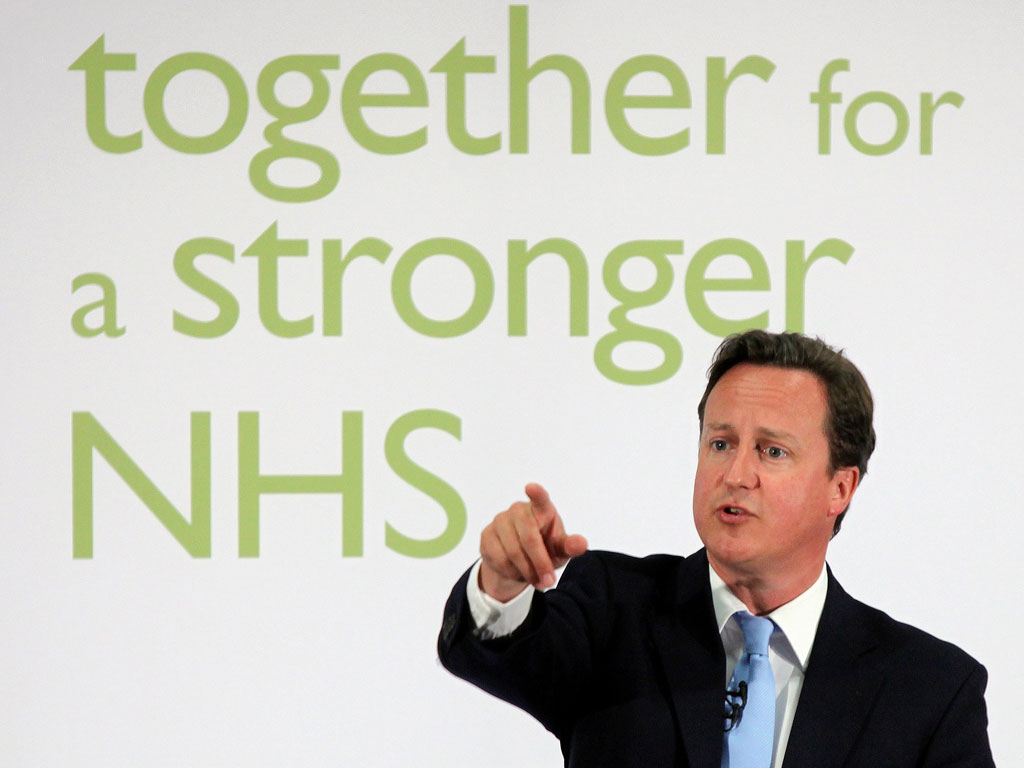
Heir to Bleir David Cameron is confirmed as being divorced from reality and full of shit.
It’s official: Cameron and the ConDem coalition government is cutting spending on the NHS. The Independent on Sunday reports that UK Prime Minister David Cameron breaks promise to increase spending on the NHS in real terms.
‘The official analysis from the House of Commons Library – which is independent of political parties – shows that in real terms, when inflation is taken into account, NHS spending fell by £800m in 2010-11.
The Prime Minister, whose party manifesto at the last election pledged to “increase health spending every year”, has gone out of his way to say the coalition government would protect frontline health cash.
In June Mr Cameron launched five NHS “guarantees you can hold me to and that I will be personally accountable for” – including “not to cut spending on the NHS, but to increase it”.
Yet Labour has claimed that the Treasury’s own figures reveal a cut in real terms in NHS spending from £102.8bn in 2009-10 to £102bn. Mr Cameron and the Health Secretary, Andrew Lansley, reject the claims, based on the Treasury’s July 2011 Public Expenditure Statistical Analyses (PESA).
The shadow Health Secretary, Andy Burnham, asked the Commons library to analyse the data and received the following information: “NHS total expenditure [fell] from £102.8bn in 2009-10 to £102.0bn in 2010-11 (in 2010-11 prices, rounded to nearest £0.1bn) – a real terms fall of 0.7 per cent.”
Mr Burnham said that another ministerial claim – that the PESA figures had not been adjusted according to the GDP deflator – rang hollow since the Treasury document made clear they were adjusted.
Mr Burnham has called on Simon Burns, the health services minister, to correct a statement to the Commons last week in which he said: “We gave a commitment in our election manifesto to provide a real-terms increase in funding in every year of the Parliament while we are in government – the lifetime of this Parliament. We have honoured that, and we will continue to do so in subsequent years.”
Mr Burnham told The Independent on Sunday: “It is official: David Cameron cut the NHS budget in his first year as Prime Minister despite promising he wouldn’t.
“He has inflicted the first real-terms cut in NHS spending for 14 years – the last being in the final year of the Major government.
“David Cameron stands at the dispatch box week after week claiming to have increased NHS spending. His hollow rhetoric will grate with NHS staff facing the reality of redundancies and patients who are being told they must wait longer for treatment. He is hopelessly out of touch.
“Cameron ruthlessly used the NHS to detoxify the Tory brand. But, one by one, he is breaking all the promises he made. He promised no top-down reorganisation, but launched the biggest since 1948.
“He promised a moratorium on hospital changes but is closing A&E and maternity departments up and down the land. He promised not to cut the NHS, but has done just that in his first year in office.”‘
27/11/13 Having received a takedown notice from the Independent newspaper for a different posting, I have reviewed this article which links to an article at the Independent’s website in order to attempt to ensure conformance with copyright laws.
I consider this posting to comply with copyright laws since
a. Only a small portion of the original article has been quoted satisfying the fair use criteria, and / or
b. This posting satisfies the requirements of a derivative work.
Actually, this post in the public interest as a record.
Please be assured that this blog is a non-commercial blog (weblog) which does not feature advertising and has not ever produced any income.
dizzy
Andrew Lansley’s choice of Commissioning Board Chairman Malcolm Grant says of NHS reforms “… this is all going to be very messy.” Camden New Journal reports on a transcript of his interview before a cross-party panel of MPs. Highlights include “… I am not a patient of the NHS.” and “Can I say that this is all going to be very messy?”.
Andy Burnham, shadow health secretary calls for the Health and Social Care / Destroy the NHS Bill to be abandoned.
Campaign group 38Degrees reports on its meeting with peers.
NHS cuts in Hull
Protest at ‘worst funded’ GP practice
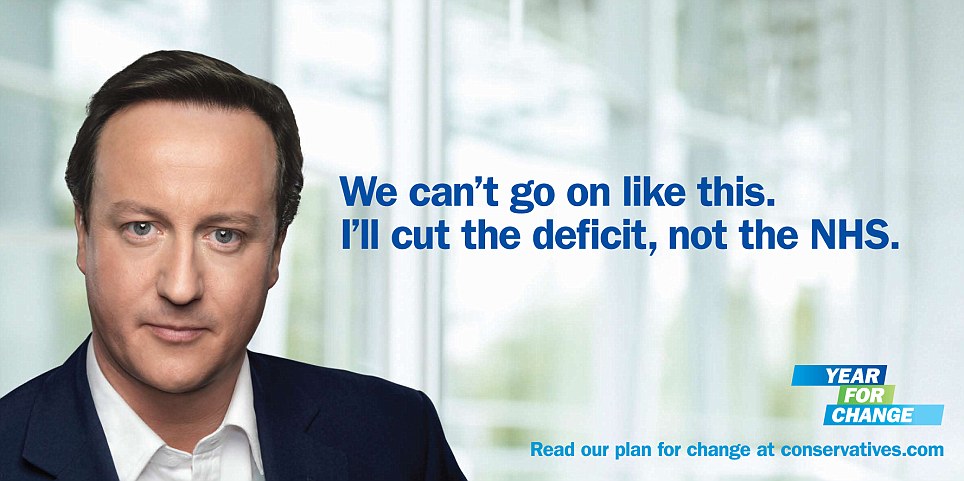
A few recent news articles about the UK’s Conservative and Liberal-Democrat (Conservative) coalition government – the ConDem’s – brutal attack on the National Health Service.
“I am not an NHS patient”, says new Commissioning Board Chairman Malcolm Grant | Camden New Journal
AS job interviews go, it was a merciless grilling.
When Professor Malcolm Grant, vying for one of the most important jobs in the health service, was asked to summon his “passion” for the NHS before a Parliamentary select committee, the University College London provost admitted it wasn’t the easiest of tasks.
A transcript, seen by the New Journal, reveals him pleading to the committee of MPs: “Come on, what do you want me to say?” He added: “I find it difficult to demonstrate because I am not a patient of the NHS.”
The lawyer had been nominated for the role of chairman of the NHS Commissioning Board – an independent body overseeing more than £100billion of NHS funding – by Conservative health secretary Andrew Lansley.
But after a lengthy interview for the £1,300-a-day post last Tuesday, the cross-party panel of seven MPs were not so impressed.
In conclusion, they said the panel did “not endorse Professor Grant’s candidacy”, adding that he had “demonstrated a lack of experience of NHS structures and processes”; “did not demonstrate to the committee a robust understanding of the issues”; received help in preparing his application by the Department of Health; and “demonstrated an assumption that his appointment was already confirmed”.
…
Labour renews calls to scrap healthcare bill
Introduced to the House of Commons in April 2011, the healthcare reform bill has generated significant opposition from all sides, including a unanimous vote calling for its revision by NHS nurses.
The motion in the name of Andy Burnham called on the Government to drop the Health and Social Care Bill, which is currently under consideration in the House of Lords and “accept the offer of cross-party talks on reforming NHS commissioning”.
The Bill passed to the House of Lords on 11th October, renewing calls from public sector unions to halt its passage.
“Peers must see through Lansley’s lies and vote against the Health Bill,” said Unison general secretary, Dave Prentis. “Just recently 400 health experts warned them to oppose it, joining a growing number of campaign groups, charities, patient groups, health unions and royal colleges.
Opposition to the reform proposals stems chiefly from the introduction of a competitive element from the private sector. Patient’s needs will be put before profit, argue the unions, whilst public funds will emerge as private profit.
Proponents simply argue that competition will reduce waste, and that there is no evidence that profits translate to reduced care.
38 Degrees | Blog | House of Lords meeting: how did it go?
I attended the meeting along with three lawyers – Stephen Cragg, our barrister, Alice Goodenough, our solicitor, and Peter Roderick, a public interest lawyer who runs the website dutytoprovide.net
I explained that we were there on behalf of over 480,000 38 Degrees members who had signed the Save Our NHS petition. I also explained that the legal advice we were going to be talking about was paid for by thousands of small contributions from 38 Degrees members. That clearly had an impact: it’s because hundreds of thousands of us have worked together to show how much we care about the NHS that they were meeting with us in the first place.
I explained that we were running this campaign because thousands of 38 Degrees members have voted to make it a top priority, and that the scrapping of the Secretary of State’s “duty to provide” was a top concern of ours.
Baroness Jolly set out some criticisms of our approach, which echoed comments made in the Guardian by Lord Paul Tyler, another Lib Dem Lord who voted with the government last week.Thankfully, given how badly the tone of Lord Tyler’s remarks had gone down with 38 Degrees members, Baroness Jolly was more polite and the words “crass” and “mob” did not feature! As lots of 38 Degrees members pointed out after that article appeared, it’s always woth engaging with criticisms like these and considering how we can campaign together most effectively. But it’s also true that if we’re being effective we should expect to be ruffling some feathers amongst politicians.
The legal team paid for by 38 Degrees members did a lot of the talking. They set out our position on the “duty to provide”, explaining that 38 Degrees members do not want to see the Secretary of State’s legal duties scrapped or watered down. We went into some of the issues in quite a lot of depth – the points we covered are set out in full in this legal briefing prepared for the Lords in advance of their debate next Tuesday. We explained why the options currently on the table aren’t yet adequate to address our concerns. Baroness Jolly highlighted that the Conservative minister, Lord Howe, had said in his closing speech at Second Reading that he is willing to consider any amendments on this issue. I said that that is encouraging, but that 38 Degrees members weren’t going to go away until our problems are properly addressed, in black-and-white, within the legislation.
…
Hull Royal Infirmary ward to shut as NHS trust looks to save £21m – Local stories – Yorkshire Post
Hull and East Yorkshire Hospitals NHS Trust, which has to make £95m budget savings over the next five years, says 46 beds in total will go.
A general medical ward will close and two others, neurology and stroke, will merge at the hospital.
The trust says there are no plans for redundancies, with all staff to be redeployed.
A final decision is expected at a board meeting in December.
Earlier this year it emerged that the hospital was planning to close 300 beds over five to 10 years, an announcement which caused unions serious concern, as they amount to 20 per cent of capacity.
…
Dr John Cormack has run the Greenwood practice in Chelmsford, Essex for 30 years and says that the PCT are refusing to fund the practice fairly.
Dr Cormack told Pulse: ‘We believe, on the basis of pretty good evidence, that this is the worst funded practice in the entire NHS.’
‘It goes without saying that this puts a question mark over the future of the surgery – at present, having exceeded our £25,000 overdraft we have had to ask the bank to increase it to £30,000 … and far from being able to draw a salary last month and the month before I’ve had to pay in a four figure sum in order that we stay solvent and the staff are paid.’
As a result Dr Cormack organized a demonstration of support where about 300 patients turned out.
…
Andrew Lansley to face a creative protest in York.
NHS cuts, NHS cuts, NHS cuts.
A few recent news articles about the UK’s Conservative and Liberal-Democrat (Conservative) coalition government – the ConDem’s – brutal attack on the National Health Service.
Health Secretary Andrew Lansley to face protest from York Stop The Cuts group (From York Press)
HEALTH Secretary Andrew Lansley will visit York this weekend to speak at a Conservative Party fundraiser – but he is set to face strong protests over his proposed NHS reforms.
Mr Lansley is due to be the guest speaker at a black-tie dinner organised by the York Conservatives organisation at the Merchant Adventurer’s Hall on Saturday night.
But campaigners from the York Stop The Cuts group plan to don tuxedos, ballgowns and masks and cut up a giant papier-maché pie outside the venue to voice their anger at what they claim is a threat to “slice up the NHS”.
…
Sussex mental health services ‘at full stretch’ (From The Argus)
Mental health services say they are operating at “full stretch” to balance rising numbers of service users and substantial funding cuts.
Senior figures at Sussex Partnership NHS Foundation Trust say they are being “challenged like never before” with some services seeing a 44% increase in people needing help over the last three years.
The rising number of people turning to the trust, which now sees more than 100,000 people every year, has been blamed on the pressures of increasingly difficult economic times.
The increase comes as the trust has to make major financial savings of more than £14 million in the current financial year.
…
Safety fears over £78m NHS cuts (From Clacton and Frinton Gazette)
Stephen Beresky, non-executive director for primary care trust NHS North East Essex, said he believed services were already “creaking” from the cost-saving measures.
At a board of directors meeting in Braintree recently, he questioned plans which will see £27.7million cut from the PCT’s budget and £51million from the amount it pays to providers such as the ambulance service, hospital and mental health care by 2015.
Mr Beresky, of Stanway, who runs a consultancy business, said: “The biggest cost in most organisations is staffing.
“The quickest way to have an impact on reducing budgets is staff.
“I want to make sure the the consequences of the decisions which are being taken are understood because, anecdotally, and a little less than anecdotally, they are creaking.”
The trust has not yet revealed how many jobs will be shed however it plans to slash staff pay by £4million between now and 2015.
…
Fears continue over A&E services at St Helier Hospital (From Your Local Guardian)
Fears continue about the future of A&E services in Sutton after NHS London bosses refused to give assurances over the future of St Helier hospital.
Following a presentation to councillors last week, Andrew Woodhead, head of mergers and acquisitions at NHS London, said the transition board was “working on an assumption that services would remain”, but would not guarantee that St Helier hospital could continue to provide A&E and maternity services in the future.
He said the proposed merger of St Helier and St George’s in Tooting was an organisational matter, which would allow the hospital to achieve Foundation Trust status.
But he said the future of services was being dealt with by a separate review of healthcare in south west London called Better Services Better Value.
…
The big NHS news today is further example of Liberal-Democrat spin that they opposed the Destroy the NHS Bill. Let’s get this clear: The NHS is getting destroyed by Conservatives and Conservative Liberal-Democrats acting in unison.
Lib-Dem peers have published a letter in the Guardian proclaiming that “The time for declaratory statements is past.” I had to find a definition for declaratory statements. It is unnecessarily complex and is inteded to exclude most people from understanding it but I think that it’s about explaining the law and stating the rights of parties. Liberal-Democrat hypocrisy is exposed by the letter also stating “Any politician who plays party political games with the NHS would be open to justified public criticism.” There you go then: justified public criticism.
The letter comes after Health Secretary Andrew Lansley signalled that he would accept an ammendment regarding ultimite responsibility for providing a health service. The ammendment appears to be a dimunition from responsibilty for providing a comprehensive health service to “retains ultimate responsibility” for NHS services. While I find this also a little complex it does seem to continue Con-Dem government’s attempts to evade responsibility for proving a health service but I’m waiting for commentary from others.
The Labour Party claims that Prime Minister David Cameron has broken three promises on the NHS: to end top-down reorganisations, to increase NHS funding in real terms and to stop hospital reconfigurations.
The British Medical Association repeats it’s call for the bill to be abandoned and states 11 changes it wants made.
The TUC highlights the government’s “credibity deficit”.
Campaign group Stroud Against the Cuts is continuing legal action against NHS Gloucestershire’s plans to transfer local health services to a community interest company.
trying to see what Gerada has to say about bloggers …
A few recent news articles about the UK’s Conservative and Liberal-Democrat (Conservative) coalition government – the ConDem’s – brutal attack on the National Health Service.
Letters: Lib Dems draw a line on the NHS | Society | The Guardian
In order to safeguard the NHS, free at the point of need and accessible to all, Liberal Democrat peers are putting forward amendments which require the secretary of state to remain responsible for health services being provided across England. In coming weeks we will seek to ensure that the NHS continues to develop cutting-edge research and that any income from private patients is used solely for the benefit of NHS patients. We will carry on scrutinising this bill so that the NHS can continue to deliver world-class care for patients.
Shirley Williams
Jonathan Marks QC
Paddy Ashdown
Liz Barker
Phil Willis
Floella Benjamin
Judith Jolly
John Shipley
John Alderdice
Navnit Dholakia
Monroe Palmer
Paul Strasburger
Diana Maddock
Chris Rennard
John Sharkey
Jenny Randerson
Ros Scott
Tim Clement-Jones
Dick Newby
Mike German
David Steel
Kishwer Falkner
Bill Bradshaw
Roger Roberts
Brian Cotter
Bill Rodgers
Anthony Lester
Sal Brinton
Paul Tyler
Mike Storey
Joan Walmsley
Trevor Smith
Related guff: Liberal Democrat peers end war with Tories over reform of NHS | Society | The Guardian BBC News – NHS bill: Lib Dem peers signal end to rebellion
David Cameron has ‘betrayed the NHS’, claims Labour | GPonline.com
Labour said it was taking its fight against the Bill directly to the prime minister for ‘writing cheques in opposition that he couldn’t cash in government’.
In a debate in the House of Commons on Wednesday, shadow health secretary Andy Burnham will accuse the prime minister of breaking three personal pledges on the NHS.
He is expected to criticise David Cameron for performing a U-turn on his pre-election promise to end top-down reorganisation in the NHS. He will also say the government’s pledge to increase NHS funding in real terms has not been met, and that the government has broken a pledge to enforce a moratorium on hospital reconfiguration.
…
BMA highlights recommended changes to health bill – News – Practice Business
The BMA outlines 11 areas of significant concern it has with the current draft of the legislation, as well as a call for the “mitigation of damage” to the NHS which it believes the bill will cause.
Included in these recommendations is an amendment making it explicit that increasing patient choice will not be given greater priority than ensuring fair access for all, a call for the secretary of state to retain ultimately responsible for the provision of comprehensive health services and a reduction of the overly restrictive powers granted to CCGs.
The BMA also expressed a wish for the government to be clearer concerning the role and the future role of the CCGs, and that the secretary of state should have a duty to ensure there is an effective system for delivering medical education and training.
Dr Hamish Meldrum, chair of the BMA Council, commented on the publication, stating: “The BMA’s preferred option is for the Health and Social Care Bill to be withdrawn – However, during this stage of the parliamentary process, there is scope for further significant change to be made.”
He added: “We have today set out the areas where we believe there still need to be amendments. We hope the Lords will agree with us and change the proposed legislation, limiting the damage this Bill could do to the NHS.”
Reforms have a ”credibility deficit” – Public Service
In response to the government’s Open Public Services white paper, the TUC said a market-led approach to reform was increasing the private sector takeover of public services and public sector workers were turning against the measures:
The TUC pointed out that while health ministers were promoting social enterprise in the UK, NHS Surrey awarded the contract for its community health care services to private provider Assura Medical (75 per cent owned by the Virgin Group) rather than the government’s social enterprise champions Central Surrey Health.
…
NHS Gloucestershire has put on hold its plans to transfer community health services and a £100m budget from the local health service to Gloucestershire Care Services, a company spun out of the local primary care trust.
Jan Stubbings, the trust’s chief executive, said she had agreed not to sign the contracts needed to effect the transfer before the outcome of a legal hearing.
“Concluding the arrangements for the transfer is in the interests of patients and staff and will ensure service continuity and stability,” said Stubbings. “Timely resolution of outstanding legal matters is also in the interests of the taxpayer and public funds.”
Campaign group Stroud Against the Cuts said the pause followed a judicial determination that trust should not finalise its proposed transfer of more than 3,000 NHS health staff and a variety of health services out of the NHS, after a legal case presented by its solicitors.
The group has claimed that the proposed transfer would be highly damaging to NHS services in Gloucestershire. James Beecher, a co-ordinator of Stroud Against the Cuts, said that if the challenge is successful it will force managers to consider options which have been successfully implemented elsewhere in the country and would keep services and staff within the NHS.
…