I support …

Reasonable and fair – who can disagree with that?

Reasonable and fair?

Well, there’s self-determination of course ~ self-determination without those bombs raigning down … +++is’nt that Neo-Liberal bullshit instead of our bullshit?+++

No, it’s your bullshit.

Then there’s being fair about caring for people who are so unfortunate to being ill without bags of money or health insurance (poor people).

He’s your Tory shit total NHS Abolitionist. [edit: Abolutionist]

[BTW I have a fully functioning gearbox]


Continue ReadingI support …

NHS news review

“Liberals” and “Democrats” to meet with whole-hearted NHS abolitionist and orange-booker (Tory) Nick Clegg.

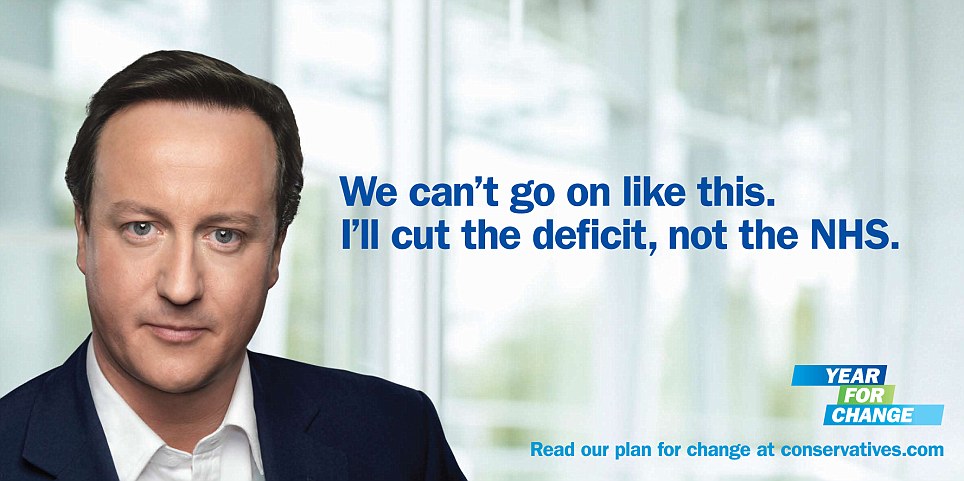
Conservative election poster 2010

Nick Clegg faces stormy conference as activists vent fury at NHS reform – UK Politics, UK – The Independent

Nick Clegg faces a challenge to his authority at the Liberal Democrats’ annual conference as party activists plan to rebel over four of the Coalition Government’s policies.

by Andrew Grice

When the Birmingham meeting opens tomorrow, grassroots members will challenge a ruling by conference managers to deny delegates a vote on the Government’s controversial NHS reforms. Although Mr Clegg extracted concessions from David Cameron, some Lib Dems believe they did not go far enough.

A conference vote in favour of further amendments to the NHS and Social Care Bill could undermine Mr Clegg’s attempt to convince the public that the Lib Dems are punching above their weight inside the Coalition.

The party is more democratic than the Conservatives or Labour and their conference decides party policy. Some activists fear that the current plan to stage a health debate without a formal vote would mark the first step towards the event becoming a “Conservative-style rally.”

Evan Harris, vice chairman of the party’s federal policy committee, said yesterday: “There is a lot of anxiety among party activists that the conference is being turned into an event where votes are avoided. That’s not our style.” Grassroots revolts are also in prospect over the Government’s plans to cut £350m from the legal aid budget and reduce state benefits for cancer patients and over its response to last month’s riots.

Lawyers plan to confront Mr Clegg over the withdrawal of legal aid from most cases of family breakdown, medical negligence, immigration, debt and welfare benefit, and to make claimants to pay legal fees out of compensation payments. The moves were rejected in a vote at the party’s spring conference.

Alistair Webster, chairman of the Liberal Democrat Lawyers’ Association, said: “I don’t think that, either inside the Government or in the parliamentary party, people have done anything like enough to push the [party’s] agenda. I’m more than disappointed – I’m appalled.”

27/11/13 Having received a takedown notice from the Independent newspaper for a different posting, I have reviewed this article which links to an article at the Independent’s website in order to attempt to ensure conformance with copyright laws.

I consider this posting to comply with copyright laws since
a. Only a small portion of the original article has been quoted satisfying the fair use criteria, and / or
b. This posting satisfies the requirements of a derivative work.

Please be assured that this blog is a non-commercial blog (weblog) which does not feature advertising and has not ever produced any income.

dizzy

Continue ReadingNHS news review

NHS news review

Colin Leys – co-author of ‘The Plot Against the NHS’ – has an article at Opendemocracy.

The NHS will be privatised – it doesn’t matter what the British people want | openDemocracy

In voting for the third reading of Andrew Lansley’s Health and Social Care Bill last week MPs voted to replace the NHS as a public service with a system of competing businesses – foundation trusts, social enterprises and for-profit corporations.

The government’s claim that the Bill does not mean privatisation is plainly specious: the truth of the matter is to be found in what Lansley’s health minister, Lord Howe, told a meeting of private health businessmen on the day the Bill was approved. He said it presented ‘huge opportunities’ for the private sector, and noted that commissioners of health care would be barred from favouring NHS providers. The truth is also to be found in the government’s leaked plans to hand over the management of NHS hospitals to private companies, and in the current and promised large-scale opening up of NHS work to ‘any qualified provider’.

Conservative election poster 2010

Lord Howe reiterated Tony Blair’s dictum that it doesn’t matter who provides care, so long as it is free to the patient. What this does is to treat as irrelevant everything that follows from introducing market dynamics. The basic fact about health care is that high quality care depends on a sufficient ratio of skilled staff to patients, whereas in the long run profits can only be made by reducing the skill-mix (to lower the wage bill) and cutting staff ratios. The resulting decline in care quality is already evident in privatised long term care and home care, and is now beginning to be seen in community health services and GP services. Once NHS trusts have to compete with for-profit companies they will be forced to follow suit.

The erosion of quality will be reinforced by two other powerful factors: a) the cuts being imposed in the NHS budget, leading to the withdrawal of some services and the scaling back of others; and b) rising costs due to marketisation.

The costs of market-based health care – from making and monitoring multiple and complex contracts, to advertising, billing, auditing, legal disputes, multi-million pound executive salaries, dividends, fraud, and numerous layers of regulation – will eventually consume 20 per cent or more of the health budget, as they do in the US. Neither the Care Quality Commission nor NHS Protect (the former NHS Counter-Fraud Unit) is remotely resourced enough, or empowered enough, to prevent the decline of care quality or the scale of financial fraud that the Bill will introduce.

The effect will be that people with limited means will be offered a narrowing range of free services of declining quality, and will once again face lengthening waits for elective care. To get high quality and more comprehensive care people will have to pay for private insurance and private care, if they can afford to. More and more NHS hospital beds will be occupied by private patients, further reducing the resources available for free care. Fixed personal budgets, like those already given to people for social care, are to be introduced for a growing range of chronic conditions, allowing those with resources to top up their allocations while leaving the rest to make do with ‘basic’ NHS provision.

None of this is wild speculation. It is either already happening or announced or readily foreseeable on the basis of current policy. To deny that the Bill means privatisation and the end of the NHS as a comprehensive service equally available to all is like denying that the earth is round.

The fact that MPs have nonetheless endorsed the Bill reveals something more serious than an ideological blind spot. It shows that they don’t really care that they are flouting the wishes of the electorate. Cameron promised categorically that there would be no further top-down reorganisation of the NHS, but is pushing through a reorganisation that amounts to a destruction of it, against the known wishes of a large majority of voters. Governments, we are told, must often take unpopular decisions. But this is not some incidental measure. We are talking about something fundamental to what, for more than half a century, has played a key part in making Britons equal citizens, and Britain a civilised and humane country. If democracy doesn’t mean that governments have to respect public opinion on something as important as this, what does it mean?

It is no less depressing that the Department of Health has been reduced to peddling more and more brazen lies, such as its ‘Department of Health Myth Buster’ document, published to coincide with the Third Reading debate. The principle seems to be that that if an official lie – such as that the Health Bill does not mean privatisation – is repeated often enough, most people will feel it must be true. Democracy depends on voters having trustworthy information. If we cannot trust departments of state, run by public servants, to tell the truth, who can we trust?

Selected excerpts from ‘The Plot Against the NHS’ by Colin Leys and Stewart Player. Chapter One is available here. I highly recommend this book available from Merlin Press for £10.

The Plot Against the NHS #1

The Plot Against the NHS #2
Continue ReadingNHS news review

NHS news review

Conservative election poster 2010

A few recent news articles about the UK’s Conservative and Liberal-Democrat coalition government – the ConDem’s – brutal attack on the National Health Service.

Save our NHS | The Socialist 14 September 2011

After minimal amendments, and in the face of continued public opposition, Andrew Lansley’s Health and Social Care Bill has passed through its third and final reading in the House of Commons.

The public sector workers’ union, Unison, has described the bill as causing “huge damage to patient care and [wasting] vast sums of public money. The plans will turn the NHS into a business where our taxes will increasingly pay for profit-driven companies to provide our health care.”

But it is not just the trade unions that are worried about this bill becoming law. The British Medical Association doctors’ organisation has explained that they “believe that the government’s reform plans pose an unacceptably high risk to the NHS, threatening its ability to operate effectively and equitably, now and in the future” due to a continued “inappropriate and misguided reliance on ‘market forces’ to shape services.”

The changes put forward in the bill represent the most fundamental attack on the NHS in its 63-year history. The bill’s implementation would mean there would no longer be a guarantee that necessary services be provided by the NHS, but only that services will be provided by “Any Qualified Provider”.

It would move the legal duty to provide health care away from the Health Secretary to local commissioners. It would mean the complete abolition of Primary Care Trusts. It would push all NHS Trusts into Foundation Trusts, breaking up the very idea of a national health services.

Clearly this bill must continue to be opposed, along with all the cuts and privatisations within the NHS.

BMA could join strikes over public sector pensions | GPonline.com

The BMA has refused to rule out industrial action over pensions after trade unions warned that government cuts could trigger the biggest strikes in a generation.

By Nick Bostock

As many as three million public sector workers could take part in industrial action on 30 November after leading unions announced plans to ballot their members over strikes.

A BMA spokeswoman said: ‘Our preferred way forward is still to reach an agreement with the government through negotiation, and industrial action is a last resort.

‘We’re in close contact with the other health unions, and as a group we’ll be looking at all issues relating to the negotiations, including the possibility of industrial action in the event that talks fail to make progress.

‘It doesn’t necessarily follow that a decision to take action by another NHS union means the BMA will take the same action.

Continue ReadingNHS news review

NHS news review

Conservative election poster 2010

A recent news article about the UK’s Conservative and Liberal-Democrat coalition government – the ConDem’s – brutal attack on the National Health Service.

Circle Health aims to take over Epsom NHS hospital | Society | The Guardian

After running up £38m deficit, hospital trust becomes target for stock market listed company

Randeep Ramesh

A stock market listed company is in the running to take over a failing NHS hospital in Epsom, in a move critics say is part of the government’s “privatisation agenda”.

Circle Health, with a market capitalisation of £120m, has formed a partnership with the Royal Surrey County hospital foundation trust to take over Epsom hospital. Circle, in which employees have a 49.9% stake, has already been named as the preferred bidder to take over Hinchingbrooke hospital trust in Cambridgeshire.

“We are very happy that progressive parts of the NHS are willing to work with us,” said Ali Parsa, the firm’s founder, who argued that his management could achieve “more with less”. He said that only better managers like Circle could hope to ensure the NHS finds £20bn in savings required by the government. “We have shown that we can deliver productivity improvements to the NHS of 13% a year. This is when the NHS sees productivity has fallen by 4% a year.”

The bid emerged just days after the Guardian revealed that the Department of Health had been in talks with a German company to take over NHS hospitals, the first tangible evidence that foreign multinationals will be able to run state-owned acute services, a market worth £8bn.

In 2010 there were 32 NHS trusts identified by the Department of Health as “underperforming” or “under review” – potentially open to private management.

Parsa said that Circle would “love to do a lot more. If we do not have national champions then we are going to let the Germans and the South Africans come in, in a few years’ time. We will have the Wimbledonisation of the NHS, where no British player ever wins. We need British companies to have management control, otherwise decisions are taken in foreign countries. Look at what happened with Cadbury’s. They closed down the factories. We don’t want that in the NHS.”

Continue ReadingNHS news review