Netanyahu takes credit for fall of Syrian government as Israel advances on Golan Heights

Original article by Zoe Alexandra republished from peoples dispatch under a Creative Commons Attribution-ShareAlike 4.0 (CC BY-SA) license.
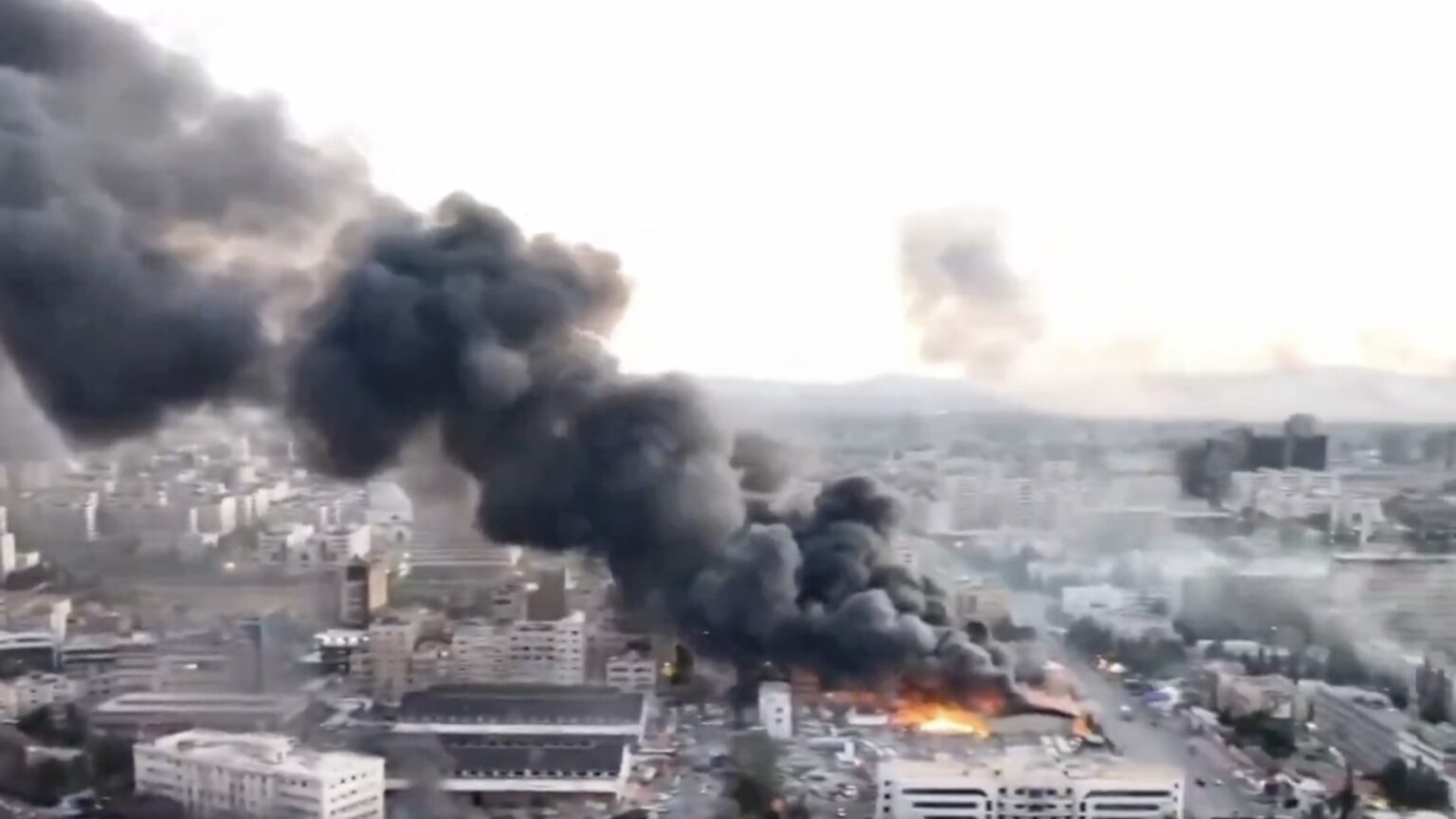
Israel carried out multiple airstrikes against the Syrian capital of Damascus on Sunday, December 8, after the fall of President Bashar al-Assad. Photo: Screenshot

The resignation and fleeing of Bashar al-Assad inaugurates a new chapter in the region that has been facing constant US and Israeli aggression for decades.

As Israeli forces advanced into the Golan buffer zone and initiated airstrikes on targets in the Syrian capital of Damascus, Israeli Prime Minister Benjamin Netanyahu declared in a video published on X that the collapse of Assad’s government on Sunday, December 8, “is a direct result of our forceful action against Hezbollah and Iran, Assad’s main supporters.” Meanwhile, images circulated across social media of members of the armed opposition groups led by Hay’at Tahrir al-Sham (HTS) taking control over Damascus, invading the Iranian embassy in the capital and tearing down posters of late Hezbollah leader Sayyed Hassan Nasrallah and Iranian General Qassem Soleimani.

The dramatic events took place after groups led by HTS launched a surprise offensive on November 27, against Syrian government forces in the Aleppo governorate. HTS is led by Abu Mohammad al-Julani, the former leader of Al-Qaeda’s Syrian branch Al-Nusra front which rebranded as HTS. In the following 12 days, the groups, some of which are backed by the United States, Turkey, and covertly Israel, quickly advanced and gained control of key Syrian cities with little resistance until reaching the capital Damascus on December 8.

The fall of Assad’s government has sent a shock wave across the region and the world. The Syrian government had been engaged in a protracted civil war since 2011, which eventually saw armed opposition groups, including ISIS and Al-Qaeda affiliates, take control over large swathes of territory. The United States officially intervened in the conflict in 2014, carrying out extensive airstrikes as well as territorial deployment alongside Kurdish forces in the north, which continues to this day. Syria’s allies including Russia, Iran, and Lebanese resistance group Hezbollah, played a central role in the military campaign to regain control over the majority of Syrian territory and defeat the Islamic State and other terrorist groups. Importantly, the coalition of armed opposition groups retained control over the Idlib governorate, from where they evidently regrouped to launch their latest offensive.

Analysts, and even Netanyahu himself, have pointed out that the timing of this offensive was no coincidence. The HTS-led offensive began on the same day that a ceasefire deal was reached between a significantly-weakened Hezbollah and Israel. The critical support Syria received in its fight against opposition groups in the last decade, was significantly reduced as its partners and allies have been engaged in their own arduous wars and conflicts.

Lebanese American journalist Rania Khalek wrote on December 5, “There is a feeling that all the forces against Syria – Turkey, the US, Israel, etc – have joined forces to attack the resistance axis at one of its weakest moments, taking advantage of the last year plus of genocide in Gaza, destruction in Lebanon and Russia being bogged down in Ukraine. All this while US sanctions and bad governance hollowed out what was left of the Syrian state and its remaining institutions. Everyone fears even darker days ahead.”

Additionally, with Israel’s advance on the Golan buffer zone, many now fear that it will seek to advance its annexation goals for the Golan Heights.

In a 2018 article written by Nour Samaha for The Intercept, she warned that, taking advantage of the war, Israel at the time was “expanding its influence and control deeper into opposition-held southern Syria.” Samaha argued that this advance through NGOs and backing opposition groups was partially in response to Israel’s anxiety about “increasing Iranian influence in Syria and Hezbollah’s presence close to its northern border”, but also ultimately part of its “aim of cementing Israel’s hold on the Golan Heights.” She reported at the time that there was an increase in Israeli settlement activity within the Occupied Golan Heights.

Israeli forces stated the deployment to the buffer zone was “to ensure the safety of the communities of the Golan Heights and the citizens of Israel. We emphasize that the IDF is not interfering with the internal events in Syria.”

Meanwhile, Israel continues to carry out airstrikes on Syria’s capital targeting strategic sites such as ammunition and weapons depots and the Mezzeh airbase, reportedly to prevent the sites from falling into the hands of the new government.

Iran, the foremost ally of the Assad government, responded to the developments in Syria during a cabinet session on Sunday, December 8. Iranian President Masoud Pezeshkian stated, “We stress the importance of preserving Syria’s unity and sovereignty, with its people deciding the country’s future and political system. We emphasize the importance of dialogue among all segments of Syrian society to reach an understanding, and we hope for an end to military confrontations.” The head of state added that Iran condemns Israel’s “violation of Syrian territory and calls on all parties and countries in the region to be vigilant against its aims.”

The country also condemned the incursion into its embassy in Damascus.

US President Joe Biden speaking in a press conference held at the White House, praised the government takeover by HTS as a “fundamental act of justice” but also that “the fall of the Assad regime in Syria is also a moment of risk and uncertainty.”

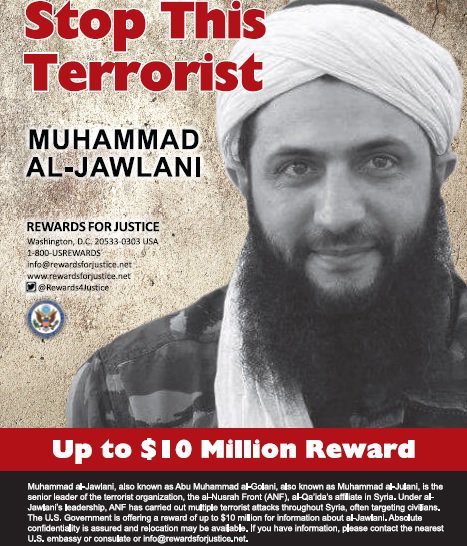
In 2017, the US had declared that it considers HTS a “designated terrorist org”. The US Embassy in Syria posted an image of HTS leader al-Julani, who himself had been declared a global terrorist as early as 2013, and stated “we remain committed to bringing leading AQS figures in HTS to justice”, offering a USD 10 million reward for his capture.
Original article by Zoe Alexandra republished from peoples dispatch under a Creative Commons Attribution-ShareAlike 4.0 (CC BY-SA) license.
Continue ReadingNetanyahu takes credit for fall of Syrian government as Israel advances on Golan Heights

Doctors tell Starmer to end Britain’s complicity in Israel’s war crimes

https://morningstaronline.co.uk/article/doctors-tell-starmer-to-end-britain-complicity-in-israel-war-crimes

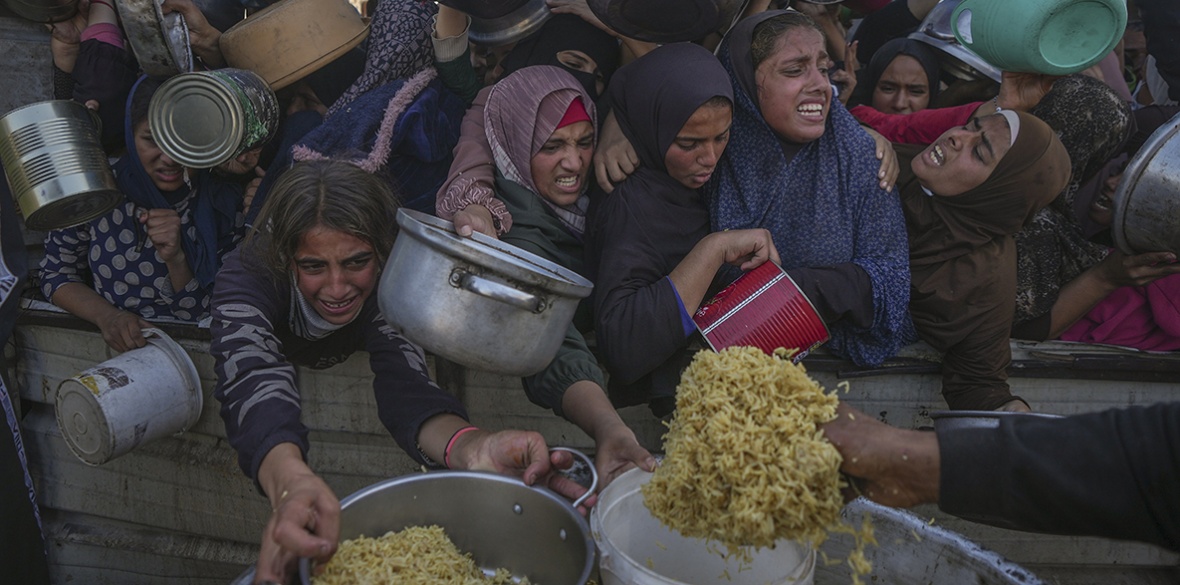
Palestinian girls struggle as they get donated food at a distribution center in Khan Younis, Gaza Strip, December 6, 2024

MORE than 800 child health professionals have demanded Sir Keir Starmer put an end to Britain’s complicity in Israel’s war crimes.

In an open letter, paediatricians, doctors and academics called on the Prime Minister to end all arms export licences to Israel and impose immediate sanctions until it complies with international law.

“We continue to hear first-hand accounts, from British healthcare professionals, of the war crimes being committed by the Israeli Defence Forces, and the catastrophic health crisis affecting both the physical and mental health of children and their families,” the letter reads.

“As British citizens, how can we live to tell the tale to our children and grandchildren that we just watched innocent lives being lost?”

According to Oxfam, more women and children have been killed in Gaza by the Israeli military over the past year than in any other conflict over the past two decades.

Israel’s bombing has targeted schools, hospitals and so-called “safe zones.”

https://morningstaronline.co.uk/article/doctors-tell-starmer-to-end-britain-complicity-in-israel-war-crimes

UK Foreign Minister David Lammy confirms that UK government and military are active participants in Israel’s genocides and that the F-35 parts that they suspended from supplying to Israel are instead simply diverted via the United States. He says see https://youtu.be/QILgUHrdWRE
Experiencing issues with this image not appearing. I suspect because it's so critical of Zionist Keir Starmer's support of and complicity in Israel's genocides.
Genocide denier and Current UK Prime Minister Keir Starmer is quoted that he supports Zionism without qualification. He also confirms that UK air force support has been essential in Israel’s mass-murdering genocide. Includes URLs https://www.declassifieduk.org/keir-starmers-100-spy-flights-over-gaza-in-support-of-israel/ and https://youtu.be/O74hZCKKdpA
Continue ReadingDoctors tell Starmer to end Britain’s complicity in Israel’s war crimes

Support for separation at four-year high as SNP rebound in polls

https://morningstaronline.co.uk/article/support-for-separation-at-four-year-high-as-snp-rebound-in-polls

People take part in a Believe in Scotland march and rally in Edinburgh, September 2, 2023

SNP is on course to retain power in Holyrood as support for independence hit a four-year high of 54 per cent, according to a new poll.

Despite a year which has seen their former chief executive facing charges related to embezzlement, the loss of a leader, a coalition with the Greens and 38 seats at the general election, research since Wednesday’s draft budget suggests the SNP are on course to win 37 per cent of constituency votes and 32 per cent on the regional lists at the next Holyrood elections in 2026.

Writing in the Sunday Times — which commissioned the Norstat poll — expert Sir John Curtice suggests this would give SNP 59 seats in Holyrood, as Labour plunge to a new low of 20, and Reform win 13.

https://morningstaronline.co.uk/article/support-for-separation-at-four-year-high-as-snp-rebound-in-polls

Continue ReadingSupport for separation at four-year high as SNP rebound in polls

Climate crisis deepens with 2024 ‘certain’ to be hottest year on record

https://www.theguardian.com/environment/2024/dec/09/climate-crisis-deepens-with-2024-certain-to-be-hottest-year-on-record

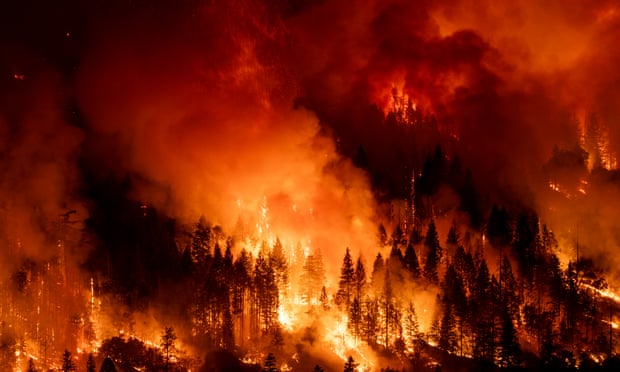
A wildfire in California this year. Fires driven by severe droughts have affected the western US, Canada, the Amazon forest and particularly the Pantanal wetlands. Photograph: David McNew/Getty Images

Average global temperature in November was 1.62C above preindustrial levels, bringing average for the year to 1.60C

This year is now almost certain to be the hottest year on record, data shows. It will also be the first to have an average temperature of more than 1.5C above preindustrial levels, marking a further escalation of the climate crisis.

Data for November from the EU’s Copernicus Climate Change Service (C3S) found the average global surface temperature for the month was 1.62C above the level before the mass burning of fossil fuels drove up global heating. With data for 11 months of 2024 now available, scientists said the average for the year is expected to be 1.60C, exceeding the record set in 2023 of 1.48C.

Fossil fuel emissions must fall by 45% by 2030 to have a chance of limiting heating to 1.5C. The recent Cop29 climate summit failed to reach an agreement on how to push ahead on the transition away from coal, oil and gas. The C3S data showed that November 2024 was the 16th month in a 17-month period for which the average temperature exceeded 1.5C.

The supercharging of extreme weather by the climate crisis is already clear, with heatwaves of previously impossible intensity and frequency now striking around the world, along with fiercer storms and worse floods.

https://www.theguardian.com/environment/2024/dec/09/climate-crisis-deepens-with-2024-certain-to-be-hottest-year-on-record

Continue ReadingClimate crisis deepens with 2024 ‘certain’ to be hottest year on record

Interview: Prof Philippe Sands on UN court’s landmark climate-change hearing

This week, the international court of justice (ICJ) opened two weeks of hearings on states’ climate-related legal obligations – and the consequences, if “significant harm” is caused.

The case stems from a unanimous UN general assembly (UNGA) request for an “advisory opinion” from the ICJ.

It is taking place against a backdrop of rapidly escalating climate impacts. Emissions continue to rise, rather than falling rapidly, as needed to avoid dangerous levels of global warming.

It is the ICJ’s largest ever case, with more than 100 countries and international organisations making interventions, deploying a wide variety of legal arguments.

Ralph Regenvanu, climate envoy for Vanuatu, which led the campaign for the ICJ hearings, said in his opening address: “[T]his may well be the most consequential case in the history of humanity.”

Below, Carbon Brief interviews leading international law scholar Prof Philippe Sands – who drafted the pleadings for Mauritius, but is speaking here in a personal capacity – to find out more about the legal issues at stake and the wider significance of the ICJ case.

Carbon Brief: Would you be able to start by just situating this case in its wider legal context and explaining why it could be so consequential?

Philippe Sands: Well, it’s the first time the international court of justice has been called upon to address legal issues relating to climate change. The ICJ is the principal judicial organ of the United Nations and, although the advisory opinion that it hands down will not be binding on states, it is binding on all UN bodies. The determinations that the court makes will have consequences that go very far and that will have a particular authority, in legal and political terms. Of course, everything turns on what the court actually says.

CB: Would you be able to summarise the key legal arguments that are being fought over in this case?

PS: No! I mean, there’s just a huge number of issues that are coming up. But, essentially, the court has been asked two questions by the UN General Assembly – the first time, I believe, that a request from the General Assembly has been consensual, with no objections. The two questions are, firstly, what are the obligations for states under international law to protect the climate system? And, secondly, what are the legal consequences under these obligations, where, by their acts and emissions, [states] cause significant harm to the climate system? So, there are two distinct questions – and about 100 states and international organisations of various kinds have made submissions on the vast range of issues that are raised by these two questions. The questions are very, very broad and that signals to me that the court’s response may be quite general. But, for me, the crucial issues are, firstly, what the court says about the state of the science: is it established, or is there any room for doubt? Secondly, what are the obligations of states having regard to the clarity of the science? Thirdly, are there legal obligations on states in relation to the climate system that exist and arise outside of the treaty regime – the 1992 [UN Framework] convention [on climate change], the Kyoto Protocol, the Paris Agreement and so on and so forth. And, related to that, fourthly – this is the most intense, legally interesting aspect – what are the responsibilities of states for historic emissions under general international law? And, in particular, are the biggest contributors liable under international law to make good any damages that may arise from their historic actions? But, I mean, there’s just such a vast array of questions that are addressed, it’s impossible to summarise briefly.

… Article continues at https://www.carbonbrief.org/interview-prof-philippe-sands-on-un-courts-landmark-climate-change-hearing/

On climate change, the international court of justice faces a pivotal choice

Continue ReadingInterview: Prof Philippe Sands on UN court’s landmark climate-change hearing