‘A System Rigged’: Untaxed Wealth of Richest 0.1% Is More Than Assets of World’s Poorest Half

Spread the love

Original article by Stephen Prager republished from Common Dreams under Creative Commons (CC BY-NC-ND 3.0). 
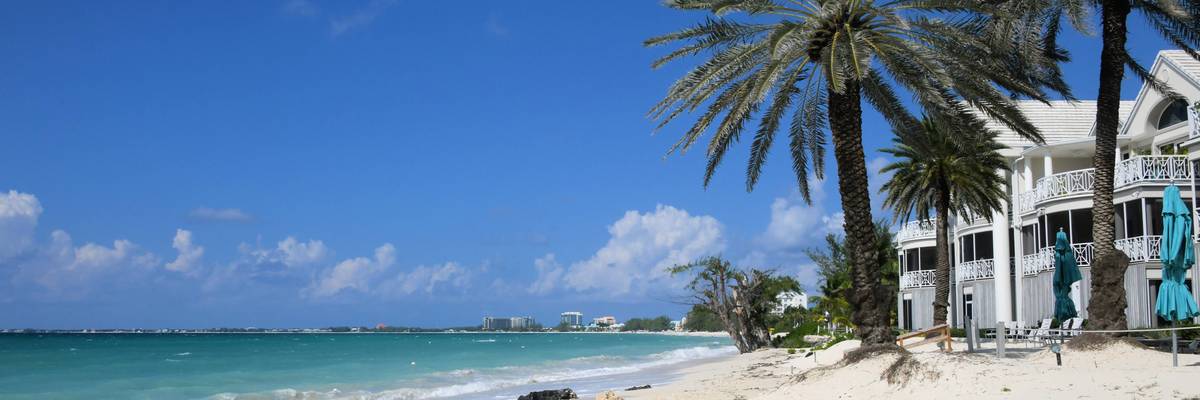
Seven Mile Beach on Grand Cayman on the Cayman Islands is photographed on March 18, 2026. (Photo by mtcurado/Getty Images)

A decade after the Panama Papers, the global rich are still hiding more than $2.8 trillion in tax havens. Just a fraction of that money could end extreme hunger and provide clean water to everyone on Earth.

The richest 0.1% of people on Earth are hiding more than $2.8 trillion in offshore accounts to avoid taxes. That money alone is more wealth than is owned by the entire bottom half of humanity, more than 4.1 billion people.

These findings were published in a report released Thursday by Oxfam International on the 10th anniversary of the 2016 Panama Papers, which provided an unprecedented look at how the world’s most powerful capitalists, financiers, political leaders, celebrities, and criminals exploited offshore tax havens to stash their money.

RECOMMENDED…
'100% Completely Unsustainable': Billionaire Wealth Manager Issues New Warning About US Inequality

‘100% Completely Unsustainable’: Billionaire Wealth Manager Issues New Warning About US Inequality
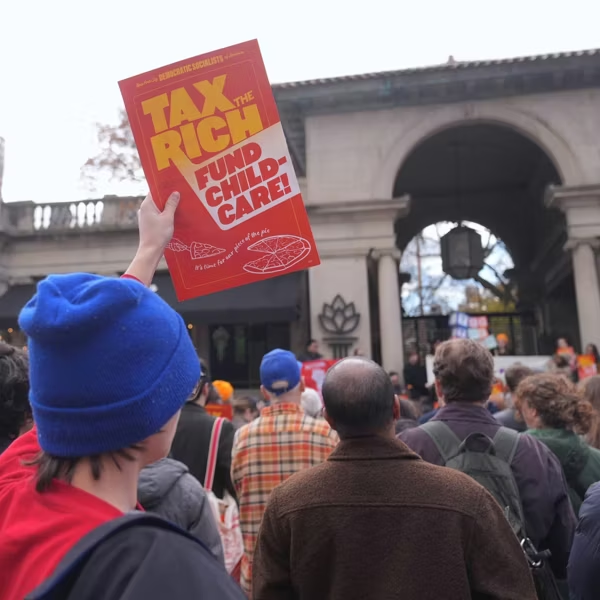
NYC-DSA holds a rally to tax the rich

‘The Current Tax Code Is Rigged,’ Plus 6.2 Trillion Other Reasons to Tax America’s Ultrarich

“Ten years on, the superrich are still sequestering oceans of wealth in offshore vaults,” said Christian Hallum, Oxfam International’s tax lead.

The percentage of untaxed wealth in offshore accounts has dropped in the past 10 years, in large part due to global reforms like the adoption of the Organization for Economic Cooperation and Development’s Automatic Exchange of Information framework (AEOI), which allows revenue authorities around the world to easily share information and crack down on cheats.

However, many nations in the Global South are excluded from this system, even though they need the tax revenue the most.

Oxfam found that a staggering $3.5 trillion, more than 3.2% of the global gross domestic product, still remains in untaxed accounts. That’s more than the entire GDP of France and is more than twice the combined wealth of the world’s 44 poorest nations.

And while the percentage of untaxed wealth is shrinking, that doesn’t mean inequality has shrunk.

On the contrary, the December 2025 “World Inequality Report” found that the richest 0.001% of humanity—fewer than 60,000 multimillionaires and billionaires—now have three times as much wealth as the poorest half of the world’s population combined.

Inequality has surged around the world in part due to taxation policies and pandemic recovery packages that overwhelmingly favor the rich. The most glaring was adopted in the world’s financial hub, the United States, last year.

The megabudget passed by Republicans and signed into law by President Donald Trump handed a $1 trillion tax cut to America’s wealthiest 1% while slashing more than $1 trillion in spending from Medicaid, food assistance, and other safety net programs. It has been described by some economists as the largest upward transfer of wealth in US history.

While the global top 0.1% holds about 80% of untaxed offshore wealth, an even smaller group of uber-wealthy individuals does most of the cheating. The world’s richest 0.01%, who hold at least $50 million apiece, control about half of all money in global tax shelters—$1.7 trillion.

According to the Tax Justice Network’s Corporate Tax Haven Index, Caribbean islands under UK ownership, including the British Virgin Islands, the Cayman Islands, and Bermuda, are among the worst offenders. Other notable tax havens include Switzerland, Singapore, Hong Kong, Ireland, and the Netherlands.

A February Oxfam report on Elon Musk, who is well on his way to becoming the world’s first trillionaire, found that his company, Tesla—which managed to pay zero dollars on its $2.3 billion income in 2024—has not published a country-by-country report on its taxes and that it has subsidiaries in many countries considered to be tax havens.

Big Pharma companies, including AbbVie and Merck, also used tax shelters to lower their total tax expense in 2025 by more than $1 billion, according to a report released earlier this month by the Financial Accountability & Corporate Transparency Coalition.

“This isn’t just about clever accounting—it’s about power and impunity,” Hallum said. “When millionaires and billionaires stash trillions of dollars in offshore tax havens, they place themselves above the obligations that bind the rest of society.”

“The consequences are as predictable as they are devastating,” he continued. “We see our public hospitals and schools starved of funds, our social fabric shredded by rising inequality, and ordinary people forced to shoulder the costs of a system rigged to enrich a tiny few.”

Even a fraction of the money currently stashed away by the world’s wealthiest could alleviate untold amounts of suffering.

In November, the United Nations’ World Food Program estimated that extreme hunger, which currently affects more than 318 million people around the world, could be eradicated by 2030 with investments of about $93 billion per year, but that global hunger programs instead remain “slow, fragmented, and underfunded.”

According to a 2021 UN Educational, Scientific, and Cultural Organization (UNESCO) report, investments of around $114 billion per year would similarly be enough to ensure that everyone on Earth has access to safe drinking water and sanitation.

Oxfam called on governments around the world to increase coordination to prevent the wealthy from hiding their riches from tax authorities. It also urged them to adopt more aggressive policies to tax the 1%’s wealth at home, including taxes on income and on extreme wealth.

Original article by Stephen Prager republished from Common Dreams under Creative Commons (CC BY-NC-ND 3.0). 

Orcas discuss Donald Trump and the killer apes' concept of democracy. Front Orca warns that Trump is crashing his country's economy and that everything he does he does for the fantastically wealthy.
Orcas discuss Donald Trump and the killer apes’ concept of democracy. Front Orca warns that Trump is crashing his country’s economy and that everything he does he does for the fantastically wealthy.
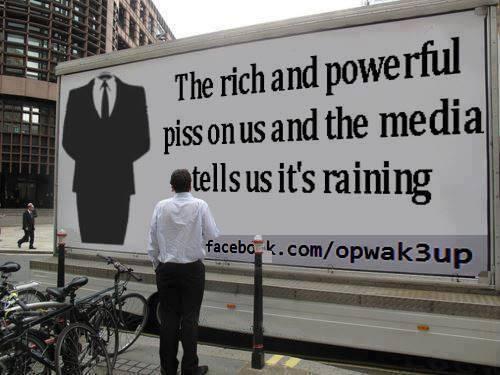
Image reads "The rich and powerful piss on us and the media tells us it's raining"
Elon Musk urges you to be a Fascist like him, says that you can ignore facts and reality then.

Continue Reading‘A System Rigged’: Untaxed Wealth of Richest 0.1% Is More Than Assets of World’s Poorest Half

GOP Budget Plans Spotlight Party’s Top Priority: Handouts for the Rich

Spread the love

Original article by JAKE JOHNSON republished from Common Dreams under Creative Commons (CC BY-NC-ND 3.0). 
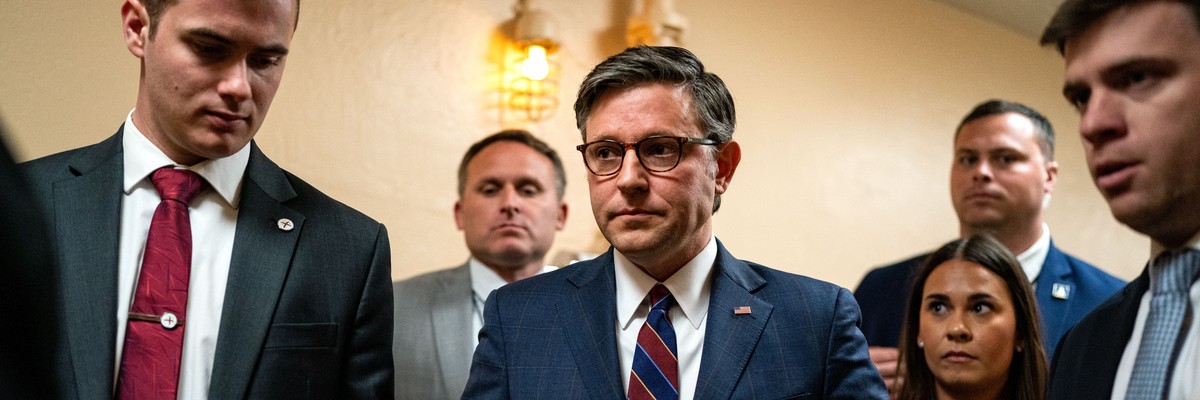
House Speaker Mike Johnson (R-La.) speaks to reporters at the U.S. Capitol on July 23, 2024 in Washington, D.C. (Photo by Kent Nishimura/Getty Images)

“Republicans would rather protect their billionaire friends at the expense of everyone else,” said the chair of the Joint Economic Committee.

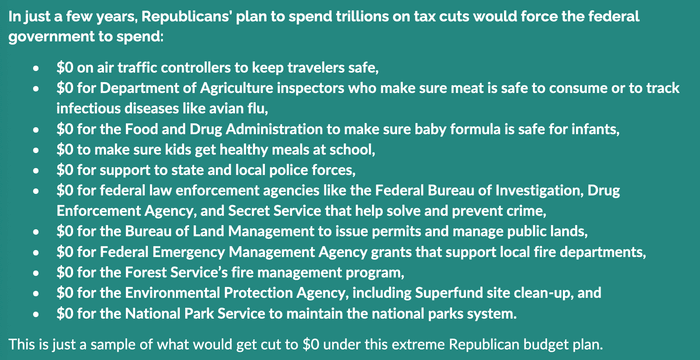
Budget proposals released by congressional Republicans in recent months lay bare the party’s desire to slash taxes for wealthy Americans and large corporations at the expense of key government programs and services, including nutrition assistance, environmental protection, and Medicaid.

That’s according to an analysis released Wednesday by Democrats on the Joint Economic Committee (JEC), which examined budget plans the GOP has released as Congress works to craft and pass government funding bills for the coming fiscal year.

The JEC specifically cites a Fiscal Year 2025 budget proposal published in March by the Republican Study Committee, a panel comprised of three-quarters of the House GOP caucus.

The plan, the JEC Democrats noted Wednesday, “claims to balance the budget by cutting Medicare spending, raising the retirement age for Social Security, capping funding for Medicaid and CHIP, and cutting the rest of non-defense discretionary spending by 31% across the board.”

“This would drive up health costs for American families by increasing premiums for [Affordable Care Act] healthcare plans and getting rid of protections for people with pre-existing conditions,” the new analysis says. “It would also prohibit Medicare from negotiating down prescription drug costs.”

A separate proposal from Republicans on the House Budget Committee claims it would finance “large tax cuts for the wealthy by both slashing key services and assuming that their tax giveaways lead to unrealistic levels of economic growth,” the Democratic report says.

“Analyzing this budget with more reasonable economic assumptions instead shows that budget would likely require the government to eliminate most federal services within a decade,” the report adds.

Sen. Martin Heinrich (D-N.M.), the chair of the JEC, said in a statement Wednesday that “Republicans’ extreme proposals are dangerous for America.”

“While Democrats are fighting to invest in families, Republicans would rather protect their billionaire friends at the expense of everyone else,” said Heinrich. “Kicking 42 million kids off of health insurance, gutting federal investments in public safety, denying veterans hospital care, and getting rid of [Supplemental Nutrition Assistance Program] benefits that help people afford groceries is unconscionable. Americans deserve better.”

The analysis from JEC Democrats comes as Republican nominee Donald Trump attempts to posture as an ally of the working class despite his history of assailing labor protections and backing tax cuts for the rich.

Trump has called for an extension of the tax cuts he signed into law in 2017—changes that overwhelmingly benefited wealthy Americans. An extension of the tax cuts would add $4.6 trillion to the deficit of the next decade, according to the Congressional Budget Office.

The former president’s advisers have also reportedly discussed reducing the corporate tax rate from 21% to 15%, a change that would give the largest 100 U.S. companies a tax cut of $48 billion per year.

Trump has floated proposals that are ostensibly geared toward helping working-class Americans, including exempting tips from taxation—a proposal specifically aimed at hospitality workers—and eliminating taxes on Social Security benefits.

But earlier this week, UNITE HERE—a union that represents hospitality workers—endorsed Democratic nominee Kamala Harris over the Republican candidate, warning that “another Trump presidency would mean four chaotic years of defending against his attacks on unions, working people, immigrants, women, and others.”

As for Trump’s proposal to eliminate taxes on Social Security benefits, an analysis by the Tax Policy Center’s Howard Gleckman found that the move would reduce “Social Security and Medicare hospital insurance (HI) revenues by $1.5 trillion over the next decade,” harming the programs’ finances while providing “little or no benefit” to lower-income households in 2025.

“Less than 1% of the lowest-income households (those making about $33,000 or less, would get any tax cut at all,” Gleckman observed. “But about 28% of middle-income households would get a tax cut. Among the top 0.1 percent, about 20 percent of households would get a tax cut.”

Gleckman found that “in dollar terms, the biggest winners would be those in the top 0.1% of income, who make nearly $5 million or more.”

Original article by JAKE JOHNSON republished from Common Dreams under Creative Commons (CC BY-NC-ND 3.0). 

Continue ReadingGOP Budget Plans Spotlight Party’s Top Priority: Handouts for the Rich