Zack Polanski becomes Green party leader – what happens next?
Spread the love
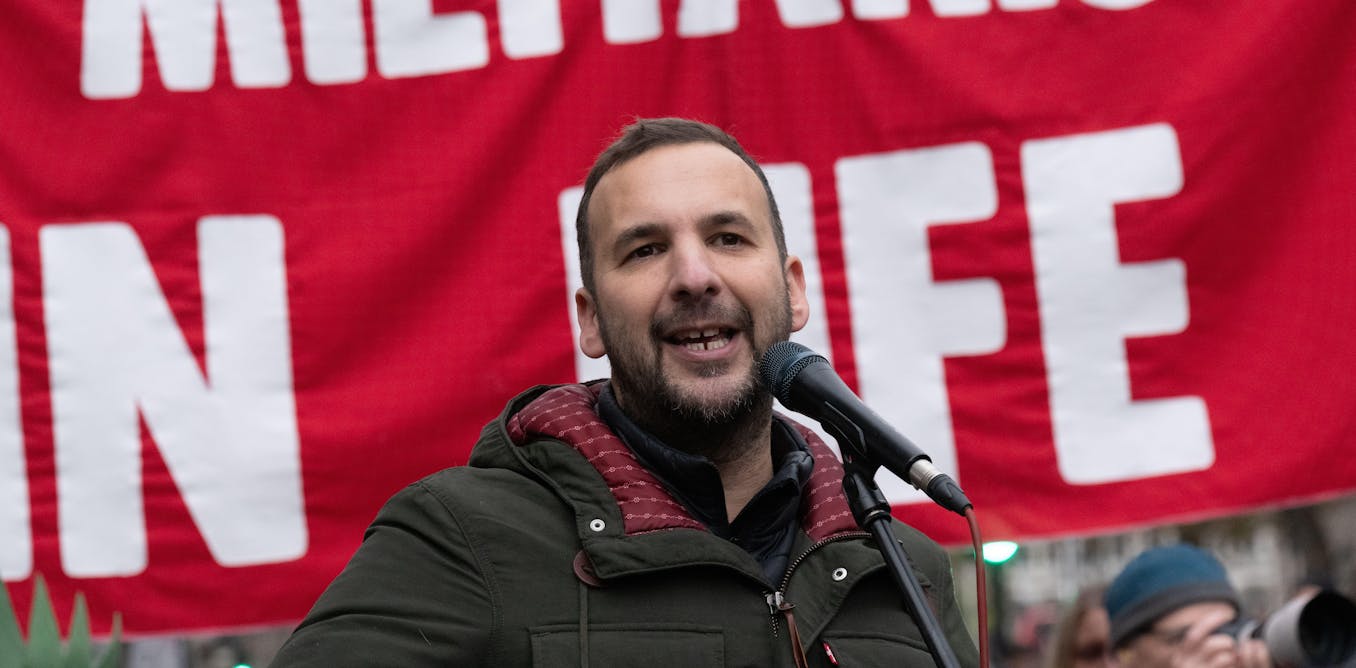
Zack Polanski is the new leader of the Green party. Alamy/Ron Fassbender

Louise Thompson, University of Manchester

Zack Polanski is the new leader of the Green party in England and Wales after winning a leadership election promising a programme of “eco-populism”. Polanski beat incumbent leader Adrian Ramsay and his partner on the ticket, Ellie Chowns.

It’s been just over a year since the party celebrated its best ever results in the most recent general election. In July 2024, it doubled its vote share and quadrupled its representation in the House of Commons to four MPs.

The same election saw terrible results for the Conservatives and even for Labour, despite its win, raising questions about whether two-party politics was well and truly over. Since then, as professor John Curtice has vividly described, things have started to look even shakier.

This year’s local election saw a “record-breaking” fragmentation of the vote in which less than a quarter of local council seats went to the two main parties. The Greens now hold over 800 seats in more than 170 different councils, adding to their electoral portfolio – which also includes two members of the House of Lords and three London Assembly members.

While Polanski will be celebrating today, party members will look to him to raise their electoral fortunes even further. The electoral challenge for the Greens in England and Wales is two-pronged.

First, the party needs to maintain its position in the seats it has already secured. Its four MPs have fairly comfortable majorities, the smallest being Chowns’ 5,800 majority in North Herefordshire. Second, and perhaps most importantly, it needs to maximise its success in the 40 constituencies where it came second. All but one of these constituencies were won by Labour, which makes Labour voters the prime targets.

My research has shown how the Green party has followed a policy of “total engagement” in recent years. It takes its parliamentary work very seriously, using any and every opportunity to get its message across, even in lower-priority policy areas.

The goal here is to build credibility with the electorate. Small parties tend to want voters to think they are bigger than they are, so they can present themselves as realistic contenders for taking on the heavy work and responsibility of government. Caroline Lucas did a fantastic job of this, punching well above her weight as the party’s only MP between 2010 and 2024.

Together, the Green MPs have made over 380 contributions in the House of Commons. Chowns in particular has been a prolific backbencher, making 161 contributions, while the previous co-leaders Carla Denyer and Ramsay have been much quieter.

With Polanski sitting in the London Assembly rather than the House of Commons, this will inevitably change. The four Green MPs will collectively have more time on their hands and, with the right direction from their new leader, will have the space to be more strategic in their parliamentary activities.

Outsiders

But the Greens have always acted as something of an atypical party too, keeping one foot outside Westminster. Lucas was regularly involved in activism, joining protesters campaigning against tuition fee increases and fracking and to support refugees, to name just a few. She was even arrested in 2013 after joining a protest against energy firm Cuadrilla in Sussex (she was later cleared of all charges in court).

The new Green MPs have continued in this vein, with Sian Berry joining a peaceful protest against far-right agitators in Brighton last year and Chowns pressing the government to water down anti-protest laws.

The new leadership will need to decide whether this strategy enhances their electoral appeal. Does it highlight the Greens’ distinctiveness from the establishment parties, or does it imply they aren’t responsible enough to manage being a party of significant size? The answer depends on who you ask. Polanski has participated in several protests in the past, so chances are this activism will continue to be a core feature of Green party politics.

An added complication for the Greens is that two other parties are also chasing left-leaning voters. One of these is Reform UK. Although associated with rightwing views on social issues, the party came second in many Labour seats in 2024 and needs to appeal to both sides of the political spectrum.

This may explain why the Greens have focused their efforts on highlighting Reform’s failures. Berry, for instance, recently challenged Nigel Farage and his colleagues to publish a log of all their meetings since entering the Commons, arguing that it would be in the public interest.

The other outside threat is Jeremy Corbyn and Zarah Sultana’s new and currently nameless party of the left. While we know little about this party’s policy platform right now, it seems to be veering towards a similarly bottom-up democratic model of organisation which has long been favoured by the Greens – possibly even with co-leaders.

The challenge for the Greens will be to better establish their niche on the left, to ensure they capture voters who are disillusioned with Keir Starmer’s wobbly start. Part of the solution could be to focus on a handful of key policy areas which go beyond the Green party’s niche of environmental issues. At the moment, its MPs take something of a scattergun approach in the Commons, contributing on everything from local buses and universal credit to Ukraine and the Middle East.

Some of the most recent questions asked during Prime Minister’s Questions by Greens hint at the options they might pursue. Ramsay has pushed for a wealth tax on the super rich, and an end to the two-child benefit cap. Both Corbyn and Sultana have, of course, been outspoken on these issues in the past.

If the Greens can’t forge a different path to this new left party, they may have no choice but to consider an electoral pact to avoid splitting the anti-Labour vote right down the middle.

Louise Thompson, Senior Lecturer in Politics, University of Manchester

This article is republished from The Conversation under a Creative Commons license. Read the original article.
Continue ReadingZack Polanski becomes Green party leader – what happens next?

Communist leader in Kenya survives violent attack

Spread the love

Original article by Nicholas Mwangi republished from peoples’ dispatch under a Creative Commons Attribution-ShareAlike 4.0 (CC BY-SA) license.

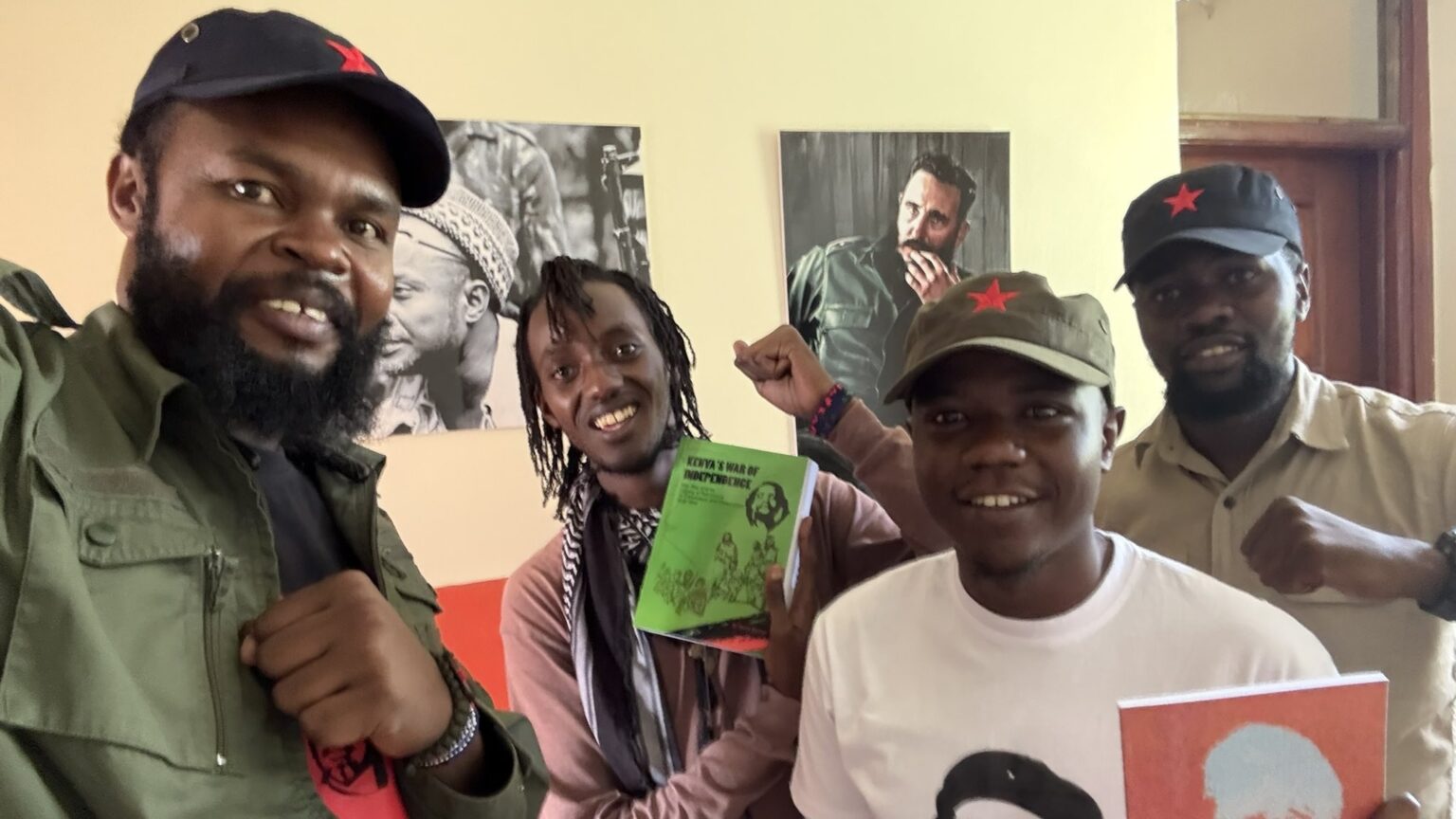
Booker Ngesa Omole with members of CPM-K. Photo: Booker Ngesa Omole

An armed attack on Kenyan communist leader Booker Ngesa Omole has sparked global outrage, with revolutionary groups expressing solidarity.

On Saturday, January 11, 2025, at approximately 3:00 am, an armed attack targeted the residence of Booker Ngesa Omole, General Secretary of the Communist Party Marxist-Kenya (CPMK). According to a statement released by the Party, the assailants—armed with firearms and equipped with night vision goggles—forced their way into the residence. A violent confrontation ensued as Booker defended himself, ultimately forcing the attackers to flee.

While the Kenyan police were quick to label the incident as an attempted burglary, the CPMK described it as a calculated assassination attempt. Booker, an organizer and fearless critic of the government, has been a vocal opponent of oppressive state policies. This shocking attack is seen as a direct assault on his activism, ideas and a broader effort to silence dissent.

“This was not a random act of crime but a direct assault on our General Secretary, who has consistently stood up for justice, democracy, and socialism in Kenya,” the Party declared. “This act of terror is an attack on the revolutionary cause and all Kenyans who are fighting for a better future.”

The Communist Party Marxist Kenya has demanded a full and transparent investigation, calling for the perpetrators to be brought to justice and that urgent measures be taken to protect its leadership and members.

“We will not be silenced,” the Party’s statement declared. “The enemies of the people may attempt to intimidate us, but we remain steadfast in our commitment to the struggle for liberation. No amount of violence will deter us from our revolutionary path.”

A rising tide of repression

The attack on Booker comes amid growing concerns over Kenya’s shrinking democratic space. Since the 2024 youth-led uprising against the controversial finance bill, government critics and activists have faced an alarming rise in abductions and violent attacks. According to the Kenya National Commission on Human Rights (KNCHR), dozens of individuals have been abducted or forcibly disappeared since mid-2024, deepening concerns of state repression.

International solidarity and condemnation

Revolutionary organizations across the continent have rallied in support of Booker and the CPMK, drawing parallels between the Kenyan experience and the broader struggle against neo-colonial exploitation, austerity, and imperialism. 

Communist Party of Benin: assassination attempt as a declaration of war

The Communist Party of Benin unequivocally denounced the assassination attempt and the broader campaign of repression against the CPMK. They described the attack as a declaration of war by counter-revolutionary forces linked to the regime. They called for united action among revolutionary organizations worldwide. The Party also expressed confidence that the repression would fail, and the Kenyan people’s democratic national revolution would prevail.

Abahlali baseMjondolo: “an injury to one is an injury to all”

Abahlali baseMjondolo, South Africa’s largest grassroots movement, linked the attack to the broader context of neo-colonial austerity and oppression. Recalling the mass protests against the Ruto government’s Finance Bill and the brutal crackdown that followed, they emphasized the global nature of the fight against imperialist-backed regimes. “An injury to one is always an injury to all,” the movement stated, condemning the attempt on Booker’s life. 

Socialist Movement of Ghana: a struggle against neoliberalism

The Socialist Movement of Ghana (SMG) expressed alarm at the assassination attempt and the subsequent arrests of CPMK leaders. They condemned the Kenyan government’s use of brutal force to suppress protests against IMF-driven neoliberal policies, linking the violence to broader struggles against neo-colonial exploitation. The SMG called for accountability for the regime and expressed unwavering solidarity with the CPMK and the Kenyan working people.

Booker responds: “we will prevail”

In a personal statement, Booker expressed his gratitude for the solidarity. “Your messages of support have reminded me, and all of us, that the fight for a just society resonates far beyond our borders,” he said. No force can silence the collective will of the people.”

Booker also revealed that officers from the Serious Crimes Unit had visited his residence and begun an investigation. He emphasized the importance of a transparent and professional inquiry, stating:

“This is a critical opportunity for the state to absolve itself of any suspicion of involvement by ensuring that those behind this heinous act are brought to justice swiftly and decisively. The Kenyan people deserve nothing less, as it is our taxes that entrust the state with the responsibility of protecting the lives of all citizens without exception.”

Addressing his comrades in the CPMK and other progressive forces, Booker called for unity and vigilance in the face of adversity:

“Attempts to disrupt our struggle for a liberated and equitable society only prove the fear our enemies feel in the face of our growing strength,” he declared. 

“Let this moment deepen our resolve and ignite revolutionary optimism within our ranks. The path to justice and socialism is never without struggle, but history shows us that the people, united in their determination, will always prevail.”

Original article by Nicholas Mwangi republished from peoples’ dispatch under a Creative Commons Attribution-ShareAlike 4.0 (CC BY-SA) license.

Continue ReadingCommunist leader in Kenya survives violent attack

Protesters disrupt red carpet to demand arms embargo on Israel

Spread the love

https://morningstaronline.co.uk/article/protesters-disrupt-red-carpet-demand-arms-embargo-israel

Photo: Youth Demand

PROTESTERS disrupted the red carpet premiere of movie We Live in Time at London’s Southbank Theatre on Thursday evening to demand an arms embargo on Israel.

Two activists from Youth Demand stood on the red carpet holding a Palestine flag with the words “Stop arming Israel” written on it.

Other protesters were detained by security before they could gain access. No arrests were made.

Protester Starr Thomas, a student from south London, said: “Our political system is rotten.

“The only way to achieve justice is through direct action, so I will continue putting my body on the line and using my voice.

“We cannot have business as usual during a genocide.

https://morningstaronline.co.uk/article/protesters-disrupt-red-carpet-demand-arms-embargo-israel

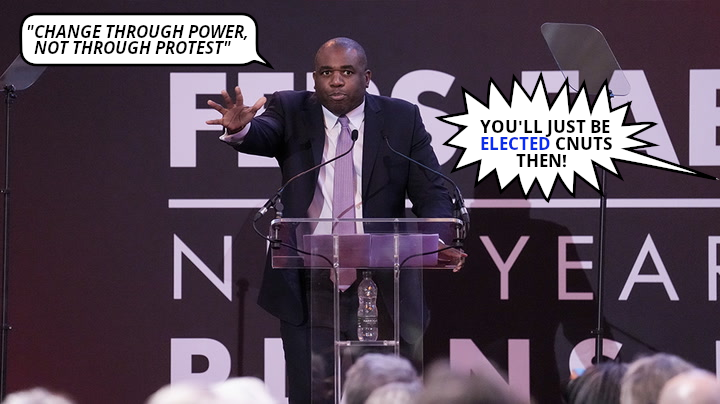
UK Labour Party Shadow Foreign Secretary repeatedly heckled at a speech to the Fabian Society over his and the Labour Party's support for and complicity in Israel's genocide of Gaza.
UK Labour Party Shadow Foreign Secretary repeatedly heckled at a speech to the Fabian Society over his and the Labour Party’s support for and complicity in Israel’s genocide of Gaza.
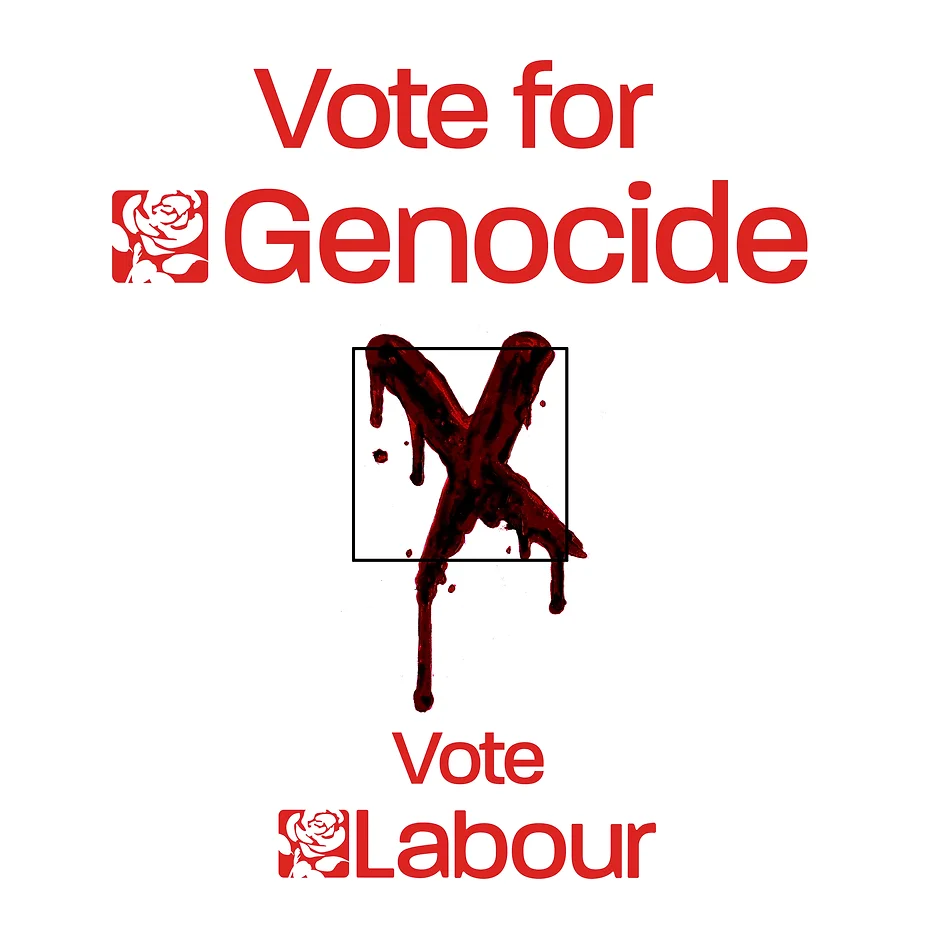
Vote For Genocide Vote Labour.
Zionist Keir Starmer is quoted "I support Zionism without qualification." He's asked whether that means that he supports Zionism under all circumstances, whatever Zionists do.
Zionist Keir Starmer is quoted “I support Zionism without qualification.” He’s asked whether that means that he supports Zionism under all circumstances, whatever Zionists do.
UK Foreign Secretary David Lammy says that UK is suspeding 30 of 350 arms licences to Israel. He also confirms the UK government's support for Israel's Gaza genocide.
UK Foreign Secretary David Lammy says that UK is suspeding 30 of 350 arms licences to Israel. He also confirms the UK government’s support for Israel’s Gaza genocide.
Continue ReadingProtesters disrupt red carpet to demand arms embargo on Israel

‘Draconian and undemocratic’: why criminalising climate protesters in Australia doesn’t actually work

Spread the love
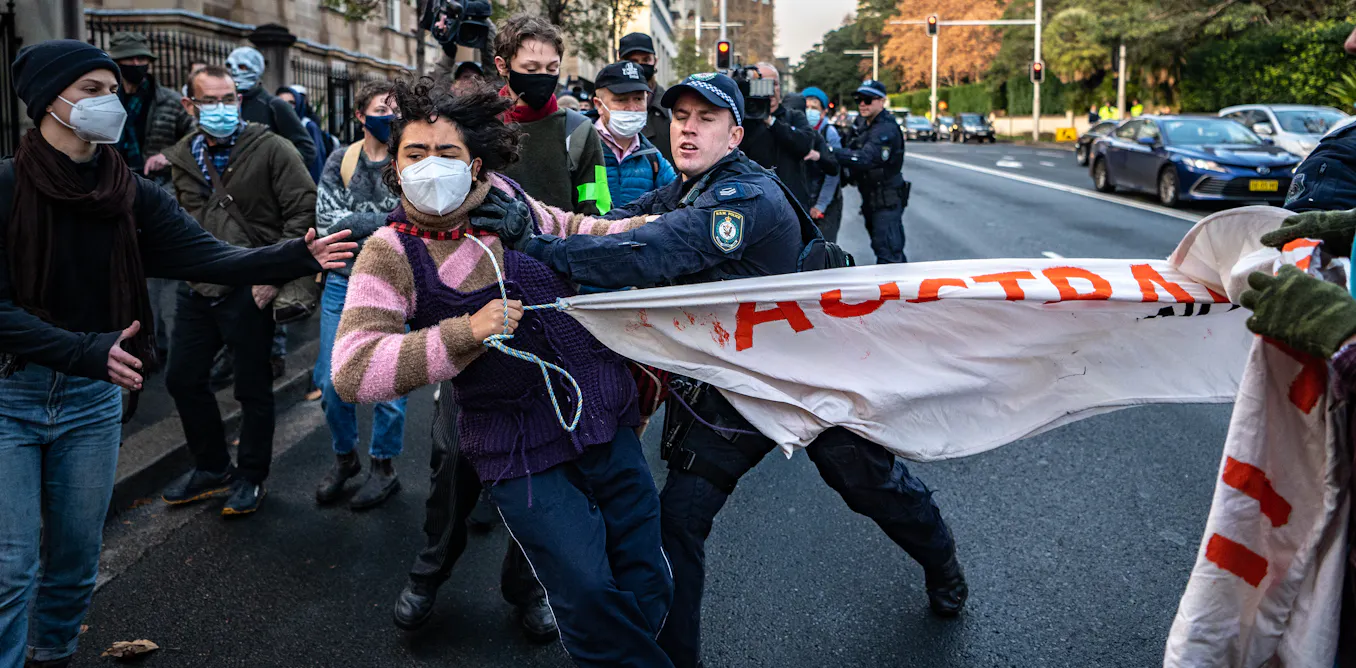
Police officers dispersing a protestor during a Blockade Australia rally in Sydney this week. AAP Image/Flavio Brancaleone

Robyn Gulliver, The University of Queensland

A man who drove through a climate protest blocking the Harbour Tunnel this week has copped a A$469 fine, while multiple members of the activist group were arrested. The protest was among a series of peak hour rallies in Sydney by Blockade Australia, in an effort to stop “the cogs in the machine that is destroying life on earth”.

Disruptive protests like these make an impact. They form the iconic images of social movements that have delivered many of the rights and freedoms we enjoy today.

They attract extensive media coverage that propel issues onto the national agenda. And, despite media coverage to the contrary, research suggests they don’t reduce public support for climate action.

But disruptive protest also consistently generates one negative response: attempts to criminalise it.

Tasmania, Victoria and New South Wales have all recently proposed or introduced anti-protest bills targeting environmental and climate activists. This wave of anti-protest legislation has been described as draconian and undemocratic.

Let’s take a look at how these laws suppress environmental protesters – and whether criminalisation actually works.

How do governments criminalise protest?

The criminalisation of environmental protest in Australia isn’t new.

Tasmania provides a compelling example. The Tasmania Workplaces (Protection from Protestors) Act 2014 sought to fine demonstrators up to $10,000 if they “prevent, hinder, or obstruct the carrying out of a business activity”. Described as a breach of the International Covenant on Civil and Political Rights, it was subsequently voted down by the Tasmanian Legislative Council.

The bill was resurrected in 2019, but also voted down, an outcome described by the Human Rights Law Centre as a “win for democracy”.

But yet again in 2022, the freedom to protest in Tasmania is under threat. The Police Offences Amendment (Workplace Protection) Bill 2022 proposes fines of up to $21,625 and 18 months jail for peaceful protest.

Activities such as handing out flyers, holding a placard or sharing a petition could fall within the offences.

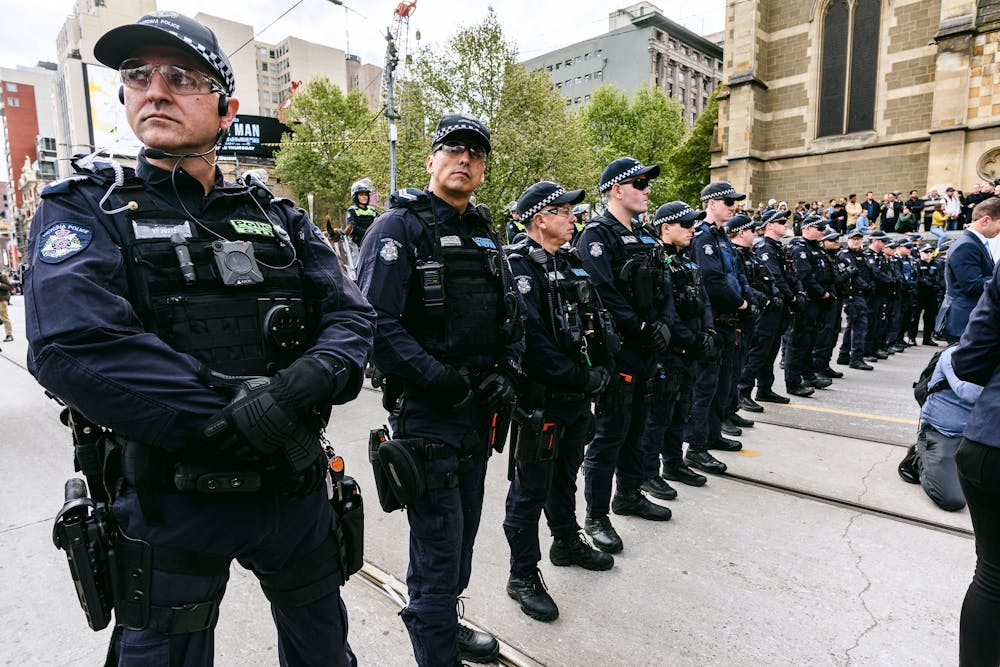
Heavy police presence is often a feature at Extinction Rebellion blockades.
Julian Meehan/Wikimedia Commons, CC BY

Tasmania is not an outlier. After the Port of Botany and Sydney climate blockades in March this year, NSW passed the Roads and Crimes Legislation Amendment Bill 2022.

Almost 40 civil society groups called to scrap the bill, which used vague and broad wording to expand offences with up to two years in jail and a $22,000 fine.

Similarly, the Andrews government in Victoria is introducing the Sustainable Forests Timber Amendment (Timber Harvesting Safety Zones) Bill 2022, which raises penalties on anti-logging protest offences to $21,000 or 12 months imprisonment.

Other ways Australia criminalise protest

Legislation isn’t the only tool in the toolbox of protest criminalisation. The expansion of police and government discretionary powers is also often used. Examples include:

Corporations also use discretionary powers. Adani/Bravus coal mining company reportedly used private investigators to restrict Wangan and Jagalingou Traditional Owners’ access to their ceremonial camp.

It also reportedly bankrupted senior spokesperson Adrian Burragubba in 2019, sued one climate activist for intimidation, conspiracy and breaches of contract, surveilled his family, and is pursuing him for $600 million (now reduced to $17m) in damages.

In statements to the ABC and the Guardian, Adani says it is exercising its rights under the law to be protected from individuals and groups who act “unlawfully”.

Another tool for suppressing protest is the use of “othering” language. This language seeks to stigmatise activists, de-legitimise their concerns and frame them as threats to national security or the economy.

We see it frequently after disruptive protest. For example, ministers have recently described Blockade Australia protesters as “bloody idiots”, who should “get a real job”.

The Queensland Premier has described protesters as “extremists”, who were “dangerous, reckless, irresponsible, selfish and stupid”.

Why do governments feel the need to implement harsher penalties?

Some politicians have argued that anti-protest laws act as a “deterrent” to disruptive protest. Critics have also argued that government powers are used as a shield to protect corporate interests.

In its new report, for example, the Australian Democracy Network shows how corporations can manipulate government powers to harass and punish opponents through a process called “state capture”.

Non-profit organisations have also demonstrated the powerful influence of the fossil fuel industry, particularly in weakening Australian environmentalists’ protest rights.

But it’s not only civil sector groups and protesters sounding the alarm. Increased repression of our rights to engage in non-violent protest have also been voiced by lawyers, scholars and observers such as the United Nations Special Rapporteur.

Does criminalisation reduce protest?

Numerous organisations have highlighted how criminalising protest and silencing charities threaten democratic freedoms that are fundamental to a vibrant, inclusive and innovative society.

But more than that, these strategies don’t appear to work.

Courts have used anti-protest legislation to instead highlight the importance of peaceful protest as a legitimate form of political communication. They have struck down legislation, released activists from remand, overturned unreasonable bail conditions and reduced excessive fines.

Police, too, have refused to remove cultural custodians from their ceremonial grounds.

And in general, research shows the public does not support repressive protest policing.

Indeed, rates of disruptive protest are escalating, while protesters vow to continue despite the risk.

The majority of Australians support more ambitious climate action. Many agree with Blockade Australia’s statement that “urgent broad-scale change” is necessary to address the climate crisis.

Politicians may be better served by focusing their efforts on this message, rather than attacking the messengers.The Conversation

Robyn Gulliver, Postdoctoral Research Fellow, The University of Queensland

This article is republished from The Conversation under a Creative Commons license. Read the original article.
Continue Reading‘Draconian and undemocratic’: why criminalising climate protesters in Australia doesn’t actually work

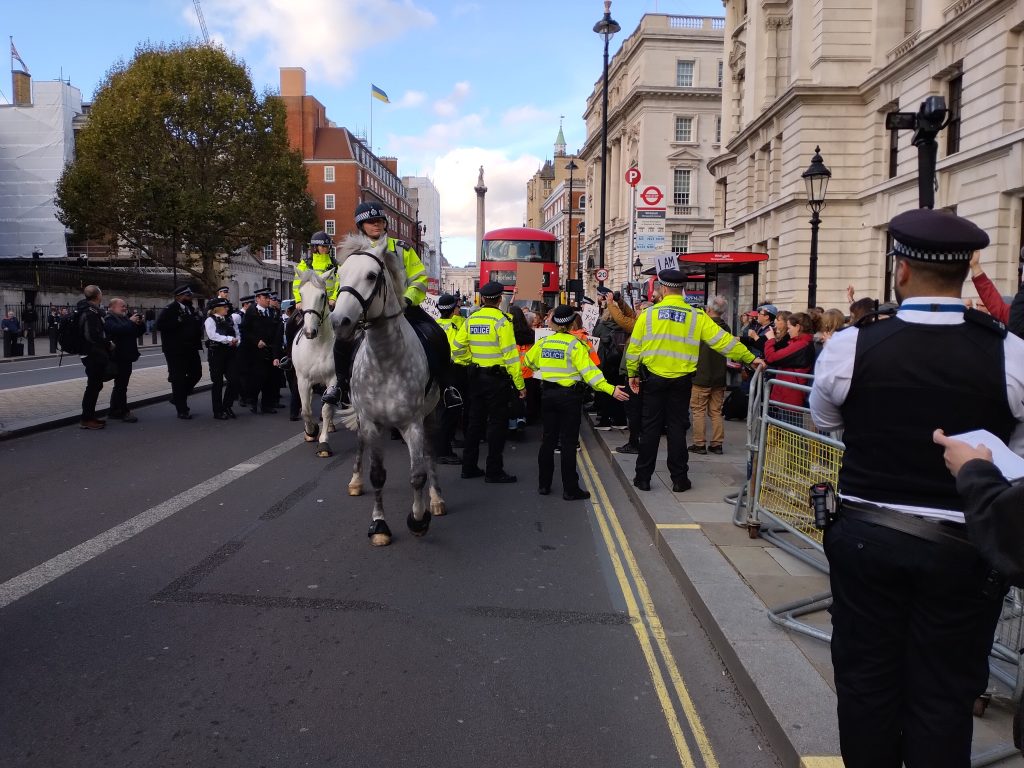
25 Just Stop Oil mothers arrested

Spread the love
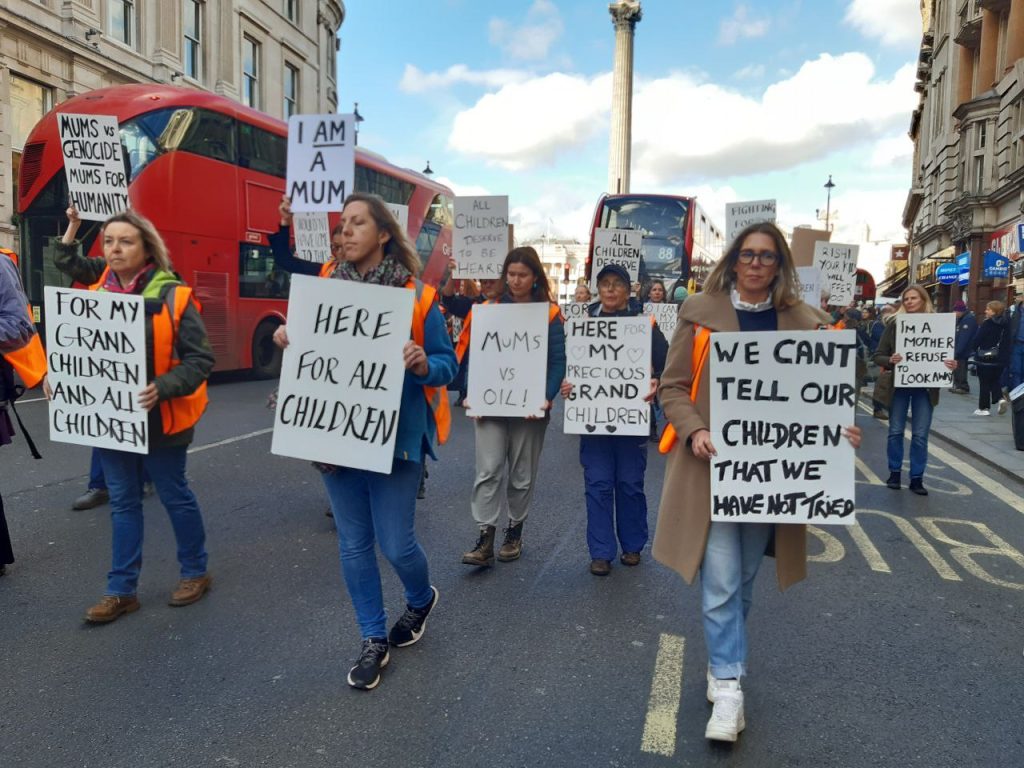
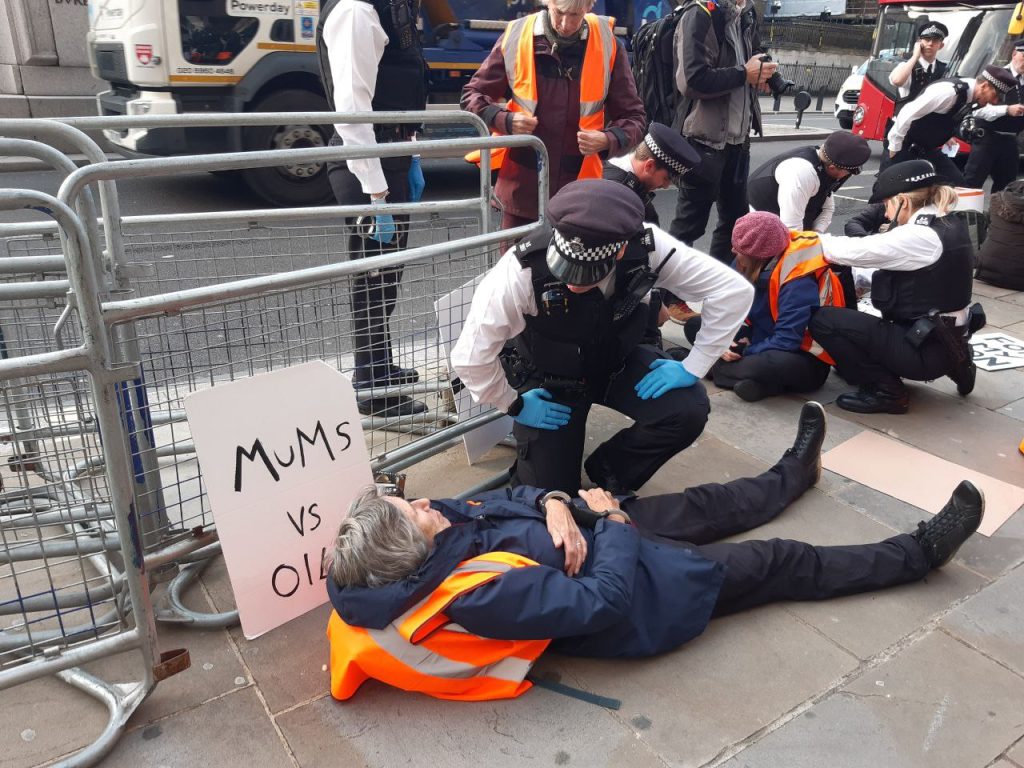
25 Just Stop Oil mothers arrested for slow marching London 6 Nov 2023.

A group of mothers and grandmothers were arrested this afternoon while slow-marching in London in support of Just Stop Oil’s demand for the government to end new oil and gas.

33 Just Stop Oil supporting mothers and grandmothers began marching down Whitehall from Trafalgar Square. Metropolitan Police kettled the group before arresting them, including a grandmother aged 79 and a great grandmother. They were detained for allegedly breaching Section 7 of the Public Order Act 2023.

Since Just Stop Oil’s most recent campaign began a week ago, police have refused to respect their rights to protest and have opted for immediately arresting slow marchers, but this group of mothers refused to be intimidated.

The mothers say that they refuse to stand by while government policies continue to support the fossil fuel industry, leading to global suffering on an unprecedented scale. The marching mums carried placards explaining why they felt compelled to resist: for their children, for all the world’s children and future generations.

25 Just Stop Oil mothers arrested for slow marching London 6 Nov 2023.

Gill Tavner, a mother of two daughters, aged 19 and 21, from Stroud said

We’re marching here to oppose corporate greed with maternal love. For years we’ve watched in mounting disbelief as global leaders have failed to take the necessary action to reduce the burning of fossil fuels. This government is travelling in completely the wrong direction.

“It’s crazy that in asking for a liveable world for our children we are vilified and criminalised. My heart aches when I think about the difficulties ahead for my girls, and even more so for less privileged children in the world. If we could rely on responsible leadership, this action would not be necessary, but politics is broken and so I’m compelled to take action. It’s the most important thing I can do as a mother.”

Angela Holland, 79, a mother of three and grandmother of five, from Bristol said:

I’m inspired to march and risk arrest by my grandson and whole family. Their determination has pushed me to read the research on climate breakdown, to understand the urgency for action and to try and adjust my lifestyle accordingly. As George Monbiot says, survival requires disobedience!

25 Just Stop Oil mothers arrested for slow marching London 6 Nov 2023.

Her daughter, Sophie Holland aged 52, a speech therapist and also a mother of three, said:

I’m here because where else would I be? The world is disappearing before our eyes – flooded, burnt, species after species vanishing. Scientists are telling us, loud and clear, this is our last chance. The UN secretary general, the International Energy Agency, Sir David Attenborough, Chris Packham are all saying we are facing catastrophe if we continue to burn fossil fuels. Why isn’t everyone who has children, or knows children, or sees pictures of already displaced and starving children; on the streets, demanding change from our self-serving, criminal government?”

Continue Reading25 Just Stop Oil mothers arrested