THE Court of Appeal decision to uphold the government’s absurd ban on Palestine Action as a “terrorist” group shows the need for a political revolt against the decree.
The definition of terrorism is being stretched to include any criminal damage to property done with a political motive, as we saw with Friday’s sentencing of the Filton Four. There, Mr Justice Johnson cited defendants’ aim to “influence the government” as evidence in favour of treating their attack on an arms factory belonging to Israeli firm Elbit Systems as a terrorist act.
The Court of Appeal is similarly sweeping. “The whole premise of Palestine Action is to cause damage to property,” it charges, before adding: “At no stage has Palestine Action suggested that its terrorist activities were either a mistake or an aberration.” “Damage to property” has by sleight of hand become “terrorist activities.”
Judges’ reference to the Suffragettes, in order to contrast their direct action to Palestine Action’s so-called terrorism, is again misleading; they state that the latter has “caused injury as well as property damage” (so did some Suffragette activities) and that its use of “secret cells to avoid … detection and prosecution” adds to the case for it being terrorist.
Elbit’s production of weapons used in a genocide against the Palestinians is described as “lawful business” despite the cases against Israel and Israeli leaders at the International Court of Justice and International Criminal Court. And speculation about future activities is given as much weight as anything that has actually been done (“The future threats and risks posed to third party individuals and property by Palestine Action are perhaps the most important factors … the home secretary is in the best position to assess those future threats and risks”).
All this simply shows that the courts are not a defence against authoritarian government.
Denying that the ban has had a chilling effect on freedom of protest, when police have arrested thousands of people for sitting down in public holding placards, is ludicrous; so is trusting ministers to tell the truth about groups they want to ban (the home secretary who pushed the ban through, Yvette Cooper, prepared the ground with baseless smears that Palestine Action might be funded by Iran).
Evidence-free froth about links to foreign states is doubly dangerous: it provides an excuse to suppress dissenting voices at home and raises international tensions when the risk of world war is again real, thanks in no small degree to the belligerence of our own government and its trigger-happy allies.
If the government cannot be turned from its repressive path judicially then this needs to happen politically. Even if Palestine Action can appeal to the Supreme Court, that won’t stop plans to give police powers to ban marches based on their “cumulative impact” or the prosecutions of peace movement leaders like Ben Jamal and Chris Nineham. We need a mass movement that forces ministers to back down.
Keir Starmer objects to criticism of the IDF. He asks how could anyone object to them starving people to death, forced marches like the Nazis did, bombing Gaza’s hospitals and universities, mass-murdering journalists, healthworkers and starving people queuing for food, killing and raping prisoners and murdering children. He calls for people to stop obstructing his genocide for Israel.Keir Starmer explains that UK is actively supporting Israel’s genocidal expansion and repeats his previous quotation that he supports Zionism “without qualification”. Keir Starmer said “I said it loud and clear – and meant it – that I support Zionism without qualification.” here: https://www.jewishnews.co.uk/keir-starmer-interview-i-will-work-to-eradicate-antisemitism-from-day-one/
Judges’ references to the Suffragettes are ridiculous. Are they suggesting that the Suffragettes didn’t plot secretly to kidnap cabinet ministers and subject them to forced feeding? Is it suggested that they published all their plans and intentions publicly so that here was no element of surprise? Are they saying that Suffragette bombers and arsonists campaigning for suffrage were not terrorists while Palestine Action opposing genocide are?
I consider that a horse crop whip only stings very briefly by the way, there is the crack of a whip but hardly painful and extremely short-lived, doesn’t leave any marks.
Scientist Sandra Steingraber is arrested outside Citigroup’s New York City headquarters on June 12, 2024. (Photo: Alec Connon)
I am here today to say to Citi that if you won’t listen to the data of scientists, you will need to listen to the bodies of scientists blocking your doors.
Editor’s note: The following is a speech read by Sandra Steingraber before being arrested outside Citigroup’s New York City headquarters on June 12, 2024.
My name is Sandra Steingraber. I have a PhD in biology, and I’ve worked as a scientist my whole adult life.
Here are two things biologists are worried about.
The first thing is happening in the ocean. When fossil fuels are burned and CO2 fills the atmosphere, some of it falls into the sea.
When carbon dioxide touches water, it turns into carbonic acid: H2CO3.
Acid makes calcium carbonate (CaCO3) dissolve. Seashells are made of calcium carbonate. So fossil fuels are turning our oceans into pits of acid, and animals made of shells are starting to dissolve.
I did not become a biologist to write eulogies for the species I study.
All together, the babies of animals with shells are called zooplankton.
Zooplankton are the basis of the marine food chain.
If you dissolve their parents, zooplankton disappear—along with the fish who eat them.
One half of the world’s human population depends on fish for protein. The pH of the oceans is now on track to crash the world’s fish stocks. As a biologist I worry about that.
Now let’s go on land and look at bees. Bumblebees also have babies, and they need to stay cool. So adult bees beat their wings like a thousand little ceiling fans to cool the bee nursery. But they can’t keep up due to more intense heatwaves. Baby bees are dying. Populations are crashing.
Bees help plants have sex. Bees turn flowers into fruits, nuts, vegetables. One-third of the food we eat is made for us by bees. And they do it for free. It’s called an ecosystem service.
If we lose the bees, crops fail. This is how the ecological crisis becomes a human rights crisis. Biologists are worried about this
I have studied climate change since 1982. I’ve testified. I’ve sent letters to the White House. I’ve met with the science adviser. I went to the Paris climate talks. But CO2 levels just reached a new high, and Citigroup is financing the arsonists.
Citi has poured $396 billion dollars into the fossil fuel industry just since 2016.
So, I am here today to say to Citi that if you won’t listen to the data of scientists, you will need to listen to the bodies of scientists blocking your doors. Today my body is a data point. And all together, all these data points on this blockade line make a trend. The trend is that when extinction rates accelerate, scientists get louder.
My message to Citi CEO Jane Fraser: I did not become a biologist to write eulogies for the species I study. I am morally obligated to use my knowledge to defend life against extinction and oppose those who finance it.
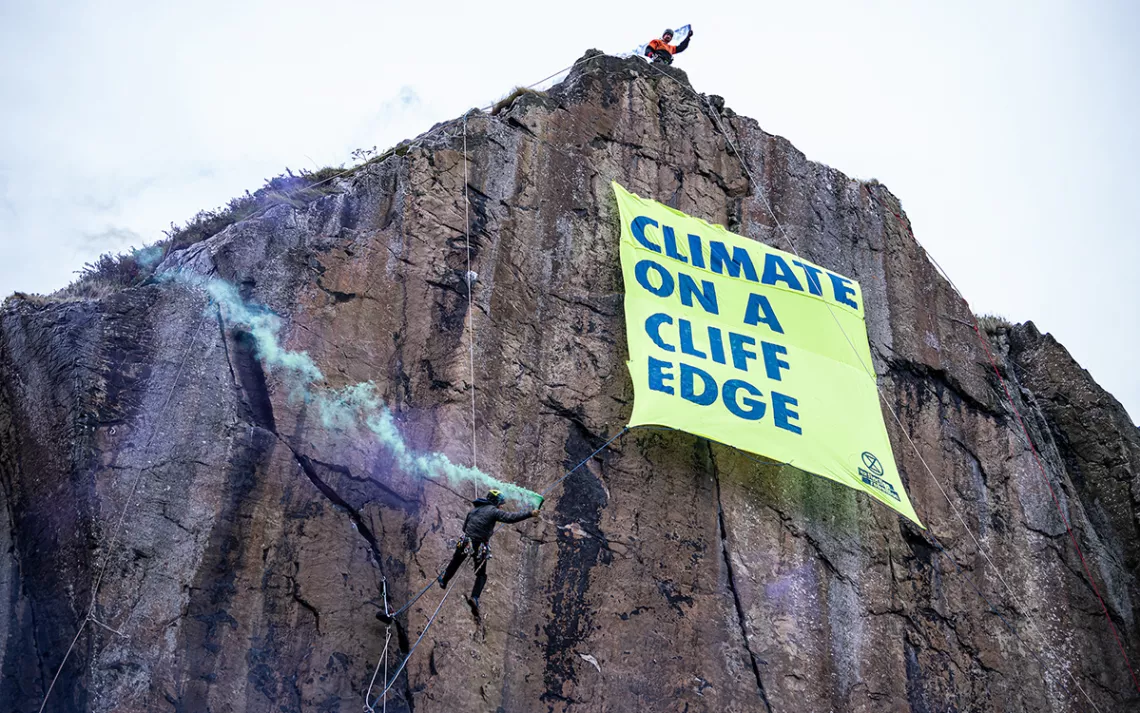
Experienced climbers scale a rock face near the historic Dumbarton castle in Glasgow, releasing a banner that reads “Climate on a Cliff Edge.” One activist, dressed as a globe, symbolically looms near the edge, while another plays the bagpipes on the shores below. | Photo courtesy of Extinction Rebellion and Mark Richards
Original article by EDWARD CARVER republished from Common Dreams under Creative Commons (CC BY-NC-ND 3.0).
Police arrest a climate protester at Citigroup’s headquarters in New York City on June 12, 2024. (Photo: Bank On Our Future/X)
“I invite you to join us, at any level of risk tolerance,” said one participant in the New York demonstration. “It feels deeply meaningful—even joyful—to be a part of this movement and to stand on the right side of history.”
Police arrested 28 people, including several scientists, protesting outside Citigroup’s headquarters in New York City on Wednesday as climate campaigners continued a series of actions targeting the bank for financing oil and gas projects.
Dozens of scientists and allies, some wearing white lab coats, marched to the bank’s entrances holding signs and banners with messages like “The Science Is Clear,” as they condemned Citigroup for financing nearly $400 billion in fossil fuel extraction in the eight years after the 2015 Paris agreement was signed.
Several scientists gave speeches before or as they were being arrested.
“I have studied climate change since 1982,” Sandra Steingraber, a biologist and retired scholar in residence at Ithaca College, said in a speech outside the Wall Street giant’s entrances. “I’ve testified. I’ve sent letters to the White House. I’ve met with the science advisor. I went to the Paris Climate talks. But carbon dioxide levels just reached a new high, and Citi here is financing the arsonists.”
Police arrested Steingraber, who, as she was being taken away in handcuffs, declared: “I’m not interested in writing eulogies for the species that I study!”
BREAKING: Scientists arrested for blockading the doors of @citibank, the world’s second largest funder of fossil fuels.
— New York Communities for Change (@nychange) June 12, 2024
The scientists’ protest was part of a series of climate actions undertaken as part of the Summer of Heat, a program organized by Climate Defenders, Climate Organizing Hub, New York Communities for Change, Planet Over Profit, and Stop The Money Pipeline (STMP).
A total of 28 people were arrested Wednesday, including several scientists, Alec Connon, STMP co-director, told Common Dreams. Dozens of campaigners were also arrested at Citigroup’s headquarters on both Monday, in a highly-attended kickoff to the summer activism series, and Tuesday, in an orca-themed follow-up.d
During Wednesday’s protest, the scientists delivered a joint letter, published Monday by the Union of Concerned Scientists and addressed to Citigroup’s leadership, urging the bank to stop financing fossil fuel projects scientists delivered a letter addressed to Citigroup’s leadership urging the bank to stop financing fossil fuel projects.
Activist pressure on major banks has risen in recent years following revelations—notably in the annual Banking on Climate Chaos report, published by nonprofit groups—about the key role they’ve played in funding oil, gas, and coal projects. The most recent report found that the world’s 60 largest banks had provided $6.9 trillion in funding to the fossil fuel industry in the eight years after the Paris Agreement.
The pressure has had an effect on some banks: HSBC and, more recently, Barclays have declared that they would stop financing new oil and gas projects. However, the Bureau of Investigative Journalism has reported that HSBC remains involved in fossil fuel deals.
Bank loans to fossil fuel companies are used not just to continue extraction at existing sites but also to explore and develop new reserves, even though the International Energy Agency has said there can be no more such development if climate goals are to be met. Citigroup has funded more new extraction than any bank in the world, the Banking on Climate Chaos report found.
Yet in response to Monday’s action, Citigroup claimed it was part of the transition to a green economy.
“Citi respects the advocacy of climate activists, and we are supporting the transition to a low-carbon economy through our net zero commitments and our $1 trillion sustainable finance goal,” a bank spokesperson said a statement, according to media outlets. “Our approach reflects the need to transition while also continuing to meet global energy needs.”
The statement did not win over climate activists. “This is the sort of bald-faced corporate lie that could cost us our planet,” Peter Kalmus, a NASA climate scientist, wrote in a Newsweek op-ed published Wednesday.
Kalmus attended Wednesday’s protest. Standing outside Citigroup’s headquarters, he said, “We’ve written thousands and thousands of papers and they have not listened to us. They’re fools. They’re stupid. They’re being unwise. They have to start listening to scientists.”
Summer of Heat organizers have events planned throughout the summer. In the op-ed, Kalmus reached out to readers to join the effort.
“I invite you to join us, at any level of risk tolerance,” he wrote. “In my experience, and in the experience of many other climate activists I know, civil disobedience has been a very effective way to create social change. And a big change is happening: A transition from a profit-above-life, colonial-extractivist, genocidal mindset, to a loving, sharing, interconnected mindset. It feels deeply meaningful—even joyful—to be a part of this movement and to stand on the right side of history.”
Original article by EDWARD CARVER republished from Common Dreams under Creative Commons (CC BY-NC-ND 3.0).
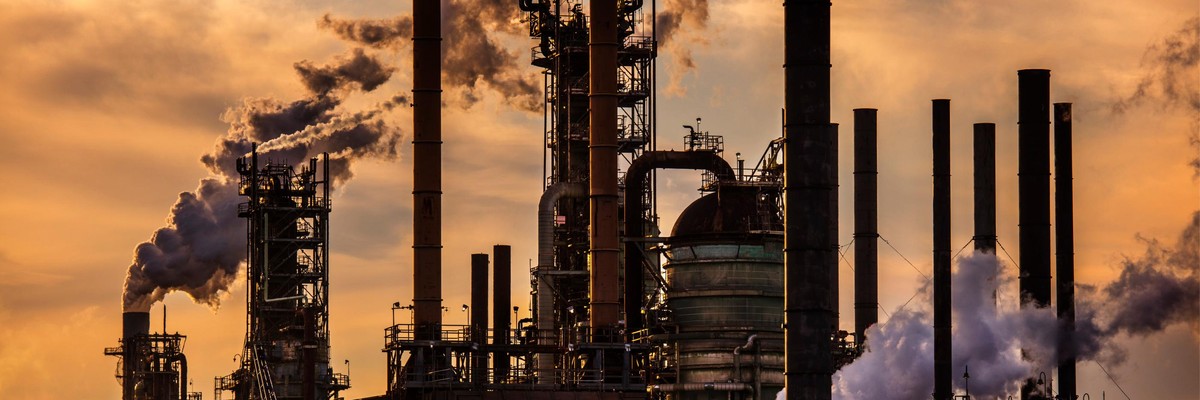
An ExxonMobil oil refinery is pictured in Baton Rouge, Louisiana. (Photo: Barry Lewis/InPictures via Getty Images)
“We cannot trust fossil fuel corporations to do anything but line the pockets of their CEOs and investors at the cost of our climate and communities,” one campaigner said.
The eight largest U.S. and Europe-based oil and gas producing companies are failing to align their plans with the Paris agreement goal of limiting global heating to 1.5°C above preindustrial levels and avoiding ever more catastrophic climate impacts.
Oil Change International’s Big Oil Reality Check report, released Tuesday, concludes that the plans of BP, Chevron, ConocoPhillips, Eni, Equinor, ExxonMobil, Shell, and TotalEnergies would actually put the world on track for more than 2.4°C of warming and burn through nearly one-third of the global carbon budget for hitting the 1.5°C target.
“It’s clearer than ever that oil and gas companies—the climate arsonists fueling climate chaos—cannot be trusted to put out the fire,” David Tong, report author and global industry campaign manager at Oil Change International, said in a statement. “There is no evidence that big oil and gas companies are acting seriously to be part of the energy transition.”
“The Big Oil Reality Check report reveals that oil and gas corporations are more interested in looking like they are acting on climate change than actually acting on climate change.”
For its fourth annual Big Oil Reality Check, Oil Change International judged the oil companies’ climate plans and pledges against a set of minimum standards for alignment with the Paris agreement. The standards were divided into three main categories: ambition, integrity, and people-centered transitions.
Under ambition, the companies were assessed on whether they had plans to stop oil and gas exploration, stop approving new extraction projects, decrease production every year through 2030, and stop extraction on a certain date while outlining a long-term plan to end production.
Under integrity, the companies were assessed on whether their emissions-reduction plans included their entire supply chain, whether they relied on carbon capture or offsets, whether their methane-reduction plans were really in line with climate goals, and whether they lobbied or advertised against climate action.
For people-centered transitions, they were assessed on whether they had just transition plans for employees and members of frontline communities and whether they respected human rights overall and the rights of Indigenous peoples, including to free, prior, or informed consent to any fossil fuel activities.
The companies were then rated from “fully aligned” to “grossly insufficient” for how well their plans complied with the Paris goals within the assessment’s framework, but all eight companies scored “insufficient” or “grossly insufficient” for a majority of the criteria.
Only one company—Eni—scored above “insufficient” in any category, earning a ranking of “partially aligned” for having greenhouse gas-reduction plans that included its supply chains. The three U.S.-based companies—Chevron, ConocoPhillips, and ExxonMobil—scored “grossly insufficient” for all 10 criteria.
Big Oil & Gas companies spend a lot of time and effort on public relations. We're here with a dose of reality.
— Oil Change International (@PriceofOil) May 21, 2024
“American fossil fuel corporations are the worst of the worst,” Oil Change International’s U.S. program manager Allie Rosenbluth said. “Chevron, ExxonMobil, and ConocoPhillips perpetuate harm in frontline communities not only across the U.S. but worldwide.”
Oil Change found that six out of the eight companies have official plans to increase oil and gas production. The only two that did not were BP and Shell; however, these companies employ a misleading strategy. They compensate for new oil and gas projects by selling off polluting assets. While the emissions from the sold operations no longer count toward company emissions, they still count toward the planet’s total. This practice is out of line with the GHG Protocol on corporate emissions accounting and may violate the United Nations Guiding Principles on Business and Human Rights.
Four of the companies assessed in the report—BP, Shell, Exxon, and Chevron—were also the subject of a recent U.S. House investigation and Senate hearing detailing how the fossil fuel industry playbook has shifted from outright denial of climate science to greenwashing its activities by presenting itself as part of the solution to the climate crisis while its day-to-day operations continue to raise global temperatures.
“The efforts of climate and social movements have forced oil and gas companies to acknowledge that fossil fuels are dirty and dangerous, leading to a variety of climate pledges and ‘plans,’” said Oil Change campaigner Myriam Douo. “The Big Oil Reality Check report reveals that oil and gas corporations are more interested in looking like they are acting on climate change than actually acting on climate change.”
“They spend billions on smoke and mirrors to try to fool us into believing they have solutions for a livable planet when, in reality, they are perpetuating harm to the climate and local communities while trying to suck every last ounce of profit out of their dirty fossil fuel business,” Douo concluded.
All told, Rystand energy data suggests that the combined production of the eight companies will be 17% by 2030 than they were last year.
“Such an increase in production on a global scale would put the world on a path towards global heating well beyond 2°C, locking in destruction of vulnerable communities and ecosystems,” the report authors wrote.
The report finds that all of the companies intend to rely on unproven carbon capture technology or offsets schemes to meet their claimed emission-reduction goals and have continued to spend money on lobbying against climate action and greenwashing their own activities since the agreement in Paris.
Further, no company has plans consistent with ensuring a just transition or protecting human rights. In one recent and urgent example, ExxonMobil, Chevron, TotalEnergies, BP, Shell, and Eni all continue to provide Israel with crude oil despite “the Israeli military’s ongoing assault on Palestinian civilians, ecosystems, and infrastructure in Gaza and mounting evidence of war crimes,” a March Oil Change investigation found.
The report comes nearly half a year after world leaders agreed to contribute to “transitioning away from fossil fuels” at the COP28 U.N. climate change conference in Dubai. In light of its conclusions, Oil Change called on governments to take action to further a just transition:
Stop permitting or approving new fossil fuel projects or infrastructure;
Set a Paris-aligned date for phasing out fossil fuel production;
End subsidies and financing for fossil fuels and false solutions like carbon capture;
Use tax policy to incentivize against investing in fossil fuels;
Craft a just transition, including by making polluters pay for cleanup and reparations; and
Passing laws to protect human rights and Indigenous rights and giving communities a legal mechanism to seek redress from corporate polluters.
Oil Change also argued that governments in the Global North should hold companies headquartered within their borders accountable for harm abroad and put money into funds to enable the Global South to transition to renewable energy, adapt to climate change, and pay for inevitable loss and damage.
“This year’s Big Oil Reality Check makes it clearer than ever—we cannot trust fossil fuel corporations to do anything but line the pockets of their CEOs and investors at the cost of our climate and communities,” Rosenbluth said. “People around the world are rising up to end the era of fossil fuels and build a just energy system that puts climate and communities first.”
The wildfires offer the latest evidence that President Joe Biden must declare a climate emergency, said one progressive economist.
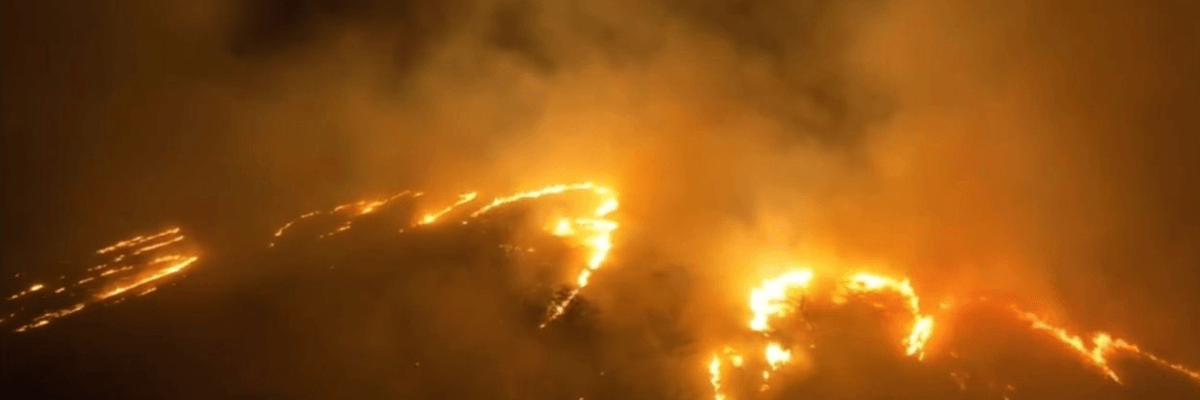
With weather experts pointing to unusually dry conditions on the Hawaiian island of Maui that primed the area for the wildfires that have killed at least 36 people so far, climate advocates on Thursday said the devastation offers the latest evidence that U.S. President Joe Biden must declare a national climate emergency.
Major General Kenneth Hara, the top defense official in Hawaii, said early Thursday that the wildfires had been contained, but authorities are still assessing widespread damage, displacement, and loss of life following a disaster that sent residents frantically running into the ocean for safety.
The historic town of Lahaina, once the capital of Hawaii, was decimated by the fires on Wednesday, with its oldest building apparently burned to the ground.
Theo Morrison, the executive director of the Lahaina Restoration Foundation, told The New York Times that the town had “no preparation, no warning, nothing” as the flames—directly fueled by the 80 mile-per-hour winds of Hurricane Dora south of Hawaii and dry vegetation—spread to Lahaina and razed its historic town center in a matter of hours.
Kaniela Ing, a former Hawaii state representative and national director of the Green New Deal Network, expressed grief over the devastating fires and noted that while residents and local authorities were caught off-guard by the fast-moving blaze, U.S. officials have been warned for years that the continued extraction of fossil fuels is making parts of the country drier and hotter and creating conditions in which wildfires can become more damaging.
“My island is on fire. My heart is breaking at the utter devastation these wildfires are causing my friends, family, and community,” said Ing in a statement. “The extreme wildfires in Lahaina in this summer of climate disasters are yet more proof that we are in a climate emergency and this crisis is killing us. Our leaders in D.C. passed starting measures to tackle climate change—but we need legislation that is as bold and urgent as the scale of the wildfires choking Hawaii and Canada, the heatwaves suffocating Texas, and the extreme flooding drowning Europe.”
Ing suggested that Congress must pass legislation to expand investments in clean energy infrastructure and jobs, but also that Biden can and should act without Congress to significantly reduce the fossil fuel emissions which scientists have said are contributing to extreme heat and wildfires.
“How many more lives lost or families displaced in communities like mine is President Biden willing to tolerate before he declares a climate emergency and activates politicians to take further climate action?” said Ing.
The wildfires devastated Lahaina on the same day that Biden told a reporter on The Weather Channel that “practically speaking,” he has already declared a climate emergency by acting to protect some public land from certain types of mining and rejoining the Paris climate agreement.
The “apocalyptic scenes” in Hawaii, said economist Umair Haque, offer the latest proof that “practically” declaring a climate emergency is not enough.
It should go without saying seeing the apocalyptic scenes in Maui that Biden shouldn’t “practically declare” a climate emergency, he should actually declare a real one. It’s what we’re living in now.
Ing also condemned Republican politicians who continue to deny the existence of the climate crisis and that it’s being caused by the fossil fuel industry, including Sen. Tim Scott (R-S.C.), who dismissed the call for a climate emergency declaration in a Fox News interview.
“Ron DeSantis, Tim Scott, oil companies, and anyone in power who denies climate change are the arsonists,” said Ing. “We are living the climate emergency.”
According to the U.S. Drought Monitor, more than a third of Maui was experiencing at least a moderate drought as of August 1, and nearly 16% of the island was in a severe drought the day before the flames engulfed parts of the island.
Climate scientist Michael Mann of the University of Pennsylvania said the fires are a “‘compound’ climate catastrophe”—made worse by the hurricane’s rapid winds, which interacted with the “background state” of extreme drought.
What we're seeing in #Maui is a "compound" climate catastrophe, where an immediate factor (in this case, unusually strong winds from the outer bands of a passing hurricane) interact w/ background state (extreme drought that has been in place for a month):https://t.co/YF7HXpB4TC
Gov. Josh Green, a Democrat, said an immediate issue the island is coping with is the displacement of several thousand people, and asked visitors to leave or cancel nonessential travel to Maui to ensure that hotel rooms and other accommodations are available for people in need of shelter.