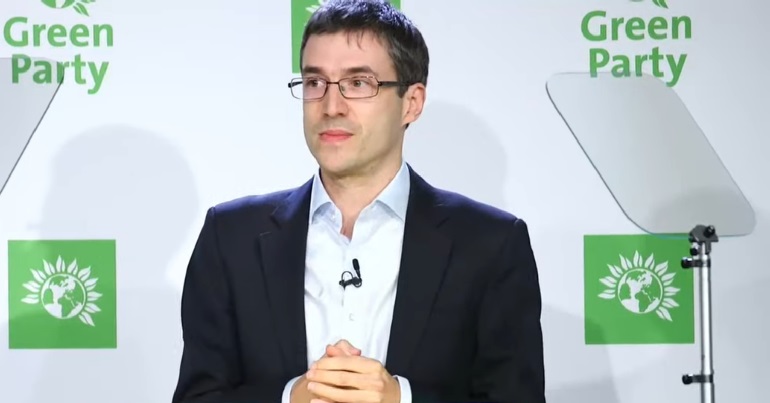
The Green Party of England and Wales has called for rail fares to be frozen on the day the government has announced that regulated fares will increase in January 2024.
…
Ramsay said: “This government is moving in completely the wrong direction. Fuel duty has been frozen since 2011, while air passenger duty cuts this year will be a disaster for the climate crisis by encouraging people to fly more. This is despite the fact UK rail passengers are already paying more to travel by train than flying and are faced with some of the most expensive tickets in Europe.
“Emissions from transport are higher than for any other sector of the economy. If the UK is to meet its climate commitments, then we need more people choosing trains over cars and planes, and we need more commuters opting for public transport and active travel to get to work. Making train travel more expensive, while closing rail ticket offices that support travellers to get the best deal, would underscore the government’s contempt for climate action and the travelling public.
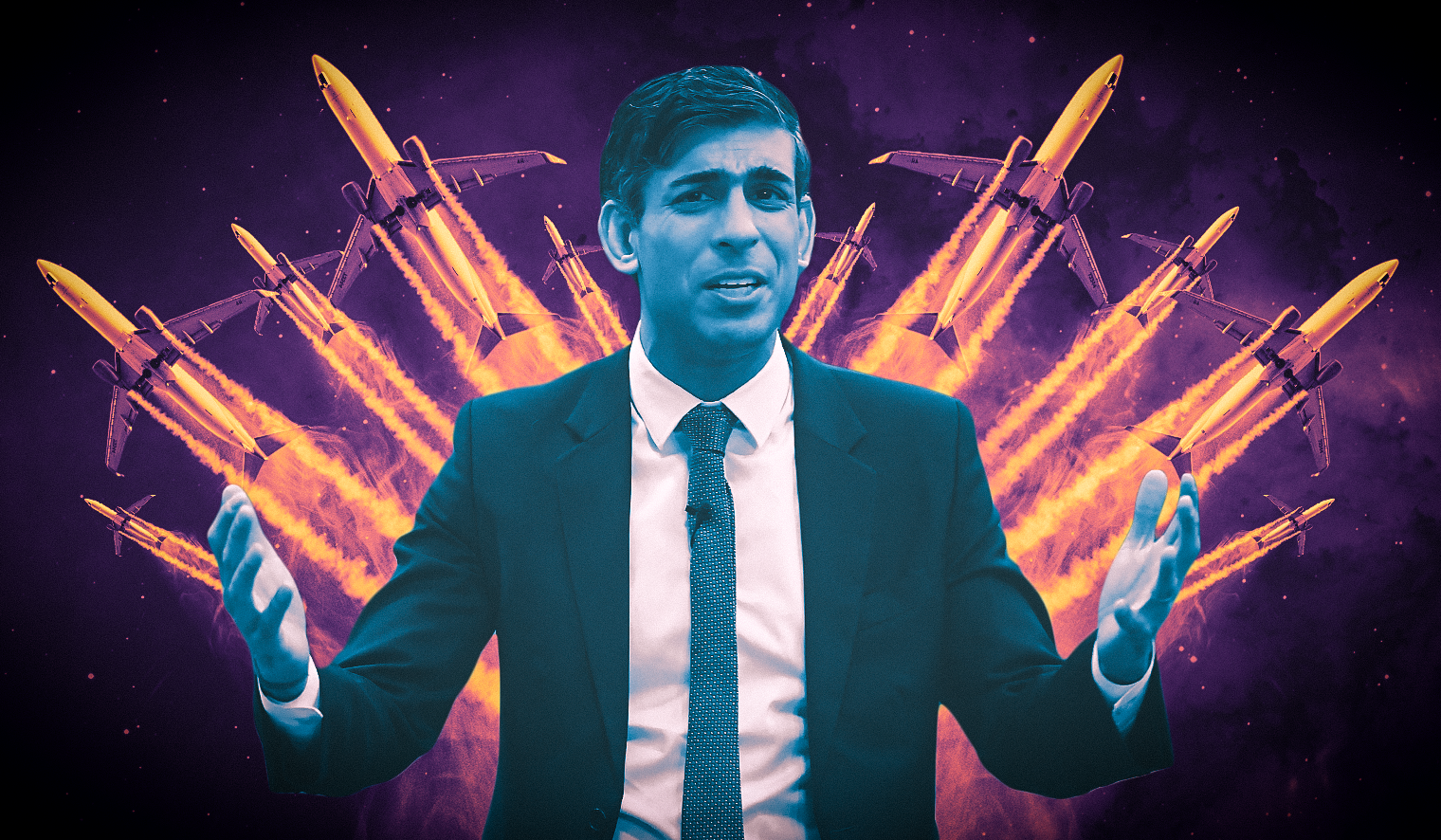
Rishi Sunak halved has aviation tax on domestic flights | Liam McBurney/alenaohneva / Getty / Pexels. Composite by openDemocracy
Rishi Sunak slashed aviation tax on domestic flights and rejected a new ‘frequent flyer levy’ after lobbying by the airline industry, openDemocracy can reveal.
The decision to halve air passenger duty (APD), which takes effect next month, will mean more flights and less rail journeys in Britain – undermining the government’s net-zero commitment.
Clean transport campaigner Matt Finch, the director of Transport and Environment, told openDemocracy: “Simply taxing airlines in the same way that all other UK companies are taxed would bring in precious funds to the Treasury, and stop the ridiculous favouritism shown to airlines.”
He added: “It’s clear that the aviation sector gets preferential treatment from the government, but it’s unclear exactly why.”
In June 2021, when Sunak was chancellor, Ryanair’s director of route development told the Treasury that APD “should be abolished in order to stimulate immediate traffic growth”, documents obtained by openDemocracy under Freedom of Information law reveal.
Ryanair said it could offer “ultra-low” domestic fares if the tax was reduced. It has responded to Sunak’s cut by sharply increasing flights from London, adding three a day between the capital and Edinburgh and three a week to Newquay, Cornwall.
Responding to the Treasury’s June 2021 consultation on the plans, British Airways’ owner, International Airlines Group (IAG), and easyJet also said they supported APD tax cuts. IAG said “positive outcomes could include new routes, increased frequency and larger aircraft on existing routes as well as lower fares”.
EasyJet said: “Our analysis shows that if domestic APD is reduced by 50%, this would
support an overall 31% increase in domestic volume to 10.6 million passengers.”
But the UK’s rail industry warned that cutting air taxes would lead to 222,000 passengers shifting from rail to air each year, equivalent to an extra 1,000 domestic flights. The Rail Delivery Group said that reducing the cost of flying “runs counter to government’s legal commitment to decarbonise” and could increase carbon emissions by 27,000 tonnes a year.
Sunak ignored the warning and in October 2021 announced a 50% cut to APD on domestic flights, from £13 to £6.50.
It’s clear that the aviation sector gets preferential treatment from the government, but it’s unclear exactly why
Matt Finch, Transport and Environment
Silviya Barrett, the director of Policy and Research at Campaign for Better Transport, said: “In the context of the climate emergency, it’s hard to think of a more wrong-headed policy than making domestic flights cheaper. Not only will it encourage more polluting travel, but it will reduce revenue which could and should be invested in sustainable alternatives.”
France is taking the opposite approach by banning domestic flights between cities that are linked by a train journey of less than 2.5 hours.
The railway industry’s ability to compete with cheap flights was further undermined last week when the government increased rail fares by up to 5.9%, the biggest rise for 11 years.
The airline industry already benefits from the absence of tax on jet fuel and no VAT on airline tickets. A study last year estimated that taxing jet fuel in the UK at the same rate as road fuel would have raised £6.7bn in 2019. The sector generates around 8% of UK emissions.
Sunak, who now travels around Britain in a private jet, also rejected a recommendation to introduce a progressive tax on frequent flyers.
The Climate Change Committee has found that a “frequent flyer levy” –which makes those who fly more often pay progressively more tax – is a fairer way of taxing aviation.
Research shows that just 15% of Brits take 70% of flights.
It’s hard to think of a more wrong-headed policy than making domestic flights cheaper
Silviya Barrett, Campaign for Better Transport
Nine in ten people back the idea of a frequent flyer levy, according to a survey by conservation charity WWF and think tank Demos, but Ryanair told the Treasury not to do it.
Ryanair argued that a frequent flyer levy would be “likely only to punish passengers that have an ongoing practical requirement to fly frequently”, while IAG told the Treasury that “taxing aviation does not benefit the environment”.
Grahame Morris, a Labour member of the House of Commons Transport Select Committee, told openDemocracy: “It is counterintuitive of this government to remain committed to ‘Jet Zero’ by 2050 and at the same time to reject a frequent flyer levy while alternative sustainable aviation fuels to replace existing fossil fuels are still under development and evaluation.”
A government spokesperson said: “We are absolutely committed to levelling up the UK and delivering on our net-zero commitments, which is why from April we are cutting duty in half for flights within the UK, except for private jets, and introducing new higher rates of duty for ultra-long haul flights, ensuring that those who fly furthest contribute the most.
“In line with the tax policy-making process, we consulted on a frequent flyer levy in 2021, which a wide range of stakeholders fed into. Having considered views, including around privacy and data concerns of implementing such a levy, we concluded that Air Passenger Duty should remain the principal tax on the aviation sector.”
SEVEN HUNDRED SELF-DESCRIBED “climate rebels” breached the chain-link fence surrounding Amsterdam’s Schiphol Airport, the world’s third-busiest hub for international passenger traffic, on November 5. With bolt cutters they opened holes in the fence and poured in, some of them on bicycles, and raced across the tarmac. Others laid ladders against the 9-foot-high fence and topped it on foot.
…
“The superrich have got used to polluting as they please with a total disregard for people and planet, and private jets are the pinnacle of these luxury emissions that we simply cannot afford,” Jonathan Leggett, one of the activists, told us. “Our action brought them back to earth. We wanted to show the extremeness and injustice related to this manner of transport.”
…
In the Netherlands, 8 percent of the population takes 40 percent of flights. Worldwide, the difference is even more stark: One percent of the population is responsible for 50 percent of pollution due to aviation, making air travel a textbook example of how pollution by the rich leads to consequences and injustices for those who have not caused the climate crisis.
Scientists attending Cop26 have sent a clear warning to policymakers: get a move on, because every moment of delay, every extra fraction of a degree of global heating will have dire consequences.
That message has been reinforced at Glasgow with reports, forums and discussions, but those involved in channelling the science to the world’s leaders are frustrated that words are still not being matched by actions.
Peter Stott, a climate scientist at the Met Office’s Hadley Centre who has been attending Cops since 1998, said he was marginally more optimistic than he had been before the Glasgow summit. “I have mixed emotions. I feel relieved that things have started to move, but I am concerned about the speed,” he said. “The scientific message we have talked about for 25 years is being acted on. That is a vindication. We might be starting to turn the corner. But I feel a strong sense of anxiety I haven’t felt before. I want to see the policymakers get a move on. In the next two years we have got to cut emissions rapidly.”
Countries are currently expected to return with better pledges in 2025, but many are now demanding the deadline should be brought forward. This is seen as the most closely fought area of disagreement as the UK hosts struggle to broker a deal.
“If that [five years] is the first time that countries are called to increase their ambitions, honestly that’s going to be too late,” said Figueres, founding partner of the Global Optimism thinktank.
A COP26 declaration to cut aviation emissions is “full of scams”, environmental campaigners have warned.
The International Aviation Climate Ambition Coalition agreed to support measures to reduce the sector’s carbon emissions.
These included promoting the development of low-carbon aircraft, sustainable aviation fuels and carbon offsetting. It was signed by 20 countries including the UK, the US, France and Spain.
But Greenpeace is calling on European leaders not to support it, and urged them to ban short-haul flights and “massively invest” in rail instead.
CREATING universal and comprehensive public transport is the only way to effectively cut carbon emissions from travel at home and abroad, unions and campaigners have said during Cop26.
Campaigners and politicians condemned the lack of consideration of rail, bus, ferry and cycle transport during proceedings at the summit today, where the focus was put on cars and planes instead.
Officials and delegates at the gathering in Glasgow made a number of announcements on transport, including on zero-emissions vehicles, so-called green shipping corridors, and on decarbonising air travel.
Tory Transport Secretary Grant Shapps said that travel, including aviation, should be “guilt-free.” He also said that the government did not see flying as “the ultimate evil,” after officials, including Prime Minister Boris Johnson, were condemned for using planes for short journeys during Cop26.