People take part in the People’s Assembly Britain is Broken national demonstration in central London, November 5, 2022
AHUGE demonstration is being held in central London tomorrow to “send a message” to the government over spending cuts and welfare reform.
The People’s Assembly said it expected thousands of trade unionists, campaigners and activists to attend the protest.
The campaign group accused the government of making spending cuts that target the poorest in society.
A spokesperson said: “The adherence to ‘fiscal rules’ traps us in a public service funding crisis, increasing poverty, worsening mental health and freezing public-sector pay.
“Scrapping winter fuel payments, keeping the Tory two-child benefit cap, abandoning Waspi women, cutting £5 billion of welfare by limiting PIP [personal independence payments] and universal credit eligibility and slashing UK foreign aid from 0.5 per cent to 0.3 per cent of GDP, while increasing defence spending to 2.5 per cent of GDP, are presented as ‘tough choices.’
“Real tough choices would be for a Labour government to tax the rich and their hidden wealth to fund public services, fair pay, investment in communities and the NHS.”
Keir Starmer says that the Labour Party under his leadership all feel a small part of Scunthorpe.Keir Starmer confirms that he’s proud to be a red Tory continuing austerity and targeting poor and disabled scum.
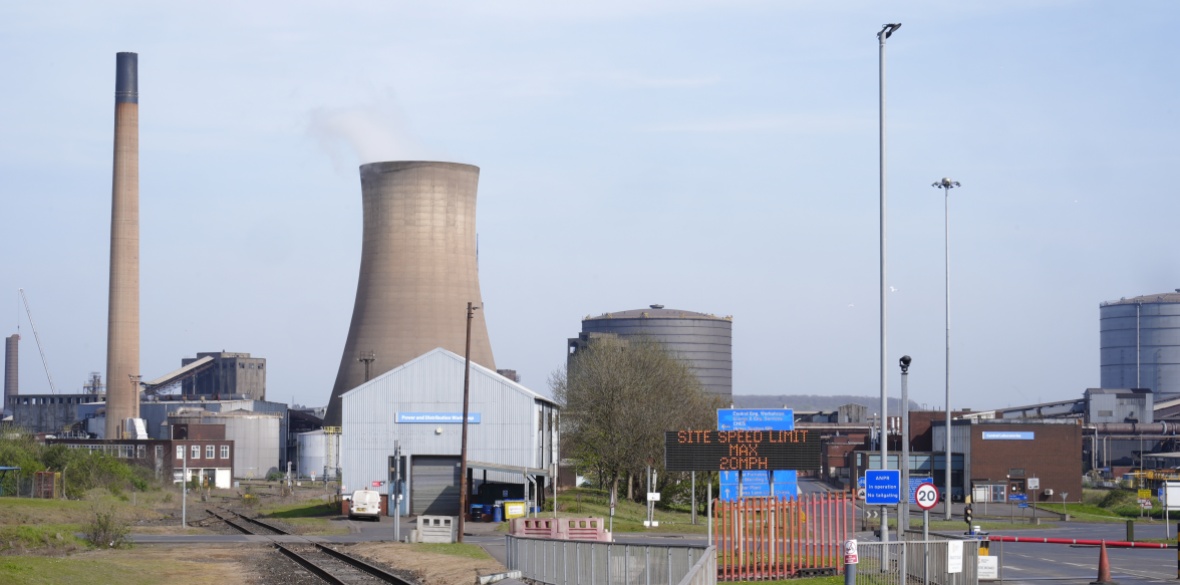
A general view of British Steel in Scunthorpe, Lincolnshire, April 12, 2025
LABOUR has been urged to catch up with public support for nationalising services “just as strategically important” as British Steel.
Campaigners and unions have continued to call for the full nationalisation of the company after the government passed an emergency law on Saturday to seize control of its Scunthorpe plant.
The legislation was passed in a single day, empowering ministers to save the last plant making “virgin steel” direct from raw materials from imminent closure, as well as thousands of jobs.
But Labour’s action was likened to an expensive public bailout today amid growing calls for the government to stop the private sector from running other services into the ground.
We Own It founder and director Cat Hobbs said: “The government has sprung into action to protect British Steel as a strategically important industry, with nationalisation on the table.
“In 2020, Keir Starmer promised public ownership of rail, mail, energy and water — as well as ending outsourcing in our NHS and local government.
“These public services are just as strategically important as steel, as drivers of economic and social development.
“Since Thatcher’s sell off, many of our key public services have been handed over to foreign states, offshore funds and billionaires.
“If Starmer is looking to take back control of our economy, this would be a good place to start.
“The UK public overwhelmingly supports public ownership and it’s high time our government caught up.”
In response to Just Stop Oil’s announcement this morning Will McCallum, co-executive director of Greenpeace UK, said:
“The history of democracies is built by groups of people like the Suffragettes, trade unionists, gay rights campaigners and anti-fracking activists who were brave enough to make themselves unpopular for a cause they believed in. With the benefit of hindsight we can see the debt we owe each of them for giving us rights and liberties, and protecting the things we care about.
“Whether you want to stand up for our planet against polluting profiteers, or save your local library from council spending cuts, the freedom to make your voice heard is the lifeblood of a healthy democracy. Just Stop Oil paid a heavy price for raising their voices at a time when politicians and corporations are trying to silence peaceful protesters – in the streets and in the courts. We must not allow our hard-won right to protest to be stripped away, because it is the right that all other rights depend upon. Greenpeace and many others will continue to defend this proud tradition of taking action on issues that matter to make change possible.”
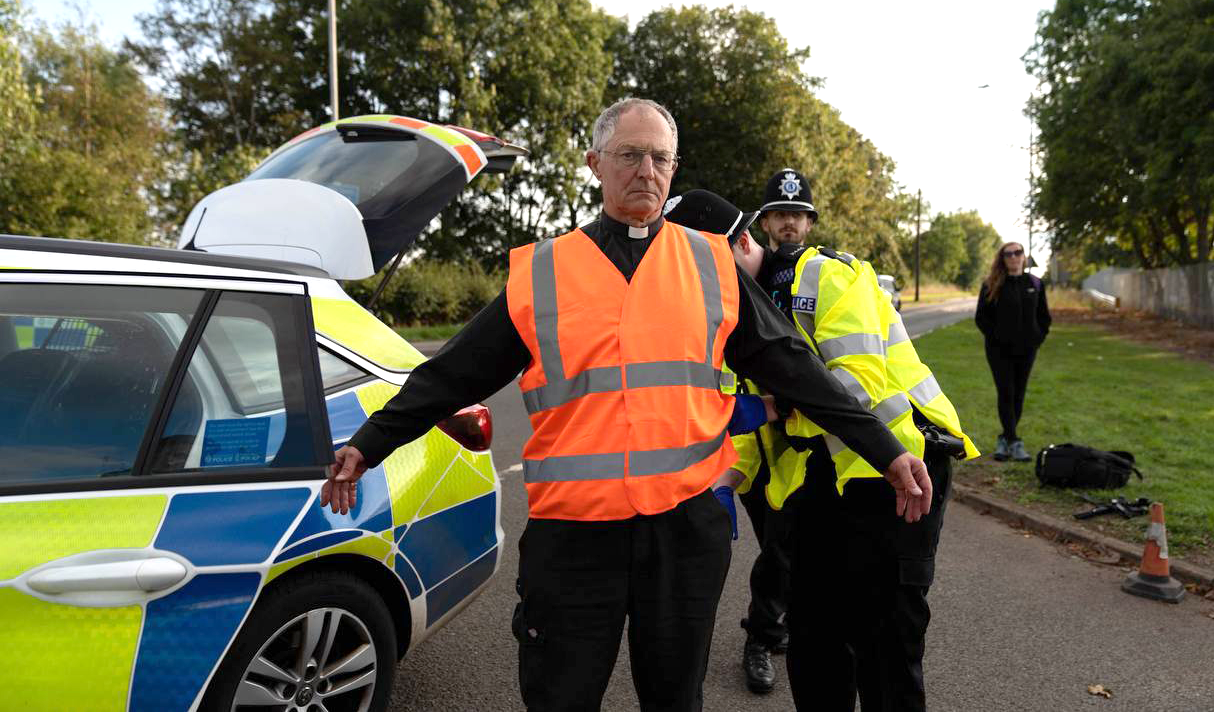
A Just Stop Oil participant getting arrested at Kingsbury oil terminal. A JSO / Vladamir Morozov image.Orcas are pleased that Rosebank and Jackdaw oil fields are blocked and say that the killer apes need to just stop oil.
Scientists and campaigners are calling on governments and tech companies to tackle climate disinformation. Credit: MauriceNorbert via Alamy
An open letter from climate scientists and campaigners warns of the dangers associated with false climate claims.
Governments around the world must take “immediate and decisive action” to tackle climate disinformation, scientists and campaign groups have urged as talks at the COP29 climate summit in Baku, Azerbaijan enter their fourth day.
A coalition of 55 climate information integrity groups and 42 leading climate scientists and experts have signed an open letter urging countries to counter the risk of false and misleading claims that are wrecking efforts to slow climate change.
It comes two days after UK Prime Minister Keir Starmer spoke at COP29 arguing that “there is no national security without climate security” – and a week after the election in the United States of Donald Trump, who has previously called climate change a “hoax”.
The letter published today – signatories to which include Friends of the Earth, the Institute of Strategic Dialogue, and regional branches of Greenpeace and WWF – lists steps governments could take.
These include adopting a universal definition of climate disinformation, such as the working definition proposed by the Climate Action Against Disinformation (CAAD) coalition, another signatory.
According to the letter, the definition should cover anything that misrepresents scientific data or “falsely publicises” supposed solutions to climate change which in fact contribute to global warming, often referred to as “greenwashing”.
Such a definition should cover “deceptive or misleading online behaviour” that undermines public understanding of climate change, the fact it is caused by human activity, and the need for urgent mitigation and adaptation action, the letter said.
Signatories also urged governments to take action against organisations which give a platform to climate disinformation – including social media outlets, advertising technology providers, broadcasters, and publishing companies.
“The spread of disinformation continues to undermine and delay our collective ability to act, jeopardising progress at crucial negotiations and the upcoming G20 Summit in Brazil”, the letter said.
“Climate disinformation, waged by vested interests, undermines climate action and puts our collective future at risk. Our information ecosystem is being damaged, and those responsible must be held accountable.”
The letter ends by arguing that “by adopting these principles, governments can foster a healthier and safer online environment that supports informed decision-making and enables effective climate action.”
The world’s leading climate science group, the UN’s Intergovernmental Panel on Climate Change (IPCC), has warned that efforts to tackle climate change were being delayed by “rhetoric and misinformation that undermines climate science and disregards risk and urgency”.
“As disinformation continues to be an obstacle to vital climate action, the message from this open letter to decision makers globally is clear: protecting truth in the climate conversation is critical if we are to secure meaningful change”, said Max MacBride, Head of Counter-Disinformation at Roots Greenpeace, the NGO’s grassroots campaign initiative.
“At Roots, we see every day how climate disinformation stifles youth advocacy, and we join this call to hold governments and platforms accountable for enabling informed, equitable climate action”, he said.
Climate Disinformation Threats
A CAAD report published earlier this week found that climate disinformation is widespread online, and is hobbling efforts to address climate change.
The report said that social media platforms bear responsibility for allowing “super spreaders” to “pollute their platforms with debunked claims attacking renewable energy and electric vehicles”.
CAAD also found that fossil fuel companies were allowed to use digital advertising across Meta platforms to greenwash their reputations, by promoting false solutions or presenting fossil fuels as essential to the energy transition.
A study published in February found that 14 percent of Americans don’t believe climate change is real – even as growing numbers of Americans say they are concerned about the climate.
“In the US, we’ve painfully experienced the role disinformation has played in thwarting disaster response and threats to the lives of responders”, Kate Cell, Senior Climate Campaign Manager at the Union of Concerned Scientists, told DeSmog.
“As climate-fueled disasters become more common around the world, governments can protect their residents by addressing the problem of climate disinformation systemically.”
Another report released this week by the scrutiny NGO InfluenceMap found 2.500 cases of fossil fuel companies pushing arguments which contradict IPCC recommendations since COP28 last year.
Thais Lazzeri, founder of educational group FALA, a signatory to the letter, told DeSmog: “The letter comes at a unique time for Brazil, which is hosting the G20 and the incoming COP30 Presidency. The alliance of so many Brazilian institutes and professionals shows the urgency for answers and the intersectoral power of this Brazilian network, willing to work together.”
She added: “At the opening of the Brazil space at CO29, Environment Minister, Marina Silva, said that denialism doesn’t fit. The Brazilian government can lead by example and guarantee information integrity policies and strategic, connected actions to change the game.”
DeSmog has previously reported on news media spreading false climate claims, with The Telegraph newspaper in the UK attacking climate solutions – a trend that has increasing since July’s general election. As revealed by DeSmog in 2023, one in three presenters on the right-wing broadcaster GB News had spread climate disinformation during the previous year.
“It is much easier to pollute the waters of public discussion on climate change causes and consequences than it is to keep them clean and productive,” said Max Boykoff, signatory to the letter and professor of Environmental Studies at Boulder University in Colorado and founder of the Media Climate Change Observatory, a project which analyses mentions of climate change in news media.
“Therefore, more proactive, clear, accurate and effective communication efforts are consistently and repeatedly needed. That motivates this call for government action to curb disinformation about climate change.”

 People take part in the People’s Assembly Britain is Broken national demonstration in central London, November 5, 2022