Thousands Feared Dead in Impoverished French Territory of Mayotte After Cyclone Chido

Spread the love

Original article by Julia Conley republished from Common Dreams under Creative Commons (CC BY-NC-ND 3.0). 

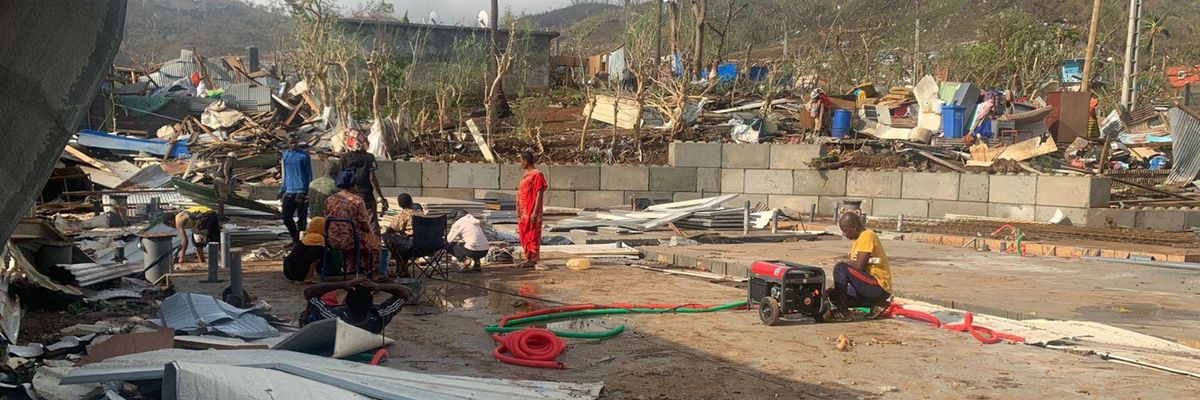
A photo taken on December 15, 2024 shows residents sitting among piles of debris of metal sheets and wood after homes were destroyed by the cyclone Chido that hit France’s Indian Ocean territory of Mayotte. (Photo: Kwezi/AFP via Getty Images)

“You feel like you are in the aftermath of a nuclear war,” said one resident. “I saw an entire neighborhood disappear.”

Undocumented migrants living in informal settlements in the French territory of Mayotte were among those whose lives and livelihoods were most devastated by Cyclone Chido, a tropical cyclone that slammed into the impoverished group of islands in the Indian Ocean over the weekend.

Authorities reported a death toll of at least 20 on Monday, but the territory’s prefect, François-Xavier Bieuville, told a local news station that the widespread devastation indicated there were likely “some several hundred dead.”

“Maybe we’ll get close to a thousand,” said Bieuville. “Even thousands… given the violence of this event.”

Mayotte, which includes two densely populated main islands, Grande-Terre and Petite-Terre, as well as smaller islands with few residents, is home to about 300,000 people.

The territory is one of the European Union’s poorest, with three-quarters of residents living below the poverty line, but roughly 100,000 people have come to Mayotte from the nearby African island nations of Madagascar and Comoros in recent decades, seeking better economic conditions.

Many of those people live in informal neighborhoods and shacks across the islands that were hardest hit by Chido, with aerial footage showing collections of houses “reduced to rubble,” according toCNN.

“What we are experiencing is a tragedy, you feel like you are in the aftermath of a nuclear war,” Mohamed Ishmael, a resident of the capital city, Mamoudzou, told Reuters. “I saw an entire neighborhood disappear.”

Bruno Garcia, owner of a hotel in Mamoudzou, echoed Ishmael’s comments, telling French CNN affiliate BFMTV: “It’s as if an atomic bomb fell on Mayotte.”

“The situation is catastrophic, apocalyptic,” said Garcia. “We lost everything. The entire hotel is completely destroyed.”

Residents of the migrant settlements in recent years have faced crackdowns from French police who have been tasked with rounding up people for deportation and dismantling shacks.

The aggressive response to migration reportedly led some families to stay in their homes rather than evacuate, for fear of being apprehended by police.

Now, some of those families’ homes have been razed entirely or stripped of their roofs and “engulfed by mud and sheet metal,” according to Estelle Youssouffa, who represents Mayotte in France’s National Assembly.

https://twitter.com/DeputeeEstelle/status/1868318452487958920?ref_src=twsrc%5Etfw%7Ctwcamp%5Etweetembed%7Ctwterm%5E1868318452487958920%7Ctwgr%5Ecb1d119dbd83328575226e14015be4fd31e516f5%7Ctwcon%5Es1_c10&ref_url=https%3A%2F%2Fwww.commondreams.org%2Fnews%2Fcyclone-mayotte

Sorry, this content could not be embedded.
X

People in Mayotte’s most vulnerable neighborhoods are now without food or safe drinking water as hundreds of rescuers from France and the nearby French territory of Reunion struggle to reach victims amid widespread power outages.

“It’s the hunger that worries me most. There are people who have had nothing to eat or drink” since Saturday, French Sen. Salama Ramia, who represents Mayotte, told the BBC.

The Washington Postreported that Cyclone Chido became increasingly powerful and intense—falling just short of becoming a Category 5 hurricane with winds over 155 miles per hour—because of unusually warm water in the Indian Ocean. The ocean temperature ranged from 81-86°F along Chido’s path. Tropical cyclones typically form when ocean temperatures rise above 80°F.

“The intensity of tropical cyclones in the Southwest Indian Ocean has been increasing, [and] this is consistent with what scientists expect in a changing climate—warmer oceans fuel more powerful storms,” Liz Stephens, a professor of climate risks and resilience at the University of Reading in the United Kingdom, told the Post.

People living on islands like Mayotte are especially vulnerable to climate disasters both because there’s little shielding them from powerful storms and because their economic conditions leave them with few options to flee to safety as a cyclone approaches.

“Even though the path of Cyclone Chido was well forecast several days ahead, communities on small islands like Mayotte don’t have the option to evacuate,” Stephens said. “There’s nowhere to go.”

Original article by Julia Conley republished from Common Dreams under Creative Commons (CC BY-NC-ND 3.0). 

Continue ReadingThousands Feared Dead in Impoverished French Territory of Mayotte After Cyclone Chido

Arctic Tundra Has Turned From ‘Carbon Sink to Carbon Source’ in Dangerous Flip: NOAA

Spread the love

Original article by Julia Conley republished from Common Dreams under Creative Commons (CC BY-NC-ND 3.0).
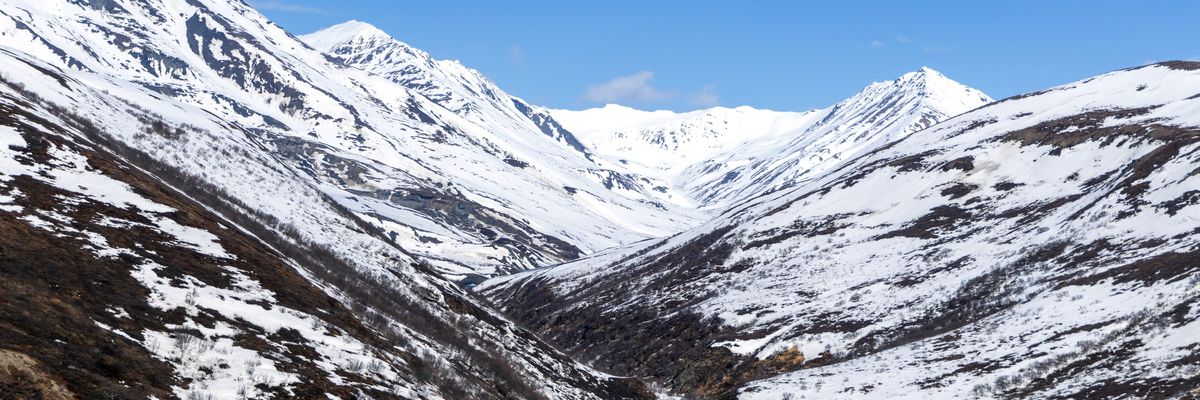
A view of Brooks Range as seen from the Dalton Highway on May 10, 2024 in North Slope Borough, Alaska. (Photo: Lance King/Getty Images)

“This is yet one more sign, predicted by scientists, of the consequences of inadequately reducing fossil fuel pollution,” said one scientist.

Permafrost in the Arctic has stored carbon dioxide for millennia, but the annual Arctic Report Card released by the National Oceanic and Atmospheric Administration reveals a concerning shift linked to planetary heating and a rising number of wildfires in the icy region: The tundra is now emitting more carbon than it is storing.

The report card revealed that over the last year, the tundra’s temperature rose to its second-highest level on record, causing the frozen soil to melt.

The melting of the permafrost activates microbes in the soil which decompose the trapped carbon, causing it to be released into the atmosphere as planet-heating carbon dioxide and methane.

The release of fossil fuels from the permafrost is also being caused by increased Arctic wildfires, which have emitted an average of 207 million tons of carbon per year since 2003.

“Our observations now show that the Arctic tundra, which is experiencing warming and increased wildfire, is now emitting more carbon than it stores, which will worsen climate change impacts,” said Rick Spinrad, administrator of NOAA. “This is yet one more sign, predicted by scientists, of the consequences of inadequately reducing fossil fuel pollution.”

Sue Natali, a scientist at the Woodwell Climate Research Center in Massachusetts and one of 97 international scientists who contributed to the Arctic Report Card, told NPR that 1.5 trillion tons of carbon are still being stored in the tundra—suggesting that the continued warming of the permafrost could make it a huge source of planet-heating greenhouse gas emissions.

Along with the “Arctic tundra transformation from carbon sink to carbon source,” NOAA reported declines in caribou herds and increasing winter precipitation.

The report card showed that the autumn of 2023 and summer of 2024 saw the second- and third-warmest temperatures on record across the Arctic, and a heatwave in August 2024 set an all-time record for daily temperatures in several communities in northern Alaska and Canada.

The last nine years have been the nine warmest on record in the Arctic region.

“Many of the Arctic’s vital signs that we track are either setting or flirting with record-high or record-low values nearly every year,” said Gerald (J.J.) Frost, a senior scientist with Alaska Biological Research, Inc. and a veteran Arctic Report Card author. “This is an indication that recent extreme years are the result of long-term, persistent changes, and not the result of variability in the climate system.”

Brenda Ekwurzel, a climate scientist at the Union of Concerned Scientists, emphasized that the continuous release of fossil fuel emissions from oil and gas extraction and other pollution has caused the Arctic to warm at a faster rate than the Earth as a whole over the past 11 years.

“These combined changes are contributing to worsening wildfires and thawing permafrost to an extent so historic that it caused the Arctic to be a net carbon source after millennia serving as a net carbon storage region,” said Ekwurzel. “If this becomes a consistent trend, it will further increase climate change globally.”

The Arctic Report Card was released weeks before President-elect Donald Trump is set to take office. Trump has pledged to slash climate regulations introduced by the Biden administration and to increase oil and gas production. He has mused that sea-level rise will create “more oceanfront property” and has called the climate crisis a “hoax,” while his nominee for energy secretary, Chris Wright, the CEO of the fracking company Liberty Energy, has claimed that climate warming is good for the planet.

“These sobering impacts in the Arctic are one more manifestation of how policymakers in the United States and around the world are continuing to prioritize the profits of fossil fuel polluters over the well-being of people and the planet and putting the goals of the Paris climate agreement in peril,” said Ekwurzel. “All countries, but especially wealthy, high-emitting nations, need to drastically reduce heat-trapping emissions at a rapid pace in accord with the latest science and aid in efforts of climate-vulnerable communities to prepare for what’s to come and help lower-resourced countries working to decrease emissions too.”

Original article by Julia Conley republished from Common Dreams under Creative Commons (CC BY-NC-ND 3.0).
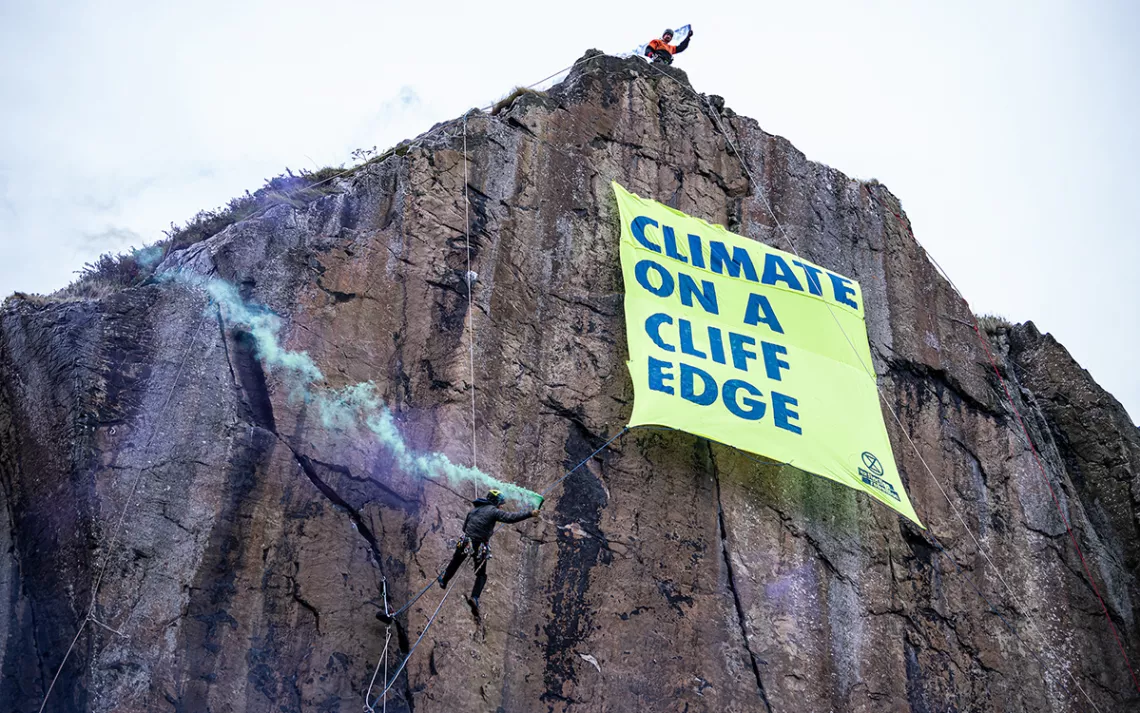
Experienced climbers scale a rock face near the historic Dumbarton castle in Glasgow, releasing a banner that reads “Climate on a Cliff Edge.” One activist, dressed as a globe, symbolically looms near the edge, while another plays the bagpipes on the shores below. | Photo courtesy of Extinction Rebellion and Mark Richards
Continue ReadingArctic Tundra Has Turned From ‘Carbon Sink to Carbon Source’ in Dangerous Flip: NOAA

‘Time to Do It for Real,’ Advocates Say as Biden Claims He’s ‘Practically’ Declared Climate Emergency

Spread the love
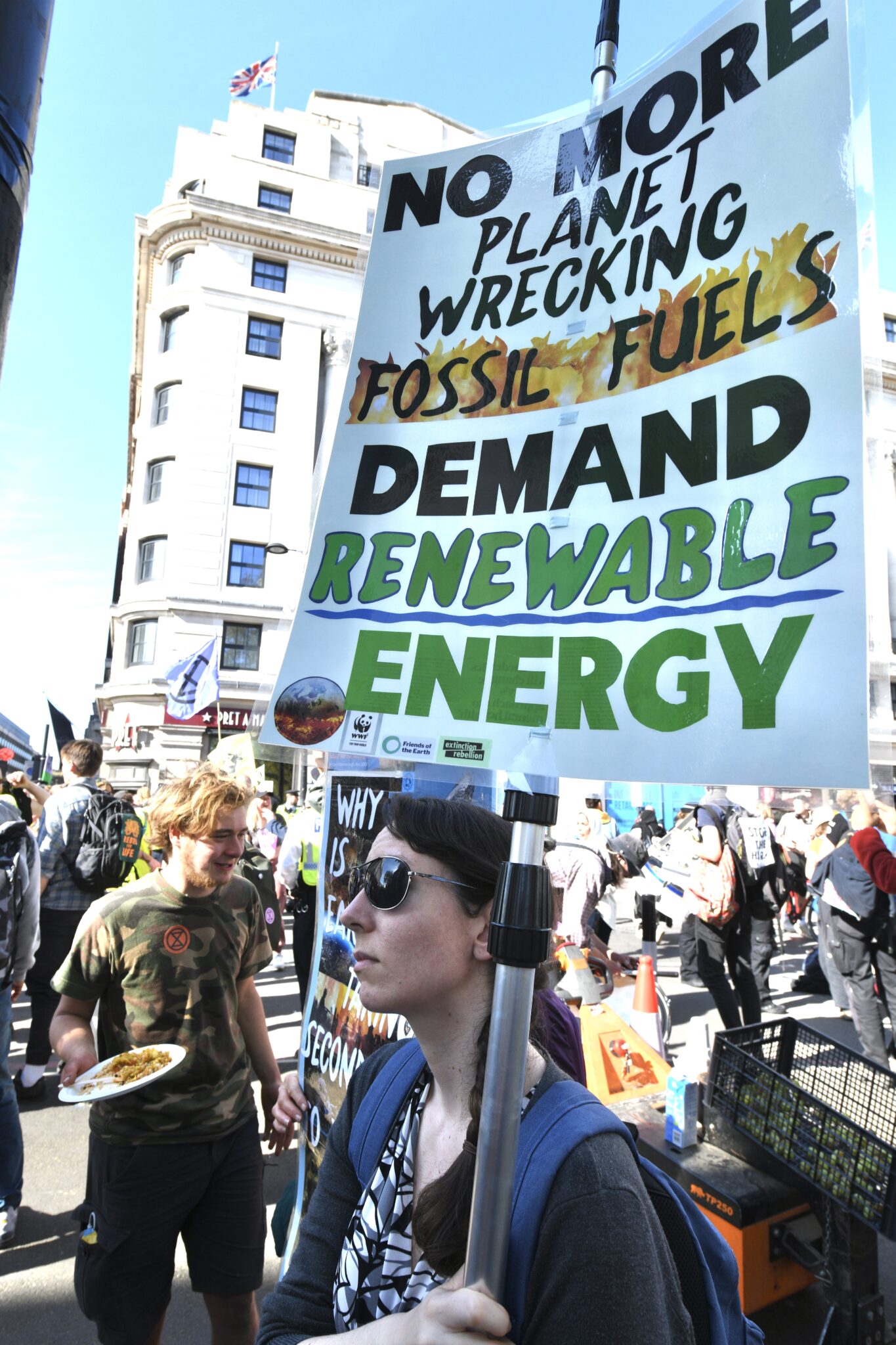
Extinction Rebellion protest, banner reads NO MORE PLANET WRECKING FOSSIL FUELS DEMAND RENEWABLE ENERGY

Original article by Julia Conley republished from Common Dreams under Creative Commons (CC BY-NC-ND 3.0).
“There’s nothing more important than what happens today,” said one environmental lawyer. “And there’s no person in the world with more power to do good than Joe Biden.”

In an interview with The Weather Channel Wednesday, U.S. President Joe Biden signaled he has no plans to formally declare a climate emergency, claiming that his climate policies are sufficient and that, “practically speaking,” a national emergency has already been declared.

When asked if he will take the unprecedented step in order to unlock executive powers to drastically cut fossil fuel emissions, Biden told correspondent Stephanie Abrams, “I’ve already done that.”

The president pointed to $368 billion that was included in the Inflation Reduction Act to invest in clean energy production, actions being taken to conserve land, and his decision to rejoin the Paris climate agreement as evidence that he is taking all the steps that experts have said are necessary to fight the climate crisis.

“We’re moving,” Biden said.

The interview aired days after a reporter asked White House Press Secretary Karine Jean-Pierre about the status of Biden’s reported climate emergency deliberations, noting that NASA climate scientist Peter Kalmus recently wrote in an op-ed that not declaring an emergency is “anti-science.”

Jean-Pierre did not directly address the question but defended Biden’s record, saying he “believes in science” and “talks about climate change.”

“And, you know, it is such a difference to what we see from Republicans who don’t even acknowledge climate change,” she added. “We’re going to continue to move forward to do everything that we can not just here in America, but globally, to be a leader in fighting climate change.”

Kalmus called Jean-Pierre’s response “barely coherent” and demanded to know why the White House won’t declare a climate emergency.

“It’s not enough for Biden to ‘practically’ declare a climate emergency,” said the Institute for Policy Studies on Wednesday after Biden’s interview aired. “It’s time to officially announce one.”

Last summer, Biden reportedly began considering declaring a climate emergency as extreme heat overtook much of the country.

As numerous climate action groups have outlined, a climate emergency declaration would be far from a symbolic gesture. The action, taken under the National Emergencies Act, would allow the White House to:

  • Reinstate the federal ban on crude oil exports—lifted by Congress in 2015—which could slash fossil fuel emissions by as much as 165 million metric tons per year;
  • End oil and gas drilling in more than 11 million acres of federal waters;
  • Halt the investment of hundreds of billions of dollars in fossil fuel projects abroad; and
  • Unlock federal funds that could be used to construct renewable energy infrastructure in communities that are especially vulnerable to climate disasters.

Biden’s comments came weeks after scientists said last month was the hottest month on record, with millions of people from Asia to Western Europe and the United States facing temperatures close to 130°F. The World Weather Attribution said in late July that the extreme heat would have been “virtually impossible” without the climate crisis and continued emissions of heat-trapping gases by the fossil fuel industry.

“As we suffer through these fossil fuel heatwaves, megafires, and floods, [Biden]’s leaving immense powers on the shelf for combating the crisis,” Kassie Siegel, director of the Climate Law Institute of the Center for Biological Diversity, told Common Dreams. “But now is the time for him to actually declare a climate emergency under the National Emergencies Act.”

Siegel added that by dismissing direct questions about an official climate emergency declaration, the White House appears to be employing “the oldest strategy in the book,” long used by administrations that have denied the climate crisis and the need to shift the renewable energy.

“The unfortunate reality is that doing some good things is simply not enough, because we are in a physical climate emergency,” Siegel said. “It is a question of survival and every day counts. There’s nothing more important than what happens today… And there’s no person in the world with more power to do good than Joe Biden.”

While the president has taken some steps to undo harm done to communities by extractive industries—announcing protections from uranium mining for one million acres near the Grand Canyon on Tuesday and launching a $20 billion initiative to invest private capital into clean technology projects last month—he also infuriated climate advocates and experts earlier this year when he approved the Willow drilling project in Alaska. The project could produce more than 600 million barrels of crude oil over three decades and lead to roughly 280 million metric tons of carbon emissions.

The White House also drew criticism last month for its announcement of new regulations for fossil fuel leasing, despite Biden’s campaign promise to ban oil and gas leases on federal lands.

“The truth is, the Biden administration has devastated communities and wildlife by backing disastrous fossil fuel projects from Alaska to Appalachia,” Siegel told Common Dreams. “And what he does today is going to make a huge difference for how much devastation comes in the future.”

Siegel added that with the United Nations set to convene a Climate Ambition Summit on September 20 in New York, “there has never been a better time for Biden to actually declare a climate emergency.”

At the summit, U.N. Secretary-General António Guterres aims to “accelerate action by governments, business, finance, local authorities, and civil society.”

The People vs. Fossil Fuels coalition, comprised of more than 1,200 advocacy groups, said it plans to mobilize ahead of the summit for a March to End Fossil Fuels in New York, aiming to “push President Biden to make a climate emergency declaration official and stop approving these deadly fossil fuel projects once and for all.”

“Now that President Biden says he’s ‘practically’ declared a climate emergency, it’s time to do it for real,” said the coalition. “The president should follow through on his rhetoric and immediately declare a national emergency that would unlock new executive powers to speed up the deployment of clean energy and halt fossil fuel expansion.”

Original article by Julia Conley republished from Common Dreams under Creative Commons (CC BY-NC-ND 3.0).

Continue Reading‘Time to Do It for Real,’ Advocates Say as Biden Claims He’s ‘Practically’ Declared Climate Emergency

Gen Z for Change Leader Interrupts Biden Press Secretary to Demand Climate Action

Spread the love

Original article by Julia Conley republished from Common Dreams under Creative Commons (CC BY-NC-ND 3.0).
Elise Joshi, executive director of Gen Z for Change, interrupted White House Press Secretary Karine Jean-Pierre at an event on July 27, 2023 to demand climate action from the Biden administration. (Photo: screenshot/Gen Z for Change)

“Asking nicely hasn’t worked out,” said Elise Joshi as she stood up during the White House press secretary’s remarks.

Shortly after U.S. President Joe Biden angered climate campaigners by failing to mention fossil fuels in his remarks about new protections for millions of people facing extreme heat, the executive director of a youth-led advocacy group decided to address the administration directly about officials’ refusal to end support for the planet-heating oil and gas industry.

Elise Joshi, 21, stood up as White House Press Secretary Karine Jean-Pierre was addressing a crowd at an event hosted by the voter engagement group Voters of Tomorrow. The campaigner spoke about Gen Z for Change’s long-stated demand that Biden declare a climate emergency—a move that would unlock numerous resources to fight the climate crisis and expedite the shift away from oil and fossil gas.

“Excuse me for interrupting, but asking nicely hasn’t worked out,” said Joshi. “A million young people wrote to the administration pleading not to approve a disastrous oil drilling project in Alaska, and we were ignored. So I’m here channeling the strength of my ancestors and generation.”

An event staffer approached Joshi, but Jean-Pierre urged them to “let her talk,” allowing the campaigner to demand that Biden “stop approving new oil and gas projects and align with youth, science, and frontline communities.”

When Joshi was finished speaking Jean-Pierre acknowledged that she had brought up the Willow project, an oil drilling operation that was approved on public land in Alaska this year. The project is expected to produce more than 600 million barrels of crude oil over the next three decades—releasing about 280 million metric tons of heat-trapping carbon emissions.

Joshi also noted that the Biden administration has approved drilling projects at a faster rate than the Trump administration.

As other Gen Z for Change campaigners called on the White House to “declare a climate emergency,” Jean-Pierre defended Biden’s record by saying he has “taken more action on climate change than any other president,” and said she would speak to Joshi privately after the event.

“We can talk through all that he has done and all that he wants to do, and we can also listen to you,” said the press secretary.

The White House can show it is listening to young people, said the advocacy group Sunrise Movement, by declaring a climate emergency.

U.S. Rep. Maxwell Frost (D-Fla.), who has also called for far-reaching climate action and at 26 is the youngest member of Congress, applauded Joshi for speaking out.

“I join the movement in asking the president to declare a climate emergency,” said Frost.

Original article by Julia Conley republished from Common Dreams under Creative Commons (CC BY-NC-ND 3.0).

Continue ReadingGen Z for Change Leader Interrupts Biden Press Secretary to Demand Climate Action

My day with Just Stop Oil

Spread the love

I travelled to London on Monday to protest with Just Stop Oil (JSO). It was supposed to be the last day of their month of October actions and so it was my last opportunity to participate and show solidarity with them. I didn’t know at the time that JSO activists had targeted MI5, Bank of England and News Corp that day. They then had a 32nd day of action on the first of November that targeted Downing Street. I had wanted to join them from the start of October but simply wasn’t able to for weeks because of commitments involving an elderly person needing support.

I arrived at about 11.30, half an hour later than JSO’s meeting time. I was very pleased to find them near the Department of Defence opposite Downing Street. I was worried that I might not find them and would be wasting hours wandering around London until I could catch my booked coach back.

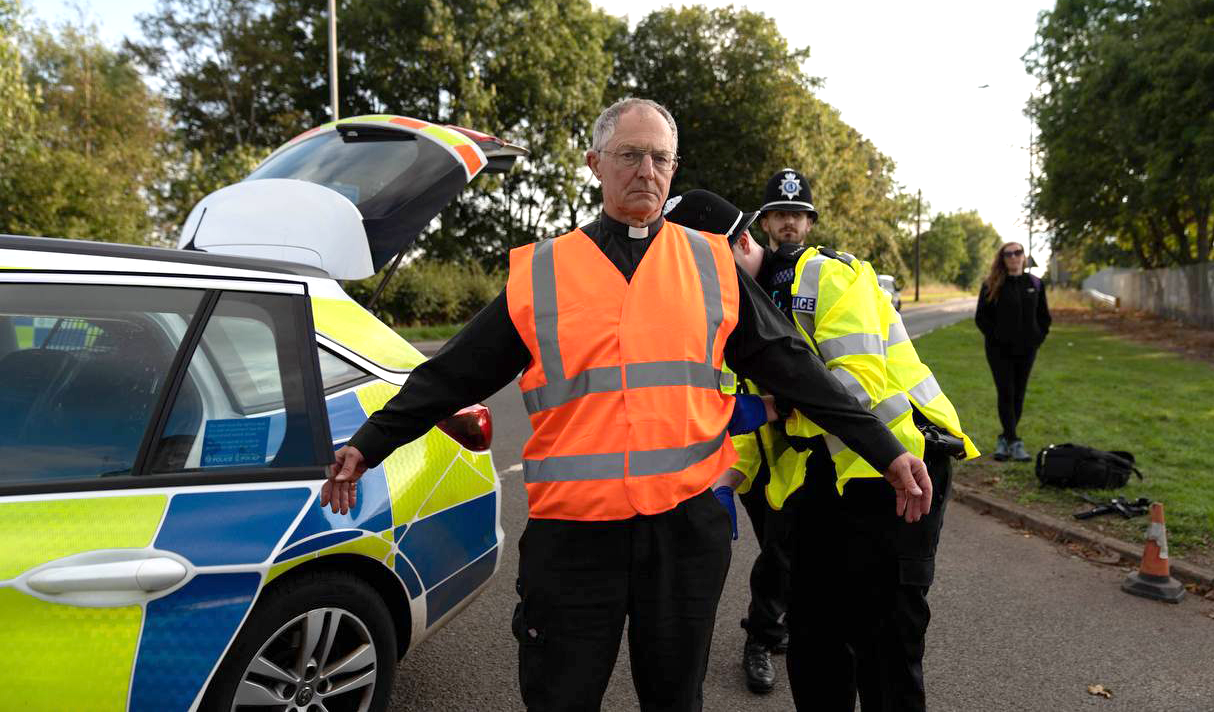
There were about 35 of us from all over the UK. Ages were from late teens and I would say about 70% like me fifty or over, some able to be there because they were retired and still fit. There were about three wearing Christian dog-collars. I recognised one from an image of him used on this blog before.

Image of a Just Stop Oil participant getting arrested at Kingsbury oil terminal.
A Just Stop Oil participant getting arrested at Kingsbury oil terminal. A JSO / Vladamir Morozov image.

I’m going to end this quickly because I’m suffering from a temporary health condition (Baker’s cysts) that causes a lot of pain. My reasoning is affected because of the pain and the painkillers that I’m taking.

JSO activists have no choice but to cause disruption. The climate crisis is a huge, real and immediate crisis.

JSO are very concerned with the safety of their participants. Marches are stewarded very well.

There is a choice to get arrested or not. JSO know the boundaries, how far they can push it until they are arrested. I was marching in the area around Parliament. Although there were arrests, those arrested were willing to be arrested.

Leafleting for JSO is challenging because you meet people who have a go at you.

JSO were not keen on letting me have the megaphone because they didn’t know me and didn’t know what I was going to say in the presence of many police officers.

There is a policy of getting out of the way of emergency vehicles despite what Mayor of London Sadiq Khan and others claim.

Just Stop Oil’s Phoebe Plummer who threw soup on Vincent van Gogh’s Sunflowers at the National Gallery in London.
The painting is undamaged because it was behind glass.

ed: Just Stop Oil’s demand is no NEW oil or gas.

Continue ReadingMy day with Just Stop Oil