Fossil fuel supply: the elephant in the room at climate change conferences
Jordi Roca Jusmet, Universitat de Barcelona
“Natural resources … are a gift from God. Every natural resource, whether it’s oil, gas, wind, sun, gold, silver, copper, they are all natural resources. Countries should not be blamed for having them, and should not be blamed for bringing these resources to the market because the market needs them. The people need them.”
These were the words of Ilham Aliyev, president of Azerbaijan, at the opening of the recent United Nations COP29 convention on climate change in Baku. https://www.youtube.com/embed/4pqVwrMAGSc?wmode=transparent&start=0 Ilham Aliyev’s speech at COP29.
It seems completely inappropriate to sing the praises of fossil fuels at an international gathering that aims to radically reducing greenhouse gas emissions. Indeed, this goal is absolutely unachievable without drastic cuts to fossil fuel use, but Aliyev’s speech does have a positive, if indirect, impact – it points a spotlight at the elephant in the room, one that has remained virtually invisible throughout the United Nations Framework Convention on Climate Change’s (UNFCCC) long history.
COP agreements have never made commitments to limit fossil fuel extraction, even though this would be the most direct – and the only certain – way to rein in the leading cause of climate change.
Reducing demand but not supply: a pointless endeavour
Fossil fuels are key to climate change, but they are largely absent from COP agreements. The biggest achievement came in 2023, at COP28 in Dubai (United Arab Emirates), when an unspecified proposal was made to “transition away from fossil fuels”. This was not ratified at COP29, mainly due to pressure from Saudi Arabia.
In economic terms, the focus of climate agreements has always been on demand. It is expected that national measures, such as promoting renewable energy and public transport, or penalising the use of fossil fuels by putting a price on carbon emissions will indirectly lead to less fossil fuels being put on the market.
While these measures can be effective, they often end up lacking, or even non-existent, because they depend completely on the policies and reactions of the nations and companies who own, supply, and profit from these resources.
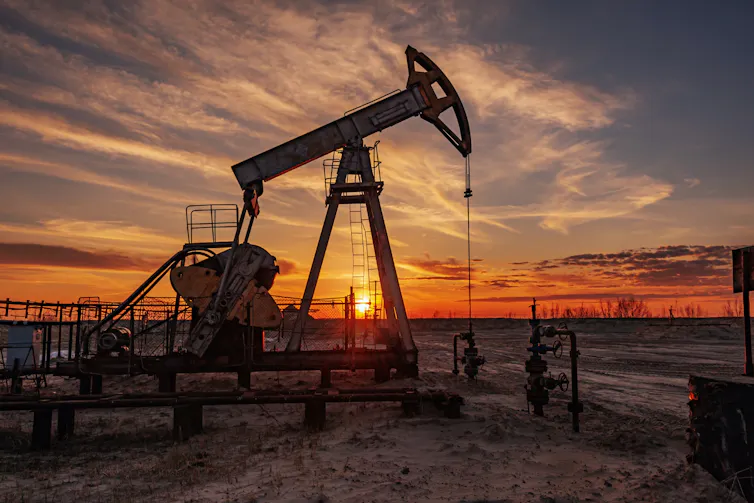
Commitments to supply-side agreements are not on the COP agenda, even though most of the fossil fuel reserves that are considered exploitable – and therefore economically valuable – cannot be burned if we are to even come close to the UNFCCC climate goals. They must be left in the ground.
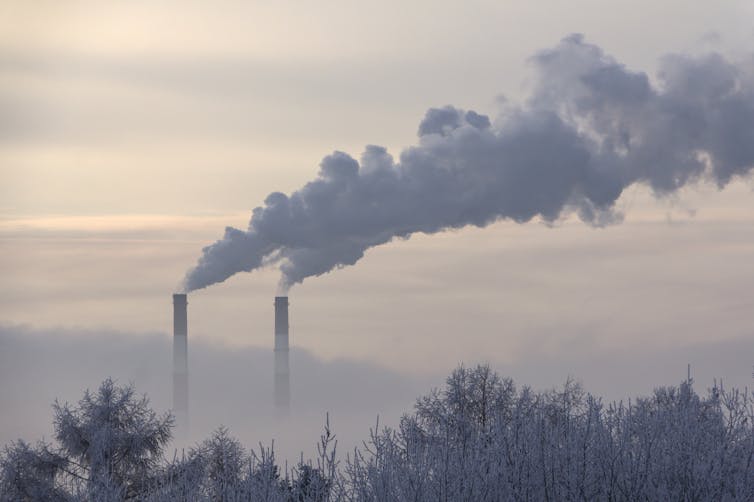
However, global CO₂ emissions are not falling. On the contrary, the use of coal, petroleum and natural gas have hit record highs in 2024.

How can we restrict fossil fuel extraction?
Limits have been put forward in the past. In 2014, for instance, economists Paul Collier and Anthony J. Venables proposed a sequenced plan for phasing out coal, which would involve progressive measures not to start new operations and to close mines, with countries staggered in a fair order. “Fairness” would be determined by ability to pay, per capita emissions and historical responsibility.
We can also take inspiration from nuclear weapons treaties, as Professor of International Relations Peter Newell and political economist Andrew Simms have done. They advocate for a fossil fuel non-proliferation treaty along the lines of the nuclear non-proliferation treaty. Many states and cities around the world have already signed up to the initiative.
There have also been local initiatives, such as the commitment to stop extracting oil in an area of the Yasuní National Park in Ecuador due to its exceptional biodiversity and the existence of populations in voluntary isolation. This will also benefit the global climate by reducing emissions.
The proposal was initially taken up in 2007 by the then president Rafael Correa on the condition that the international community would financially compensate part of the sacrificed monetary income. However, scarce contributions to the compensation fund led Correa to renounce the initiative and allow oil exploitation.
Environmentalists, affected communities and academics demanded a referendum and, after years of litigation, the right to consultation was recognised by the courts. In August 2023, a large majority (almost 60 %) voted in favour of keeping the oil reserves “in the ground indefinitely”. Money does not always prevail, even in poor countries, though the Ecuadorian government has postponed its mandate to dismantle drilling sites, meaning many are still operational today.
A blessing for some, a curse for others
The above case and many others – such as the Niger Delta (Nigeria), where Shell has been extracting oil since 1958 – remind us that “God’s gift” of natural resources can also be a curse.
A gift for some – usually multinational companies or small numbers of wealthy people – can be a curse not only for the planet, but also for the local population who suffer the devastating environmental and social consequences of extracting these resources, and who face violent repression when they protest.
It was in places like Nigeria and Ecuador that the activist slogan “leave fossil fuels in the ground” was coined. Even if their motivation is primarily or solely to protect their territory, social movements opposing coal mining or hydrocarbon extraction undeniably contribute – from the supply side – to curbing climate change.
Together with social movements, academic and political work is key to defining the areas where preventing the exploitation of fossil fuels is a priority, and to establishing economic compensation. Martí Orta-Martínez, from the University of Barcelona, is doing just this. He is leading a project to geographically define the fossil fuel deposits that should not be burned, which was presented at a seminar in the framework of COP29.
It may sound utopian to seek supply-side international agreements, but the truth is that it is impossible to reduce global emissions and move towards decarbonisation without a rapid decrease in the extraction of fossil fuels. COPs should heed this evidence.
Given the magnitude of the climate challenge, it is not a question of deciding between demand or supply-side policies, but of using both, promoting them in each country, and reaching robust agreements at an international level.
Jordi Roca Jusmet, Catedrático de Economía, Universitat de Barcelona
This article is republished from The Conversation under a Creative Commons license. Read the original article.