Plans to spy on Disabled people’s bank accounts show Labour isn’t for change

Spread the love

Original article by Mikey Erhardt republished from Open Democracy under a Creative Commons Attribution-NonCommercial 4.0 International licence.

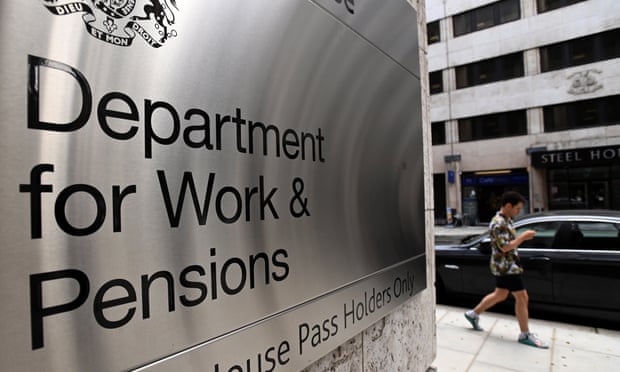
The prime minister may have changed, but the welfare policies are the same | Anthony Devlin/Bloomberg via Getty Images

Disabled people are once again living under a government pursuing ever more surveillance of our lives

The Labour government is barely 100 days into office and even its supporters have been reduced to half-hearted attempts at optimism. But this ‘it’s not all doom and gloom’ narrative rings hollow to many Disabled people.

Yet again, we are living under a government pursuing ever more surveillance of our lives. Another prime minister is happy to subject us to increased benefit sanctions and reduced rights.

So much for the party of change. Keir Starmer used his first Labour Party Conference in power last month to make clear that when it comes to Disabled people, his government’s priorities are the same as its predecessors – namely “getting the welfare bill down”.

To this end, the prime minister will continue plans set out by the previous Conservative government to monitor the bank accounts of the 6.3 million people claiming disability benefits without their knowledge. The proposals are expected to be included in the Fraud, Error and Debt Bill, which was announced by the government last month.

Kieran Lewis, rights and migration policy officer at National Survivor User Network (NSUN), told openDemocracy that he is “disappointed at Keir Starmer’s repackaging of invasive bank-spying powers that we and so many other groups pushed back against under the last government”.

The NSUN – which works with people who have lived experience of mental ill-health, distress, and trauma – was a core part of the coalition opposing these powers when the Tory government proposed them mere months ago.

Lewis continued: “Surveillance of this kind is a threat to everyone, and those of us who live with mental ill-health, distress and trauma will feel its effects particularly sharply.

“The harsh rhetoric espoused by Keir Starmer, a continuation of previous governments’ negative messaging, has had considerable impact on Disabled people and other groups of marginalised people.”

Starmer’s conference pledge to “legislate to stop benefit fraud” may be a familiar rhetoric – but it’s one built on shaky foundations. Some 75% of Universal Credit overpayments recorded by the Department for Work and Pension’s debt manager system in 2021 were due to an ‘official error’ – meaning the government miscalculated the amount to be paid – according to new research from the Public Law Project.

The research also found that the subsequent deductions that the DWP inflicts following such ‘overpayments’ led 26% of people to report resorting to food banks. Almost one in ten said they had slept rough due to a deduction.

Elsewhere in his conference speech, Starmer vowed to be “a great reforming government”. Disabled people have already lost an average of £1,200 a year thanks to the ‘reforms’ of the past 15 years, including the introduction of Employment and Support Allowance, the Work Capability Assessment, Personal Independence Payment, the bedroom tax, the benefit cap, the two-child limit, and Universal Credit.

All of these measures have combined to leave the UK with one of Western Europe’s least generous welfare systems. Staff at the Greater Manchester Disabled People’s Panel, which runs regular peer-support group sessions for those navigating the social security system, told openDemocracy there is a serious risk that Starmer’s plans will lead to welfare payments for Disabled and working-class people being wrongfully suspended, forcing them to deal with burdensome appeals processes.

It is important to recognise that ‘benefits fraud’, which the Labour Party appears likely to dedicate so much time to, is a non-issue. The fraud rate for disability benefits is 0.2%. That’s far lower than the percentage of Labour ministers who took free Taylor Swift concert tickets this summer. When will there be a crackdown on that?

Ironically, Starmer closed his conference speech by saying that “every community” should have “the breathing space, the calm, the control to focus on the little things they love in life, not the anxiety and insecurity we have now.”

This is at odds with the experiences of the Greater Manchester Coalition, whose staff told openDemocracy: “We see Disabled people struggling to obtain much-needed benefits, and if obtained, struggling to keep those benefits.

“Having to already prove and then re-prove they’re not fraudsters, being assessed, reassessed and reviewed is a relentless often degrading, soul-destroying experience that leads many to abandon the process.”

This dire situation will only be worsened by the Fraud, Error and Debt Bill, which will massively increase financial surveillance and create yet another punitive, disabling barrier for Disabled people to contend with.

It will put many of us under tremendous stress and, as the Greater Manchester Coalition noted, could leave even more of us “isolated and particularly vulnerable. For some, especially those in mental health crisis, this places them in great harm.”

In short, Disabled people know this bill is not the way forward. If only our community had more music festivals and football games to invite ministers to – imagine how our social security system could look then.

Original article by Mikey Erhardt republished from Open Democracy under a Creative Commons Attribution-NonCommercial 4.0 International licence.

Keir Starmer confirms that he is continuing Tory policies and that he's proud to be a red Tory.
Keir Starmer confirms that he is continuing Tory policies and that he’s proud to be a red Tory.
Continue ReadingPlans to spy on Disabled people’s bank accounts show Labour isn’t for change

The UK doesn’t work for Disabled people. Neither Labour or the Conservatives will change that

Spread the love

Original article by Mikey Erhardt republished from Open Democracy under a Creative Commons Attribution-NonCommercial 4.0 International licence

Neither Keir Starmer nor Rishi Sunak has any real plan to improve the lives of Disabled people | Jonathan Hordle – ITV via Getty Images

So far, we’ve heard more about Starmer and Sunak’s parents than the UK’s 16 million Disabled people

“This election is about who our country works for — the patriotic belief that Britain can be better and must be better,” said Kier Starmer concluding the first leaders’ debate earlier this month.

There are at least 16 million Disabled people in the UK – we make up a quarter of the population. We know this country doesn’t work for us, we’ve known that our entire lives. We disproportionately live in poverty, achieve poorer outcomes in education, and are more likely to be unemployed or earn less.

Yet every leadership debate so far has given more time to talking about Starmer and Rishi Sunak’s parents than these problems, which face millions of Disabled people up and down the country.

The general election campaign has solidified that neither the Labour leader nor his rival, incumbent Conservative prime minister Rishi Sunak, has any interest in improving our lives.

It is not as if the Conservatives or Labour don’t know about the issues we face. A United Nations report published in April confirmed that the UK is violating our human rights; a parliamentary committee last month found that “Disabled people undeniably encounter unnecessary and severe barriers to accessing suitable housing in England”; and the Department of Work and Pensions is under investigation by the Equality and Human Rights Commission over its treatment of Disabled claimants.

Disabled people in the UK are not a homogenous group. Some of us experience greater injustice than others. But we also have many things in common. We all want to live in an inclusive society where everyone has a fulfilling life and feels connected and valued.

We know politicians do not place the same worth on our lives as others; every day we experience discrimination, oppression and barriers to our inclusion and full participation in society because they won’t take the action needed to change it.

Years of deep cuts to services and neglect mean societal infrastructure, such as housing, transport and street environment, consistently fails to meet our needs. This structural decline has coincided with anti-migrant, anti-trans and racist policies, leaving ever-increasing numbers of us in poverty, homeless, incarcerated or dead.

The UN report was clear: “There has been no significant progress for Disabled people throughout the UK concerning their right to living independently and being included in the community.

“While some reforms and policies have been undertaken to provide financial support, accessible housing, and transport, this has been inadequate considering the cost-of-living crisis.”

One would expect this damning conclusion to be a key feature of the election campaign. But over the past four weeks, Labour and the Tories have both failed to provide anything of substance to help Disabled people.

Sunak’s Conservatives have instead pledged to shave £12bn a year from the cost of benefits, much of which would come from a crackdown on the personal independence payment (PIP) given to people with extra care or mobility needs. The party also seeks to tighten the work capability assessment (WCA), which would see more Disabled people declared fit to work and denied their benefit.

Labour’s manifesto, meanwhile, is notable for what it lacks. Previous promises to overhaul the welfare system, end punitive sanctions and co-produce disability-related policy with Disabled people are all missing – as are commitments to end care charges, increase carers’ allowance and ensure better provision of accessible housing.

Labour’s vows to improve SEN (special education needs) provision in schools and introduce changes to support Disabled people to gain and retain jobs are sticking plasters at best. Its manifesto sports a glaring lack of immediate investment in disability and carer benefits and social care – and we all know you can’t fix things without investment.

With so little real change on offer, Disabled people must unite and fight back. We can draw inspiration from the experiences of UK-based Disabled activists and the radical disabled resistance of the past 40 years. No changes affecting us have come through without collective struggle and organising.

As part of the DPO Forum England, a collective of Disabled people’s organisations in England, we are committed to joining forces nationwide and unifying our demands. That’s why we came together to create the Disabled People’s Manifesto, which contains radical policy demands for systemic overhaul and transformation. 

We, as Disabled people, must now come together and demand our politicians take up the manifesto and commit to creating a country that values equity, dignity, respect, trust, and support as much as we value anything else. Our political system should be focused on supporting Disabled people to live the lives we have a right to, which no candidate sweating under the bright studio lights can deliver on their own.

Together, we can create space for ourselves and our ideas, and integrate the energy, dedication and skills of our community to create a new future.

Original article by Mikey Erhardt republished from Open Democracy under a Creative Commons Attribution-NonCommercial 4.0 International licence

Jeremy Hunt’s benefit crackdown will worsen an already terrible system

The government’s insulting Disability Action Plan won’t deliver any change

How the DWP fought to withhold evidence its policies kill disabled people

Continue ReadingThe UK doesn’t work for Disabled people. Neither Labour or the Conservatives will change that

Scrap plans to scan accounts of benefit claimants or risk new scandal, MPs told

Spread the love

https://www.theguardian.com/society/2024/mar/04/ministers-urged-to-scrap-plans-for-surveillance-of-benefit-claimants-bank-accounts

The DWP is seeking powers to require banks to trawl the accounts of millions of people who receive benefits. Photograph: Andy Rain/EPA

Campaigners say ‘fully automated’ approach risks repeat of Post Office Horizon scandal

Plans for automated surveillance of millions of bank accounts to catch welfare cheats should be scrapped, campaigners have said, warning the approach risks a repeat of the Post Office Horizon scandal.

But campaigners for welfare claimants, disabled people, human rights and privacy warned ministers it represents an “unprecedented and disproportionate invasion of the public’s financial privacy, the effect of which will be felt most sharply by the most vulnerable”.

The net would also trawl the private banking data of people related to welfare claimants including partners, parents and landlords. It would save around £360m a year – less than 5% of the total lost to welfare fraud, according to the government’s best estimate.

In a letter to Mel Stride, the work and pensions secretary, 42 organisations, from Disability Rights UK to Big Brother Watch, said: “There are approximately 22.6 million individuals in the welfare system, including those who are disabled, sick, caregivers, job seekers, and pensioners. They should not be treated like criminals by default … The Horizon scandal saw hundreds of people wrongfully prosecuted using data from faulty software. The government must learn from this mistake – not replicate it en masse.”

https://www.theguardian.com/society/2024/mar/04/ministers-urged-to-scrap-plans-for-surveillance-of-benefit-claimants-bank-accounts

Continue ReadingScrap plans to scan accounts of benefit claimants or risk new scandal, MPs told