Treaties like the ECHR protect everyone in the UK, not just migrants

Spread the love
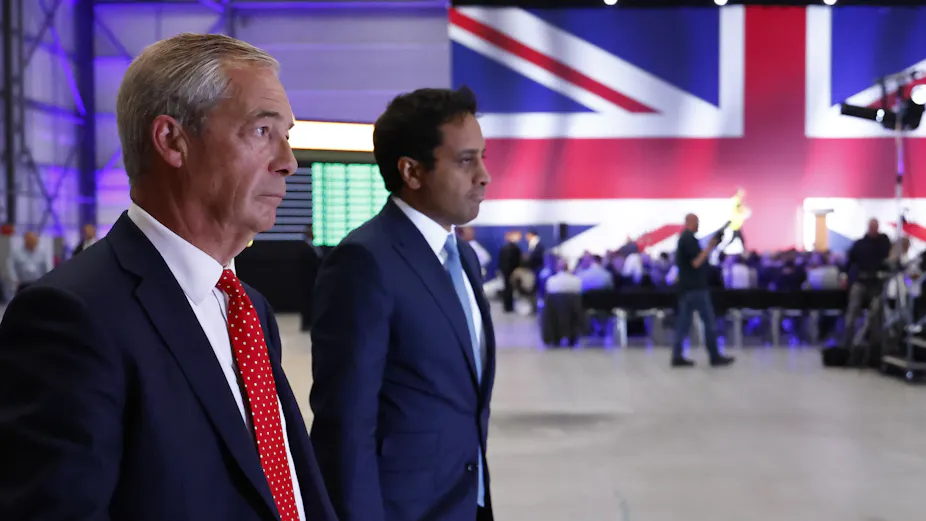
Reform’s Nigel Farage and Zia Yusuf arrive at an airplane hangar to lay out their deportation plans. Tolga Akmen/EPA-EFE

Alice Donald, Middlesex University and Joelle Grogan, University College Dublin

Reform UK has laid out plans for an “emergency programme” to address illegal immigration. The party argues its plans, which include expanding immigration detention capacity from the current roughly 2,200 places to 24,000, would enable the deportation of up to 600,000 people over a parliamentary term.

The plans would require removing legal protections against mass deportation without due process. Specifically, Reform has called for repealing the Human Rights Act (HRA) 1998 and permanently withdrawing the UK from the European Convention on Human Rights (ECHR). Nigel Farage has also proposed disapplying for five years the 1951 Refugee Convention, the UN Convention against Torture and the Council of Europe anti-trafficking convention, although these treaties do not, in fact, allow for temporary suspension.

Beyond the apparent logistical challenges are serious political repercussions. The Good Friday Agreement requires the rights and freedoms in the ECHR and recourse to the European Court of Human Rights to be part of the law in Northern Ireland. Withdrawing would require a renegotiation of the agreement. A showdown would also ensue with the devolved assemblies in Wales, Scotland and Northern Ireland.

Reform has touted its plan as a “legal reset”. But it is better understood as a total rejection of the UK’s postwar international commitments to protect the human rights of everyone within its jurisdiction.

These commitments, and others, have cemented the UK at the heart of the rules-based international order. This is the foundational idea that countries are bound by the legal commitments they make to each other and everyone within their jurisdiction. Successive governments have viewed this as both a moral imperative and a core aspect of the UK’s foreign and defence policies.

Reform’s plan would be an unprecedented and drastic rupture with almost eight decades of commitment to human rights protections. It would have far-reaching implications for all people in the UK, not just refugees.

How the ECHR protects everyone

If the UK withdrew from the ECHR, everyone living in the UK would lose the ability to take cases to the European Court of Human Rights if they fail to get justice domestically.

ECHR rights have been invoked to protect victims of domestic abuse, children and disabled people. The right to private and family life, the application of which has been (inaccurately) criticised for preventing deportation, is the same right relied on to protect privacy in the workplace or from surveillance, to uphold the dignity of older and disabled people in residential care, and to secure legal protection for LGBTQ+ people.

The ECHR alone has provided redress to victims of crime who have been failed by state investigations, like the survivors and bereaved families of the Hillsborough disaster or the victims of the “black cab rapist” John Worboys. Ironically, Reform UK has repeatedly argued for protection of free speech, which is protected primarily by the ECHR.

The wider cost of UK withdrawal from international treaties would be the loss of influence and reputation. These treaties are benchmarks for international cooperation, and foundational to international order. Pulling out of the UN convention against torture and the anti-trafficking convention would signal the UK’s abandonment of global principles to combat torture, modern slavery, sexual exploitation and trafficking, including the illegal trade in human organs.

Far from enabling the UK to control migration, a do-it-alone stance would harm the ability of future governments to do so. Removing the UK from the negotiating table would forfeit the opportunity to shape and benefit from cooperation to tackle a global challenge. We have seen this before: UK withdrawal from the EU took it out of the Dublin system and ongoing EU-wide efforts to manage migration and returns, just as small boat arrivals increased.

Beyond this, removals require treaties with other countries. Treaties require political will, mutual benefit, time and trust that the signatories will hold to their commitments. Where these are lacking, as evidenced by the failed and costly Rwanda policy, receiving countries can extract a very high price from the UK.

Could the rights be replaced?

To implement these plans, a Reform government would need to pass legislation through parliament to repeal the Human Rights Act (HRA). If successful, this would pave the way for the UK to give notice to the Council of Europe to withdraw from the ECHR.

Without the HRA, there is no equivalent protection to the ECHR elsewhere in UK law. The common law, a body of law developed over centuries by judicial decisions as distinct from laws passed by parliament, would continue to provide some protection for rights, including personal liberty, access to justice, the right to a fair trial and the prohibition of torture.

Common law principles would still guide British judges when making decisions about mass detention and deportation without due process. It is also possible that a new bill of rights could be enacted, containing a similar or identical catalogue of rights to the ECHR.

The most important difference would be how rights would be protected in practice. Would any replacement, like the HRA, oblige public authorities and the government to uphold rights in their decisions and actions? And would it allow higher courts to declare a law incompatible with human rights, flagging to parliament that the law should be reconsidered?

Human rights protections are invisible to most people living in the UK. The expectation that police and your local council must treat you fairly, that health and care services must respect your dignity, and that there will be legal remedy if the state fails you, is so normalised that it would be inconceivable to think it could disappear within the UK.

But it is the invisible integration of individual rights within the UK system that makes this both a lived and legal reality. Stripping away these protections would leave us all naked.


Want more politics coverage from academic experts? Every week, we bring you informed analysis of developments in government and fact check the claims being made.

Sign up for our weekly politics newsletter, delivered every Friday.


Alice Donald, Professor, Middlesex University and Joelle Grogan, Senior Visiting Research Fellow, UCD Sutherland School of Law, University College Dublin

This article is republished from The Conversation under a Creative Commons license. Read the original article.

Climate science denier Nigel Farage explains that it's simple to blame asylum-seekers or Muslims for everything.
Climate science denier Nigel Farage explains that it’s simple to blame asylum-seekers or Muslims for everything.
Nigel Farage reminds you that he's the man that brought you Brexit and asks what could possibly go wrong.
Nigel Farage reminds you that he’s the man that brought you Brexit and asks what could possibly go wrong.

Continue ReadingTreaties like the ECHR protect everyone in the UK, not just migrants

Supreme court rules Rwanda plan unlawful: a legal expert explains the judgment, and what happens next

Spread the love
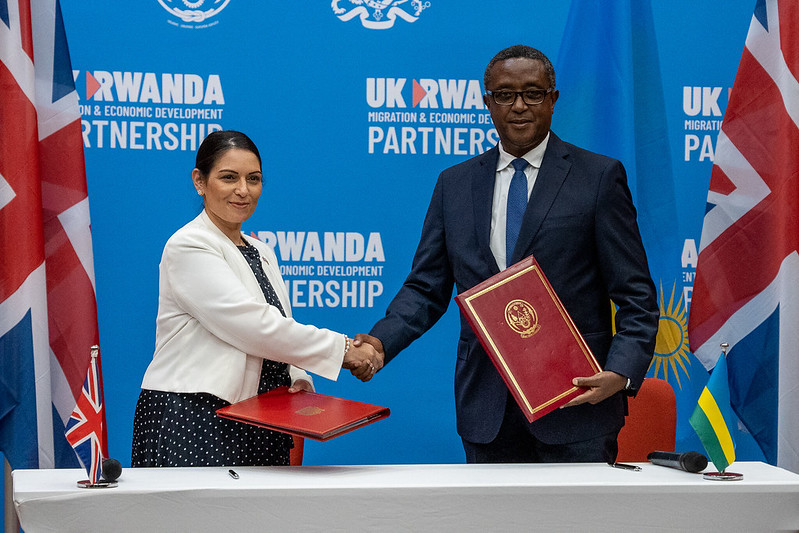
The Rwanda deal was signed when Priti Patel was home secretary. Rwanda visit April 14, 2022. Image: UK Home Office.

Before publishing this article unaltered, I draw your attention to these excerpts:

It is important to note that the supreme court’s decision is not a comment on the political viability of the Rwanda plan, or on the concept of offshoring asylum processes generally. The ruling focused only on the legal principle of non-refoulement, and determined that in this respect, Rwanda is not a “safe third country” to send asylum seekers.


This ruling is likely to revive discussion about the UK leaving the European convention on human rights (ECHR), which holds the UK to the non-refoulement obligation. Some Conservatives, including the former home secretary Suella Braverman, have argued that leaving the convention would make it easier to pass stronger immigration laws.

But while handing down the supreme court judgment, Lord Reed emphasised that there are obligations towards asylum seekers that go beyond the ECHR. The duty of non-refoulement is part of many other international conventions, and domestic law as well. In other words, exiting the ECHR would not automatically make the Rwanda plan lawful or easier to implement.

So it would appear that UK is not going to be sending refugees to Rwanda despite Rishi Sunak and Conservative claims that it will.

Supreme court rules Rwanda plan unlawful: a legal expert explains the judgment, and what happens next

Devyani Prabhat, University of Bristol

The UK supreme court has unanimously ruled that the government’s plan to send asylum seekers to Rwanda is unlawful.

Upholding an earlier decision by the court of appeal, the supreme court found that asylum seekers sent to Rwanda may be at risk of refoulement – being sent back to a country where they may be persecuted, tortured or killed.

The courts cited extensive evidence from the UN refugee agency (UNHCR) that Rwanda does not respect the principle of non-refoulement – a legal obligation. The UNHCR’s evidence questioned the ability of Rwandan authorities to fairly assess asylum claims. It also raised concerns about human rights violations by Rwandan authorities, including not respecting non-refoulement with other asylum seekers.

It is important to note that the supreme court’s decision is not a comment on the political viability of the Rwanda plan, or on the concept of offshoring asylum processes generally. The ruling focused only on the legal principle of non-refoulement, and determined that in this respect, Rwanda is not a “safe third country” to send asylum seekers.

The ruling is another blow to the government’s promise to “stop the boats”. And since the Rwanda plan is at the heart of its new Illegal Migration Act, the government will need to reconsider its asylum policies. This is further complicated by Conservative party infighting and the firing of home secretary Suella Braverman, just two days before the ruling.

How did we get here?

For years, the UK government has been seeking to reduce small boat arrivals to the UK. In April 2022, the UK and Rwanda signed an agreement making it possible for the UK to deport some people seeking asylum in Britain to Rwanda, without their cases being heard in the UK. Instead, they would have their cases decided by Rwandan authorities, to be granted (or rejected) asylum in Rwanda.

While the Rwanda plan specifically was found to be unlawful, the government could, in theory, replicate this in other countries so long as they are considered “safe” for asylum seekers.

The government has not yet sent anyone to Rwanda. The first flight was prevented from taking off by the European court of human rights in June 2022, which said that British courts needed to consider all human rights issues before starting deportations.

A UK high court then decided in December 2022 that the Rwanda plan was lawful.


Catch up on our other coverage of the Rwanda plan:

Why UK court ruled Rwanda isn’t a safe place to send refugees – and what this means for the government’s immigration plans

Rwanda deportations: what is the European Court of Human Rights, and why did it stop the UK flight from taking off?

Suella Braverman is wrong about the UN refugee convention being ‘not fit for purpose’ – here’s why

The government passed a major immigration law last year – so why is it trying to pass another one?

‘A toxic policy with little returns’ – lessons for the UK-Rwanda deal from Australia and the US


Ten asylum seekers from Syria, Iraq, Iran, Vietnam, Sudan and Albania challenged the high court ruling, with the support of the charity Asylum Aid. Their claim was about whether Rwanda meets the legal threshold for being a safe country for asylum seekers.

The court of appeal said it was not and that asylum seekers risked being sent back to their home countries (where they could face persecution), when in fact they may have a good claim for asylum.

The government has since passed the Illegal Migration Act. The law now states that all asylum seekers arriving irregularly (for example, in small boats) must be removed to a safe third country. But now that the Rwanda deal has been ruled unlawful, there are no other countries that have said they would take asylum seekers from the UK.

What happens next?

Former Home Secretary Suella 'Sue-Ellen' Braverman
Former Home Secretary Suella ‘Sue-Ellen’ Braverman continued with the Rwanda policy.

It is clear that the government’s asylum policies will need rethinking. Should another country now be designated as a safe country and different arrangements put in place, these will probably be subject to further legal challenges, including in the European court of human rights and in British courts.

This ruling is likely to revive discussion about the UK leaving the European convention on human rights (ECHR), which holds the UK to the non-refoulement obligation. Some Conservatives, including the former home secretary Suella Braverman, have argued that leaving the convention would make it easier to pass stronger immigration laws.

But while handing down the supreme court judgment, Lord Reed emphasised that there are obligations towards asylum seekers that go beyond the ECHR. The duty of non-refoulement is part of many other international conventions, and domestic law as well. In other words, exiting the ECHR would not automatically make the Rwanda plan lawful or easier to implement.

The prime minister, Rishi Sunak, has said that he is working on a new treaty with Rwanda and is prepared to change domestic laws to “do whatever it takes to stop the boats”.

The UK is not the only country to attempt to off-shore asylum processing. Germany and Italy have recently been considering finding new safe third countries to accept asylum seekers as well.

But ensuring these measures comply with human rights obligations is complicated. International law requires states to provide sanctuary to those fleeing persecution or risk to their lives. As this ruling shows, the UK is not going to find an easy way out of these obligations.The Conversation

Devyani Prabhat, Professor of Law, University of Bristol

This article is republished from The Conversation under a Creative Commons license. Read the original article.
Continue ReadingSupreme court rules Rwanda plan unlawful: a legal expert explains the judgment, and what happens next