Labour’s biggest corporate donor Ecotricity accused of ‘greenwashing’

Spread the love

Original article by Martin Williams republished from OpenDemocracy under a Creative Commons Attribution-NonCommercial 4.0 International licence.

Ecotricity’s founder, Dale Vince.  Bloomberg / Contributor

Exclusive: Energy firm making ‘misleading’ claims about ‘neutralising’ gas with carbon credits

The Labour Party’s biggest corporate donor has been accused of “greenwashing” after an investigation by openDemocracy.

Ecotricity Ltd, which has given almost £3.4m to Labour since Keir Starmer became leader in 2020, claims to be “Britain’s greenest energy supplier”.

Yet 99% of the gas it supplies comes from fossil fuels. The company claims this gas is “carbon-neutralised” because it invests in “carbon reduction programmes to cancel out the carbon burned”.

But openDemocracy has learned that Ecotricity has no active carbon credits – despite listing four environmental projects on its website that it says it supports.

When questioned about the company’s claims that “carbon emissions from our fossil fuel gas are offset by investing in carbon reduction schemes”, a spokesperson admitted that some of the schemes it previously supported had not done “as promised” – and said that information on its website would be “refreshed”.

But experts warned that even if the company held active carbon credits, its claims that these “neutralise” its fossil fuel gas would still be misleading.

“It is highly misleading for a company to claim that its product – or itself – is carbon- or climate-neutral,” said Lindsay Otis Nilles from Carbon Market Watch. “These false claims are based on heavily flawed scientific principles and lead to consumer confusion.”

The company has not broken any laws, but it will be illegal to claim that carbon offsets can “neutralise” fossil fuel products in the EU from 2026, as the bloc looks to crack down on greenwashing. An EU directive says these claims create a “false impression to consumers that the consumption of that product does not have an environmental impact”.

Analysis by openDemocracy shows that some of the carbon offset projects that Ecotricity previously pumped money into have been linked to environmental concerns and human rights abuses.

In some cases, records cast doubt on whether the company’s offsetting credits actually helped to reduce emissions at all – since the projects it invested in were already fully funded.

For example, two years ago, Ecotricity purchased credits in the Soubré hydropower plant, the largest hydroelectric dam in Ivory Coast, which was completed in 2017.

The project cost around £452m, 85% of which had already been secured by January 2017, with a loan from EXIM Bank of China. The remaining 15% was covered by the Ivory Coast government.

The Soubré powerplant previously came under fire in a 2019 report that accused it of having an “irresponsible” approach to monitoring its potential environmental impact.

The report, which was published by American environment and human rights organisation International Rivers, also included complaints by workers at the dam of instances of “discrimination and physical abuse” and “threats from the government” when they spoke out.

Meanwhile, the project’s main contractor, Chinese firm Sinohydro – which is responsible for its engineering, procurement and construction – has faced allegations of fraud elsewhere.

The company is currently excluded from projects financed by the European Investment Bank, following an investigation into “misconduct”. And in 2018, another investigation by the African Development Bank found that Sinohydro had “engaged in a fraudulent practice”.

Ecotricity has also held carbon credits in another hydroelectric power plant in Indonesia, called Asahan 1. Reports from as far back as 2012 say the company behind it, PT Bajradaya Sentranusa, had already secured funding from a bank “to take over the entire existing project loans for the construction” when Ecotricity bought the credits.

A spokesperson for Ecotricity said: “The information on the website about carbon reduction projects is being refreshed.”

They added: “We used carbon credits to entirely offset our gas supply for the financial year 2024 which is now closed and our offsetting programme for the financial year 2025 is currently under review which is why we do not currently hold any credits. Any suggestion that we do not or will not offset our gas in the future is false and misleading.”

“Offsetting is an annual accounting period practice and can take place at any point in that [financial year] – that is standard practice. Our offsetting programme for the financial year 2025 is currently under review. Any suggestion that we do not or will not offset our gas is wrong.”

The spokesperson added that Ecotricity is looking at “more direct carbon capture methods”, adding: “Carbon offsetting has been a bridge. We have always been clear about that.”

‘Greenwashing’

Ecotricity not only boasts about its own climate credentials, it also actively warns customers about “greenwashing” by rival energy suppliers.

“A number of energy companies claim green credentials for themselves or for some of their tariffs,” it says, “but are their claims genuine?”

But Ecotricity has itself now been accused of greenwashing. Responding to the company’s claims about carbon offsets, Nilles of Carbon Market Watch told openDemocracy: “It is a fallacy to think that purchasing carbon credits on the voluntary carbon market can magically ‘cancel out’ or ‘offset’ climate harm. Greenwashing practices like this must stop once and for all.”

Ecotricity’s founder, Dale Vince, recently joined Labour’s campaign in Bristol. His involvement in the constituency is controversial because it is seen as one of the few seats the Green Party has a genuine chance of winning in this week’s general election. But Vince tweeted: “Labour has a green manifesto and can make it happen.”

The self-styled “green industrialist” is the outright owner of Ecotricity’s parent company, Green Britain Group Limited. According to the latest accounts filed with Companies House, this firm made £38m profit in the year ending 30 April last year, after bringing in more than £550m turnover.

Responding to openDemocracy, Vince repeated the claim that carbon credits were used to achieve “net neutrality”.

He said: “Ecotricity bought carbon credits from the Asahan and Soubre schemes two years ago – we no longer do so. We’ve been reducing our carbon footprint annually for decades and only recently used carbon credits to achieve net neutrality, for our green gas while we built new gasmills.

“It’s important to reduce as far as possible before using credits, but that world is full of uncertainty, risk and projects that don’t do as promised, which these two schemes appear to be an example of. We welcome the EU move to clamp down on all forms of greenwashing.”

Vince accused openDemocracy of a “smear attack” with a “rather distorted presentation of facts”.

Prior to this response, openDemocracy had repeatedly asked Ecotricity to provide a complete and up-to-date list of its carbon credit portfolio, but it failed to do so.

Last week, Vince told the Financial Times that he was not seeking support for his own energy projects from Labour. “I don’t want support for my projects,” he said, “I’m not interested, life’s too short to be chasing money.”

The latest accounts filed by Green Britain Group Limited show it received £123m in “government grants” in the year ending April 2023. The financial support was designed to pay energy firms to cap prices for consumers.

The previous year, the company received a £9.4m Covid “business interruption” loan to support large companies in the pandemic.

However, Vince told openDemocracy: “Ecotricity hasn’t had any government subsidies.”

Original article by Martin Williams republished from OpenDemocracy under a Creative Commons Attribution-NonCommercial 4.0 International licence.
Continue ReadingLabour’s biggest corporate donor Ecotricity accused of ‘greenwashing’

Where Labour and the Tories got their money from in 2023

Spread the love

Original article by Ethan Shone republished from Open Democracy under a Creative Commons Attribution-NonCommercial 4.0 International licence.

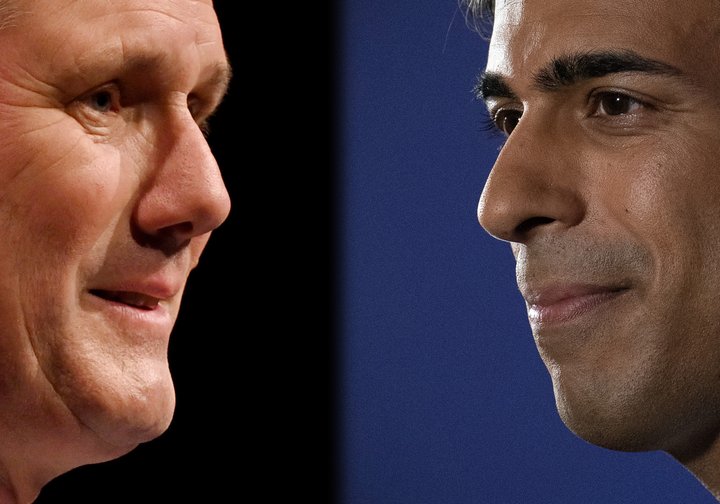
Keir Starmer and Rishi Sunak saw donations to their respective parties increase significantly last year
 | Leon Neal & Carl Court/Getty Images

Labour’s cash from private donors now dwarfs donations from unions, while the Tories got their biggest bung ever

Britain suffered a bleak economic landscape in 2023, with wages stagnant and costs rising across the board, but political donors and the parties they give to seem to have been unimpacted. All parties declared more than £93m in total compared with £52m in the previous year. And the cash looks set to keep pouring in ahead of the general election, which could take place as soon as May – although our money is on a November poll.

The Conservatives received the most donations by far, raking in £44.5m in cash, compared with Labour’s total of £21.6m, £6m for the Liberal Democrats, £610,000 for the Green Party and £255,000 for Reform – who now have their first MP in the form of ‘Red Wall Rottweiler’ Lee Anderson. The SNP registered only £76,000 cash donations in 2023, with £50,000 from the estate of a donor who passed away some years prior.

In addition to this, parties received non-cash donations – for things like premises, staff costs, sponsorship, consultancy services and more – worth £4.2m in total. Other regulated recipients like Labour Together, The New Conservatives, Labour First, and the Carlton Club Political Committee, took in £2.5m – these are campaigning organisations affiliated to political parties but legally separate from them, and often provide financial support to a particular faction within a party.

We’ve had a closer look at some of the underlying trends behind the numbers and picked out a few key points to look out for in the months ahead, based on what these donations tell us about the state of play in the two main parties.

Labour’s reliance on companies and individuals over trade unions

Much has been made of Labour’s increasingly close relationship with big business and the wealthy under Keir Starmer. Supporters of the party leadership argue that Labour has to be able to compete with the spending power of the Conservatives in the general election, and so has to look beyond the traditional funding source of the trade union movement toward people and businesses with deep pockets. Critics, however, might suggest that the interests of the trade union movement and the interests of those with the deepest pockets may not accord.

The concern among those of the latter view is that, as donations from the wealthy come to represent a larger proportion of the party’s war chest, there could be a shift in policy in that direction. Dark Arts has already reported on the access and influence enjoyed by corporate lobbying firms who employ Labour candidates to connect their clients with senior party figures. I’ve also written for openDemocracy about the millions that have poured into the party from bankers and financiers under Starmer. And our analysis of donations data for 2023 shows another potentially concerning trend for those worried about a corporate takeover of the party.

Of the £21.5m in cash received by the party in 2023, just £5.9m came from the trade union movement, compared with £14.5m from companies and individuals – a huge increase on the previous year, and indeed more than in the three previous years of Keir Starmer’s leadership combined. As trade union contributions have dipped slightly, from around £6.9m in 2020 and 2021 to £5.3m in 2022, donations from businesses and individuals have soared: they totalled £2.3m in 2020 and rose to £3m in 2021 and £7.6m in 2022 before nearly doubling last year.

Around £10m of this total comes from just four sources: Gary Lubner (£4.6m), David Sainsbury (£3.1m), Fran Perrin (£1m) and Ecotricity (£1m), the green energy firm owned by prominent eco-activist Dale Vince. This means that just two individuals gave the Labour Party more money last year than all the trade unions combined.

Lubner is the former CEO of Belron, a global firm specialising in vehicle glass repair. He has been donating to the party since meeting shadow chancellor Rachel Reeves at a dinner hosted by the big-four consultancy firm PwC in 2021. Sainsbury – of supermarket fame – has been an on-off Labour donor for decades, forging a close relationship with the party during the New Labour years when he got a seat in the Lords and served as a science minister. His daughter, Fran Perrin, was an adviser in Tony Blair’s Downing Street.

Including trade unions, there were 114 donors who gave £25,000 or more last year, while the overall average sum donated over the year was £111,499.

Tories in need of new funding sources ahead of GE

It is perhaps an indictment of the British political system that two of the largest individual donors to political parties last year were both men with the last name Sainsbury. David Sainsbury’s contribution to Labour was dwarfed by the £10m left by his cousin, Tory peer John Sainsbury, to the Conservatives in his will – the largest single donation ever received by the party.

Of the £44.5m in cash received by the Conservatives last year, more than £20m came from two sources: John Sainsbury and Frank Hester, an IT entrepreneur from Leeds who has given £5m personally and another £5m through his firm, The Phoenix Partnership. Hester’s firm has profited from public sector contracts and his ties with the party are under heightened scrutiny following the publication of an investigation by the Guardian that revealed he had said former Labour MP Diane Abbott made him “want to hate all black women” and should be shot.

A further £11.3m came from five individuals:

  • Mohamed Mansour, Egyptian-born billionaire who controls the behemoth conglomerate Mansour Group, which has interests in real estate, finance, retail and tech: £5m
  • Graham Edwards, co-founder of one of the largest private companies in the UK, Telereal Trillium, which owns thousands of properties and approximately 60 million square feet of land: £2m
  • Amit Lohia, son of billionaire petrochemical and fertiliser tycoon Sri Prakash Lohia, chair of Indorama: £2m
  • Christopher Barry Wood, founder of biotech firm Medannex: £1.3m
  • Alan Howard, hedge fund manager who co-founded Jersey-based Brevan Howard and has significant interests in crypto-currency: £1m

Even without the mega-donation from John Sainsbury, the party comfortably brought in more than Labour last year, and plans pushed through recently by the government raising the amount that political parties can spend at a general election have been widely seen as a sign the party still believes it can leverage its financial pull to good effect against Starmer’s Labour.

However, when the one-off £10m donation is discounted, the party’s fundraising efforts slowed down significantly in the latter half of last year. In the first six months of 2023 the party received £20.6m, compared with just £12m in the second half of the year. Without the £10m from Lord Sainsbury, the party would have taken in just £3m in the third quarter, a huge drop from Q2 (£9.2m) and Q1 (£11.4m).

This might suggest that, at least into the latter portion of last year, the Conservatives were not planning on holding an election in the early portion of 2024, as we would expect to see an uptick in fundraising in anticipation of that.

Overall, there were 286 donors who gave the Conservative Party £25,000 or more last year. The average Tory donor gave £90,811 over the course of the year.

If you’re concerned about the influence of money in politics and want to support our reporting in this area, sign up to our newly-launched newsletter, The Dark Arts, on Substack.

Original article by Ethan Shone republished from Open Democracy under a Creative Commons Attribution-NonCommercial 4.0 International licence.

Continue ReadingWhere Labour and the Tories got their money from in 2023