Vance Dossier Shows Not All Hacks Are Created Equal

Spread the love

Original article by Ari Paul republished from FAIR under https://creativecommons.org/licenses/by-nc-nd/3.0/

Ken Klippenstein, an independent reporter operating on Substack and an investigative alum of the Intercept, announced (Substack9/26/24) that he had been kicked off Twitter (now rebranded as X). His crime, he explained, stemmed from posting the 271-page official dossier of Republican vice presidential candidate’s J.D. Vance’s campaign vulnerabilities; the US government alleges that the information was leaked through Iranian hacking. In other words, the dossier is a part of the “foreign meddling campaign” of “enemy states.”

Klippenstein is not the first reporter to gain access to these papers (Popular Information9/9/24), but most of the reporting about this dossier has been on the intrigue revolving around Iranian hacking rather than the content itself (Daily Beast8/10/24Politico8/10/24Forbes8/11/24). Klippenstein decided it was time for the whole enchilada to see the light of day:

As far as I can tell, it hasn’t been altered, but even if it was, its contents are publicly verifiable. I’ll let it speak for itself.

“The terror regime in Iran loves the weakness and stupidity of Kamala Harris, and is terrified of the strength and resolve of President Donald J. Trump,” Steven Cheung, communications director for the Trump campaign, responded when I asked him about the hack.

If the document had been hacked by some “anonymous”-like hacker group, the news media would be all over it. I’m just not a believer of the news media as an arm of the government, doing its work combating foreign influence. Nor should it be a gatekeeper of what the public should know.

The US Office of the Director of National Intelligence said in a statement that alleged Iranian hacking (9/18/24) was “malicious cyber activity” and “the latest example of Iran’s multi-pronged approach…to stoke discord and undermine confidence in our electoral process.”

Where’s the beef?

Ken Klippenstein (Substack9/26/24) argued that the Vance dossier ” is clearly newsworthy, providing Republican Party and conservative doctrine insight into what the Trump campaign perceives to be Vance’s liabilities and weaknesses.”

The Vance report isn’t as salacious as Vance’s false and bizarre comments about Haitians eating pets (NPR9/15/24), but it does show that he has taken positions that have fractured the right, such as aid for Ukraine; the report calls him one of the “chief obstructionists” to providing assistance to the country against Russia. It dedicates several pages to Vance’s history of criticizing Trump and the MAGA movement, suggesting that his place on the ticket could divide Trump’s voting base.

On the other hand, it outlines many of his extreme right-wing stances that could alienate him with putative moderates. It says Vance “appears to have once called for slashing Social Security and Medicare,” and “is opposed to providing childcare assistance to low-income Americans.” He “supports placing restrictions on abortion access,” and states that “he does not support abortion exceptions in the case of rape.”

And for any voter who values 7-day-a-week service, Vance “appears to support laws requiring businesses to close on Sundays.” It quotes him saying: “Close the Damn Businesses on Sunday. Commercial Freedom Will Suffer. Moral Behavior Will Not, and Our Society Will Be Much the Better for It.” That might not go over well with small business owners, and any worker who depends on their Sunday shifts.

‘Took a deep breath’

The Washington Post (8/13/24) suggested that Vance dossier was different from Hillary Clinton’s hacked emails in 2016 because of “foreign state actors increasingly getting involved” in US elections.

Are the findings in the Vance dossier the story of the century? Probably not, but it’s not nothing that the Trump campaign is aware its vice presidential candidate is loaded with liabilities. There are at least a few people who find that useful information.

And the Washington Post (9/27/24) happily reported on private messages Vance sent to an anonymous individual who shared them with the newspaper that explained Vance’s flip-flopping from a Trump critic to a Trump lover. Are the private messages really more newsworthy than the dossier—or is the issue that the messages aren’t tainted by allegedly foreign fingerprints? Had that intercept of material involved an Iranian, would it have seen the light of day?

In fact, the paper (8/13/24) explained that news organizations, including the Post, were reflecting on the foreign nature of the leak when deciding how deep they should report on the content they received:

“This episode probably reflects that news organizations aren’t going to snap at any hack that comes in and is marked as ‘exclusive’ or ‘inside dope’ and publish it for the sake of publishing,” said Matt Murray, executive editor of the Post. Instead, “all of the news organizations in this case took a deep breath and paused, and thought about who was likely to be leaking the documents, what the motives of the hacker might have been, and whether this was truly newsworthy or not.”

Double standards for leaks

Politico (10/7/16) quoted a Clinton spokesperson: “Striking how quickly concern about Russia’s masterminding of illegal hacks gave way to digging through fruits of hack.” This was immediately followed by: “Indeed, here are eight more e-mail exchanges that shed light on the methods and mindset of Clinton’s allies in Brooklyn and Washington.”

There seems to be a disconnect, however, between ill-gotten information that impacts a Republican ticket and information that tarnishes a Democrat.

Think back to 2016. When “WikiLeaks released a trove of emails apparently hacked from Hillary Clinton’s campaign chairman email account, unleashing thousands of messages,” as Politico (10/7/16) reported, the outlet didn’t just merely report on the hack, it reported on the embarrassing substance of the documents. In 2024, by contrast, when Politico was given the Vance dossier, it wrote nothing about its contents, declaring that “questions surrounding the origins of the documents and how they came to our attention were more newsworthy than the material that was in those documents” (CNN8/13/24).

The New York Times and Washington Post similarly found the Clinton leaks—which were believed at the time to have been given to WikiLeaks by Russia—far more newsworthy than the Vance dossier. The Times “published at least 199 articles about the stolen DNC and Clinton campaign emails between the first leak in June 2016 and Election Day,” Popular Information (9/9/24) noted.

FAIR editor Jim Naureckas (11/24/09) has written about double standards in media, noting that information that comes to light through unethical or illegal means is played up if that information helps powerful politicians and corporations. Meanwhile, if such information obtained questionably is damaging, the media focus tends to be less on the substance, and more on whether the public should be hearing about such matters.

For example, when a private citizen accidentally overheard a cell phone conversation between House Speaker John Boehner, former Speaker Newt Gingrich and other Republican congressmembers, and made a tape that showed Gingrich violating the terms of a ethics sanction against him, news coverage focused on the illegality of taping the conversation, not on the ethics violation the tape revealed (Washington Post1/14/97New York Times1/15/97).

But when climate change deniers hacked climate scientists’ email, that produced a front-page story in the New York Times (11/20/09) scrutinizing the correspondence for any inconsistencies that could be used to bolster the deniers’ arguments.

When Cincinnati Enquirer reporter Michael Gallagher wrote a series of stories about the Chiquita fruit corporation, based in part on listening without authorization to company voicemails, the rest of the media were far more interested in Gallagher’s ethical and legal dilemmas (he was eventually sentenced to five years’ probation) rather than the bribery, fraud and worker abuse his reporting exposed.

Meet the new boss

Musk personally ordered the suspension of the account of antifascist activist Curt Loder, the Independent (1/29/23) revealed, noting that “numerous other accounts of left-leaning activists and commentators have been suspended without warning.”

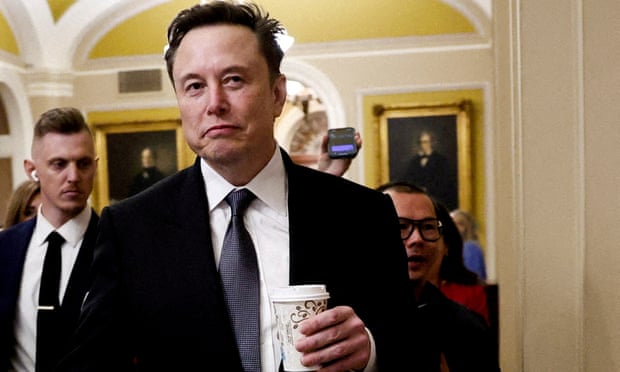
There’s a certain degree of comedy in the hypocrisy of Klippenstein’s suspension. Since right-wing billionaire Elon Musk bought Twitter, he has claimed that his administration would end corporate censorship, but instead he’s implemented his own censorship agenda (Guardian1/15/24Al Jazeera8/14/24).

The Independent (1/29/23) reported that Musk “oversaw a campaign of suppression that targeted his critics upon his assumption of power at Twitter.” He

personally directed the suspension of a left-leaning activist, Chad Loder, who became known across the platform for his work helping to identify participants in the January 6 attack.

Al Jazeera (2/28/23) noted that “digital rights groups say social media giants,” including X, “have restricted [and] suspended the accounts of Palestinian journalists and activists.” Musk has likewise fulfilled censorship requests by the governments of Turkey (Ars Technica5/15/23) and India (Intercept1/24/233/28/23) officials, and is generally more open to official requests to suppress speech than Twitter‘s previous owners (El Pais5/24/23Washington Post9/25/24).

Meanwhile, Musk’s critics contend, he’s allowed the social network to be a force multiplier for the right. “Elon Musk has increasingly used the social media platform as a megaphone to amplify his political views and, lately, those of right-wing figures he’s aligned with,” AP (8/13/24) reported. (Musk is vocal about his support for former President Donald Trump’s candidacy—New York Times7/18/24.)

Twitter Antisemitism ‘Skyrocketed’ Since Elon Musk Takeover—Jewish Groups,” blasted a Newsweek headline (4/25/23). Earlier this year, Mother Jones (3/13/24) reported that Musk “has been retweeting prominent race scientist adherents…spreading misinformation about racial minorities’ intelligence and physiology to his audience of 176.3 million followers.”

‘Chilling effect on speech’

The message Ken Klippenstein got from X announcing he had been kicked off the platform.

Now Musk’s Twitter is keeping certain information out of the public view—information that just happens to damage the presidential ticket he supports. With Klippenstein having been silenced on the network, anyone claiming X is a bastion of free speech at this point is either mendacious or simply deluded.

Klippenstein (Substack9/26/24) explained that “X says that I’ve been suspended for ‘violating our rules against posting private information,’ citing a tweet linking to my story about the JD Vance dossier.” He added, though, that “I never published any private information on X.” Rather, “I linked to an article I wrote here, linking to a document of controversial provenance, one that I didn’t want to alter for that very reason.”

The journalist (Substack9/27/24) claims that his account suspension, which he reports to be permanent, is political because he did not violate the network’s code about disclosing personal information, and even if he did, he should have been given the opportunity to correct his post to become unsuspended. “So it’s not about a violation of X’s policies,” he said. “What else would you call this but politically motivated?”

Klippenstein is understandably concerned that he is now without a major social media promotional tool. “I no longer have access to the primary channel by which I disseminate primarily news (and shitposts of course) to the general public,” he said. “This chilling effect on speech is exactly why we published the Vance Dossier in its entirety.”

UPDATE: Klippenstein (Substack9/29/24) reports that his publication of the Vance dossier is being censored not only by X, but by Meta (Facebook and Instagram) and Google as well: “The platforms said that the alleged Iranian origin of the dossier — which no one is calling fake or altered — necessitated removing any links to the document.”

FAIR’s work is sustained by our generous contributors, who allow us to remain independent. Donate today to be a part of this important mission.

Original article by Ari Paul republished from FAIR under https://creativecommons.org/licenses/by-nc-nd/3.0/

Continue ReadingVance Dossier Shows Not All Hacks Are Created Equal

Tech billionaire Elon Musk is on track to become the world’s first trillionaire. It’s a sign markets aren’t working

Spread the love
FredericLegrand/Shutterstock

Richard Denniss, Crawford School of Public Policy, Australian National University

Apparently, the world is about to get its first trillionaire.

A report from the business intelligence agency Informa Connect says, at his present rate of wealth accumulation, tech billionaire Elon Musk is on track to be the world’s first trillionaire, three years from now.

At the moment Musk is said to be worth US$195 billion (A$293 billion), but if his wealth continues growing at the recent rate of 110% per year, he will hit US$1.195 trillion in 2027.

The next trillionaire after Musk should be Indian mining magnate Gautam Adani, followed by Nvidia chief Jensen Huang and Indonesian mining mogul Prajogo Pangestu, all of whom are on track to hit the milestone in 2028.

The nearly 1 billion human beings who don’t yet have electricity connected to their homes will doubtless be looking on with interest as the tech bros and mining bosses vie to crack 13 digits.

Before examining how it is that someone could ever make a trillion-dollar fortune, and what it might mean for the world for so much of the world’s wealth to be held in the hands of one person, it is important to first try to comprehend how big a trillion actually is.

One trillion seconds last 31,000 years

A million is a big number: it is 1,000 thousands. If you managed to retire with that many dollars in superannuation, you would have saved up more than 90% of your fellow retirees.

One billion is 1,000 millions. It takes 12 days for a million seconds to pass, but 31 years for a billion seconds to tick over.

That means a trillion seconds would equal 31,000 years.

If you had $1 trillion and did no more than stick it in the bank where it earned 4% interest per year you would get $40 billion per year in interest.

No one needs $1 trillion, and it is hard to see how anyone could spend it as fast as it grew, which raises important questions about how societies, economies and democracies will be able to function if and when governments allow trillionaires to emerge.

For mortals, a trillion is hard to justify

The palace at Versaille could have cost $300 billion in today’s dollars. WikimediaCommons, CC BY-NC-SA

France’s King Louis XIV spent today’s equivalent of US$200 billion-300 billion building his palace at Versailles, and it was by no means his only palace.

Pyramids and sphinxes didn’t come cheap either, but these sorts of expenditures were seen as needed for beings selected by gods and not entirely mortal.

For mortals, some believe that the entire population benefits when a small minority controls most of the resources on the basis that it builds incentives.

Just as peasants spent millennia awaiting their reward in the afterlife while their rulers enjoyed heaven on earth, in modern economies we are told wealth and prosperity will trickle down to us eventually if we keep working hard.

Unfortunately for most of us, despite the wealth of the richest 200 Australians growing from A$40.6 billion to $625 billion over the past 20 years, neither the Australian economy nor the wages of ordinary Australians are soaring.

High profits are meant to be temporary

Incentives can and do play an important role in our economy.

In the so-called “free market” envisaged by 18th-century economist Adam Smith, if my new farming technique or silicon chip is so good that everyone wants one, it is considered only fair that I get an initial reward.

But after a while, everyone else will be free to compete with me by selling similar goods and in turn stopping me from getting an extraordinary ongoing reward.

The problem is that some markets aren’t free and don’t work properly. It is no accident that the world’s biggest fortunes are held by those who have monopoly rights to sell natural resources or technologies that are protected by patents or systems that lock in users.

That’s bad news for those still waiting patiently for wealth to trickle down or to be spread more evenly.

Technofeudalism keeps profits growing

In his latest book former Greek finance minister Yannis Varoufakis describes the world we now live in as one of technofeudalism in which online platforms have the ongoing opportunity to exploit workers, consumers and producers in ways Smith could not have imagined.

Having created digital platforms where the price of entry is handing over your personal details and preferences, modern tech titans use a new form of alchemy to convert data into knowledge that allows them to keep you on their platform and exploit you or advertisers or suppliers in the belief that you won’t leave.

And while there are physical limits to how big a car factory or fast-food chain can grow, there are almost no physical limits on how much money tech platforms can make by selling ads they didn’t make for products they didn’t make to consumers they know nearly everything about.

Restraining profits is pro-market

It isn’t anti-capitalist to want those profits competed away, it’s pro-market.

When the United States broke up J.D. Rockerfeller’s oil monopoly in the early 20th century, the oil industry prospered rather than vanished. consumers and the businesses that had dealt with Rockerfeller were better off, and so was the economy as a whole.

Democracies have, for now, the power to use taxes and regulations to redistribute the enormous benefits flowing to the new class of billionaires (and soon trillionaires) from the sale of scarce resources and the creation of platforms that keep us trapped.

Whether and how we use that power is up to us, but we mightn’t have it for long. The more the new class of billionaires and trillionaires becomes entrenched, the more it will be able to use the political system to protect their interests rather than those of mere mortals.

Richard Denniss, Adjunct Professor, Crawford School of Public Policy, Australian National University

This article is republished from The Conversation under a Creative Commons license. Read the original article.

Continue ReadingTech billionaire Elon Musk is on track to become the world’s first trillionaire. It’s a sign markets aren’t working

Murdoch to Musk: how global media power has shifted from the moguls to the big tech bros

Spread the love
The Conversation, Mary Altaffer/AAP, Frederic Legrand/Shutterstock

Matthew Ricketson, Deakin University and Andrew Dodd, The University of Melbourne

Until recently, Elon Musk was just a wildly successful electric car tycoon and space pioneer. Sure, he was erratic and outspoken, but his global influence was contained and seemingly under control.

But add the ownership of just one media platform, in the form of Twitter – now X – and the maverick has become a mogul, and the baton of the world’s biggest media bully has passed to a new player.

What we can gauge from watching Musk’s stewardship of X is that he’s unlike former media moguls, making him potentially even more dangerous. He operates under his own rules, often beyond the reach of regulators. He has demonstrated he has no regard for those who try to rein him in.

Under the old regime, press barons, from William Randolph Hearst to Rupert Murdoch, at least pretended they were committed to truth-telling journalism. Never mind that they were simultaneously deploying intimidation and bullying to achieve their commercial and political ends.

Musk has no need, or desire, for such pretence because he’s not required to cloak anything he says in even a wafer-thin veil of journalism. Instead, his driving rationale is free speech, which is often code for don’t dare get in my way.

This means we are in new territory, but it doesn’t mean what went before it is irrelevant.

A big bucket of the proverbial

If you want a comprehensive, up-to-date primer on the behaviour of media moguls over the past century-plus, Eric Beecher has just provided it in his book The Men Who Killed the News.

Alongside accounts of people like Hearst in the United States and Lord Northcliffe in the United Kingdom, Beecher quotes the notorious example of what happened to John Major, the UK prime minister between 1990 and 1997, who baulked at following Murdoch’s resistance to strengthening ties with the European Union.

In a conversation between Major and Kelvin MacKenzie, editor of Murdoch’s best-selling English tabloid newspaper, The Sun, the prime minister was bluntly told: “Well John, let me put it this way. I’ve got a large bucket of shit lying on my desk and tomorrow morning I’m going to pour it all over your head.”

MacKenzie might have thought he was speaking truth to power, but in reality he was doing Murdoch’s bidding, and actually using his master’s voice, as Beecher confirms by recounting an anecdote from early in Murdoch’s career in Australia.

In the 1960s, when Murdoch owned The Sunday Times in Perth, he met Lang Hancock (father of Gina Rinehart) to discuss potentially buying some mineral prospects together in Western Australia. The state government was opposed to the planned deal.

Beecher cites Hancock’s biographer, Robert Duffield, who claimed Murdoch asked the mining magnate, “If I can get a certain politician to negotiate, will you sell me a piece of the cake?” Hancock said yes. Later that night, Murdoch called again to say the deal had been done. How, asked an incredulous Hancock. Murdoch replied: “Simple […] I told him: look you can have a headline a day or a bucket of shit every day. What’s it to be?”

Between Murdoch in the 1960s and MacKenzie in the 1990s came Mario Puzo’s The Godfather with Don Corleone, aided by Luca Brasi holding a gun to a rival’s head, saying “either his brains or his signature would be on the contract”.

Former British Prime Minister John Major fell foul of Rupert Murdoch – and paid the price. Lynne Sladky/AP/AAP

Changing the rules of the game

Media moguls use metaphorical bullets. Those relatively few people who do resist them, like Major, get the proverbial poured over their government. Headlines in The Sun following the Conservatives’ win in the 1992 election included: “Pigmy PM”, “Not up to the job” and “1,001 reasons why you are such a plonker John”.

If media moguls since Hearst and Northcliffe have tap-danced between producing journalism and pursuing their commercial and political aims, they have at least done the former, and some of it has been very good.

The leaders of the social media behemoths, by contrast, don’t claim any fourth estate role. If anything, they seem to hold journalism with tongs as far from their face as possible.

They do possess enormous wealth though. Apple, Microsoft, Google and Meta, formerly known as Facebook, are in the top ten companies globally by market capitalisation. By comparison, News Corporation’s market capitalisation now ranks at 1,173 in the world.

Regulating the online environment may be difficult, as Australia discovered this year when it tried, and failed, to stop X hosting footage of the Wakeley Church stabbing attacks. But limiting transnational media platforms can be done, according to Robert Reich, a former Secretary of Labor in Bill Clinton’s government.

Despite some early wins through Australia’s News Media Bargaining Code, big tech companies habitually resist regulation. They have used their substantial influence to stymie it wherever and whenever nation-states have sought to introduce it.

Meta’s founder and chief executive, Mark Zuckerberg, has been known to go rogue, as he demonstrated in February 2021 when he protested against the bargaining code by unilaterally closing Facebook sites that carried news. Generally, though, his strategy has been to deploy standard public relations and lobbying methods.

But his rival Musk uses his social media platform, X, like a wrecking ball.

Musk is just about the first thing the average X user sees in their feed, whether they want to or not. He gives everyone the benefit of his thoughts, not to mention his thought bubbles. He proclaims himself a free-speech absolutist, but most of his pronouncements lean hard to the right, providing little space for alternative views.

Some of his tweets have been inflammatory, such as him linking to an article promoting a conspiracy theory about the savage attack on Paul Pelosi, husband of the former US Speaker, Nancy Pelosi, or his tweet that “Civil war is inevitable” following riots that erupted recently in the UK.

As the BBC reported, the riots occurred after the fatal stabbing of three girls in Southport. “The subsequent unrest in towns and cities across England and in parts of Northern Ireland has been fuelled by misinformation online, the far-right and anti-immigration sentiment.”

Nor does Musk bother with niceties when people disagree with him. Late last year, advertisers considered boycotting X because they believed some of Musk’s posts were anti-Semitic. He told them during a live interview to “Go fuck yourself”.

He has welcomed Donald Trump, the Republican Party’s presidential nominee, back onto X after Trump’s account was frozen over his comments surrounding the January 6 2021 attack on the capitol. Since then both men have floated the idea of governing together if Trump wins a second term.

Is the world better off with tech bros like Musk who demand unlimited freedom and assert their influence brazenly, or old-style media moguls who spin fine-sounding rhetoric about freedom of the press and exert influence under the cover of journalism?

That’s a question for our times that we should probably begin grappling with.

Matthew Ricketson, Professor of Communication, Deakin University and Andrew Dodd, Director of the Centre for Advancing Journalism, The University of Melbourne

This article is republished from The Conversation under a Creative Commons license. Read the original article.

Continue ReadingMurdoch to Musk: how global media power has shifted from the moguls to the big tech bros

Billionaires for Trump and Vance

Spread the love

Original article by ALAN SINGER republished from Common Dreams under Creative Commons (CC BY-NC-ND 3.0). 

Billionaire hedge fund manager Bill Ackman speaks at The New York Times DealBook Conference at Jazz at Lincoln Center on November 10, 2016 in New York City. (Photo by Bryan Bedder/Getty Images for The New York Times )

Here they are. They have names. They have billions. And they’re the leading American oligarchs backing the ticket that wants to kick the working class and poor people in the face.

No matter who may be supporting them in public opinion polls, Donald Trump and JD Vance are not the saviors of the middle class, the working, class, or the poor. They are not the champions of Blacks, whites, Latinos, men, women or any other demographic group. Their policy proposals won’t even benefit better off but not rich Americans. They are the candidates of casino, real estate, fossil fuel, and tech billionaires. Many are affiliated with Trump 47 or one of the other pro-Trump Super PACs.

I am a union member and have been since I started working as a teenager in the 1960s and I support the Harris-Walz ticket. I think it is a moral transgression in this election to vote for any down ballot Republican candidate that appears on the same line as Trump and Vance. The Democrats must win the House and Senate and local elections to stop the billionaire financed anti-democracy MAGA movement.

Below, in alphabetical order, is a list and description of some of the Trump-Vance team’s key super-wealthy supporters. It is a billionaire’s club.

Hedge fund billionaire Bill Ackman is the chief executive and portfolio manager of Pershing Square Capital Management. Ackman demanded that Trump resign after the January 6 attack on the Capitol, but now endorses Trump. Ackman is a leading crusader against DEI policies and what he perceives of as a wave of antisemitism on college campuses. He played a leading role in forcing Harvard President Claudine Gray to resign, in getting New York City Mayor Eric Adams to use police to breakup protests at Columbia University against Israel’s action in Gaza and contributed to SuperPACs that defeated progressive candidates in Democratic Party primaries because they criticized Israel. Forbes estimates Ackman’s net worth at over $9 billion.

Casino magnates Miriam Adelson and her deceased husband, Sheldon Adelson, were Trump’s biggest donors in 2020. They contributed $90 million to the pro-Trump SuperPAC Preserve America. Adelson is the wealthiest Israeli citizen and one of the fifty wealthiest people in the world. She pledged $100 million to Trump’s 2024 campaign in exchange for his promise that if he is elected President the United States would recognize Israeli sovereignty over the West Bank, torpedoing any possible of an independent Palestinian state.

Marc Lowell Andreessen is a Silicon Valley tech businessman, former software engineer, member of the Facebook Board of Directors, and worth $1.8 billion. In 2016 he endorsed Hillary Clinton for President because of Trump’s anti-immigrant stance, but he is now donating mega-bucks to SuperPACs supporting Trump, hoping to secure policies that favor his investments.

Scott Bessent is founder of the global investment firm Key Square Group with an investment portfolio of $8 billion. Previously Bessent was the Chief Investment Officer of Soros Fund Management, a much more liberal company. At some point, Bessent changed his stripes, and he is now a co-chair of Trump 47, a Republican Party fundraising group in Palm Beach, Florida. Bessent is considered a possible Secretary of the Treasury if Trump is elected.

Robert Thomas Bigelow owns Budget Suites of America and is founder of Bigelow Aerospace. He is a notorious conspiracy theorists providing financial support for investigating UFOs and paranormal phenomena including consciousness after death. Bigelow has originally a DeSantis supporter but switched to Trump when DeSantis dropped out of the race. Bigelow gave Trump a million dollars to help with his legal fees and promised to give $20 million to pro-Trump Super PACs. Bigelow’s net worth is $1.5 billion.

Robert H. Book is chairman of Book Capital Enterprises and Jet Support Services, and a Vice Chairman of Axxes Capital. His net worth is only half a billion dollars so he may not belong on this list. Book, a major philanthropist in support of Israel, was critical of Trump in 2017 for not forcibly condemning neo-Nazis marching in Charlottesville, Virginia. However, in 2020 he gave over a million dollars to the Trump Victory Committee.

Timothy Dunn is the CEO of the fossil fuel company CrownQuest Operating. Dunn contributed to the Trump 2020 campaign and in 2023 he gave $5 million towards the 2024 campaign. He’s an active donor in rightwing Texas politics, giving approxinately $10 million to the conservative Defend Texas Liberty PAC. He co-founded a Christian school where he is on the board of trustees and teaches Sunday school. Dunn opposes abortion, same-sex marriage. and adoptions by same sex couples. He is worth an estimated 2.2 billion.

José Fanjul is a Cuban American a sugar magnate with investments in Domino Sugar and real estate who gave over $800,000 to the Trump 47 Committee and hosted a Trump fundraiser. Fanjul’s company received an estimated $65 million in federal agricultural subsidies that he uses political influence to protect. The family’s business interests are valued at over $8 billion.

Kenneth Griffin is a hedge fund manager who gave $10 million to the House Republican Super PAC and $5 million to the Senate Republican Super PAC. Griffin initially backed Nikki Haley for the 2024 Republican nomination and called Trump a “three-time loser,” but is now prepared to endorse Trump. Griffin is worth about $35 billion.

Harold Hamm, executive chair of Continental Resources, is an oil and gas magnate heavily invested in fracking who is worth $18.5 billion. Hamm is part of the Koch brothers rightwing donor network. He contributed $320,000 to the 2020 Trump campaign and organized a major Trump fundraiser with the fossil fuel industry.

Diane Marie Hendricks and her deceased husband were major supporters of Wisconsin Governor Scott Walker. Her net worth is over $20 billion. From 2014 to 2016, she gave millions of dollars to a Republican Super PAC created by the Koch Brothers and in 2020 Hendricks contributed $1.1 million to Trump’s presidential campaign. She spoke at the 2024 Republican Party National Convention and is also a financial supporter of Georgia representative Marjorie Taylor Greene. Hendricks’ investment in Trump paid off bigtime. She saved $36 million in income taxes from a provision in the 2017 Trump tax cut.

Benjamin Horowitz is a co-founder of the venture capital firm Andreessen Horowitz along with Marc Lowell Andreessen and is personally worth $3.5 billion. He pledged to give money to the 2024 Trump campaign.

Robert “Woody” Johnson is co-owner of the New York Jets football team and an heir to the Johnson & Johnson pharmaceutical company. He is worth an estimated $10 billion. Johnson was a co-financial chair of the Republican Party during Trump’s 2016 campaign and was appointed ambassador to the United Kingdom when Trump was elected. During the 2024 campaign, Johnson has already given over a million dollars to Trump Super PACs.

Doug Leone is a partner at and former head of Sequoia Capital. Forbes magazine estimates he is worth $8.4 billion. In 2021, Leone said Trump lost his support because of the January 6 attack on the Capitol, but he is now back on the Trump bandwagon. He gave $2 million to the Right for America Trump Super PAC and $1 million to the America PAC.

Joe Lonsdale is a technology entrepreneur and investor and co-founder of Palantir worth about half a billion dollars. He donates to Trump through the Super PAC America Pac.

Howard Lutnick is CEO of Cantor Fitzgerald and has a net worth of an estimated $1.5 billion. Lutnick has hosted New York metro area fundraisers for Trump in his home since 2019.

Omeed Malik, who formerly supported Ron DeSantis, changed track and pledged to raise over $3 million and donate at least $100,000 to the Trump campaign. Malik is president of 1789 Capital and CEO of Farvahar Partners. He has an estimated net worth of $6.15 billion.

Home Depot co-founder Bernie Marcus supported Trump for President in 2016 and 2020 and announced he would support Trump again even if he were convicted of crimes. He gave the Trump campaign $25 million in 2020. Marcus, who is worth almost $9 billion, originally supported DeSantis this round and then Haley, but he is now boosting Trump again. He said his donations to the 2024 Trump campaign would be “in line” with past contributions.

Vincent and Linda McMahon are professional wrestling promoters. The McMahons gave $5 million to the Donald J. Trump Foundation. Linda was appointed administrator of the federal Small Business Administration during the Trump administration and spoke at the 2024 Republican National Convention. The McMahon’s have a combined net worth of $3.2 billion.

Timothy Mellon is a descendant of the founder of the Mellon Bank and railroad interests. The bank, under different names, today manages about $50 trillion in assets and the current generation of the family is worth about $15 billion. Mellon is a major Trump supporter. In April 2020, he gave $10 million to Trump’s America First Action Super PAC, and he has pledged $75 million to elect Trump in 2024. He also contributed $25 million to the independent candidacy of Robert Kennedy. Mellon is the definition of rightwing weirdo. He posted online comparing climate scientists to ISIS, is a COVID anti-vaxxer, donated to build a Southern wall, and issued statements that led to him being accused of racism.

Robert and Rebeka Mercer (his daughter and fellow conservative activist) Pappa Mercer was an artificial intelligence proponent and co-chair of the Renaissance Technologies hedge fund. Mercer has a string of companies based in the Caribbean that he uses to avoid paying American income taxes. Among his rightwing activities, he contributed to the Brexit campaign for Great Britain to leave the European Union, works with Koch brother’s groups, financially supported Breitbart News, donated to the Heritage Foundation and the Cato Institute, labels civil rights acts as racist, and helped fund JD Vance’s Ohio Senate campaign. Daughter Rebekah is in charge of the Mercer Family Foundation. She home schooled her children, is on the Heritage Foundation Board of Trustee, was on the 2016 Trump transition team, and works closely with Steve Bannon who she introduced to Trump. Pappa Mercer is probably worth a little less than a billion dollars.

Elon Musk is going all in to elect Trump, providing money through his private pro-Trump Super PAC and free publicity on his social media site including an interview scheduled for posting on August 12. Musk reportedly pledged to contribute $45 million a month to his America PAC, which has already been accused of using data from a subterfuge voting registration drive to aid the Trump campaign. After Musk purchased Twitter, which he rebranded X, there was a surge of antisemitic and racist postings on the platform. Musk himself has also posted or retweeted hateful conspiracy theories, targeted Anthony Fauci, and made fun of people using gender pronouns. It is estimated that Musk is worth over $200 billion.

Chamath Palihapitiya, an early senior executive at Facebook, is a champion of digital currency and a competitive poker player. He co-hosted a San Francisco fund raiser for Trump with David Sacks that raised $12 million and promotes Trump on his podcast. Palihapitiya’s net worth is estimated at $1.2 billion.

Geoffrey Palmer is a Los Angeles-based real estate developer and competitive polo player worth $3.1 billion. His company contributed $5 million to Trump’s 2016 campaign, and he has hosted fundraisers for each of Trump’s campaigns. This round he gave $2 million to Trump’s MAGA Inc. super PAC and $814,600 to the Trump 47 Committee. He was also a major financer of efforts to recall California Governor Gavin Newsom.

John Paulson, net worth $3.5 billion, made his money from the 2008 housing market collapse. He was an early supporter of Trump in 2016, has already raised $50 million for the Trump 2024 campaign, and is another potential Treasury Secretary.

Hedge fund broker Nelson Peltz stated that he regretted voting for Trump after the Capitol attack, but he is now hosting Trump fund raisers at his Palm Beach, Florida mansion, although he says he is not happy about it. Peltz is worth $1.6 billion.

Isaac Perlmutter is an Israeli American billionaire who has had stakes in several companies including Revco drug stores, Remington gun manufacturers, and Marvel Entertainment. He is a friend and unofficial advisor to Trump who helped oversee the Department of Veterans Affairs when Trump was President. Isaac and his wife Laura Perlmutter gave Trump almost $2 million in 2016, and Laura was part of Trump’s inauguration planning committee. In 2024, the Perlmutters have already contributed $10 million to Trump’s Right for America Super PAC. Isaac and Laura Perlmutter live near Mar-a-Lago in Florida and are worth over $4 billion.

Vivek Ramaswamy originally ran against Trump in Republican primaries but then endorsed him and was awarded with a spot at the Republican National Convention. Ramaswamy opposes affirmative action, abortion rights, and birthright citizenship. During his campaign he called the “climate change agenda a hoax” and for raising the voting age to 25. He has endorsed conspiracy theories that the January 6 attack on the U.S. Capitol was a “inside job” and questioning the official story about the September 11th attack on the World Trade Center. He made his money in pharmaceuticals and is worth about a billion dollars.

Todd Ricketts is a co-owner of the Chicago Cubs, a TD Ameritrade board member, and a former Republican Party finance chair. Since 2016 he has been a Trump fundraiser and was chair of the Trump Victory Committee in 2020. The Ricketts family is worth over $4 billion.

Phil Ruffin, a casino magnate, is a longtime associate and business partner of Trump who was with Trump at the 2013 Miss Universe Pageant in Moscow. Ruffin, worth $2.6 billion, contributed $2 million to Trump’s MAGA Inc. Super PAC and more than $800,000 to Trump 47.

Tech investor, podcast host, and venture capitalist David Sacks spoke opening night of the Republican National Convention. on Monday, co-hosted a fundraiser for Trump in San Francisco. Sacks, a former chief operating officer at PayPal, is now a big promoter of crypto currency along with JD Vance. Sacks supported Hillary Clinton in 2016, recently toyed with support for Robert Kennedy, but is now a prominent Trump fund raiser.

Blackstone CEO Steve Schwarzman, a longtime friend of Trump, was chairman of his Strategic Policy Forum when Trump was President. In that role he marshalled billionaires to support Trump tax cuts and economic policies. Schwarzman denounced the January 6 attack on the Capitol Building as an “insurrection” and an “affront to the democratic values we hold dear” and in 2022 he announced he would not support Trump for reelection however Schwarzman is now a Trump supporter and fundraiser again. He is worth $39 billion.

Paul Singer is a hedge fund manager with a net worth of over $6.1 billion. His specialty is buying the debt of poor countries and then forcing them to pay. Singer and the workforce at his company, Elliott Management are a top source of contributions to the National Republican Committee. Singer has contributed to the political efforts of the Koch brothers and gave one million dollars to the Trump 2017 inaugural committee. He originally supported Nicki Haley’s 2024 campaign but has now endorsed Trump.

Jeff Sprecher and his wife, former Georgia Senator Kelly Loeffler are worth over $1 billion. Each contributed over $800,000 to a Trump Super PAC. Sprecher is the former chairman of the New York Stock Exchange.

So far Peter Thiel, co-founder of PayPal and Palantir, has not endorsed Trump again. He contributed a million dollars to the trump 2016 campaign but did not give money in 2020. Thiel, who is gay and part of a same-sex marriage, remains unhappy with Trump and the Republican Party’s focus on hot-button cultural issues. However, he was a major supporter of JD Vance’s Senate campaign and is expected to eventually support the Trump-Vance ticket because of his major investment in crypto currencies. Thiel, the person who introduced Trump to Vance, is worth $4.2 billion.

Richard Uihlein and Elizabeth Uihlein are founders of Uline and Richard is also an heir to Schlitz. They are anti-union, anti-tax, anti-regulation, and anti-gay and transgender rights. Their $10 million contribution to the Trump 2024 Make America Great Again Super PAC is currently the second largest Trump gift. The Uihleins are worth over $6 billion.

Kelcy Warren, the chairman and former CEO of a pipeline company with a net worth of over $6 billion gave over $800,000 to the Trump 47 Committee and $5 million to the MAGA Inc. super PAC.

Cameron and Tyler Winklevoss each gave over $1 million to the Trump 47 Committee and $250,000 to the America PAC. The twins run the cryptocurrency exchange Gemini and are each worth $2.7 billion. When endorsing trump, Tyler Winklevoss called him “pro-Bitcoin, pro-crypto, and pro-business.”

Steve Wynn was vice-chairman of Trump’s 2017 inaugural committee. He is casino and real estate magnate worth $3.4 billion who is accused of sexual misconduct and acting as a foreign agent for China. Wynn gave over $800,000 to the Trump 47 Committee.

Jeffrey Yass is the co-founder trading and technology company Susquehanna International Group, a major investor in TikTok which is under attack because its parent company is owned by China, and Trump’s sham media company. He has a net worth of $27.6 billion. He is a self-proclaimed libertarian, on the executive advisory council of the Cato Institute, and an advocate for charter schools and vouchers. Yass is one of the largest Republican Party deep pockets and contributed to several candidates challenging the results of the 2020 Presidential election.

Original article by ALAN SINGER republished from Common Dreams under Creative Commons (CC BY-NC-ND 3.0). 

Continue ReadingBillionaires for Trump and Vance

Billionaires Buy Governments to Avoid Paying Their Fair Share in Taxes

Spread the love

Original article by BOB LORD of Inequality.Org republished from Common Dreams under a Creative Commons Attribution-Share Alike 3.0 License.

U.S. President Donald Trump smiles at House Ways and Means Committee Chairman Rep. Kevin Brady (R-Texas) after speaking about the passage of tax cut legislation at the White House in Washington, D.C. on December 20, 2017. (Photo: Saul Loeb/AFP via Getty Images)

In legislatures, the courts, and our executive offices, we have a system rigged in favor of the ultra-rich, rigged by everything from acts of Congress and judicial rulings to IRS budgets and audit policies.

By all appearances, former U.S. President Donald Trump has cut a sweet deal with a dozen or two of America’s richest billionaires: Finance his campaign and he’ll keep their federal taxes super low—or even lower them—once he’s sitting back in the White House.

How much do billionaires like this deal? This much: In April, hedge fund billionaire John Paulsen held a Palm Beach fundraiser for Trump that brought in $50.5 million. Immediately after Trump’s late May conviction on 34 felony counts in Manhattan, Timothy Mellon, the grandson of the classic plutocrat Andrew Mellon, ponied up $50 million. Miriam Adelson, the billionaire widow of Las Vegas kingpin Sheldon Adelson, appears eager to kick in as much as $100 million.

This past spring, meanwhile, billionaires Elon Musk and David Sacks reportedly held a secret dinner party for Trump, with attendees including the illustrious deep pockets Peter Thiel, Rupert Murdoch, and Michael Milken.

The rich themselves have actually become more brazen about avoiding taxes. Just try to stop us, they seem to be saying.

America’s billionaires clearly see politics as one route to ensuring they pay as little as possible at tax time. But they don’t just make their presence felt at election time. America’s rich have their thumbs firmly on the scale of all three branches of government. In legislatures, the courts, and our executive offices, we have a system rigged in favor of the ultra-rich, rigged by everything from acts of Congress and judicial rulings to IRS budgets and audit policies.

Some of this rigging we can all easily see. The dividends and long-term capital gains of the ultra-rich have for decades faced a maximum tax rate barely half the maximum rate applicable to other forms of income. And the investment income of the rich, unlike the paychecks of working people, faces no Social Security tax.

In 2017, the first year of the Trump presidency, intense lobbying efforts helped rich business owners to a special tax rate for their business income. In 2018 alone, according to ProPublica, that special rate translated into a $67 million gift to Mike Bloomberg, whose personal wealth now reportedly exceeds $100 billion.

But these glaring privileges the rich enjoy at tax time only tell part of the billionaire tax story. Other parts get precious little attention. In 2004, for instance, lawmakers in Congress enacted a penalty for the failure to disclose potentially abusive tax avoidance transactions on tax returns. The penalty on the surface looked substantial: 75% of the tax sought to be avoided. But Congress capped the penalty at $100,000, a move that turned the penalty into a minor nuisance for billionaires seeking to avoid millions of dollars in taxes.

In our current rich people-friendly tax climate, IRS staff who want to do the right thing face tough going. Recently, for example, one former IRS staffer, Michael Welu, went public with his concerns that the IRS itself has both official and unofficial policies that end up treating audited rich taxpayers much more gently than small business owners.

“I was putting butchers, bakers, and candlestick makers in jail,” Welu told the International Consortium of Investigative Journalists, “but the big stuff we really wanted to go after was being ignored.”

Welu found the upper management of the IRS division tasked with auditing the super rich—and the corporations they run—distinctly uninterested in investigating America’s richest and their “most egregious, ridiculous schemes” for avoiding taxes.

IRS officials like Michael Welu do occasionally speak out. But only tax wonks truly have any real sense of how much obscure tax code penalties and IRS audit policies favor the rich. And most of those tax wonks work for the rich.

The rich themselves have actually become more brazen about avoiding taxes. Just try to stop us, they seem to be saying.

Take the recently decided Supreme Court case, Moore v. United States. Working through an array of right-wing organizations, the conservative mover-and-shaker Leonard Leo attempted to use a challenge to an obscure one-time tax as a vehicle to preempt Congress from ever taxing the wealth or unrealized gains of the ultra-rich. Ultimately, the court decided the case without ruling on whether the rich can be taxed on their wealth or unrealized gains. But the opinions that four of the nine justices handed down made it clear that they stand prepared to do the billionaire bidding should a direct challenge to a tax on the wealth or unrealized gains of billionaires come before them.

Billionaires now have at least three Supreme Court justices firmly in their pockets. Reporting by ProPublica has revealed the massive gifts that have been flowing from Harlan Crow and other billionaires to Justice Clarence Thomas as well as the generous gifts that billionaire Paul Singer has been sending Justice Samuel Alito’s way. Justice Neil Gorsuch has had his entire career, including his appointment to the court, funded by the billionaire Philip Anschutz.

Those three justices, along with Justice Amy Coney-Barret, have now made it patently obvious they will not allow billionaires to be taxed on their unrealized gains or their wealth. Does anyone really think the billionaires won’t have the crucial, majority-making fifth vote from Justice Brett Kavanaugh when they need it?

Republican members of Congress are showing even less shame than our Supreme Court justices. Last year, these GOP lawmakers held the country hostage in negotiations to increase the country’s debt limit. Their price for agreeing to raise the debt limit, thereby avoiding a default on the country’s debt? They demanded—and won—a reduction in a scheduled IRS budget increase that would been used to increase enforcement moves against rich taxpayers.

The purported motive for this legislative hostage taking—“concern” over the federal deficit—made for an absurd justification. The proposed increase in the IRS budget would have been recovered, several times over, through increased tax collections. The IRS budget reductions the Republican lawmakers extracted will, in fact, only increase the federal deficit. But those reductions will serve a political purpose. They’ll protect the GOP’s richest patrons from tax enforcement.

The mainstream media, to no one’s surprise, did a miserable job of exposing this Republican dishonesty in the debt limit negotiations. But at one point in our recent past a courageous soul did emerge to expose the rot in our tax system. What happened? The ultra-rich and their henchmen in Congress make sure that this soul faced a punishment far more severe than any punishment ever meted out to those few rich Americans who actually get caught evading their taxes due.

That courageous soul, Charles Littlejohn, worked as an IRS contractor. He leaked tax return information related to Trump and America’s billionaires to TheNew York Times and ProPublicaProPublica used that leaked information to write over 50 stories about billionaire tax avoidance, embarrassing and angering many of our richest in the process. Two of them even brought lawsuits, one against the IRS and the other against Littlejohn’s employer.

Ultimately, Littlejohn pled guilty to one count of unauthorized tax return information disclosure, a crime that carries a recommended sentence of four to 10 months. But 25 Republican members of Congress, undoubtedly at the behest of their billionaire patrons, wrote the judge in the case and urged the harshest possible sentence of five years. The judge obliged, stating in her sentencing remarks that Littlejohn posed a graver threat to democracy than the January 6 rioters. As tax law professor Reuven Avi-Yonah has noted, Littlejohn is now serving a sentence far harsher than any imposed on rich Americans convicted of tax evasion.

Littlejohn’s extreme sentence did not reflect the one single count of unauthorized tax return information disclosure he pled guilty to. That sentence reflects his “crime” of exposing the tax avoidance of the billionaire class.

Try this thought experiment: Imagine if Littlejohn had released the return information of 1,000 or so taxpayers with modest incomes to ProPublica. Imagine that ProPublica had then publicly detailed all the tip income that servers and bartenders among these taxpayers had failed to report and all the social meals that small business owners in the sample had claimed as business expenses. If Littlejohn had then pled to one count of unauthorized disclosure, would 25 members of Congress have intervened? Would the judge have imposed a sentence over six times the maximum recommended in federal sentencing guidelines?

Doesn’t it become dangerous to society when the punishment for a crime depends on who the victim happens to be?

We are now living that danger. Our billionaires sit firmly in control. And they will do whatever it takes to make sure they never pay tax at an appropriate level—even if that means locking a human being up for a preposterously long time just to send a message.

Original article by BOB LORD of Inequality.Org republished from Common Dreams under a Creative Commons Attribution-Share Alike 3.0 License.

Continue ReadingBillionaires Buy Governments to Avoid Paying Their Fair Share in Taxes