‘Gleefully Encouraging the Arsonists’: UK Government Commits to More Fossil Fuel Drilling

Spread the love

Original article by JAKE JOHNSON republished from Common Dreams under Creative Commons (CC BY-NC-ND 3.0).

“The U.K. government is blatantly in denial about climate breakdown.”

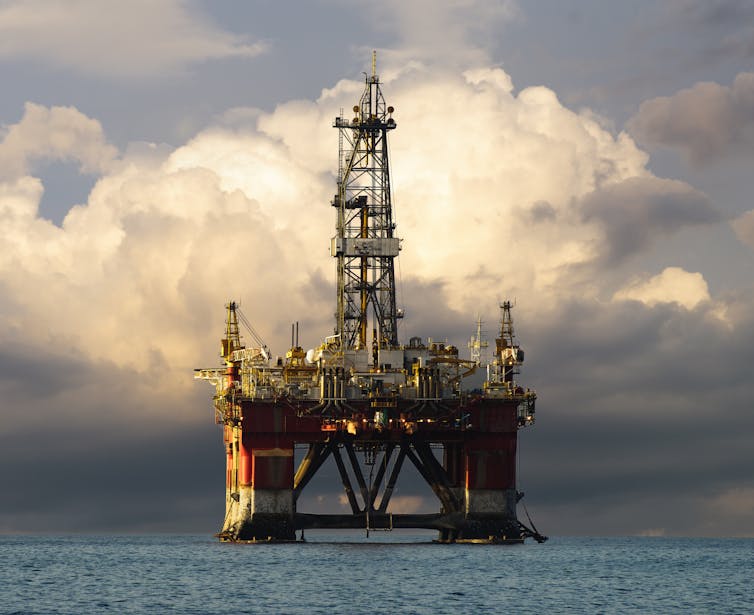
U.K. Prime Minister Rishi Sunak announced Monday that his government will approve hundreds of new licenses for oil and gas drilling in the North Sea, drawing anger from climate advocates who say he’s doing the bidding of the fossil fuel industry amid a nightmarish wave of extreme weather.

Paying lip service to the nation’s net-zero emissions target, the Tory leader also laid out plans for two new carbon capture and storage facilities in Northeast Scotland and the Humber, lining up behind an oil industry-backed approach to reining in pollution that critics say is a false solution to the global climate crisis.

“Burning oil and gas is driving extreme weather and killing people on every continent, yet Rishi Sunak is gleefully encouraging the arsonists to go and put more fuel on the fire,” said Mary Church, a campaigner with Friends of the Earth Scotland. “By committing to future licensing rounds on the same day, it’s clear to see that carbon capture is little more than a greenwashing tactic by Big Oil to try and keep their climate-wrecking industry in business.”

Major fossil fuel giants such as Shell and BP have maintained oil and gas facilities in the North Sea for years. According to a recent analysis by Greenpeace, oil and gas licenses approved by the U.K. government over the past two years are set to generate as much carbon dioxide as Denmark emits annually—roughly the equivalent of 14 million cars.

“History will view this as an act of gross criminality. Our future sacrificed for the profits of a tiny elite.”

Philip Evans of Greenpeace U.K. said Monday that Sunak’s new announcements are “nothing but a cynical political ploy to sow division, and the climate is collateral damage.”

“Just as wildfires and floods wreck homes and lives around the world, Rishi Sunak’s government has decided to row back on key climate policies, attempted to toxify net zero, and recycled old myths about North Sea drilling,” said Evans. “Relying on fossil fuels is terrible for our energy security, the cost of living, and the climate. Our sky-high bills and recent extreme weather have demonstrated that.”

“Rishi Sunak knows that any oil and gas from the North Sea will just be sold on the international market, making oil companies even richer at the expense of the rest of us. How will this help our bills exactly?” Evans asked, countering the prime minister’s claims that new drilling will enhance the U.K.’s “energy security.”

“If Sunak were serious about boosting our energy security while keeping energy bills down,” Evans continued, “he’d remove the absurd barriers holding back cheap, homegrown renewables and launch a nationwide insulation program to tackle energy waste in our homes.”

Nick Dearden, director of the U.K.-based advocacy group Global Justice Now, wrote that “history will view this as an act of gross criminality. Our future sacrificed for the profits of a tiny elite.”

“The talk of securing our independence couldn’t be further from the truth,” Dearden added. “This leaves us on the hook for £billions, even if the next govt rescinds these contracts, as they must, the fossil fuel elite will pocket a fortune at our expense.”

In addition to the new drilling license commitments, the Financial Times reported Sunday that the U.K. government has “made it cheaper for industry to pollute in Britain compared with the E.U. by watering down reforms to the carbon market.”

“The U.K. government is blatantly in denial about climate breakdown,” said Church.

Original article by JAKE JOHNSON republished from Common Dreams under Creative Commons (CC BY-NC-ND 3.0).

Continue Reading‘Gleefully Encouraging the Arsonists’: UK Government Commits to More Fossil Fuel Drilling

‘A Death Sentence’: Green Groups Decry G7 Support for More Gas Investments

Spread the love

Original article by Jessica Corbett republished from Common Dreams under Creative Commons (CC BY-NC-ND 3.0).

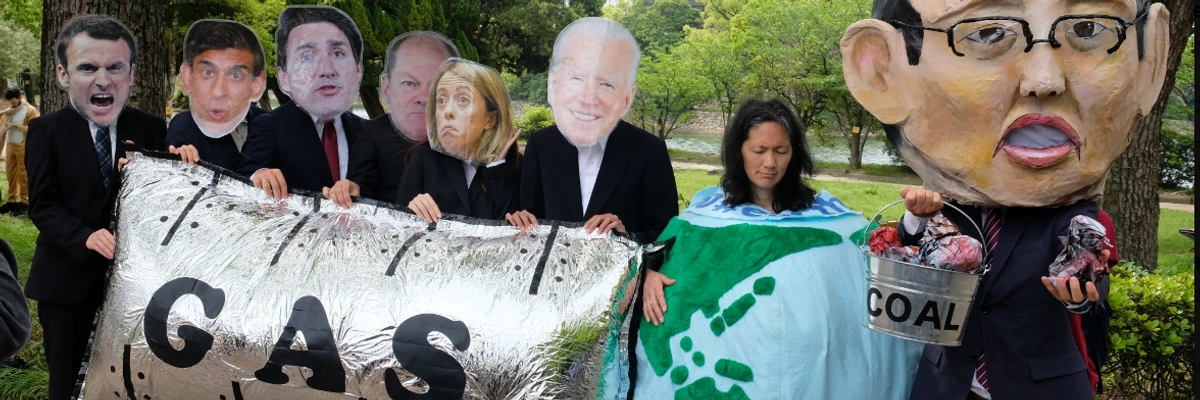
Activists with masks of Group of Seven leaders protest fossil fuels. (Photo: 350.org Japan/Friends of the Earth Japan/Oil Change International)

“Energy security can only be achieved by rapidly and equitably phasing out fossil fuels and transitioning to renewable energy, not locking in deadly fossil fuels and lining the pockets of oil and gas executives,” said one critic.

Since Group of Seven leaders on Saturday put out a wide-ranging communiqué from a Japan-hosted summit in Hiroshima, climate action advocates from G7 countries and beyond have blasted the statement’s support for future investments in planet-heating gas.

The statement comes after G7 climate, energy, and environment ministers were criticized for their communiqué from a meeting in Sapporo last month as well as protests around the world this week pressuring the summit’s attendees to ditch fossil fuels and “deliver a clear and just renewable energy agenda for a peaceful world.”

To meet the 1.5°C goal of the Paris climate agreement, the new statement commits to “accelerate the phaseout of unabated fossil fuels so as to achieve net-zero in energy systems by 2050 at the latest” along with “the elimination of inefficient fossil fuel subsidies by 2025 or sooner.”

“The G7 must stop using fossil fuels immediately—the planet is on fire.”

The statement also highlights that last year, G7 nations—Canada, France, Germany, Italy, Japan, the United Kingdom, and the United States—pledged to end “new direct public support for the international unabated fossil fuel energy sector, except in limited circumstances,” though as recent analysis shows, some are breaking that promise.

The communiqué then endorses liquefied natural gas (LNG) as a solution to “the global impact of Russia’s war on energy supplies, gas prices and inflation, and people’s lives,” referencing the invasion of Ukraine:

In this context, we stress the important role that increased deliveries of LNG can play, and acknowledge that investment in the sector can be appropriate in response to the current crisis and to address potential gas market shortfalls provoked by the crisis. In the exceptional circumstance of accelerating the phaseout of our dependency on Russian energy, publicly supported investment in the gas sector can be appropriate as a temporary response, subject to clearly defined national circumstances, if implemented in a manner consistent with our climate objectives without creating lock-in effects, for example by ensuring that projects are integrated into national strategies for the development of low-carbon and renewable hydrogen.

“The G7 energy outcome correctly diagnoses a short-term need for energy security, then promotes a dangerous and inappropriate lock-in of fossil gas that would do nothing to address this need,” responded Collin Rees, United States program manager at Oil Change International (OCI). “Energy security can only be achieved by rapidly and equitably phasing out fossil fuels and transitioning to renewable energy, not locking in deadly fossil fuels and lining the pockets of oil and gas executives.”

After accusing the summit’s attendees of “using the war as an excuse,” deflecting blame for current conditions, and neglecting Global South countries disproportionately suffering from the climate crisis, Max Lawson, head of inequality policy at Oxfam, declared that “the G7 must stop using fossil fuels immediately—the planet is on fire.”

Greenpeace International global climate politics expert Tracy Carty also demanded a swift end to fossil fuels, charging that “G7 leaders’ endorsement of new fossil gas is a blunt denial of the climate emergency” which dooms “current and future generations.”

Gerry Arances, executive director of the Philippine Center for Energy, Ecology, and Development, similarly argued that “the endorsement of increased LNG deliveries and investment in gas in the G7 communiqué is no mere backsliding—it is a death sentence being dealt by the G7 to the 1.5°C limit and, in consequence, to the climate survival of vulnerable peoples in the Philippines, Southeast Asia, and across the world.”

“Unless they genuinely put forward the phaseout of all fossil fuels, Japan and all G7 nations spout nothing but lies when they say they have aligned to 1.5°C,” he continued. “They cannot claim to be promoting development while subjecting our people to decades more of pollution and soaring energy prices. We reject this notion of a development powered by fossil fuels.”

Looking to the United Nations Climate Change Conference (COP28) planned for later this year, Arances added that “Japan and G7 leaders should already be warned that civic movements will not tire in pushing back against fossil fuels and false solutions and in demanding a renewable energy transition.”

“Civic movements will not tire in pushing back against fossil fuels and false solutions and in demanding a renewable energy transition.”

Other campaigners also specifically called out the Hiroshima summit’s host—including Ayumi Fukakusa, deputy executive director at Friends of the Earth Japan, who asserted that the country “has used the G7 presidency to derail the global energy transition.”

“Japan has been driving the push to increase gas investments and has been promoting its so-called ‘green transformation’ strategy,” Fukakusa said of a “greenwashing scheme” featuring hydrogen, ammonia, nuclear, and carbon capture and storage technologies.

OCI Asia program manager Susanne Wong agreed that given the nation’s promotion of gas expansion and technologies to prolong the use of coal, “this year’s G7 is revealing Japan’s failure of climate leadership at a global level.”

“Activists mobilized 50 actions across 22 countries this week to demand that Japan end its fossil fuel finance and stop driving the expansion of gas and other fossil-based technologies,” Wong added. “Japan will continue to face intense international scrutiny until it stops fueling the climate crisis.”

Groups from other G7 countries also called out their political leaders. Petter Lydén, head of international climate policy at Germanwatch, said, “Most likely, the German chancellor, Olaf Scholz, has been a driving force behind the weak language on gas, which is a serious blow to Germany’s international credibility on climate.”

Citing sources familiar with summit negotiations, The New York Timesreported Saturday that “Britain and France fought the German effort” while U.S. President Joe Biden was caught between defending his climate agenda and “aiding other United States allies intent on increasing their access to fossil fuels.”

OCI’s Rees said the that “this betrayal continues a disturbing turn by President Biden and Chancellor Scholz from rhetorically committing to climate leadership to openly boosting fossil fuel expansion. History will not look kindly on world leaders who accelerate the pace of fossil fuel buildout in the face of worsening climate crisis.”

Original article by Jessica Corbett republished from Common Dreams under Creative Commons (CC BY-NC-ND 3.0).

Continue Reading‘A Death Sentence’: Green Groups Decry G7 Support for More Gas Investments