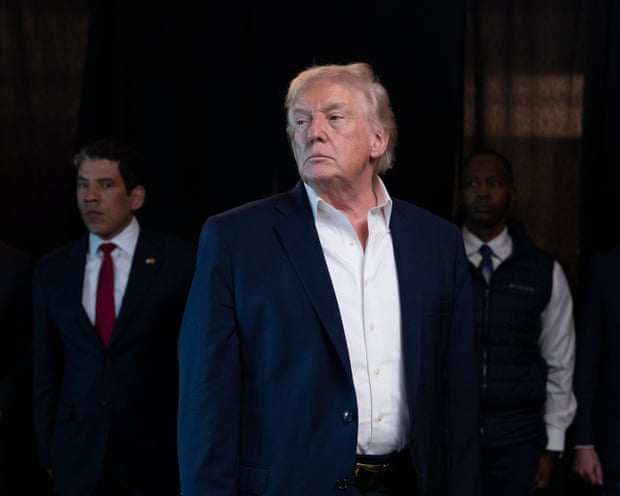
Donald Trump monitors US military operations in Venezuela, 3 January. Photograph: Molly Riley/AP
The illegal abduction of Venezuela’s president, and threat to ‘run’ his country, is a dangerous act. Its repercussions will be felt far beyond the region
Amid the immense confusion surrounding the US strikes on Venezuela, the seizure of the president, Nicolás Maduro, and Donald Trump’s announcement that the US will “run” the country and “take back the oil”, one thing is clear – they set a truly chilling precedent. The US has a grim history of interference, invasion and occupation in the region, but the early hours of Saturday saw its first major military attack on South American land. “American dominance in the western hemisphere will never be questioned again,” Mr Trump declared. The decision to unilaterally attack another country and abduct its leader – days after he publicly sought an off-ramp – has still wider repercussions. It should alarm us all.
Venezuelans have endured a repressive, kleptocratic and incompetent regime under Mr Maduro, widely believed to have stolen the last election. They now face profound uncertainty at best. Mr Trump has suggested that Mr Maduro’s deputy, Delcy Rodríguez, would follow US instructions, and dismissed the rightwing opposition leader and Nobel prize-winner María Corina Machado as a plausible replacement. But Ms Rodríguez, now interim president, has so far struck a defiant tone – and other parts of the decapitated regime are more hardline.
A man who won power promising to abandon foreign wars now says he is “not afraid of boots on the ground”. Rebranding the Department of Defense as the Department of War was more than posturing. He does not see the world’s superpower as policeman; he is turning it into a rogue state. He believes the US’s might allows it to do as it wishes with minimal cost: witness the strikes on Nigeria, on Iran’s nuclear facilities and elsewhere. He promises that Venezuelan oil means this latest episode “won’t cost us a penny”.
…
No one buys the pretext that this is about drugs. Venezuela is only a minor conduit for cocaine; Mr Trump recently pardoned the former Honduran president Juan Orlando Hernández for drugs and weapons crimes. And Mr Trump himself made it clear that he is driven by the lure of oil as well as machismo, the ideology of some in his administration, and the desire for glory as domestic popularity wanes.
The global reaction, especially in Europe, has – with honourable exceptions – been shockingly muted. That’s not due to Mr Maduro’s sins, but fear of Mr Trump’s wrath. The strong reaction from the UN’s secretary general, António Guterres, was welcome, but this episode underscores the institution’s growing irrelevance. Mr Trump’s anti-interventionist domestic base could yet press him to turn attention back home – but soaring healthcare premiums, economic unhappiness and the Epstein files increase his appetite for distraction.
Donald Fuhrump says that Amerikkka doesn’t bother with crimes or charges anymore, not being 100% Amerikkkan and opposing his real estate intentions is enough.
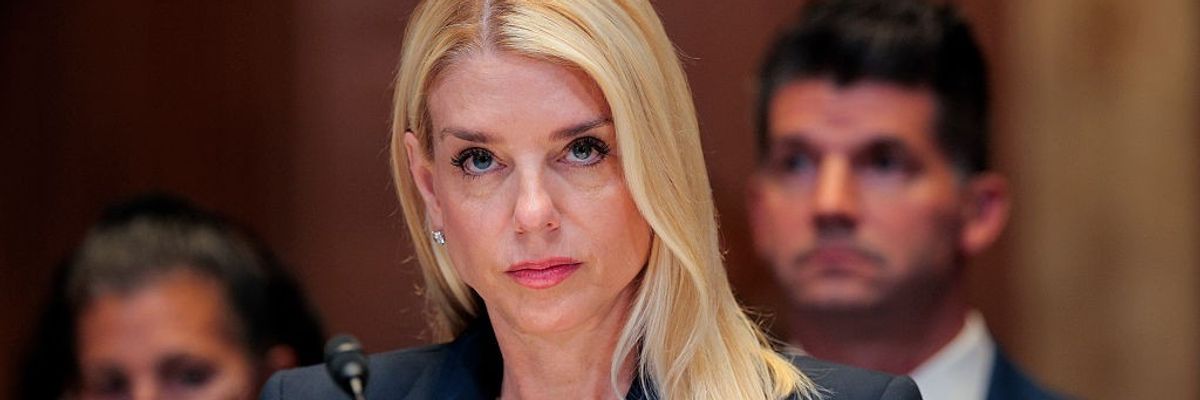
US Attorney General Pam Bondi testifies before a Senate committee on June 25, 2025 in Washington, DC. (Photo by Chip Somodevilla/Getty Images)
“What else is being covered up?”
Congressional Democrats on Saturday pressed US Attorney General Pam Bondi for answers regarding the apparent removal of a photo showing President Donald Trump surrounded by young female models from Friday’s Department of Justice release of files related to the late convicted child sex criminal Jeffrey Epstein.
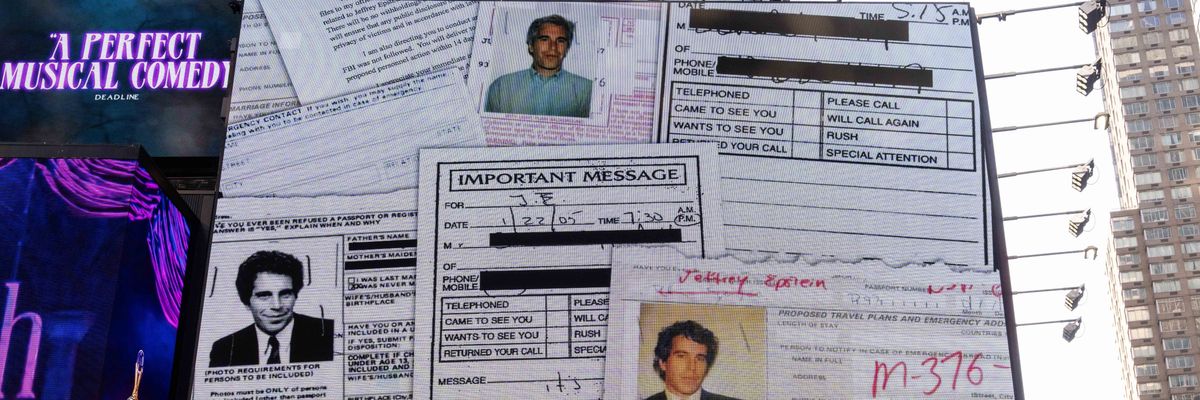
Amid the heavily redacted documents in Friday’s DOJ release was a photo of a desk with an open drawer containing multiple photos of Trump, including one of him with Epstein and convicted child sex trafficker Ghislaine Maxwell and another of him with the models.
However, the photo—labeled EFTA00000468 in the DOJ’s Epstein Library—was no longer on the site as of Saturday morning.
“This photo, file 468, from the Epstein files that includes Donald Trump, has apparently now been removed from the DOJ release,” Democrats on the House Oversight Committee noted in a Bluesky post. “AG Bondi, is this true? What else is being covered up? We need transparency for the American public.”
This photo, file 468, from the Epstein files that includes Donald Trump has apparently now been removed from the DOJ release.AG Bondi, is this true? What else is being covered up? We need transparency for the American public.
Numerous critics have accused the Trump administration of a cover-up due to the DOJ’s failure to meet a Friday deadline to release all Epstein-related documents and heavy redactions—including documents of 100 pages or more that are completely blacked out—to many of the files.
Deputy Attorney General Todd Blanche responded to the criticism by claiming that “the only redactions being applied to the documents are those required by law—full stop.”
“Consistent with the statute and applicable laws, we are not redacting the names of individuals or politicians unless they are a victim,” he added.
Earlier this year, officials at the Federal Bureau of Investigation reportedly redacted Trump’s name from its file on Epstein, who was the president’s longtime former friend and who died in 2019 in a New York City jail cell under mysterious circumstances officially called suicide while facing federal child sex trafficking and conspiracy charges.
Trump has not been accused of any crimes in connection with Epstein.
House Oversight Committee Ranking Member Robert Garcia (D-Calif.) said during a Friday CNN interview that the DOJ only released about 10% of the full Epstein files.
The DOJ is breaking the law by not releasing the full Epstein files. This is not transparency. This is just more coverup by Donald Trump and Pam Bondi. They need to release all the files, NOW.
“The DOJ has had months and hundreds of agents to put these files together, and yet entire documents are redacted—from the first word to the last,” Garcia said on X. “What are they hiding? The American public deserves transparency. Release all the files now!”
In a joint statement Friday, Garcia and House Judiciary Committee Ranking Member Jamie Raskin (D-Md.) said, “We are now examining all legal options in the face of this violation of federal law.”
“The survivors of this nightmare deserve justice, the co-conspirators must be held accountable, and the American people deserve complete transparency from DOJ,” they added.
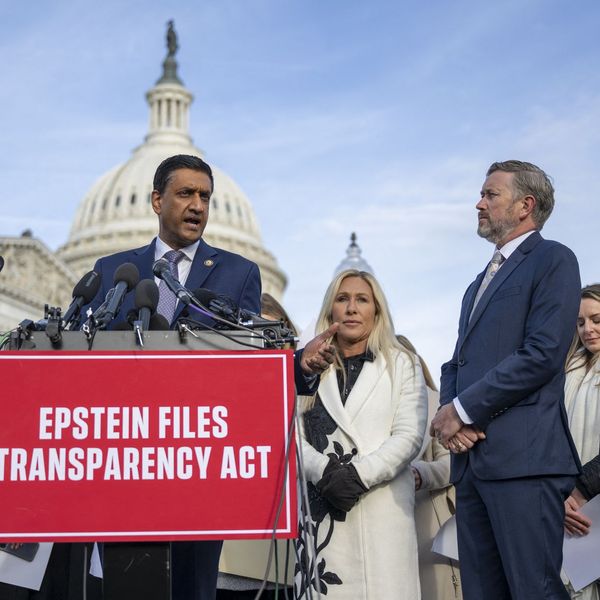
Rep. Ro Khanna (D-Calif.)—who along with Rep. Thomas Massie (R-Ky.) introduced the Epstein Files Transparency Act, which was signed into law by Trump last month and required the release of all Epstein materials by December 19—said in a video published after Friday’s document dump that he and Massie “are exploring all options” to hold administration officials accountable.
“It can be the impeachment of people at Justice, inherent contempt, or referring for prosecution those who are obstructing justice,” he added.
A billboard in Times Square calls for the release of the Epstein Files on July 23, 2025, in New York City. (Photo by Adam Gray/Getty Images)
“Not national security that has anything to do with the national defense or harm to the nation,” said independent journalist Ken Klippenstein. “But the self-serving kind that protects the system from the people.”
After its near-unanimous approval in Congress and following months of sustained public pressure, President Donald Trumpsigned a law on Wednesday releasing the files from the FBI’s investigation into the late sex trafficker Jeffrey Epstein.
The law requires Attorney General Pam Bondi to “make publicly available in a searchable and downloadable format all unclassified records, documents, communications, and investigative materials” related to the investigations into Epstein and his partner and coconspirator Ghislaine Maxwell within the next 30 days.
But critically, it gives Bondi expansive power to redact large amounts of information, potentially burying material that may be incriminating to the president, whose relationship with the disgraced financier has become the subject of greater speculation with each new set of documents released.
One provision allows Bondi to redact documents to strike information that “would jeopardize an active federal investigation or ongoing prosecution.” Last week, Trump ordered Bondi to open investigations into Epstein’s connections with several prominent Democrats: Among them are former President Bill Clinton, former Treasury Secretary Larry Summers, and Democratic donor Reid Hoffman.
Lawmakers have raised fears that these investigations were enacted to give Bondi greater leeway to scrub information from the record. On Monday, Rep. Thomas Massie (Ky.), the law’s Republican cosponsor, warned that the DOJ “may be trying to use those investigations as a predicate for not releasing the files.”
But another largely overlooked section may give her even more sweeping authority. The law states that information may also be redacted “if the attorney general makes a determination that covered information may not be declassified and made available in a manner that protects the national security of the United States, including methods or sources related to national security.” It also allows her to redact information deemed “to be kept secret in the interest of national defense or foreign policy.”
While the law requires Bondi to issue a written justification for each piece of redacted information and also clarifies that no file shall be “withheld, delayed, or redacted on the basis of embarrassment, reputational harm, or political sensitivity, including to any government official, public figure, or foreign dignitary,” it does not define the criteria Bondi must use to determine whether something is in the interest of America’s “national security,” “national defense,” or “foreign policy.”
Here's a look at the Epstein files after Bondi does her "national security" redactions pic.twitter.com/xrteA1JP0X
“One glaring loophole will prevent full transparency: It’s called national security,” wrote independent journalist Ken Klippenstein Monday, as the House moved toward a vote on the files. “Not national security that has anything to do with the national defense or harm to the nation, but the self-serving kind that protects the system from the people by depriving them of information.”
There are many cases in recent memory of the US using national security as a justification to withhold information from the public. Earlier this year, the Trump administrationused its “state secrets” privilege to deny a judge’s request to turn over information related to its extrajudicial deportation flights to El Salvador, arguing that it would compromise its diplomatic relations with that country. Meanwhile, past administrations have used national security to justify keeping the public in the dark about everything from the military’s use of torture to the government’s mass surveillance of American citizens.
While the primary interest in Epstein surrounds his alleged role in facilitating a sex trafficking ring for the political and economic elite, there are clear cases where the government could attempt to use national security as a justification to keep information hidden.
For example, recent documents have revealed the extent of his involvement with foreign intelligence and dealmaking. Drop Site Newshas reported extensively on Epstein’s long history working as an informal fixer for former Israeli Prime Minister Ehud Barak to secure deals with several foreign nations that benefited Israel and attempted to shape global politics, including in the United States, to its interests.
Went on the @SantitaJ show with @JNaureckas to talk Epstein, Israel, and how the media seeks to bury the connection.
Klippenstein has also raised concerns about the inclusion of the word “unclassified” in the bill, which he noted “is an official word that in theory only exists when it comes to national security matters; that is, that the release of such information could cause ‘harm’ to national security.”
He said he asked Massie and the law’s Democratic cosponsor, Ro Khanna (Calif.), for comment on why that word was included at all since the law does not relate to national security. Neither responded.
But Massie told journalist Michael Tracey back in September that a similar provision to redact info related to “national defense” was included because, “You have to put that in there if you’re going to get them to sign it.”
House Speaker Mike Johnson (R-La.), who fought against the release of the files until the bitter end but ultimately voted for the bill along with all but one member of the House, invoked what he called “national security concerns” in a last-ditch effort to stop the discharge petition that brought the Epstein bill to the House floor.
It echoed what Bondi herself said back in March when asked on Fox News why any information besides victims’ names would need to be stricken from the record: “Of course, national security.”
Speaker Johnson says he has "national security concerns" about releasing the Epstein Files.
"Declassification should always rest and always has rested with the agency that originated the intelligence. Why? So that they can protect their critical sources and methods." pic.twitter.com/fazvsRfprh
— Ken Klippenstein (NSPM-7 Compliant) (@kenklippenstein) November 18, 2025
“If large sections of the files remain redacted or withheld, the public may face a truncated version of ‘transparency,’ one that protects many of the powerful rather than exposes them,” wrote independent journalist Brian Allen. “This is not just a story about Epstein. It is a stress test of our system of accountability.”
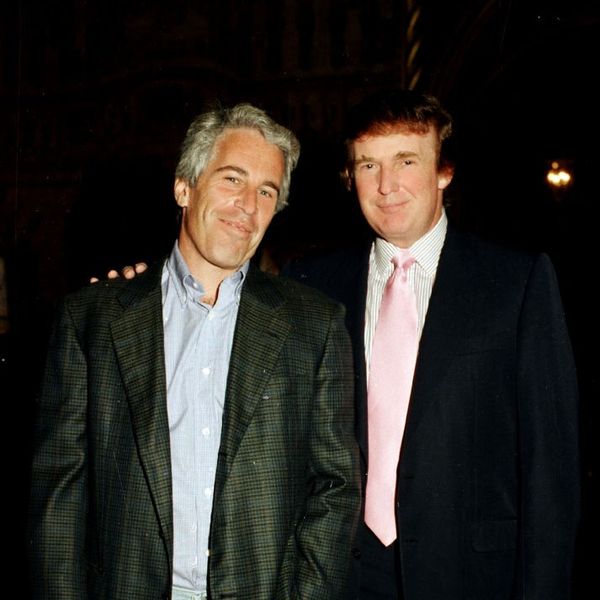
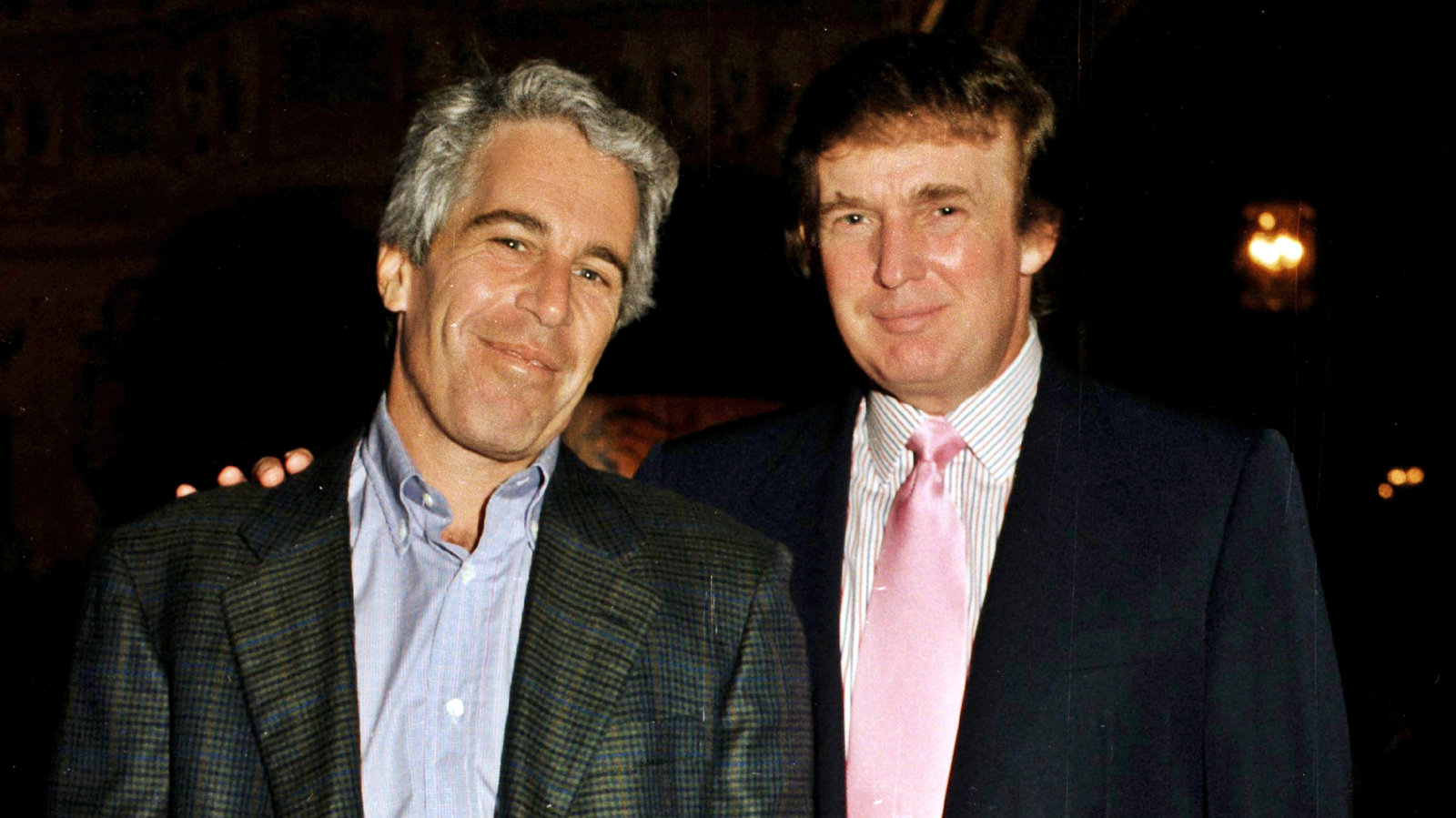
Donald Trump and his paedophile friend Jeffrey Epstein.Donald Trump and his paedophile friend Jeffrey Epstein.Donald Trump picture with one of his wives, Jeffrey Epstein and Ghislaine Maxwell.
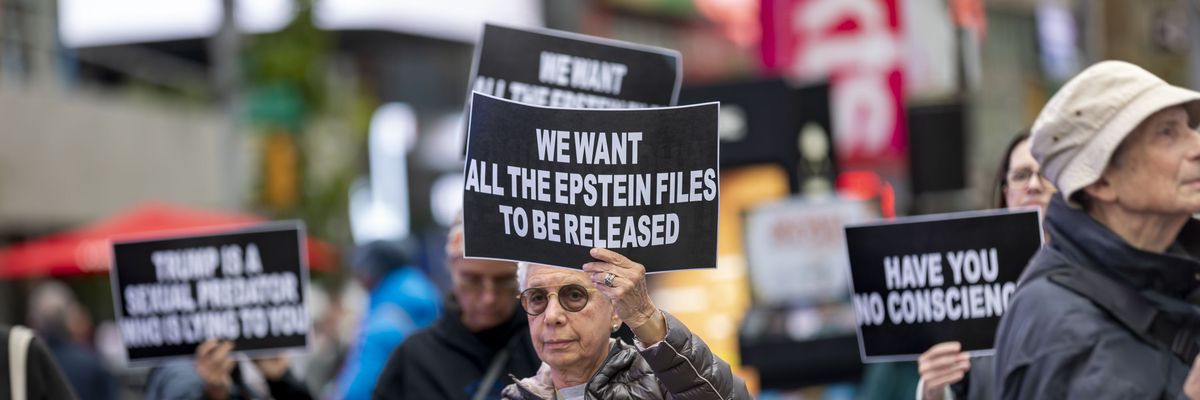
Demonstrators carry signs calling out Donald Trump’s refusal to release files from the federal case against deceased sex offender Jeffrey Epstein, his former friend, in New York City’s Times Square on October 14, 2025. (Photo by Michael Nigro/Pacific Press/LightRocket via Getty Images)
“Your eleventh-hour decision to not fight a vote in the House that you were certainly going to lose is yet another dodge,” Democratic legislators wrote to the president, a former friend of the dead criminal.
After President Donald Trump’s sudden about-face on the US House of Representatives’ imminent vote to force the release of files on deceased sex offender Jeffrey Epstein, a group of state legislators on Monday urged Trump to prove he is serious by not waiting for Congress to make public materials from the federal case against his former friend.
In a letter provided to Common Dreams by the group Defend America Action, the 15 elected Democrats called on Trump and his administration to “put the issue of the Epstein files to bed once and for all” and “focus on what the American people are concerned about: the affordability crisis which has exploded on your watch.”
“Just a few weeks ago, Americans from Georgia to Virginia to New Jersey registered their dissatisfaction with your economic performance with overwhelming victories for Democrats up and down the ballot,” they noted. “That should’ve been a wake-up call for you and your administration, but instead, you’ve turned to an all-too familiar strategy of gaslighting the American people with tales of a booming economy that don’t match reality.”t don’t match reality.”
“We need bipartisan solutions to the cost of living crisis, not multiple congressional committees, investigations, and precious floor time devoted to files related to Jeffrey Epstein, which you could release with the stroke of a pen.”
US House Democrats and a few Republicans have long fought to make the Department of Justice release its files on the late financier, which Speaker Mike Johnson (R-La.) recently pushed off for weeks by refusing to swear in Congresswoman Adelita Grijalva (D-Ariz.)—a delay he tried to blame on the government shutdown.
As the shutdown standoff over a looming healthcare crisis came to an end, Johnson finally administered the oath of office to Grijalva, who swiftly became the crucial 218th signature on a discharge petition to force a vote on the Epstein files. While her decision set up a December vote, Johnson then moved up the timeline.
With many House Republicans expected to vote for releasing the files as early as Tuesday, Trump sent shockwaves through the US on Sunday by suddenly declaring his support for the disclosure. He doubled down on Monday, telling reporters that he would sign the bill if it reached his desk but also returning to his claim that “the whole thing is a hoax.”
Trump on if he'll sign an Epstein files release bill: "We have nothing to do with Epstein. The Democrats do. All of his friends were Democrats. You look at this Reid Hoffman, Larry Summers, Clinton… all I want is I want for people to recognize the great job I've done on pricing, on affordability."
As the state legislators wrote to Trump: “You have called the issue of the Epstein files a ‘hoax,’ and dismissed the numerous congressional efforts underway to pursue transparency, accountability, and justice for the hundreds of victims who suffered at Epstein’s hands. This issue has again overtaken Washington, DC, and you have mobilized enormous government resources, up to and including meetings in the ultra-secure Situation Room, to try to prevent the files’ release.”
“Your eleventh-hour decision to not fight a vote in the House that you were certainly going to lose is yet another dodge—you could order the full release of the files today so that we can all move forward and deal with the issues our voters and yours care about: making life affordable for American families,” they argued. “Those priorities should be addressing the skyrocketing costs that are keeping families up at night: housing, food, energy, and healthcare.”
“We need bipartisan solutions to the cost of living crisis, not multiple congressional committees, investigations, and precious floor time devoted to files related to Jeffrey Epstein, which you could release with the stroke of a pen,” they continued, stressing the need for “good partners” and “good policies” at the federal level to aid American families struggling with soaring prices. “Release the files and let’s get on with the business of the American people.”
Signatories to the letter include Iowa Rep. Kenneth Croken, Vermont Rep. William Greer, Colorado Sen. Cathy Kipp, Michigan Rep. Stephen Wooden, and Kentucky Rep. Lisa Willner. It is also signed by Pennsylvania Reps. Danilo Burgos and Arvind Venkat, Maryland Dels. Ashanti Martinez and Vaughn Stewart, Wisconsin’s Sen. Melissa Ratcliff and Rep. Ryan Clancy, and four lawmakers from New Hampshire: Reps. John Cloutier, Chris McAleer, Terri O’Rorke, and Terry Spahr.
Donald Trump and his paedophile friend Jeffrey Epstein.Donald Trump and his paedophile friend Jeffrey Epstein.Donald Trump picture with one of his wives, Jeffrey Epstein and Ghislaine Maxwell.
This work by Middle East Monitor is licensed under a Creative Commons Attribution-NonCommercial-ShareAlike 4.0 International License.
US Special Envoy for Syria, Tom Barrack in Damascus, Syria on September 16, 2025. [ Izz Aldien Alqasem – Anadolu Agency]
The Middle East is once again standing at the lip of an abyss. Hezbollah refuses to disarm. Israel vows it will force the issue. Washington, amplifying its threats through its envoy Tom Barrack, has delivered an ultimatum that sounds less like diplomacy and more like a loaded gun placed on the negotiating table. But beneath this geopolitical standoff lies another implosion—moral, not military: the sanctimonious unravelling of Tom Barrack himself, whose name now flickers through the sprawling Epstein files. In a region accustomed to hypocrisy, this one still manages to astound.
Hezbollah’s defiance, Israel’s fury
Barrack’s warning in Beirut was unambiguous: Hezbollah must surrender its weapons before the year’s end or “Israel will do it for them.” It was a performance of righteous American certitude—stern, paternal, condescending. Hezbollah’s answer was not diplomatic. Secretary-General Naim Qassem declared, “No force on earth can compel us to disarm. Resistance is our identity.”
Israel, meanwhile, continues pounding Hezbollah’s infrastructure, assassinating field commanders, striking convoys, and hitting southern Lebanon night after night. Yet military analysts admit what Israeli officials avoid saying publicly: Hezbollah’s arsenal remains formidable. Chatham House scholar Dr Lina Khatib noted, “Hezbollah has been weakened but not disarmed… the language of war is drowning out the language of diplomacy.”
And hovering behind it all is a grim warning from the Pentagon: a strike on Hezbollah could ignite a confrontation with Iran, pulling the United States into a regional inferno. “This would not be a contained war,” one US defence official cautioned.
The sanctimony of Tom Barrack
Then came the revelation that detonated whatever moral leverage Washington thought it possessed. Tom Barrack—lecturer-in-chief, dispenser of ethical sermons, the envoy who scolded Lebanese journalists to “behave properly and not like animals”—is now himself a featured name in the Epstein files. Newly surfaced emails show exchanges between Barrack and Epstein, including one chilling note from Epstein: “Send photos of you and child. Make me smile.”
The reaction across the Arab press was immediate and brutal. Lebanese columnist Ibrahim al-Amin wrote that Barrack “preached morality while lecturing us, yet his own name is tied to Epstein. He is the laughingstock of the region.” Egyptian political scientist Hassan Nafaa added, “American envoys demand accountability from Arabs, yet their own hands are stained. Barrack’s hypocrisy is a mirror of Western double standards.”
American outlets echoed the outrage. The New Arab reported the email trove “raised serious questions about the relationship between sex offender Jeffrey Epstein and ambassador Tom Barrack.” Newsweek and the New Republic detailed the widening circle of embarrassment. A Washington Post columnist summarised the mood: “Barrack’s sanctimony collapses under the weight of his own associations.”
This is the empire’s inevitable collapse into self-mythology. Those who thunder about order and virtue abroad often rot from within.
Barrack’s disgrace is not a footnote. It is a strategic wound. The United States cannot demand the disarmament of Hezbollah while its envoy is tainted by the shadow of a dead paedophile financier. It cannot preach morality while its representative embodies the very decadence it condemns. It cannot claim the ethical high ground while standing next to a man whose credibility is now radioactive.
“It compromises the entire American position,” Lebanese scholar Karim Makdisi said. “Hezbollah will use this hypocrisy as a weapon in the battle for legitimacy.”
He is already being proven right. Hezbollah’s media machine is having a field day: the saintly American envoy caught in the filth of Epstein’s orbit, lecturing Arabs on ethics while stumbling through his own mire.
Even inside Washington, the calls for resignation are growing louder. “His presence is untenable,” a congressional aide admitted. “How can he lecture Lebanon on morality when his own name is in Epstein’s files?”
A region on the Brink
All of this unfolds as Lebanon teeters on the brink of paralysis and implosion. The country cannot disarm Hezbollah without triggering civil war. Israel cannot tolerate Hezbollah’s arsenal without courting disaster. The United States cannot project moral authority with a tainted envoy. And the Arab world—long sceptical—now watches the hypocrisy made plain.
Tom Barrack once enjoyed the luxury of preaching from a mountaintop. Now the ground has collapsed beneath him. His sanctimony is rubble. His authority is ash. His presence mocks the very values he claimed to defend.
December may yet bring war. But humiliation has already arrived. Tom Barrack, once Washington’s holier-than-thou emissary, is now its hollow man—a symbol of imperial hypocrisy, a cautionary tale of moral decay, and a reminder that those who wield righteousness as a weapon must ensure their own hands are clean.
He did not. And the region, already aflame, sees it clearly.
The views expressed in this article belong to the author and do not necessarily reflect the editorial policy of Middle East Monitor.
This work by Middle East Monitor is licensed under a Creative Commons Attribution-NonCommercial-ShareAlike 4.0 International License.
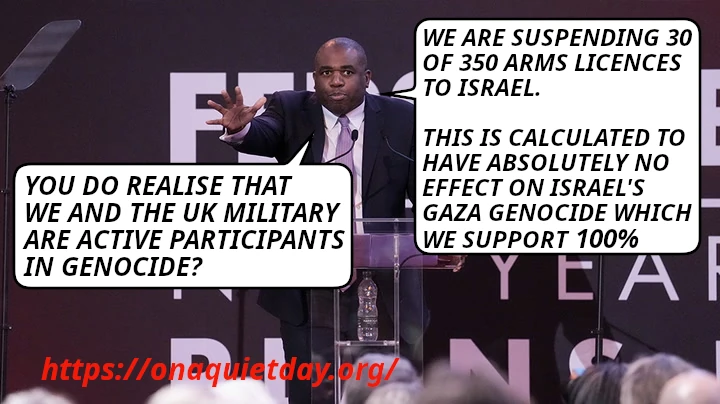
Keir Starmer objects to criticism of the IDF. He asks how could anyone object to them starving people to death, forced marches like the Nazis did, bombing Gaza’s hospitals and universities, mass-murdering journalists, healthworkers and starving people queuing for food, killing and raping prisoners and murdering children. He calls for people to stop obstructing his genocide for Israel.Orcas discuss Genocide-supporting and complicit Zionists. Donald Trump, Keith Starmer, David Lammy, Rachel Reeves, Angela Rayner and Wes Streeting are acknowledged as evil genocide-complicit and supporting cnuts.Genocide denying UK Foreign Secretary David Lammy says that UK is suspending 30 of 350 arms licences to Israel. He also confirms the UK government’s support for Israel’s Gaza genocide and the UK government and military’s active participation in genocide.