Former Secretary of State Michael Gove gave permission for the mine near Whitehaven in 2022
The government will no longer defend a decision, made by the previous government, to allow a controversial new coalmine in Cumbria.
The new Secretary of State for Housing, Communities and Local Government, Angela Rayner, has accepted there was an “error of law” in the decision to grant planning permission for the mine in December 2022.
Consequently, the government will not now be defending two legal challenges next week against the mine – by Friends of the Earth and South Lakes Action on Climate Change (SLACC).
It has instead informed the court that the decision to grant planning permission should be quashed.
BBC News has contacted West Cumbria Mining, the company behind the proposed mine, for comment.
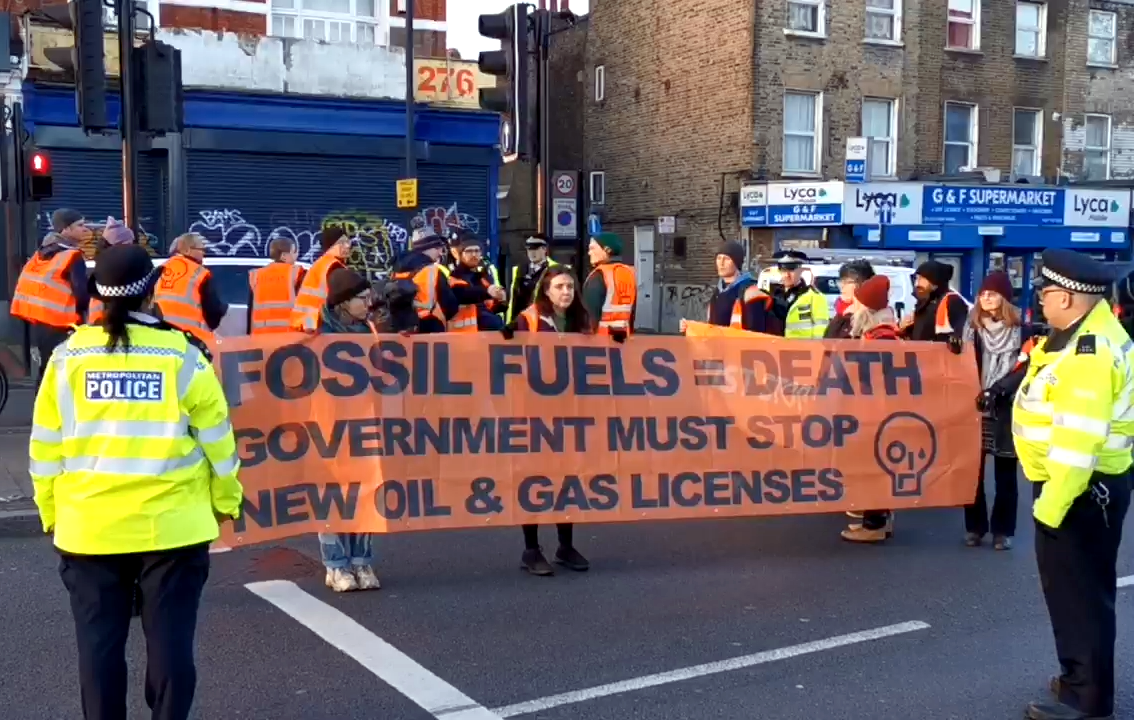
The mine has been heavily criticised by climate campaigners and the government’s independent advisors on climate.
Two legal challenges over the climate impacts of burning the coal will be heard at the High Court in London next week.
It comes after the court ruled in June that permission for an oil drilling project in Surrey should not have been granted because the climate impacts of burning the fossil fuels had not been considered.
The government referred to that ruling in its decision on Thursday to withdraw support.
Right-wing groups are peddling false claims that the heavy rainfall that led to the region’s disastrous flooding in May is not related to climate change.
On May 9, volunteers and emergency workers were still rescuing people and animals who remained stranded on the sixth day of flooding on the streets of Rio Grande do Sul’s capital, Porto Alegre. Social media images of the rooftop rescue of a horse named Caramelo shocked the world.
A day before the dramatic rescue, Porto Alegre’s deputy mayor, Ricardo Gomes, appeared on a livestream wearing a cap with the Brasil Paralelo logo. Brasil Paralelo is a far-right media company with a streaming platform focusing on “journalism, entertainment, and education,” as its website states. The company was founded in Porto Alegre in 2016 and serves as a main channel of climate denialism among right-wing groups in Brazil. By wearing the Brasil Paralelo logo, Gomes associated himself with an institution that experts say is a purveyor of climate denialism, at the height of a climate-related disaster.
Some days later, Ricardo Felício, a professor of Brasil Paralelo’s education wing who has also appeared on many of the platform’s documentaries, wrote that climate change did not cause the extreme rainfall in South Brazil. He published his opinions in the Revista Oeste (West Magazine), a print and online publication that caters to far-right followers of former President Jair Bolsonaro, saying “CO2 has nothing to do with it!”
Southern Brazil was under water for the entire month of May, and two months later, it’s still facing the consequences of the worst flood in its history. Hundreds of thousands have been displaced – 180 have died, and 32 are still missing.
Flooded rivers swept away entire communities in a disaster on par with 2005’s Hurricane Katrina. The town of Estrela, located on the banks of Taquari River, was more than 70 percent submerged. In recent years, the region has experienced more and more extreme rainfall. Residents of towns on the Taquari River are still feeling the impacts of their third consecutive flood in a six-month period.
Porto Alegre, with 1.4 million inhabitants, was flooded for four weeks between May and June due to swelling water from the Guaiba River and failures of the city’s anti-flood system. The region’s main airport, Salgado Filho International Airport, is not expected to operate again until December.
Porto Alegre’s mayor, Sebastião Melo, and Deputy Mayor Gomes have led its city council since 2021. Both were elected in the wake of Bolsonarism and won decisive victories. And both have faced media criticism for failures in managing the city’s emergency responses to the flood and for failing to update its anti-flood system.
Gomes has participated in events run by Atlas Network, an extensive global collective of more than 500 think tanks, many known to have a history of working against climate action. He attended Atlas Network’s 2019 CEO Summit of the Americas, where leaders of right-wing think tanks gathered to exchange ideas. He appeared at the summit as president of RELIAL, a network of right-wing Latin American research organizations. He is a member of Atlas Network’s Global Council of CEOs team.
Gomes also participated in Atlas Network’s 2020 Latin America Liberty Forum online, again representing RELIAL. The politician is also a long-standing ally, teacher, and host of a political series on Brasil Paralelo’s YouTube channel. His political connections reveal an intricate network that links Brazilian far-right organizations that deny climate change with international think tanks.
Brasil Paralelo’s Roots
In the months after the center-left Brazilian president Dilma Rousseff was impeached in 2016, far-right proponents established Brasil Paralelo, which arose from the growth of far-right ideas that gained ground in the country at the time. Its five founders, who were students, claimed that mass media was overwhelmingly left-wing, and they wanted to challenge mainstream public opinion about the nation’s political crisis after Rouseff’s impeachment.
Three of the original founders, Lucas Ferrugem, Henrique Viana, and Filipe Valerim, now run the company. Experts interviewed for the platform’s first documentaries included names from Instituto Millenium, Instituto Liberal, and Instituto Mises, partner think tanks of Atlas Network in Brazil in 2016.
A panel titled “Entrepreneurship for Common Good” by Atlas Network partner Acton Institute used Brasil Paralelo’s founding and development as a case study in 2021. The panel explored how “entertainment can shape a society’s culture,” and Brasil Paralelo’s role within the “prevailing cultural winds to point Brazil towards pillars of freedom and virtue through a holistic approach to education and entrepreneurship,” as the video states.
Alejandro Chafuen, president of Atlas Network between 1991 and 2018 and a Mont Pelerin Society member, taught a Brasil Paralelo course about faith and free-market ideas in 2019. Chafuen also mentioned the media company in his Forbes magazine column in 2023, in which he compared the Brazilian organization to the U.S. nonprofit conservative media group PragerU. He made the same comparison to his YouTube subscribers (over 3.38 million) and Instagram followers (2.5 million), indicating that Brasil Paralelo surpassed PragerU’s audience levels with more than 300,000 subscribers on YouTube and around 400,000 on Instagram.
Chafuen compares the popularity of Brasil Paralelo to widespread support for Olavo de Carvalho, the deceased influential far-right philosopher who was also known for his strident scientific denialism, including climate denialism. Chafuen also wrote in Forbes that “Brasil Paralelo is planning to land in the United States and replicate its success with U.S.-focused topics, teams, and profiles.”
In August 2023, Brasil Paralelo ran an article raising doubts about the effects of climate change stemming from a speech by UN Secretary Antonio Guiterrez claiming that “the era of global boiling has arrived”. According to the article,”It is not a question of denying climate change, but of discussing whether or not humankind influences this process and to what degree the planet will warm up (or cool down).”
Chafuen’s article promoted a 2021 Brasil Paralelo documentary called “Cortina de Fumaça” (“Smoke Screen”). It stated that the documentary seeks to answer questions such as, “How does the environmental movement affect the economy in Brazil and other countries? What lies behind some of the main environmentalist misinformation?”
Patrick Moore, a known climate science denier, is presented in the documentary as a co-founder of Greenpeace. Years before, DeSmog had reported that this claim was false. Moore stated in the documentary that Greenpeace is “a conspiracy organization, spreading junk science around the world.”
One of the sections in “Smoke Screen,” which is available on YouTube, is titled “Environmental apocalyptic predictions that are false.” The journalist Augusto Nunes, one of the founders of Revista Oeste, said in the segment that the Amazon rainforest is not being destroyed, contradicting official data from 2021. Other sources in Brazil, including Aldo Rebelo, former minister of defense during Rousseff’s government, supported the same argument.
According to the documentary, environmental campaigners’ criticisms and so-called “lies” about the Amazon rainforest’s deforestation are attempts to protect the U.S. and European agricultural markets.
In another article in September 2023, Brasil Paralelo defended the idea that global warming legitimizes NGOs’ actions pushing international actions such as the Paris Agreement, which the platform claims keeps developing countries producing less while first-world countries maintain their production.
In an interview with The Intercept Brasil, researcher Renata Nagamine from the Brazilian Center of Analysis and Planning (Cebrap) said Brasil Paralelo’s “Smoke Screen” uses a “scientific repertoire on the margins of climate science.”
When contacted by DeSmog, representatives for Brasil Paralelo did not respond to requests for comment.
“CO2 Has Nothing to Do With It!”
Climate change boosted the rainfall volume in Rio Grande do Sul by 15 percent, according to a study by the website Clima Meter, which confirmed the influence of climate change on the recent flooding disaster in the region.
Clima Meter is “an experimental rapid framework for understanding extreme weather events in a changing climate based on looking at similar past weather situations.” From the analysis of the patterns of local precipitation and the ElNiño-Southern Oscillation, the researchers interpreted the “Brazil floods as an event whose local characteristics can mostly be ascribed to human driven climate change.”
Flooding in South Brazil on May 5. Credit: Ricardo Stuckert/Wikimedia Commons
Davide Faranda, a researcher of the Laboratory for Sciences of Climate and Environment at the Institute Pierre Simon Laplace and coauthor of Clima Meter’s study on Brazil’s flooding, said in an interview with the local newspaper, GaúchaZH, that floods have been intensified by the burning of fossil fuels and have a major impact on vulnerable communities, which bear the brunt of climate change.
However, Ricardo Felício, who teaches courses at Brasil Paralelo and is a professor of geography at the University of São Paulo (USP), offered a contradictory explanation for the disaster.
“It is confusing to relate the climate to a meteorological scenario of large dimensions, which is the case here,” wrote Felício in his May 12 weekly column in Revista Oeste. “CO2 has nothing to do with it!”
In addition to writing for Revista Oeste, Felício is a well-known climate denier in Brazilian politics. DeSmog uncovered an interview with Felício on a once-popular Brazilian TV show, where Felício stated in 2012, “There is no scientific proof of global warming.” Brazil’s ex-president Bolsonaro tweeted an interview between Nando Moura, a well-known right-wing influencer, and Felicio in 2017.
Between 2017 and 2021, Felício gave several lectures at universities and trade associations across the country denying climate change after the Aprosoja Mato Grosso (an association of soybean growers) sponsored his talks, according to a BBC investigation.
Journalists and media executives founded Revista Oeste in 2020. It is a self-proclaimed conservative outlet and claims the problems of capitalism should be solved with more capitalism.
The magazine’s print cover in June 2024, a month after the tragedy in Rio Grande do Sul, showed the planet resting on a palm, followed by the headline “The global warming hoax.” The periodical also published other articles on the floods in Rio Grande do Sul, denying climate change had a part in the disaster.
“Historically, apocalyptic predictions about the climate have not come close to coming true. Now, activists are blaming climate change for the floods in Rio Grande do Sul,” wrote the journalist Myllena Valença. The piece claimed that “facts overturn the delirious prophecies of environmental activists, who for decades have been announcing disasters caused by global warming.” Felício is a leading source in the report.
The June print edition also featured an interview with the president of Environmental Progress, Michael Shellenberger, a well-known nuclear energy enthusiast and a Republican witness in climate hearings in the U.S. Congress. In the interview, he pointed out he is optimistic about the environment and pessimistic about civilization. “I’m worried about the hysteria around global warming,” Shellenberger said.
When contacted by DeSmog, representatives for Revista Oeste did not respond to requests for comment.
A Well-Connected Deputy Mayor
Donations poured into Rio Grande do Sul in the aftermath of the flooding disaster to help people who had lost everything. Brasil Paralelo asked for donations for an organization called Instituto Cultural Floresta (ICF).
Porto Alegre’s Deputy Mayor Gomes also requested donations to the same organization, even though his City Hall made its own donation channel available, an Agência Públicainvestigation revealed last month.
The ICF is a nonprofit organization based in Porto Alegre, and according to its website, it focuses on providing security forces with military equipment. Leaders and members of the organization are connected to the Instituto de Estudos Empresariais (IEE), an Atlas Network think tank partner in Brazil that promotes the right-wing annual meeting, Liberty Forum, which is sponsored directly by Atlas Network, and boosts right-wing political candidates.
Leonardo Fração is president of the ICF and a former IEE president. He spoke at the Liberty Forum in 2018 and in 2010.
Other ICF members are affiliated with IEE, including Bruno Zaffari, the owner of real estate and supermarket companies, and Wilson Ling, the director of the plastic packaging and forestry company Évora S.A.
Gomes held various positions, including president of the IEE from 2009 to 2012. But his relations with right-wing think tanks stretch much further. Between 2016 and 2020, he served as the president of RELIAL, and he also is a member of the Mont Pelerin Society. DeSmog research found that Mont Pelerin Society members are affiliated with over 100 organizations that also appear on the membership list of the Atlas Network.
Atlas Network also quoted Gomes in a report about the Latin America Liberty Forum in 2021.
RELIAL presents itself as a network of brain trusts that “disseminate and implement liberal principles as their flag.” Agustín Etchebarne, a member and a former director of RELIAL, is also the general director of the Fundación Libertad y Progreso, an Argentinian Atlas-affiliated think tank that supported the election of far-right Argentinian President Javier Gerardo Milei.
Atlas Network awarded Fundación Libertad y Progresoa a grant in 2024. The organization spent the money to promote an international summit in partnership with the Cato Institute for the six-month anniversary of the inauguration of Milei. The event took place June 11-12 in Buenos Aires, and Milei attended.
Fundación Libertad y Progresoa promoted an international summit in partnership with the Cato Institute for the six-month anniversary of the inauguration of Argentininan President Javier Milei. Credit: Wikipedia
When contacted for comment, Atlas Network said in a statement that the organization “has no grant programs related to climate change and makes no policy prescriptions to its partners on the subject of climate change.” It also stated that it “does not fund initiatives advocating against the existence of climate change.”
The organization stated that it “has no partnerships with candidates, parties, or government officials,” and that its “partners are independent, nonprofit organizations engaged in public policy issues.”
Atlas also asserted that “there are no ‘Atlas Network groups’ in Brazil,” but instead “independent partner organizations that apply to receive training, grants, and networking opportunities from Atlas Network.” The think tank network also stated that its partners are “each governed independently and are not managed by our organization.”
Political Negligence and Climate Denialism
The media has widely criticized Porto Alegre’s Mayor Melo for his crisis management issues and his administration’s low budget for flood prevention. To defend against the criticism, Melo claimed online that, “I’m not a denialist on anything, much less on the climate issue.”
Porto Alegre suffered two severe floods in 2023, including its biggest flood since 1941. However, since 2021, the city council reduced its investment in flood protection, and added no additional protection in 2023.
Experts also condemned the city’s failure to maintain its anti-flooding system, which was designed in the 1970s. The Municipal Department of Water and Sewage, which operates the system, has laid off more than half of its employees since 2013. In addition, Melo’s term in office has included environmental scandals and conflicts with environmentalists and indigenous people.
When contacted by DeSmog, Porto Alegre’s City Hall Press Office, which represents Melo and Gomes, did not respond to requests for comment.
When the flooding crisis deepened in Porto Alegre, Melo used a Bolsonarist style, applying the motto that every person looks out for his own, which summarizes his way of doing politics. “If you have a house on the beach and can afford to leave, I recommend that you leave and go to the beach,” he said, talking about wealthier families who have second homes at the beach. This comes from the mayor of a city where inequality is so entrenched that many people don’t have one home, let alone a second beach house.
Gomes has said he will not seek reelection with Melo this year, but that he will continue supporting Melo against “the radical left.” Everything suggests, however, that the Brasil Paralelo cap will officially be part of his uniform.
Rescuers carry away a man, affected by the scorching heat, on a stretcher as Muslim pilgrims arrive to perform the symbolic “stoning of the devil” ritual as part of the Hajj pilgrimage in Mina, Saudi Arabia on June 16, 2024. (Photo: Fadel Senna/AFP via Getty Images)
“This alarming record underlines the need to urgently phase out fossil fuels, and to hugely increase climate finance,” said one campaigner.
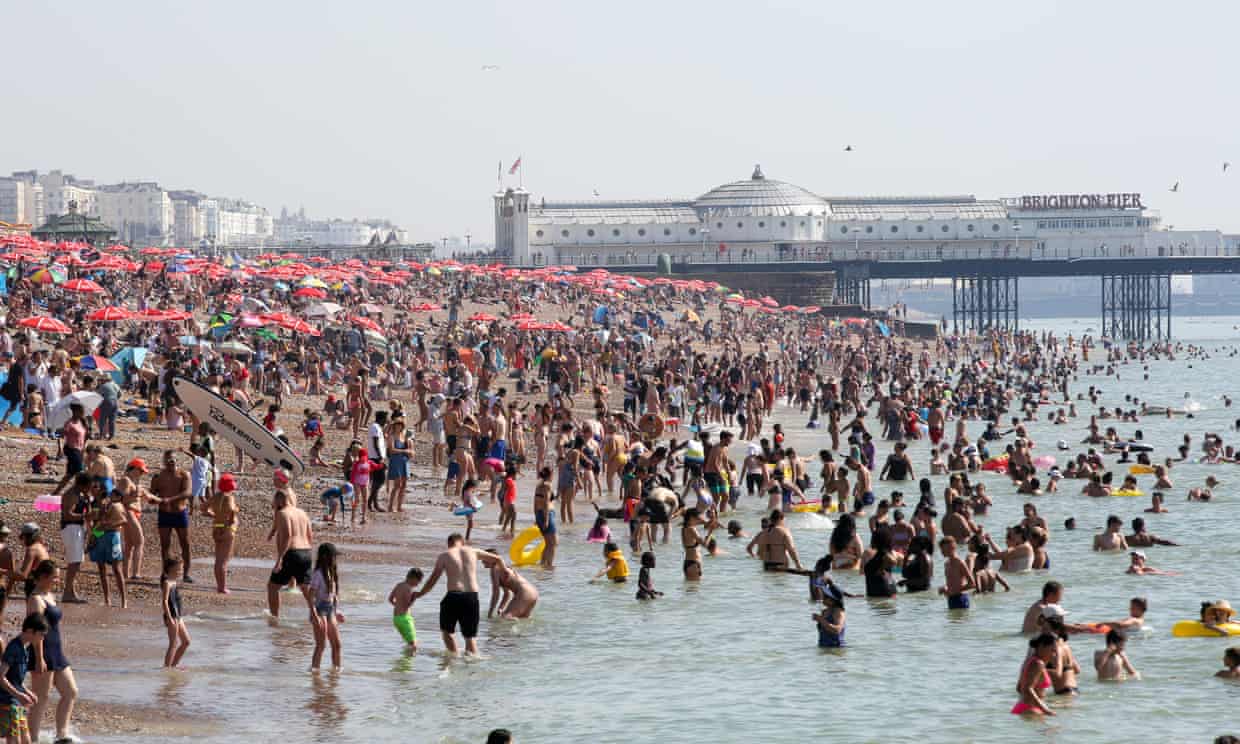
Scientists on Monday underscored the urgent need to accelerate the transition from fossil fuels to renewable energy following the publication of data from the European Union’s climate change monitor showing that last month was the hottest June ever recorded and that 2024 is likely to be the planet’s hottest year on record.
Each month since June 2023 has been the hottest since records have been kept, the European Union’s Copernicus Climate Change Service (C3S) said last week in its latest monthly bulletin.
According to the agency, June “was 1.50°C above the estimated June average for 1850-1900, the designated preindustrial reference period, making it the 12th consecutive month to reach or break the 1.5°C threshold.”
“European temperatures were most above average over southeast regions and Turkey, but near or below average over western Europe, Iceland, and northwestern Russia,” C3S noted. “Outside Europe, temperatures were most above average over eastern Canada, the western United States and Mexico, Brazil, northern Siberia, the Middle East, northern Africa, and western Antarctica.”
“Temperatures were below average over the eastern equatorial Pacific, indicating a developing La Niña, but air temperatures over the ocean remained at an unusually high level over many regions,” the agency added.
🚨 Another red alert!
🌍 AVg global temperature has been 1.5°C above the pre-industrial era for 12 successive months, according to @CopernicusECMWF.
🌡️ It was the hottest June on record and the 13th month in a row to set a monthly temp record.
— World Meteorological Organization (@WMO) July 8, 2024
C3S Director Carlo Buontempo said in a statement Monday that “even if this specific streak of extremes ends at some point, we are bound to see new records being broken as the climate continues to warm.”
“This is inevitable unless we stop adding greenhouse gases into the atmosphere and the oceans,” he stressed.
In an interview with The Associated Press published Monday, C3S climate scientist Nicolas Julien called the new data “a stark warning that we are getting closer to this very important limit set by the Paris agreement.”
“The global temperature continues to increase,” he added. “It has at a rapid pace.”
Zeke Hausfather, a researcher at the California-based nonprofit Berkeley Earth, told Reuters, “I now estimate that there is an approximately 95% chance that 2024 beats 2023 to be the warmest year since global surface temperature records began in the mid-1800s.”
As Reuters reported Monday:
The changed climate has already unleashed disastrous consequences around the world in 2024. More than 1,000 people died in fierce heat during the Hajj pilgrimage last month. Heat deaths were recorded in New Dehli, which endured an unprecedentedly long heatwave, and amongst tourists in Greece.
“This is not good news at all,” Aditi Mukherji, who co-authored the most recent Intergovernmental Panel on Climate Change (IPCC) report, told The Guardian.
“We know that extreme events increase with every increment of global warming,” she added, “and at 1.5°C, we witnessed some of the hottest extremes this year.”
The Guardian surveyed hundreds of IPCC authors earlier this year. Three-quarters of them said they expect Earth to heat by at least 2.5°C by the end of this century. Half of the surveyed scientists expect temperatures to rise above 3°C by 2100.
“It is a crisis,” said Mukherji, and one that has a clear solution, given that burning fossil fuels is the leading cause of global heating.
Antonia Juhasz, a senior researcher on fossil fuels at Human Rights Watch, told Nation of Change that “as a result of the burning of fossil fuels, heatwaves are becoming more common, and intense heatwaves are more frequent.”
“We can break the cycle, we can make oil companies stop burning fossil fuels,” she added.
Reacting to the latest C3S data, Amnesty International climate adviser Ann Harrison said on social media that “this alarming record underlines the need to urgently phase out fossil fuels, and to hugely increase climate finance.”
Exclusive: Energy firm making ‘misleading’ claims about ‘neutralising’ gas with carbon credits
The Labour Party’s biggest corporate donor has been accused of “greenwashing” after an investigation by openDemocracy.
Ecotricity Ltd, which has given almost £3.4m to Labour since Keir Starmer became leader in 2020, claims to be “Britain’s greenest energy supplier”.
Yet 99% of the gas it supplies comes from fossil fuels. The company claims this gas is “carbon-neutralised” because it invests in “carbon reduction programmes to cancel out the carbon burned”.
But openDemocracy has learned that Ecotricity has no active carbon credits – despite listing four environmental projects on its website that it says it supports.
When questioned about the company’s claims that “carbon emissions from our fossil fuel gas are offset by investing in carbon reduction schemes”, a spokesperson admitted that some of the schemes it previously supported had not done “as promised” – and said that information on its website would be “refreshed”.
But experts warned that even if the company held active carbon credits, its claims that these “neutralise” its fossil fuel gas would still be misleading.
“It is highly misleading for a company to claim that its product – or itself – is carbon- or climate-neutral,” said Lindsay Otis Nilles from Carbon Market Watch. “These false claims are based on heavily flawed scientific principles and lead to consumer confusion.”
The company has not broken any laws, but it will be illegal to claim that carbon offsets can “neutralise” fossil fuel products in the EU from 2026, as the bloc looks to crack down on greenwashing. An EU directive says these claims create a “false impression to consumers that the consumption of that product does not have an environmental impact”.
Analysis by openDemocracy shows that some of the carbon offset projects that Ecotricity previously pumped money into have been linked to environmental concerns and human rights abuses.
In some cases, records cast doubt on whether the company’s offsetting credits actually helped to reduce emissions at all – since the projects it invested in were already fully funded.
For example, two years ago, Ecotricity purchased credits in the Soubré hydropower plant, the largest hydroelectric dam in Ivory Coast, which was completed in 2017.
The project cost around £452m, 85% of which had already been secured by January 2017, with a loan from EXIM Bank of China. The remaining 15% was covered by the Ivory Coast government.
The Soubré powerplant previously came under fire in a 2019 report that accused it of having an “irresponsible” approach to monitoring its potential environmental impact.
The report, which was published by American environment and human rights organisation International Rivers, also included complaints by workers at the dam of instances of “discrimination and physical abuse” and “threats from the government” when they spoke out.
Meanwhile, the project’s main contractor, Chinese firm Sinohydro – which is responsible for its engineering, procurement and construction – has faced allegations of fraud elsewhere.
The company is currently excluded from projects financed by the European Investment Bank, following an investigation into “misconduct”. And in 2018, another investigation by the African Development Bank found that Sinohydro had “engaged in a fraudulent practice”.
Ecotricity has also held carbon credits in another hydroelectric power plant in Indonesia, called Asahan 1. Reports from as far back as 2012 say the company behind it, PT Bajradaya Sentranusa, had already secured funding from a bank “to take over the entire existing project loans for the construction” when Ecotricity bought the credits.
A spokesperson for Ecotricity said: “The information on the website about carbon reduction projects is being refreshed.”
They added: “We used carbon credits to entirely offset our gas supply for the financial year 2024 which is now closed and our offsetting programme for the financial year 2025 is currently under review which is why we do not currently hold any credits. Any suggestion that we do not or will not offset our gas in the future is false and misleading.”
“Offsetting is an annual accounting period practice and can take place at any point in that [financial year] – that is standard practice. Our offsetting programme for the financial year 2025 is currently under review. Any suggestion that we do not or will not offset our gas is wrong.”
The spokesperson added that Ecotricity is looking at “more direct carbon capture methods”, adding: “Carbon offsetting has been a bridge. We have always been clear about that.”
‘Greenwashing’
Ecotricity not only boasts about its own climate credentials, it also actively warns customers about “greenwashing” by rival energy suppliers.
“A number of energy companies claim green credentials for themselves or for some of their tariffs,” it says, “but are their claims genuine?”
But Ecotricity has itself now been accused of greenwashing. Responding to the company’s claims about carbon offsets, Nilles of Carbon Market Watch told openDemocracy: “It is a fallacy to think that purchasing carbon credits on the voluntary carbon market can magically ‘cancel out’ or ‘offset’ climate harm. Greenwashing practices like this must stop once and for all.”
Ecotricity’s founder, Dale Vince, recently joined Labour’s campaign in Bristol. His involvement in the constituency is controversial because it is seen as one of the few seats the Green Party has a genuine chance of winning in this week’s general election. But Vince tweeted: “Labour has a green manifesto and can make it happen.”
The self-styled “green industrialist” is the outright owner of Ecotricity’s parent company, Green Britain Group Limited. According to the latest accounts filed with Companies House, this firm made £38m profit in the year ending 30 April last year, after bringing in more than £550m turnover.
Responding to openDemocracy, Vince repeated the claim that carbon credits were used to achieve “net neutrality”.
He said: “Ecotricity bought carbon credits from the Asahan and Soubre schemes two years ago – we no longer do so. We’ve been reducing our carbon footprint annually for decades and only recently used carbon credits to achieve net neutrality, for our green gas while we built new gasmills.
“It’s important to reduce as far as possible before using credits, but that world is full of uncertainty, risk and projects that don’t do as promised, which these two schemes appear to be an example of. We welcome the EU move to clamp down on all forms of greenwashing.”
Vince accused openDemocracy of a “smear attack” with a “rather distorted presentation of facts”.
Prior to this response, openDemocracy had repeatedly asked Ecotricity to provide a complete and up-to-date list of its carbon credit portfolio, but it failed to do so.
Last week, Vince told the Financial Times that he was not seeking support for his own energy projects from Labour. “I don’t want support for my projects,” he said, “I’m not interested, life’s too short to be chasing money.”
The latest accounts filed by Green Britain Group Limited show it received £123m in “government grants” in the year ending April 2023. The financial support was designed to pay energy firms to cap prices for consumers.
The previous year, the company received a £9.4m Covid “business interruption” loan to support large companies in the pandemic.
However, Vince told openDemocracy: “Ecotricity hasn’t had any government subsidies.”
This month brought yet another record-breaking spate of flash floods and deadly heatwaves across the US. Yet, as a new study by Heated (6/27/24) reveals, despite ample reporting on these events, a majority of news outlets still did not link these events to their cause: climate change.
Emily Atkin and Arielle Samuelson, writers for the climate-focused, Substack-based outlet, analyzed 133 digital breaking news articles from national, international and regional outlets reporting on this month’s extreme weather. Just 44% mentioned the climate crisis or global warming. Broken down by weather event: 52% of stories that covered heatwaves, and only 25% of stories that covered extreme rainfall, mentioned climate change.
As Atkin and Samuelson write, by now we know that climate change is the main cause of both extreme heat and extreme flooding. And we know the biggest contributor of climate-disrupting greenhouse gasses: fossil fuels, which account for about 75% of global emissions annually.
Still, the study’s authors found, only 11% of the articles they studied mentioned fossil fuels. Only one piece (BBC, 6/24/24) mentioned deforestation, which scientists say contributes about 20% of annual greenhouse gas emissions. None mentioned animal agriculture, which the FAO estimates contributes about 12% of global emissions.
Stark omissions
The omissions were laughably stark: A New York Post piece (6/21/24) ended with a New Yorker and former Marine who said he’d been in “way hotter conditions”—in Kuwait and Iraq. An AP article (6/4/24) quoted the “explanation” offered by a spokesperson for the Arizona Department of Forestry and Fire Management: “It does seem like Mother Nature is turning up the heat on us a little sooner than usual.”
Heated recognized some outlets that consistently mentioned climate change in their breaking coverage of heat and floods this month. That list included NPR, Vox, Axios, BBC and Agence France-Presse (AFP).
Then there were the outlets whose breaking coverage never mentioned it: ABC News, USA Today, The Hill, the New York Post and Fox Weather. When questioned, many of these outlets pointed the study’s authors to other climate coverage they had done, but this study’s focus on breaking news stories was deliberate:
Our analysis focused only on breaking stories because climate change is not a follow-up story; it is the story of the lethal and economically devastating extreme weather playing out across the country. To not mention climate change in a breaking news story about record heat in June 2024 is like not mentioning Covid-19 in a breaking news article about record hospitalizations in March 2020. It’s an abdication of journalistic responsibility to inform.
Explaining isn’t hard
A crucial takeaway for journalists and editors in this piece is that explaining the cause of these weather events isn’t hard. It’s often a matter of adding a sentence at most, Atkin and Samuelson write. They provide examples of stories that successfully made this connection, as with BBC (6/24/24):
Scientists say extreme weather events are becoming more frequent and intense as a result of human-caused climate change, fueled by activities like burning fossil fuels and cutting down forests.
Heatwaves are becoming more severe and prolonged due to the global climate crisis, caused primarily by the burning of fossil fuels.
Notably, the Guardian piece was a reprint of an AParticle that did not originally include that sentence; Heated confirmed that it was added by a Guardian editor.
AP, however, was sometimes able to provide appropriate context, as in a June 21 piece:
This month’s sizzling daytime temperatures were 35 times more likely and 2.5 degrees F hotter (1.4 degrees C) because of the warming from the burning of coal, oil and natural gas—in other words, human-caused climate change.
More denial than acknowledgment
During last summer’s apocalyptic orange haze on the East Coast, caused by record Canadian wildfires, I conducted a similar study (FAIR.org, 7/18/23) on US TV news’s coverage. Out of 115 segments, only 38% mentioned climate change’s role. Of those 115, 10 mentioned it in passing, 10 engaged in climate denial and 12 gave a brief explanation without alluding to the reality that climate change is human-caused. Only five segments acknowledged that climate change was human caused, and just seven fully fleshed out the fact that the main cause of the climate crisis is fossil fuels.
When there are more segments denying climate change than acknowledging fossil fuels’ role in it, you know there’s a problem.
This year, I noticed coverage of worldwide coral bleaching that did make the appropriate connections (FAIR.org, 5/17/24). As Atkin and Samuelson emphasized, the difference between careless and responsible reporting on this issue is often just a few words.