Top US Newspapers Show ‘Consistent Bias’ Against Palestinians: Analysis

Spread the love

Original article by JAKE JOHNSON republished from Common Dreams under Creative Commons (CC BY-NC-ND 3.0). 

Palestinians mourn loved ones killed by an Israeli airstrike on December 24, 2023 in Khan Younis, Gaza. (Photo: Ahmad Hasaballah/Getty Images)

The New York TimesThe Washington Post, and The Los Angeles Times have regularly “used emotive language to describe the killings of Israelis, but not Palestinians.”

An analysis published Tuesday shows that three of the most influential newspapers in the United States—The New York TimesThe Washington Post, and The Los Angeles Times—have reliably shown a bias against Palestinians in their coverage of Israel’s assault on Gaza and its reverberating consequences.

Writer Adam Johnson and researcher Othman Ali examined the three outlets’ coverage of Israel-Gaza between October 7—the day of the deadly Hamas-led attack on southern Israel—and November 24, which marked the start of a negotiated pause that ended just a week later. The Israeli bombardment has continued relentlessly since.

The pair’s analysis, published in The Intercept, found that across more than 1,000 articles, the three newspapers showed a “consistent bias” against Palestinians. Specifically, the outlets “disproportionately emphasized Israeli deaths in the conflict; used emotive language to describe the killings of Israelis, but not Palestinians; and offered lopsided coverage of antisemitic acts in the U.S., while largely ignoring anti-Muslim racism in the wake of October 7.”

As the Gaza death toll surged during the first month and a half of Israel’s assault, the three newspapers’ mentions of Palestinians in their coverage declined, Johnson and Ali found.

In the period between October 7 and November 24, the outlets used the words “slaughter” and “massacre” a combined 180 times when describing the toll of the Hamas-led attack on Israel. The newspapers used those terms just five times when describing Gazans killed by the Israeli military.

The Washington Post employed ‘massacre‘ several times in its reporting to describe October 7,” Johnson and Ali wrote. “‘President Biden faces growing pressure from lawmakers in both parties to punish Iran after Hamas’ massacre,’ one report from the Post says. A November 13 story from the paper about how Israel’s siege and bombing had killed 1 in 200 Palestinians does not use the word ‘massacre’ or ‘slaughter’ once. The Palestinian dead have simply been ‘killed’ or ‘died’—often in the passive voice.”

Johnson and Ali previously found similar bias against Palestinians in the coverage of CNNFox News, and MSNBC.

The analysis also shows that the newspapers’ coverage of the Israeli assault’s impact on children and journalists has been relatively sparse given the unparalleled impact the war has had on kids and members of the media.

In the three weeks after October 7, Israeli forces killed more children in Gaza than were killed in all of the world’s armed conflict zones since 2019, according to Save the Children. The Committee to Protect Journalists said last month that more reporters were killed during the first 10 weeks of the war “than have ever been killed in a single country over an entire year.”

Johnson and Ali wrote Tuesday that “the lack of coverage for the unprecedented killing of children and journalists, groups that typically elicit sympathy from Western media, is conspicuous.”

“By way of comparison, more Palestinian children died in the first week of the Gaza bombing than during the first year of Russia’s invasion of Ukraine, yet The New York TimesWashington Post, and Los Angeles Timesran multiple personalsympathetic stories highlighting the plight of children during the first six weeks of the Ukraine war.”

The analysis comes days after The Intercept highlighted a longstanding CNN policy under which the outlet runs its Israel-Palestine coverage through its Jerusalem bureau, which must abide by the rules of the Israeli military’s censor.

The few journalists who have been allowed to enter Gaza as embeds with Israeli forces are required to submit their materials and footage to the Israeli government for review.

The Western media’s slanted coverage of Israel’s devastating war on Gaza has drawn outrage from individual journalists, including some who work at The Washington Post and Los Angeles Times.

“We are renewing the call for journalists to tell the full truth without fear or favor,” reads an open letter signed by hundreds of journalists in November. “To use precise terms that are well-defined by international human rights organizations, including ‘apartheid,’ ‘ethnic cleansing,’ and ‘genocide.’ To recognize that contorting our words to hide evidence of war crimes or Israel’s oppression of Palestinians is journalistic malpractice and an abdication of moral clarity.”

After the letter was released, dozens of signatories—including journalists from The Associated Press and Washington Post—asked that their signatures be removed, fearing retaliation from their employers.

Original article by JAKE JOHNSON republished from Common Dreams under Creative Commons (CC BY-NC-ND 3.0). 

Continue ReadingTop US Newspapers Show ‘Consistent Bias’ Against Palestinians: Analysis

2023 was deadliest year for Palestinians in the West Bank since 2005

Spread the love

Original article by Abdul Rahman republished from peoples dispatch under a Creative Commons Attribution-ShareAlike 4.0 (CC BY-SA) license.
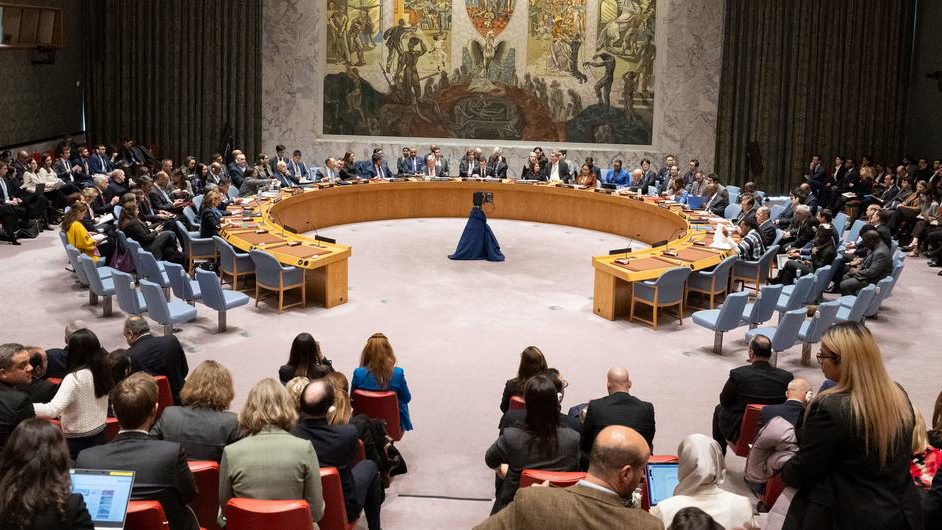
Israeli occupation forces obstructing the work of ambulances in Jenin. (Photo: Mohammad Mansour/WAFA)

Over 500 Palestinians were killed in the West Bank in 2023. Under its undeclared policy of collective punishment, Israel also destroyed a significant amount of civilian infrastructure such as roads, residential buildings, and hospitals in West Bank since October 7

Israel’s war on Gaza has entered its fourth month. It has killed over 23,000 Palestinians in the besieged enclave and injured around 60,000. Nearly 80% of all Gazans have been displaced due to the constant bombings. The amount of destruction and killing in Gaza is horrendous. The offensive has also extended to the West Bank where Palestinians have been facing a form of undeclared collective punishment both before and since the war in Gaza.  

Though the West Bank has always faced violent attacks from Israeli occupation, those attacks have increased manifold since the beginning of the war in Gaza. Despite the fact that Hamas does not rule the territory, Israel used the excuse of Operation Al-Aqsa Flood to justify its unprecedented attacks on civilians and their infrastructure there. 

Between October 7 and December 31, last year more than 340 Palestinians, including a large number of children, were killed in attacks carried out by both the Israeli forces and illegal settlers. 

The Israeli attacks targeted Palestinian civilians, including artists from the famous Freedom Theater, while homes were demolished, hospitals and medical facilities targeted, and roads and other civilian infrastructure uprooted.  

At least three Palestinian men were shot and killed by the occupying Israeli forces during the intervening period of Monday evening and Tuesday night in Tulkarm. Video footage of these attacks showed Israeli forces first shooting and killing the men and then running over the bodies of one of them with their military vehicle.

Israeli forces reportedly conducted similar night raids in Qalqilya, Nablus, Ramallah, and Bethlehem, among several other places on Tuesday night, arresting scores of people and destroying civic infrastructure.

Israeli occupation is targeting the Palestinians in the West Bank economically as well by refusing to transfer millions of dollars in tax revenue to the Palestinian Authority, leaving it with no money to pay the salaries to its over 140,000 employees. It has also refused to allow around 150,000 workers from the territory to return to their jobs in Israel since October 7.  

Deadliest Year since 2005

Israeli forces similarly attacked the Jenin refugee camp a couple of days ago and killed at least 7 Palestinians. They have targeted the camp repeatedly since October 7, killing over 60 Palestinians there and deliberately destroying most of the roads and other civil infrastructure. According to Al-Jazeera, Tulkarm too has been a center of Israeli attacks with at least 60 Palestinians killed since October 7.

In August, the UN had already declared 2023 to be the deadliest year for the West Bank as the number of Palestinians killed in Israeli attacks had crossed 200, more than the previous high of 167 in 2022.

According to the latest data, the total number of Palestinians killed in 2023 has crossed 500 with over 13,000 more injured in the attacks carried out by both illegal settlers as well as Israeli soldiers.

More than 70 of the Palestinians killed in Israeli attacks were children. This is the highest number of the Palestinian children ever killed in the occupied West Bank in a year. Some sources say the death toll among children is even higher.

Settler Violence

According to Israeli human rights organization Yesh Din, 2023 was also the most violent year for the Palestinians in the occupied West Bank in terms of the number of attacks carried out by the illegal settlers. According to it, at least 10 Palestinians were killed in 2023 just in those attacks.

According to the UN Office for the Coordination of Humanitarian Affairs (OCHA), at least 1,225 cases of settler violence were recorded in 2023.

The figure presented by the Palestinian officials for the same is almost double at 2,410. It also claims that the number of Palestinians killed in settler violence in 2023 was 22.

There are around 500,000 Israeli settlers living illegally inside the occupied West Bank. Most of these illegal settlers participate in attacks on nearby Palestinian villages under security cover provided by the Israeli occupation forces.

The settlers attack the villages, burn Palestinian houses, their farms and other properties, and attack people trying to prevent those attacks with the objective of terrorizing people to leave their villages and farms.

Record number of Palestinians detained

More than 11,000 Palestinians were also arrested or detained by Israel in the last year in the occupied West Bank alone, which is almost three times higher than the total number of Palestinians inside Israeli prisons before the beginning of the year.

Some of them were later released after a brief period of detention. Some others were released as part of the prisoner exchange deal between Hamas and Israel. Still the number of Palestinian prisoners inside Israeli jails has jumped from around 4,500 before the beginning of the year to over 7,000 at the end of it.

joint statement issued by Detainees and Ex-Detainees Affairs Commission, the Palestinian Prisoners Society, Addameer, and others stated that 1,085 of those detained by the Israeli occupation forces from the West Bank in 2023 were children.

As per reports, scores of Palestinian prisoners have been killed inside Israeli jails with large number of them reporting torture and abuse by the prisoner authorities.

Original article by Abdul Rahman republished from peoples dispatch under a Creative Commons Attribution-ShareAlike 4.0 (CC BY-SA) license.

Continue Reading2023 was deadliest year for Palestinians in the West Bank since 2005

Israel Threatens to Bar Gazans From Returning to Their Homes in the North

Spread the love

Original article by JAKE JOHNSON republished from Common Dreams under Creative Commons (CC BY-NC-ND 3.0).

Residents and emergency workers carry out a search and rescue operation around the rubble of the building destroyed by Israeli airstrikes in Deir al-Balah, Gaza on January 8, 2024.  (Photo: Ashraf Amra/Anadolu via Getty Images)

“To explicitly describe forced displacement as a tactic of war two days before a major international trial on your war strategy begins is… an interesting choice.”

Israeli officials reportedly plan to tell U.S. Secretary of State Antony Blinken on Tuesday that Palestinians displaced from their homes in northern Gaza will not be allowed to return unless Hamas agrees to free additional hostages.

Denying a displaced population the right to return home is a violation of international humanitarian law, as many observers noted in response to Axios reporting on the Israeli threat. Around 130 hostages are still being held in Gaza, according to Israeli authorities.

“Israel is basically telling their weapon supplier that they’re going to use those weapons for ethnic cleansing—a war crime and an aspect of genocide,” wrote Mohammad Alsaafin, a senior producer at AJ+. “Under both U.S. and [international] law, the U.S. would be required to stop facilitating this. Biden’s choice is Israel or the rule of law.”

Unnamed senior Israeli officials told Axios on Monday that “while Israel doesn’t in principle oppose allowing Palestinians to return to northern Gaza, officials will tell Blinken such a move needs to be part of a new hostage deal.” One official was explicit: “We are not going to allow Palestinians to go back to their homes in northern Gaza if there is no progress with the release of hostages.”

The Axios story was published hours before Blinken arrived in Tel Aviv to meet with Israeli leaders as the deadly assault on Gaza entered its fourth month.

The U.S. has backed Israel’s latest war on the Gaza Strip from the start, supplying the country with more than 10,000 tons of military equipment and obstructing cease-fire efforts on the world stage.

U.S. law prohibits weapons transfers to countries that are “more likely than not” to use them to commit war crimes, but the Biden administration has refused to formally assess whether Israel is complying with international law and dismissed calls to apply conditions to its military assistance.

Last week, the U.S. State Department rebuked two high-ranking Israeli ministers for demanding the permanent expulsion of Gazans from the Palestinian enclave, much of which has been destroyed by Israel’s relentless bombing campaign. The U.S. insisted the ministers’ comments were not representative of the Israeli government’s position—a claim that Axios‘ reporting calls into further question.

“To explicitly describe forced displacement as a tactic of war two days before a major international trial on your war strategy begins is… an interesting choice,” HuffPost senior diplomatic correspondent Akbar Shahid Ahmed wrote on social media late Monday, referring to the International Court of Justice’s upcoming hearings on South Africa’s genocide case against Israel.

Around 90% of Gaza’s population has been displaced by Israel’s assault, which has destroyed more than two-thirds of all structures in the northern part of the strip. In recent weeks, Israeli evacuation orders have pushed increasingly desperate, starving Gazans into an ever-smaller segment of the enclave.

Israel said Monday that it is now focusing its military campaign on central and southern Gaza.

“The fighting will continue throughout 2024,” said Daniel Hagari, a spokesperson for the Israel Defense Forces.

Original article by JAKE JOHNSON republished from Common Dreams under Creative Commons (CC BY-NC-ND 3.0).

Continue ReadingIsrael Threatens to Bar Gazans From Returning to Their Homes in the North

‘Horror Is Growing By the Minute,’ Says Rights Group, as Israel Starves Gaza

Spread the love

Original article by JULIA CONLEY republished from Common Dreams under Creative Commons (CC BY-NC-ND 3.0). 

Children wait for food relief in the southern Gaza Strip city of Rafah on December 31, 2023. (Photo: Rizek Abdeljawad/Xinhua via Getty Images)

“If current conditions persist,” said Israeli group B’Tselem, “there is significant risk that famine will be declared throughout the entire Gaza Strip within six months.”

The Israeli government “can, if it chooses to,” save more than 2 million people who are starving in Gaza by ending its blockade on aid, an Israel-based human rights group emphasized in a report on Monday, condemning the country for continuing to allow just a fraction of the food needed in the enclave through border crossings as it relentlessly bombs civilian targets.

“Everyone in Gaza is going hungry,” said B’Tselem in the dispatch, bluntly titled, “Israel Is Starving Gaza.”

The organization pointed to a recent analysis by the Integrated Food Security Phase Classification Famine Review Committee from late last month, which found that about 93% of Gaza’s over 2 million people were suffering from “acute food insecurity” at Phase 3, while more than 15%—378,000 people—were already at the most dire classification, Phase 5, with “extreme food shortages, hunger, and exhaustion.”

By February 7, the entire population of Gaza is expected to reach Phase 3, and “if current conditions persist,” said B’Tselem, “there is significant risk that famine will be declared throughout the entire Gaza Strip within six months.”

“Such a declaration is made when 20% of households read Phase 5, when 30% of children suffer from extreme malnutrition, and when two adults or four children out of 10,000 die of hunger every day,” said the group.

Before Israel began its U.S.-backed bombardment of Gaza in retaliation for Hamas’ October 7 attack, about 80% of Gaza residents relied on humanitarian aid to survive.

Israel’s destruction of cultivated fields, bakeries, food warehouses, and factories has meant that residents now wholly depend on food supplies from outside Gaza.

That aid is still available, B’Tselem stressed, but cannot reach people because “Israel is deliberately denying the entry of enough food to meet the population’s needs.”

About 500 aid trucks entered Gaza daily before the assault began, but only about 120 trucks are allowed through just two crossings—Rafah and Kerem Shalom—on a daily basis.

The Rafah crossing is a designed for passenger vehicles rather than “massive commercial transports,” and the recent opening of the Kerem Shalom crossing was “merely a token addition that has failed to alleviate the hardship,” said B’Tselem.

“The little food that does get in is very difficult to distribute due to constant bombings, destroyed roads, frequent communications blackouts, and shelters overflowing with hundreds of thousands of [internally displaced people] crowding into smaller and smaller areas,” said the group.

Israel’s continued blockade has resulted in “children begging for food, people waiting in long lines for paltry handouts, and hungry residents charging at aid trucks,” B’Tselem added. “The horror is growing by the minute, and the danger of famine is real.”

Martin Griffiths, undersecretary-general for humanitarian affairs and emergency relief coordinator at the United Nations, said late last week that Israel’s air and ground assault on Gaza has rendered the enclave “uninhabitable.”

“A public health disaster is unfolding,” said Griffiths. “Infectious diseases are spreading in overcrowded shelters as sewers spill over. Some 180 Palestinian women are giving birth daily amidst this chaos. People are facing the highest levels of food insecurity ever recorded. Famine is around the corner.”

“For children in particular, the past 12 weeks have been traumatic: No food. No water. No school,” he added. “Nothing but the terrifying sounds of war, day in and day out.”

Last month, Human Rights Watch accused Israel of using starvation as a “method of warfare”—a war crime according to international humanitarian law.

“Changing this policy is not just a moral obligation,” said B’Tselem. “Allowing food into the Gaza Strip is not an act of kindness but a positive obligation under international humanitarian law: Starvation as a method of warfare is prohibited, and when a civilian population lacks what it needs to survive, parties to the conflict have a positive obligation to allow rapid and unimpeded passage of humanitarian aid—including food.”

“These two rules are considered customary law,” added the group, “and violating them constitutes a war crime under the Rome Statute of the International Criminal Court.”

Original article by JULIA CONLEY republished from Common Dreams under Creative Commons (CC BY-NC-ND 3.0). 

Continue Reading‘Horror Is Growing By the Minute,’ Says Rights Group, as Israel Starves Gaza

‘Eradication of Journalism in Gaza’ Continues as Israel Kills Two More Reporters

Spread the love

Original article by JAKE JOHNSON republished from Common Dreams under Creative Commons (CC BY-NC-ND 3.0). 

A press helmet is placed over the grave of Hamza Dahdouh, a Palestinian journalist who worked for Al Jazeera and was killed in an Israeli airstrike on Rafah on January 7, 2024. (Photo: Mohammed Talatene/picture alliance via Getty Images)

The international community must “hold Israel accountable for its heinous crimes,” said the Al Jazeera Media Network.

An Israeli airstrike in the southern Gaza city of Rafah on Sunday killed two Palestinian journalists and seriously wounded a third, adding to the war’s grisly toll on media workers.

The Al Jazeera Media Network said in a statement that the Israeli military targeted the journalists’ car as they were driving through the northern part of Rafah. The strike killed Hamza Dahdouh, the 27-year-old son of Al Jazeera‘s Gaza bureau chief, and Mustafa Thuraya, a freelance videographer working with Agence France-Presse. Hazem Rajab was injured in the Israeli strike.

“The assassination of Mustafa and Hamza, Al Jazeera correspondent Wael Dahdouh’s son, whilst they were on their way to carry out their duty in the Gaza Strip reaffirms the need to take immediate necessary legal measures against the occupation forces to ensure that there is no impunity,” the network said, imploring the international community to “hold Israel accountable for its heinous crimes.”

Hamza is the fifth member of Wael Dahdouh’s family killed in Israel’s assault on the Gaza Strip. Earlier in the war, Israeli strikes killed Dahdouh’s wife, younger son, daughter, and grandson. Wael himself was wounded by an Israeli drone strike that killed Al Jazeera journalist Samer Abu Daqqa.

“Hamza was everything to me, the eldest boy, he was the soul of my soul,” Wael said in anguished remarks from the cemetery where his son was buried. “These are the tears of parting and loss, the tears of humanity.”

Christophe Deloire, secretary-general of Reporters Without Borders, expressed “shock” in response to news of Dahdouh and Thuraya’s killing.

“This unbearable massacre must stop,” Deloire wrote on social media. “Israel must be held accountable for this eradication of journalism in Gaza. We will continue to refer to the International Criminal Court so that maximum priority is given to crimes against journalists. Justice must be served.”

(Photo: Abed Rahim Khatib/Anadolu via Getty Images)

Since October 7, Israeli forces have killed dozens of media workers in the Gaza Strip, where around 1,000 journalists were working before the assault. According to the Committee to Protect Journalists (CPJ), more journalists were killed in the first 10 weeks of the war “than have ever been killed in a single country over an entire year.”

“CPJ is particularly concerned about an apparent pattern of targeting journalists and their families by the Israeli military,” the group said last month. An investigation by Reporters Without Borders concluded that Reuters video journalist Issam Abdallah and his colleagues were deliberately targeted in October 13 strikes in southern Lebanon.

Reporters Without Borders has filed two war crimes complaints with the International Criminal Court since early October. The second complaint, submitted last month, accuses the Israel Defense Forces of intentionally killing seven Palestinian journalists.

“Targeting reporters is a war crime,” the group wrote in a social media post on Sunday.

Original article by JAKE JOHNSON republished from Common Dreams under Creative Commons (CC BY-NC-ND 3.0). 

800+ Global Groups Back South Africa’s Genocide Case as ICJ Prepares for Hearing

Protests Urging Gaza Cease-Fire Block NYC Tunnel, Bridges

In MSNBC Farewell, Mehdi Hasan Honors Palestinian Journalists Killed by Israel

Continue Reading‘Eradication of Journalism in Gaza’ Continues as Israel Kills Two More Reporters