Israel has committed hundreds of ceasefire violations since October 2025, thwarting the possibility of advancing to phase two of the talks
Three months after the US-brokered Gaza ceasefire deal took effect, the Israeli Occupation Forces (IOF) continued carrying out grave violations across the besieged enclave.
At least three Palestinians were killed in an Israeli drone strike that targeted a group of civilians in the Al-Balad area in Gaza’s southern city of Khan Younis on Monday, January 12.
A woman also sustained injuries on Monday after being shot at by Israeli soldiers in the Al-Batn al-Sameen area of Khan Younis.
Meanwhile, the Palestinian Interior Ministry in the Gaza Strip announced that the police chief of Khan Younis, Lieutenant Colonel Mahmoud Al-Astal, was assassinated by an Israeli-backed militia in the Al-Mawasi area west of the city.
21 Palestinians, including 18 children, freeze to death
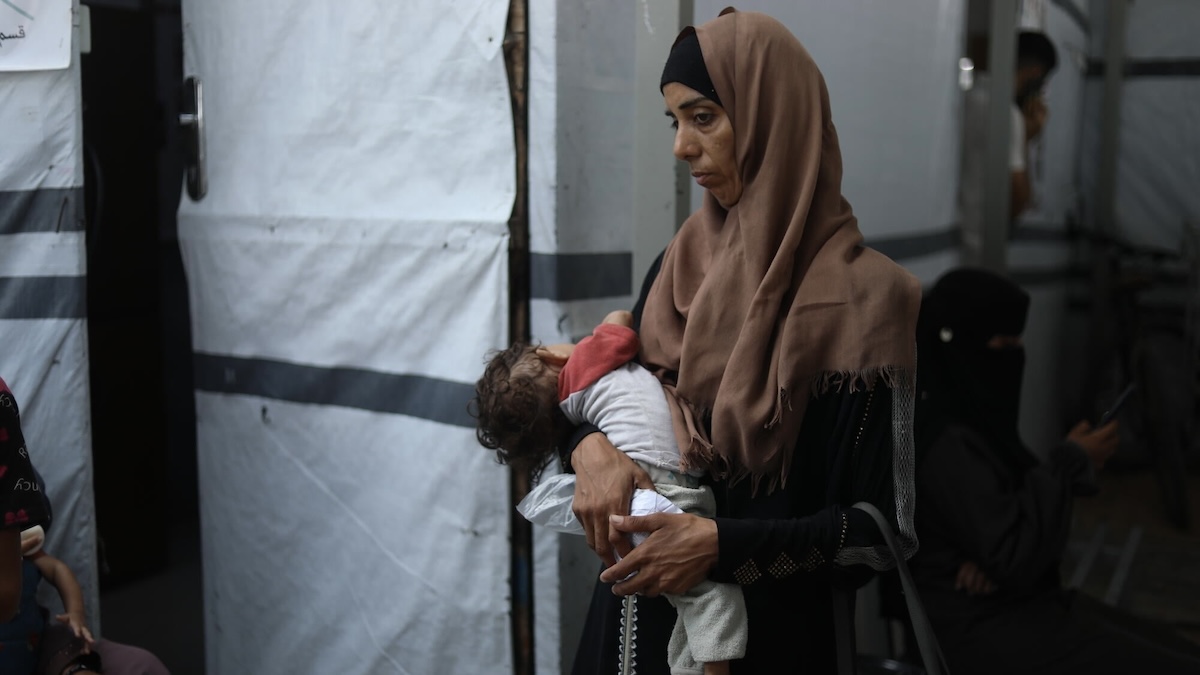
As the blockade imposed by the IOF on the war-torn territory still persists, the humanitarian crisis has aggravated, leaving many displaced people without shelter and heating during the cold weather.
The Gaza-based Palestinian Health Ministry reported that three Palestinian children, including a newborn and a two-month-old baby, have frozen to death since Sunday, January 11.
The ministry added that 21 Palestinians, including 18 children, died in Gaza due to the cold weather since the beginning of Israel’s genocidal aggression on October 7, 2023.
In a statement released on Monday, the ministry further indicated that 442 Palestinians died, while 1,240 others were injured, as a result of Israeli violations of the truce agreement that came into force in October 2025.
This takes the official death toll of Palestinians, who were killed by the IOF across Gaza in the aftermath of the October 7 attacks to 71,419 people.
In spite of Israel’s continued atrocities, mediators and guarantors of the ceasefire deal, above all the Trump administration, remain unmoved, crushing every hope for advancing towards phase two of the agreement.
Genocide denier and Current UK Prime Minister Keir Starmer is quoted that he supports Zionism without qualification. He also confirms that UK air force support has been essential in Israel’s mass-murdering genocide. Includes URLs https://www.declassifieduk.org/keir-starmers-100-spy-flights-over-gaza-in-support-of-israel/ and https://youtu.be/O74hZCKKdpAKeir Starmer objects to criticism of the IDF. He asks how could anyone object to them starving people to death, forced marches like the Nazis did, bombing Gaza’s hospitals and universities, mass-murdering journalists, healthworkers and starving people queuing for food, killing and raping prisoners and murdering children. He calls for people to stop obstructing his genocide for Israel.Orcas discuss Genocide-supporting and complicit Zionists. Donald Trump, Keith Starmer, David Lammy, Rachel Reeves, Angela Rayner and Wes Streeting are acknowledged as evil genocide-complicit and supporting cnuts.
This work by Middle East Monitor is licensed under a Creative Commons Attribution-NonCommercial-ShareAlike 4.0 International License.
A view of fighter jet being prepared ahead of Israeli army’s attack on Iran, on October 26, 2024 in Israel. [Israel Defense Forces (IDF) – Anadolu Agency]
Israel has raised its alert level for the Air Force and army troops in anticipation of a possible US strike on Iran, media reports said Tuesday, Anadolu Agency reports.
The Maariv newspaper, citing Israeli military sources, said the alert level was raised in the Air Force, the Military Intelligence Service and the Northern Command.
No decision, however, was made to change the level of readiness on the home front.
The army “continues to closely monitor developments in Iran amid concerns that the US military may launch an attack on Tehran,” said the newspaper.
Israel’s army is currently coordinating with US Central Command (CENTCOM) regarding any possible attack on Iran, according to the report.
Reports have emerged of a potential US strike on Iran, where anti-government protests have continued since late last month.
Iranian officials have accused the US and Israel of backing “riots” and “terrorism.”
There are no official casualty figures, but the Human Rights Activists News Agency (HRANA), a US-based rights group, estimates that the death toll has reached more than 2,000, including security forces and protesters.
This work by Middle East Monitor is licensed under a Creative Commons Attribution-NonCommercial-ShareAlike 4.0 International License.
Elon Musk urges you to be a Fascist like him, says that you can ignore facts and reality then.Donald Fuhrump says that Amerikkka doesn’t bother with crimes or charges anymore, not being 100% Amerikkkan and opposing his real estate intentions is enough.Orcas discuss how Trump was re-elected and him being an obviously insane, xenophobic Fascist.
This work by Middle East Monitor is licensed under a Creative Commons Attribution-NonCommercial-ShareAlike 4.0 International License.
Israeli Prime Minister Benjamin Netanyahu attends his trial on corruption charges at the district court in Tel Aviv, on April 21, 2025. [Moti KIMCHI / POOL / AFP / Getty Images]
Israeli Prime Minister Benjamin Netanyahu appeared Tuesday before the District Court in Tel Aviv for the 70th time as part of his ongoing corruption trial, Anadolu reports.
Independent Israeli journalist Orly Barlev, who has closely tracked the case since its outset, said the latest session marked the 70th day of Netanyahu’s courtroom testimony.
“Today marks the 70th day of testimony by the defendant Netanyahu, with questioning continuing in Case 4000,” Barlev wrote on the US social media company X.
The hearing comes as Israeli society remains divided over Netanyahu’s request for a presidential pardon from President Isaac Herzog, a move that has drawn both political backing and sharp criticism.
Netanyahu formally submitted the pardon request on Nov. 30 last year, seeking relief from the corruption charges without admitting wrongdoing or withdrawing from public life.
Since the trial began, Netanyahu has consistently denied all allegations. Under Israeli law, however, a presidential pardon can only be granted following an admission of guilt.
The prime minister is facing charges in three separate cases, commonly known as Case 1000, Case 2000 and Case 4000. The indictments were filed in late November 2019 by then-Attorney General Avichai Mandelblit.
Case 1000 centers on allegations that Netanyahu and members of his family received costly gifts from wealthy businessmen in exchange for political favors.
Case 2000 involves claims that Netanyahu held talks with Arnon Mozes, publisher of the privately owned Yedioth Ahronoth newspaper, in an effort to secure favorable media coverage.
Case 4000 focuses on accusations that Netanyahu granted regulatory benefits to Shaul Elovitch, former owner of the Walla news website and a senior executive at Bezeq telecommunications company, in return for positive press.
Netanyahu’s trial has been underway since 2020 and remains unresolved. He continues to dismiss the charges, portraying them as a politically motivated effort to force him from office.
Beyond the domestic proceedings, Netanyahu is also facing international legal scrutiny. In November 2024, the International Criminal Court issued arrest warrants against him over war crimes and crimes against humanity committed in Gaza, where more than 71,000 people have been killed, mostly women and children, and over 171,000 others injured in a brutal assault since October 2023.
This work by Middle East Monitor is licensed under a Creative Commons Attribution-NonCommercial-ShareAlike 4.0 International License.
Elon Musk urges you to be a Fascist like him, says that you can ignore facts and reality then.Donald Fuhrump says that Amerikkka doesn’t bother with crimes or charges anymore, not being 100% Amerikkkan and opposing his real estate intentions is enough.Orcas discuss how Trump was re-elected and him being an obviously insane, xenophobic Fascist.
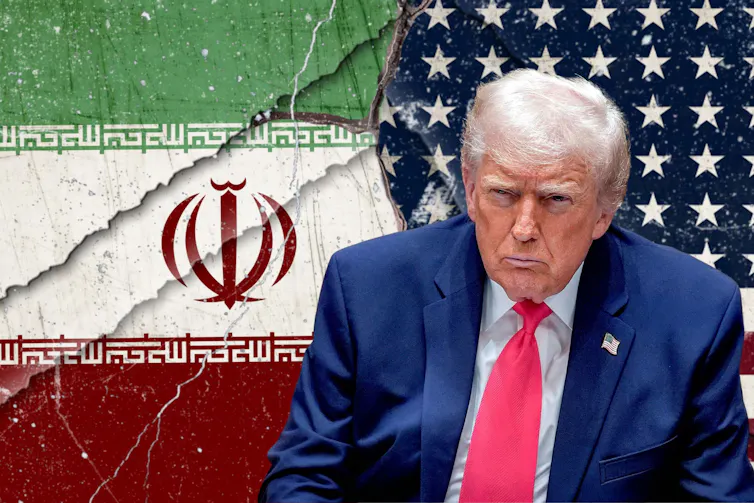
Donald Trump is weighing military action in Iran over the state’s crackdown on protesters. Reports suggest that more than 600 people have been killed since the protests began in late December, with the US president saying the US military is now “looking at some very strong options”.
Trump has not yet elaborated on what these options are and has said that Iranian officials, keen to avoid a war with the US, had called him “to negotiate”. But he added that the US “may have to act before a meeting” if the deadly crackdown continues.
There is a wide spectrum of measures available to Washington should it decide to intervene in Iran. These range from diplomatic condemnation and an expanded sanctions regime, to cyber operations and military strikes. However, history weighs heavily against every move the US government may be considering.
Targeted sanctions and diplomatic pressure, which includes the 25% tariff rate recently introduced by Trump on any country that does business with Iran, remain the least escalatory tools. They allow the US to coordinate with its allies and signal moral support for protesters in Iran without triggering direct confrontation. Yet decades of experience show the limits of this approach.
Iran’s leadership has mastered how to absorb economic pressure, shift costs on to society and frame longstanding western sanctions as collective punishment imposed by hostile outsiders. The government in Tehran has adapted over time by developing alternative markets and expanding informal and non-dollar trade.
It has also boosted its economic resilience through regional networks, particularly in Iraq where political, financial and security ties help sustain revenue flows and cushion the impact of sanctions on the state.
There are other, more covert tools at Washington’s disposal, including cyber disruption and efforts to assist independent media or help protesters bypass internet shutdowns. These measures can help protesters stay visible internationally and complicate the state’s capacity to ramp up repression.
However, even here expectations should be modest. These tools may create friction within the Iranian elite by raising the costs of, and imposing technical difficulties on, surveillance and repression. But they do not change the core calculus of a regime that prioritises survival above all else.
At the most extreme end of the spectrum are military strikes. The rationale behind strikes would be to undermine the regime’s repression efforts. But in reality, they risk doing the opposite. Iran’s ruling system, and particularly the powerful Islamic Revolutionary Guard Corps branch of the armed forces, has historically relied on external threats to consolidate power domestically.
A preemptive US strike would almost certainly hand Iran’s security apparatus the very narrative it seeks: an existential battle for national survival. This framing is already explicit in the discourse of the Iranian elite.
Mohammad Bagher Ghalibaf, the hardline speaker of the Iranian parliament, warned in a recent speech that any attack on Iran would make Israel and all US military bases and assets in the region “legitimate targets”. Iranian state media then showed large crowds of regime supporters rallying in Tehran and other cities, chanting “Death to America” and “Death to Israel.”
Military escalation is especially dangerous given the character of the current protest movement. Women have been at the forefront, challenging the ideological foundations of the state, while regions populated largely by ethnic Kurds have endured disproportionate levels of violence at the hands of the authorities.
These protests are civic, decentralised and rooted in social grievances. US military strikes would allow the Iranian state to overwrite that reality, recasting a diverse domestic movement as a foreign-backed security threat. In doing so, it would legitimise a far harsher crackdown than anything seen so far.
Shadow of 1953
Many ordinary Iranians are also cautious of direct US interference. This stems from a CIA-backed coup in 1953 that ousted Iran’s elected prime minister, Mohammad Mosaddeq, and restored the monarchy under Shah Mohammad Reza Pahlavi. The coup was followed by nearly two decades of repression, political policing and authoritarian rule closely aligned with western interests.
This experience is not distant history; it is a foundational trauma that continues to shape Iranian political consciousness. As a result, recent suggestions by Trump that the collapse of Iran’s theocratic system would naturally make way for a democratic transition cannot be disentangled from the memory of an external intervention that produced dictatorship rather than self-rule.
It also explains why many people inside Iran are sceptical of figures such as Reza Pahlavi, the son of country’s last shah who has often been promoted in the west as a possible future leader of Iran. Pahlavi remains symbolically tied to a system associated with oppression and foreign backing. This leaves him without the broad domestic legitimacy required for any credible democratic transition, regardless of his messaging.
The scepticism of Iranians is reinforced by recent regional experiences. In Iraq, foreign intervention hollowed out the state, leaving a weak system that has been co-opted by external powers and militias.
And in Syria, the collapse of central authority paved the way for a former al-Qaeda leader, Ahmed al-Sharaa, to take power. He has been rebranded by western powers, including Trump, into a credible political figure despite his jihadist past.
These cases reinforce a belief across the Middle East that western intervention tends not to empower democratic forces. It instead appears to elevate the most organised and militarised parties to power, producing long-term instability rather than renewal.
Without a credible, homegrown transition, Iran risks fragmenting and sliding into chaos. For Washington, the most difficult reality may be that the wisest path is not bold intervention, but restraint combined with sustained support for Iranian society.
Genuine change in Iran cannot be engineered from the outside, especially at the point of a missile.
Elon Musk urges you to be a Fascist like him, says that you can ignore facts and reality then.Donald Fuhrump says that Amerikkka doesn’t bother with crimes or charges anymore, not being 100% Amerikkkan and opposing his real estate intentions is enough.Orcas discuss how Trump was re-elected and him being an obviously insane, xenophobic Fascist.
This work by Middle East Monitor is licensed under a Creative Commons Attribution-NonCommercial-ShareAlike 4.0 International License.
Five-year-old Lana Salih Juha, who fled with her family from Gaza’s Shuja’iyya neighborhood to the city center, suffers from severe malnutrition under Israel’s strict blockade and attacks, which affects infants and children the most, on July 28, 2025. [Mohammed Y. M. Al-yaqoubi – Anadolu Agency]
The UN on Monday warned that child malnutrition in the Gaza Strip has reached alarming levels, with nearly 95,000 cases identified in 2025 and harsh winter conditions eroding fragile humanitarian gains, Anadolu reports.
Citing the Office for the Coordination of Humanitarian Affairs (OCHA), UN spokesperson Stephane Dujarric said at a news conference that “the humanitarian situation in the Gaza Strip remains dire, as harsh weather conditions are jeopardizing the progress made by the humanitarian response.”
Dujarric reported that the agencies leading the nutrition response continue to detect large numbers of children in urgent need.
“Meanwhile, our humanitarian partners leading on addressing malnutrition report that last month they screened over 76,000 children and identified around 4,900 cases of acute malnutrition, including more than 820 cases of severe acute malnutrition,” he said.
He further added that “this brings the total number of acute malnutrition cases identified in 2025 to nearly 95,000.”
Noting that the UN partners provided supplies such as tents, tarpaulins and blankets to 28,000 families, Dujarric warned that “1.1 million people still urgently need help as rainstorms continue to damage and destroy many existing shelters.”
“Our partners stress that tents remain a temporary solution and more supplies, including toolkits, cement and heavy machinery to clear debris, as well as sustained funding, are needed to transition from emergency to early recovery efforts,” he added.
Highlighting the severity of the harsh weather on children, Dujarric said that “since the ceasefire and as of the year’s end, our partners were able to distribute more than 310,000 children’s winter clothing sets and more than 112,000 pairs of shoes as part of the winterization efforts.”
“They also installed 150 specialized tents across Gaza to be used as child-friendly and safe spaces,” he said.
Dujarric said that the UN’s education partners on the ground opened up 18 additional temporary learning spaces for 35,000 Gazan students, adding: “The total number of operational temporary learning spaces is now 440, accommodating around 268,000 children.”
However, he stressed that “education supplies continue to be denied entry by the Israeli authorities on the grounds that education is not a critical activity during the first phase of the ceasefire.”
“We do believe that it is a critical activity,” he affirmed, urging for “rapid, sustained and unimpeded access to allow ourselves and our partners to scale up assistance faster to prevent further deterioration and alleviate the suffering of people in Gaza.”
When asked about Israel’s continued destruction in the Gaza Strip, Dujarric said: “We want to see a stop to the destruction of whatever remains in Gaza.”
“We want to see the parties move towards phase two to try to rebuild,” he said.
A ceasefire agreement took effect in Gaza on Oct. 10 under US President Donald Trump’s 20-point plan, halting two years of Israeli attacks that have killed more than 71,000 people, mostly women and children, and injured over 171,000 since October 2023.
This work by Middle East Monitor is licensed under a Creative Commons Attribution-NonCommercial-ShareAlike 4.0 International License.
Genocide denier and Current UK Prime Minister Keir Starmer is quoted that he supports Zionism without qualification. He also confirms that UK air force support has been essential in Israel’s mass-murdering genocide. Includes URLs https://www.declassifieduk.org/keir-starmers-100-spy-flights-over-gaza-in-support-of-israel/ and https://youtu.be/O74hZCKKdpAKeir Starmer objects to criticism of the IDF. He asks how could anyone object to them starving people to death, forced marches like the Nazis did, bombing Gaza’s hospitals and universities, mass-murdering journalists, healthworkers and starving people queuing for food, killing and raping prisoners and murdering children. He calls for people to stop obstructing his genocide for Israel.Orcas discuss Genocide-supporting and complicit Zionists. Donald Trump, Keith Starmer, David Lammy, Rachel Reeves, Angela Rayner and Wes Streeting are acknowledged as evil genocide-complicit and supporting cnuts.