Extinction Rebellion calls out HSBC’s Greenwash at AGM in Birmingham

Spread the love

At 10:30am this morning, around fifty protesters descended on HSBC’s annual general meeting at the Eastside Rooms in Birmingham to call out the bank’s shameful climate policies. It comes as the bank announces soaring quarterly profits of $12.9 billion.

Members of Extinction Rebellion Midlands and Money Rebellion arrived with a bath of greenwash, while a group of ‘dirty scrubbers’ dressed in pinafores and headscarves offered to clean up the bank’s soiled image in return for cash. 

Inside the conference centre protesters brought the AGM to a standstill as they unfurled banners, sang songs, the dirty scrubbers reappeared with dramatic skits, and people repeatedly called out HSBC’s broken promises over its climate pledges, accusing them of ‘climate genocide’ and ‘lies’. Security eventually removed protesters after 45 minutes of disruption. 

HSBC has invested $145bn in fossil fuels since the Paris Agreement in 2016 and the bank’s climate pledges have been tarnished by a series of damaging exposes. 

In December, HSBC made a surprise announcement that it was updating its energy policy and would stop new investment in oil and gas fields in an apparent change of policy. However, it’s climate pledges to date have been revealed as mere greenwash. in January, it was revealed that HSBC had given energy giant RWE a secret $340m loan as bulldozed a village to expand a coal mine in Germany, just three months after the bank had pledged to stop financing new coal. Last October, investigators showed that HSBC’s $1 trillion investment in ‘sustainable financing’ and ‘green bonds’ was being used by fossil fuel companies to bankroll mines, pipelines, and oil rigs.[4] 

Questions have also been raised about the bank’s pledge to stop direct funding of fossil fuel projects, while continuing to indirectly fund fossil fuel companies like Saudi Aramco, ExxonMobil and Shell. The bank is also financially supporting ConocoPhillips, the company behind the controversial Alaskan oil drilling Willow project. Despite its various pledges HSBC invested a total of $11.074b in fossil fuels last year.

Andrew Taylor from Money Rebellion said: “HSBC continues to fund new devastating coal,oil and gas projects. These projects destroy the health and livelihoods of communities who live near them, and are fuelling climate chaos. We will use every tool in the box to stop HSBC and other banks from pursuing this deadly business plan – from disrupting their AGMs to building the biggest bank boycott in history.”

Continue ReadingExtinction Rebellion calls out HSBC’s Greenwash at AGM in Birmingham

Climate activists disrupt financers of climate destruction Barclays Bank AGM

Spread the love
Fossil Free London protest at Barclays AGM 2023.

Major disruption to Barclays AGM by Money Rebellion and other activist groups with searching questions, songs and Shakespeare

A major bank funding our extinction by pouring billions of pounds into new fossil fuel projects was left in disarray today as activists linked to a huge new climate crisis coalition disrupted their Annual General Meeting headquarters in the City of London.  

The board of directors faced constant interruption and challenge making it almost impossible for the AGM to continue. When Barclays chairman Nigel Higgins tried to outline the bank’s own climate commitments, a protester shouted “bullshit.”

At 11am teams of activists infiltrated the AGM of Europe’s biggest funder of fossil fuels, Barclays. A 70-strong Climate Choir sang a climate crisis version of the Spice Girls “Stop Right Now” to bank board members. Further disruption followed as other shareholders from Fossil Free London, with a Shakespearean condemnation of Barclays as being on the wrong side of history. 

Pulling out hidden ruffs and quills, they performed Shakespeare-based lines generated by ChatGPT about the bank’s funding of fossil fuels. Lines included: “The people thee harm, and our air thou pollute! And yet, there is more, I tell you this day, For Barclays is guilty in a vile way. Thou art on the wrong side of history, I say!”

At the action, Claude Fourcroy, of Money Rebellion, an off-shoot of Extinction Rebellion, said: “We need UK banks to stop funding fossil fuels today, but instead they are profiting from a rigged system where bankers sacrifice people and planet to make vast fortunes. This is why we have chosen to target these vastly wealthy and powerful establishments, in the interests of the public – because time for humanity and every other species on the planet is running out. 

“These banks boast about being part of the solution to the climate and ecological emergency while taking baby steps toward pulling funding for the worst fossil fuel criminals, making empty promises full of loopholes, and greenwashing on an industrial scale

“The government and Bank of England are failing to challenge or regulate the power of the banks. But people power can and will stop them. No more carbon bombs, no more genocide and no more displacement. Until the banks stop funding new fossil fuels, we will use every tool in the box to stop them, including building the biggest bank boycott in history to hit them where it hurts – in their pockets.”

Extinction Rebellion co-founder Clare Farrell said: “These Money Rebellion actions disrupting financial power holders are just the start of an unprecedented movement of movements stepping up to challenge the corrupt elite in order to drive the urgent changes we need for survival of life on this planet.”

“In this new phase of Extinction Rebellion, we are connecting across groups to build a stronger climate alliance aimed at community resilience, inclusivity and fairness for all living beings. By linking up everyone who stands for a just and rapid response to the climate crisis we will create a formidable opposition. People are determined to challenge the misuse of power which threatens to bring an end to all life if we do not stop it.”

Barclays’ AGM was targeted by activists because the bank is the largest financier of fossil fuel expansion, heavily funding new fossil fuel exploration and drilling, while issuing net zero pledges. 

According to Rainforest Action Network and Greenpeace since 2016 Barclays has been the worst bank in Europe for fossil fuel financing. In 2022 alone, the bank provided over $16 billion to coal, oil, and gas companies, and $190 billion since the Paris Agreement, making it the seventh largest fossil fuel funder in the world.

Barclays has said it is committed to aligning its financed emissions with the goals of the Paris Agreement, but in reality the bank has no policy dictating how it should reduce its financing of the oil and gas sector. Barclays is one of the only major UK banks which has not started the process of restricting financing for new oil and gas, putting it at odds with competitors HSBC, Lloyds, and NatWest.

Andrew Taylor from Money Rebellion, an offshoot of Extinction Rebellion, added: “As the UN Secretary General António Guterres has said, we have reached a tipping point on the need for climate action. The disruption to our climate and our planet is already worse than we thought, and it is moving faster than predicted. And what is the reaction of these banks to this frightening scenario?  

“According to the London School of Economics and the Grantham Research Institute on Climate Change and the Environment Barclays scores 0% on its commitment to achieve net-zero emissions from its financing activities by 2050 or sooner, consistent with a 1.5°C scenario. It also scores 0% on climate policy engagement.

“A more accurate title for these AGMs would be Annual Greenwash Meetings.”

Continue ReadingClimate activists disrupt financers of climate destruction Barclays Bank AGM

Exxon’s new ‘advanced recycling’ plant raises environmental concerns

Spread the love

https://www.theguardian.com/us-news/2023/apr/10/exxon-advanced-recycling-plastic-environment

Advocates warn plants like the latest addition to the Texas complex generate hazardous pollutants and provide cover for oil giants to produce new plastic products

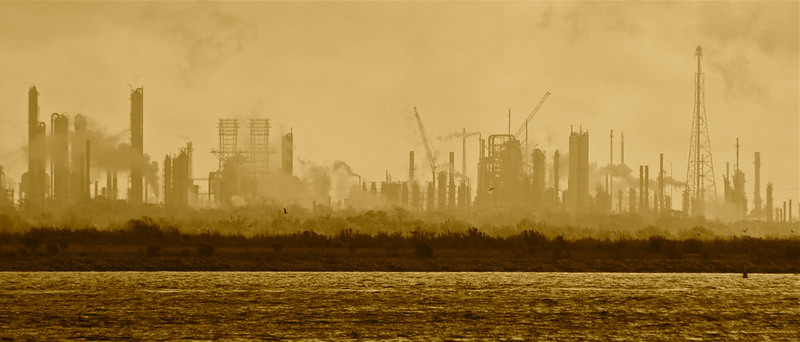
Exxon plant at Baytown, Texas

ExxonMobil just launched one of the largest chemical recycling plants in North America – but environmental advocates say the technology is a dangerous distraction from the need to reduce plastic production.

On the surface, the latest addition to ExxonMobil’s giant petrochemical refinery complex in Baytown, Texas, sounds like it could be a good thing: An “advanced recycling” facility capable of breaking down 36,000 metric tons of hard-to-recycle plastic each year. But plastic waste advocates warn that plants like it do little actual recycling, and instead generate hazardous pollutants while providing cover for oil giants to keep producing millions of tons of new plastic products each year.

The facility, which began large-scale operations in December of last year, is one of the largest chemical recycling plants in North America. Chemical recycling works by breaking down plastic polymers into small molecules in order to make new plastics, synthetic fuels and other products. Companies like ExxonMobil have rebranded the technology as “advanced recycling” and are now touting it as the latest hi-tech fix to address the plastic crisis, as traditional, mechanical recycling has failed to slow the tide of plastic piling up in landfills and the ocean.

ExxonMobil’s Baytown complex – which includes the third largest oil refinery in the US and a plant that manufactures 2.3m metric tons of plastic a year – is a major contributor to regional air and water pollution. It also has a long history of emitting chemicals above its permit limits, including the carcinogenic compound benzene. In recent years, ExxonMobil’s Baytown complex has been the site of fires and explosions that have injured workers and triggered shelter-in-place orders for nearby residents.

“Exxon has a terrible track record of polluting the Baytown community,” Luke Metzger, the executive director of Environment Texas, told the Guardian. “This false ‘chemical recycling’ will only produce more toxic misery for Baytown.”

https://www.theguardian.com/us-news/2023/apr/10/exxon-advanced-recycling-plastic-environment

Continue ReadingExxon’s new ‘advanced recycling’ plant raises environmental concerns

Tories to launch a greenwashing campaign next week

Spread the love

Rosebank decision expected at Tories’ net-zero launch in Aberdeen

THE UK Government will launch its net-zero strategy in Aberdeen next week, signalling plans to extend drilling for oil and gas.

The revamped Conservative proposals will see what was being referred to as “green day” by Whitehall staff rebranded to “energy security day”, with more of a focus on fossil fuels.

According to The Guardian, Thursday could see the Government confirm the licensing for a huge new oilfield named Rosebank off the coast of Shetland, using the argument that it is needed for investment in carbon capture and storage technology.

The proposals will also fail to bring in a 2025 flaring ban for oil and gas firms despite it being one of the 130 recommendations made by Tory MP Chris Skidmore earlier this year.

There will be no office for net zero – also one of Skidmore’s calls – and no compulsion for solar panels on new housing. Plans for a UK-wide programme of home insultation improvements, campaigned for by groups like Insulate Britain, will not be included.

[and the BS continues … an expansion of oil and gas destroying the planet spun as it’s exact opposite.]

Rosebank decision expected at Tories’ net-zero launch in Aberdeen

Continue ReadingTories to launch a greenwashing campaign next week

Shareholder Resolutions Push Big Banks to Phase Out Fossil Fuel Financing

Spread the love

Original article republished from Common Dreams under Creative Commons (CC BY-NC-ND 3.0).

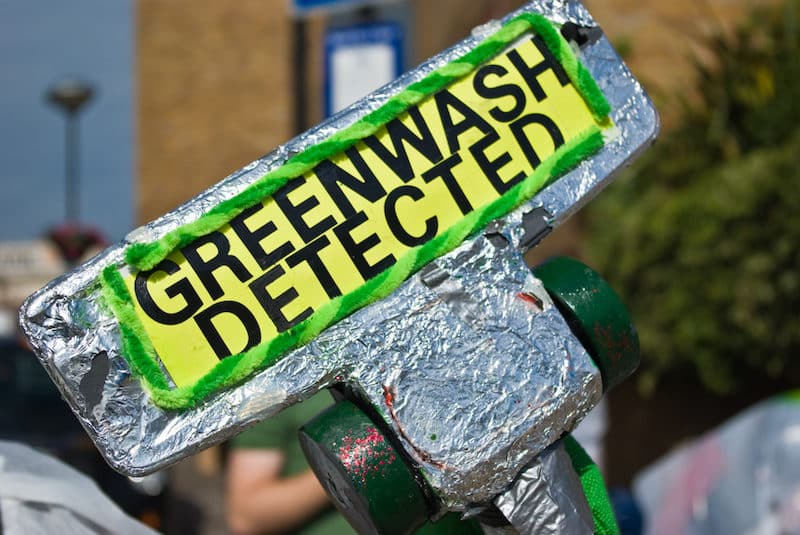
Protest placard reads Greenwash detected

Any climate commitment from a bank that is still financing fossil fuel expansion is greenwashing, pure and simple,” said a Stop the Money Pipeline campaigner.

BRETT WILKINS Jan 24, 2023

Taking aim at Wall Street banks financing the oil, gas, and coal extraction fueling the climate crisis, a coalition of institutional investors on Tuesday announced the filing of climate-related shareholder resolutions in an effort to force “more climate-friendly policies that better align with” the firms’ public commitments to combating the planetary emergency.

In the resolutions, members of the Interfaith Center on Corporate Responsibility (ICCR) and Harrington Investments asked six banks—Bank of America, Goldman Sachs, JPMorgan Chase, Morgan Stanley, Citigroup, and Wells Fargo—to enact policies phasing out fossil fuel finance, disclose plans for aligning their financing with their stated near-term emissions reduction goals, and to set absolute end-of-decade emissions reduction targets for their energy sector financing.

Shareholders also filed climate resolutions at four companies—Chubb, Travelers, The Hartford, and Berkshire Hathaway—that insure fossil fuel projects.

“Each of the major banks has publicly committed to aligning its financing with the goals of the Paris agreement to achieve net-zero emissions by 2050, a target widely considered imperative to avoid catastrophic climate impacts and financial losses,” ICCR said in a statement. “Scientific consensus shows that new fossil fuel expansion is incompatible with achieving net-zero by 2050, yet these banks continue to invest billions of dollars each year in new fossil fuel development—a fact corroborated by a new Reclaim Finance report released last week.”

As Stop the Money Pipeline—a coalition of over 200 groups seeking to hold “financial backers of climate chaos accountable”—noted:

A slate of resolutions calling for policies to phase out financing for fossil fuel expansion was filed by the same investors at U.S. banks in 2022. They received between 9% and 13% support, which was a significant milestone for these first-of-their-kind proposals. This year’s fossil fuel financing proposals have been updated to encourage banks to finance clients’ low-carbon transition so long as those plans are credible and verified. The previous resolutions were supported by many major institutional investors, including the New York State and New York City Common Retirement Funds.

New in 2023 are the resolutions on absolute emissions reduction targets for energy sector financing filed by the New York City and New York State comptrollers, and the resolutions calling for disclosure of climate transition plans filed by As You Sow. The day before the resolutions were filed, Denmark’s largest bank, Danske, announced a phaseout of corporate financing for companies engaged in new coal, oil and, gas development.

“Any climate commitment from a bank that is still financing fossil fuel expansion is greenwashing, pure and simple,” Arielle Swernoff, U.S. banks campaign manager at Stop the Money Pipeline, said in a statement. “By supporting these resolutions, shareholders can hold banks accountable to their own climate commitments, effectively manage risk, and protect people and the planet.”

Dan Chu, executive director of the Sierra Club Foundation—which led the filing at JPMorgan Chase—lamented that “all major U.S. banks continue to finance billions of dollars for new coal, oil, and gas projects every year. Such financing undermines the banks’ net-zero commitments and exposes investors to material risks.”

“These shareholder resolutions simply ask banks to align their promises with their actions and to adopt policies to phase out the financing of new fossil fuel development,” Chu added.

Referring to a warning from the International Energy Agency, Kate Monahan of Trillium Asset Management—which spearheaded the Bank of America filing—said that “we will not be able to achieve the Paris agreement’s goal of limiting warming to 1.5°C if banks continue to finance new fossil fuel exploration and development.”

“Bank of America has publicly committed to the Paris agreement but continues to finance fossil fuel expansion with no phaseout plan, exposing itself to accusations of greenwashing and reputational damage,” Monahan contended. ” By continuing to fund new fossil fuels, Bank of America and others are taking actions with potentially catastrophic consequences.”

Our work is licensed under Creative Commons (CC BY-NC-ND 3.0). Feel free to republish and share widely.

Original article republished from Common Dreams under Creative Commons (CC BY-NC-ND 3.0).

Continue ReadingShareholder Resolutions Push Big Banks to Phase Out Fossil Fuel Financing