NHS news review

Spread the love

One wheel on his wagon, but Lansley’s still rolling / Features / Home – Morning Star Recommended.

HealthInvestor – Article: Ministers urged to allow hospitals to fail ahead of public services White Paper

Interesting that the Con-Dem Conservative Liberal-Democrat coalition government is applying the ideology of the abolition of the NHS to public services generally. “Please, sir, I want some more.”

Cuts to fire services mean that fire engines will not be routinely despatched to hospitals when alarms ring.
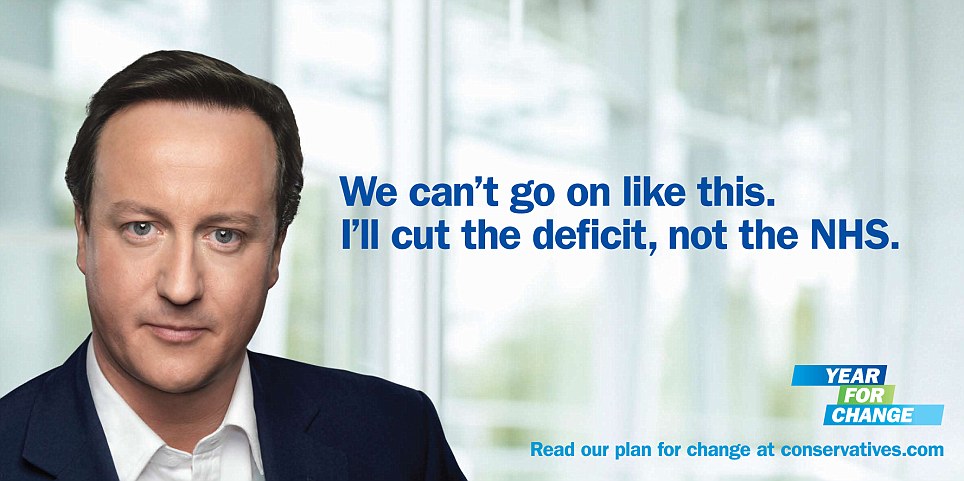
Conservative election poster 2010

A few recent news articles concerning the UK’s Conservative and Liberal-Democrat coalition government – the ConDem’s – brutal attack on the National Health Service.

One wheel on his wagon, but Lansley’s still rolling / Features / Home – Morning Star

It may have “paused” temporarily, and been cosmetically adjusted in a bid to defuse Lib Dem opposition, but Andrew Lansley’s Health Bill is far from dead.

Instead Lansley himself has now urged more rapid progress in implementing it, even before the delayed parliamentary process is complete.

David Cameron and Lansley are so fixated on carrying through their plan, which seeks to transform the NHS into a competitive market and slice off billions of the £100 billion NHS budgets to benefit private providers that they are ignoring even major setbacks like the high-profile resignation of national heart tsar Professor Roger Boyle.

Boyle, a highly respected doctor and author of the influential 2007 policy to reform stroke services, told the Health Service Journal he was opposed to the government laying waste to large parts of the NHS.

He opposed the closure of primary care trusts and strategic health authorities and ridiculed the idea that the NHS is “over-managed” to the extent claimed by ministers.

Boyle is not the only one expressing concerns.

Supporting a motion moved by GPs, the BMA has again, despite pleas from its leaders, voted overwhelmingly for the Bill to be withdrawn, branding it the biggest-ever threat to the NHS.

The BMA has also published a survey showing thousands of GPs are planning to retire rather than implement the Bill and that a large majority of GPs have major concerns about Lansley’s wholesale restructuring of the NHS.

These are the key people who are supposed to implement the changes and the only ones seeming to benefit from them.

Their hospital colleagues have now woken up to the fact that the Bill would largely exclude them from any voice, relegating them to the back of the NHS terraces while the GPs are dragged reluctantly into the directors’ box.

Royal College of General Practitioners (RCGP) president Clare Gerada has also challenged government attempts to “railroad” the Bill through.

The amendments to it do not address fundamental problems, but would mean that 163 NHS bodies being abolished would be replaced by more than three times as many new bodies to be involved in the decision-making process.

“The RCGP’s tally of new quangos includes 300 commissioning groups, 150 health and well-being boards, 50 PCT clusters, 15 clinical senates, four SHA clusters, the national commissioning board and the Department of Health,” she told the GP magazine Pulse.

HealthInvestor – Article: Ministers urged to allow hospitals to fail ahead of public services White Paper

The government has published its Open Public Services White Paper, which aims to enshrine the right to a choice of public service provider in law.

It comes as government documents come to light warning ministers that hospitals and schools must be allowed to fail if the transformation of public services is to be successful.

The public services white paper, published today, sets out a series of reforms to help drive competition and localism across the entire public service industry. The Any Willing Provider model is expected to be applied to every part of the public sector to allow charities, mutuals and private providers to flourish and give people a range of service providers to choose from. The Ombudsmans’ role will be changed to “an enforcer of choice” to ensure a plurality of providers are available to anyone accessing health, education and neighbourhood services.

Prime minister David Cameron, announcing the public service reforms, said it was “something very big and very different” and that the “old, closed, state monopoly is dead.” The white paper was originally due to be published last autumn, but has been repeatedly delayed. The drive towards a range of independent providers is likely to be seen by public sector unions as a move towards the privatisation of key public services.

Obesity and the NHS: ‘People here are in big trouble’ | Society | The Guardian

Uncomfortable conversations about rationed operations are likely to become a more regular part of doctors’ work in the next few years, as the squeeze on NHS funding becomes more intense. Although the coalition promised to ringfence NHS funding, government spending on healthcare will remain flat until 2015, at a time when demand on the service is rising. The NHS was already committed to finding £20bn worth of savings (or “productivity improvements”) by 2015 and, as a result, all parts of the NHS are under pressure to reduce costs. Imposing tighter limits on certain procedures, such as gastric bands, is one way money will be saved.

This week, the Guardian reported that waiting lists for tests and treatment are already beginning to rise all over the country, and staff at Heartlands know that they are entering a period of financial austerity. The Heart of England Trust, which embraces three hospitals across Birmingham (including Heartlands), has agreed to shave 4% from its £600m annual budget – equivalent to £24m – every year until 2015, and expects to cut 1,600 posts out of the total headcount of around 10,000.

For the moment the full force of the impending squeeze on costs has yet to be felt, erupting only occasionally in unexpected rationing. Dr Taheri says he describes himself as “a fairly mild-mannered, calm person”, but he is increasingly angry about the new restrictions on treatment. “About 30% of the patients need things that we’re not able to get them. This is going to be the challenge, to explain to patients that we can’t do things,” he says.

This is Hull and East Riding | Hull hospitals chief criticises Humberside Fire alarm cuts

PATIENTS’ lives will be put at risk by fire brigade cutbacks, the region’s hospitals chief has warned.

Under new plans, firefighters will no longer automatically turn out to the region’s main hospitals when an alarm sounds.

Humberside Fire And Rescue Service currently sends two fire engines to Hull Royal Infirmary and Castle Hill Hospital when an alarm goes off.

But now, fire officials are considering only dispatching crews if hospital staff confirm there is a blaze.

Phil Morley, chief executive of Hull And East Yorkshire Hospitals NHS Trust, said: “If the changes are made, I have told them they have to accept accountability for any patient death from a fire.

“It would be unbelievable, unacceptable and wholly inadequate.

“In the interests of patient safety, we should be a priority if an alarm goes off. It is acting quickly that saves lives.”

The Fire Brigades Union (FBU) claimed the new system will be like “playing Russian Roulette with hospital staff, patients’ and firefighters’ lives”.

Fears private firms will ‘cherry pick’ profitable council services in shake-up – Liverpool News – News – Liverpool Daily Post

PRIVATE firms and charities will be able to demand the right to run almost every public service – from schools and day centres, to libraries and leisure centres – under radical government plans unveiled yesterday.

An Ombudsman will rule on whether companies and voluntary groups have been

“unfairly precluded” from tendering for contracts currently held by local authorities, for example.

The idea is modelled on the plans to allow “any willing provider” to run NHS services, in legislation that triggered a storm of protest that forced David Cameron to retreat.

Unveiling the flagship “Open Public Services” White Paper, David Cameron vowed the Government was “releasing the grip of state control and putting power in people’s hands”.

But ministers were put on the back foot by confidential documents that showed civil servants had warned the plans would only work if existing, unsuccessful services – such as schools and hospitals – were allowed to collapse.

BBC News – Long hospital waits ‘on the increase’

The number of people facing “long waits” for hospital treatment in England is rising, NHS figures show.

Under the NHS Constitution, patients have a right to be seen in 18 weeks.

But there are currently 236,155 on the waiting list who have waited longer than that – a rise of 8.5% in a year, according to official data. Nearly half have waited more than six months.

The government said there could be valid medical or personal reasons for long waits.

However, doctors blamed the rise on the squeeze in budgets that is increasingly being seen in the health service.

The most common treatments people are facing long waits for is in orthopaedics, which includes operations such as knee and hip replacements.

Peter Kay, president of the British Orthopaedic Association and a former adviser to the Department of Health, said the sheer numbers waiting longer than 18 weeks meant it was unlikely to be solely for personal or medical reasons.

He said the focus of hospitals was now slipping and patients were being left waiting for too long.

And he added: “One of the issues with 18 weeks is that once you have missed the boat there is less incentive to get the patient treated. They get left on the list for longer than they otherwise would.”

BBC News – Leicester NHS staff worried over missing payments

About 200 staff at a Leicester hospital say they are concerned missing overtime payments are due to their NHS trust’s troubled financial position.

Union Unison said 200 staff at the Leicester Royal Infirmary had not received pay for extra shifts and overtime this month.

The University Hospitals of Leicester NHS Trust has an overspend of £7m, three months into the financial year.

In a statement, the trust said payments would be processed in a week’s time.

“All staff have received their basic pay for June, but additional payments are dealt with separately, and a small number of those payments go through a supplementary run which occurs in the week following payday,” the statement said.

But Adrian Morgan, area organiser for Unison in Leicestershire, said staff had been told different things when querying the missing payments.

“A couple of people have phoned payroll and asked why they haven’t got their enhanced payments and they were told the signature on the overtime sheet isn’t legible or acceptable any more but these are from managers that have signed forms for years and years.

“It is very conflicting information,” he said.

Mr Morgan said staff were beginning to suspect the trust was hanging on to payments “to try to garner some interest”.

Can the NHS exist without managers? – Views – OnMedica

NHS managers have accused Health Secretary, Andrew Lansley, of failing to support them in their efforts to save money and lead the reform of the health service.

After a 20-minute speech to the NHS Confederation’s annual conference in Manchester last Thursday, Lansley was asked to be more vocal in his support for NHS leaders, helping to raise their profile in the media.

A young man in the audience, who only started working in NHS management two years ago, said: “I have quickly recognised the role that leaders play and the absolute benefits they bring. I do not, therefore, understand why I have to go home and convince my friends and family of the pivotal role we all play. Can you not do more to make clear the difference between bureaucracy and essential leadership – in the public arena and through the press – so that I do not have to go home and convince people myself?”

Continue ReadingNHS news review

NHS news review

Spread the love

The Guardian reports that waiting times are increasing.

Mary Salisbury says that when she needed the NHS “it wasn’t there for me”. This is likely to be how most people will experience the Con-Dems brutal attack on the NHS. They are unaware that the Conservatives and the Liberal-Democrats are destroying the NHS. One day when they really need it, it simply won’t be there for them.

The Guardian has an editorial urging Lib-Dem MPs to wake up on the NHS.

Conservative election poster 2010

A few recent news articles concerning the UK’s Conservative and Liberal-Democrat coalition government – the ConDem’s – brutal attack on the National Health Service.

NHS waiting time increases may cost lives, doctors warn | Society | The Guardian

Delays could mean illnesses reach stage where surgery or drugs cannot treat them, chair of BMA’s consultants committee says

Patients could die because of rising NHS waiting lists for tests and treatment, the leader of Britain’s hospital doctors has warned. Delays in identifying conditions such as cancer may mean that a patient’s illness reaches the stage where surgery or drugs cannot save them, Dr Mark Porter told the Guardian.

Porter, chairman of the British Medical Association’s consultants committee, said the growing delays were “inhumane” because the ensuing uncertainty added to patients’ fear and suffering.

His remarks will add to the pressure on David Cameron, who has offered several recent personal guarantees that patients will not have to endure long waits to be treated.

A Guardian analysis of official NHS data on England’s six main waiting time targets shows that five are increasingly being breached. The number of patients waiting more than six weeks for a diagnostic test such as an MRI scan has quadrupled in the last year, an extra 2,400 people a month are not being treated within 18 weeks, and 200,000 patients waited longer than four hours in A&E this year compared with the same period in 2010, the data reveals.

The growing number not being tested or treated within the required time limits was of particular concern, Porter said. “If patients are now exceeding those times, then those patients’ treatment options are being limited, and if that happens then there’s a potential for patients suffering harm.

“It may be that someone’s disease progresses beyond the point where surgery might usually give a cancer patient a potential cure, but the patient then receives palliative care only,” he said.

NHS waiting times: one women’s agonising delay | Society | The Guardian

A special needs teacher says the wait she endured for surgery on her back problem was inhumane and unspeakable

Mary Salisbury, a retired special needs teacher, was advised to have back surgery in June 2010. But the operation did not happen until March 2011, even though NHS rules say it should have been carried out within 18 weeks.

“My back trouble began in 2009. I had an MRI scan in February 2010 at St Mary’s hospital in Newport on the Isle of Wight, where I live. But I then had to wait until early June to see the consultant, as he only visits the island once a month from Southampton. He immediately recommended an operation called a laminectomy to relieve the pressure on the nerve between my fourth and fifth vertebrae, which was being crushed and causing me severe pain, a condition called a lumbar stenosis.

“The consultant said the waiting time was about 12 weeks. First, I was told the surgery should be in September or October, and then November or December. But I was never given a definite date. Every time I rang Southampton General hospital the operation receded further and further into the distance. Just before Christmas, I was told it would be 31 January, but that was cancelled. So were three subsequent operations, two of them on the day after I’d stayed in Southampton the night before and arrived as instructed at 7.30am.

“The surgery finally happened on 23 March this year – 42 weeks after I’d first seen the consultant, but a year and six weeks after I’d had the MRI scan. I’ve been sorted now, happily. But the wait I had to endure for treatment was inhumane and unspeakable. I was in a lot of pain, but I wasn’t being treated. They said priority cases were being treated. Why wasn’t I a priority? I was in serious pain and distress, couldn’t sleep properly and became depressed. I’d always been a healthy person and never needed the NHS beforehand. Yet when I needed it, it wasn’t there for me.

Health warning – Our view – Yorkshire Post

NO Government policy is enjoying a smooth passage at present, not least David Cameron’s NHS changes that face renewed scrutiny. The news that GPs could earn premium rates of up to £100 an hour to take on additional budgetary duties perpetuates the belief that health spending is being recycled rather than redirected to patients.

As even more demands are placed on taxpayers, many will be uncomfortable at the prospect of GPs earning more money than well-remunerated NHS chief executives. The rate will vary dramatically depending on the area they work in, another cause for concern.

There also remains confusion over how much of the money will go direct to the GPs, and how much will fund the costs of locum cover. These vital details need to be established quickly.

The rates are being negotiated locally and the apparent lack of guidance from Westminster will do little to allay fears that the NHS reforms have been ill-conceived.

Such lucrative hourly rates will raise concerns that shielding the NHS from cuts was a backward step, allowing significant funds to remain at the top of the organisation rather than filtering down to patients.

That the figures only came to light following an investigation by this newspaper is further indicative of the lack of clarity surrounding Mr Cameron’s reforms, even in their revised format, and why further changes are likely to be necessary.

Continue ReadingNHS news review

NHS news review

Spread the love

Conservative election poster 2010

A few recent news articles concerning the UK’s Conservative and Liberal-Democrat coalition government – the ConDem’s – brutal attack on the National Health Service.

NHS ‘shocking’ in parts, says Andrew Lansley – Telegraph

Speaking to members of the NHS Confederation, which represents healthcare managers, Andrew Lansley said that variation between areas was evidence that the service could be “so much better”.

He cited a recent report on care for the dying by Tom Hughes-Hallet, the chief executive of Marie Curie Cancer Care, which found some health authorities spend more than £6,000 on palliative care for each dying person, while one spent just £186.

He told the annual conference of the NHS Confederation in Manchester: “I know people are generally satisfied with the NHS. But if people were only aware of the variations in the quality, they’d be shocked!

GPs paid £100 an hour for new NHS duties – Main Section – Yorkshire Post

TAXPAYERS are forking out premium rates of up to £100 an hour for GPs in the region to take on new duties under the Government’s landmark NHS reforms, the Yorkshire Post can reveal.

The rate for roles commissioning services is equivalent to around £180,000 a year – more than the annual pay for most NHS chief executives.

Doctors in North Lincolnshire are being paid the highest £100 an hour fee which is twice as much as in neighbouring Doncaster.

Across the region, rates vary significantly for duties on new GP commissioning groups, which will each take charge of hundreds of millions of pounds in NHS spending.

Ministers claim their plans for health service reconfiguration will save taxpayers billions of pounds by axing layers of bureaucracy but doubts have already been raised about the likely impact.

Unison and private companies clash over any qualified provider policy | GPonline.com

Unison has renewed its attack on the policy to allow any qualified provider to deliver NHS care after the government said it would push ahead with its plans.

The public sector union claimed the policy was ‘perverse’ at a time of NHS cuts and said it was privatisation by the back door.

But private companies defended the proposal saying it would allow charities to take a bigger role in delivering NHS services.

The any qualified provider policy will see NHS and private providers compete for contracts based on quality and cost. The government says it will improve patient choice.

The NHS Future Forum opted to retain the policy in its recommendations on the Health Bill last month.

Karen Jennings, head of health at Unison, debated the plans during a lively exchange at the UK Faculty of Public Health’s annual conference in Birmingham on Monday.

Ms Jennings told attendees: ‘We are moving towards wholesale competition in the NHS.’

If the any qualified provider policy is adopted, ‘we will have an NHS based on pure, unfettered market’, she warned.

She claimed plans to increase patient choice could actually raise NHS costs if they opt for more expensive options and was ‘perverse’ at a time of stringent cuts.

The choice agenda is a first step towards co-payments for some care, she added, which will eventually lead to a US-style health insurance model.

‘This is the road to ruin for the NHS,’ she said.

Continue ReadingNHS news review

NHS news review

Spread the love

Jacqueline Davis has an article in the Guardian arguing that the ‘listening exercise was a PR coup for the government. “Very little of significance had changed and the bill is still on course to achieve its underlying intention, accelerating the privatisation of the health service, turning the NHS into a kitemark attached to a ragbag of competing and largely private providers.”

Spending cuts and resulting longer waiting times.

Longer waiting times for diagnostic tests.

Top heart specialist Professor Roger Boyle said he planned to retire, partly in protest at government reform of the health service. He launched an angry attack on health secretary Andrew Lansley’s plans, saying they would abolish ‘large chunks of the NHS’.

Conservative election poster 2010

A few recent news articles concerning the UK’s Conservative and Liberal-Democrat coalition government – the ConDem’s – brutal attack on the National Health Service.

This NHS U-turn was a fake | Jacqueline Davis | Comment is free | The Guardian

Andrew Lansley’s privatisation remains on track, hidden by a public relations smokescreen

After the so-called “listening exercise” many commentators are talking about a humiliating U-turn by the government over the NHS “reforms” and claiming there have been significant changes to Andrew Lansley’s health and social care bill. But they are the victims of a massive PR coup by the government, which must be delighted with its strategy.

A well-orchestrated political storm greeted the report of the Future Forum, with Liberal Democrats claiming they had ticked nearly all their boxes and Conservative backbenchers complaining that the “reforms” had been betrayed by their coalition partners. Even Alan Milburn was dusted off to say that the “reforms” were now a “car crash” as a result of being watered down too much.

But, if you had listened carefully while all this was going on, you would have heard Lansley reassuring his backbenchers that the core principles of the bill remained in place and that no red lines had been crossed, and he was quite right. Very little of significance had changed and the bill is still on course to achieve its underlying intention, accelerating the privatisation of the health service, turning the NHS into a kitemark attached to a ragbag of competing and largely private providers.

All the mechanisms to do this are still in place. Private companies can still be involved in commissioning NHS services and these services will still be delivered by any “qualified” provider. Thus the commercial sector can still hold the budget and provide the care. Competition, the aspect of the reforms that most worries doctors, emerges almost intact.

The rhetoric has been toned down and been rebranded as “choice”. However, the code of practice that governs it will be put on a statutory footing, and the responsibility for ensuring that competition trumps other considerations is passed to the Orwellian Co-operation and Competition Panel. They move into Monitor, so claims that Monitor is no longer concerned with competition are premature, if not misleading.

Foundation trust timetables have been relaxed but there is still no cap on their private income, meaning that many will be tempted to boost their dwindling resources by increasing private patient numbers, inevitably at the expense of NHS patients. The secretary of state’s “duty to provide” comprehensive health care is now so obscure that teams of lawyers are working their way through the legalese in an attempt to understand it. If this is meant to be straightforward, why not return to the original wording? Worrying evidence is also emerging that the bill will specifically make provision for private equity companies to buy NHS facilities and asset strip them. Is this really what David Cameron intended when he claimed that he loved the NHS?

Spending cuts will mean longer waiting times, say NHS managers – UK Politics, UK – The Independent

Hospital waiting times will grow and patients’ access to treatments will be limited because of the squeeze on health spending, more than half of NHS chief executives and chairmen believe.

The warning from the heads of nearly 250 health providers comes as the NHS sets out to save £20bn from its budget over four years. Yesterday Andrew Lansley admitted that the NHS would have to find £4bn of savings next year because of the increased demands on the service.

“We are taking steps to cut the costs of administration and focus resources on the front line,” he said.

But in the first survey of NHS organisations since the Government’s efficiency drive was implemented, managers said reducing administration costs alone would not be enough and that tough decisions on cutting and merging services would have to be made.

One in five said they believed the quality of care their institutions offer will decrease over the next 12 months while almost a third thought care would get worse over the next three years.

Nearly 50 per cent said the financial situation facing their organisation was “the worst they had ever experienced”, while an additional 47 per cent said it was “very serious”.

NHS waiting times increase for diagnostic tests | Society | The Guardian

Patients’ health and treatment could suffer because NHS waiting-times for x-rays, cardiology tests and ultrasound scans are increasing sharply, doctors are warning.

Longer waits to access diagnostic tests could cause anxiety for patients and mean that identification of serious illnesses such as cancer is delayed, they say.

Their warning comes as new NHS figures show that 15,667 patients waited more than six weeks to undergo a diagnostic procedure in May alone – a more than fourfold increase on the same month in 2010, when 3,378 did so.

The figures again call into question David Cameron’s promise to ensure that waiting times do not rise, despite the growing demand for healthcare and tough financial climate in the NHS. He made that one of his “five personal pledges” to voters on the NHS last month.

The flagship 18-week target for patients to be treated after first consulting a GP is also under pressure. Quarterly data in that area, due next week, is expected to show another fall. Performance on other waiting-time markers is also slipping, such as the four-hour wait to be seen in A&E.

The latest statistics covering access to diagnostic procedures, covering May 2011, showed that 2.7% of patients were left waiting for six weeks or longer for diagnosis results. A further 1,800 patients waited more than three months – an almost tenfold increase on last year’s figure of 217. Average waiting times also increased year-on-year, but to a lesser degree. The typical wait for diagnosis increased to 1.9 weeks in May 2011 versus 1.8 weeks a year before.

Top heart specialist quits NHS role in protest at reforms | Manchester Evening News – menmedia.co.uk

The expert charged with reviewing heart services at a Greater Manchester hospital is quitting his role with the NHS.

The country’s top heart specialist Professor Roger Boyle said he planned to retire, partly in protest at government reform of the health service.

He launched an angry attack on health secretary Andrew Lansley’s plans, saying they would abolish ‘large chunks of the NHS’.

His announcement threw a question mark over his review of heart services at Rochdale Infirmary – but bosses told the MEN his report has been completed and will still be used by hospital chiefs.

Prof Boyle visited the hospital in March and said major cutbacks at the Rochdale heart unit – the third biggest in the region – had made it unsafe.


27/11/13 Having received a takedown notice from the Independent newspaper for a different posting, I have reviewed this article which links to an article at the Independent’s website in order to attempt to ensure conformance with copyright laws.

I consider this posting to comply with copyright laws since
a. Only a small portion of the original article has been quoted satisfying the fair use criteria, and / or
b. This posting satisfies the requirements of a derivative work.

Please be assured that this blog is a non-commercial blog (weblog) which does not feature advertising and has not ever produced any income.

dizzy

Continue ReadingNHS news review

NHS news review

Spread the love

There is a great deal of NHS news today so I’ve tried to impose some order out of chaos™.

  • There are many articles about the 63rd birthday of the NHS yesterday.
  • Health Secretary Andrew Lansley was evasive while appearing before the Health Select Committee hearing yesterday. Lansley reveals that the bill does not address competition law which is left to be decided by the courts.
  • Waiting times and cuts are to increase despite Prime Minister David Cameron’s commitments that they would not.
  • Massive increase in NHS bureaucracy as a result of NHS reforms despite the claimed intention of the reforms to reduce bureaucracy.

Conservative election poster 2010

A few recent news articles concerning the UK’s Conservative and Liberal-Democrat coalition government – the ConDem’s – brutal attack on the National Health Service.

NHS 63rd Birthday

Happy birthday NHS / Britain / Home – Morning Star


TUC general secretary Brendan Barber said: “Despite some amendments to the controversial NHS reforms, many of the most damaging aspects of the Health and Social Care Bill remain. The changes presented to us by the government after its recent listening exercise amount to little more than smoke and mirrors.

“The government’s proposals go against the very principle of our NHS, in which care is based on need not ability to pay.

“They mean private providers will be able to increase their role in the NHS, simply cherry-picking the most lucrative parts for their own private profit to the detriment of the overwhelming majority of patients.”

Happy 63rd Brithday NHS

Rehana Azam GMB National officer for NHS said “GMB wishes the NHS a happy 63rd birthday today.

The Tory plan is to get the guts of the measures on the statute book and then by stealth break up the National Health Service.

The NHS was designed to be a cradle to the grave health and care service free at the point of use until the Tories in 1990 changed it to be a cradle to nursing home service. That is what people want and that is what politicians should respect and deliver.”

Campaigners celebrate 63 years of NHS – Local news – Worksop Guardian


Spokesperson for Bassetlaw Protecting our People and Services group Ann Donlan said: “Before the NHS they had to pay for medicine, pay for doctors and pay for treatment.”

“Since the NHS came in we have had first class service and an excellent hospital. We are here to remind people of its importance, we do not want to see it privatised again.”

Spokesperson for Bassetlaw Protecting our People and Services group Ann Donlan said: “Before the NHS they had to pay for medicine, pay for doctors and pay for treatment.”

“Since the NHS came in we have had first class service and an excellent hospital. We are here to remind people of its importance, we do not want to see it privatised again.”

Birthday cake and banners at NHS protest over reforms – Health – The Star


Campaign member Andy Turner said: “It is clear that the Department of Health is planning for the Health Bill to go through largely unchanged. It has clearly been a cynical exercise to take the heat out of the situation.

“We are gravely worried that the proposed changes will favour private healthcare providers accountable to shareholders and not patients, promote competition and not co-operation, and lead to drastic reductions in quality of patient care.”

Increased Bureaucracy

Leaked paper says new NHS board with £20bn budget will direct health reforms | Society | The Guardian

A new NHS commissioning board employing 3,500 staff and with a £20bn commissioning budget will oversee the government’s reforms to the health service, according to a leaked Department of Health document.

Labour said the document showed the government was planning to create a new layer of NHS bureaucracy, raising questions about the health secretary Andrew Lansley’s claim to be streamlining the management of the health service.

The document, which carries a warning “confidential draft – not for circulation” – was drawn up by the NHS chief executive, Sir David Nicholson, as he outlined the duties of an independent NHS commissioning board.

Nicholson said the new board will:

• Employ about 3,500 staff. It will have a chair and five non-executive directors. A chief executive will head a team of five executive directors – the four others will be a nursing director, a medical director, a director of commissioning development and a director of finance, performance and operations

• Directly commission £20bn of services and hold about 33,000 contracts for primary care services

• Oversee the new clinical commissioning groups across the country that will take responsibility for £80bn of the NHS budget.

England will be split into four “commissioning sectors” – with London as one of the “distinct” areas, raising questions about whether strategic health authorities are being reconfigured.

Nicholson proposed that the new board should be called NHS England, though he admitted that this might be a step too far.

The chief executive added in his report that his proposals would lead to savings because the board’s 3,500 staff would take over the duties currently performed by 8,000 workers.

Liz Kendall, the shadow health minister, said: “The government is wasting precious NHS resources on its huge re-organisation.

“Their original plan was going to cost at least £2bn. Their new plan will cost even more as the number of NHS organisations balloons from 160 to more than 500.”

Kendall also criticised Simon Burns, the health minister, who told the Commons committee examining the health and social care bill that it was premature to comment on staffing levels.

She added: “Today the minister Simon Burns told me it was ‘premature’ to say how much their new super quango, the NHS commissioning board, will cost and how many staff it will employ.

“Yet we now know from this leaked document it will employ at least 3,500 staff. The government must now come clean and spell out the true costs of their chaotic NHS plans.”

“Massive bureaucracy” increase due to Health Bill » Hospital Dr

The government’s NHS reforms are set to treble the number of statutory NHS organisations, the Royal College of GPs’ chair Dr Clare Gerada warned MPs.

Giving evidence to the Parliamentary Health and Social Care Committee last week, Dr Gerada warned the reforms will send the number of statutory NHS organisations soaring from 163 to 521.

Gerada complained that NHS bureaucracy was being “massively increased”, while the revised bill had become “very incoherent”.

“It is neither liberating nor controlling. It neither allows for GPs to be innovative, nor does it give them tight restraints.”

The RCGP’s tally of new quangos includes 300 commissioning groups, 150 health and wellbeing boards, 50 PCT clusters, 15 clinical senates, four SHA clusters, the National Commissioning Board and the Department of Health.

Gerada said: “We are deeply concerned that commissioning consortia are going to be so bound up in bureaucracy that they will simply not be able to deliver the system leadership required.”

Cuts and related Increased Waiting Times

Managers warn of worsening access to NHS care – Main Section – Yorkshire Post

PATIENT access to NHS care will worsen in coming years as the health service faces “unprecedented” financial pressures, health bosses warn today.

In a survey of nearly 300 chief executives and chairmen, four in 10 say the financial situation facing their organisations is the “worst they had ever experienced” and another 47 per cent say it is “very serious”.

More than two thirds fear the pressures will intensify over the next three years, partly due to the impact of cuts by local councils, and that waiting times will worsen.

In a stark message, NHS Confederation chief executive Mike Farrar will today tell the annual conference of managers in Manchester that key decisions taken in the next 18 months over future health service reforms would determine “if the NHS is a going concern for future organisations to inherit”.

related: BBC News – NHS chiefs warn of rising hospital waiting times Pledges on NHS waiting times in doubt | Society | guardian.co.uk Spending cuts will mean longer waiting times, say NHS managers – UK Politics, UK – The Independent

Lansley

Irritated MPs interrogate Lansley over NHS Bill / Britain / Home – Morning Star

Frazzled MPs spent a frustrating two hours today trying to cajole Health Secretary Andrew Lansley into revealing how much competition will be unleashed in the NHS.

Mr Lansley went round in circles before grudgingly admitting to Lib Dem MP Andrew George that many of the amendments to the Health and Social Care Bill were cosmetic.

Some amendments were introduced to address “misplaced concerns,” while others were to “reflect more accurately” the principles proposed in the Bill, explained the minister.

“Some of them are genuine changes,” he added chirpily in an appearance before the health select committee.

Parrying questions on the changes, he insisted: “It was not recommended to us by the NHS Future Forum that we should depart from the principles of the Bill.”

The forum had said that there was “widespread support” for the measure, he crowed.

Labour MP Valerie Vaz joined West Cornwall Lib Dem Mr George in trying to smoke out the minister over his latest emphasis on giving wide powers to a NHS National Commissioning Board, charged with promoting “integration” and improving quality.

NHS chief executive Sir David Nicholson confessed that the enhanced National Commissioning Board did not actually have any members yet.

“It’s just me at the moment,” he said.

There was a lot of “preparatory work” to do and adverts for a chair and a non-executive director would appear after the summer break.

Playing with words, Mr Lansley declared that NHS regulator Monitor would in future be using competition “as a means to an end” rather than the earlier intention of promoting competition as “an end in itself.”

HealthInvestor – Article: NHS competition rules ‘still open to debate’, admits Lansley

There remains a lack of clarity about how competition law will be applied in the reformed NHS, the health secretary has admitted.

Speaking at a Health Select Committee hearing, Andrew Lansley said the full application of competition law in the health service would be determined gradually by the courts, rather than by his amended Heath and Social Care Bill.

“If you’re trying to establish with certainty what the boundary of the application of competition law is, then it’s a matter of debate and it will be something that will only be determined over time as there are cases brought before the courts,” he said.

At present, EU competition rules only apply to ‘undertakings’, meaning enterprises engaged in ‘economic activities’. This means that while it applies to private providers in the NHS, it tends not to cover public sector bodies. There remains considerable legal debate about what constitutes an ‘economic activity’ in public healthcare provision, especially amid efforts to introduce a genuine internal market within the NHS.

The health minister, giving evidence on the government’s response to the NHS Future Forum report, said clarity on competition law was not contained within his amended Health Bill and would only emerge as providers challenged decisions in the courts.


27/11/13 Having received a takedown notice from the Independent newspaper for a different posting, I have reviewed this article which links to an article at the Independent’s website in order to attempt to ensure conformance with copyright laws.

I consider this posting to comply with copyright laws since
a. Only a small portion of the original article has been quoted satisfying the fair use criteria, and / or
b. This posting satisfies the requirements of a derivative work.

Please be assured that this blog is a non-commercial blog (weblog) which does not feature advertising and has not ever produced any income.

dizzy

Continue ReadingNHS news review