Trump plans anti-anti-fascist summit as capitalist crisis deepens

Spread the love

Article by Dave McKee republished from People’s World under http://creativecommons.org/licenses/by-nc-nd/3.0/us/.
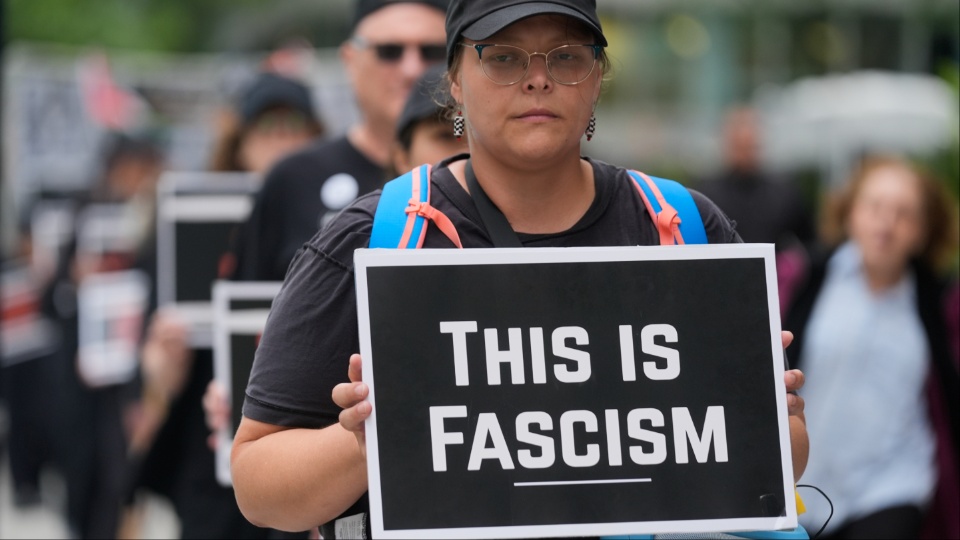
AP

In what can only be described as an acceleration and expansion of the bellicose and dangerous far-right populist movement around the globe, the U.S. government of Donald Trump is reportedly seeking to build an international coalition to oppose the anti-fascist left.

Washington says U.S. counterterrorism officials are organizing a summit in the summer to discuss and develop “strategies to counter the anti-fascist movement.”

White House and State Department officials have described such groups as a “serious threat to national security,” lumping together “anarchists, Marxists, and violent extremists.” The State Department claimed these organizations have waged “a terrorist campaign in the United States and across the Western world for decades, involving bombings, beatings, shootings, and riots in the service of their extreme agenda.”

The move comes as Trump has faced significant domestic opposition to many of his policies. This includes a sustained two-month popular uprising in Minnesota against violent anti-migrant sweeps by ICE, which ultimately forced the president to back down and withdraw the federal agents.

Labelling virtually all opposition as “terrorist” is an alarming escalation in Trump’s rhetoric, and it suggests a significant shift in counterterrorism priorities. The fact that the U.S. is trying to internationalize this effort—invitees to the summit include Canada, Britain, Germany, France, Italy, Hungary, Brazil, Mexico, Argentina, India, and Indonesia—suggests that such a shift may be underway in other countries as well.

Reuters reported that sources within U.S. counterterrorism say the summit will encourage intelligence sharing and common strategies. Other reports suggest that Washington is considering multiple international conferences, beginning in May with a workshop with foreign law enforcement officials in The Hague to “teach them about the dangers of far-left groups and how to counter them.”

The U.S. push comes as right-wing political forces in Canada are also agitating to label dissent as “terrorist.” In a move eerily reminiscent of the McCarthy era, Conservative MP Garnett Genuis has reportedly asked federal departments and agencies to determine whether any of their employees or members have current or prior association with anti-fascist and anti-racist left movements.

Right-wing politicians and media typically use the term “antifa” to refer to a sweeping range of organizations and movements that oppose fascist, racist, and far-right groups. With such a broad interpretation, virtually any political grouping, however large or small, can be described as “terrorist” or “a threat to national security” and subject to state repression.

In no small part, this is the desperate response of a system that is in crisis and decay. As capitalism’s social contradictions sharpen—evidenced by recurring and deepening social and economic crises, increased inter-imperialist rivalry and competition, and the accelerating drive to militarism and war—an increasingly broad section of the population becomes drawn into opposition and resistance.

Cutting off the organizational and political leadership of this growing movement against capitalism, even if it is nascent, is of utmost importance to the ruling class. If the commanders of capitalism, at least those in the U.S., are indeed planning ahead through their “anti-anti-fascist summit,” then working people had better start doing the same.

The working-class movement needs to get to work on developing its own independent political action plan and building up organizations and alliances that can carry it out. This includes working to win more people over to political positions like opposing NATO and other imperialist military alliances, rejecting corporate trade deals and tripartite “social dialogue” with the bosses and their governments, and insisting on the necessity of class struggle.

It also means combatting anti-socialist and anti-communist propaganda, including within labor and “left” movements. Narratives that deny the achievements of the Soviet people, or which draw false distinctions between the Cuban people and the Cuban government, or which equate communism with fascism and terror—these kinds of lies are all designed to divide and weaken the working-class movement, and to reinforce the dictatorship of capital over working people.

It’s true that capitalism is not always fascist. But it’s also true that fascism is always capitalist, and when capitalism is in crisis, it is anti-anti-fascist. This is what we are seeing now, and this is why the working class, which alone has the power to transform society, must get organized.

People’s Voice

As with all op-eds published by People’s World, the views expressed here are those of the author.

We hope you appreciated this article. At People’s World, we believe news and information should be free and accessible to all, but we need your help. Our journalism is free of corporate influence and paywalls because we are totally reader-supported. Only you, our readers and supporters, make this possible. If you enjoy reading People’s World and the stories we bring you, please support our work by donating or becoming a monthly sustainer today. Thank you!

Article by Dave McKee republished from People’s World under http://creativecommons.org/licenses/by-nc-nd/3.0/us/.

Donald Trump sings and dances, says that it's fun to kill everyone ...
Donald Trump sings and dances, says that it’s fun to kill everyone …
Orcas discuss Donald Trump and the killer apes' concept of democracy. Front Orca warns that Trump is crashing his country's economy and that everything he does he does for the fantastically wealthy.
Orcas discuss Donald Trump and the killer apes’ concept of democracy. Front Orca warns that Trump is crashing his country’s economy and that everything he does he does for the fantastically wealthy.
Continue ReadingTrump plans anti-anti-fascist summit as capitalist crisis deepens

Indonesia may exit Trump’s ‘Board of Peace’ if Palestine independence unmet: Report

Spread the love

This work by Middle East Monitor is licensed under a Creative Commons Attribution-NonCommercial-ShareAlike 4.0 International License

U.S. President Donald Trump signs the Peace Charter for Gaza during the 56th World Economic Forum in Davos, Switzerland on January 22, 2026. [Harun Özalp – Anadolu Agency]

Indonesia may exit US President Donald Trump’s “Board of Peace” if Palestine’s independence goals are not advanced, according to the state-run news agency Antara.

President Prabowo Subianto, while responding to concerns on the issue during a meeting at the State Palace in Jakarta on Tuesday, stated: “’If we join the BoP, we are not obliged to go along when they do not align with our views. Second, if no changes can be made, he (President Prabowo) is prepared to withdraw from the BoP.’ That is how I understood his remarks,” Indonesian Ulema Council Vice Chairman Cholil Nafis told reporters, quoting the president.

Prabowo said that “if BoP policy later involves steps that are not in line with our position, we (Indonesia) will abstain and be absent from participation. Then, if it truly does not suit us and Indonesia cannot do anything, he is ready to withdraw from the BoP,” Nafis added.

READ: Italy, Indonesia to send forces to Gaza under strict conditions

Separately, Foreign Minister Sugiono said the Indonesian president had opened the option of withdrawal if the board’s direction did not align with Indonesia’s goals.

“If it does not match what we want: First, peace in Gaza in the immediate term; then peace in Palestine more broadly, and ultimately Palestinian independence and sovereignty,” he said. “That is the trajectory we aim to achieve, and I think those are the corridors.”

Trump announced the establishment of the “Board of Peace” on Jan. 15 as part of his broader plan for Gaza, under which a ceasefire agreement was reached on Oct. 10, 2025. The board was later authorized by UN Security Council Resolution 2803 in November 2025.

OPINION: Indonesia should not join Trump’s Board of Peace

This work by Middle East Monitor is licensed under a Creative Commons Attribution-NonCommercial-ShareAlike 4.0 International License

Donald Trump explains why he established his Bored of Peace
Keir Starmer objects to criticism of the IDF. He asks how could anyone object to them starving people to death, forced marches like the Nazis did, bombing Gaza's hospitals and universities, mass-murdering journalists, healthworkers and starving people queuing for food, killing and raping prisoners and murdering children. He calls for people to stop obstructing his genocide for Israel.
Keir Starmer objects to criticism of the IDF. He asks how could anyone object to them starving people to death, forced marches like the Nazis did, bombing Gaza’s hospitals and universities, mass-murdering journalists, healthworkers and starving people queuing for food, killing and raping prisoners and murdering children. He calls for people to stop obstructing his genocide for Israel.
Orcas discuss Genocide-supporting and complicit Zionists. Donald Trump, Keith Starmer, David Lammy, Rachel Reeves, Angela Rayner and Wes Streeting are acknowledged as evil genocide-complicit and supporting cnuts.

Continue ReadingIndonesia may exit Trump’s ‘Board of Peace’ if Palestine independence unmet: Report

The Guardian view on adapting to the climate crisis: it demands political honesty about extreme weather

Spread the love

https://www.theguardian.com/commentisfree/2025/dec/26/the-guardian-view-on-adapting-to-the-climate-crisis-it-demands-political-honesty-about-extreme-weather

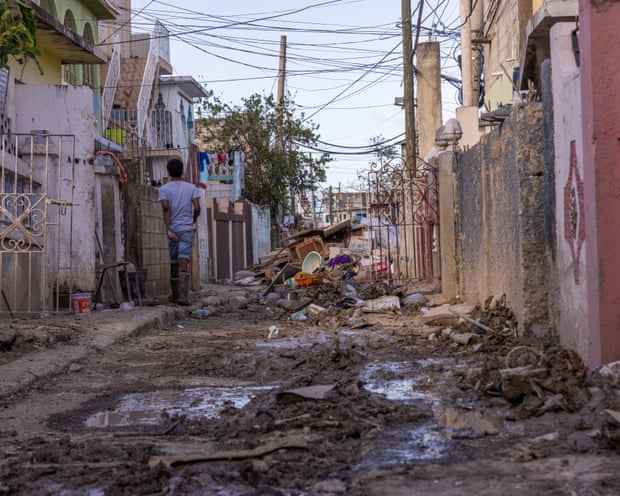
The aftermath of Hurricane Melissa in Catherine Hall, Montego Bay, Jamaica, on 4 November 2025. Photograph: Ina Sotirova/The Guardian

The record-breaking 252mph winds of Hurricane Melissa that devastated Caribbean islands at the end of October were made five times more likely by the climate crisis. Scorching wildfire weather in Spain and Portugal during the summer was made 40 times more likely, while June’s heatwave in England was made 100 times more likely.

Attribution science has made one thing clear: global heating is behind today’s extreme weather. That greenhouse gas emissions warmed the planet was understood. What can now be shown is that this warming produces record heatwaves and more violent storms with increasing frequency.

What we can do to minimise, or at least reduce, the risks to life from such events – as well as more gradual changes – is what climate adaptation experts think about all the time. The alarming consensus is that we are not doing anywhere near enough. The result is paid for in lives: floods and cyclonic storms across Thailand, Sri Lanka and Indonesia left hundreds dead at the end of November.

For the rich world, adaptation is prudent. For the poor world, it is survival. The latest UN report is unequivocal: developing countries will need more than $310bn annually by 2035, yet received just $26bn in 2023. Catastrophic floods in Asia and worsening droughts in Africa this year point to the growing need to accelerate climate adaptation.

Under the Paris agreement, nationally determined contributions (NDCs) – country plans to tackle global heating – are meant to cover both emissions reduction and adaptation to climate impacts.

But NDCs end up focusing mostly on cutting greenhouse gases and establishing decarbonisation pathways. That needs to change. National adaptation plans, which came out of Cop16, need to be foregrounded. These put adaptation centre stage – and demand real plans, real finance, real justice. They ask the question that really matters now: how do vulnerable nations survive a warming world that emissions cuts alone can’t stop?

https://www.theguardian.com/commentisfree/2025/dec/26/the-guardian-view-on-adapting-to-the-climate-crisis-it-demands-political-honesty-about-extreme-weather

Donald Trump urges you to be a Climate Science denier like him. He says that he makes millions and millions for destroying the planet, Burn, Baby, Burn and Flood, Baby, Flood.
Nigel Farage urges you to ignore facts and reality and be a climate science denier like him and his Deputy Richard Tice. He says that Reform UK has received £Millions and £Millions from the fossil fuel industry to promote climate denial and destroy the planet.
Elon Musk urges you to be a Fascist like him, says that you can ignore facts and reality then.

The Guardian view on adapting to the climate crisis: it demands political honesty about extreme weather

‘When you plant something, it dies’: Brazil’s first arid zone is a stark warning for the whole country

Continue ReadingThe Guardian view on adapting to the climate crisis: it demands political honesty about extreme weather

Even ‘weak’ cyclones are being turned into deadly rainmakers by fast-warming oceans

Spread the love
Thomas Wyness / Alamy

Ligin Joseph, University of Southampton

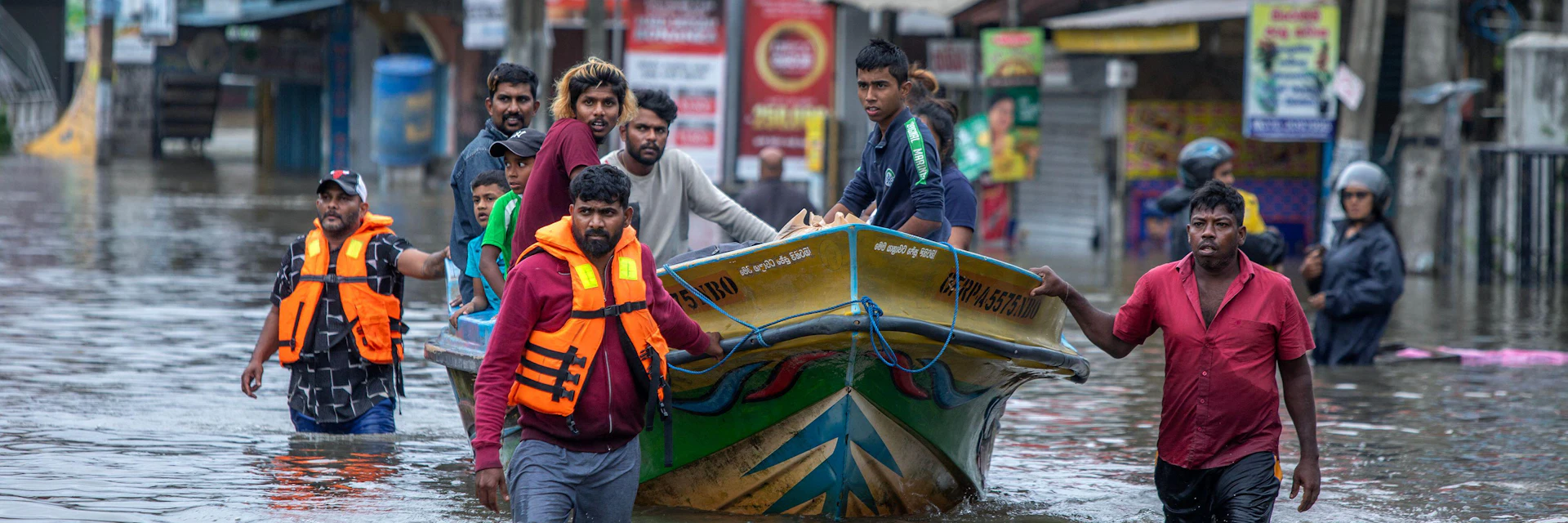
The final week of November was devastating for several South Asian countries. Communities in Sri Lanka, Indonesia and Thailand were inundated as Cyclones Ditwah and Senyar unleashed days of relentless rain. Millions were affected, more than 1,500 people lost their lives, hundreds are still missing, and damages ran into multiple millions of US dollars. Sri Lanka’s president even described it as the most challenging natural disaster the island has ever seen.

When disasters like this happen, the blame often falls on a failure in early warnings or poor preparedness. This was the case with major floods in Kerala, south India, in 2018, which devastated my hometown.

But this time, the forecasts were largely accurate; the authorities knew the storms were coming, yet the devastation was still immense.

So, if the forecasts were good enough, why were the impacts still so severe?

Weak winds, extreme rain

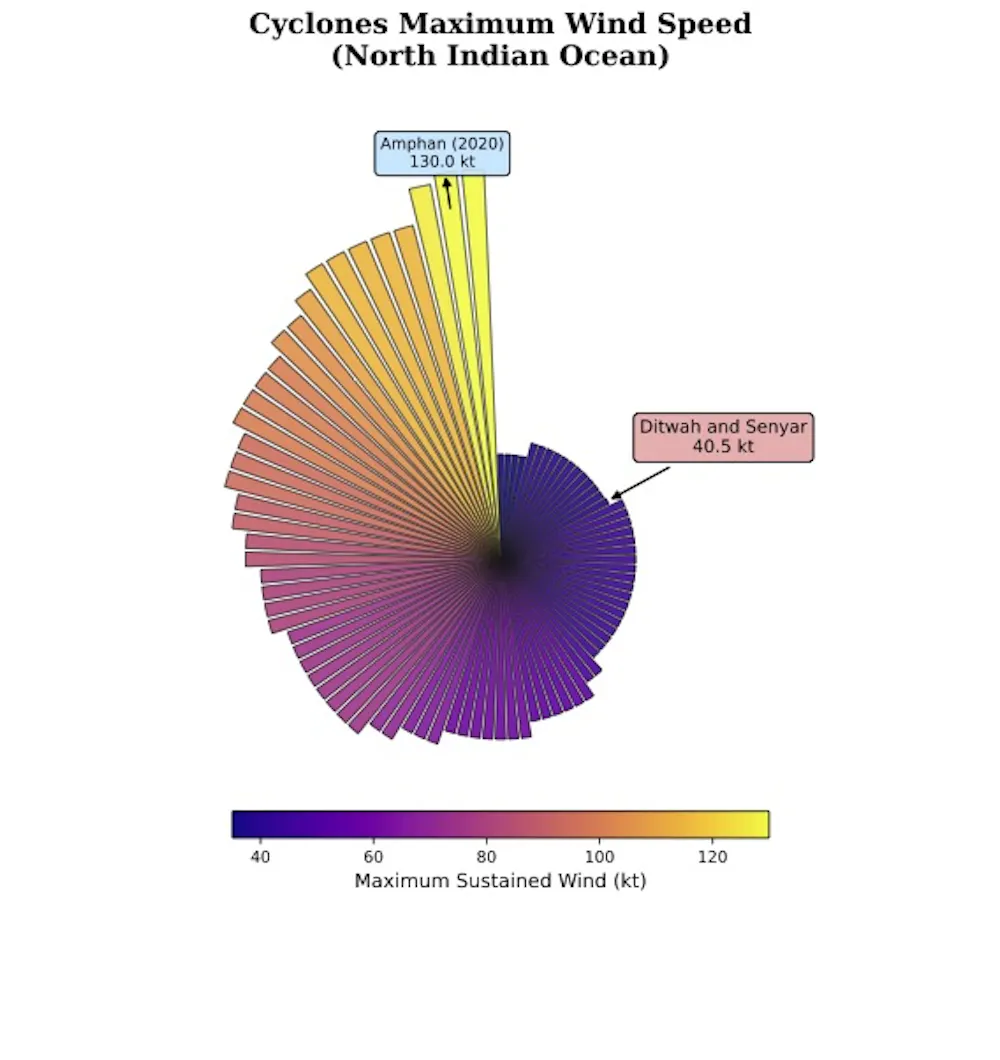
One emerging explanation is that these storms were not dangerous because of their winds, but because they produced unusually intense rainfall.

Graph of wind speeds
This graph of all cyclonic storms over the north Indian Ocean since 2001 shows Ditwah and Senyar weren’t particularly windy. (Wind speed measured in knots. 1 knot is about 1.15 mph or 1.85 kph) Ligin Joseph (data: IBTrACS), CC BY-SA

Consider Cyclone Ditwah. Its peak winds were around 75 km/h (47 mph). That’s windy, but nothing special. In the UK, it would be classified merely as a “gale” rather than a “storm”. It was far weaker than the 220 km/h winds of the powerful 1978 cyclone that also struck Sri Lanka. Yet Ditwah still caused massive devastation.

What explains this apparent contradiction? It’s too early to say definitively, but climate change is likely a part of the story. Even when storms are not especially strong in wind terms, the amount of rain they carry is increasing.

A warmer atmosphere holds more water

A well established meteorological rule helps explain why. For every degree of global warming, the atmosphere can hold about 7% more moisture.

As the planet warms, the air above us becomes a larger reservoir, waiting to dump more water on us. When storms form, they can tap into this expanded supply, often in extremely short bursts. Even if wind speeds are modest, the rainfall alone can be catastrophic.

The oceans matter even more

Warming oceans play an even more powerful role, as cyclones draw their energy from warm ocean waters. Satellite data from late November shows just how warm the eastern Indian Ocean was, with large areas more than 1°C above normal during Ditwah and Senyar.

Coloured map of Indian Ocean and SE Asian seas
In the days before the cyclones formed (20–24 November), the oceans were even warmer than usual, creating conditions that could have fuelled and intensified the rainfall. Ligin Joseph (Data: OISST; track positions are approximate), CC BY-SA

Such warm anomalies are no longer unusual. The oceans have absorbed more than 90% of the excess heat trapped by greenhouse gases, and long-term observations show a clear upward trend in ocean temperatures.

That doesn’t necessarily mean cyclones are becoming more frequent – their formation still depends on other ingredients, such as low wind shear (small differences in wind speed and direction with height) and the right atmospheric structure.

What warmer oceans do change, however, is the amount of energy available to any storm that does manage to form. When the ocean is warmer, cyclones have more fuel and evaporation increases, loading the atmosphere with moisture that can fall as intense rain once a storm develops. Even weak cyclones can therefore hold exceptional amounts of rain.

Coloured map of Indian Ocean and SE Asian seas
Evaporation averaged for 26–27 November. Ditwah especially travelled over warm waters supplying large amounts of moisture to the atmosphere. Ligin Joseph (Data: ERA5), CC BY-SA

The winds near the surface help this process along. As they move across the ocean, they sweep away the moisture-filled air just above the water and replace it with drier air, allowing evaporation to continue. Put together, warmer oceans, higher evaporation, and an atmosphere that can store more moisture, these factors can significantly intensify the rainfall associated with cyclones.

Coastline hugging makes flooding worse

Local geography amplified these effects. Both Ditwah and Senyar formed unusually close to land and travelled along the coastline for an extended period. This meant they stayed over warm waters long enough to continuously draw moisture, but remained close enough to land to dump that moisture as intense rainfall almost immediately.

Cyclone Ditwah, in particular, moved slowly as it approached Sri Lanka. Slow-moving storms can be especially dangerous as they repeatedly dump rain over the same area. Even if winds are weak, this combination of warm seas, coastal proximity and slow forward speed can be devastating.

A new threat

These storms suggest that climate change – especially ocean warming – is reshaping the risks posed by cyclones. The most dangerous storms may no longer simply be the ones with the strongest winds, but also the ones with the most moisture.

Forecasting systems, including new AI-powered weather models, are getting better at predicting cyclone tracks and wind speeds. Yet rainfall-driven flooding remains far harder to forecast. As oceans continue to warm, governments and disaster agencies will need to prepare for storms that may be weak in wind but extreme in rain.

These insights are based on preliminary analysis and emerging scientific understanding. More detailed peer-reviewed studies will be needed to pinpoint exactly why Ditwah and Senyar produced such extreme rainfall. But the pattern that is emerging – weak cyclones delivering outsized floods in a warming world – must not be ignored.

Ligin Joseph, PhD Candidate, Oceanography, University of Southampton

This article is republished from The Conversation under a Creative Commons license. Read the original article.

Donald Trump urges you to be a Climate Science denier like him. He says that he makes millions and millions for destroying the planet, Burn, Baby, Burn and Flood, Baby, Flood.
Nigel Farage urges you to ignore facts and reality and be a climate science denier like him and his Deputy Richard Tice. He says that Reform UK has received £Millions and £Millions from the fossil fuel industry to promote climate denial and destroy the planet.
Continue ReadingEven ‘weak’ cyclones are being turned into deadly rainmakers by fast-warming oceans

12 countries commit to arms embargo on Israel to stop its attacks on Gaza

Spread the love

Original article by Pablo Meriguet republished from peoples dispatch under a Creative Commons Attribution-ShareAlike 4.0 (CC BY-SA) license.

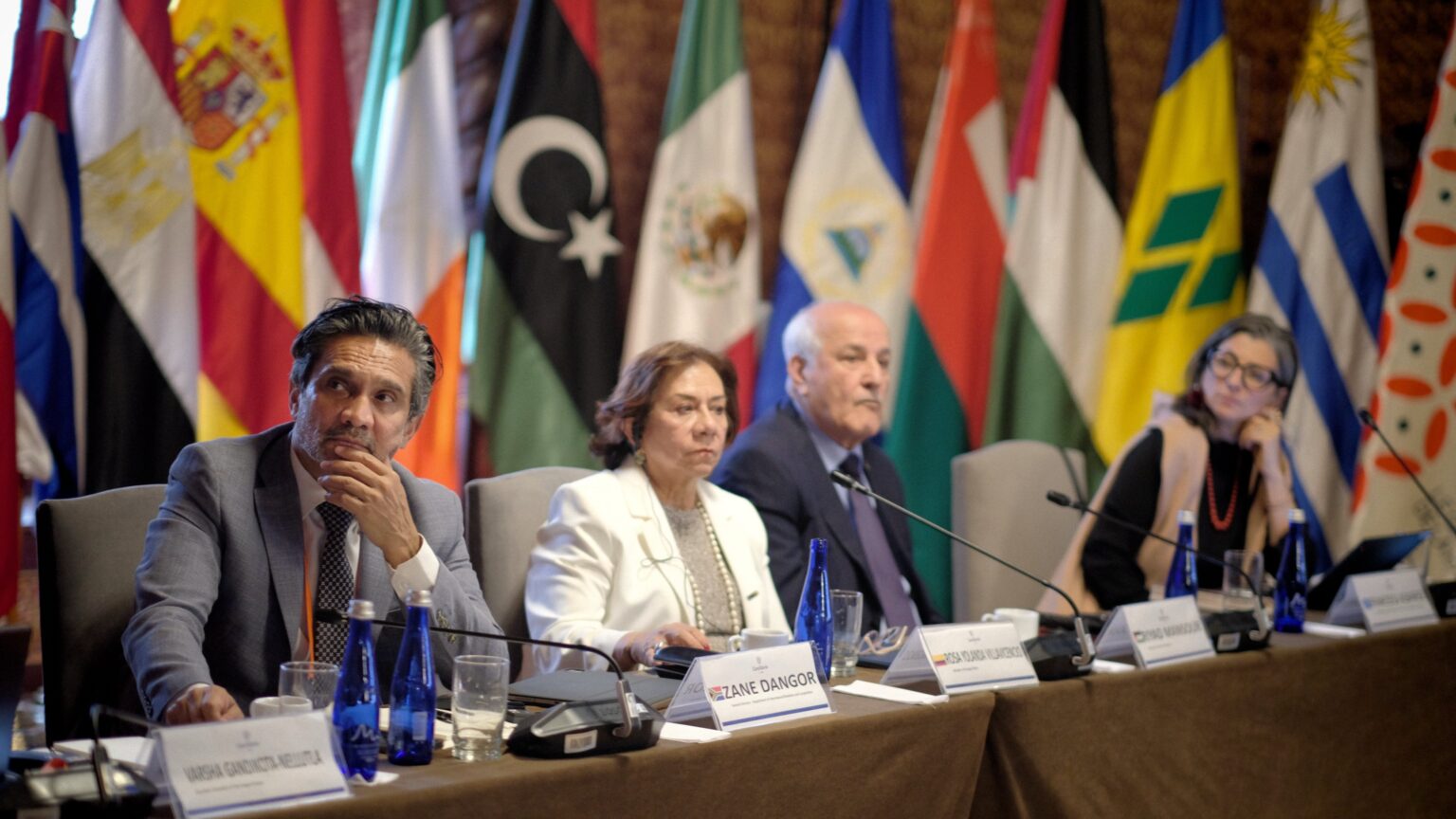
Hague Group Summit in Bogotá, Colombia. Photo: Abby Martin

In the final document, the signatory countries commit, among other things, to cease arms trade with Israel, review public contracts with that country, and seek accountability for war crimes.

Countries of the Global South have expressed their solidarity with the Palestinian people at the Emergency Ministerial Conference on Palestine organized by The Hague Group, which took place on July 15 and 16 in Bogotá, Colombia. The multilateral meeting was attended by representatives from Algeria, Bangladesh, Botswana, Brazil, Chile, China, Djibouti, Egypt, Slovenia, Spain, Honduras, Indonesia, Iraq, Ireland, Lebanon, Libya, Malaysia, Mexico, Namibia, Nicaragua, Norway, Oman, Pakistan, Palestine, Qatar, Saint Vincent and the Grenadines, South Africa, Turkey, Uruguay, and Venezuela.

Regarding the meeting, Colombia’s deputy secretary of state, Mauricio Jaramillo, said: “This conference is being convened by the Hague Group, but it is not an exclusive meeting of this group. Given the urgency of what is happening in the occupied territories, especially in Gaza, where today, for example, we have passed the threshold of 58,000 fatalities, we must commit ourselves to action.”

The conference, which was organized by the governments of Colombia and South Africa and attended by 30 countries, agreed that: “The era of impunity must end – and that international law must be enforced without fear or favor through immediate domestic policies and legislation – along with a unified call for an immediate ceasefire.”

The agreements

According to an official press release, the meeting laid out several measures to stop the genocide in Gaza:

  1. Prevent the provision or transfer of arms, munitions, military fuel, related military equipment, and dual-use items to Israel.
  2. Prevent the transit, docking, and servicing of vessels at any port … in all cases where there is a clear risk of the vessel being used to carry arms, munitions, military fuel, related military equipment, and dual-use items to Israel.
  3. Prevent the carriage of arms, munitions, military fuel, related military equipment, and dual-use items to Israel on vessels bearing our flag … and ensure full accountability, including de-flagging, for non-compliance with this prohibition.
  4. Commence an urgent review of all public contracts to prevent public institutions and funds from supporting Israel’s illegal occupation of the Palestinian Territory and entrenching its unlawful presence.
  5. Comply with obligations to ensure accountability for the most serious crimes under international law, through robust, impartial, and independent investigations and prosecutions at national or international levels, to ensure justice for all victims and the prevention of future crimes.
  6. Support universal jurisdiction mandates, as and where applicable in national legal frameworks and judiciaries, to ensure justice for victims of international crimes committed in the Occupied Palestinian Territory.

Although 30 countries attended the meeting, only 12 countries committed to immediately complying with the agreements outlined in the final declaration: Bolivia, Cuba, Colombia, Indonesia, Iraq, Libya, Malaysia, Namibia, Nicaragua, Oman, Saint Vincent and the Grenadines, and South Africa. The others expected to join them by September 20, 2025 – the date of the 80th UN General Assembly. The group will also be consulting various other states on an ongoing basis for participation in the measures against Israel.

Colombia’s President Gustavo Petro stated: “We came to Bogotá to make history — and we did … Together, we have begun the work of ending the era of impunity. These measures show that we will no longer allow international law to be treated as optional, or Palestinian life as disposable.”

“What we have achieved here is a collective affirmation that no state is above the law … The Hague Group was born to advance international law in an era of impunity. The measures adopted in Bogotá show that we are serious — and that coordinated state action is possible,” said South African Secretary of State Ronald Lamola.

The final agreement is historic as it is the first multilateral agreement that seeks to influence the Israeli government’s actions in its offensive against Gaza. In this sense, it is the first time that several countries have challenged the apparent immunity of the Israeli state in its actions in Gaza, which could have unpredictable diplomatic repercussions. It could also become the starting point for other countries to demand an end to the violence in Palestine jointly.

Original article by Pablo Meriguet republished from peoples dispatch under a Creative Commons Attribution-ShareAlike 4.0 (CC BY-SA) license.

Continue Reading12 countries commit to arms embargo on Israel to stop its attacks on Gaza